
- Joined
- 21 April 2009
- Messages
- 14,357
- Reaction score
- 9,447


So what was possible in the 1980s (from scratch) is now impossible even with all the designs? That makes no sense unless human evolution is in reverse and we are going to turn back into amoebas shortly.I’m no rocket expert but, sorry Forest Green, to my ears that doesn’t sound even remotely plausible.
Your quoting me outside the context in which my comments were made and not remotely reflecting what I meant.
I’d suggest you & other contributors read them in context.
So give us some "context" that makes building Peacekeeper analogs, "not even remotely plausible". (And let's try and keep it to a technical standpoint.)

I don't see how building an MM3 replacement would be any cheaper. Even the most limited endeavour would mean building new MM3 copies and updating the electronics, which would be at least as complicated as rebuilding 30 year-old Peacekeepers and likely more so given that the MM3 is 50 years old! The MM3 was also a solid rocket design BTW. It's not like liquid rockets are a remotely plausible option unless you want to have to refuel the rockets whilst waiting to respond to a pre-emptive strike.Again this need for an “opponent” to “attack” (a need being being demonstrated by a number of contributors).
Read my comments in context of those they are responding to.
I was responding to comments from Forrest Green that the “choice” was between a new missile and (in relative terms) extremely simple and cheap literal resurrection of the “old” missiles (Peacemakers and Midgetmen).
It was that literal resurrection and it’s promised straight forward nature that I was saying wasn’t plausible from a technical and industrial perspective.
Obviously a new missile (or new missiles) that are based on the capabilities of what came before is technically feasible and I never said it wasn’t.
However. as other contributors are also suggesting, a “son of peacemaker” is likely to be too expensive and all round too politically unpalatable, given the need to cut-ones-cloth to rebuild and sustain the overall triad and specifically the land based ICBM leg.


And from what can be gleaned from the unit cost for the transport erector replacement and the payload transporter replacement programs, these
aren't systems that cost enough to be allowed to drive major GBSD specs.
Phase changing fuels might be an area worth looking at again. Another possible approach might be programmable matter fuels.
And at this point in the game don’t think we can risk anything too experimental. GBSD has too work 98+% ready rate at deployment. I’m already fearing Columbia’s new propulsion system being delayed/late.Phase changing fuels might be an area worth looking at again. Another possible approach might be programmable matter fuels.
Both are probably too expensive / risky / lacking in reliability to want to mess with.
That's just scary how quickly the US is falling behind.
Indeed. Both Trident and MM3 are solid fuel, so I would imagine a solid-fuelled replacement is a given.And at this point in the game don’t think we can risk anything too experimental. GBSD has too work 98+% ready rate at deployment. I’m already fearing Columbia’s new propulsion system being delayed/late.
The information sheet I posted above mentioned 100 MX missiles in service.
https://www.secretprojects.co.uk/threads/ground-based-strategic-deterrent-gbsd.22898/post-357679
The designs to make all those systems and equipment still exists though.
If the skills base to manufacture solid rockets has been disappearing, all the more reason to renew it.
How do you know Midgetman can't take a HGV?
You've made a lot of assumptions of doom here.
It's because this attitude doesn't exist in Russia that they can actually make progress updating their deterrent.
Hopefully they're not THAT short sighted. Not building the force you need because you can't be bothered to build a new kind of truck is stupid beyond belief. And the "foam blocks" were there as much for cold launching as shock absorption.
Not exactly 'short-sighted' as the Peacekeeper trailers and infrastructure were very different than the MM stuff and that too cost a lot extra to handle and it was clear from "Midgetman" we didn't technically NEED a bigger missile to do the job.
Well, no, that's not clear at all. That's a bit like saying we don't need B-21s because we're building the much smaller F-35.
Yep, and that's all that were ever deployed. Still, we're not talking about building a Panama Canal here. The original thousand-plus silos were built in a few years. Modifying them, and building a new transport system for the new missile is hardly going to break the bank. It's not like those MM3 trucks can last forever, or need to. They're not sacred cows.
It's not like those MM3 trucks can last forever, or need to. They're not sacred cows.
And from what can be gleaned from the unit cost for the transport erector replacement and the payload transporter replacement programs, these
aren't systems that cost enough to be allowed to drive major GBSD specs.

It's not like those MM3 trucks can last forever, or need to. They're not sacred cows.
And from what can be gleaned from the unit cost for the transport erector replacement and the payload transporter replacement programs, these
aren't systems that cost enough to be allowed to drive major GBSD specs.
As unit items no but they by themselves also drive things like bay/building requirements, crane specifications and numerous other support systems. Those ARE major drivers of the systems costs and so were made specifications on the GBSD system itself. Peacekeeper required major rebuilds of existing facilities, (ie: new bays had to be build onto existing buildings to handle the Peacekeeper and support systems, new storage facilities had to be constructed to house stored and in maintenance missiles, etc) new crane and handling systems had to be installed and new storage and maintenance facilities constructed most of which were not easily compatible with those of the MMIII. (You could, with extra work, use a Peacekeeper gantry, cradle and crane for a MMIII but it was difficult and dangerous to do so and the reverse was impossible) As already noted it took extensive and expensive modifications to put a Peacekeeper into a MM silo and neither the operation nor survive-ability were optimal. All this adds up VERY rapidly which is why over and above "development" costs, (which btw include development and deployment of any support systems as well as the missile itself) of a weapons system well over two-thirds of the total cost of the system over time can end up being JUST the support and maintenance systems. To reduce that as much as possible you WANT to use as much of any existing support infrastructure that you can.
I understand that everyone wants what they think is the 'best' possible solution but none of it is in isolation and to get a clear picture you have to look at the ENTIRE picture not just the bits you like
Randy
RanulfC - At time present there are warheads and missiles deployed and not but the source I provided is from 1990."In service" covers all the missiles, not only those actually deployed but those in storage or in maintenance. Congress initially authorized 100 to be deployed in a mixture of modified MMII and maybe Titan II silo's but then changed the number to only 50. The rest went to storage so they could rotate out with deployed missiles as maintenance came due.
The designs to produce that equipment does though, whereas the designs to produce that equipment for a new missile does not."Likely" the designs still exist somewhere but the manufacturing and production equipment don't nor does any of the maintenance and transport equipment.
No time like the present and any replacement will have to be solid fuel due to the nature of the deterrent anyway.Which has been the military's argument for the last couple of decades which no one in Congress listened to.
Quite simple really, the c/s area is 1/4 that of a Peacekeeper, which was designed for 10 warheads (with a maximum of 14 if no decoys are carried) of the same design to that on Midgetman. So that single warhead on the MGM-134 has bags of space around it.The thread has been noting that a MM would have difficulty in fitting a capable HGV, and the Midgetman is MUCH smaller than the MMIII AND designed for only a single warhead at that. Given that information why would you assume it could carry one?
The only 'problems' you've brought up exist for any GBSD replacement. Solid fuel issue - exists for any GBSD replacement. Manufacturing and support equipment problem - exists for any GBSD replacement. The only difference is that there is no supporting design material for the new missile and it would be completely untested.Because you can't get exactly what you want because you think you need it doesn't make it an "assumption of doom" I'm simply pointing out that the actual and political reality are not likely to support what you want. Congress, (BOTH sides of the aisle mind you) have been balking at a new ICBM since the end of the Cold War and nobody is looking at expanding basing options either so we have to look at what we can do with what we have and can get not wishful thinking.
Errr... RS-24, RS-28, RSM-56, R-29RMU/RMU2. All in the last 12 years or less.Oddly enough this 'attitude' very much DOES exit in Russia which is why they have ONLY deployed a few systems rather than the number and depth they have stated over the decades. The US has actually been updating its deterrent but due to the way we spend and who controls it it has been slower and less robust than it should. The main factor has been and remains mostly political rather than technical.
Except that you seem to be under the impression that new systems requiring new infrastructure is a new thing. On the contrary, it's almost ALWAYS the case. Should we have stayed with M60 tanks because Abrams required a new tank transporter?
You seem stuck on the transporter I guess because it was the example I used? The M1 in fact could use the majority of the existing M60 facilities and systems (they needed upgrading and expansion of course) but without major rebuilding or new construction. So you pretty much understand the actual point but are missing it because.... ?
Except that you seem to be under the impression that new systems requiring new infrastructure is a new thing. On the contrary, it's almost ALWAYS the case. Should we have stayed with M60 tanks because Abrams required a new tank transporter?
:::sigh::: No it's YOU that is under the impression that something "new" includes all new support systems that magically appear when required. I on the other hand actually deal with such systems and have for a bit over 40 years
Randy
RanulfC - At time present there are warheads and missiles deployed and not but the source I provided is from 1990."In service" covers all the missiles, not only those actually deployed but those in storage or in maintenance. Congress initially authorized 100 to be deployed in a mixture of modified MMII and maybe Titan II silo's but then changed the number to only 50. The rest went to storage so they could rotate out with deployed missiles as maintenance came due.
The designs to produce that equipment does though, whereas the designs to produce that equipment for a new missile does not."Likely" the designs still exist somewhere but the manufacturing and production equipment don't nor does any of the maintenance and transport equipment.
No time like the present and any replacement will have to be solid fuel due to the nature of the deterrent anyway.Which has been the military's argument for the last couple of decades which no one in Congress listened to.
Quite simple really, the c/s area is 1/4 that of a Peacekeeper, which was designed for 10 warheads (with a maximum of 14 if no decoys are carried) of the same design to that on Midgetman. So that single warhead on the MGM-134 has bags of space around it.The thread has been noting that a MM would have difficulty in fitting a capable HGV, and the Midgetman is MUCH smaller than the MMIII AND designed for only a single warhead at that. Given that information why would you assume it could carry one?
The only 'problems' you've brought up exist for any GBSD replacement. Solid fuel issue - exists for any GBSD replacement. Manufacturing and support equipment problem - exists for any GBSD replacement. The only difference is that there is no supporting design material for the new missile and it would be completely untested.Because you can't get exactly what you want because you think you need it doesn't make it an "assumption of doom" I'm simply pointing out that the actual and political reality are not likely to support what you want. Congress, (BOTH sides of the aisle mind you) have been balking at a new ICBM since the end of the Cold War and nobody is looking at expanding basing options either so we have to look at what we can do with what we have and can get not wishful thinking.
[/quote]Errr... RS-24, RS-28, RSM-56, R-29RMU/RMU2. All in the last 12 years or less.Oddly enough this 'attitude' very much DOES exit in Russia which is why they have ONLY deployed a few systems rather than the number and depth they have stated over the decades. The US has actually been updating its deterrent but due to the way we spend and who controls it it has been slower and less robust than it should. The main factor has been and remains mostly political rather than technical.
Except that you seem to be under the impression that new systems requiring new infrastructure is a new thing. On the contrary, it's almost ALWAYS the case. Should we have stayed with M60 tanks because Abrams required a new tank transporter?
:::sigh::: No it's YOU that is under the impression that something "new" includes all new support systems that magically appear when required. I on the other hand actually deal with such systems and have for a bit over 40 years
Randy
What point do you think I'm missing? Would a new vehicle, training, maintenance chain, etc. cost money? Of course. Is it worth it? If you want a viable defense, then yes. If not, I guess it doesn't matter. But saying (in effect) "a new chain costs money" well, duh. Of course it does. The price of doing business. Saying it's so overburdening that we need to hamstring ourselves for the next 50 years over it is ridiculous.
I thought the GBSD program RfP and follow on budget documents do provide for a considerable amount of infrastructure upgrades? Wasn’t their just an announcement that funds this years are shifting from “the missile” to testing infrastructure?Except that you seem to be under the impression that new systems requiring new infrastructure is a new thing. On the contrary, it's almost ALWAYS the case. Should we have stayed with M60 tanks because Abrams required a new tank transporter?
:::sigh::: No it's YOU that is under the impression that something "new" includes all new support systems that magically appear when required. I on the other hand actually deal with such systems and have for a bit over 40 years
Randy
What point do you think I'm missing? Would a new vehicle, training, maintenance chain, etc. cost money? Of course. Is it worth it? If you want a viable defense, then yes. If not, I guess it doesn't matter. But saying (in effect) "a new chain costs money" well, duh. Of course it does. The price of doing business. Saying it's so overburdening that we need to hamstring ourselves for the next 50 years over it is ridiculous.
The question is then is a new missile with greater capability and performance that works with the existing support systems going to address that need? The current direction says yes so that is the planned direction they are going. Going with a larger missile itself which costs more to produce and deploy AND does not fit with those systems and requires all new systems is not seen as cost effective or improving the deterrence/defense equation. The idea that it does has not been made effectively enough to change anyone's mind and past history (Peacekeeper) shows that it is not as clear as you think it is. Money is going to be an issue as is political support. We've managed to get SOME movement out of Congress on a new missile but we have to work within a budget and constraints that entails. The idea that this 'hamstrings' our capability is questionable and while it would be great to get more than one missile into development it simply isn't going to happen as there is not political support for it. Nor is there for building more silo's or the safety and security measures needed to deploy mobile missiles in the US. That is the reality we have to deal with the best we can.
Randy
RanulfC - At time present there are warheads and missiles deployed and not but the source I provided is from 1990."In service" covers all the missiles, not only those actually deployed but those in storage or in maintenance. Congress initially authorized 100 to be deployed in a mixture of modified MMII and maybe Titan II silo's but then changed the number to only 50. The rest went to storage so they could rotate out with deployed missiles as maintenance came due.
And? I pointed out the number actually deployed into silo's versus the number totally in-service. All Peacekeeper's were destroyed and or used for launch vehicles there are none left and the facilities and manufacturing to build new ones is gone.
The designs to produce that equipment does though, whereas the designs to produce that equipment for a new missile does not."Likely" the designs still exist somewhere but the manufacturing and production equipment don't nor does any of the maintenance and transport equipment.
Maybe they are but it is unlikely they will be used as is simply because the companies and manufacturers no longer have those particular ability to reproduce them and the current bidders (along with the US government and military) are planning on building NEW missiles.
No time like the present and any replacement will have to be solid fuel due to the nature of the deterrent anyway.Which has been the military's argument for the last couple of decades which no one in Congress listened to.
Again, it's what's being done so it's is even less likely that they would consider building an older missile.
Quite simple really, the c/s area is 1/4 that of a Peacekeeper, which was designed for 10 warheads (with a maximum of 14 if no decoys are carried) of the same design to that on Midgetman. So that single warhead on the MGM-134 has bags of space around it.The thread has been noting that a MM would have difficulty in fitting a capable HGV, and the Midgetman is MUCH smaller than the MMIII AND designed for only a single warhead at that. Given that information why would you assume it could carry one?
The Midgetman was designed to carry one (1) warhead specifically, it wasn't designed to carry additional warheads or decoys. So no there isn't in fact 'bags' of space available but less room than a Minuteman. (And Peacekeeper could carry 11 Mk21's or up to 12 Mk12's with decoys which take less space than a warhead)
The only 'problems' you've brought up exist for any GBSD replacement. Solid fuel issue - exists for any GBSD replacement. Manufacturing and support equipment problem - exists for any GBSD replacement. The only difference is that there is no supporting design material for the new missile and it would be completely untested.Because you can't get exactly what you want because you think you need it doesn't make it an "assumption of doom" I'm simply pointing out that the actual and political reality are not likely to support what you want. Congress, (BOTH sides of the aisle mind you) have been balking at a new ICBM since the end of the Cold War and nobody is looking at expanding basing options either so we have to look at what we can do with what we have and can get not wishful thinking.
Actually the point I keep making but you among others ignore is that the support equipment, facilities and systems all pretty much already exist IF the new missile isn't bigger (physically) than a Minuteman III which is why that is a requirement for the new missile. That greatly reduces the support, maintenance and deployment costs of a new missile system. Again this is why this is a requirement for the new missile. These costs would balloon greatly, (a Peacekeeper lesson) if the new missile is significantly physically different than the MMIII BUT the Midgetman has pretty much shown we don't NEED to have such a big missile in the first place.
Errr... RS-24, RS-28, RSM-56, R-29RMU/RMU2. All in the last 12 years or less.Oddly enough this 'attitude' very much DOES exit in Russia which is why they have ONLY deployed a few systems rather than the number and depth they have stated over the decades. The US has actually been updating its deterrent but due to the way we spend and who controls it it has been slower and less robust than it should. The main factor has been and remains mostly political rather than technical.
There were at least 100 deployed originally. Missiles were not laid up in 1990.The R29 is an upgraded missile in service since 1974, modernized just like Trident was. The RSM-56 is their newest SLBM and comparable to the Trident, the RS-28 is in testing but it's not clear if it will actually be deployed. Russia says yes but the money and support are not clear at this point. The RS-24 is a modernized and updated version of the Topol-M, so in all closer to 20 years of development in all. Worrying, yes which is why Congress has finally actually approved and supported a new missile program in the US but they've been saying they were going to build and deploy many more that have not come to fruition.
Randy
The question is then is a new missile with greater capability and performance that works with the existing support systems going to address that need?
Yes, massively so, in an F-18C to F-18E kind of way.
That was my point.That's not an "upgrade". It's a completely different aircraft that happens to look similar.
I thought the GBSD program RfP and follow on budget documents do provide for a considerable amount of infrastructure upgrades? Wasn’t their just an announcement that funds this years are shifting from “the missile” to testing infrastructure?
There were at least 100 deployed originally. Missiles were not laid up in 1990.
Why wouldn't they be able to build them? Part of keeping proper documentation is exactly about retaining that ability.
They're building a liquid-fuelled GBSD?
My argument was based on cross-sectional area. 1 W87 in a Midgetman has far more space around it than 10+ in a Peacekeeper.
They can use that equipment for the Midgetman.
Upgraded? Yes, massively so, in an F-18C to F-18E kind of way. Different dimensions, range, payload etc.
That was my point.That's not an "upgrade". It's a completely different aircraft that happens to look similar.
An R-29RMU2 is about as similar to a vanilla R-29 as an F-18E is to an F-18C. It's 15% longer, 5% wider, 25% heavier and can carry 12x as many warheads.
And even the old UR-100N is now carrying HGVs.
The question is then is a new missile with greater capability and performance that works with the existing support systems going to address that need?
It's certainly more likely to than a less capable missile.
Which is why they are looking at it from that direction rather than planning an 'all-new' missile and infrastructure. So we are on the same page then?
The question is then is a new missile with greater capability and performance that works with the existing support systems going to address that need?
My point exactly
Randy
The question is then is a new missile with greater capability and performance that works with the existing support systems going to address that need?
It's certainly more likely to than a less capable missile.
My point exactly
Randy
No. Aside from being able to use MM3 silos (whether modified or not) support equipment shouldn't even enter the equation. Are we seriously going to determine whether or not we build an effective force structure on the ability to use a few trucks?

And silo's, (they are part of the whole equation so trying to exclude them from it isn't helping) and trailers, cranes, buildings, both for storage and maintenance and including long-term storage bunkers and buildings, transport systems for long range movement, (used to do a lot with trains, and planes but that's all trucks and highways now) support and mainteance systems, equipment and personnel for the MISSILE support and maintenance personnel and buildings, security needs for all this and similar support and maintenance personnel for all that as well.
This isn't anything new after all the F-22 greatly uses facitities, support systems and other things that have not fundementally changed since the P-51/F-51 was in service.
The question is then is a new missile with greater capability and performance that works with the existing support systems going to address that need?
It's certainly more likely to than a less capable missile.
My point exactly
Randy
No. Aside from being able to use MM3 silos (whether modified or not) support equipment shouldn't even enter the equation. Are we seriously going to determine whether or not we build an effective force structure on the ability to use a few trucks?
And silo's, (they are part of the whole equation so trying to exclude them from it isn't helping)
I just find that funny since the big criticism of the F-22 (and the F-35) is precisely the opposite: they are fundamentally different than their predecessors wrt support, facilities and personnel.
Based on what? In service in 1990 meant deployed.I thought the GBSD program RfP and follow on budget documents do provide for a considerable amount of infrastructure upgrades? Wasn’t their just an announcement that funds this years are shifting from “the missile” to testing infrastructure?
It may be something of an updated announcemtne since "the missile" is obviously going to be delayed at this point. Updating and upgrading the testing infrastructure is overdue since the last ICBM moderinzation/upgrades are IIRC pushing 20 years old by now. But you need to have the missile itself defined at the very least in a general way to do anykind of upgrading of basic infrastructure which is where the requirement for utilization of existing MMIII infrastructure comes in. While the MMIII has been modernized and upgraded the actual handling and maintenance faciities and structures have not been and what was added during the Peacekeeper deployment is of limited utility in that regard.
Planning is to upgrade and expand supporting systems which includes complete replacement of some of the buildings used for maintenance and stoarge but there are limited areas in which to place those new structures in the existing bases. Eventually once the new missile gets closer to deployment there will be upgrading and modernization of the deployment systems to help accellerate deployment but again actual physical 'room' to do a lot of this is limited. That 'significant amount' of money is assuming that the infrastructure being upgraded is mostly already in place and available for the task. Quite obvioulsy if you have to go with a totally NEW (aka larger and more 'capable' such as a new-model Peacekeeper) then that "significant amount" quickly becomes a 'staggering amount' instead. LIke I said this WAS a clear lesson from the Peacekeeper itself.
There were at least 100 deployed originally. Missiles were not laid up in 1990.
Peacekeeper's? 100 were 'deployed' into the system but no more than 50 were every availble on alert in silo's. Most of them were laid up in storage buildings and/or at the manufacuter's site in 'ready-storage' to be shipped into the system.
Why wouldn't they be able to build them? Part of keeping proper documentation is exactly about retaining that ability.
What part of having to rebuild the productin and manufacturing systems and supplies lines is not clear? What part of the Peacekeeper NOT being either effective or economical in actuality was not clear? Sure it was a nice 'big' missile with a lot of warheads but it turned out to be very expensive, (even more so when Congress cut the productin and deployment numbers which should be a familar story) and difficult to maintain and didn't fullfill the role replacing the Titan II as originally envisioned. Sure we've got all the documentation and history at our finger tips and it will be shared with the new missile developers but it should be telling that the requirement is specifically NOT for another big missile like the Peacekeeper.
They're building a liquid-fuelled GBSD?
The Russians? Yes. The US? No. We're quite satisfied with the utility and economics of solid propellant missiles.
My argument was based on cross-sectional area. 1 W87 in a Midgetman has far more space around it than 10+ in a Peacekeeper.
Oh, so we're NOT talking about an HGV then but the amount of room a W87 has? Bit different from what we were supposed to be discussing but lets see...
Peacekeeper had around a 7ft diameter "payload" interface, MMIII has about a 5ft interfce while Midgetman had a bit over 3ft. The Mk-21RV has a base diamter of about 22 inches, so yes a single W87 in a Mk21 has room to allow decoy's and counter-measures which WERE carred in all the above missiles with or without multiple warheads.
HGV's on the other hand have been much larger than the '21in' Mk21, so we're back to the same point: If the MMIII with around 5ft of space may have problems them it is very unlikely that it could be crammed into a 3ft space.
They can use that equipment for the Midgetman.
The equipment was never produced in any number as the program was cancled before deployment. What they WILL use is modified and new build MMIII equipment as it's available and in production. Like the Peacekeeper equipment as it was not going to be used the equipment was destroyed and scrapped. Do we have the plans and designs available? Why yes we do and what can be used to design and build equipment compatable with the new missile will be used but it won't be the "Midgetman Equipment" or systems.
Upgraded? Yes, massively so, in an F-18C to F-18E kind of way. Different dimensions, range, payload etc.That was my point.That's not an "upgrade". It's a completely different aircraft that happens to look similar.
An R-29RMU2 is about as similar to a vanilla R-29 as an F-18E is to an F-18C. It's 15% longer, 5% wider, 25% heavier and can carry 12x as many warheads.
Wow, that's amazing! Except... Well it's NOT. The R-29RMU2 IS pretty advanced over the R-29 which were initially deployed in the mid-70s but that's not that impressive when you consider the R-29RMU2 is derived from the R-29RMU which makes the supposed 'gains' much less impressive. Longer? Nope or it wouldn't fit in the tube. Heavier? Why yes but this is actually a problem not an advantage. Bigger around? Yep, added a whole 0.1m to it to allow more propellant to carry the extra weight. Can carry 13X as many warheads? Eh, no, not even if we're talking the actual R-29 rather than the missile it was developed from. The R-29 was deployed with two (2) medium to high yeild thermonuclear warheads. The R-29RMU carried 4 medium to high yeild warheads with advancec penatration aids as well. The R-29RMU2 CAN carry up to 12 warheads, (10 more than the R-29, 8 more than the R-29RMU) but only if they are all low-yeild warheads and no penatration aids are carried. It can carry 10 low yeild warheads AND standard penatration aids, or 8 with enchanced penatration aids or 4 medium yeild warheads with standard penatration aids.
Low and medium yeild warheads can be carried as a mix such as four low and four medium but no penatration aids down to 4 medium and four low yeild with some standard penatration aids. It does not seem to be able to carry an HGV warhead due to the size of the HGV, (about 1.5m in length)
More like going from the F-18B to the F-18C not the E.
And even the old UR-100N is now carrying HGVs.
Actually the UR-100N-UTTKh which the HGV was specifically designed to be carried on. The missile can carry one (1) HGV with no penatration aids as opposed the normal load of six (6) medium to high yeild warheads and penatration aids. It is reported that the warhead yeild of the HGV is supposed to be around 2mt but this is not confirmed though likely given large size (again 1.5m/5ft long) and mass (40mt/88,185lbs) with the expected loss or range on most platforms to be 'made-up' (one hopes) by the boost-glide ability of the HGV itself. Even carrying more than one HGV on such large missiles as the R-36, (standard throw weight to maximum distance is 8,800kg/19,402lb) is problematical. Note below the R-100N-UTTKh with the HGV managed to hit a target a little over half its nominal range, (6,000km compared to 10,000km standard) and this would be expected to carry across all platforms.
https://www.freemaptools.com/how-fa...ssile-test-range_-kamchatka-krai.htm?units=KM
The question is then is a new missile with greater capability and performance that works with the existing support systems going to address that need?
It's certainly more likely to than a less capable missile.
My point exactly
Randy
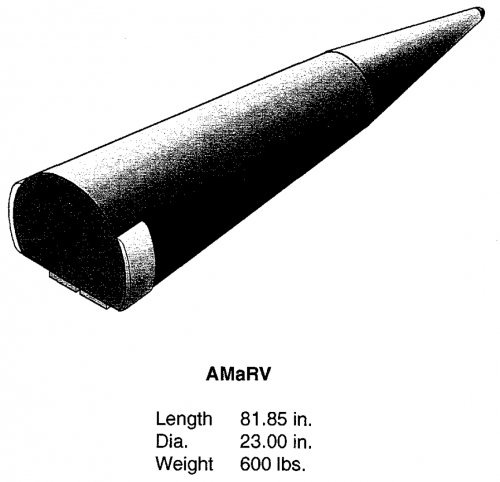
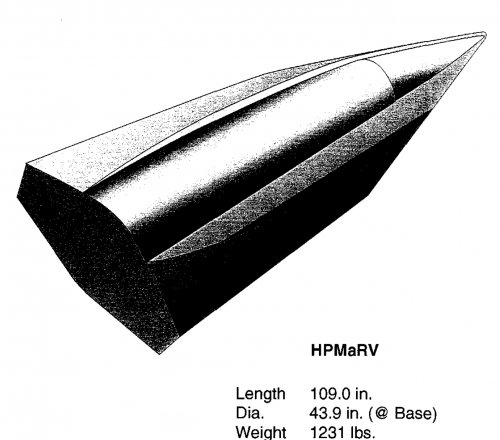
The R29 is an upgraded missile in service since 1974, modernized just like Trident was.
Excluding MILCON (for the silos and even the choose-your-own-inflation-index cost for the MX upgrades wasn't horrible), this list is an ascending order with respect to cost.
Personnel costs dominate over just about everything else so worrying about equipment or infrastructure commonality isn't particularly useful unless
you expect retraining or recruiting to horribly distort personnel costs.
I just find that funny since the big criticism of the F-22 (and the F-35) is precisely the opposite: they are fundamentally different than their predecessors wrt support, facilities and personnel.
Where did I do that? In fact I specifically state they SHOULD be included.
This conversation is going nowhere. You appear to think we should limit the new missile to being able to use current equipment. I disagree. And there it sits.
I just find that funny since the big criticism of the F-22 (and the F-35) is precisely the opposite: they are fundamentally different than their predecessors wrt support, facilities and personnel.
The F-22's wingspan was limited to the size of NATO hardened aircraft shelters. That said, it's not uncommon at all for new weapons to require new equipment. Imposing artificial limitations in the name of commonality needs to be worth it to do it.
I just find that funny since the big criticism of the F-22 (and the F-35) is precisely the opposite: they are fundamentally different than their predecessors wrt support, facilities and personnel.
The F-22's wingspan was limited to the size of NATO hardened aircraft shelters. That said, it's not uncommon at all for new weapons to require new equipment. Imposing artificial limitations in the name of commonality needs to be worth it to do it.
Some new equipment and systems always happens but if you need totally new towing tractors, new heating units, new power generators, new handling and mainteance equipment, new stands and lifts.. And those will ONLY work on this one system... It isn't an 'artificial' limitation but a request to not repeat a previous mistake.
Randy
Still think they should have taken this opportunity to build new ultra hard silos using cutting edge materialsI just find that funny since the big criticism of the F-22 (and the F-35) is precisely the opposite: they are fundamentally different than their predecessors wrt support, facilities and personnel.
The F-22's wingspan was limited to the size of NATO hardened aircraft shelters. That said, it's not uncommon at all for new weapons to require new equipment. Imposing artificial limitations in the name of commonality needs to be worth it to do it.
Some new equipment and systems always happens but if you need totally new towing tractors, new heating units, new power generators, new handling and mainteance equipment, new stands and lifts.. And those will ONLY work on this one system... It isn't an 'artificial' limitation but a request to not repeat a previous mistake.
Randy
Look at Atlas coffins to Titan I silos. Or Titan silos to MM3 silos. Or Polaris SSBNS to Trident. Or Hawk launchers to Patriot to THAAD, etc. Price of doing business.
Silos are crazy expensive, you will kill GBSD at birth if you try to add new silos to the equation, and it is much easier to increase the accuracy of an RV than it is to harden the silo to resist that RV, especially now with MARVs and GPS. If you can drop a nuke within say 50 meters it wont matter how hard the silo is.
Based on what? In service in 1990 meant deployed.
What part of all that being laid out in documentation is not clear? Funny how Russia and China don't see it that way.
So what exactly are you talking about wrt a skills shortage around building solid propellant rockets when they're being built either way.
Peacekeeper had a 2.34m diameter and Midgetman 1.18m. I believe this from an earlier thread covers it.
https://www.secretprojects.co.uk/threads/early-maneuverable-reentry-vehicle-studies.8981/
58.42cm vs 118cm. You could almost fit 2 at a push.
Even more advanced HGVs fit.
111.5cm vs 118cm.
Err... oh no you don't, you referenced a missile dating back to the 1970s, which is the R-29 not the R-29RMU, which came in 2007. So let's not start the pigeon chess.
Given that most MM3s are only carrying one warhead, 1 HGV is still better.


