
You are using an out of date browser. It may not display this or other websites correctly.
You should upgrade or use an alternative browser.
You should upgrade or use an alternative browser.
Mars habitat.
- Thread starter Sferrin
- Start date

My issues with it:
1) How do you print the dome? More specifically, the central part, where you're doing less of adding another layer on top, more of adding a layer *inwards*? Unless the liquid hot magma your robots are pooping out is *real* sticky and *real* thick... won't it just drip down?
2) You need *meters* of thickness to build up substantial radiation shielding. That's a lot of molten rock.
Seems to me a way to go would be to ship along a robo-bulldozer that spends its days building up domes of sand. Your magma-poopers then come along and start building on top of the sand. Once they've built up a sufficiently thick dome, the bulldozer starts hauling the sand out from inside. Move the sand to another pile a hundred yards away and start on another shield dome.
1) How do you print the dome? More specifically, the central part, where you're doing less of adding another layer on top, more of adding a layer *inwards*? Unless the liquid hot magma your robots are pooping out is *real* sticky and *real* thick... won't it just drip down?
2) You need *meters* of thickness to build up substantial radiation shielding. That's a lot of molten rock.
Seems to me a way to go would be to ship along a robo-bulldozer that spends its days building up domes of sand. Your magma-poopers then come along and start building on top of the sand. Once they've built up a sufficiently thick dome, the bulldozer starts hauling the sand out from inside. Move the sand to another pile a hundred yards away and start on another shield dome.

- Joined
- 3 June 2011
- Messages
- 20,037
- Reaction score
- 17,257
My issues with it:
1) How do you print the dome? More specifically, the central part, where you're doing less of adding another layer on top, more of adding a layer *inwards*? Unless the liquid hot magma your robots are pooping out is *real* sticky and *real* thick... won't it just drip down?
Depends on how viscous the rock is, and if you're actively cooling as you lay it down. It could be done. They can "print" with cement right now and I'd wager rock will cool faster than cement would cure.
2) You need *meters* of thickness to build up substantial radiation shielding. That's a lot of molten rock.
If you have nuclear power you would have the power. Solar. . .

- Joined
- 2 August 2006
- Messages
- 3,301
- Reaction score
- 1,785
I find the first system my preferred choice. However, I would have to see some good aerodynamic analysis of what the winds in a dust storm will do to the inflated modules in the "open" wind tunnels within which they sit. Also, would these just serve to catch the sand making it impossible to get out of after a months long dust storm?
Depends on how viscous the rock is, and if you're actively cooling as you lay it down. It could be done.
Using the robots shown? To get the angles needed as the down starts really curving inwards, the robots would seem to have to be like spiders, hanging out over the edge squirting out lava at an angle.
They can "print" with cement right now and I'd wager rock will cool faster than cement would cure.
Note that in that video, all of the cement is laid down purely vertically. There are a few places where the cement is laid down over an existing substrate, metal mesh and lintels and the like, but nowhere does it show "sideways" printing. It's always directly atop something solid.
That's a lot of molten rock.
If you have nuclear power you would have the power.
Depends on what you mean by nuclear. If you have a 100 kilowatt reactor, that's great and all, but how many kilos of sand per hour can you melt with the electricity you get out of that?
I kinda wonder if the better approach might be actual concrete. Water is of course at a premium, so perhaps it would be best to manufacture the domes in segments inside sealed chambers which can be kept warm and which can extract the water from the cured slabs. Then use a crane to lift them into place and cement them together (obviously losing *that* water) and then pile dirt on top of that.
- Joined
- 3 June 2011
- Messages
- 20,037
- Reaction score
- 17,257
Using the robots shown? To get the angles needed as the down starts really curving inwards, the robots would seem to have to be like spiders, hanging out over the edge squirting out lava at an angle.
Note that in that video, all of the cement is laid down purely vertically. There are a few places where the cement is laid down over an existing substrate, metal mesh and lintels and the like, but nowhere does it show "sideways" printing. It's always directly atop something solid.
Depends on what you mean by nuclear. If you have a 100 kilowatt reactor, that's great and all, but how many kilos of sand per hour can you melt with the electricity you get out of that?
I kinda wonder if the better approach might be actual concrete. Water is of course at a premium, so perhaps it would be best to manufacture the domes in segments inside sealed chambers which can be kept warm and which can extract the water from the cured slabs. Then use a crane to lift them into place and cement them together (obviously losing *that* water) and then pile dirt on top of that.
The process would have to resemble continuous casting so it's solid enough to retain it's shape as the "mold" continued down the line. If the mold could wrap around the overhanging edge, with the machine resting on the outside/topside of the previously "printed" wall it should be doable. Obviously you'd use a different mold/applicator for differing amounts of overhang, and there would probably be limits. . . The more I think about it though I'd think finding enough cooling would be the biggest problem. Power is just a matter of making the reactor powerful enough. Cooling though. . .you'd need a lot of surface area, tubing, pumps, etc. to circulate all the water (or whatever you decided to use for coolant).
I'd always thought they'd used sometime more like concrete as well. While melting everything might sound great that's a huge power demand and a lot of sophisticated equipment, enduring extreme conditions, resulting in decreased reliability I'd think.
Also wondered about the possiblity of using an adhesive binder though that would be a lot more expensive.
Don't forget that time is not a constraint (400 days to go and nobody is in the rush) nor temperature (see actual temperature on Mars: https://www.space.com/16907-what-is-the-temperature-of-mars.html )

Brett Davidson
ACCESS: Top Secret
- Joined
- 26 September 2006
- Messages
- 4,047
- Reaction score
- 11,755
Article on Martian concrete:
 www.technologyreview.com
 arxiv.org
"The key material in a Martian construction boom will be sulphur, says the Northwestern team. The basic idea is to heat sulphur to about 240 °C so that it becomes liquid, mix it with Martian soil, which acts as an aggregate, and then let it cool. The sulphur solidifies, binding the aggregate and creating concrete. Voila—Martian concrete."
Materials Scientists Make Martian Concrete
If we’re going to colonize Mars, we’ll need buildings to live and work in. So researchers have made cheap, strong concrete out of “Martian” soil.
A Novel Material for In Situ Construction on Mars: Experiments and Numerical Simulations
A significant step in space exploration during the 21st century will be human settlement on Mars. Instead of transporting all the construction materials from Earth to the red planet with incredibly high cost, using Martian soil to construct a site on Mars is a superior choice. Knowing that Mars...
arxiv.org
"The key material in a Martian construction boom will be sulphur, says the Northwestern team. The basic idea is to heat sulphur to about 240 °C so that it becomes liquid, mix it with Martian soil, which acts as an aggregate, and then let it cool. The sulphur solidifies, binding the aggregate and creating concrete. Voila—Martian concrete."
martinbayer
ACCESS: Top Secret
- Joined
- 6 January 2009
- Messages
- 4,730
- Reaction score
- 6,473
Food for thought:
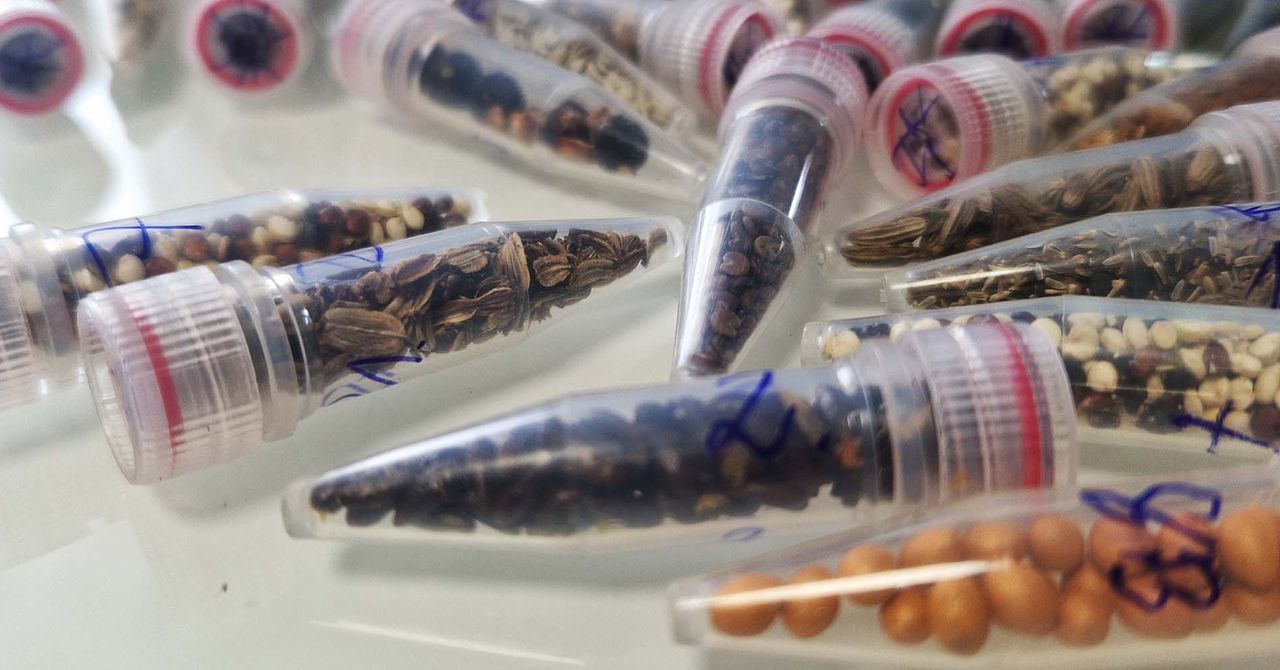
 www.wired.com

Scientists Are Sending Cannabis Seeds to Space
The versatile cannabis plant could, some scientists think, one day be useful for lunar and Martian colonists. For now, researchers will subject its seeds to radiation in orbit and see what happens.
Martian Grow
martiangrow.com
Using local building materials is not too big of an advantage, most of the equipment will need to be transported from the ground and integrating pressure hatches, antennas, cables, cooling circuits, life maintenance system circuits, waste disposal pipes, surface insulation to prevent heat loss and the interaction of moisture from the breathed gases with the sulphur in the walls. Installing all that equipment requires many hours of specialized labor and specialized tools that would not be necessary if the already built habitat is transported from the ground in removable sections.Article on Martian concrete:
Materials Scientists Make Martian Concrete
If we’re going to colonize Mars, we’ll need buildings to live and work in. So researchers have made cheap, strong concrete out of “Martian” soil.
A Novel Material for In Situ Construction on Mars: Experiments and Numerical Simulations
A significant step in space exploration during the 21st century will be human settlement on Mars. Instead of transporting all the construction materials from Earth to the red planet with incredibly high cost, using Martian soil to construct a site on Mars is a superior choice. Knowing that Mars...
"The key material in a Martian construction boom will be sulphur, says the Northwestern team. The basic idea is to heat sulphur to about 240 °C so that it becomes liquid, mix it with Martian soil, which acts as an aggregate, and then let it cool. The sulphur solidifies, binding the aggregate and creating concrete. Voila—Martian concrete."
Brett Davidson
ACCESS: Top Secret
- Joined
- 26 September 2006
- Messages
- 4,047
- Reaction score
- 11,755

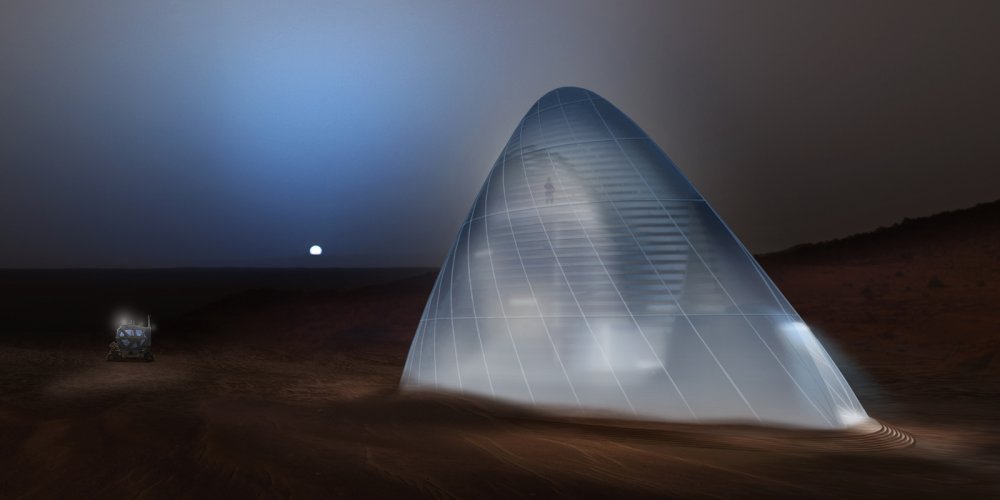
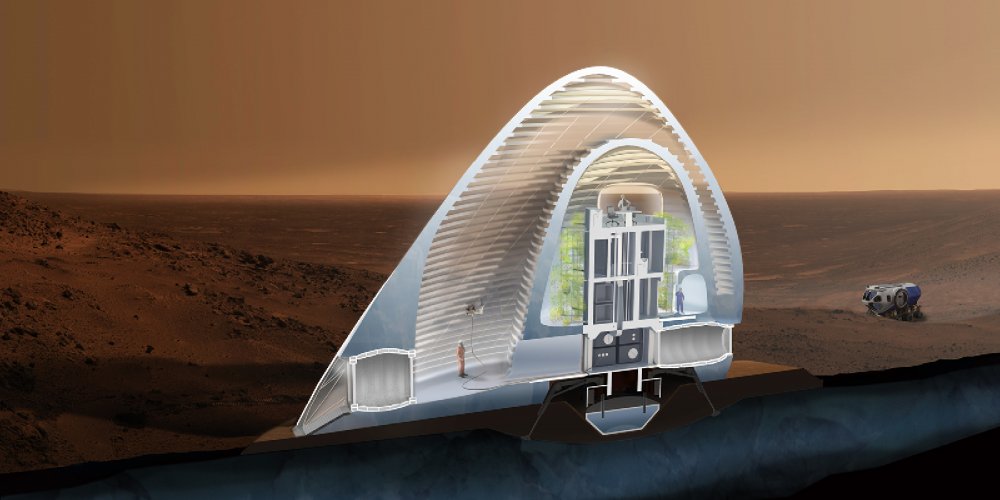
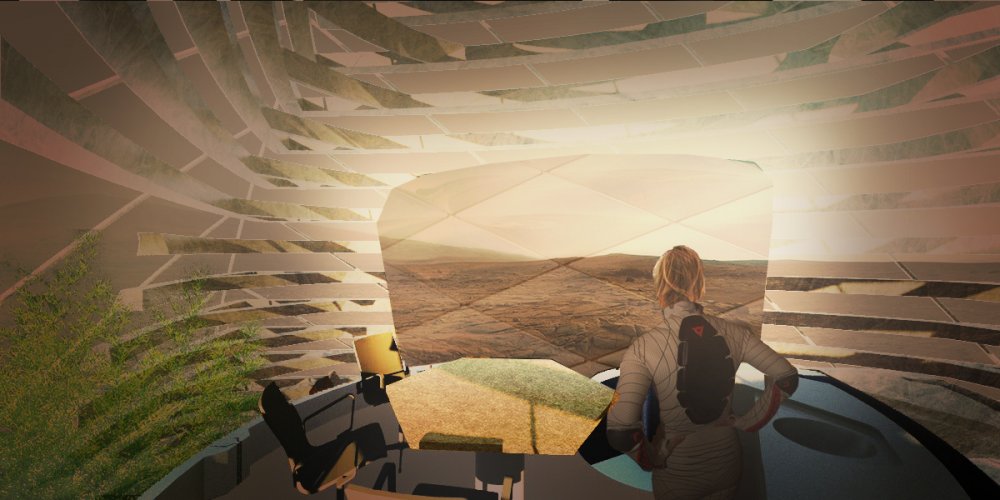
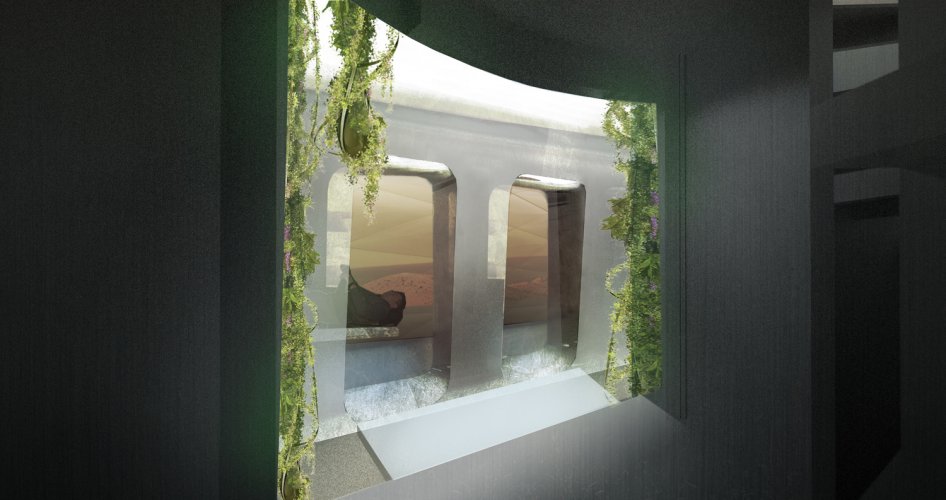
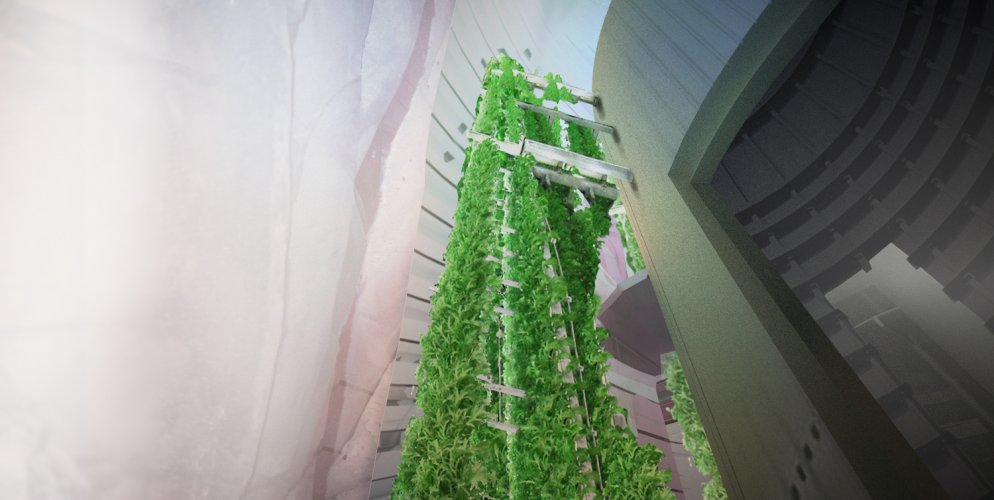
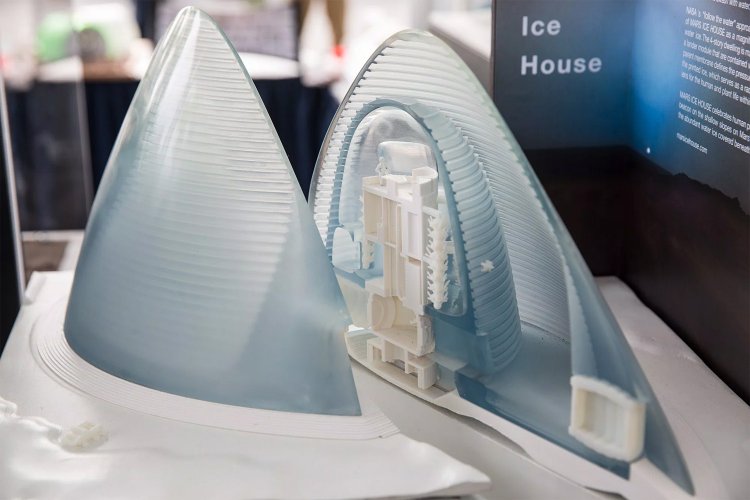
Igloos on Mars? How Future Astronauts Could Use Ice to Survive
Humans traveling to Mars will need protective habitats to live on the harsh surface. Ice could help

Ice as a Material for Extraterrestrial Habitat Construction
Human solar system exploration is a major goal for space agencies across the wo...
agu.confex.com
Here we investigate the potential for ice to sustain habitable conditions. Ice is relatively easy to acquire and process, and it is abundant on planetary bodies more distant than Earth, such as Mars, Ceres, and Callisto. We present radiative and thermal calculations demonstrating that clear ice layers several meters thick can elevate temperatures by tens of degrees K while blocking both UV and harmful cosmic rays, thereby permitting human surface habitation on Mars and other worlds.
Here're studies from a few years back exploring just that idea.
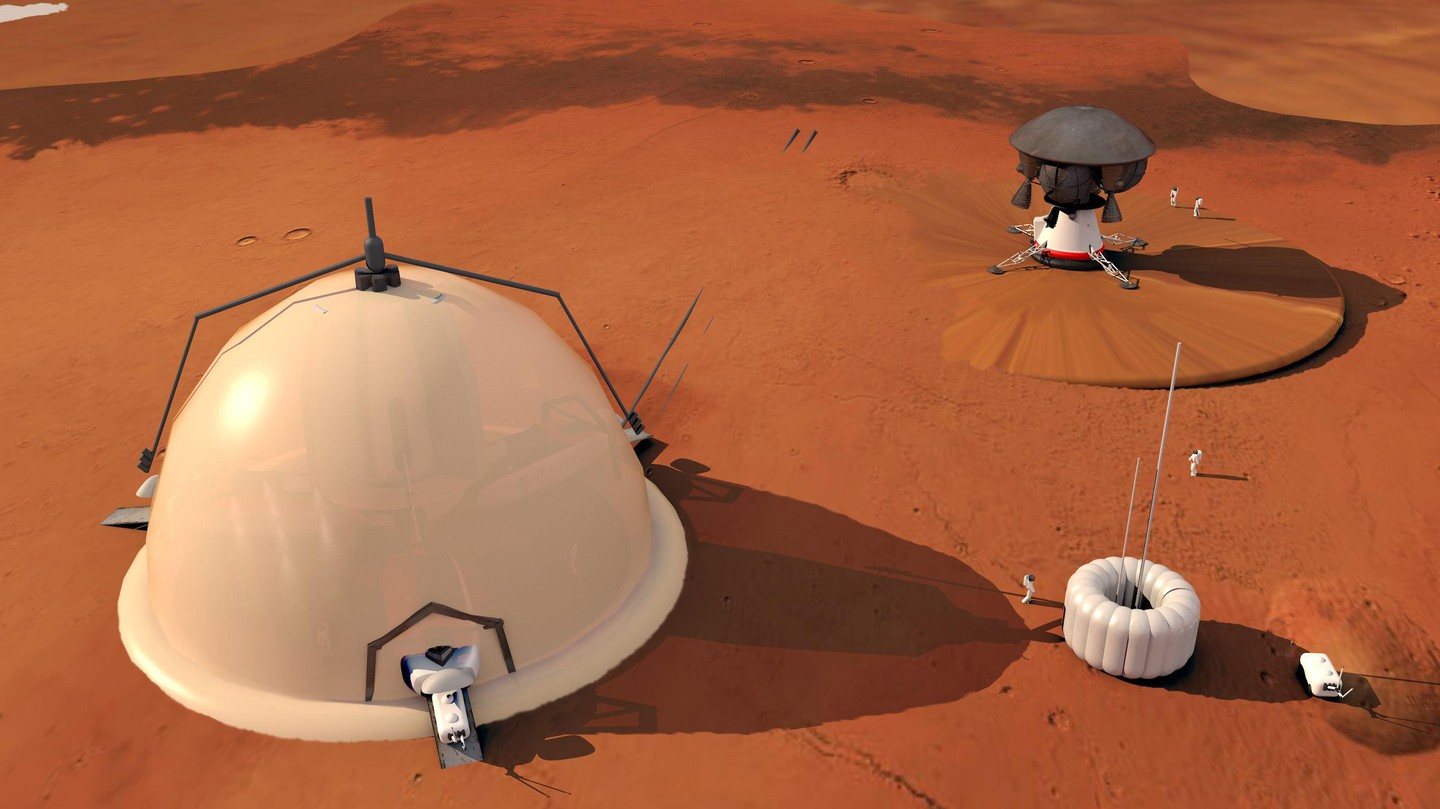
Scientists sketch out the foundations of a colony on Mars
EPFL scientists have mapped out the steps required to build a self-sustaining research base on Mars that would be habitable for the long term. Their work can help researchers set priorities for space programs exploring Mars as well as the solar system as a whole.
 actu.epfl.ch
This is highly detailed and quite elegant, though I suspect that it will turn pink quite quickly. It's more than ten years old now.

3D-printed Ice House by Clouds AO and SEArch wins NASA Mars Habitat contest
US space agency NASA has chosen a winner in its contest to design proposals for 3D-printed housing on Mars
 www.dezeen.com
NASA crowns the 3D-printed space igloo as the most livable habitat for Mars
The 3d-printed ICE HOUSE won NASA's 3D-Printed Habitat Challenge for Mars.
This is the design team's site:
Building on Mars — MARS ICE HOUSE
 www.marsicehouse.com
Attachments
Last edited:


