- Joined
- 26 May 2006
- Messages
- 38,285
- Reaction score
- 20,423
Attachments
Last edited by a moderator:



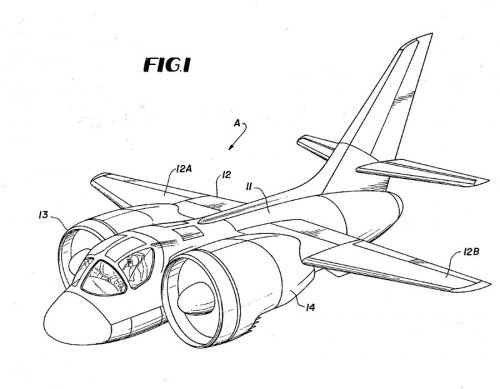
overscan said:http://www.google.com/patents?id=UtkxAAAAEBAJ
Nice drawing, don't *think* I've seen this design except as a tiny thumbnail before.

PaulMM said:http://www.google.com/patents?id=UtkxAAAAEBAJ
Nice drawing, don't *think* I've seen this design except as a tiny thumbnail before.
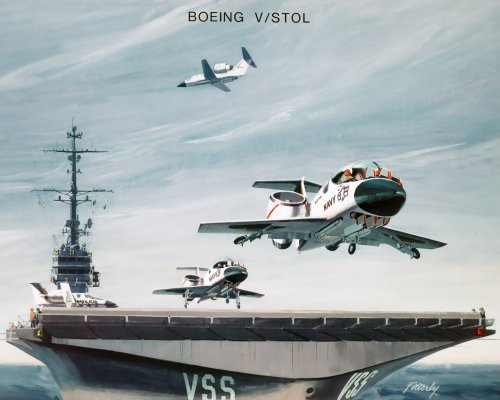
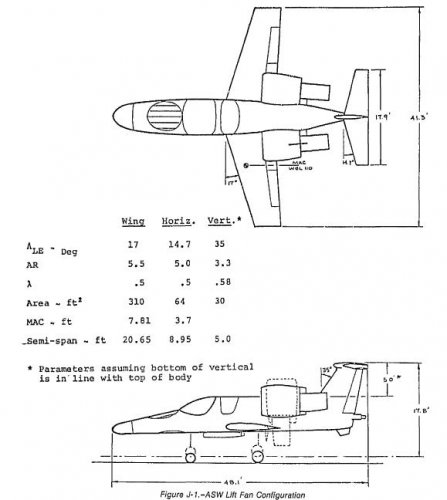
PaulMM said:This seems to be the same design ("Boeing VSTOL" from US VTOL Projects topic)
VTOLicious said:Some Propulsion and Control Concepts for a Navy Type A V/STOL Airplane (VOL. 16, NO. 11, NOVEMBER 1979 ARTICLE NO. 78-1505R)
Rather short, but very interesting AIAA-article with some Type A design studies never seen before!
[Removed link to illegal copy of AIAA journal - Admin]
Please visit www.aiaa.org to purchase the article.
Pioneer said:Yes it is a great drawing and an interesting design. Although it has the 'Filing Date' of the 24 May, 1979 on it! Isn't this past the USN's Type A program?
Regards
Pioneer
Nice find!!!
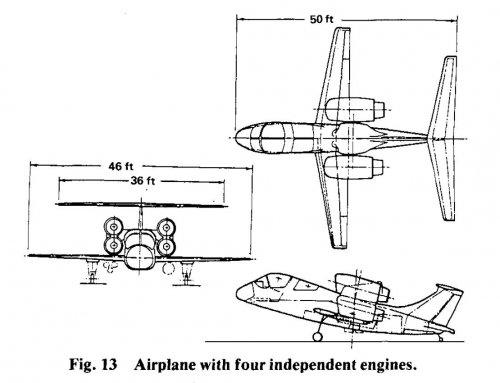
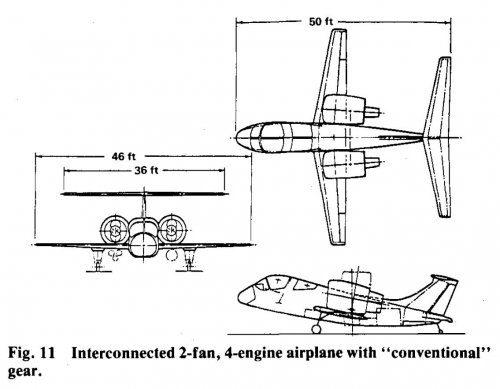
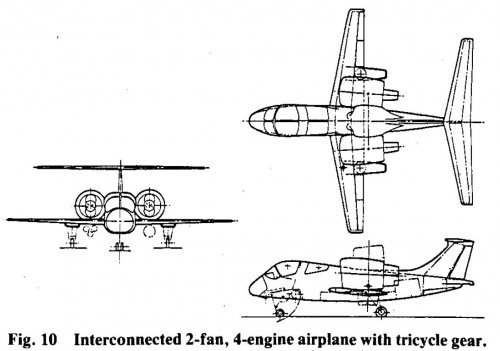
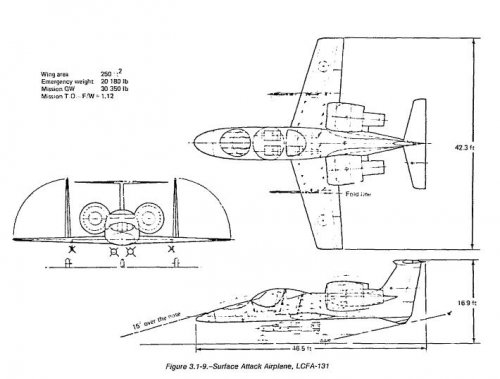
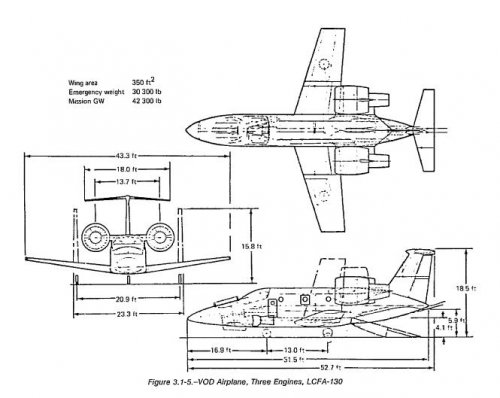
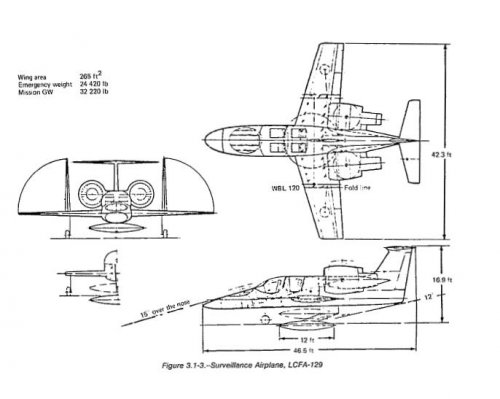
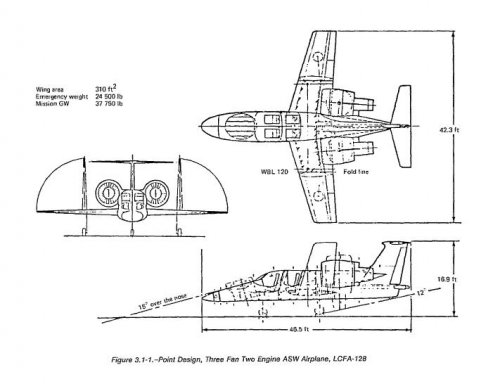
So are the three 3-view drawings (Fig 10, 11 & 13) Boeing designs??
Regards
Pioneer
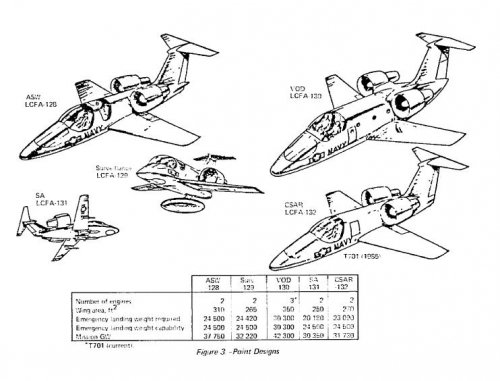
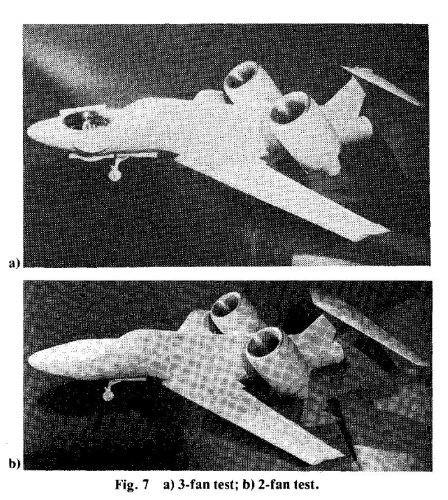
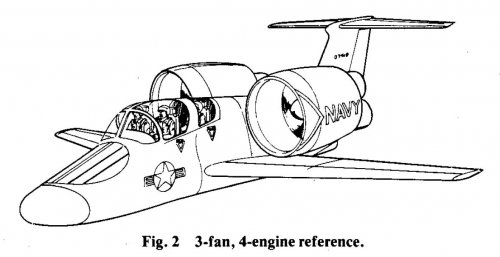
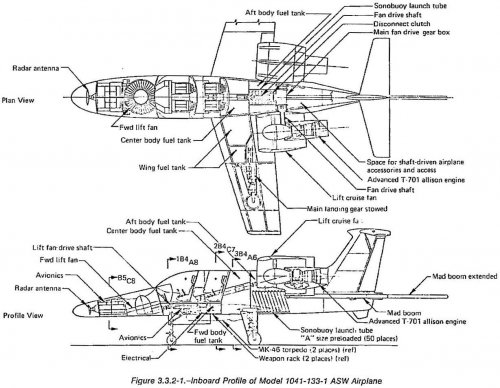
...In 1974, Navy interest in V/STOL caused the studies to be redirected toward what is now the type A V/STOL. At Boeing, the first of these studies resulted in a three-fan, two engine design with an optional third engine for transport missions. The power to land vertically after failure of one engine was achieved by a contingency rating. Subsequently, the Navy asked that design without a contingency rating be considered. This led to a three-fan, four-engine airplane...
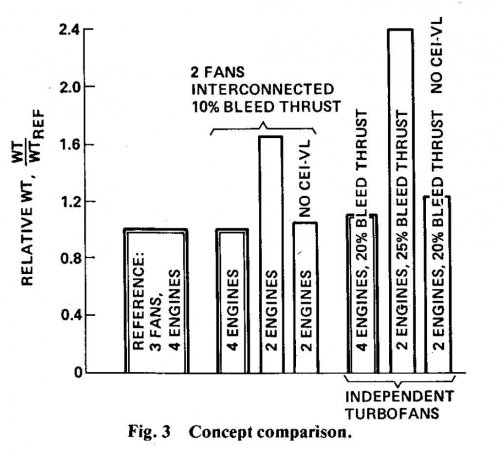
...Recently, a review was undertaken to see if it was possible to design an airplane that is simpler than one with the threefan, four-engine, interconnected V/STOL system. The objectives were all to be accomplished on one airplane; in practice they were taken in stages. They are: 1) eliminate or minimize the interconnect; 2) reduce the number of fans to 2; and 3) reduce the number of engines to 2...
...In the search for simplicity, a variety of airplanes were designed. One group had two fans driven by two or four engines with bleed for pitch reaction control. Another group used individual turbofans; two- and four-engine airplanes were considered...
PaulMM said:
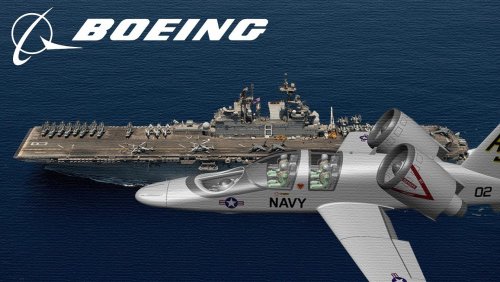
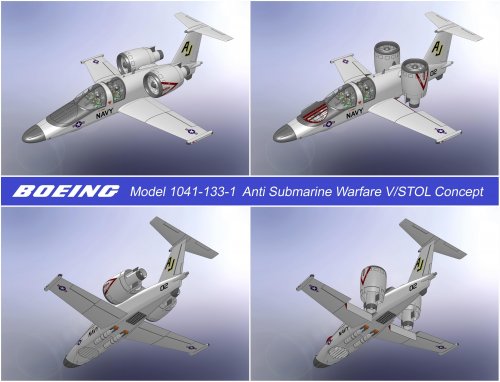
Thx! ...still work in progress. Modelling adjustable lift fan louvers is tricky. Another concern is the main landing gear. The gear folds into the outer part of the wing, which is foldable by itself! Maybe i will cheat here and make the landing gear retract into the inner part of the wing.Nice one, VTOLicious!... ditto that, great work VTOLicious!
hesham said:Great work my dears,
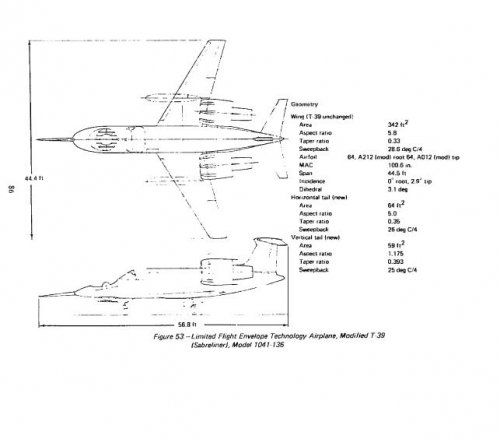
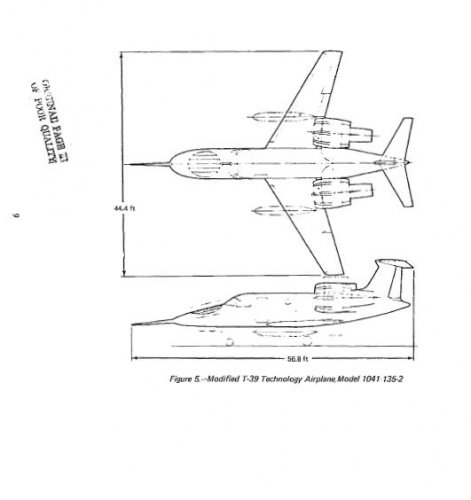
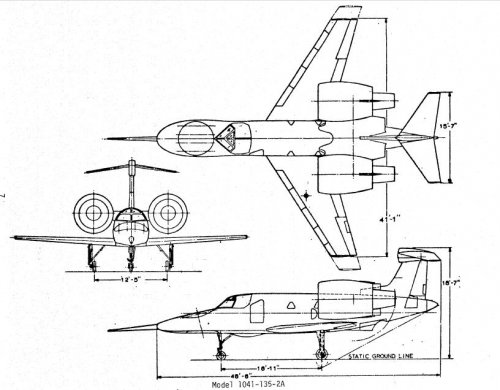
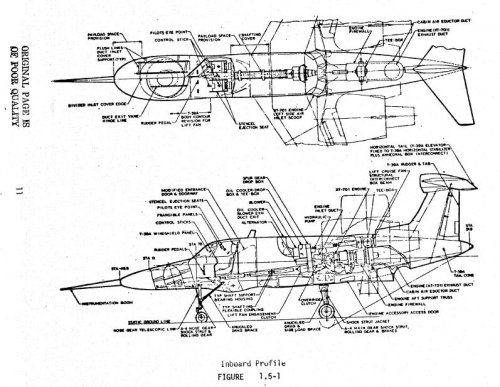
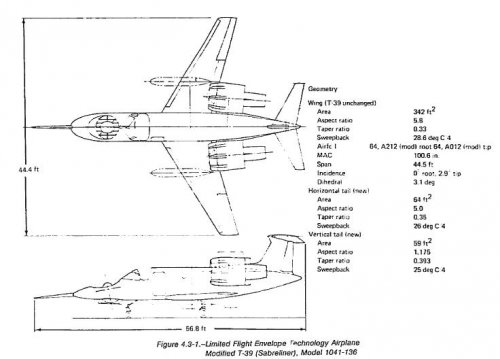
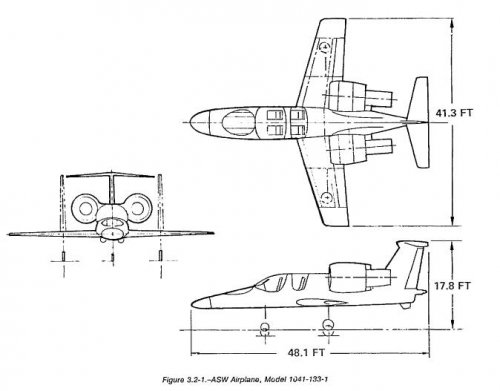
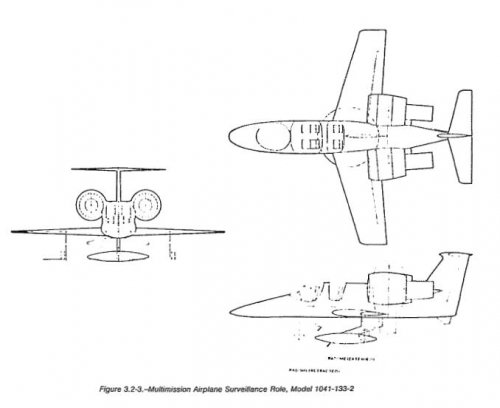
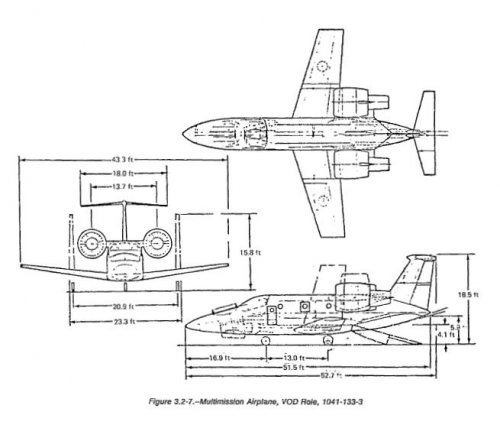
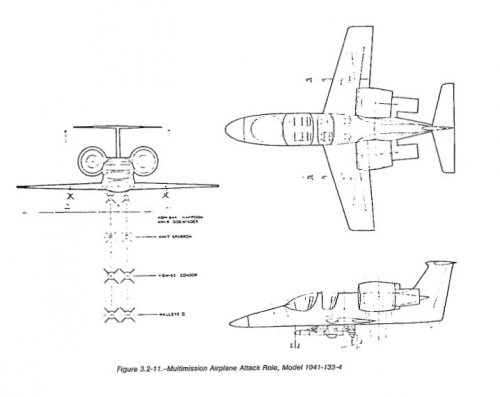
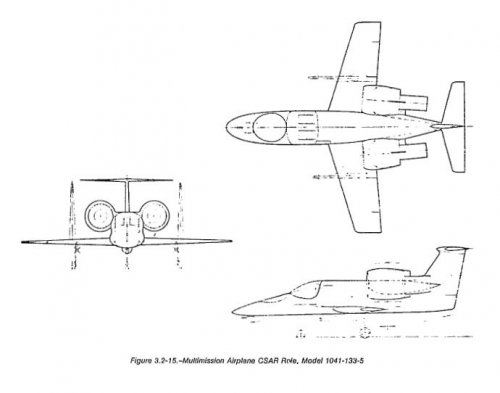
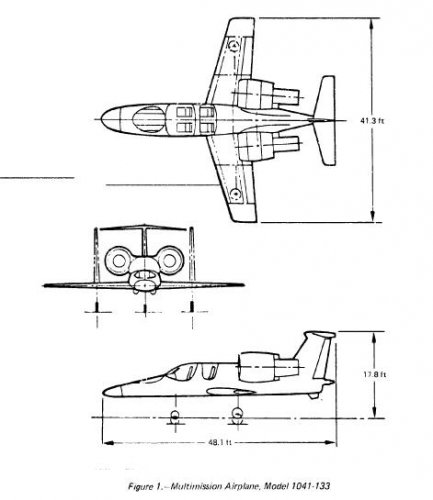
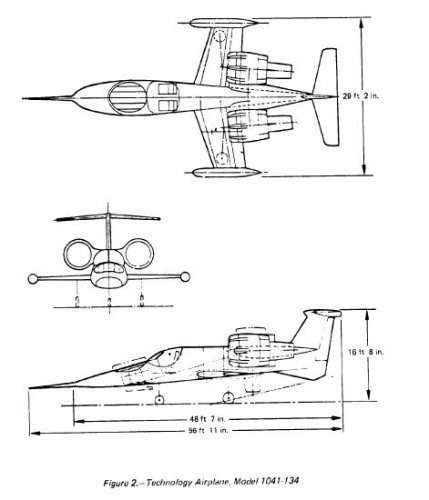
and after 1041-133 & 1041-134,here is the Boeing Model 1041-135;
http://ntrs.nasa.gov/archive/nasa/casi.ntrs.nasa.gov/19770010092_1977010092.pdf
VTOLicious said:I´ve removed the pic from my previous post, but here is another one of the enhanced 3D-model with moveable lift fan-louvers, flaps and engine nacelles - Enjoy!
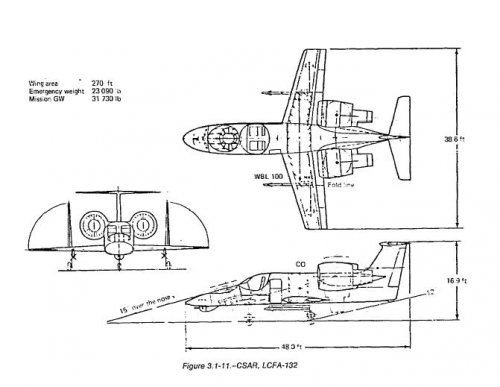
PaulMM (Overscan) said:Design definition study of a lift/cruise fan technology V/STOL airplane: Addendum
http://ntrs.nasa.gov/archive/nasa/casi.ntrs.nasa.gov/19760011014_1976011014.pdf