- Joined
- 18 October 2006
- Messages
- 4,782
- Reaction score
- 6,847
hesham said:Hi,
here is three McDonnell helicopter projects,the Model 78,86 and 113.
http://www.airandspacemuseum.org/MacsHelicopters.htm

113 appears to be a US gyrodyne concept. (?)

hesham said:Hi,
here is three McDonnell helicopter projects,the Model 78,86 and 113.
http://www.airandspacemuseum.org/MacsHelicopters.htm

The McDonnell Model 99 Convertiplane seems to be a configuration between McDonnell Model 78 and Model 113.However, after the Korean War had ended, budget cuts and concern over anticipated developmental problems led to the cancellation of the contract before completion of a single XHRH-1. All work on the project ended in April 1954.
Sources:MODEL 113
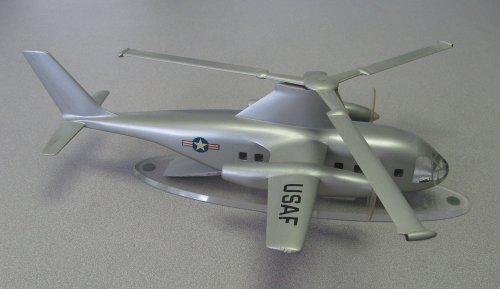
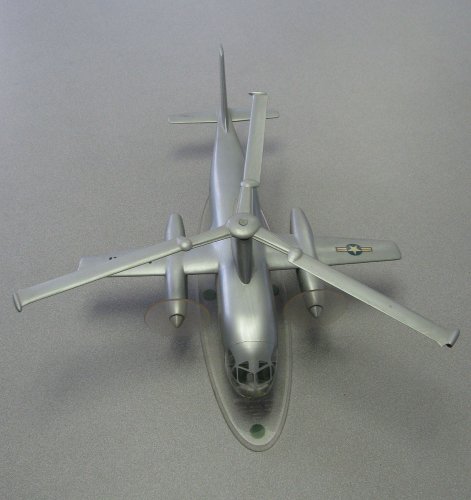
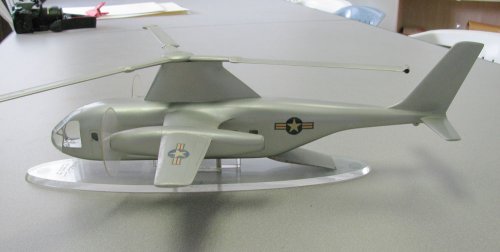
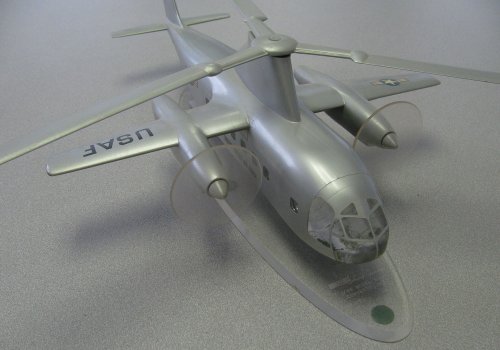
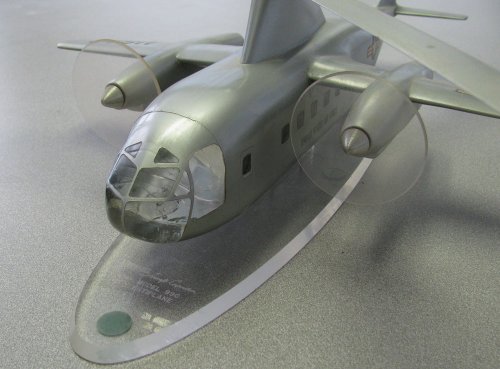
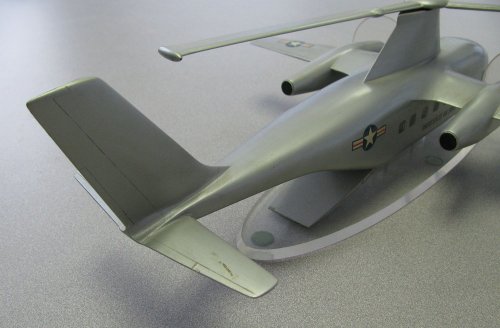
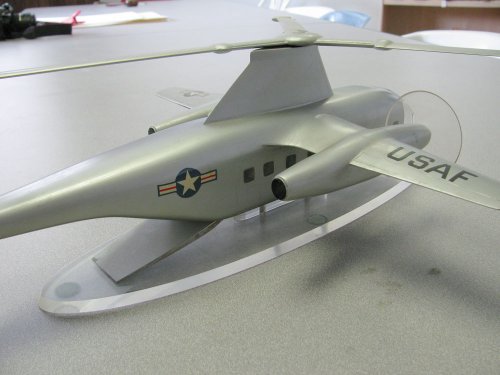
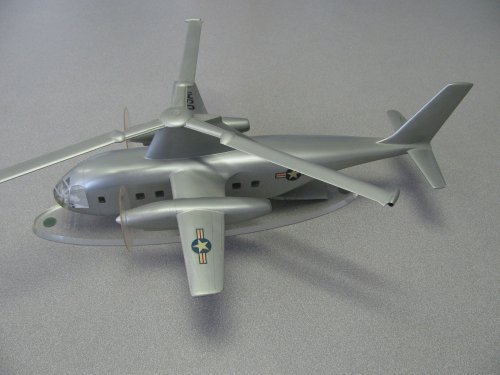
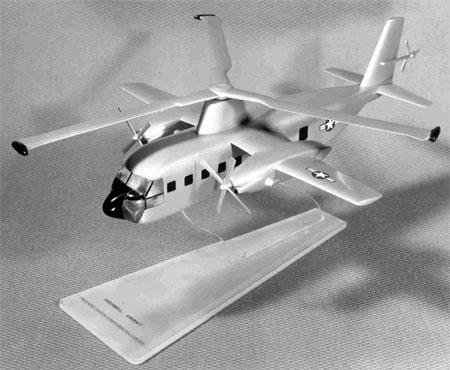
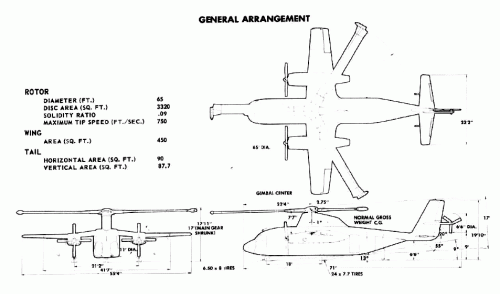
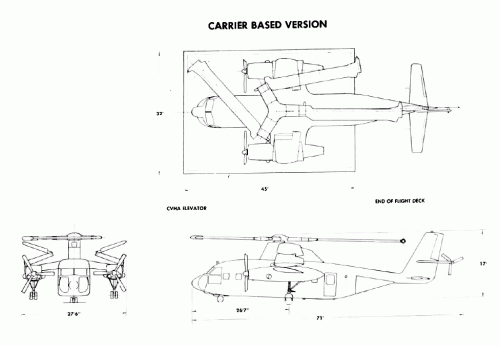
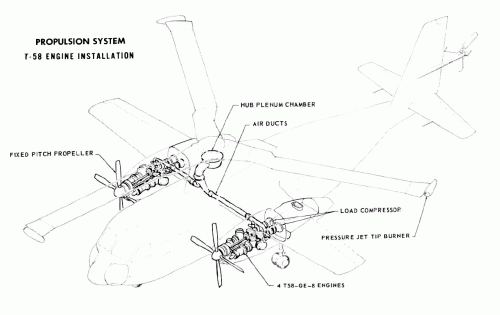
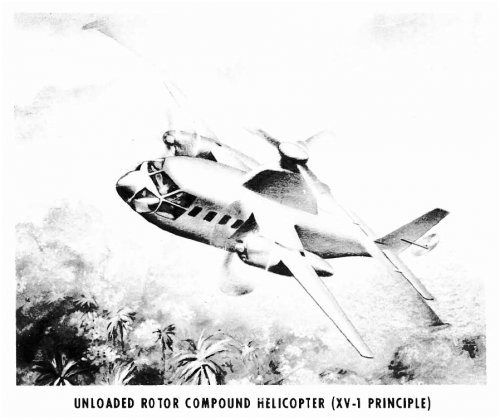
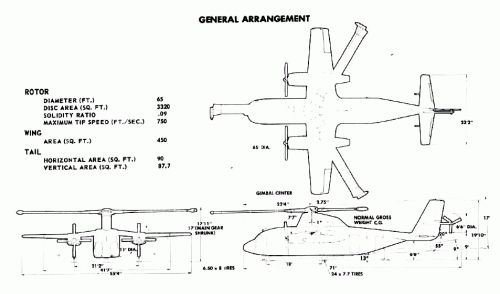
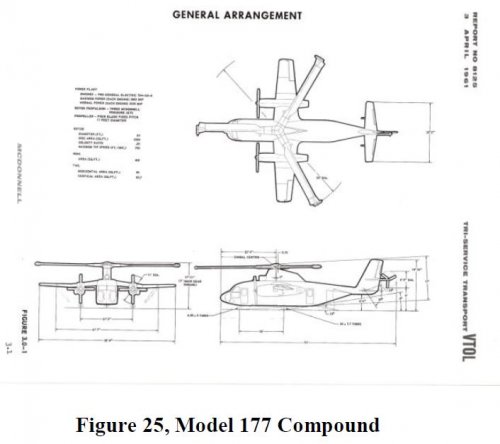
During the mid-1950s, McDonnell studied a variety of configurations based on the “Unloaded Rotor Principle”, all quite similar in overall concept to the XHRH-1 (Model 78) of 1951. For example, the Model 113 (which did not win any development contracts) was offered as a light or medium cargo-and-troop transport and as a long-range rescue vehicle. As shown in Fig. 17, it would have had the McDonnell pressure-jet driven rotor, but versions with a shaft-driven rotor were also considered. The version shown here would have had four GE T58 turboshaft engines, two in each nacelle, alternately driving the compressors for rotor-drive air or turning the fixed-pitch propellers for forward flight.


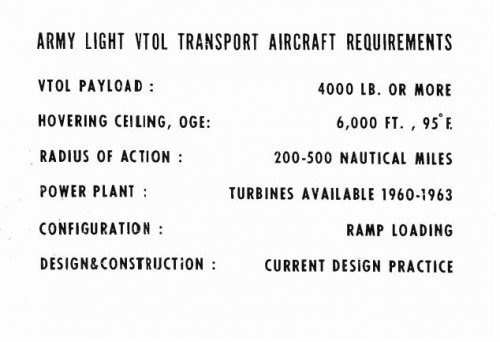
The results of extended flight testing of the McDonnell XV-1 research aircraft by company and by Air Force pilots during 1955-57 prompted the company to start the preliminary design phase of a VTOL transport designated Model 113 which incorporates all the features and principles of the XV-1 research aircraft. This aircraft meets the TRECOM criterion for a light VTOL Army transport with a payload of approximately but not less than 2 tons at 6000 feet 95°F and with a radius of action of more than 200 nautical miles. A large number of design variations of this VTOL transport have been studied since 1956. Extensive wind tunnel tests with a scale model of one configuration, including the rotor, have been conducted.
The light unloaded rotor transport configuration with four T58-GE-8 free turbine engines is designated Model 113P. Alternate versions of the Model 113 have three T55-L-7 or two T64-GE-2 turbine engines. The Model 113P version is a 30,000-pound VTOL transport designed for the Army criterion of hovering out of ground effect at 6000 feet 95°F (11 percent power augmentation) and carrying, under these stringent conditions, a payload of 3 tons and fuel sufficient for a radius of action of 100 nautical miles. With a payload of only 2 tons, the radius of action is extended to 230 nautical miles. The cruising speed is approximately 200 knots.
The design of Model 113P is based not only on the flight experience with the XV-1 research aircraft but also on the experience with the Navy 75-foot, 50,000-pound thrust jet driven helicopter rotor which accumulated over 150 hours of whirlstand operation. During the extensive studies of the problems connected with the development of a 2- to 3-"ton, 200-knot VTOL aircraft, optimum parameters of such a craft were established considering not only performance criteria but also dynamic, structural, weights, stability, control, and flight conversion criteria.
(...)
In vertical and low speed flight, the Model 113 is basically a helicopter; it uses accepted helicopter principles of lift generation and of control, thereby retaining the slow speed performance and handling characteristics of the pure helicopter. Features such as collective and cyclic pitch control, high rotor damping of aircraft angular velocities, autorotation capability, and ground cushion effects characterize this VTOL aircraft type. Added to these are the desirable features of the conventional fixed wing aircraft, control surface areas and empennage that increase the levels of stability and control response.
(...)
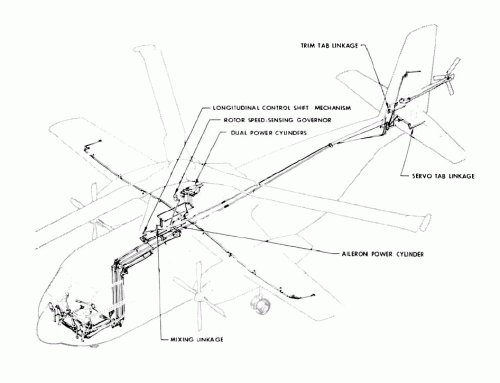
Flying qualities in airplane flight, cruise conditions, are established primarily by the airframe components and secondarily by the action of the rotor as controlled by the rotor constant speed governor. The rotor input in airplane flight is relatively small and it is a stable contribution resulting in aircraft response to control input similar to that of a fixed wing aircraft.
(...)
The compound helicopter may be used as a crane for carrying bulky cargoes externally The method involves suspending the cargo from a single cable which is attached just below the aircraft center of gravity in the manner successfully demonstrated by the McDonnell Model 120 helicopter. External cargo may be carried in the helicopter flight regime at any airspeed up to that limited by power with no deleterious effects on stability or control; autogyro and airplane flight are not practical for the carrying of external payloads because of power limitations at the higher airspeeds of these regimes.
hesham said:Hi,
here is a report from DTIC about the Model-113 and Model-113P,the
Model-113 was powered by three T55-L-7 or two T64-GE-2 engines
and the Model-113P was powered by four T58-GE-8 engines.
http://www.dtic.mil/dtic/tr/fulltext/u2/232716.pdf
[images replaced by higher resolution ones below]