What actually made "8 gun configuration" of B-25 so deadly to Japanese destroyer?

Ronny

ACCESS: Top Secret
Joined
19 July 2019
Messages
1,581
Reaction score
1,864
I watched this video today
So apparently, US and Australia modified some B-25 and put eight .50-caliber machine guns into its nose, apparently making it a night mare for Japanese destroyer and frigate. Not only that they could harass these ship, they were actually able to even sink so many of them.
This all very confusing to me because:
1- We are not talking about 75 mm cannon or even 25 mm cannon, they literally just put .50-caliber machine guns on B-25 nose. That is the same kind of machine gun on all USA fighter at that time from P-51, P-47, F6F, F4U..etc, even the small P-51, F4U can carry six .50-caliber machine guns while the larger P-47 can carry eight .50-caliber machine guns, the P-38 can even carry five 20 mm cannon + four .50-caliber machine guns . So what actually make B-25 strafing more scary than fighter strafing run?, the quantity of gun doesn't seem to be extremely impressive. I would imagine that they can gather a lot more fighter to attack at once than they can gather B-25 as well

2- In WW II, ship were attacking each other with big caliber cannon, wouldn't they all be heavily armored and would be quite invulnerable to small caliber machine gun?. why would sailor be terrified of bomber .50-caliber machine guns?

3- These ship are equipped with 20 mm anti air cannon, wouldn't they easily out range the bomber .50-caliber machine guns?, especially consider that there is no way a bomber can be armored as well as a ship , wouldn't these bomber get shredded into piece before they get in range?
Screenshot 2025-09-27 021611.png
Screenshot 2025-09-27 022133.png
Screenshot 2025-09-27 022157.png
 
I am suspect the reputation exceeds the actual effect of such aircraft. But it is also important to remember destroyers were practically unarmored and AA crews had no cover whatsoever.

ETA: ah, the post just above mine has a video that looks like it addresses this. The machine guns were a defense suppression effort, not the weapons that sank the ship. 50 cal is more than enough for people with a higher rate of fire and accuracy against what is almost a stationary target for direct fire. And against distributed AA emplacements all along the ship, accuracy matters far less than volume.
 
Last edited:
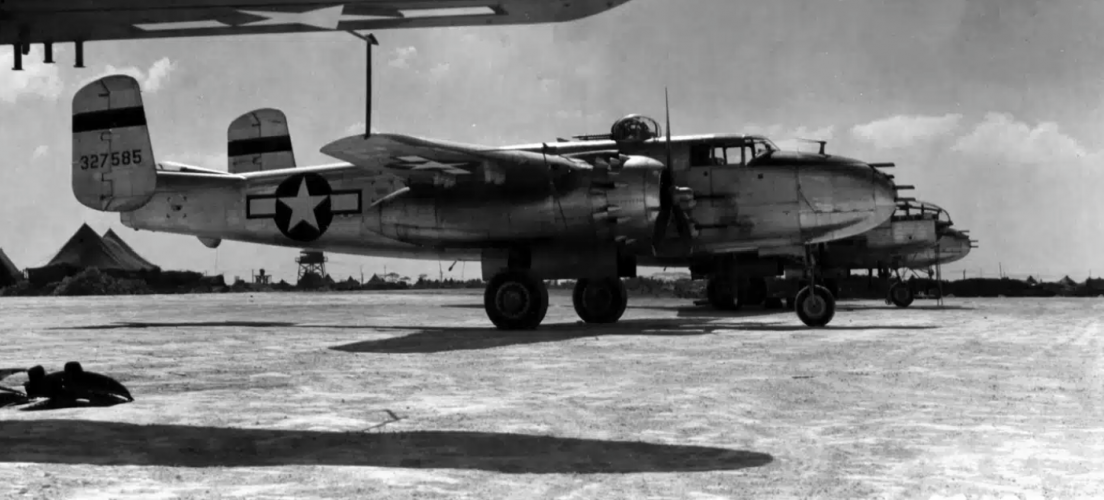
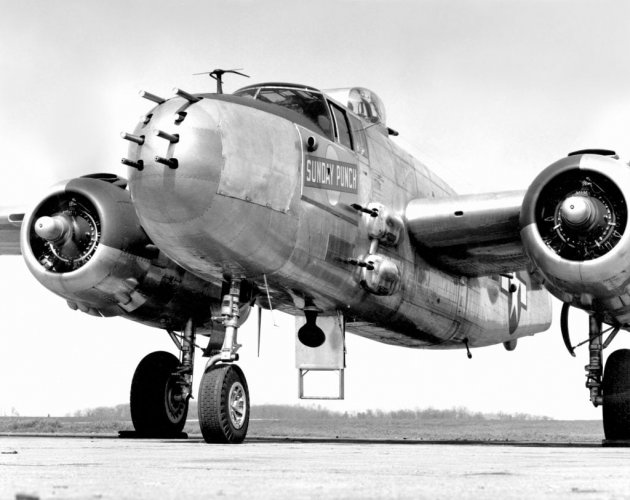
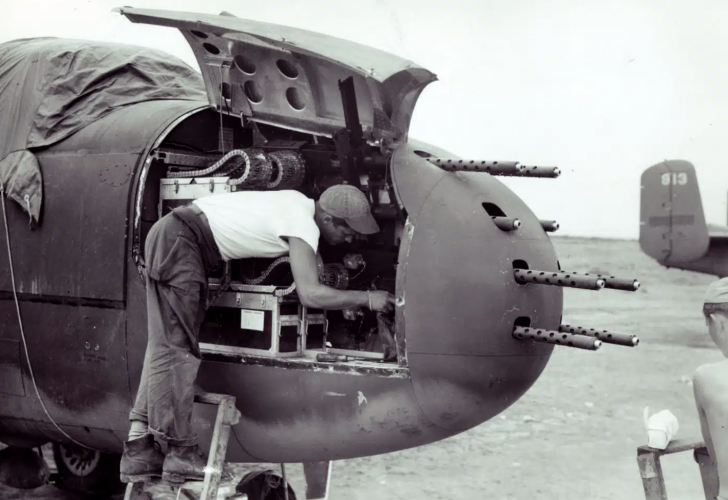
Many of the B-25s with the eight .5 in gun nose also had four .5 in on the fuselage sides, below the cockpit. Add to that the two .5 in guns in the dorsal turret, slewed forward, makes for a total 14 guns pointing forward.
1000016041.jpg
 
Last edited:
I watched this video today
So apparently, US and Australia modified some B-25 and put eight .50-caliber machine guns into its nose, apparently making it a night mare for Japanese destroyer and frigate. Not only that they could harass these ship, they were actually able to even sink so many of them.
This all very confusing to me because:
1- We are not talking about 75 mm cannon or even 25 mm cannon, they literally just put .50-caliber machine guns on B-25 nose. That is the same kind of machine gun on all USA fighter at that time from P-51, P-47, F6F, F4U..etc, even the small P-51, F4U can carry six .50-caliber machine guns while the larger P-47 can carry eight .50-caliber machine guns, the P-38 can even carry five 20 mm cannon + four .50-caliber machine guns . So what actually make B-25 strafing more scary than fighter strafing run?, the quantity of gun doesn't seem to be extremely impressive. I would imagine that they can gather a lot more fighter to attack at once than they can gather B-25 as well

2- In WW II, ship were attacking each other with big caliber cannon, wouldn't they all be heavily armored and would be quite invulnerable to small caliber machine gun?. why would sailor be terrified of bomber .50-caliber machine guns?

3- These ship are equipped with 20 mm anti air cannon, wouldn't they easily out range the bomber .50-caliber machine guns?, especially consider that there is no way a bomber can be armored as well as a ship , wouldn't these bomber get shredded into piece before they get in range?
o
1. It was more than 8 guns
2. Not a destroyer or transport ship. 50 cal could penetrate much of the armor of destroyers.
3. The guns would tear up the AA crews and bridge crew. Japanese were looking for high altitude planes and not ones at low level

Also the bombers were doing low level skip bombing at the same time of strafing.
Also, the Japanese response was typically turning towards the planes because they thought they were torpedo bombers, which usually make a run at the broad side. But turning towards the planes made them more vurnable to strafing runs.
 
I watched this video today
So apparently, US and Australia modified some B-25 and put eight .50-caliber machine guns into its nose, apparently making it a night mare for Japanese destroyer and frigate. Not only that they could harass these ship, they were actually able to even sink so many of them.
This all very confusing to me because:
Essentially, the eight .50-caliber machineguns in the nose worked as AA suppressors for skip bombing.

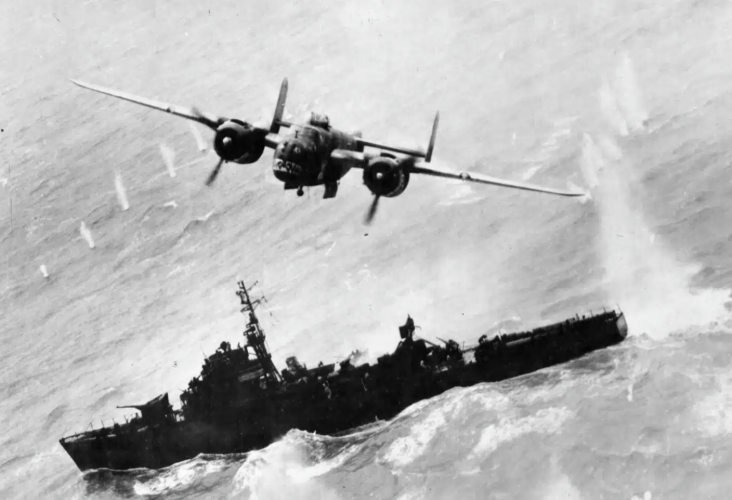
The use of eight nose machineguns was linked with low-altitude attack tactics, preferred by B-25 crews against ships. The bombers made a pass from low altitude, approaching the enemy ship from bow or stern. The machineguns aimed & started to fire as soon as ship was in range; their long bursts run along ships decks from end to end, hitting the open AA gun mounts - damaging guns, killing gun crews, shreddering superstructures, ect. Essentially they paralyzes the ship's close range defense exactly at the momen when B-25 would fly over & drop its bomb load - ensuring, that the bomber would not be met by concentrated fire.

It was bombs that actually sunk the ships; the machineguns only ensured that enemy defenses would be disrupted at most crucial moment.

The heavier weapons wasn't suitable for that purpose, due to low rater of fire. The eight machinegun battery "combed" through the enemy decks, from one end to another, ensuring that everything would be hit (or at least that everyone would dive for cover). The 3-inch gun would be able to fire at most a few shells during the same approach time, of which not many would hit - it would not have the same suppressing effect.
 
2- In WW II, ship were attacking each other with big caliber cannon, wouldn't they all be heavily armored and would be quite invulnerable to small caliber machine gun?. why would sailor be terrified of bomber .50-caliber machine guns?
A lot of the Japanese coastal traffic was wooden-built, ranging from powered barges/light landing craft such as the 14m and 17m Daihatsus, up to 1000t Sea Trucks. The Daihatsus in particular were too small for a bomb, but 14 .50s would make a real mess of one.

3- These ship are equipped with 20 mm anti air cannon, wouldn't they easily out range the bomber .50-caliber machine guns?, especially consider that there is no way a bomber can be armored as well as a ship , wouldn't these bomber get shredded into piece before they get in range?
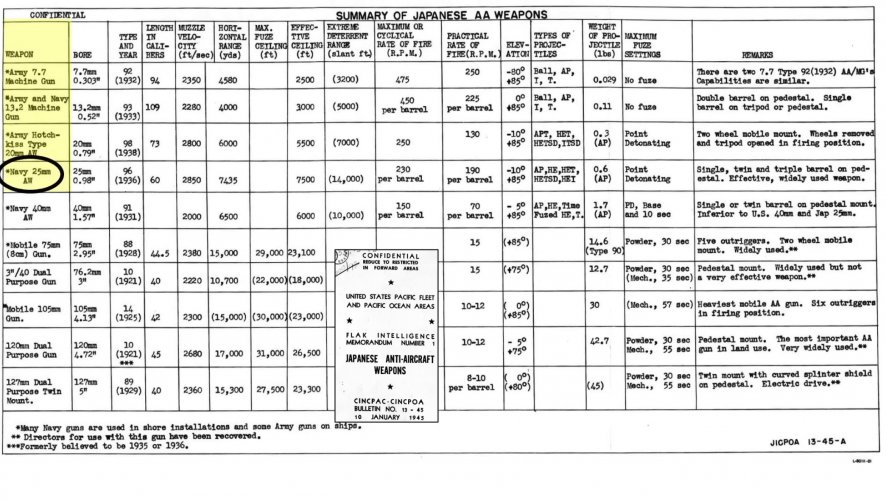
IJN light AA was poor, either 13.2mm Hotchkiss singles, twins and quads with 30 round magazines, 25mm Hotchkiss single, twins or triples, with 15 round magazines, or a limited number (500) of single 40mm Pom-Poms (identical to the British 2 Pdr Mk 2 pom-pom of 1915) with 50 round belts, and in very low numbers of mountings per ship compared to their allied equivalents. Gun shields for the crew were almost unknown, Yamato was unique in having some shielded mountings, but IIRC they were later removed.
 
I wonder if a long tether was attached to a dropped bomb yanking a tether affixed to another object to snag targets.
 
I watched this video today
So apparently, US and Australia modified some B-25 and put eight .50-caliber machine guns into its nose, apparently making it a night mare for Japanese destroyer and frigate. Not only that they could harass these ship, they were actually able to even sink so many of them.
This all very confusing to me because:
1- We are not talking about 75 mm cannon or even 25 mm cannon, they literally just put .50-caliber machine guns on B-25 nose. That is the same kind of machine gun on all USA fighter at that time from P-51, P-47, F6F, F4U..etc, even the small P-51, F4U can carry six .50-caliber machine guns while the larger P-47 can carry eight .50-caliber machine guns, the P-38 can even carry five 20 mm cannon + four .50-caliber machine guns . So what actually make B-25 strafing more scary than fighter strafing run?, the quantity of gun doesn't seem to be extremely impressive. I would imagine that they can gather a lot more fighter to attack at once than they can gather B-25 as well

2- In WW II, ship were attacking each other with big caliber cannon, wouldn't they all be heavily armored and would be quite invulnerable to small caliber machine gun?. why would sailor be terrified of bomber .50-caliber machine guns?

3- These ship are equipped with 20 mm anti air cannon, wouldn't they easily out range the bomber .50-caliber machine guns?, especially consider that there is no way a bomber can be armored as well as a ship , wouldn't these bomber get shredded into piece before they get in range?
View attachment 786237
View attachment 786238
View attachment 786239
Ronny

Howdy !

The B-25H had 10 fwd firing .50s, when the pilot locked the upper turret to fire in the direction of flight; and the plane was also outfitted w/ 4ea .50 cal gun pack 2 on each side of aircraft nose ).

Some B-25Js were outfitted w/ 16 ea fwd-fiirng .50s, w/ 2 of those being the upper turret .50s; capable of be fired fwd.

Strafing the ship followed by skip bombing attack using 500lb’ers got the job done.

On 11 Dec 1941, 4ea F-4Fs of Marine Squadron VMF211 attacked and sank the IJN
Destroyer Kisaragi. The Marines concentrated the 4 .50 cal wing guns of each aircraft on the ships’s waterline, riddeling the thin sides of the hull; letting in water. The destroyer was polished-off w/ a bomb, reportedly 2 hits made using bombs of 100lb wt.

An old “ Flying “ magazine my Dad gave me from early WWII had a one page multi-color cartoon of the 4 Wildcats attacking the Kisaragi in an ariel melee…the last frame illustrating the victorious pilots smiling broadly as they entered the debrief shack.


With regards,
357Mag
 
Ronny

Howdy !

The B-25H had 10 fwd firing .50s, when the pilot locked the upper turret to fire in the direction of flight; and the plane was also outfitted w/ 4ea .50 cal gun pack 2 on each side of aircraft nose ).

Some B-25Js were outfitted w/ 16 ea fwd-fiirng .50s, w/ 2 of those being the upper turret .50s; capable of be fired fwd.

Strafing the ship followed by skip bombing attack using 500lb’ers got the job done.

On 11 Dec 1941, 4ea F-4Fs of Marine Squadron VMF211 attacked and sank the IJN
Destroyer Kisaragi. The Marines concentrated the 4 .50 cal wing guns of each aircraft on the ships’s waterline, riddeling the thin sides of the hull; letting in water. The destroyer was polished-off w/ a bomb, reportedly 2 hits made using bombs of 100lb wt.

An old “ Flying “ magazine my Dad gave me from early WWII had a one page multi-color cartoon of the 4 Wildcats attacking the Kisaragi in an ariel melee…the last frame illustrating the victorious pilots smiling broadly as they entered the debrief shack.


With regards,
357Mag
Oops -


Forgot to also mention the B-25H had a 75mm canon, later made models having an auto loading feature for the canon.

Most of the B-25H’s went to the Marines.

My Dad flew the first spate of his total 70 combat missions in B-25Gs, which had 2ea
.50 cal machine guns in the extreme nose; above the lower Lt located 75mm canon
muzzle. He sortied out of Corsica, going after German ( and probably some Italian ) wartime shipping. They used the -Gs for “ sea sweeps “…. looking for targets of opportunity. His flight log book included notes of a mission where they attacked a submarine using the plane’s 75mm gun; but made no hits on the U boat.
His Squadron had better success doing skip bomb attacks on shipping, using 500lb’ers.

One imagines a B-25G, - H, or solid gun nosed B-25J would have diced N’ sliced
Nazi trains with aplomb ! My Dad typically flew glass-noses B-25Js, attacking Axis bridges in the Po river valley during “ Operation Strangle “. He also performed attacks on train transformer stations, and railway tunnels. Pop was awarded the
“ Distinguished Flying Cross “ for leading a low-level attack on a railway tunnel vital to the Nazis, which put it out of commision.

The B-25 was not only used for tactical and interdiction missions, but also for quasi-strategic bombing, as the many B-25 squadrons in the Europe Africa Mid East theatre contributed significantly to the Germans being kicked out of not only Rome; but also from Italy in its entirety.

The plane had a well deserved reputation.

Best regards,
357Mag
 
My Dad flew the first spate of his total 70 combat missions in B-25Gs, which had 2ea
.50 cal machine guns in the extreme nose; above the lower Lt located 75mm canon
muzzle. He sortied out of Corsica, going after German ( and probably some Italian ) wartime shipping. They used the -Gs for “ sea sweeps “…. looking for targets of opportunity. His flight log book included notes of a mission where they attacked a submarine using the plane’s 75mm gun; but made no hits on the U boat.
His Squadron had better success doing skip bomb attacks on shipping, using 500lb’ers.

One imagines a B-25G, - H, or solid gun nosed B-25J would have diced N’ sliced
Nazi trains with aplomb ! My Dad typically flew glass-noses B-25Js, attacking Axis bridges in the Po river valley during “ Operation Strangle “. He also performed attacks on train transformer stations, and railway tunnels. Pop was awarded the
“ Distinguished Flying Cross “ for leading a low-level attack on a railway tunnel vital to the Nazis, which put it out of commision.

The B-25 was not only used for tactical and interdiction missions, but also for quasi-strategic bombing, as the many B-25 squadrons in the Europe Africa Mid East theatre contributed significantly to the Germans being kicked out of not only Rome; but also from Italy in its entirety.

The plane had a well deserved reputation.

Best regards,
357Mag
I didn't know there were any -Gs in the ETO.
 
I didn't know there were any -Gs in the ETO.
Scott -

Howdy !

B-25Gs in the EAME theatre ? Oh heck yes !

My Dad ( amongst other B-25 pilots ) was assigned a brand new -G for making the trans-Atlantic hop w/ his crew.

He picked up the plane at Stout Field in Indianapolis, and made multiple stops in the US and Carribean on his way to the trans-Atlantic jumping off point @ Natal, Brazil.
The BrazilIan departure point gave them the least amount of over-water time; and they made landfall in ( I believe ) the Ivory Coast. From there… they made various stops alon their flight up and around the West then NW coast of Africa. There were in Tangiers, Morocco on Christmas Day 1943. The final leg was across the Med, to Corsica.

Corsica had multiple B-25 bases, serving a home for B-25s of the 310th Bomb Wing.
Pop was in the 428th Bomb Squadron, based @ Gisonacia, Corsica. After piloting
B-25Gs for his initial combat sorties in early 1944, Pop went on to fly the occasional
B-25C and -Ds, before the B-25Js showed up there….Summer of - 44’. Pop was assigned a B-25J, that he named and had nose art applied to. He named his plane
“ Hoosier Gal “, in-honor on the girl waiting for him back in Indiana. This of course, was
my Mother.

After at age 9 that my Dad was a WWII B-25 bomber pilot, I became fascinated w/ airplanes ( esp WWII vintage ), and in-particular… the B-25. I read anything I could get my hands on about the “ Mitchell “, to the point that by early adulthood… I thought I knew about as much as anybody did; about B-25s.

But… one thing I never thought to check on, was where and to which service branch the B-25H’s were assigned. For decades…. I just assumed those bases with B-25Gs were pretty much automatically upgraded to operating the -H model; over time. I only discovered in the the past few years, that the -Hs went pretty much to the Marine Corps.

* If anyone has good or better info on whether the US Army Air Corps operated B-25Hs in the EAME theatre… especially if flow from Corsica… I’d like to hear about it.
In-particular, if they operated out of any Corsican bases, especially Gisonacia; and what month(s) / year.


With regards,
357Mag
 
All -
I apologize for the many typing errors on the previous msg.

I found out @ age 9, that my Dad had served as a B-25 bomber pilot.

And, while I thought I knew a lot about B-25s… I have realized that I am not the
“ font of all knowledge “ when it comes to B-25s…. let alone other topics !!

Regards,
357Mag
 
* If anyone has good or better info on whether the US Army Air Corps operated B-25Hs in the EAME theatre… especially if flow from Corsica… I’d like to hear about it.
In-particular, if they operated out of any Corsican bases, especially Gisonacia; and what month(s) / year.
What I was told on The Miniatures Page forum (a forum dedicated to all forms of wargaming), was that all the -Hs went to the Pacific. Mix of AAF and Marine units. Pretty sure that was from Allen E. Curtis ("aecurtis" on the forum), one of the aviation heavies. Allen has passed now, years ago (I want to say 11 or 14?).
 
Ronny

Howdy !

The B-25H had 10 fwd firing .50s, when the pilot locked the upper turret to fire in the direction of flight; and the plane was also outfitted w/ 4ea .50 cal gun pack 2 on each side of aircraft nose ).

Some B-25Js were outfitted w/ 16 ea fwd-fiirng .50s, w/ 2 of those being the upper turret .50s; capable of be fired fwd.

Strafing the ship followed by skip bombing attack using 500lb’ers got the job done.

On 11 Dec 1941, 4ea F-4Fs of Marine Squadron VMF211 attacked and sank the IJN
Destroyer Kisaragi. The Marines concentrated the 4 .50 cal wing guns of each aircraft on the ships’s waterline, riddeling the thin sides of the hull; letting in water. The destroyer was polished-off w/ a bomb, reportedly 2 hits made using bombs of 100lb wt.

An old “ Flying “ magazine my Dad gave me from early WWII had a one page multi-color cartoon of the 4 Wildcats attacking the Kisaragi in an ariel melee…the last frame illustrating the victorious pilots smiling broadly as they entered the debrief shack.


With regards,
357Mag
All -

Correction to previous:


Some “solid nose“ B-25J’s had 14 fwd-firing .50 cal machine guns ( as Arjun mentioned )

Apologies for my obvious math error ! Probably should not make post responses so late in the p.m.!


With regards,
357Mag
 
Do you know if there were any in ETO/Italy?
First off, my apologies,to Ronny and everyone else.

Without intending… it appears I have danced very close to “ hyjacking Ronny’s post !!
I am very mproud of my Father’s WWII service as a B-25 Command Pilot, and embrace every opportunity to share stories of his 70 combat mission exploits.

IF I am still permitted to respond, I will say….

I have not myself ever researched whether or to what extent the “ solid nose “ B-25 gunships were ever employed on the Europe-Africa- Mid East theatre.

I shall do some looking, this p.m., and report back….if it is ok to do so; here.


With regards,
357Mag
 
Do you know if there were any in ETO/Italy?
All -

First off… for some great info on B-25 history, including info on all models currently flying or in restoration; take a look @ https//B-25history.org

- Select the “ Hangar “ button
- Select “ aircraft bios “

On the ‘net, I found B-25 info on WIKI that stated: the first 300 B-25H models came with 2 ea “packet guns “ mounted on the Rt fuselage side; only. 248 of the 1,000
-H model produced, were flown by the Navy/Marines as “ PBJ-1Hs “. It was also stated that a field installable “ kit “ was available; that basically allowed adding the fuselage side-mounted “packet “ guns to any model B-25. The Hawaiian Air Depot installed or upgraded the nose/ fuselage guns mounted on some
 
All -

Well crap…. Just lost about 1hr worth of research and typing; so sent what little that wasn’t deleted…. just above.

I’ll try to add this info now, without making any more errors !!

The Marines were given some 248 PBJ-1s to operate.
The PBJ-1H was the equivalent of a USAAC B-25H, and their PBJ-1Js…. equivalent of USAAC B-25Js.

Marine Corps Squadron VMB433 had two PBJ-1Js that incurred nose damage, which were repaired by their installing the depot-level 8 gun “solid nose “ kit.
- See : VMB433.com
- Click “our aircraft “ button, to see color drawing of one of their PBJ-1Js equipped w/ the 8 gun “ solid nose “

Marine Corps squadron VMB613 was the only one to operate the PBJ-1H ( w/ 75mm canon ) in combat.

VMB 614 briefly operated PBJ-1Js that came to them with the 8 gun solid nose.
They arrived at Henderson Field Guam late Aug 1945, after Japan had already agreed to an unconditional surrender.

I am still looking for info on B-25 8 gun “ solid nose “ / “ staffer nose “ B-25Js by any US Army Air Corps squadrons……


With regards,
357Mag
 
Do you know if there were any in ETO/Italy?
All -

A cursory internet search revealed a website stating that the US Army Air Corps utilized
B-25Js w/ the solid “8 gun straffer nose were:

- The 345th Bomb Group “ Air Apaches “

- “ Units of the 5th Air Force and 13th Air Force “

- and it said…. “ units in other theatres like the 319th Bomb Group “

* The latter 3 reference I’ll have to research, further…. as the ‘net may have simply
mentioned all USAAC B-25 units.

Regards,
357Mag
 
The firepower output of eight M2 machine guns is truly impressive, delivering approximately 256 kilograms of projectiles per minute (using M20 ammunition with 800 rounds per minute).

In comparison, the 75mm M48 high-explosive shell (widely used in M4 and M3 tanks, as well as the B-25) projectile weight of 6.75 kilograms. This means the projectile mass fired by the eight M2 machine guns in one minute is roughly equivalent to that of 37 75mm high-explosive shells (though the M20 ammunition does not contain the significant explosive charge of the M48).

Whether it's 256 kilograms of bullets or 37 rounds of 75mm shells, this would pose a substantial threat to any destroyer. Their armor is relatively thin, and a large number of personnel and equipment are exposed.
 
The firepower output of eight M2 machine guns is truly impressive, delivering approximately 256 kilograms of projectiles per minute (using M20 ammunition with 800 rounds per minute).

In comparison, the 75mm M48 high-explosive shell (widely used in M4 and M3 tanks, as well as the B-25) projectile weight of 6.75 kilograms. This means the projectile mass fired by the eight M2 machine guns in one minute is roughly equivalent to that of 37 75mm high-explosive shells (though the M20 ammunition does not contain the significant explosive charge of the M48).

Whether it's 256 kilograms of bullets or 37 rounds of 75mm shells, this would pose a substantial threat to any destroyer. Their armor is relatively thin, and a large number of personnel and equipment are exposed.
Two tribes -

Howdy !

Your math talked about 8ea .50 calibre machine guns, and 75mm canon energy.
On the B-25H, you could also include the contribution made by the fwd firing
upper turret .50s.

On the 8 gun “ solid nose “ B-25Js… the 4ea fuselage side guns + the 8 nose guns + the fwd firing upper turret guns gave the plane 14 .50 cal machine guns that could be brought to bear on the target ahead.


With regards,
357Mag
 
A lot of the Japanese coastal traffic was wooden-built, ranging from powered barges/light landing craft such as the 14m and 17m Daihatsus, up to 1000t Sea Trucks. The Daihatsus in particular were too small for a bomb, but 14 .50s would make a real mess of one.
But Daihatsus is just a landing craft. In Battle of the Bismar Sea, these B-25 literally attacked 8 Japanese destroyers: Yukikaze, Shirayuki, Arashio, Asashio, Asagumo, Shikinami and Uranami .
So I just checked out Bismar Sea battle and these destroyer seem to have decent amount of anti air cannon, for example:
Asashio class has 28 type 96 (25 mm) cannon + 14 type 93 (13.2 mm) cannon.
Given the massive number of cannon with big caliber, wouldn’t they be capable of hitting these bomber long before these bomber can get close enough for strafing run
 
Last edited:
But Daihatsus is just a landing craft. In Battle of the Bismar Sea, these B-25 literally attacked 8 Japanese destroyers: Yukikaze, Shirayuki, Arashio, Asashio, Asagumo, Shikinami and Uranami .
So I just checked out Bismar Sea battle and these destroyer seem to have decent amount of anti air cannon, for example:
Asashio class has 28 type 96 (25 mm) cannon + 14 type 93 (13.2 mm) cannon.
Given the massive number of cannon with big caliber, wouldn’t they be capable of hitting these bomber long before these bomber can get close enough for strafing run
Again, the Japanese were not expecting low level B-25s but higher level torpedo bombers. The tactic when encountering torpedo bombers was to turn towards the attack to present a lower profile for the torpedos. This presented more of the ship to be exposed to strafing and also masked some of the gun emplacements.

Also, the Japanese AA directors weren't very good.
 
Last edited:
Many of the B-25s with the eight .5 in gun nose also had four .5 in on the fuselage sides, below the cockpit. Add to that the two .5 in guns in the dorsal turret, slewed forward, makes for a total 14 guns pointing forward.
View attachment 786250
That roughly equivalent to the number of machine gun on 2 F6F or F4U, and they can also carry bomb (and even rocket). So what make machine gun on these bomber so effective at destroying/surpressing destroyer conpared to carrier fighter like F6F or F4U?. I mean logically, shouldn’t they be capable of getting so many more fighter on the air compared to bomber?
 
The first 75mm equipped B-25G for the 5th AF units arrived in Brisbane in July 1943.

Battle of the Bismarck Sea was 2-4 March 1943. It was the 3rd & 38th BGs that flew the B-25C/D during the Battle. The former was the first unit to fly strafer B-25C/D conversions, receiving the first 12 by the end of Feb 1943. These aircraft had twin 0.5" gun packs each side of the fuselage plus another 4x0.5" in the bomb aimer's nose glazing. More conversions followed being distributed through the 3rd and other B-25 equipped units in the theatre.
 
Last edited:
That roughly equivalent to the number of machine gun on 2 F6F or F4U,
12 guns on two planes is not the same as 14 on one plane. 14 guns on one pass is going to do more damage.
Also the B-25 had more ammo and range/enduance
 
12 guns on two planes is not the same as 14 on one plane. 14 guns on one pass is going to do more damage.
Also the B-25 had more ammo and range/enduance
Possibly but then 14 gun on one plane, especially a sluggish bomber seem to be a lot easier for the destroyer to neutralize with its own AA gun though. Isn’t effective range of 25 mm round about 7 times longer than the .50 cal?. I also don’t think a B-25 can dodge/wave like a F4U can
IMG_1205.jpeg
IMG_1206.jpeg
 
So I just checked out Bismar Sea battle and these destroyer seem to have decent amount of anti air cannon, for example:

Asashio class has 28 type 96 (25 mm) cannon + 14 type 93 (13.2 mm) cannon.
The Battle of the Bismarck Sea was early March 1943; the date is important because armament fit was a moving target.

Wiki states: "In terms of anti-aircraft capability, initially two twin-mount Type 96 AA guns were placed forward of the second smokestack. The Asashio-class was the first destroyers to receive this type of gun.[2] As the war progressed, the number of Type 96 guns was gradually increased. In 1942-1943, the twin-mounts were replaced by triple-mounts, and another twin-mount was added forward of the bridge. From 1943-1944, on surviving vessels the superfiring "X" turret was removed and replaced by two more triple-mounts. After 1944, surviving vessels were fitted with between eight and twelve additional single-mounts, and Kasumi received also two Type 93 13mm machine guns."

So in early 1943 their only rapid firing AA armament that could bear on an attacking aircraft was one 25mm triple and/or one twin, depending on the precise bearing, and possibly just one twin if they still had the original fit, and that ran out of ammunition every 15 rounds.
 
First B-25 and A-20 machine guns were all axially mounted in the fuselage close to the pilot line of sight. Precision was paramount and short convergence unnecessary. This made strafing deadly with long burst when the trigger could be pressed from long range to close quarter.

Second, as stated the 0.5 were armor piercing and incendiary, standards fitting for medium bomber and fighters. It's also a heavy bullet with high rate of fire and high muzzle velocity that provide tremendous kinetic energy on impact.

Third, many ships had wooden decks. Any oblique straffing would see hits on vital components like machine boilers, fuel lines or sailors below deck. The sole effect of the bullets ricocheting everywhere in every direction on more armored vessels would decimate personal and disable or cut trough any non or thin metal parts like windows, hangar doors, AAA stations, equipment as setting multiple fire etc...

Four, Warship are tight spots crammed with incendiary materials, if not explosives. The cascading effect of small fire, fuel leak and cut open munitions is often dramatic.
 
Last edited:
Possibly but then 14 gun on one plane, especially a sluggish bomber seem to be a lot easier for the destroyer to neutralize with its own AA gun though. Isn’t effective range of 25 mm round about 7 times longer than the .50 cal?. I also don’t think a B-25 can dodge/wave like a F4U can
Moving around doesn't help putting lead on target.

and again, only few of the destroyers' AA mounts could be brought to bear.
 
Possibly but then 14 gun on one plane, especially a sluggish bomber seem to be a lot easier for the destroyer to neutralize with its own AA gun though. Isn’t effective range of 25 mm round about 7 times longer than the .50 cal?. I also don’t think a B-25 can dodge/wave like a F4U can
View attachment 786555
View attachment 786556
Ronny -

Howdy !

It was not like these engagements were “ John Wayne “ one plane vs one gun aftfairs.

The Japs had to contend with multiple B-25s ( example ) attacking, with the possibility of more than one bomber making an attack run.

The straffing was a prelude to or…. part-n’-parcel of a “ skip bombing “ attack using a 500lb’er. Even after the B-25 completed its attack run, the Jap ship and crew still had in-bound 500lb bomb that was set to impact after just a few skips on the water’s surface. These successful attacks “ vaporized “ Jap corvettes and picket boats.

Jap gunners had to deal with their own ship’s movement, that often included pronounced attempts @ evasive manuevres. And while the Japs might have evaded the occasional skip bomb attack….high velocity machine gun and canon fire always arrived
in short order. A B-25 pilot could wiggle the rudders and “ hose “ the target vessel,
while Jap gunners were pressed to adequately react to inbound B-25’ manuevres.
And with B-25s carrying multiple 500lb bombs… the bombers crew were able to make multiple attacks, whether on one ship; or more.

Did the Japs damage or shoot down U.S. B-25s ( and other Allied aircraft )….certainly. Nonetheless….history shows how that all played out in the end.


With regards,
357Mag
 
Possibly but then 14 gun on one plane, especially a sluggish bomber seem to be a lot easier for the destroyer to neutralize with its own AA gun though. Isn’t effective range of 25 mm round about 7 times longer than the .50 cal?. I also don’t think a B-25 can dodge/wave like a F4U can
View attachment 786555
View attachment 786556
from wiki:
"
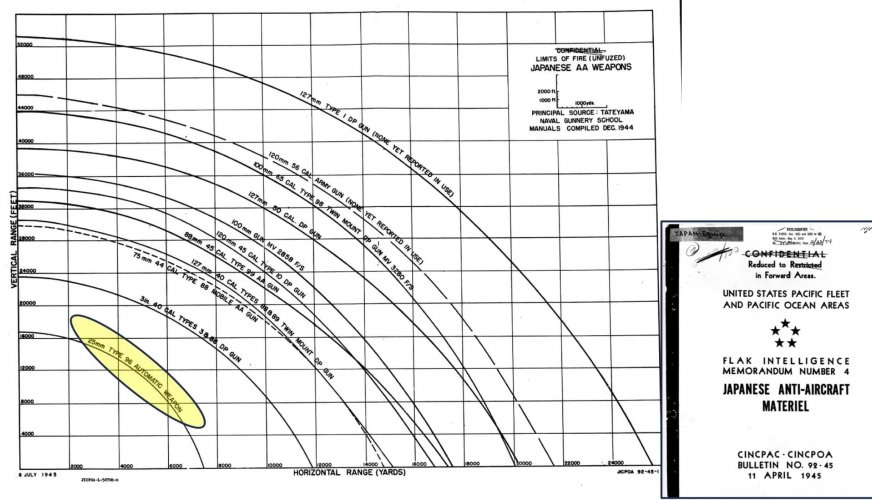
The Japanese military estimated that it required an average of 1,500 rounds to shoot down an aircraft at a height of 1,000 meters and a range of 2,000 meters, and that fire beyond that range was completely ineffective. Later in the war, when ammunition supply was restricted, firing was held until the targets were within 800 meters range, dropping this ratio to as low as seven rounds per aircraft.[9]

The Type 96 was a mediocre weapon compared to its contemporaries in other navies. It was hampered by slow training and elevating speeds (even in power-operated triple mounts), excessive vibration and muzzle flash, and that the ammunition feed was via a 15-round fixed magazine, which necessitated ceasing fire every time the magazine had to be changed."
 
Destroyers had almost no armour.

Bullets can have incendiary effect without being incendiary bullets. Shoot a car with normal machinegun ball shots and it'll start burning.

Many old destroyers still had oil lamps during WW2.

.50cal hits on torpedo warheads or depth charges could trigger huge secondary explosions. Hits on artillery shells could produce smaller secondary explosions. Penetrations of boilers or high pressure steam pipes had catastrophic effects below deck.

AAA had poor if any shielding, so .50cal strafing was effective at destroying or suppressing AAA crews. Germany used single 20 mm guns for the same purpose in anti-ship mission bombers.

The Japanese 25 mm was a really poor light AAA gun. The Americans deployed special simple bombsights to effectively bomb from only about 7,000 ft altitude with very good hit rates IIRC. You could not have done this in face of German or Italian 37 mm guns.

AFAIK the Japanese had no stabilised AAA mounts, so shooting during evasive manoeuvres was super inaccurate.

Japanese escorts had very few AAA guns until about late '43.

.50cal that penetrates a hull close to the waterline can produce leaks. Leak countermeasures weren't developed top counter 50+ leaks at once.
 
I have to imagine a veteran crew with a lot of experience on the type could take some advantage of the 75mm gun's capabilities but for the average crew the strafing configuration with as many .50 caliber MGs as could be fitted was a better choice. I believe later B-25s had the ability to carry 5" HVAR rockets on the wings which helped too.

The XA-38 had a 75mm with automatic loader but I don't think the B-25 ever received that equipment, so it was up to the navigator to load it IIRC. If you took someone like a skilled loader from an M4 Sherman he could probably feed that gun pretty quickly, but your average airman just introduced to the job was only able to give the pilot maybe three well-aimed aimed shots on a pass.

I imagine it would have been possible to fit 20mm or 37mm cannons in the nose but if they tried that I don't think such configurations saw any combat use.
 
I would say Dakar, Senegal.
Archibald -

Howdy !

When I re-counted some of my Dad’s East bound trans-Atlantic B-25 flight, I had to go from memory…..

With regret, I will inform that 2/3rd’s of our belongings were stolen during a move from Oklahoma back to NE Indiana. In amongst the many items the culprits took, was all of my Dad’s WWII orders, records, engraved invitation to his Cadet Graduation, Pilot’s flight log with detailed mission notes, his aviator glasses, pictures taken out cockpit windows…waist gun blisters…and out open down bay doors, original medals and ribbons, a full dress uniform, his Pilot’s flight cap repleat with “ 50 mission crush “, original citation for one of his awarded “ Air Medals “, his original
“ Distinguished Flying Cross “ citation, the memorial box I had assembled w/ brand new medals and ribbons + his “ wings “ …AF patch… leather name tag…. rank insignia…and his burial fla.

I did look up the WWII tran-Atlantic stopping points associated with a departure from Natal, Brazil…and Roberts Field, Liberia jogged my memory. I do believe he made landfall @ Robert’s Field; and not the Ivory Coast; as I previously stated.

With regards,
357Mag
 
He picked up the plane at Stout Field in Indianapolis,
Indulge me in a short tangent,

Still, though my trip down the now less traveled Sam Jones Expressway led me past a different relic of the aviation age, one of Indianapolis’ first airports, Stout Field at Minnesota Street and Holt Road. In 1926, the City of Indianapolis leased 200 acres of land on the southwest side for its first municipal airport and subsequently leased it to the State of Indiana for it to be run by the Indiana National Guard. For a short period of time, the modest airstrip was knows as the Mars Hill Airport, the National Guard Flying Field or the Indianapolis National Guard Airport. However, after the death of Hoosier WWI flying ace Lt. Richard H. Stout, in a plane crash at Fort Benjamin Harrison, Indy’s new airport was named Stout Field in honorarium.

and


Richard Stout was one of three sons of Harry Stout, a businessman who owned several shoe stores around Indianapolis called Stout’s Footwear. The elder Stout would die in 1912, and his brother, Edward, would take over the business.

When World War I broke out in 1914, Richard Stout wanted to enlist to fight in the war but the U.S. was not yet involved. Stout enlisted in the French Army, where he served as an ambulance driver, bringing wounded troops away from the battlefront. He was awarded the Croix de Guerre, a French military award, for his bravery under fire.

According to the Indiana National Guard, when the U.S. entered the war in 1917, he enlisted in the aviation branch of the U.S. Army Signal Corps, which was focused on communications. After the war, he was commissioned as a pilot in the Air Service Officer Reserve Corps, the equivalent of today’s U.S. Air Force Reserve, and joined the Indiana National Guard in 1926.
...
About two years after Stout’s death, the Indiana National Guard acquired Indianapolis’ first municipal airport, called Mars Hill Airport. The airport was known as National Guard Flying Field and Indianapolis National Guard Airport before it was renamed Stout Field in his honor, according to the Encyclopedia of Indianapolis.

Oliver and Sidney Stout served in World War II. When they returned, they took over the shoe business from their uncle, according to the store’s official history. Oliver Stout helped establish the Indiana Air National Guard and served as its first commanding general.
 
That roughly equivalent to the number of machine gun on 2 F6F or F4U, and they can also carry bomb (and even rocket). So what make machine gun on these bomber so effective at destroying/surpressing destroyer conpared to carrier fighter like F6F or F4U?. I mean logically, shouldn’t they be capable of getting so many more fighter on the air compared to bomber?
All the guns on the B25 fired directly forward, while the wing guns on the fighters were angled to converge into a single pattern at about 200 yards.
 

Similar threads

Back
Top Bottom