[email protected]
I really should change my personal text
- Joined
- 6 April 2014
- Messages
- 40
- Reaction score
- 42


Could be, but in this instance I could see possible problems with prop clearance. Could it be small wheels fitted in the factory for roof clearance?Looks like some of the German alternative designs for reduced rubber use. Looked for the topic but cannot find it.

The first paved runways were laid at Odiham and Gosport by the end of 1938 because they were particularly wet as grass fields. Only another 9 are known to have had one or more paved runways by the outbreak of WW2 with another 6-10 (my sources vary) fighter airfields authorised April / May 1939 to receive them in. During 1940/41 runway requirements continued to increase in length until in 1942 the Class A standard was set out which meant further increases in length to existing runways.Intriguing;- the Brits use of big (balloon) tyres was because of the large number of grass airfields at the beginning of WW2 This a universal requirement on all RAF designed prior to 42(ish). In reality paved runway airfields were built really quickly so almost no heavy bomber operations were conducted from grass. A paved surface offers an order of magnitude better load bearing (known as “floatation”) so the wheels & tyres could be a lot, lot smaller;- indeed the Wellington might look odd but I reckon its about right for a fully loaded operation when compared to post war tyre loading/sizing .
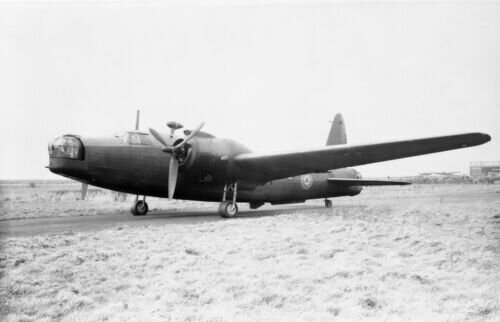
I've read somewhere that was what they were for, to save using production wheels because of a shortage at the time. It might have been in an Air-Britain article.How certain are you of the reg? BV461 was a Warwick ASR.I. There are photos of it in Aircraft Profile 229 at Brooklands, just prior to delivery. Your photo is defo a Wellington (the tail, no corncob exhaust etc.).
ETA: Aaah, you've edited I see.
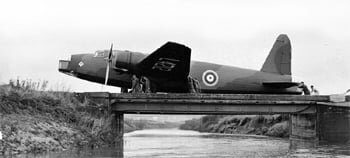
Could it be temporary wheels for towing across the River Wey at Brooklands? I don't think those wheels would be viable with any kind of warload.
View attachment 678019
Almost. The aircraft is BK461 used by Dunlop for trials of its "Compacta" tyres at Honiley in 1945.Looks like some of the German alternative designs for reduced rubber use. Looked for the topic but cannot find it.

The film was Target for Tonight and wondered about that when I saw it. As the film was filmed during the last two weeks of March and the first two weeks of April 1941, I wonder if it might have been a cold weather starting procedure?While we are discussing Wellingtons, a little while ago was watching a wartime film showing the aircraft being prepared for a raid. When it came to starting the engines, a ground crew pushed a rolled up engine cover into the exhaust until the motor started.
Can anyone throw any light on this practice? I assumed it was done to increase back pressure or such like.
The methodology of French aircraft production in the run up to WW2 was well and truely screwed up. Build the airframe to flying condition. Then ferry it to a seperste facility for weapons or radio installations. That's the type of thing a politician dreams up to spread the work around. It's one thing to have the subcontractors spread out and ship components in.The French industry also used similar tricks... "temporary" propellers and wheels for ferry flights... except the lack of coordination with subcontractors had the "temporary" coming to the frontline (!) I kid you not: MB-152s delivered to the frontline with fixed pitch wooden propellers, two blades... and then you wonder why France collapsed in 1940 ?
(my rant is over)
The methodology of French aircraft production in the run up to WW2 was well and truely screwed up. Build the airframe to flying condition. Then ferry it to a seperste facility for weapons or radio installations. That's the type of thing a politician dreams up to spread the work around. It's one thing to have the subcontractors spread out and ship components in.The French industry also used similar tricks... "temporary" propellers and wheels for ferry flights... except the lack of coordination with subcontractors had the "temporary" coming to the frontline (!) I kid you not: MB-152s delivered to the frontline with fixed pitch wooden propellers, two blades... and then you wonder why France collapsed in 1940 ?
(my rant is over)
In Britain aircraft generally went from factory to Maintenance Unit where various pieces of govt furnished equipment would be added. That often included armament, radios, gunsights, radar sets or other role specific equipment. It would even include repainting the aircraft if need be (for example Coastal Command Mosquitos in 1944/45) if the standardised factory scheme were not appropriate for the theatre/unit they were to be sent to.The methodology of French aircraft production in the run up to WW2 was well and truely screwed up. Build the airframe to flying condition. Then ferry it to a seperste facility for weapons or radio installations. That's the type of thing a politician dreams up to spread the work around. It's one thing to have the subcontractors spread out and ship components in.The French industry also used similar tricks... "temporary" propellers and wheels for ferry flights... except the lack of coordination with subcontractors had the "temporary" coming to the frontline (!) I kid you not: MB-152s delivered to the frontline with fixed pitch wooden propellers, two blades... and then you wonder why France collapsed in 1940 ?
(my rant is over)
In Britain aircraft generally went from factory to Maintenance Unit where various pieces of govt furnished equipment would be added. That often included armament, radios, gunsights, radar sets or other role specific equipment. It would even include repainting the aircraft if need be (for example Coastal Command Mosquitos in 1944/45) if the standardised factory scheme were not appropriate for the theatre/unit they were to be sent to.The methodology of French aircraft production in the run up to WW2 was well and truely screwed up. Build the airframe to flying condition. Then ferry it to a seperste facility for weapons or radio installations. That's the type of thing a politician dreams up to spread the work around. It's one thing to have the subcontractors spread out and ship components in.The French industry also used similar tricks... "temporary" propellers and wheels for ferry flights... except the lack of coordination with subcontractors had the "temporary" coming to the frontline (!) I kid you not: MB-152s delivered to the frontline with fixed pitch wooden propellers, two blades... and then you wonder why France collapsed in 1940 ?
(my rant is over)
Hiya, Andy Jordan here, I'm a volunteer at Brooklands museum in Surrey, home of the Wellington. I've been doing a lot of research over the last couple of years and can confirm you are correct. At the time, airframe production was far exceeded engine production so Vickers looked at all alternatives. The Mk.IV was only produced for a limited run, 220 production aircraft in total. Engines considered were indeed Alfa Romeo but Anglo Italian relationships were getting a little bit strained! Also considered were the Pratt and Whitney R2600 double wasp (as used in the majority of Warwicks) at 46l and the Wright Cyclone 1820. It was finally decided to use the Pratt and Whitney R1830 double Wasp at 30l capacity on the MkIV. I hope this helps.While we are on the subject of Wellingtons, does anyone have anything more concrete on the Putnam tome's assertion that Alfa Romeo radials were considered for what became the B.IV?