USAF/USN 6th Gen Fighters - F/A-XX, F-X, NGAD, PCA, ASFS News & Analysis [2008- 2025]

Status
Not open for further replies.
Speed is the response for the long distance, may be more than stealth.
only 1 facet of the problem. it's also about range, but more specifically, combat range and ferry range (ferry range is important because US does not have stealthy tankers). and speed and range don't like each other very much because of physics.

Higher wing sweep allows for greater speed but less fuel efficient loitering time. Higher speed engines are not fuel efficient.

Things like adaptive cycle engine and morphing wings are meant to compensate (keyword) but not negate entirely the inherent physics of it all.

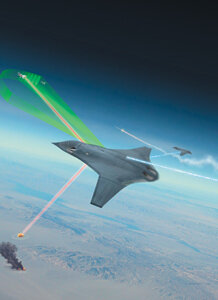
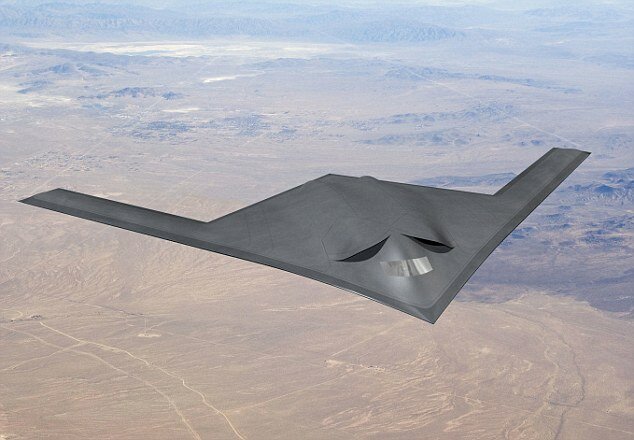
Btw, from artworks I've seen, far fetched with 0 evidence here (but that's pretty much summing up the thread at this point in time), but I think Northrop pitched morphing wings based on their manned and unmanned artworks. Pretty much same platform except wing sweep angle.
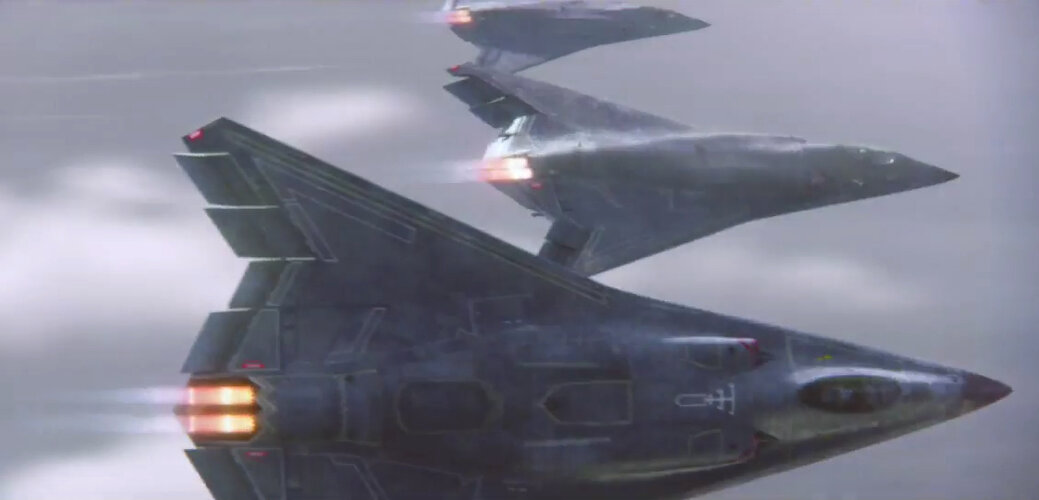
 

Attachments

  • NG-6th-Gen-fighter.jpg
    NG-6th-Gen-fighter.jpg
    328.7 KB · Views: 84
  • fighter02.jpg
    fighter02.jpg
    79.4 KB · Views: 110
NGB -> LRS-B dejavu

NGB was cancelled in 2009.
NGB was replaced by the less ambitious LRS-B in 2010.
LRS-B contract was awarded to NG in 2015.
First B-21 pictures (*) photos were revealed in 2023 (**) Dec. 2022.

X-planes for what was to become NGAD were ordered in 2015.
At least one demonstrator supposedly flew in 2020.
NGAD(-manned) contract-award was going to happen in 2024.
It is 2024, and NGAD(-manned) is under review to check 'if it still fits the needs/requirements and the available budget'...
Maybe this thread - which was started in 2008 - will contain the first pictures (*) photos of a pre-production 'LRS-F' (USAF Long Range Stealth-Fighter, USN Long Range Strike-Fighter) somewhere between 2035 and 2040... :rolleyes:


Edit:
(*) I meant 'photos'. 'Pictures' can also mean drawings, concept-art, etc.
(**) First B-21 photos are from Dec. 2022.
 
Last edited:
Well that’s how you get those low low unit costs!
When they calculate the cost of a B-21 they do not include the R&D costs from the NGB program. If they did it would appear to be much more expensive.
Ha. Sorta like a realtor pulling a stale listing, then listing it again to restart the clock.

If Kendall gold-plated the NGAD from the get-go, he should have known better than trying to sneak it by OSD. Sakes alive, he had LaPlante's job during NGB-->LRS-B.

If Kendall was caught by surprise by OSD's cost estimate, that tells me that Air Force estimators couldn't or wouldn't give him an honest estimate (shades of Lehman pre-A-12).

If this is all about finding a DAF bill-payer for the ICBM and 'unk' classified program, then LaPlante ought not to paint an "all is well" public picture for near-term USAF PCA or USN F/A-XX. Getting NGAD/PCA back to Milestone B readiness will take years if there's austerity in the POM-26 profile.
 
I hope he meant to say it the other way around :eek:
History would says stealth is the new speed but if you can develop a hypersonic bomber that release glide vehicles. It can be challenging to defend against. Though it offers some unique capabilities I fail to see how it can be more versatile and useful than an in theater ultra stealth bomber that can loiter and respond promptly to pop up and changing threats, extended IRS, and command center for other assets/drones.
 
NGB was cancelled in 2009.
NGB was replaced by the less ambitious LRS-B in 2010.
LRS-B contract was awarded to NG in 2015.
First B-21 pictures were revealed in 2023.

X-planes for what was to become NGAD were ordered in 2015.
At least one demonstrator supposedly flew in 2020.
NGAD(-manned) contract-award was going to happen in 2024.
It is 2024, and NGAD(-manned) is under review to check 'if it still fits the needs/requirements and the available budget'...
Maybe this thread - which was started in 2008 - will contain the first pictures of a pre-production 'LRS-F' (USAF Long Range Stealth-Fighter, USN Long Range Strike-Fighter) somewhere between 2035 and 2040..

History would says stealth is the new speed but if you can develop a hypersonic bomber that release glide vehicles. It can be challenging to defend against. Though it offers some unique capabilities I fail to see how it can be more versatile and useful than an in theater ultra stealth bomber that can loiter and respond promptly to pop up and changing threats, extended IRS, and command center for other assets/drones.
The speed reduce the distance , and there is not a lot of missile able to catch a plane flying mach 5 at 80000 ft.
 
Awesome analysis
 
History would says stealth is the new speed but if you can develop a hypersonic bomber that release glide vehicles. It can be challenging to defend against. Though it offers some unique capabilities I fail to see how it can be more versatile and useful than an in theater ultra stealth bomber that can loiter and respond promptly to pop up and changing threats, extended IRS, and command center for other assets/drones.
I don't disagree... it's just that the current focus of say, the USAF, is to procure stealthy aircraft for strike and A2/AD missions. It's probably going to take a bit until something like the bomber concept you mentioned would be feasibly developed (and needed). Eventually, stealth may be a non-factor, and other ways to minimize the window that an adversary has to defend, such as utilizing extremely fast strike capabilities will be preferred.
 
Last edited:

But I must admit, even as I meant photos instead of pictures/pics, I was (at least) a month off: First photos revealing the B-21 (without a tarpaulin or something else covering it up) are from December 2022, not from 2023 as I wrote.
 
does this all point to a bigger F-15EX buy or will NGAD “subsystems” and tech filter into subsequent CCA increments?
 
does this all point to a bigger F-15EX buy or will NGAD “subsystems” and tech filter into subsequent CCA increments?

Personally I think it points to:
1) Someone should have figured out a lot sooner the Sentinel ICBM program/missile would need much new infrastructure and/or a deep renovation of the old Minuteman III infrastructure, and what (high) costs that might entail.
2) Maybe they shouldn´t have given Kendall a ride in the backseat of an F-16 VISTA some weeks ago (or is it a few months already?) for an air-combat simulation of A.I. versus a human pilot, reportedly he got really impressed how the A.I. beat or at least equaled the human in most air-combat scenarios.
 
The speed reduce the distance , and there is not a lot of missile able to catch a plane flying mach 5 at 80000 ft.
Speed does not solve the problem of distance. Many times quite the opposite. Please refer to my response to your comment earlier on this page. You might have missed.

Also if you're lobbing hypersonic glide vehicles at extremely high altitude, you're at significant standoff distance from threat envelope. Which missile that can intercept such aircraft?
 
Personally I think it points to:
1) Someone should have figured out a lot sooner the Sentinel ICBM program/missile would need much new infrastructure and/or a deep renovation of the old Minuteman III infrastructure, and what (high) costs that might entail.
2) Maybe they shouldn´t have given Kendall a ride in the backseat of an F-16 VISTA some weeks ago (or is it a few months already?) for an air-combat simulation of A.I. versus a human pilot, reportedly he got really impressed how the A.I. beat or at least equaled the human in most air-combat scenarios.
unmanned vehicles have won 100% of air-to-air combat since vietnam war, because missiles are unmanned

but in every single one of those situations - a human made the shoot/no-shoot decision, and that's the hard part
 
unmanned vehicles have won 100% of air-to-air combat since vietnam war, because missiles are unmanned

but in every single one of those situations - a human made the shoot/no-shoot decision, and that's the hard part
Which is why CCAs are in an interesting place, because there's going to be a human pilot pretty close that told the drones shooting was permitted.

I don't think we're anywhere near ready for completely autonomous fighters as the entire NGAD program.
 
yep, considering geopolitical fallout of a nuanced situation. What if it's a regular intercept and escort mission that rapidly escalates. The drone can be programmed to respond to such threat based on conventional rules of engagement and doctrines, but will it be able to decipher the political consequences of shooting down a Chinese aircraft vs Vietnamese aircraft? Can it take into account that for example, it's 1 month before election in Vietnam and the pro Chinese wing is looking for a scandal to topple the US friendly side vs just any regular day in Vietnam?

Also, having a drone intercepting a manned aircraft possibly provides less deterrence against a escalating situation. From the adversary's point of view, the political consequence of shooting down a drone and retaliation from US is alot less than killing one of US' combat pilots.

Loyal wingman is happy middle. A human must be in the loop not just for technological concerns but political concerns as well.
 
2) Maybe they shouldn´t have given Kendall a ride in the backseat of an F-16 VISTA some weeks ago (or is it a few months already?) for an air-combat simulation of A.I. versus a human pilot, reportedly he got really impressed how the A.I. beat or at least equaled the human in most air-combat scenarios.
You've hit the nail on the head.
Kendall enjoyed his VISTA ride because he had a revelation during a 3g turn -- I know, an unmanned NGAD/PCA will be cheaper and as effective! Oh boy, a free lunch!
Being the Prince of DAF, the Duke of Combat Aircraft, doesn't mean he's a genius.
I fear this unmanned PCA stuff is Frank's hail mary pass.
 
f Kendall gold-plated the NGAD from the get-go, he should have known better than trying to sneak it by OSD. Sakes alive, he had LaPlante's job during NGB-->LRS-B.

If Kendall was caught by surprise by OSD's cost estimate, that tells me that Air Force estimators couldn't or wouldn't give him an honest estimate (shades of Lehman pre-A-12).

If this is all about finding a DAF bill-payer for the ICBM and 'unk' classified program, then LaPlante ought not to paint an "all is well" public picture for near-term USAF PCA or USN F/A-XX. Getting NGAD/PCA back to Milestone B readiness will take years if there's austerity in the POM-26 profile.
Kendall spent years promoting how the Aerospace Innovation Initiative was his baby and the effort to design and fly multiple demonstrators and run engine programs. Now he's saying that the requirements need to change in a way calling into question what they've spent the last 6-8 years working towards. With NGAD potentially in a mess, NGAP is probably uncertain at this point (from a propulsion requirements stand point) and F-35 adaptive engine was cancelled because industry was getting NGAP (or so the argument went) so those efforts were being channelized there (we had NGAP contracts embedded in AETP etc). So this throws everyone off and I think Congress is going to want public discussion around this. I don't think they can continue to selectively leak through SecAF's chosen connections in the media (Vago Muradian etc) and avoid congressional scrutiny.
 
Kendall spent years promoting how the Aerospace Innovation Initiative was his baby and the effort to design and fly multiple demonstrators and run engine programs. Now he's saying that the requirements need to change in a way calling into question what they've spent the last 6-8 years working towards. With NGAD potentially in a mess, NGAP is probably uncertain at this point (from a propulsion requirements stand point) and F-35 adaptive engine was cancelled because industry was getting NGAP (or so the argument went) so those efforts were being channelized there (we had NGAP contracts embedded in AETP etc). So this throws everyone off and I think Congress is going to want public discussion around this. I don't think they can continue to selectively leak through SecAF's chosen connections in the media (Vago Muradian etc) and avoid congressional scrutiny.
Or how to go from a robust 3-stream engine development program to chaos in three easy steps.
 
Last edited:

Directly from a transcript of the NG Earnings Call of today (July 25th, 2024);


M*** A**** -- W**** F**** Securities -- Analyst

Good morning. Thanks for the question. Can you comment on the Navy new fire, the FXX, just what you're hearing on timing there and if you still have plenty to bid on that program?

Kathy J. Warden -- Chair, President, and Chief Executive Officer

Yes. We have not received any updates that would suggest the Navy is changing their approach. They are in competition now for selection to occur next year. And in terms of our overall collection of opportunities continue to believe that the Department of Defense will move forward with sixth generation platforms.

The timing is a bit influx on many of them as they sort out budget priorities. But we are confident that we're well positioned when and if they do move forward.
 
yep, considering geopolitical fallout of a nuanced situation. What if it's a regular intercept and escort mission that rapidly escalates. The drone can be programmed to respond to such threat based on conventional rules of engagement and doctrines, but will it be able to decipher the political consequences of shooting down a Chinese aircraft vs Vietnamese aircraft? Can it take into account that for example, it's 1 month before election in Vietnam and the pro Chinese wing is looking for a scandal to topple the US friendly side vs just any regular day in Vietnam?

Also, having a drone intercepting a manned aircraft possibly provides less deterrence against a escalating situation. From the adversary's point of view, the political consequence of shooting down a drone and retaliation from US is alot less than killing one of US' combat pilots.

Loyal wingman is happy middle. A human must be in the loop not just for technological concerns but political concerns as well.

I don´t think they intend to go 'fully unmanned' with regard to 'PCA' (or 'F/A-XX').
The air-combat A.I. under development for 6th gen. platforms, when/if applied to the (still) manned ones, will augment the pilot and take over certain tasks, and if the A.I. is regarded as mature enough it will also be able to fly & maneuver the aircraft when/if required. (The 'manned platform' could then also become 'optionally manned', for whenever that might be regarded as optimal or necessary for a specific combat mission.)
Maybe such an A.I. 'backseater' wasn´t part of the original requirements.
If it wasn´t, inserting such technology now into a manned platform under development since years and closing in on a Milestone-B decision, would probably demand some redesign and it would augment the already (very) high price of the manned 6th gen. fighter. Which would then force them to have a(nother) good look at all the other requirements, to check which ones are must-haves and which ones could potentially be changed, downgraded or maybe even deleted.

I´m just speculating, I could be completely wrong and there could be very different reasons for all the recent comments made by Kendall, Wilsbach and others.
 
Directly from a transcript of the NG Earnings Call of today (July 25th, 2024);


M*** A**** -- W**** F**** Securities -- Analyst

Good morning. Thanks for the question. Can you comment on the Navy new fire, the FXX, just what you're hearing on timing there and if you still have plenty to bid on that program?

Kathy J. Warden -- Chair, President, and Chief Executive Officer

Yes. We have not received any updates that would suggest the Navy is changing their approach. They are in competition now for selection to occur next year. And in terms of our overall collection of opportunities continue to believe that the Department of Defense will move forward with sixth generation platforms.

The timing is a bit influx on many of them as they sort out budget priorities. But we are confident that we're well positioned when and if they do move forward.

"One of these planes is not like the others" jokes on you, they're all real and that's the F/A-XX.
 

Attachments

  • popeyes-meme-social.jpeg
    popeyes-meme-social.jpeg
    35.5 KB · Views: 66
  • northrop-grumman-unveils-6th-generation-fighter-jet.png
    northrop-grumman-unveils-6th-generation-fighter-jet.png
    1.7 MB · Views: 85
  • Northrop-Grumman-NGAD-concept.jpg
    Northrop-Grumman-NGAD-concept.jpg
    566.8 KB · Views: 90
Taking a step back, I wonder if the hesitation/change of direction might be due to new intelligence. I say this because none of the other factors brought up are really new. Perhaps China's space based sensing is further along than was thought, or they are on the verge of a new capability in some area.
 
Taking a step back, I wonder if the hesitation/change of direction might be due to new intelligence. I say this because none of the other factors brought up are really new. Perhaps China's space based sensing is further along than was thought, or they are on the verge of a new capability in some area.
It most certainly is a factor and if it isn’t an issue today it will be in the short to medium term. If you go nuts, and spot them persistent high quality tracking of surface ships and aircraft, then hypersonic ships are really the way to go. Unmanned obviously. Sorry Mav.
 
I think the speed that the Pacific is traversed may be the really expensive option that is tripping this whole thing up. Whatever the stealth option they use, be it the F35 generation, or something newer, the RCS is going to change significantly as the temperature from high speed runs get the airframe really toasty. The F35 already had a problem with hot fuel. Are they going to have to cryo cool the NGAD fuel to soak up some of that heat?

As part of a hypersonic program Lockheed developed the ability to 3d print structures that efficiently used hydrocarbon fuel to chill and density incoming supersonic air in an inlet.

It would be reasonable to conclude the same methods were used to embed “capillaries” into the structure of a supersonic aircraft to control the skin temperature and boundary layer.
 
As part of a hypersonic program Lockheed developed the ability to 3d print structures that efficiently used hydrocarbon fuel to chill and density incoming supersonic air in an inlet.

It would be reasonable to conclude the same methods were used to embed “capillaries” into the structure of a supersonic aircraft to control the skin temperature and boundary layer.

And boy oh boy does that sound pricey!
 
And boy oh boy does that sound pricey!
According to reports about similar technology in the Mako hypersonic missile, the price is lower than the subtractive machining cost, with weight gains and more tunable material properties. The American aerospace industry is quietly investing millions of dollars in micron and nano-scale precision metal and resin 3d printing for large parts. It'll be interesting to see the next generation of aerospace vehicles as they integrate more generative design and additive-only design elements, like embedded systems in structural components.
 
And boy oh boy does that sound pricey!

If you can 3D print the whole structure it is not nearly as complicated to make. HAWC is said to work this way: the combustor is 3D printed so all the intricate channels for fuel to be pumped as a coolant (and also use the heat to crack the fuel into lighter hydrocarbons) are created as the assembly is printed. X-51 apparently had to machine all of this; now THAT sounds incredibly complicated.
 
If you can 3D print the whole structure it is not nearly as complicated to make. HAWC is said to work this way: the combustor is 3D printed so all the intricate channels for fuel to be pumped as a coolant (and also use the heat to crack the fuel into lighter hydrocarbons) are created as the assembly is printed. X-51 apparently had to machine all of this; now THAT sounds incredibly complicated.
The other side of the equation is that the X-51 had to use CFD on computers that predate Windows XP, to say nothing about the computational materials science revolution at the turn of the century that the HyTECH program never took advantage of
 
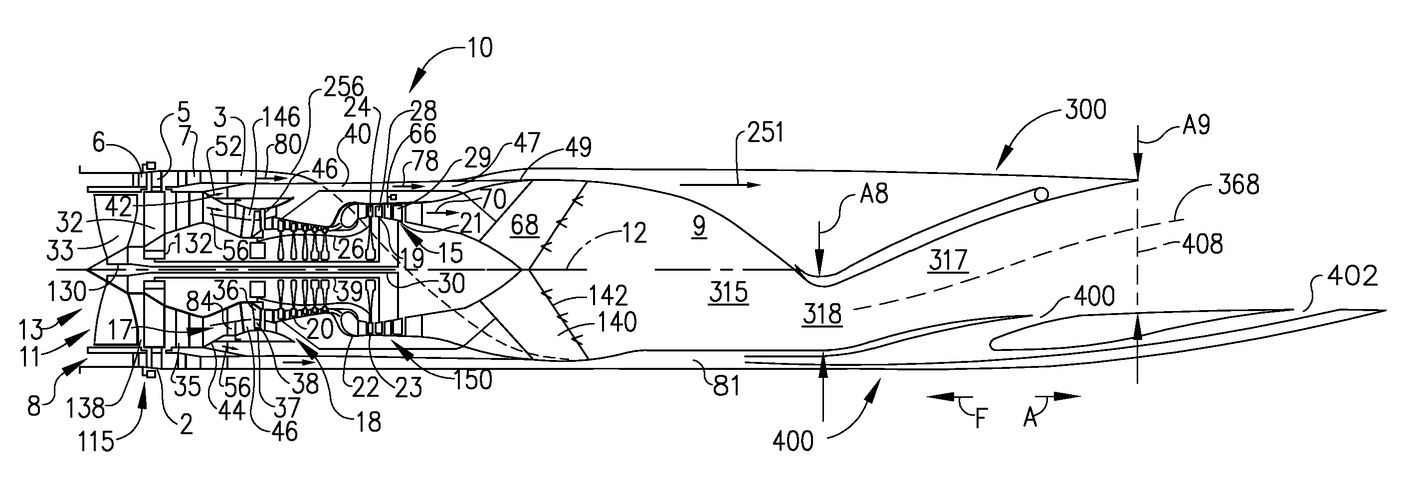
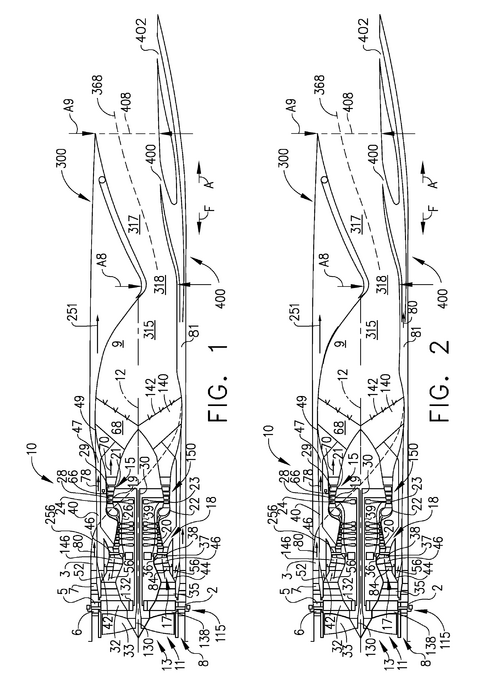
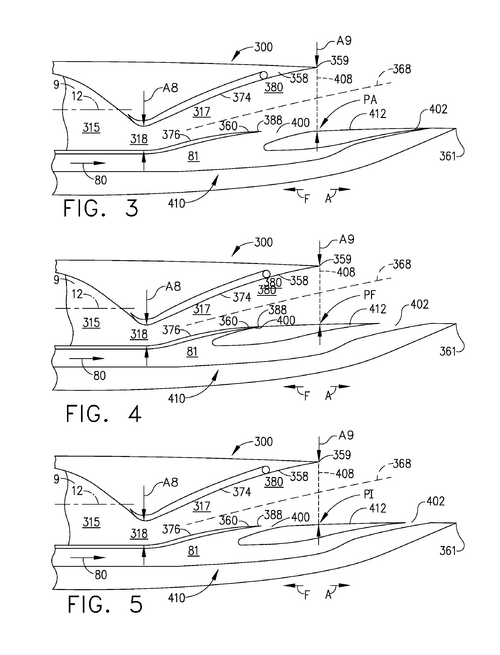
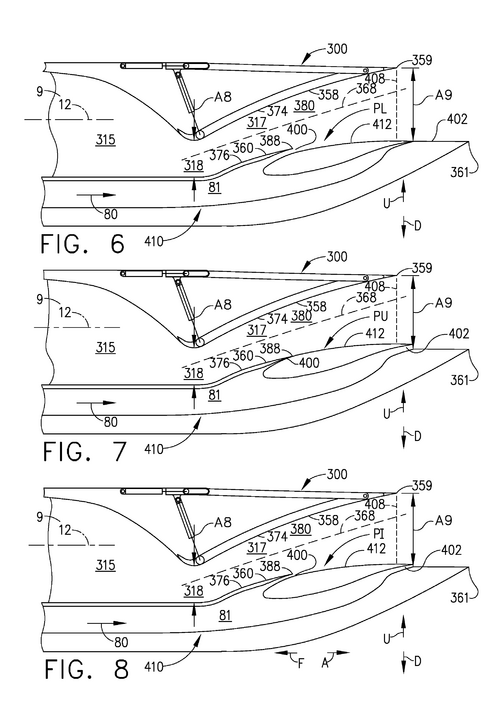
A general electric patent that appears to show how a three stream engine is used is a SERN assembly like that seen on the Northrop patent.


Attachments

  • US08984891-20150324-D00000.png
    US08984891-20150324-D00000.png
    35.9 KB · Views: 57
  • US08984891-20150324-D00001.png
    US08984891-20150324-D00001.png
    76.9 KB · Views: 60
  • US08984891-20150324-D00002.png
    US08984891-20150324-D00002.png
    55.1 KB · Views: 56
  • US08984891-20150324-D00003.png
    US08984891-20150324-D00003.png
    56.9 KB · Views: 62
According to reports about similar technology in the Mako hypersonic missile, the price is lower than the subtractive machining cost, with weight gains and more tunable material properties. The American aerospace industry is quietly investing millions of dollars in micron and nano-scale precision metal and resin 3d printing for large parts. It'll be interesting to see the next generation of aerospace vehicles as they integrate more generative design and additive-only design elements, like embedded systems in structural components.

The Mako is not a 10,000+ hour airframe. Making a platform that lasts that many hours and doesn't cost a zillion dollars an hour to sustain is what is making attributable and unmanned platforms look really tasty right now.
 
Status
Not open for further replies.

Similar threads

Back
Top Bottom