USAF/USN 6th Gen Fighters - F/A-XX, F-X, NGAD, PCA, ASFS News & Analysis [2008- 2025]

Status
Not open for further replies.
This notion that it has to be some huge leap forward as a "6th generation" fighter when that is an even more nebulous concept that what had defined/separated prior generations of jet fighters.
Okay, let's talk about what the different generations are.
1st Generation: P-80, F-84, and F-86
2nd Generation: Century Series, not counting F-111
3rd Generation: F-4 and F-111 (not that F-111 is particularly a fighter, but it needs to be placed here)
4th Generation: Teen series
5th Generation: F-22 and F-35
6th Generation: NGAD and FAXX

So, what defines each generation?
First Generation is having jets at all.
Second Generation is going supersonic.
Third Generation is going Mach 2 or close to it, and starting into multirole capabilities.
Fourth Generation is not generally as fast but is much more maneuverable and heavily multirole.
Fifth Generation is stealthy and multirole.
Sixth Generation is looking like sensor fusion, heavily datalinked, with drones flying support jobs. (I will happily be corrected on that point, but I think it's right.)
 
Wondering about directed energy via all that extra power generation & cooling capability? And electronic attack?
 
My definition of 6th gen would be:

1) distributed architecture enabled by AI and MUM-T
2) step change in utilization of non-traditional EM techniques beyond jamming and spoofing, like directed energy and cyberattack
3) supersonic tailless aircraft with reasonably "fighter-ish" maneuverability (loaded)
4) variable cycle engines
5) big data and fancy communications (lasers and/or AESAs?)
6) thermal signature focus -- high internal airflow, lots of fuel to thermally soak, extra power for cooling, high altitude
7) survivable basing through pure engine power (esp when taking off with light fuel load and then tanking) and range, plus austerity

I may easily be missing some ideas, but this seems like PLENTY to constitute a new generation. Am very confused by recent suggestions that NGAD might not offer enough to be worth it, in comparison to 5th gen. Rather, I think the problem is mainly a tightening budget.
 
Last edited:
Any new combat aircraft tailored for local operations is unlikely to need "significantly increased range". The extra range will come at a price. Different operators will make different decisions.
 
Any new combat aircraft tailored for local operations is unlikely to need "significantly increased range". The extra range will come at a price. Different operators will make different decisions.
And yet NGAD, FAXX, GCAP, and FCAS are all looking to have more range than the existing fighters.
 
Mostly because all the systems that make them able to do the job at all are expensive, and more systems keep getting added to the "minimum requirements" list.

"We can't afford to build carriers if they cost that much!" says the accountant.

"Then either we make really good friends with the people that do have carriers and pray they don't decide to take over us, or we don't have a country anymore. Take your pick."
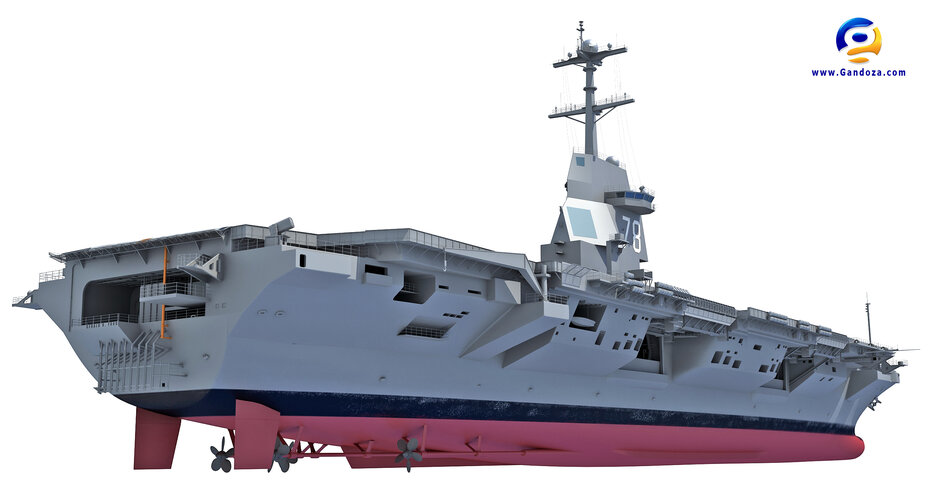
First para: maybe added systems might be farmed out to cheaper platforms then? Carriers would never operate alone anyway. The wide stern of the Ford is an example of this potential problem - it's a means of 'future-proofing' the ships by adding extra space for workshops and so on but its effect is to concentrate more essential capability in one hull. Considering perfectly reasonable expectations of growth in required capabilities over the long life of the class, it makes sense (certainly considering the increasing difficulty in shoehorning more and more into the Arleigh Burkes) but I'm not sure if that's wise in the long term as a trend. Compare the render with the ship as it was actually built.

Second: Yep, that's what they say. Unfortunately, politicians mostly haven't heard the proverb 'penny wise and pound foolish'.

Third: That seems to be the NATO strategy/doctrine as it emerges. The British Army has a reduced number of tanks but the UK's strength is in naval, nuclear, space and cyber, and these are given priority in studies at least. For self-defence, land forces are likely to be less of a priority for the UK's defence on its own, while its strategic assets are also its most valuable contribution to NATO. The arrangement would be similar in its continued relationship to the EU, if anyone sane and with an IQ greater than that of a potato is in the cabinet next month.

Thanks for the reasoned discussion.
 

Attachments

  • CVN_78_04.jpg
    CVN_78_04.jpg
    1.1 MB · Views: 35
  • 170408-n-ix020-0065.jpg
    170408-n-ix020-0065.jpg
    308.8 KB · Views: 36
Last edited:
Addendum. In my ideal world, there's coherence and co-ordination of needs and requirements across the entire fleet and a plan is followed and circumstances don't change, versus an attitude of 'who knows what's going to be funded next, let's cram as much of what we need into this one!' I do know what's the most pragmatic...
 
Last edited:
By the way, supremely cynical sf writer and (in his own words) lapsed marine biologist Peter Watts describes the principle of evolution by natural selection not as 'survival of the fittest' but 'survival of the least inadequate.'
 
"I don't know how Boeing is going very well with the F-15EX relative to the F-35."

You're comparing the programmes, that's what those words mean
It was meant to state that both programs are not going according to set plans. Not comparing one's problems to the other. You can't say F-35 is stuck but EX is going smoothly when both have delayed deliveries to the Air Force.

LM's problems are partially on account of delays in suppliers supporting the upgrade effort. Boeing's problems are with actual production of the aircraft being late particularly problems within Boeing (onshoring of certain production) itself. From a technical perspective, TR-3 and Block 4 are introducing several new things into the F-35 which are running behind. F-15EX is not really doing anything as risky (mission comp, and EPAWSS were programs long before EX became a program and they've omitted certain other things like MAWS to save cost and testing time) so it was a pretty mature system to begin with. It would be akin to LM having trouble delivering on Block 3F aircraft running TR-2 hardware and APG-81 radar in 2024. With the EX, you have a program that has delivered aircraft for decades that is now beginning to deliver to the USAF with a highly mature technical baseline and another that is undergoing a major upgrade to mission computer, radar and other hardware..Yet the AF is going to have to wait between 8 and 14+ months to take delivery on both. So yeah, both are underperforming just for different reasons.
 
Last edited:
Northrop started investing its own money way back in the early 1960's, in LO technology and Northrop (along with Lockheed) knew about the potential of stealth technology 30+ years before anyone else, this was clearly stated by the late Thomas V. Jones (former Northrop CEO) during the B-2 roll out. Some history, Northrop flew the YB-49 against radars at Half Moon Bay and by the time the radar operators got a lock on the aircraft, the YB-49 had already had destroyed the facility, and this with an all-aluminum flying wing. There is a lot of technology Northrop and Lockheed had developed over decades that more than likely no one except the special few know about. Northrop and Lockheed had true visionaries, everyone else had and has to play catch-up.
Northrop may be unique in having spent 'their own money' in the defense biz. During the period before F/A-18A/B production, and after F-5E/F sales slowed, Northrop Aircraft's largest revenue stream came from building 747 fuselages for Boeing (I've been told that subcontract was very lucrative). Without a significant DoD business base (which would include F-5 Foreign Military Sales since those are under a US govt contract), their is no place to allocate or distribute IR&D, B&P, PPE costs. That is a true business challenge, so Thomas Jones deserves credit there too.

If memory serves, Jones also self-funded the F-20A Tigershark development and flight testing, much to the chagrin of the Air Force and F-16 community.

Re: Lockheed -- the Skunk Works (aka ADP) was deliberately buried inside of the Lockheed California Company (aka Calac) from the P-38 days until 1991. Once it was its own 'profit center' it became more of a challenge for leadership as to where to distribute IR&D and PPE costs (they traditionally spend relatively little in B&P). During the 60s, 70s, and 80s, Calac had two substantial 'white world' programs to allocate ADP's allowable costs -- the S-3 and P-3 aircraft for the Navy and FMS.

Isn't it ironic, and even bizarre, that the Navy picked up most of the tab for ADP's IR&D-funded stealth technology development, while they themselves were largely in the dark, to wit, the A-12 disaster.
 
Last edited:
@Scott Kenny Which could saddle their operators with a Ferrari SUV doing a Ford Bronco's job. And doing it poorly.
Given that NGAD is being designed around a fight in the Pacific, not so much. GCAP and FCAS are being designed around flying to the Ural mountains and back.

Only the KF21 seems to be designed with a relatively short range (ie, on par with F4s).


First para: maybe added systems might be farmed out to cheaper platforms then? Carriers would never operate alone anyway. The wide stern of the Ford is an example of this potential problem - it's a means of 'future-proofing' the ships by adding extra space for workshops and so on but its effect is to concentrate more essential capability in one hull. Considering perfectly reasonable expectations of growth in required capabilities over the long life of the class, it makes sense (certainly considering the increasing difficulty in shoehorning more and more into the Arleigh Burkes) but I'm not sure if that's wise in the long term as a trend. Compare the render with the ship as it was actually built.
It's looking like bunching up is extremely dangerous when under threat of AShBM attack, much easier to swamp the defenders in numbers when there are 3+ targets in the footprint. Plus, hypersonics require the defender to basically be on top of the target (within 10km at the farthest, closer is better). So either you have a plane guard DDG right next to the carrier, or the carrier itself needs to carry defenses against hypersonics. The later Ford class carriers will have SPY6 and Aegis by default, so you might as well add a few cells of whatever the Hypersonic defense missile is to the carrier.
 
Northrop may be unique in having spent 'their own money' in the defense biz. During the period before F/A-18A/B production, and after F-5E/F sales slowed, Northrop Aircraft's largest revenue stream came from building 747 fuselages for Boeing (I've been told that subcontract was very lucrative). Without a significant DoD business base (which would include F-5 Foreign Military Sales since those are under a US govt contract), their is no place to allocate or distribute IR&D, B&P, PPE costs. That is a true business challenge, so Thomas Jones deserves credit there too.

If memory serves, Jones also self-funded the F-20A Tigershark development and flight testing, much to the chagrin of the Air Force and F-16 community.

Re: Lockheed -- the Skunk Works (aka ADP) was deliberately buried inside of the Lockheed California Company (aka Calac) from the P-38 days until 1991. Once it was its own 'profit center' it became more of a challenge for leadership as to where to distribute IR&D and PPE costs (they traditionally spend relatively little in B&P). During the 60s, 70s, and 80s, Calac had two substantial 'white world' programs to allocate ADP's allowable costs -- the S-3 and P-3 aircraft for the Navy and FMS.

Isn't it ironic, and even bizarre, that the Navy picked up most of the tab for internally-funded stealth technology development, while they themselves were largely in the dark, to wit, the A-12 disaster.
Yes, Northrop did fund the F-20A internally at a time when the USG wanted primes to explore new potential platforms and tech but in the end, we all know how that goes, ultimately the USG does not like unsolicited proposals because they do suffer from not-invented-here-syndrome, even if the primes were and are right-on the money. We got screwed on the F-20A primarily because it had some capabilities that rivaled and potentially were better than the F-16, so no exports.
 
Heres a suggestion, the factory might be for a drone program rather than for a manned fighter. When Boeing was eliminated from the CCA program it said that it would continue to receive funding from the defence department for work on the MQ-25, MQ-28 and an undisclosed combat drone project. Theyve expanded production facilities in Australia to produce the MQ-28 and the MQ-25 is produced at a facility at St Louis airport but there hasnt been a lot of mention of this other black project combat drone.

Though even if it was a speculative build for NGAD they can still repurpose it for other programs. (besides any bad investment can just be written off as a tax deduction)
 
Last edited:
Says who?
Its a moving target..Block 4 in the 2020's..block 5 in the 2030's etc. So it will always be chasing a capability upgrade. That will also be the case for the F-15EX though there the upgrades are likely to be more modest given the already high cost and low inventory volumes. First they would need to get back things that should have been standard like a MAWS etc.
 
The U.S. Air Force has not abandoned its program to build an advanced next-generation fighter, but it does need a redesign to get costs under control and better integrate its planned drone wingmen, the service’s secretary told Defense News in an exclusive interview.

Secretary Frank Kendall also said a revamped Next Generation Air Dominance fighter platform could end up with a less complex, smaller engine than originally intended to try to hold down its price...

 
You don't built a 1.6 billion building if you are not sure of the end of the contract.
Unless you negotiated a really good tax break (something Boeing are usually pretty cut-throat about). Did Boeing pay for it, or did state and local government?
 
Unless you negotiated a really good tax break (something Boeing are usually pretty cut-throat about). Did Boeing pay for it, or did state and local government?
They've leased the land and probably have plenty of ways to down (right) size the deal depending on how their fortunes pan out on a few of these programs. Pretty standard really. Not to diminsh their internal investment but its not like they went out and have already sunk $1+ Bn into it in hope of winning.
 

“Do you hand the monopoly on fifth- and sixth-generation fighters to Lockheed? Or do you hope that Boeing, which seems to be trying to decide if rocks are still edible, somehow could execute?” he said, adding that it’s unclear whether the Boeing has a design team capable of developing a new advanced aircraft.
 
“Do you hand the monopoly on fifth- and sixth-generation fighters to Lockheed? Or do you hope that Boeing, which seems to be trying to decide if rocks are still edible, somehow could execute?” he said, adding that it’s unclear whether the Boeing has a design team capable of developing a new advanced aircraft.

Wasn't Boeing's proposal described as the more advanced and somewhat riskier design concept?
 
Interesting article , the mach 2 cruiser could be a game changer...

"A high-altitude supercruiser (Mach 2+) can survive with moderate reduction in radar cross section, combined with speed, altitude, and stand-off launch." in that article,

Sounds like what the MiG-31 is doing in Ukraine with the Kinzhal and R-37M right now.

AFAIK, no MiG-31 has been shot down by the S-300 or Patriot so far?
 

"... Could we use strictly attritable and standoff capability? So CCAs that penetrate the airspace, they didn't call it the CCAs back then, but that was the idea and standoff capabilities like F-15. And they said, well, sort of except for the fact that they're not going to be able to find their targets, we need something inside that airspace to find the targets that are inside that contested bubble. "

I wonder why CCAs operating inside the SAM bubble cannot find targets for standoff weapon carriers outside the SAM bubble.

Perhaps a CCA that can do the job would be as large and expensive as a manned fighter?
 
Been holding off until we hear more, now that we have: this sucks. First kill AETP, now shrinking NGAP. This is the definition of penny wise and pound foolish: possible major capability loss for likely minor cost saving. Get in front of Congress and make your case for the money.
 
What I read under the lines is that NGAP, as being integrated with NGAD airframe to maximize propulsion efficiency, increases volume, mass, complexity and hence cost. By decoupling them, or degrading their integration down to a certain level, NGAD would be minorly less performant but could be "good enough".
 
Been holding off until we hear more, now that we have: this sucks. First kill AETP, now shrinking NGAP. This is the definition of penny wise and pound foolish: possible major capability loss for likely minor cost saving. Get in front of Congress and make your case for the money.
Its actually worst. The narrative so far has been "let us divest things we have and buy fewer of what we have in production...shrink the force..because we need to invest in future technologies that are needed around the 2030 timeframe thus needing record RDT&E increases". They are basically asking for a rescoping of the entire air vehicle program and thus probably adding half a decade to the program with no plans to show their work. This 12 months after they issued a NGAD RFP to industry with the progam that must have passed multiple reviews and a formal AOA. The AF doesn't have a lot of equity with Congress but its probably going to take a further beating on that front.
 
What I read under the lines is that NGAP, as being integrated with NGAD airframe to maximize propulsion efficiency, increases volume, mass, complexity and hence cost. By decoupling them, or degrading their integration down to a certain level, NGAD would be minorly less performant but could be "good enough".
There's a couple problems here. One is that the engine is more than propulsion, F-35 is already making hard decisions about future capabilities due to F135 limits. Second is that the pacing threat isn't slowing down or scaling back, I'm not a "zomg China owns us!" alarmist but PLAAF would laugh all the way to the bank on this.
 
"... Could we use strictly attritable and standoff capability? So CCAs that penetrate the airspace, they didn't call it the CCAs back then, but that was the idea and standoff capabilities like F-15. And they said, well, sort of except for the fact that they're not going to be able to find their targets, we need something inside that airspace to find the targets that are inside that contested bubble. "

I wonder why CCAs operating inside the SAM bubble cannot find targets for standoff weapon carriers outside the SAM bubble.

Perhaps a CCA that can do the job would be as large and expensive as a manned fighter?
Exactly. CCAs would be austere extensions of the PCA/NGAD platform which would have the broad spectrum stealth and sensors to see and coordinate the CCA within the A2/AD bubble. CCAs would carry A2A missile closer to the enemy and provide some targeting data. Passive sensors? Lower cost active ones? If you eliminate NGAD and abandon the manned element in the manned/unmanned teaming strategy, CCAs will need to grow in size and cost. They will need to carry mission systems similar to NGAD and would require total autonomy. That's risky. Not sure if we are ready for that.
 
Been holding off until we hear more, now that we have: this sucks. First kill AETP, now shrinking NGAP. This is the definition of penny wise and pound foolish: possible major capability loss for likely minor cost saving. Get in front of Congress and make your case for the money.
It makes no sense. So they are blaming the engine for the primary driver of costs? They have invested a lot of money via the AETP program and NGAP. A production ready engine for the F-35A/C was supposedly set for 2027/28.

The assumption is they are more concerned with fly away cost of the engine. NGAP was supposed to have provided greater thrust, range - which is needed in the Pacific, and increased cooling. It also will have provided a technology edge over the Chinese.

What engine do they use instead to reduce costs? Resize the F135 and adapt it for NGAD? Public pronouncements indicated that NGAP would be smaller than the AETP. Possibly relying on 2 engines instead of 1? Or are they thinking about a smaller planform and smaller engine? Less payload, slower, less range?

Kendall's knew about NGAD's cost previously. The AF made a decision not to proceed with an award in the 2021 time frame. They had a lot of time to study the issue. Kendall also previously said that NGAD was in EMD, even though it wasn't officially, indicating the design was at an advanced level of maturity.

This mess gives me the impression that the DAF doesn't know what it is doing.
 
It makes no sense. So they are blaming the engine for the primary driver of costs? They have invested a lot of money via the AETP program and NGAP. A production ready engine for the F-35A/C was supposedly set for 2027/28.

The assumption is they are more concerned with fly away cost of the engine. NGAP was supposed to have provided greater thrust, range - which is needed in the Pacific, and increased cooling. It also will have provided a technology edge over the Chinese.

What engine do they use instead to reduce costs? Resize the F135 and adapt it for NGAD? Public pronouncements indicated that NGAP would be smaller than the AETP. Possibly relying on 2 engines instead of 1? Or are they thinking about a smaller planform and smaller engine? Less payload, slower, less range?

Kendall's knew about NGAD's cost previously. The AF made a decision not to proceed with an award in the 2021 time frame. They had a lot of time to study the issue. Kendall also previously said that NGAD was in EMD, even though it wasn't officially, indicating the design was at an advanced level of maturity.

This mess gives me the impression that the DAF doesn't know what it is doing.
Have we pondered the idea that maybe all of this back and forth theatrics and boeing low-key building advanced aircraft manufacturing sites could just be social media warfare to make everyone (including us) believe that they are struggling?
 
Kendall's knew about NGAD's cost previously. The AF made a decision not to proceed with an award in the 2021 time frame. They had a lot of time to study the issue. Kendall also previously said that NGAD was in EMD, even though it wasn't officially, indicating the design was at an advanced level of maturity.

This mess gives me the impression that the DAF doesn't know what it is doing.

Its actually worst. The narrative so far has been "let us divest things we have and buy fewer of what we have in production...shrink the force..because we need to invest in future technologies that are needed around the 2030 timeframe thus needing record RDT&E increases". They are basically asking for a rescoping of the entire air vehicle program and thus probably adding half a decade to the program with no plans to show their work. This 12 months after they issued a NGAD RFP to industry with the progam that must have passed multiple reviews and a formal AOA. The AF doesn't have a lot of equity with Congress but its probably going to take a further beating on that front.

Good points. Kendall apparently sees NGAD/PCA as his baby, dating back to when he was DoD undersecretary for acquisition and his sponsorship of DARPA's ADI activity. Nevertheless, rescoping the program at this late date is bureaucrat speak for 'back to the drawing board'. If the reports are accurate, this is a FUBAR situation.

My guess is that briefings of Pentagon principals began a few weeks ago, in preparation for the formal Milestone B approval by the current DoD acquisition chief William LaPlante. This is the critical go/no-go period, in part because the CAPE presents their independent cost estimate and the resource officers review the service-wide budget plans and programming. (The CAPE estimate carries significant weight, particularly if the EMD contract is of the cost-plus variety.)

I have to go back to Navy Secretary John Lehman to remember another service secretary who seemed to have taken on the role of birthing and raising an individual aircraft program. And we all know how that baby (the ATA/A-12 program) turned out, Lehman's later denials of his deep involvement to the contrary.
 
One of articles specifically mentioned downsizing the engine. I would think the major driver of cost would be complexity? Also an engine downgrade seems like such a fundamental redesign, it is hard to imagine that this is not a massive delay. Avionics downgrades would probably be a lot more timeline tolerant.
 
"... Could we use strictly attritable and standoff capability? So CCAs that penetrate the airspace, they didn't call it the CCAs back then, but that was the idea and standoff capabilities like F-15. And they said, well, sort of except for the fact that they're not going to be able to find their targets, we need something inside that airspace to find the targets that are inside that contested bubble. "

I wonder why CCAs operating inside the SAM bubble cannot find targets for standoff weapon carriers outside the SAM bubble.

Perhaps a CCA that can do the job would be as large and expensive as a manned fighter?
Pretty much. Systems account for 30-35% of the cost of an F35. So while not including the cockpit, you're still looking at probably 90% the cost of an F35 for something with all the same systems and just unmanned.
 
Status
Not open for further replies.

Similar threads

Back
Top Bottom