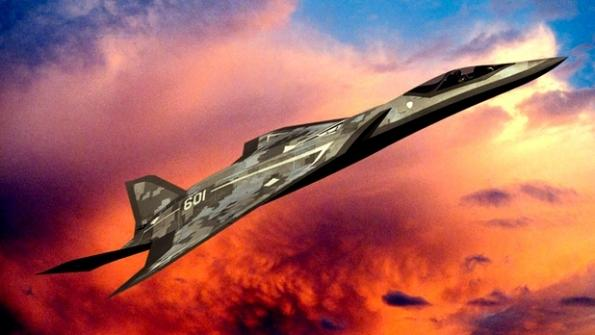
USAF/USN 6th Gen Fighters - F/A-XX, F-X, NGAD, PCA, ASFS News & Analysis [2008- 2025]

Status
Not open for further replies.
I can see your point about dedicated interceptors Josh_TN, NGAD armed with the AIM-260 will fill that role in the west while Russia will have its MiG-41 but will only build so many as it will probably be too costly.
The larger quantity of fighters and smaller landmass to cover probably made them redundant. As did larger fighters with greater range and drop tanks.
 
I miss interceptors, the only country that designs and builds interceptors nowadays is Russia with the MiG-31 and the MiG-41, why did interceptors go out of fashion in the west?
Historically, interceptors are very short-ranged, fast climbing, and optimized around blowing up large bombers. So you need lots of them, if you are expecting an attack by large bombers in formation.

But the US was mostly expecting an attack by missiles, not bombers, once the 1960s ended. That said, the US did keep F-106s in service clear till 1988 or so, but by that time F-16s could carry large enough missiles to do the job.

So, the CCA part of NGAD isn't going to be attritable? say what?

https://breakingdefense.com/2023/03...ritable-despite-common-misconception-general/
I'm not sure how much cheaper something with potentially F-35 range and payload is going to be than an F-35 proper... IMO they'll be lucky to get one for less than half the cost of an F-35.

I think there will be major performance trade offs to keep the CCA cheaper. It has already been suggested that supercruise may be sacrificed. I’d expect at least some versions to not have radar and other high end avionics, since that’s a major cost driver. But also I think it’s worth pointing out removing the pilot has a lot of cost savings in and of itself organizationally.
Not sure how much money will be saved by sacrificing supercruise. I mean, the AGM-28 supercruised at Mach 2.1 with a non-afterburning J52...

That said, I do see probably 3 different CCA types flying:
  • One is a pure A2A type, small and probably the dumbest of the CCA types with minimal electronics. This will probably also be the first one built. It may be able to supercruise, or it may be replaced with a version that can later.
  • Second is a recon/electronic attack type, and will end up expensive due to sensors. I expect that this one will be the stealthiest, and will have a little bit of space onboard for ARMs and a couple small missiles for threats that need to get blasted RIGHT NOW.
  • Third is a heavier attacker, carrying 10k+lbs internally. Obviously, this one is the biggest, and will probably be even bigger than an F-35.
=====

Does anyone have numbers for how much weight is saved by not needing a cockpit and all the other bits that go with having a pilot onboard?
 
Not sure how much money will be saved by sacrificing supercruise. I mean, the AGM-28 supercruised at Mach 2.1 with a non-afterburning J52...

That said, I do see probably 3 different CCA types flying:
  • One is a pure A2A type, small and probably the dumbest of the CCA types with minimal electronics. This will probably also be the first one built. It may be able to supercruise, or it may be replaced with a version that can later.
  • Second is a recon/electronic attack type, and will end up expensive due to sensors. I expect that this one will be the stealthiest, and will have a little bit of space onboard for ARMs and a couple small missiles for threats that need to get blasted RIGHT NOW.
  • Third is a heavier attacker, carrying 10k+lbs internally. Obviously, this one is the biggest, and will probably be even bigger than an F-35.
=====

Does anyone have numbers for how much weight is saved by not needing a cockpit and all the other bits that go with having a pilot onboard?

Well I certainly think the CCAs won't have augmented engines at any rate. One thing about the Hound Dog is that it was a pure turbojet, which is generally going to be less efficient. Second thing is that it was a version of the engine designed to operate at emergency power full time since its lifespan was measured in hours. You can probably get a supercruising UAV with an unaugmented turbanfan of some kind, but you'd probably have to design it from scratch. I suspect any engine in those weight classes have too much bypass ratio to get an aircraft through the sound barrier. The F-22's have notably less bypass and sacrifice low altitude performance; I suspect there isn't an off the shelf installation that easily can achieve that.

I'm sure there will be a couple types of CCAs though I won't guess their size and weights. I doubt removing the pilot from an F-35 sized aircraft has a major effect, but the smaller the aircraft, the larger the percentage of weight saved. IMO the real savings is in pilot training (and aircraft maintenance), not pilot weight.
 
Not sure how much money will be saved by sacrificing supercruise. I mean, the AGM-28 supercruised at Mach 2.1 with a non-afterburning J52...

That said, I do see probably 3 different CCA types flying:
  • One is a pure A2A type, small and probably the dumbest of the CCA types with minimal electronics. This will probably also be the first one built. It may be able to supercruise, or it may be replaced with a version that can later.
  • Second is a recon/electronic attack type, and will end up expensive due to sensors. I expect that this one will be the stealthiest, and will have a little bit of space onboard for ARMs and a couple small missiles for threats that need to get blasted RIGHT NOW.
  • Third is a heavier attacker, carrying 10k+lbs internally. Obviously, this one is the biggest, and will probably be even bigger than an F-35.
=====

Does anyone have numbers for how much weight is saved by not needing a cockpit and all the other bits that go with having a pilot onboard?

Well I certainly think the CCAs won't have augmented engines at any rate. One thing about the Hound Dog is that it was a pure turbojet, which is generally going to be less efficient. Second thing is that it was a version of the engine designed to operate at emergency power full time since its lifespan was measured in hours. You can probably get a supercruising UAV with an unaugmented turbanfan of some kind, but you'd probably have to design it from scratch. I suspect any engine in those weight classes have too much bypass ratio to get an aircraft through the sound barrier. The F-22's have notably less bypass and sacrifice low altitude performance; I suspect there isn't an off the shelf installation that easily can achieve that.
I mean, you could dial the engine back to a longer term survivable power level and only cruise at Mach 1.5 or whatever. Wonder if a non-afterburning F404 would do the job?

I'm sure there will be a couple types of CCAs though I won't guess their size and weights. I doubt removing the pilot from an F-35 sized aircraft has a major effect, but the smaller the aircraft, the larger the percentage of weight saved. IMO the real savings is in pilot training (and aircraft maintenance), not pilot weight.
Yes, but it's harder to show those lifetime savings to the people paying for the aircraft.
 
Last edited:
The Air Force is not going to settle for being a "licensed" user of the platform, that is for sure.
 
At least this puts the the tired discussion about demonstrators already existing, my bet is on Boeing losing.

The USAF would be insane to give Boeing another big contract IMO.
Well considering their recent track record in both defence and space I would certainly think long and hard before giving them any contract in these areas.
 
Well, at least we know Lockmart hasn't been kicked out of the competition. If they had, they wouldn't have bothered with the promotional.

Wonder who the second remaining survivor is.
 
I would not like to state the obvious, Northrop. If it is Northrop I wonder what type of design it is going to be especially since we have not heard or seen anything from them.
 
View attachment 702422

View: https://twitter.com/i/status/1673330273411366912


Interesting angle from the latest Lockheed Martin teaser, what do we think is this a V shaped vertical stab? Would love be right about it not being tailless hehe.
Regardless of whether or not the NGAD will have a tail (I think they will eventually), what is evident in this video is that according to Skunk Works what will largely define the fighters of the next generation will be their speed.
And if this is true, this feature should be reflected in its design. So the NGAD should take a few steps well beyond the developments that are currently being made in Europe and Asia.
 
Last edited:
Not sure that that image indicates a V-tail type setup. It could be just a point of the back edge of the mold line. Think NG's NGAD tailless concept.
 
The CCA looks like a backdoor replacement for the F-35. A medium fighter with long range and reasonable payload. Enough equipment to get to and partially inside defended area, launch stand-off missiles, and return.
 
I'd argue F-22 is an interceptor; certainly it is highly optimized for high altitude A2A work at the expensive of A2G payload and performance. NGAD is probably going to be more in the "interceptor" than "fighter" category as well.
Regarding interceptor qualities, F-22 isn't universally superior to the F-15.
Which, in turn, wasn't exactly an all-around improvement over F-106.
High altitude a2a work by itself isn't a sure sign of an interceptor, after all - and both F-15 and F-22 consequently made design choices against interceptor qualities, and in favor of qualities that don't really matter for air defense.
And neither is any good compared to what could've been done with the corresponding technology level - we know it for sure for F-15 (there was still enough NORAD activity till the early-mid 1970s)... and while by AFX times it died out - imagining, what could've been done with the same technology isn't exactly difficult(and the program itself began from many concepts of such qualities).

Specialization matters, and air superiority is quite a different task from either point defense or loitering intercept.

In general I think the issue with purpose built interceptors was that they were costly for an aircraft that that had only one mission and that most countries didn't particularly need that mission.
This is true. Furthermore, specialization at interceptor metrics in fact does come at a cost of air superiority qualities.
Mig-31BM can be a very capable interceptor despite being almost 50 years old - but ask something mundane of it, and it just falls apart.

And if we'll look carefully enough - compromises are still quite visible even on those platforms, which specifically tried to mix the best of both worlds(F-14, Su-27, Eurofighter)
 
Last edited:
So, the CCA part of NGAD isn't going to be attritable? say what?

https://breakingdefense.com/2023/03...ritable-despite-common-misconception-general/
I'm not sure how much cheaper something with potentially F-35 range and payload is going to be than an F-35 proper... IMO they'll be lucky to get one for less than half the cost of an F-35.
$40M? That would be not be surprising for the first examples. The question is how many can they get. Costs typically go down with higher manufacturing rates.

Perhaps the "Sherman tank" version: simple construction to streamline production, easy to transport, using an existing engine(s) already under high rates of production. Then have all three manufacturers build as many as possible. One can hope.
 
View attachment 702422

View: https://twitter.com/i/status/1673330273411366912


Interesting angle from the latest Lockheed Martin teaser, what do we think is this a V shaped vertical stab? Would love be right about it not being tailless hehe.
I have no idea about the V tail, but it sure looks like there are three engines.........notice three lines of exhaust shocks.

Or rather two exhausts with some overlap due to the angle...
 
So, the CCA part of NGAD isn't going to be attritable? say what?

https://breakingdefense.com/2023/03...ritable-despite-common-misconception-general/
I'm not sure how much cheaper something with potentially F-35 range and payload is going to be than an F-35 proper... IMO they'll be lucky to get one for less than half the cost of an F-35.
$40M? That would be not be surprising for the first examples. The question is how many can they get. Costs typically go down with higher manufacturing rates.

Perhaps the "Sherman tank" version: simple construction to streamline production, easy to transport, using an existing engine(s) already under high rates of production. Then have all three manufacturers build as many as possible. One can hope.
I mean, an MQ-9 Reaper is $30mil, and isn't even jet powered. I'll be surprised if the first CCAs are less than $60mil.
 
and presum
So, the CCA part of NGAD isn't going to be attritable? say what?

https://breakingdefense.com/2023/03...ritable-despite-common-misconception-general/
I'm not sure how much cheaper something with potentially F-35 range and payload is going to be than an F-35 proper... IMO they'll be lucky to get one for less than half the cost of an F-35.
$40M? That would be not be surprising for the first examples. The question is how many can they get. Costs typically go down with higher manufacturing rates.

Perhaps the "Sherman tank" version: simple construction to streamline production, easy to transport, using an existing engine(s) already under high rates of production. Then have all three manufacturers build as many as possible. One can hope.
I mean, an MQ-9 Reaper is $30mil, and isn't even jet powered. I'll be surprised if the first CCAs are less than $60mil.
And to up the cost further I presume they will have to have stealth coating/characteristics to avoid indicating to the enemy an area of the sky where the controlling aircraft probably is.
 
Can we get a source for the $30 million? I have a hard time believing individual airframes cost that much; that sounds like a system cost (ground segment) or some kind of airframe + sensor payload cost. In any case, if you largely dispense with the avionics systems and simply use CCA as a fire platform, along with adopting a cheap and plentiful propulsion method, you can probably make a much cheaper UAV. As an example, a no frills XQ-58 is <10 million. I know that isn't in the size and weight class we're looking for but the point being it is a high performance UAV with low RCS and a bomb bay, and it is a lot cheaper than 30 million. If you are willing to give the CCA just a data link, IRST, and some ejectable countermeasures rather then set it up as an independent fighter with its own sensors and jammers then it could be cheaper. The trade off would independent operations and survivability - it would need the manned platform for its firing cues and would have minimal ability to dodge once detected. IMO that's a better way to go, given the lethality of future dual mode AAMs. They might not be designed to be disposable but they certainly will take casualties once they start firing.
 
View attachment 702422

View: https://twitter.com/i/status/1673330273411366912


Interesting angle from the latest Lockheed Martin teaser, what do we think is this a V shaped vertical stab? Would love be right about it not being tailless hehe.
I have no idea about the V tail, but it sure looks like there are three engines.........notice three lines of exhaust shocks.

Or rather two exhausts with some overlap due to the angle...
You may be right, but it does appear to be 3 distinct lines of shock diamonds. Anyway, it is just art so who knows except for the artist.
 
Can we get a source for the $30 million? I have a hard time believing individual airframes cost that much; that sounds like a system cost (ground segment) or some kind of airframe + sensor payload cost.
A sale to France for 16 airframes plus 8 ground control stations, ground handling equipment, and pilot training in 2013 was $1.5bn.

CCAs will require a similar amount of support equipment, but I'm trying to find an example without any pilot training.

"On 15 October 2013, the USAF awarded General Atomics a $377.4 million contract for 24 MQ-9 Block 5 Reapers." (Archived source: https://web.archive.org/web/2013103...r-uavs-under-terms-of-377-4-million-contract/ ) Can't find a lot of details about this in terms of what else was included, but this implies a cost of roughly $15.25mil per Reaper in 2013 dollars, which inflates to $20mil today.

I suspect that $30mil includes a ground station and any aircraft-specific ground support equipment.

In any case, if you largely dispense with the avionics systems and simply use CCA as a fire platform, along with adopting a cheap and plentiful propulsion method, you can probably make a much cheaper UAV. As an example, a no frills XQ-58 is <10 million. I know that isn't in the size and weight class we're looking for but the point being it is a high performance UAV with low RCS and a bomb bay, and it is a lot cheaper than 30 million. If you are willing to give the CCA just a data link, IRST, and some ejectable countermeasures rather then set it up as an independent fighter with its own sensors and jammers then it could be cheaper. The trade off would independent operations and survivability - it would need the manned platform for its firing cues and would have minimal ability to dodge once detected. IMO that's a better way to go, given the lethality of future dual mode AAMs. They might not be designed to be disposable but they certainly will take casualties once they start firing.
If they don't want the CCA to be attritable, that means they want it to have all the Radar Warning Receivers, Missile Approach Warning Systems, radar and IR jammers, etc ad nauseam. Which blows "cheap" out of the water.
 
If they go for a full fighter sized UAV it sounds like what they are trying to save money on is pilots, not hardware. Or alternatively they envision CCAs operating independently from manned fighters altogether in the long run and local control is just a stepping stone on the way to geo fencing them with weapons free on the wrong side of line. I’m starting to get that feeling.
 
Last edited:
It's not just money.

Do you remember the international incident caused when the Iranians captured and held hostage the pilot of of the RQ-4 BAMS reconnaissance aircraft that they shot down several years ago?

Probably not, since the pilot/mission commander was likely several thousand miles away, and all the Iranians had to perp-walk was ... wreckage.
 
I'd argue F-22 is an interceptor; certainly it is highly optimized for high altitude A2A work at the expensive of A2G payload and performance. NGAD is probably going to be more in the "interceptor" than "fighter" category as well.
Regarding interceptor qualities, F-22 isn't universally superior to the F-15.
When it comes to air superiority where does the F-15 beat the F-22. (Please don't say top speed.)
 
If they go for a full fighter sized UAV it sounds like what they are trying to save money on is pilots, not hardware. Or alternatively they envision CCAs operating independently from manned fighters altogether in the long run and local control is just a stepping stone on the way to geo fencing them with weapons free on the wrong side of line. I’m starting to get that feeling.
They're definitely not saving in hardware funds even the with somewhat smaller than fighter drones. The complexities and time and money more than exceed just building a manned system. It seems to be an attempt to weaken US air power from within. Taking the pilot out of plane and relying on electromagnetic fields is frought with disaster. And we are nowhere near fully automated fighters taking off, flying a mission that might change while in the air, and returning to base. We can't even perfect the AAM to be reliable but they're selling us on aircraft 4000 times more complex for air superiority. I recall even recently a hornet needed 2 AAMs to down a 1970s mig in the mideast and 2 were needed to down a balloon over the US. Can't make missiles more reliable but speed ahead with unmanned fighters. Ok dude go smoke another joint at your pride event for the DoD.
 
I'd argue F-22 is an interceptor; certainly it is highly optimized for high altitude A2A work at the expensive of A2G payload and performance. NGAD is probably going to be more in the "interceptor" than "fighter" category as well.
Regarding interceptor qualities, F-22 isn't universally superior to the F-15.
When it comes to air superiority where does the F-15 beat the F-22. (Please don't say top speed.)
The point was, interceptor =/= air superiority, through the whole history.
Soviet Union tried to blend two types, but now this approach is widely seen as flawed.

So while this question is quite answerable (F-15EX serves as a good reminder), it isn't the point i wanted to convey.

p.s. for interceptor, top speed/altitude, as well as time to get to them - actually matters.
 
I'd argue F-22 is an interceptor; certainly it is highly optimized for high altitude A2A work at the expensive of A2G payload and performance. NGAD is probably going to be more in the "interceptor" than "fighter" category as well.
Regarding interceptor qualities, F-22 isn't universally superior to the F-15.
When it comes to air superiority where does the F-15 beat the F-22. (Please don't say top speed.)
The point was, interceptor =/= air superiority, through the whole history.
Soviet Union tried to blend two types, but now this approach is widely seen as flawed.

So while this question is quite answerable (F-15EX serves as a good reminder), it isn't the point i wanted to convey.

p.s. for interceptor, top speed/altitude, as well as time to get to them - actually matters.
Which is where the F-15 falls short compared to the F-22.
 
I'd argue F-22 is an interceptor; certainly it is highly optimized for high altitude A2A work at the expensive of A2G payload and performance. NGAD is probably going to be more in the "interceptor" than "fighter" category as well.
Regarding interceptor qualities, F-22 isn't universally superior to the F-15.
When it comes to air superiority where does the F-15 beat the F-22. (Please don't say top speed.)
The point was, interceptor =/= air superiority, through the whole history.
Soviet Union tried to blend two types, but now this approach is widely seen as flawed.

So while this question is quite answerable (F-15EX serves as a good reminder), it isn't the point i wanted to convey.

p.s. for interceptor, top speed/altitude, as well as time to get to them - actually matters.
Which is where the F-15 falls short compared to the F-22.
Readiness (rate), capability to wait on standby (on ground), normal datalinks, range/loitering time(conformal tanks), Vmax.
As always with raptor, rather limited upgradeability, but to be fair - f-15 didn't get too much as an interceptor either.

Raptor sacrifices quite a lot for its survivability(low observability) - something pure interceptor doesn't really need at all...
 
Raptor sacrifices quite a lot for its survivability(low observability) - something pure interceptor doesn't really need at all...
I would argue that an aircraft intended to intercept anything smaller than a B52/Tu95 needs some level of stealth these days, because it may have to intercept something like an F16 or Su27/34 with nukes onboard. Which can definitely send a couple of AAMs at any potential interceptor.
 
I'd argue F-22 is an interceptor; certainly it is highly optimized for high altitude A2A work at the expensive of A2G payload and performance. NGAD is probably going to be more in the "interceptor" than "fighter" category as well.
Regarding interceptor qualities, F-22 isn't universally superior to the F-15.
When it comes to air superiority where does the F-15 beat the F-22. (Please don't say top speed.)
The point was, interceptor =/= air superiority, through the whole history.
Soviet Union tried to blend two types, but now this approach is widely seen as flawed.

So while this question is quite answerable (F-15EX serves as a good reminder), it isn't the point i wanted to convey.

p.s. for interceptor, top speed/altitude, as well as time to get to them - actually matters.
Which is where the F-15 falls short compared to the F-22.
Readiness (rate), capability to wait on standby (on ground), normal datalinks, range/loitering time(conformal tanks), Vmax.
As always with raptor, rather limited upgradeability, but to be fair - f-15 didn't get too much as an interceptor either.

Raptor sacrifices quite a lot for its survivability(low observability) - something pure interceptor doesn't really need at all...
Readiness rate is a factor of priority. F-15C rarely use CFTs (and the Es aren't optimized for air-to-air). Vmax? Please. By that rational the F-15 falls short to the F-4 Phantom. How'bout we use the metric, "which aircraft can get to the target soonest with a useful payload".
 
If they go for a full fighter sized UAV it sounds like what they are trying to save money on is pilots, not hardware. Or alternatively they envision CCAs operating independently from manned fighters altogether in the long run and local control is just a stepping stone on the way to geo fencing them with weapons free on the wrong side of line. I’m starting to get that feeling.

Reduction in the pilot 'bottleneck' would be sensible. CCAs seem most beneficial when operating independently. But operating as a truck, not a shooter. Stealthily flying them into the middle of a hot area where they can go weapons-free makes less sense to me.

With CCAs, I think of pilots as forward observers enabled with the F-35s radar. CCAs are flying, constantly shifting, artillery batteries, without the artillery crew. CCAs need to fly independently to some location where manned sensor-shooters engage targets using weapons from the CCAs. They make less sense to me flying in formation with F-35's

One would never think of an M777 as expendable. Perhaps more so because of the crews than the equipment.
 
I think in the medium term the CCA concept will allow the USAF to grow the force without growing the pilot base, which is a bottleneck. Long term I think they are considering the ramifications of near full autonomy, or at least ROE option specified by the human on site with a number of preset behavior types (defensive, offensive, recon, ECM,etc).

In a drawn out war you can supply attrition replacement aircraft much faster than pilots.
 
Raptor sacrifices quite a lot for its survivability(low observability) - something pure interceptor doesn't really need at all...
I would argue that an aircraft intended to intercept anything smaller than a B52/Tu95 needs some level of stealth these days, because it may have to intercept something like an F16 or Su27/34 with nukes onboard. Which can definitely send a couple of AAMs at any potential interceptor.
Well, [fighting] smaller aircraft is already DEFCA, i.e. air superiority :)

The difference, I guess, is proportions and sacrifices. Mig-31 isn't exactly defenseless, and Mig-31M (original deep upgrade) planned to go for a proper EW suite; both are considered to be very strong aircraft in WVR head-on (expectedly one-sided).
Make it less one-sided, however, or make interceptor to do something less aggressive - and it's sorta screwed.
By that rational the F-15 falls short to the F-4 Phantom. How'bout we use the metric, "which aircraft can get to the target soonest with a useful payload".
Erm, the only production aircraft which outdashes F-15 (Vmax PoW) is Mig-25/31.
Furthermore, phantom was indeed designed as an interceptor, thou a different kind of one. It's quite natural for it to be a good interceptor aircraft - even not necessarily for continental protection mission.

"Time to intercept point" is the right metric indeed - but Vmax, depending on the profile (range), is part of it. Furthermore, it's closely related to Hmax...

 
Raptor sacrifices quite a lot for its survivability(low observability) - something pure interceptor doesn't really need at all...
I would argue that an aircraft intended to intercept anything smaller than a B52/Tu95 needs some level of stealth these days, because it may have to intercept something like an F16 or Su27/34 with nukes onboard. Which can definitely send a couple of AAMs at any potential interceptor.
Well, [fighting] smaller aircraft is already DEFCA, i.e. air superiority :)

The difference, I guess, is proportions and sacrifices. Mig-31 isn't exactly defenseless, and Mig-31M (original deep upgrade) planned to go for a proper EW suite; both are considered to be very strong aircraft in WVR head-on (expectedly one-sided).
Make it less one-sided, however, or make interceptor to do something less aggressive - and it's sorta screwed.
By that rational the F-15 falls short to the F-4 Phantom. How'bout we use the metric, "which aircraft can get to the target soonest with a useful payload".
Erm, the only production aircraft which outdashes F-15 (Vmax PoW) is Mig-25/31.
Furthermore, phantom was indeed designed as an interceptor, thou a different kind of one. It's quite natural for it to be a good interceptor aircraft - even not necessarily for continental protection mission.

"Time to intercept point" is the right metric indeed - but Vmax, depending on the profile (range), is part of it. Furthermore, it's closely related to Hmax...
Max speed clean is irrelevant for all practical purposes. Put your standard air-to-air loadout on and the F-15 will be left FAR in the dust.
 
View attachment 702422

View: https://twitter.com/i/status/1673330273411366912


Interesting angle from the latest Lockheed Martin teaser, what do we think is this a V shaped vertical stab? Would love be right about it not being tailless hehe.
I have no idea about the V tail, but it sure looks like there are three engines.........notice three lines of exhaust shocks.

Or rather two exhausts with some overlap due to the angle...
You may be right, but it does appear to be 3 distinct lines of shock diamonds. Anyway, it is just art so who knows except for the artist.

I had another glance at the video

View: https://www.youtube.com/watch?v=k-x8V75rc14


The fly by wire control looks interesting.more than anything, it for sure not a F_35...

However reading discussion forum on

http://www.dreamlandresort.com
Implying that L-M may have lost the NGAD competition.

cheers
 
Status
Not open for further replies.

Similar threads

Back
Top Bottom