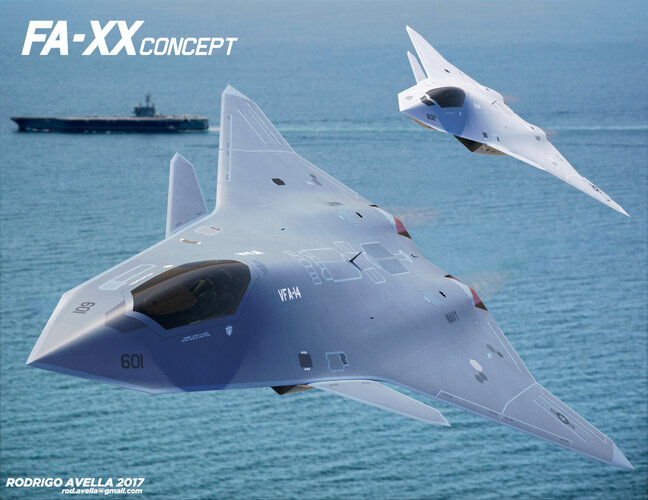
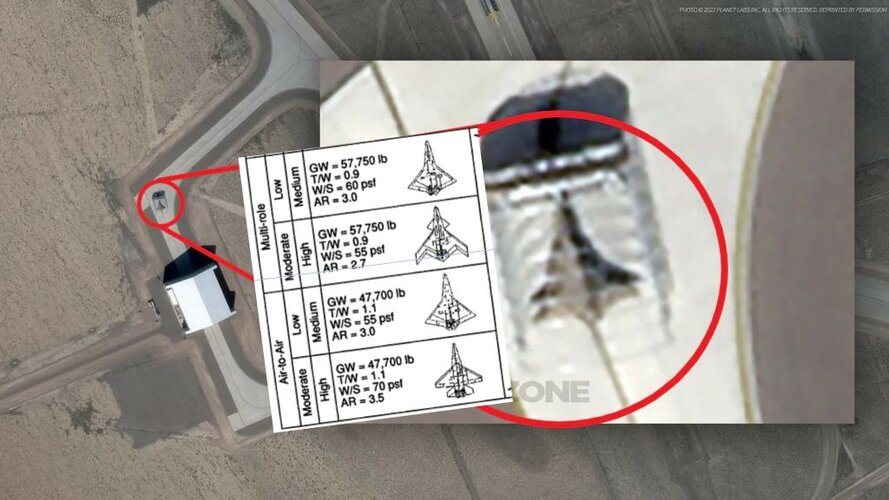
USAF/USN 6th Gen Fighters - F/A-XX, F-X, NGAD, PCA, ASFS News & Analysis [2008- 2025]

Status
Not open for further replies.
People heard about the B-2 in 1980. (Thanks to Carter blowing its cover for political points.) The F-117 was a different type of project. It was more like the original A-12 in that there was a competition but everything was black, even the existence of the program. NGAD is right out there in the public.

I don't blame him for announcing we were working on an ATB when he was taking so much flak from the Reagan campaign over rightly cancelling the B-1A. Yes, he probably could have came out and just talked about how full of crap Reagan was, but Carter was too nice for that.
 
People heard about the B-2 in 1980. (Thanks to Carter blowing its cover for political points.) The F-117 was a different type of project. It was more like the original A-12 in that there was a competition but everything was black, even the existence of the program. NGAD is right out there in the public.

I don't blame him for announcing we were working on an ATB when he was taking so much flak from the Reagan campaign over rightly cancelling the B-1A. Yes, he probably could have came out and just talked about how full of crap Reagan was, but Carter was too nice for that.
Apparently you don't remember Carter like the US does.
 
People heard about the B-2 in 1980. (Thanks to Carter blowing its cover for political points.) The F-117 was a different type of project. It was more like the original A-12 in that there was a competition but everything was black, even the existence of the program. NGAD is right out there in the public.

I don't blame him for announcing we were working on an ATB when he was taking so much flak from the Reagan campaign over rightly cancelling the B-1A. Yes, he probably could have came out and just talked about how full of crap Reagan was, but Carter was too nice for that.

I'm not so sure it makes sense to cancel programs until the next airframe achieves IoC. We've seen issues with both B-2 and F-22 having production cuts that have left the USAF with unreasonably limited numbers of airframes. Let us hope the same problem doesn't effect B-21 and NGAD.
 
People heard about the B-2 in 1980. (Thanks to Carter blowing its cover for political points.) The F-117 was a different type of project. It was more like the original A-12 in that there was a competition but everything was black, even the existence of the program. NGAD is right out there in the public.

I don't blame him for announcing we were working on an ATB when he was taking so much flak from the Reagan campaign over rightly cancelling the B-1A. Yes, he probably could have came out and just talked about how full of crap Reagan was, but Carter was too nice for that.
Apparently you don't remember Carter like the US does.
I remember him quite well. What he taught me is the U.S. doesn't want a President that actually is Christian or honest. He didn't make deals with terrorists like the Reagan campaign did to win an election.
 
People heard about the B-2 in 1980. (Thanks to Carter blowing its cover for political points.) The F-117 was a different type of project. It was more like the original A-12 in that there was a competition but everything was black, even the existence of the program. NGAD is right out there in the public.

I don't blame him for announcing we were working on an ATB when he was taking so much flak from the Reagan campaign over rightly cancelling the B-1A. Yes, he probably could have came out and just talked about how full of crap Reagan was, but Carter was too nice for that.

I'm not so sure it makes sense to cancel programs until the next airframe achieves IoC. We've seen issues with both B-2 and F-22 having production cuts that have left the USAF with unreasonably limited numbers of airframes. Let us hope the same problem doesn't effect B-21 and NGAD.
The B-1A had serious problems that even an comprehensive ECM system, which also didn't work, couldn't fix. The B-1A had no chance whatsoever of penetrating Soviet air space, which was what it was it's specified mission. Also, not putting it in production before IOC wasn't a first. See the XB-70. Instead, a much better aircraft was received, in the form of the B-2. In fact, when you look at aircraft R&D in the seventies, it was all about finding a to way defeat the Soviet Air Defense network. That's why the ATS and ATF and all of the other strike fighter programs being worked on in the seventies morphed into the eighties ATF program. Especially, once they figured out the two tracks they were taking, supercruise long range strike and V.L.O. tech could be effectively merged into a single air frame.
 
People heard about the B-2 in 1980. (Thanks to Carter blowing its cover for political points.) The F-117 was a different type of project. It was more like the original A-12 in that there was a competition but everything was black, even the existence of the program. NGAD is right out there in the public.

I don't blame him for announcing we were working on an ATB when he was taking so much flak from the Reagan campaign over rightly cancelling the B-1A. Yes, he probably could have came out and just talked about how full of crap Reagan was, but Carter was too nice for that.
Apparently you don't remember Carter like the US does.
I remember him quite well. What he taught me is the U.S. doesn't want a President that actually is Christian or honest. He didn't make deals with terrorists like the Reagan campaign did to win an election.
I'll take Reagan over Carter any day. YMMV.
 
Be nice fellas. The politics are history.

I was referring to the reduced numbers of B2 and F22s that were produced. It would be helpful to have more B2 and F22s at the moment. And with reality of their reduced production it would be helpful to have more B1s during this transition to B21.
 
Last edited:

The Civilians will know about the new plane when the production line is set up and pumping out planes so their "expert" bitching cant fuck it up. Which I honestly cant blame them...
People heard about the B-2 in 1980. (Thanks to Carter blowing its cover for political points.) The F-117 was a different type of project. It was more like the original A-12 in that there was a competition but everything was black, even the existence of the program. NGAD is right out there in the public.
No no no..... By US law the ATB had to be made public knowledge. Carter revealed at a time when it may have helped his poles but it lawfully had to be made public.

If Carter wanted to really boost his poles he would have revealed the F117 but he did not.
 

So, I've listened through the interview and at no point does Kendall say that NGAD is in production.

This is a reporter taking a huge leap from the "flying demonstrator" we've been talking about for a couple of years now.
More likely a reporter who doesn't know the difference between producing a demonstrator and being in production. You can have demonstrators in production, or prototypes in production, without having production aircraft.
This is true. Reporters are notorious for being stupid people.
 

The Civilians will know about the new plane when the production line is set up and pumping out planes so their "expert" bitching cant fuck it up. Which I honestly cant blame them...
People heard about the B-2 in 1980. (Thanks to Carter blowing its cover for political points.) The F-117 was a different type of project. It was more like the original A-12 in that there was a competition but everything was black, even the existence of the program. NGAD is right out there in the public.
No no no..... By US law the ATB had to be made public knowledge. Carter revealed at a time when it may have helped his poles but it lawfully had to be made public.

If Carter wanted to really boost his poles he would have revealed the F117 but he did not.
The F-117 was small potatoes compared to the B-1A replacement.
 

The Civilians will know about the new plane when the production line is set up and pumping out planes so their "expert" bitching cant fuck it up. Which I honestly cant blame them...
People heard about the B-2 in 1980. (Thanks to Carter blowing its cover for political points.) The F-117 was a different type of project. It was more like the original A-12 in that there was a competition but everything was black, even the existence of the program. NGAD is right out there in the public.
No no no..... By US law the ATB had to be made public knowledge. Carter revealed at a time when it may have helped his poles but it lawfully had to be made public.

If Carter wanted to really boost his poles he would have revealed the F117 but he did not.
The F-117 was small potatoes compared to the B-1A replacement.
Its all in the optics and probably would have gave him a boost nonetheless.
 
A bit more from Collins Aerospace´s art-department (which may have ties with LM´s art-department)

(If already shown somewhere in this thread, or unwanted, then feel free to remove.)


Attachments

  • col-ngad_pic2.jpg
    col-ngad_pic2.jpg
    92.5 KB · Views: 165
  • col-ngad.jpg
    col-ngad.jpg
    102.7 KB · Views: 165
Did they procure the rights to it? Hopefully the artist has at least gotten a decent royalty out of it.
 
Last edited:
Did they procure the rights to it? Hopefully the artist has at least gotten a decent royalty out of it.

I´d like to know that too...
And are his concept-arts often used by aerospace companies, or is this a first?
 
Frank Kendall on drones to accompany NGAD and B-21:

“We’re looking for systems that cost nominally on the order of at least half as much as the manned systems that we're talking about for both NGAD and for B-21” while adding capability, he said. “ … They could deliver a range of sensors, other mission payloads, and weapons, or other mission equipment and they can also be attritable or even sacrificed if doing so conferred a major operational advantage – something we would never do with a crewed platform.”

The whole article is pretty useful imo, though broader in scope:

 
Question: if a bomber has to be manned to carry nuclear weapons, according to doctrine, what would be the case with an unmanned loyal wingman? Suppose the wingman is a considerable distance away, linked by sat or whatever.
 
Question: if a bomber has to be manned to carry nuclear weapons, according to doctrine, what would be the case with an unmanned loyal wingman? Suppose the wingman is a considerable distance away, linked by sat or whatever.
If a cruise missile can have a nuclear warhead why not a UCAV? Remember, even back in the 60s, Project Pluto was basically an unmanned bomber.
 
Question: if a bomber has to be manned to carry nuclear weapons, according to doctrine, what would be the case with an unmanned loyal wingman? Suppose the wingman is a considerable distance away, linked by sat or whatever.

I would be suprised if any new penetration systems rely on satellite communications. Line-of-site from >60k feet is a considerable distance.
 
Another tidbit of info found on the internet (via DreamlandResort.com):

Next-Generation, Power-Electronics Materials for Naval Aviation Applications​

Description:

TECHNOLOGY AREA(S): Materials, Electronics, Weapons
OBJECTIVE: Develop wide-band gap (WBG) electronic material systems for naval aviation applications.
DESCRIPTION: The energy optimized aircraft (EOA) technology concept is continually evolving and being recognized as a game-changer for war fighting capabilities. The main objective of EOA is to systematically replace on-board hydraulic and pneumatic systems with electrical systems to power flight controls, landing gear, and engines starts. The key feature of EOA includes a switch from AC (alternating current) to DC (direct current) power distribution to allow exchanges of energy between equipment, which minimizes electromagnetic interferences (EMI) and energy dissipation, and allows regeneration of air-powered electrical power systems (EPS). Power electronics is the discipline that deals with electrical power generation, distribution and energy storage by conversion, control, and management of electrical power. However, the power conversion forms for electrical power categories (i.e., generation, transmission, and use/storage) differ significantly. For example, the main AC power must be converted to DC power for electronic devices; circuits require DC-DC conversion from one voltage level to another; and DC power from renewable energies (i.e., batteries, solar cells, and fuel cells) can be converted to AC electrical power. Power electronics is a key enabling technology for the advancement of EOA to improve both generator (mechanical to electrical) and actuator (electrical to mechanical) energy conversion and includes novel materials capable of withstanding high temperature and high-power density with reduced weight used in Navy-unique, harsh environmental conditions including EMI. With Next Generation Air Dominance (NGAD) on the horizon, it is important to realize the full potential of power electronics to achieve high power and volume density, high efficiency, reliability, and affordability. A wide band gap (WBG) system would have a positive impact on the next-generation aircraft platform by combining secondary power distribution with emerging power electronics. The current distribution system is made up of bulky, low-efficiency, mechanical-based circuit breakers, contactors, and control systems. Replacing such components with power electronics transforms inefficient systems into simple and intelligent power solutions. With diagnostic and prognostic capabilities, power distribution becomes compact and efficient, which results in significant cost, energy, fuel, and weight savings. Thus, modernization of Navy aircraft is enabled though the application of a WBG system. Switch-mode power circuits (i.e., the electronic circuits utilizing switching frequencies) use two types of semiconductor-based switches: two-terminal rectifiers (diodes) and three-terminal switches (transistors). These switches include inherent material properties, such as electron mobility and thermal conductivity [Ref 1], which result in salient features such as the following: (1) high blocking/breakdown voltage [1-10 kilo Volt]; (2) low loss (conversion efficiency of 99%); (3) large current-carrying capacity (kilo Ampere range); (4) high operational frequency (i.e., 1-100 gigahertz]); (5) high-temperature tolerance (i.e., 300 deg C); and (6) low specific ON-contact resistance [~ 0.01 milliohm cm2]. [Ref 2] These devices are silicon (Si)-based and have several advantages and disadvantages. Advantages include that they operate efficiently, are mass produced, are affordable and reliable, and are used in low-power and low-voltage applications. Disadvantages include that the devices have ohmic losses and generate more heat at higher switching frequencies, which necessitate a complex thermal management solution with a limited operating temperate range. The failure rates of the devices double for every 10 deg C increase in temperature. In short, the limits of the physical properties of Si-based devices are fast approaching, which are hindering further progress. Currently naval electronic applications with Si-based devices operate up to 125 deg C. As the demand for high-voltage devices for switching applications increases, a need exists for materials with much higher breakdown fields. Silicon Carbide (SiC), gallium Nitride (GaN), and gallium arsenide (GaAs) materials within electronics have band-gaps up to 3X higher than that of 1.12 electron volts, and hence WBG materials are the choice for next-generation power electronics. WBG devices can operate at a voltage 10 times higher than Si-based power devices because of their higher maximum electric fields and operating temperatures well over 350 deg C. The higher-temperature operation eliminates the need for complex thermal management solutions such as heat sinks and cooling media. WBG systems have the ability to switch at higher frequencies, enabling equipment to drastically reduce in space, weight, and cost. A high-voltage system has the potential to use lightweight materials, resulting in weight savings for the wires and overall aircraft. WBG systems eliminate up to 90% of power losses currently occurring in the energy conversion process and impart huge energy benefits. Challenges associated with the WBG systems include: (1) the hurdles in crystal growth, both from wafer size (6 inches or more) and drastically-reduced, defect densities (i.e., 5000/cm2), need to be overcome; (2) the devices need to exhibit higher power density (i.e., 3MW/m3) to be more efficient (> 98%) and must be affordable (up to 10X reduction from the current price of $1,000/mm2); (3) the processing temperature for SiC (> 2000deg C) compared to Si is high, which requires innovation in synthesis and processing of these classes of materials; and (4) the yield for WBG materials is much lower than Si, resulting in a high market price. Other remaining challenges include identifying substrate materials, epitaxial film growth, and the back-end process of solving interface, interconnect, and package issues towards successful device development and integration. The reliability and durability (i.e., mean-time-between-failure of 2,000 hours) of the devices to meet various MIL-STD specifications for electrical power quality, environmental control, and EMI are major hurdles to overcome [Refs 3-5].

PHASE I: Establish the structure-property relationship for WBG systems (i.e., SiC, GaN, and GaAs). For instance, demonstrate feasibility of improved wafer quality (up to 8 inches) by reducing the dislocation defect density with salient device features. Apply modeling and simulation tools as necessary. The Phase I effort will include prototype plans to be developed under Phase II.

PHASE II: Based upon Phase I results, fully develop the technology into a prototype and demonstrate on an electrical power system application.

PHASE III: Fully develop the airworthy product with performance specifications satisfying targeted acquisition requirements (e.g., F/A-18, MQ-8B, and H-60) coordinated with Navy technical point of contacts. Improve the technology readiness level/manufacturing readiness level (TRL/MRL) of the electrical power system component and transition to platform (F/A-18, MQ-8B, and H-60). For such a representative aircraft EPS, demonstrate the positive SWaP-C (space, weight, and power - cooling) benefits of the relevant showing compactness, high electrical and thermal efficiencies, and miniaturization leading to a next-generation power generation system architecture for EOA. Demonstrate hardware with in-the-loop testing, along with the electrical load analysis of EPS, as an integral part of this effort. The effort will result in developing compact, miniature electronic products that will benefit automobile and consumer electronic market sectors.

REFERENCES:
1: Wide Bandgap Power Electronics Technology Assessment, https://energy.gov/sites/prod/files/2015/02/f19/QTR Ch8 - Wide Bandgap TA Feb-13-2015.pdf
2: Tolbert, L. M., Ozpineci, B., Islam, S. K., and Chinthavali, M. "Wide Bandgap Semiconductors for Utility Applications." IASTED International Conference on Power and Energy Systems (PES 2003), (Palm Springs, CA), page 315 and references therein. http://web.eecs.utk.edu/~tolbert/publications/iasted_2003_wide_bandgap.pdf
3: MIL-STD-810G(1) – Department of Defense Test Method Standard: Environmental Engineering Considerations Laboratory Tests (15 Apr 2014). http://quicksearch.dla.mil/qsDocDetails.aspx?ident_number=35978
4: MIL-STD-461G – Department of Defense Interface Standard: Requirements for the Control of Electromagnetic Interference Characteristics of Subsystems and Equipment (11 Dec 2015). http://quicksearch.dla.mil/qsDocDetails.aspx?ident_number=35789
5: MIL-STD-704F(1) – Department of Defense Aircraft Electrical Power Characteristics (05 Dec 2016). http://quicksearch.dla.mil/qsDocDetails.aspx?ident_number=35901
KEYWORDS: Power Electronics Materials; Wide-band Gap Systems; Wafers; Power Electronic Equipment; Aircraft Applications; Affordable Cost

 
Last edited:
Another tidbit of info found on the internet (via DreamlandResort.com):

Next-Generation, Power-Electronics Materials for Naval Aviation Applications​

Description:

TECHNOLOGY AREA(S): Materials, Electronics, Weapons


REFERENCES:
1: Wide Bandgap Power Electronics Technology Assessment, https://energy.gov/sites/prod/files/2015/02/f19/QTR Ch8 - Wide Bandgap TA Feb-13-2015.pdf
2: Tolbert, L. M., Ozpineci, B., Islam, S. K., and Chinthavali, M. "Wide Bandgap Semiconductors for Utility Applications." IASTED International Conference on Power and Energy Systems (PES 2003), (Palm Springs, CA), page 315 and references therein. http://web.eecs.utk.edu/~tolbert/publications/iasted_2003_wide_bandgap.pdf
3: MIL-STD-810G(1) – Department of Defense Test Method Standard: Environmental Engineering Considerations Laboratory Tests (15 Apr 2014). http://quicksearch.dla.mil/qsDocDetails.aspx?ident_number=35978
4: MIL-STD-461G – Department of Defense Interface Standard: Requirements for the Control of Electromagnetic Interference Characteristics of Subsystems and Equipment (11 Dec 2015). http://quicksearch.dla.mil/qsDocDetails.aspx?ident_number=35789
5: MIL-STD-704F(1) – Department of Defense Aircraft Electrical Power Characteristics (05 Dec 2016). http://quicksearch.dla.mil/qsDocDetails.aspx?ident_number=35901
KEYWORDS: Power Electronics Materials; Wide-band Gap Systems; Wafers; Power Electronic Equipment; Aircraft Applications; Affordable Cost

Mate, could you maybe add paragraphs and such to this WALL OF TEXT?
 
Last edited:

The service requested $1.65 billion for the Next Generation Air Dominance program, a boost of about $133 million that mostly pays for advanced sensors and resilient communications gear associated with the sixth-generation fighter, Peccia said. The service also included $113 million for “advanced collaborative platforms” — the Air Force’s latest jargon for “Loyal Wingman” style drones that will augment NGAD and the B-21.

It contains $354 million for the Advanced Engine Development program, which includes $286 million for the Adaptive Engine Technology Program and $66 million for the Next Generation Adaptive Propulsion effort.
 
On the Navy’s side of the house.


THE PENTAGON – The Navy is spending more money to develop its sixth-generation fighter program but is keeping the costs classified for the third year in a row, the service said on Monday.

For the last three budget cycles, the Navy has classified the research and development dollars it’s spending on Next Generation Air Dominance (NGAD) and service officials have provided few details about the program due to the classification. The Fiscal Year 2023 proposal, unveiled Monday, lists NGAD under the aircraft section of its research and development efforts without dollar figures.

“Although NGAD is a classified line, investments do go up over the [Future Years Defense Program] somewhat dramatically for NGAD,” Rear Adm. John Gumbleton, the Navy’s deputy assistant secretary for budget, told reporters during a Monday briefing. Gumbleton was referring to the Pentagon’s five-year budget outlook.

Asked how the Navy justifies the classification and how the service will make the case to the taxpayer that it needs the money despite not revealing the specific cost, Gumbleton said Capitol Hill is looped in on the numbers.

“Our folks on the Hill who monitor this program and approve those budgets are read into these programs and they have full access to understand what we’re requesting and what they cost,” he said.

Pressed on why the program is classified, Gumbleton referred USNI News to the NGAD program manager.

Naval Air Systems Command, where the NGAD program office resides, did not immediately respond to a list of questions from USNI News.

The Navy last disclosed spending lines for NGAD in its FY 2020 budget books, asking for approximately $20.7 million in research and development dollars for the initiative at the time. That year’s budget books projected dollar figures throughout the FYDP, with the amount increasing each fiscal year. At the time, the Navy projected it would ask for $55.05 million in FY 2021, $111.26 in FY 2022, $255.59 in FY 2023, and $371.9 million in FY 2024 for NGAD.

While Navy officials have said little about the NGAD program, the service has acknowledged it will be a family of both manned and unmanned systems centered around a manned fighter, or F/A-XX.

“Bottom line is we see a threat out there that requires capabilities that we do not currently posses, from signature and speed and range capabilities. And so the sixth-generation program is built to solve those problems,” Rear Adm. Andrew Loiselle, who leads the chief of naval operation’s air warfare directorate (OPNAV N98), told USNI News in a December interview.

Loiselle described NGAD as a “highly classified” program, but could not say how long it would be classified.

“I can’t really answer that question. I don’t have a number,” he said at the time. “I would anticipate it’s going to be highly classified for quite some time.”

The Pentagon has kept parts of other fighter programs – like the F-35 Lightning II Joint Strike Fighter – classified, but it’s rare to classify spending lines.The Air Force’s F-117 Nighthawk program – developed in the 1970s – and the early effort for the Navy’s A-12 Avenger II attack aircraft, which was canceled in the 1990s, were both classified.

The Navy needs NGAD to come online in the 2030s so the family of systems can replace the earliest F/A-18E/F Super Hornets and EA-18G Growlers when they are set to reach the end of their service lives.

In addition to NGAD, the Navy is also developing its next-generation destroyer, or DDG(X), to succeed the Arleigh Burke-class destroyers and its next-generation attack submarine, or SSN(X), to succeed the Virginia-class boats. The service is seeking $196 million in research and development funding for DDG(X) in FY 2023 and $237 million for SSN(X).

Aviation Week's reporting from Steve Trimble suggests that the Navy's NGAD/F/A-XX is not as ambitious as the Air Force's.

The U.S. Navy plans to ramp up spending for the classified Next Generation Air Dominance Family of Systems (NGAD) over the next six years, a U.S. Navy official said March 28.

Research and development funding “goes up fairly significantly” through fiscal 2027, says Rear Adm. John Gumbleton, deputy assistant secretary of the Navy for Budget.

Gumbleton’s remarks offer a rare glimpse into the Navy’s secret funding plans for the program that intends to replace the Boeing F/A-18E/F fleet in the 2030s.

The Navy previously disclosed the program’s long-term spending plans, but then started classifying that information three years ago.

As of May 2019, Navy officials said they were seeking a new tactical aircraft with different characteristics than sought by the Air Force’s version of NGAD. While the Air Force’s plans called for a penetrating aircraft, the Navy’s requirements did not include an aircraft stealthy enough to penetrate highly contested airspace.

The Navy’s version of the NGAD family is expected to operate alongside the Lockheed Martin F-35C.

Honestly, I think we should have separate threads for the Air Force and Navy NGAD programs. It’s clear that despite the identical names, they’re distinct programs of record.
 
Last edited:
IIRC AF NGAD was to be like F-22 to B-2, an air supremacy platform for B-21.

A case needs to be made on how to handle SEAD and EW. In an A2AD environment is this likely to be handled by F-16's and growlers?

Is there enough advancement in sensor fusion and EW software to offload this capability by reduced workload to variants of unmanned, stealthy (and subsonic), SEAD/EW versions of bomb trucks pre-positioned to accompany a single seat NGAD or perhaps an EW variant of the two seat B-21? For example, instead of sending 50 SEAD jets, can I send 9 piloted jets and 41 or more unmanned, stealthy SEAD bomb trucks carrying decoys, drones, and HARM's? For EW, can I send 3 EW versions of the B-21 airframe and 9 or more unmanned, stealthy EW trucks?

If possible, it seems like this would provide range, loiter, and magazine capacity while reducing the likelihood of loosing pilots in difficult territory. Standardization makes it possible to build many, many unmanned, stealthy bomb trucks, reducing cost and resulting in more persistent pressure on your adversary's air defense, allowing them less time to recover. The manned aircraft can be staggered in and out of the fight while the unmanned trucks keep coming. I could see Navy F-35Cs providing HAVCAP missions for a constant stream of unmanned, stealthy bomb trucks. The SEAD manned aircraft might even be augmented by forward deployed F-35Bs. This may result in, qualitatively, more sorties and be advantageous when dealing with a large adversary.
 
IIRC AF NGAD was to be like F-22 to B-2, an air supremacy platform for B-21.

A case needs to be made on how to handle SEAD and EW. In an A2AD environment is this likely to be handled by F-16's and growlers?

Is there enough advancement in sensor fusion and EW software to offload this capability by reduced workload to variants of unmanned, stealthy (and subsonic), SEAD/EW versions of bomb trucks pre-positioned to accompany a single seat NGAD or perhaps an EW variant of the two seat B-21? For example, instead of sending 50 SEAD jets, can I send 9 piloted jets and 41 or more unmanned, stealthy SEAD bomb trucks carrying decoys, drones, and HARM's? For EW, can I send 3 EW versions of the B-21 airframe and 9 or more unmanned, stealthy EW trucks?

If possible, it seems like this would provide range, loiter, and magazine capacity while reducing the likelihood of loosing pilots in difficult territory. Standardization makes it possible to build many, many unmanned, stealthy bomb trucks, reducing cost and resulting in more persistent pressure on your adversary's air defense, allowing them less time to recover. The manned aircraft can be staggered in and out of the fight while the unmanned trucks keep coming. I could see Navy F-35Cs providing HAVCAP missions for a constant stream of unmanned, stealthy bomb trucks. The SEAD manned aircraft might even be augmented by forward deployed F-35Bs. This may result in, qualitatively, more sorties and be advantageous when dealing with a large adversary.
There is an AARGM-ER in the works for internal carry and also various MALD options, including one with a warhead in the works I think.
 
On the Navy’s side of the house.


THE PENTAGON – The Navy is spending more money to develop its sixth-generation fighter program but is keeping the costs classified for the third year in a row, the service said on Monday.

For the last three budget cycles, the Navy has classified the research and development dollars it’s spending on Next Generation Air Dominance (NGAD) and service officials have provided few details about the program due to the classification. The Fiscal Year 2023 proposal, unveiled Monday, lists NGAD under the aircraft section of its research and development efforts without dollar figures.

“Although NGAD is a classified line, investments do go up over the [Future Years Defense Program] somewhat dramatically for NGAD,” Rear Adm. John Gumbleton, the Navy’s deputy assistant secretary for budget, told reporters during a Monday briefing. Gumbleton was referring to the Pentagon’s five-year budget outlook.

Asked how the Navy justifies the classification and how the service will make the case to the taxpayer that it needs the money despite not revealing the specific cost, Gumbleton said Capitol Hill is looped in on the numbers.

“Our folks on the Hill who monitor this program and approve those budgets are read into these programs and they have full access to understand what we’re requesting and what they cost,” he said.

Pressed on why the program is classified, Gumbleton referred USNI News to the NGAD program manager.

Naval Air Systems Command, where the NGAD program office resides, did not immediately respond to a list of questions from USNI News.

The Navy last disclosed spending lines for NGAD in its FY 2020 budget books, asking for approximately $20.7 million in research and development dollars for the initiative at the time. That year’s budget books projected dollar figures throughout the FYDP, with the amount increasing each fiscal year. At the time, the Navy projected it would ask for $55.05 million in FY 2021, $111.26 in FY 2022, $255.59 in FY 2023, and $371.9 million in FY 2024 for NGAD.

While Navy officials have said little about the NGAD program, the service has acknowledged it will be a family of both manned and unmanned systems centered around a manned fighter, or F/A-XX.

“Bottom line is we see a threat out there that requires capabilities that we do not currently posses, from signature and speed and range capabilities. And so the sixth-generation program is built to solve those problems,” Rear Adm. Andrew Loiselle, who leads the chief of naval operation’s air warfare directorate (OPNAV N98), told USNI News in a December interview.

Loiselle described NGAD as a “highly classified” program, but could not say how long it would be classified.

“I can’t really answer that question. I don’t have a number,” he said at the time. “I would anticipate it’s going to be highly classified for quite some time.”

The Pentagon has kept parts of other fighter programs – like the F-35 Lightning II Joint Strike Fighter – classified, but it’s rare to classify spending lines.The Air Force’s F-117 Nighthawk program – developed in the 1970s – and the early effort for the Navy’s A-12 Avenger II attack aircraft, which was canceled in the 1990s, were both classified.

The Navy needs NGAD to come online in the 2030s so the family of systems can replace the earliest F/A-18E/F Super Hornets and EA-18G Growlers when they are set to reach the end of their service lives.

In addition to NGAD, the Navy is also developing its next-generation destroyer, or DDG(X), to succeed the Arleigh Burke-class destroyers and its next-generation attack submarine, or SSN(X), to succeed the Virginia-class boats. The service is seeking $196 million in research and development funding for DDG(X) in FY 2023 and $237 million for SSN(X).

Aviation Week's reporting from Steve Trimble suggests that the Navy's NGAD/F/A-XX is not as ambitious as the Air Force's.

The U.S. Navy plans to ramp up spending for the classified Next Generation Air Dominance Family of Systems (NGAD) over the next six years, a U.S. Navy official said March 28.

Research and development funding “goes up fairly significantly” through fiscal 2027, says Rear Adm. John Gumbleton, deputy assistant secretary of the Navy for Budget.

Gumbleton’s remarks offer a rare glimpse into the Navy’s secret funding plans for the program that intends to replace the Boeing F/A-18E/F fleet in the 2030s.

The Navy previously disclosed the program’s long-term spending plans, but then started classifying that information three years ago.

As of May 2019, Navy officials said they were seeking a new tactical aircraft with different characteristics than sought by the Air Force’s version of NGAD. While the Air Force’s plans called for a penetrating aircraft, the Navy’s requirements did not include an aircraft stealthy enough to penetrate highly contested airspace.

The Navy’s version of the NGAD family is expected to operate alongside the Lockheed Martin F-35C.

Honestly, I think we should have separate threads for the Air Force and Navy NGAD programs. It’s clear that despite the identical names, they’re distinct programs of record.
Looking at the dollars, that's really not very much money. Tells me that they are long long away away from flying something or they are developing a super super hornet with new wings and engines.
 
Perhaps a relevant comparison would be the ATF funding during the RFI and Dem/Val phases. Don’t have the numbers for the former on hand, but Dem/Val was completed in FY 1991 at $3.8 billion.

That said, there is certainly a vast disparity between the Navy and the Air Force in terms of their respective NGAD budgets. Again, this may point to the Navy’s F/A-XX being not as ambitious as the Air Force’s F-X/PCA; perhaps the Navy would be content with a 5.5 generation analogue of the F-14B/D. Even so, those funding numbers don’t exactly point to the Navy realistically fielding the aircraft by the 2030s.
 
Last edited:

Attachments

  • sus3.jpg
    sus3.jpg
    114.6 KB · Views: 236
We already spent 4 pages discussing this here. Searching for the URL before posting would have led you there.
 
Perhaps a relevant comparison would be the ATF funding during the RFI and Dem/Val phases. Don’t have the numbers for the former on hand, but Dem/Val was completed in FY 1991 at $3.8 billion.

That said, there is certainly a vast disparity between the Navy and the Air Force in terms of their respective NGAD budgets. Again, this may point to the Navy’s F/A-XX being not as ambitious as the Air Force’s F-X/PCA; perhaps the Navy would be content with a 5.5 generation analogue of the F-14B/D. Even so, those funding numbers don’t exactly point to the Navy realistically fielding the aircraft by the 2030s.
I certainly think with the navy budget dollars published that they are not pursuing a 6 gen platform. I'm seriously expecting a slightly stealthier hornet with recessed missile carriage like the Korean bird. With true stealth you need a bigger airplane for internal fuel and missiles and space is cramped even in the Ford which is counter productive to airframes on the deck. With that budget you're looking at 2035 for entry into the fleet
 
Status
Not open for further replies.

Similar threads

Back
Top Bottom