
You are using an out of date browser. It may not display this or other websites correctly.
You should upgrade or use an alternative browser.
You should upgrade or use an alternative browser.
USAF/USN 6th Gen Fighters - F/A-XX, F-X, NGAD, PCA, ASFS News & Analysis [2008- 2025]
- Thread starter Matej
- Start date
- Status
- Not open for further replies.

- Joined
- 6 August 2007
- Messages
- 4,530
- Reaction score
- 10,229
When I read "MLP" the first thing that comes to my mind is "Mobile Launch Platform".
My Little Pony. KC-46
siegecrossbow
I really should change my personal text
- Joined
- 12 March 2012
- Messages
- 843
- Reaction score
- 2,903
Computing power increases in power and/or drops in cost at a staggering rate. Perhaps the first few increments of CCAs will not have a “big picture” type software agent, but I think a few iterations in they will. If we are talking about off the shelf commercial processors, it simply will not be prohibitively expensive to give a multi million dollar CCA an air management AI. Smaller stuff - more disposable UAVs and expendable decoys - can be directly controlled by the CCAs.
You still need to harden it against EW and possibly microwave weapons going forward. Probably will lag state of the art civilian process for some time.

_Del_
I really should change my personal text... Or not.
- Joined
- 4 January 2012
- Messages
- 1,315
- Reaction score
- 1,874
https://www.airandspaceforces.com/tankers-likely-the-first-aircraft-to-receive-abms-upgrades/Ive tried for too long on a weekend to look up what MLP means in this context…. I know Pegasus is getting ABMS as part of CR1 but am i missing something obvious but non-official with “MLP” apologies and thx in advance
Tis a joke.
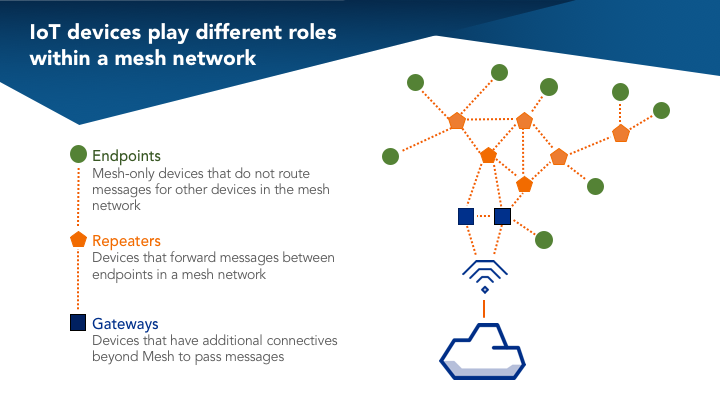
If the Pegasus new pod or otherwise has JREAP-C terminal (previously demonstrated), then it can use military or commercial networks sending TDL info over internet protocol. Anything connected to the internet on Starshield/Starlink can function as part of the mesh network. Both (or multiple) nodes can send and receive data over IP and share that with any platform/node they can reach otherwise. Those nodes can share with anyone it can reach on the network, and so on. Which means all this sharing can be beyond line of sight even if not everyone has JREAP-C.
This is how someone else and I otherwise butted heads earlier, because the Link-16 data can absolutely be sent over IP networks. And the node does not have to be so enabled by hardware. It can be a standard TDL node. It just needs to connect to a gateway JREAP-C node and then it will be shared like normal with everyone over standard TDL, and/or everyone connected to the network with JREAP-C gear (who then also share like normal).
One JREAP-C equipped CCA can communicate from a dozen CCA drones in it's sight to an off the shelf F-16 if it goes through Starshield (or any other network) to be shared at the other gateway. Everything is a repeater in the Link-16 network. If you can get data over the commercial network to another gateway, say a tanker, there is no reason it cannot share with platforms half a world a way (latency could be an issue until they get more hardware and bandwidth up there and stop using commercial networks).
Attachments
Last edited:
You still need to harden it against EW and possibly microwave weapons going forward. Probably will lag state of the art civilian process for some time.
I am not aware of any directed energy weapon that remotely approaches the envelope of an AIM-120.

- Joined
- 30 May 2023
- Messages
- 664
- Reaction score
- 1,436
My Little Pony. KC-46
LOL thank you. I saw the Vance / MLP stuff in one the searches and thought it can’t be thought.

You can also have a considerably higher fuel fraction, both by increasing fuel capacity and reducing weight. Relaxing some of the demanding but rarely used maneuver parameters from the F-22 can save quite a bit of weight. And as is, even the F-22's fuel fraction isn't quite what was originally intended due to cost saving measures during EMD that deactivated certain fuel tanks.That says 18% over F119. Nice, and a significant improvement.
But I repeat, even a 25% increase in efficiency over the F119 will not give the range they're talking about in an F-22 sized airframe.
Note that the 18% range improvement for the F-22 refers to the application of AETP/NGAP technology for a Raptor-specific powerplant (i.e. enhanced F119), not the direct application of the NGAP engines (XA102 and XA103) themselves.
- Joined
- 15 January 2021
- Messages
- 649
- Reaction score
- 2,859
It also might not be a 3-Stream engine. It could just be injection of AETP/NGAP technologies in the F119 architecture, like using the F135 ECU core module, modified to fit the F119 internal interfaces.You can also have a considerably higher fuel fraction, both by increasing fuel capacity and reducing weight. Relaxing some of the demanding but rarely used maneuver parameters from the F-22 can save quite a bit of weight. And as is, even the F-22's fuel fraction isn't quite what was originally intended due to cost saving measures during EMD that deactivated certain fuel tanks.
Note that the 18% range improvement for the F-22 refers to the application of AETP/NGAP technology for a Raptor-specific powerplant (i.e. enhanced F119), not the direct application of the NGAP engines (XA102 and XA103) themselves.
Scott Kenny
ACCESS: USAP
- Joined
- 15 May 2023
- Messages
- 19,517
- Reaction score
- 27,965
Which still takes a big chunk of volume, weight, power, and cooling in the CCA. And that costs money. So does armoring the processors to military standards.Yes, and no. It is software and it will be airframe agnostic defined only by mission set. Airframe capabilities incl. available weapons are only one of the variables. If you can run GPT at home, then most probably you can put such model on the CCA airframe.
Latency will still be an issue when you're bouncing up to satellites and back down. It's 15 light-seconds from Earth to Moon, 15 seconds back down. It's over half a second to the usual comms satellites and back down, and roughly a second and a half to bounce off 3 satellites to reach the far side of the planet.If the Pegasus new pod or otherwise has JREAP-C terminal (previously demonstrated), then it can use military or commercial networks sending TDL info over internet protocol. Anything connected to the internet on Starshield/Starlink can function as part of the mesh network. Both (or multiple) nodes can send and receive data over IP and share that with any platform/node they can reach otherwise. Those nodes can share with anyone it can reach on the network, and so on. Which means all this sharing can be beyond line of sight even if not everyone has JREAP-C.
This is how someone else and I otherwise butted heads earlier, because the Link-16 data can absolutely be sent over IP networks. And the node does not have to be so enabled by hardware. It can be a standard TDL node. It just needs to connect to a gateway JREAP-C node and then it will be shared like normal with everyone over standard TDL, and/or everyone connected to the network with JREAP-C gear (who then also share like normal).
One JREAP-C equipped CCA can communicate from a dozen CCA drones in it's sight to an off the shelf F-16 if it goes through Starshield (or any other network) to be shared at the other gateway. Everything is a repeater in the Link-16 network. If you can get data over the commercial network to another gateway, say a tanker, there is no reason it cannot share with platforms half a world a way (latency could be an issue until they get more hardware and bandwidth up there and stop using commercial networks).
500ms latency is no bueno in combat.
Typical latency over Starlink with a local node (Ground Station for example) is on the order of 25-50ms (can be pushed even lower) . The whole point of starlink and starshield’s LEO constellation is to shorten distance to the satellite and reduce latency.Which still takes a big chunk of volume, weight, power, and cooling in the CCA. And that costs money. So does armoring the processors to military standards.
Latency will still be an issue when you're bouncing up to satellites and back down. It's 15 light-seconds from Earth to Moon, 15 seconds back down. It's over half a second to the usual comms satellites and back down, and roughly a second and a half to bounce off 3 satellites to reach the far side of the planet.
500ms latency is no bueno in combat.
Scott Kenny
ACCESS: USAP
- Joined
- 15 May 2023
- Messages
- 19,517
- Reaction score
- 27,965
Vetted data sets are not cheap.Something as ubiquitous as LLM AI that has been eating garbage all its life is dangerous and unnecessary. Aircraft AI will be given narrowly defined data that has been tagged and cleaned by humans and used for specific tasks to give automation a facsimile of intuition: recognizing new EW wave forms and countering them with ECM, recognizing new target types or targets that are masking their EO/IR signature with camo or light emitters, and of course the software agent(s) that actually fly the CCAs. There is little reason not to install one on manned NGAD as a fallback; it could handle surprise situations while the aircrew focused on managing a wider network of unmanned aircraft.
Carefully vetted data sets are doubly so.
It's 15 light-seconds from Earth to Moon, 15 seconds back down.
1.5 light-seconds not 15 light-seconds,
Which still takes a big chunk of volume, weight, power, and cooling in the CCA. And that costs money. So does armoring the processors to military standards.
Latency will still be an issue when you're bouncing up to satellites and back down. It's 15 light-seconds from Earth to Moon, 15 seconds back down. It's over half a second to the usual comms satellites and back down, and roughly a second and a half to bounce off 3 satellites to reach the far side of the planet.
500ms latency is no bueno in combat.
The LEO satellites in orbit by 2028 will have significantly shorter latency and lag time is less significant if the platforms are mostly automated. C&C should be more general - setting behavior and mission, or possibly operating area and target set.
But there would still need to be some kind of graceful degradation mode in case satellite contact was lost.
Vetted data sets are not cheap.
Carefully vetted data sets are doubly so.
Never the less they will be made (more likely already in process). The advantages offered are too great to ignore.
ETA: a dataset for a very specific purpose would also be several orders of magnitude smaller than a LLM. For instance an EW software agent largely just needs to know everything on file about friendly and opponent wave forms and how to jam them. Chances are that data is already stored in a highly organized and vetted form.
Last edited:
_Del_
I really should change my personal text... Or not.
- Joined
- 4 January 2012
- Messages
- 1,315
- Reaction score
- 1,874
It's about .001 seconds to a LEO satellite like Starlink, plus whatever distance it travels on network. Not the biggest concern.Latency will still be an issue when you're bouncing up to satellites and back down. It's 15 light-seconds from Earth to Moon, 15 seconds back down. It's over half a second to the usual comms satellites and back down, and roughly a second and a half to bounce off 3 satellites to reach the far side of the planet.

Kat Tsun
eeeeeeeeeeeeeee
- Joined
- 16 June 2013
- Messages
- 1,887
- Reaction score
- 2,666
Since the LLMs are starting to show collapses due to them "eating"/analyzing LLM-created bullshit, I doubt that we will see LLMs on military aircraft.
Not important for parsing battlefield orders versus making Wikipedia 2. Combat LLMs would have their own training data sets.
- Joined
- 6 August 2007
- Messages
- 4,530
- Reaction score
- 10,229
I doubt that we will see LLMs on military aircraft
Large Language Models are statistical models of language that are specific to natural language processing. LLMs do not make decisions or have the ability to reason. There is not a good use case for a natural language interface on a military aircraft.
ubiquitous08
ACCESS: Confidential
- Joined
- 11 November 2008
- Messages
- 68
- Reaction score
- 66
LLMs are especially bad at dealing with new situations outside their training data so are especially vulnerable to novel tactics.
NeilChapman
Interested 3rd party
- Joined
- 14 December 2015
- Messages
- 1,319
- Reaction score
- 562
Rapidly iterate...Nope, far from dead. As of early summer it was very much alive. USAF wants to produce small numbers at a time and constantly iterate. 3-6 years for each airframe iteration, with 8-16 year service life.
Each iteration could be made by a different contractor. They want to get away from “winner take all” and use CCA to incubate new contractors.
Something we can thank SpaceX (Musk) for.
NeilChapman
Interested 3rd party
- Joined
- 14 December 2015
- Messages
- 1,319
- Reaction score
- 562
A blockade would be imposed the moment the PRC decides to invade Taiwan and attempts to send PLA forces across the Taiwan strait.
What would that look like?
NeilChapman
Interested 3rd party
- Joined
- 14 December 2015
- Messages
- 1,319
- Reaction score
- 562
CCA bullshit can't replace a plane like the F-22, it is like fighting a jet with piston engine. Musk is saying bullshit, he want to sell is starlink service for the drone fleet , but soon the conflict will be in space, to shot down the CCA fleet shoot the Starlink satellite detonate a nuclear weapon in orbit an bye bye the marvelous drone fleet. There is nothing better than a human in a real fighter , they must look at the Ukraine war carefully with no dominance in the air no win. Musk is a genious for Space but know nothing about military aviation.
A couple of thoughts...
DoD is already purchasing a separate version of the Starlink service. Spacex was the only satellite system that the russians weren't able to jam. It would make sense that the DoD version would be hardened.
Setting off a nuclear weapon in space would be politically catastrophic for the CCP.
Space is really big and SpaceX has a lot of satellites.
NeilChapman
Interested 3rd party
- Joined
- 14 December 2015
- Messages
- 1,319
- Reaction score
- 562
This is the problem. None of this should be surprising considering DoD has been stating this for years, yet the "news" outlets that are most often read and cited here do not report on them.
Frankly, most of our forum members do a better job of reporting the news on these topics than those sites do. Which... is why... those places... keep using material from the forum.
Hold my beer....
View attachment 751162
How deep is the magazine?
With AI, and iteration for both design and manufacturing techniques, you can have faster, cheaper, and better. This is something else that Musk knows how to do. This is not something that you get when you have an accountant running an aerospace company.
NeilChapman
Interested 3rd party
- Joined
- 14 December 2015
- Messages
- 1,319
- Reaction score
- 562
What do we need NOW and the next ten-fifteen years? Not what can we deliver in fifteen years time. The catch is if you commit to an extremely expensive and capable NGAD right now, you might be caught holding the bag in fifteen years when the technology delivers even further. The expensive NGAD that is redundant and worse tying up assets you could have used to field the new technologies.
That's where the talk about "re-imagining" and punting on NGAD commitment is coming from, and where the small, fast, programs delivering cheap aircraft with short life cycles generates from. They aren't being completely feckless. We're on the dawn of truly revolutionary technology, and noone wants their balls in the vice because we emptied the treasury for a very fancy and redundant aircraft that missed the revolution.
Yes
I would argue the time frame is 2-5 years. The PRC needs to see an unencumbered US economy growing at 3+ percent per year, rapid progress with CCA, and a complete transformation in munitions production.
It was a full two years before the US economy was able to get on a war footing after 1941. And that was when the country built its own machine tools. The best that can be done today is to convince them that's the direction that they're going.
NeilChapman
Interested 3rd party
- Joined
- 14 December 2015
- Messages
- 1,319
- Reaction score
- 562
Regardless of AI the manufacturing/logistics aspect remains the same. Capability = cost so the more capable the drone the more expensive they are to build and logistically support. Meaning you won't be able to afford absurd numbers of them in the air. 100,000 dirt-cheap quadcopters or kamikaze drones aren't going to do much of anything when they run out of power and fall into the ocean. The distances needing to be flown, the projected levels of air defense and enemy EW support, that all requires some minimum level of capability that AI isn't going to fundamentally change the balance of. Designs like the MQ-28 and MQ-58 are probably the bare minimum that would be useful in an offensive sense that aren't just a one-way expendable munition. But of course, you need other platforms providing them the much of the sensor data and coordinating with them to perform successful sorties.
I'm not suggesting quadcopters are the answer.
But Taiwan is not very far from the northern Philippines, nor Yonaguni. There are lots of islands in the Ryukyu island chain.
NeilChapman
Interested 3rd party
- Joined
- 14 December 2015
- Messages
- 1,319
- Reaction score
- 562
In war, a one way trip makes a lot of sense.Might be surprised on the range for a Valkyrie. It won't lug 2000 lbs that far down range, but if you can by 10 or more of them that far for the price of one X-47B-style UCAV, I'm not sure the math leans in the direction of the more capable platform.
- Joined
- 6 August 2007
- Messages
- 4,530
- Reaction score
- 10,229
Rapidly iterate...
Something we can thank SpaceX (Musk) for.
No, they have been very clear that they are following the model of consumer cell phones.
They want to have a hardware platform that allows them to rapidly solve problems through software, and iterate the hardware as rapidly as feasible.
NeilChapman
Interested 3rd party
- Joined
- 14 December 2015
- Messages
- 1,319
- Reaction score
- 562
We can basically fix this issue until like 2050+ ish without increasing taxes on anyone making below 150k a year. Also optimizing/reforming the big three SS, medicare/medicaid would help a bunch too, there's a lot that can be done.
From what I remember Trump/GOP in 2016 proposed a pretty solid tax reform idea but dropped it in the final bill, they could bring it back again this time and that would actually go a long way and allow way more openings for
The big three don't affect the budget. They were already paid for by our taxes we used to pay directly into them. The problem is congress likes to loot them to give tax cuts to the wealthy and the wealthy don't want to pay it back. They can keep their greedy paws off of my earned benefits that I already paid for.
This is way off topic.
Let's wait and see what they're able to do.
NeilChapman
Interested 3rd party
- Joined
- 14 December 2015
- Messages
- 1,319
- Reaction score
- 562
Worth noting that with the widespread adoption of the F-35's worldwide, designers are tailoring new weapons within this constraints. Many/most munitions in the next ten-fifteen years are going to be designed around that size-constraint. In spite of that they will probably increase, not decrease, the ability to deliver whatever effect downrange be it AAM, ARM, cruise-missile, ASh, EW, etc
The next fielded combat aircraft won't have to size themselves to carry 4 AMRAAM internally to deliver that equivalent effect downrange, or perhaps it is sized to deliver that effectx10 or more with a smaller bay than the F-35, as one example.
Let's hope that comes with a cost reduction as well. These munitions are ridiculously expensive. Has anyone determined what they currently cost per kilo?
NeilChapman
Interested 3rd party
- Joined
- 14 December 2015
- Messages
- 1,319
- Reaction score
- 562
No, they have been very clear that they are following the model of consumer cell phones.
They want to have a hardware platform that allows them to rapidly solve problems through software, and iterate the hardware as rapidly as feasible.
Well, that's necessary if you have an airframe requirement of eight thousand hours. Not as necessary if you optimize for production speed and lethality.
NeilChapman
Interested 3rd party
- Joined
- 14 December 2015
- Messages
- 1,319
- Reaction score
- 562
That's not very likely in regards to the PRC as it is dealing with intractable demographic and economic issues that are getting worse.
I agree. The problem with autocratic regimes is that as they get more unstable, they create problems to take the focus off their own shortcomings. The United States must move quickly to achieve it's objective of maintaining peace in the region.
Getting its fiscal house in order and modifying how DOD does business seems to be part of the plan of the incoming administration. I, for one, hope they're successful. Magazines need to be refilled. Airframes and munitions need to be manufactured and fielded orders of magnitude faster.
NeilChapman
Interested 3rd party
- Joined
- 14 December 2015
- Messages
- 1,319
- Reaction score
- 562
Probably better. If I can get 50 CCA even in a limited class like Valkyrie and 2 F-35's for two uberNGAD, then it's a pretty easy choice. And a Valkyrie is much cheaper than that (~$5, less with an extended run). Especially when you look at development costs and setting up supply chains for a boutique run of sixth generation fighter.
$250m buys a lot of hardware. Or one current NGAD (assuming it comes in on budget).
The goal has to be mission oriented. We want to be able to accomplish policy goals, not have the shiniest toys. If we can't achieve our goals with a limited number of shiniest toys, then it makes no sense to commit to it instead of attempting to accomplish our goals elsewise.
Rock hard reality is that we may even ultimately need to readjust our policy goals, like so many counties before us (UK, France, Germany, etc).
I think NGAD is awesome. I'd love to buy several thousand, but we are headed towards austerity budgets and facing recap problems. It will probably become the TSR2, Arrow of the new age, but reality is coming to the forefront
Some call it an austerity budget. Some will call it right-sizing government. My expectation is a laser focus on what is absolutely essential. Defense will be considered absolutely essential. As will reducing regulation and increasing energy production with the objective of sustained gdp growth above three percent.
If the threat horizon is 2030 NGAD doesn't factor. The 262 was an amazing airplane, but Germany had no pilots, fuel issues, and problems with new engines. Augmenting existing airframes with lots of CCAs seems to be the expeditious way to multiply lethality. But more airframes, don't do you any good without munitions. If you exhaust your munitions in three weeks, none of it does you hell of a lot of good.
If I remember correctly, NGAD was to clear a path for the B-21. Is that airframe still required for the mission?
We'll see.

Forest Green
ACCESS: USAP
- Joined
- 11 June 2019
- Messages
- 14,508
- Reaction score
- 31,536
Getting its fiscal house in order and modifying how DOD does business seems to be part of the plan of the incoming administration.
The incoming administration already had a go once before and did nothing of the sort. It has already tried to negate the debt ceiling before even taking office, which is a pretty clear indication of intent.
On the brite side the CCAs seem to be on track to be produced quickly, cheaply, in new generations every couple years. The manned component is however a question mark.
Only congress can increase the NGAD/USAF budget. Alternatively, only Congress can allow the USAF to retire legacy platforms to fund NGAD.

dark sidius
ACCESS: Top Secret
- Joined
- 1 August 2008
- Messages
- 1,619
- Reaction score
- 1,711
Instead of that PLAAF will be the more powefull Air Force in the world.Only congress can increase the NGAD/USAF budget. Alternatively, only Congress can allow the USAF to retire legacy platforms to fund NGAD.

Times change, the fear is once dominant states lashing out to try curtail those rising (the old adage of a threatened animal !)

- Joined
- 25 January 2020
- Messages
- 1,332
- Reaction score
- 2,138
I think that all depends on whether the new Chinese aircraft are to be taken seriously, and whether the USAF is iwlling to compromise on certain elements of the design to actually get a finished product or not. I haven't been following the program much, but up to a few months ago, the latter was certainly up for considerationIt will probably become the TSR2, Arrow of the new age, but reality is coming to the forefront
- Joined
- 25 January 2020
- Messages
- 1,332
- Reaction score
- 2,138
So fun they ended up crapping their pants an developing the Flankers.Everything else was American own overthinking, which USSR simply let go - for fun purposes.
This is a game of cat and mouse. and neither side is going to want to cease development. Let's remember how the Anglo-German Dreadnaught race ended, it evened out the playing field and let to new developments. The same can be said now.
Let us also remember that the US has been testing hardware for NGAD for a while now, so it's not like both sides are starting from scratch either.

bring_it_on
I really should change my personal text
- Joined
- 4 July 2013
- Messages
- 4,203
- Reaction score
- 5,730
whether the USAF is iwlling to compromise on certain elements of the design to actually get a finished product or not.
Not sure if you are referring to the last 3-4 months of debate based on Secretary Kendall's pause on NGAD leading to a blue-ribbon committee reviewing program and proposing next steps etc. If so, it appears to be significantly influenced by budget outlook and reading between the lines seems to be a pause to assess whether they should substantially ('not minor compromises to get a finished product') diverge from the plans they've been developing and try to field something else instead of pursuing something that will get stuck somewhere in development and not field in quantities that are needed due to budgets. You are talking about $5-$10 Billion in RDT&E dollars a year (peak years) to develop PCA, CCA, NGAP etc which is like 10-12% of the entire AF RDTE budget (and likely 15-20% if you strip out pass through and space force funding). Procurement likewise can be expected to be 2x of what the AF is presently spending on F-35As each year - and for likely half the quantity. I believe the group assembled by Frank Kendall recommended that the manned PCA be pursued as the path forward.
While its one thing to suggest that they should set that aside and pursue capabilities and CONOPS that fit better with budget, it assumes that there are 'cheap' or at least significantly more affordable asymmetric capabilities that the service can rapidly invest to regain the sort of edge it hoped to gain via NGAD (even if its in the collective through multiple capabilities). Its not going to be long before China fields a regional force comprising of more than 1,000 stealthy fifth and fifth gen plus fighters, bombers and UAV's. The clock is ticking. Of those 'candidate alternatives', if they cannot be put into production later this decade, they really aren't very viable as options IMHO.
- Status
- Not open for further replies.
Similar threads
-
 Japanese next generation fighter studies (aka i3, F-3)
- Started by bobbymike
- Replies: 588
-
 CNO Greenert Warns Congress of Fighter Shortfall, Hornet Line to Close 2017
- Started by Triton
- Replies: 1
-
-
-