dark sidius
ACCESS: Top Secret
- Joined
- 1 August 2008
- Messages
- 1,618
- Reaction score
- 1,710
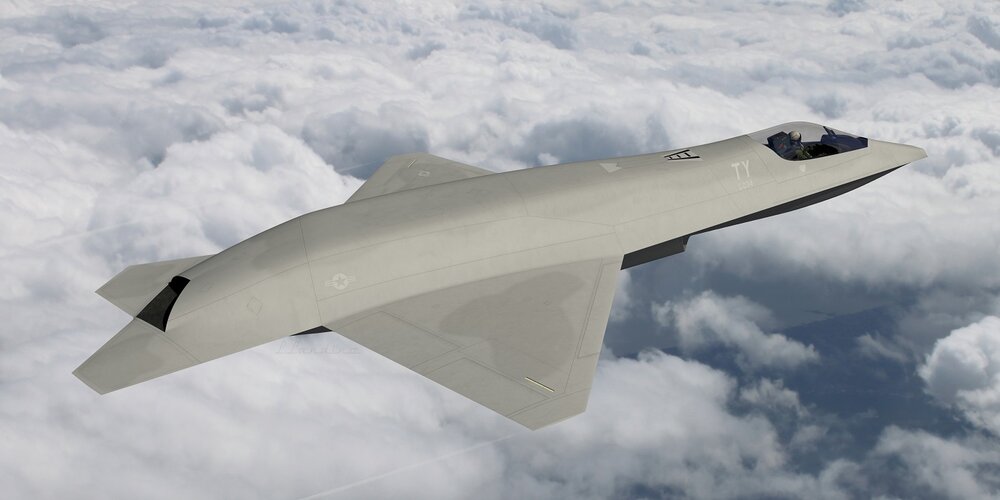
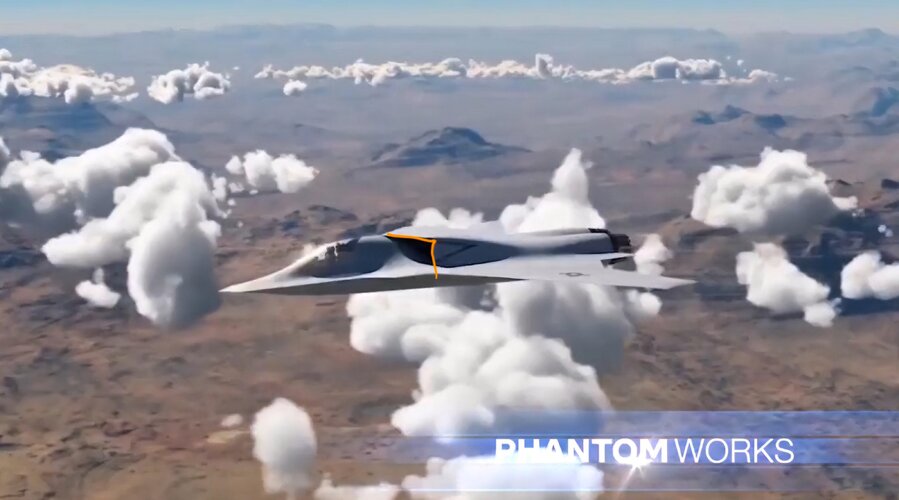
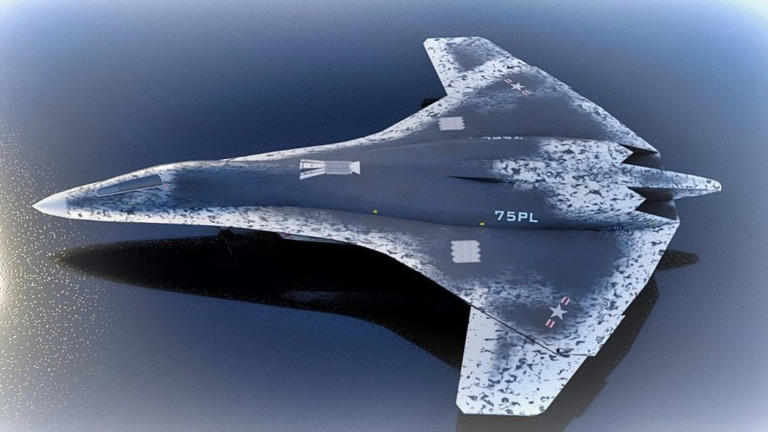
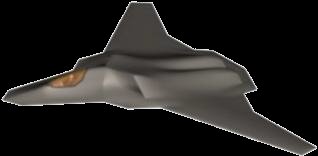
Lockheed martin picture look a lot like the BAE Tempest?Can any of you provide a higher resolution of this image?
Last edited:

Lockheed martin picture look a lot like the BAE Tempest?Can any of you provide a higher resolution of this image?

And superior cooling thanks to the additional stream.Ability to vary the bypass ratio to optimise fuel efficiency for a larger variety of speed.

I don't particularly believe it's Lockmart, but Boeing. Here's another reference photo, notice the intake and wing platform are similar to the phantom works render, the main difference I see is one concept has annular nozzles and the other the more familiar LO nozzle. I would love to discuss the lift augmentation cited in the Boeing patent as well. There's your "fresh approach".Lockheed martin picture look a lot like the BAE Tempest?
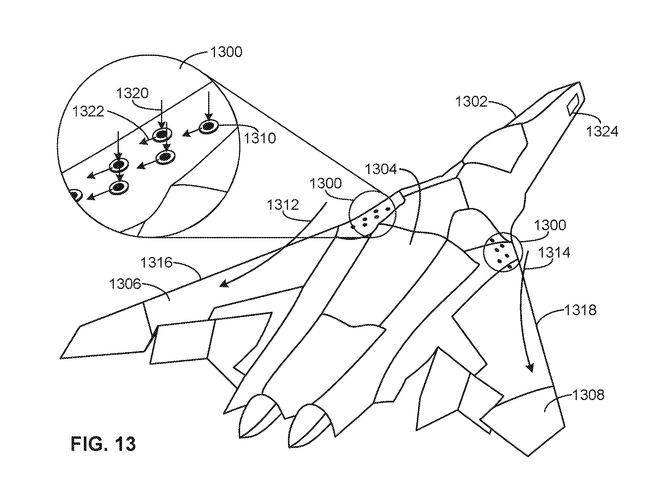
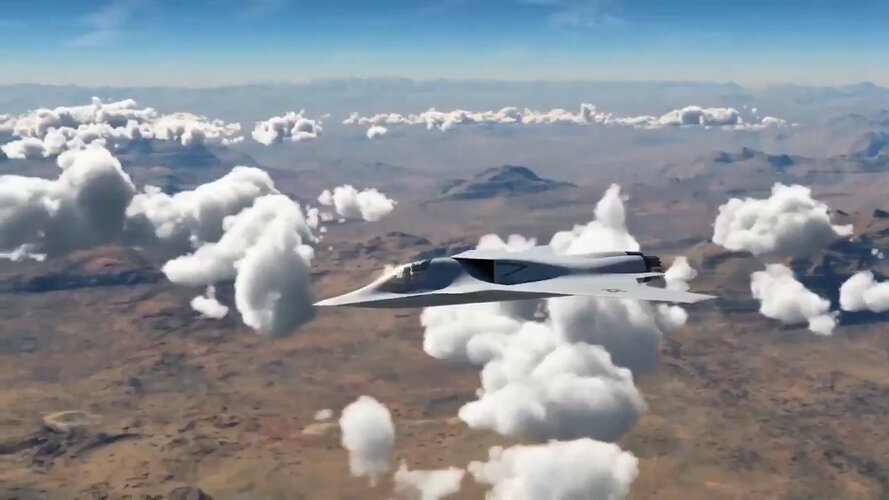
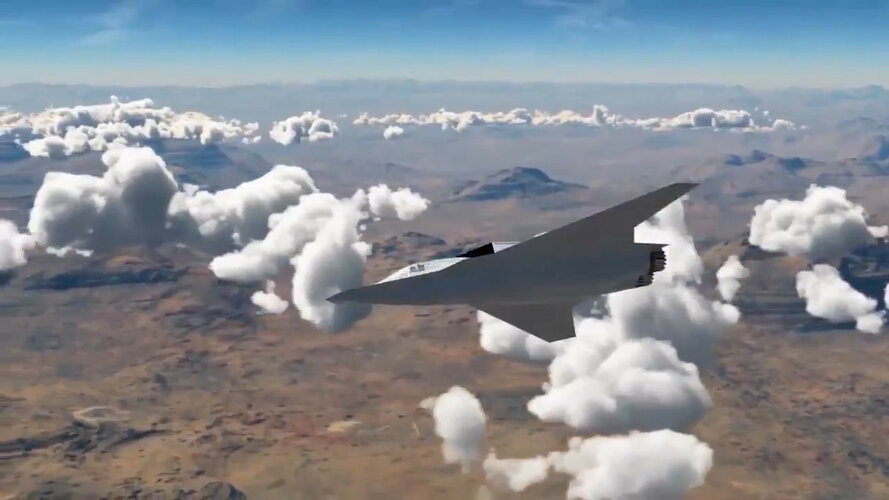
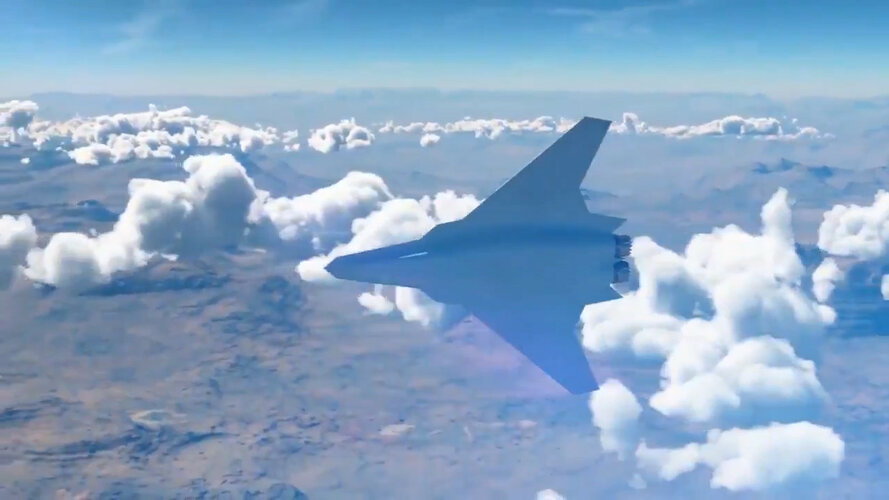
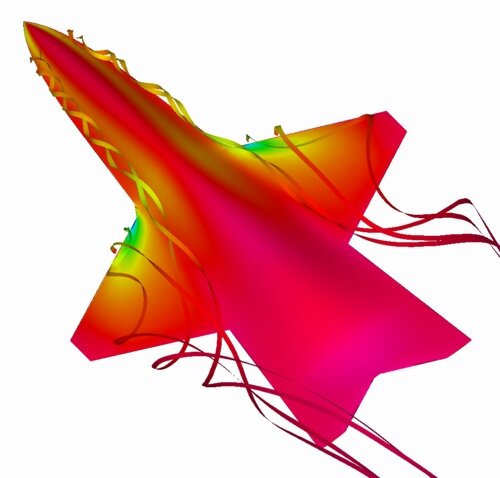
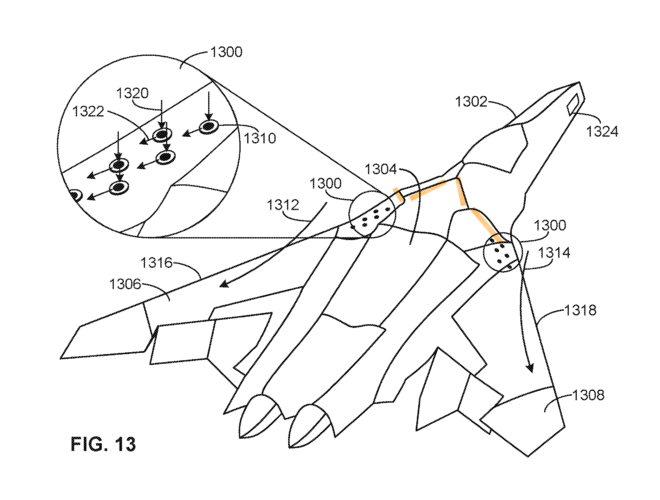
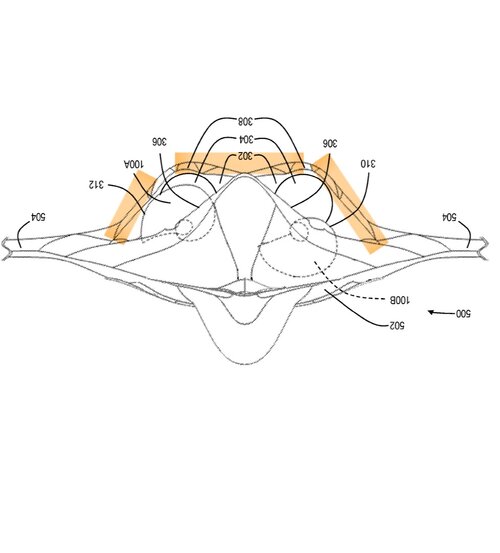
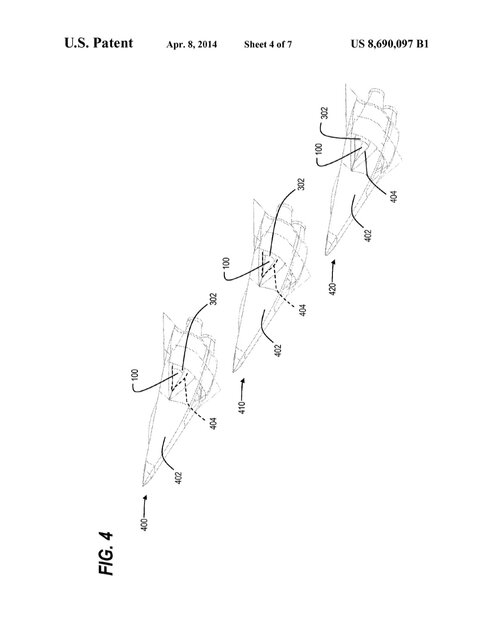
The patent describes the use of passive porosity lessons to created attached flow over delta wing surfaces at slower speeds to improve handling qualities, the holes are to eject air to help attach that flow (red), pay close attention to the use of nose actuated strakes (green). More info on it can be found in the ACWFT studies conducted by mcdonnell douglas (now boeing) from the 90's. Another key area to look at that I seen on the patent sketches is that the segment in the image I highlighted also appears to be an all moving wingtip like the ICE studies, notice it's attachment area is parallel to the leading edge on the opposing wing (yellow and blue). An all flying wingtip coupled with leading edge flow effectors would change the game on delta wings. I am taking a gamble here at this statement as well, I know top mounted air intakes can be a big issue at high alpha, maybe the flow effectors are used there too?What does the lift augment consist of and what is the suspected purpose?
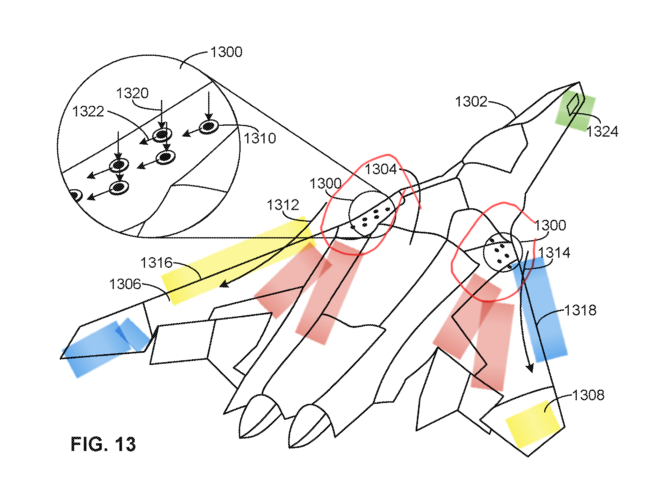
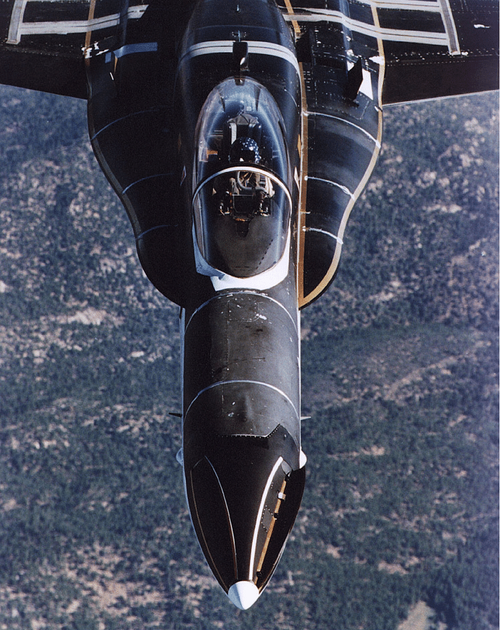
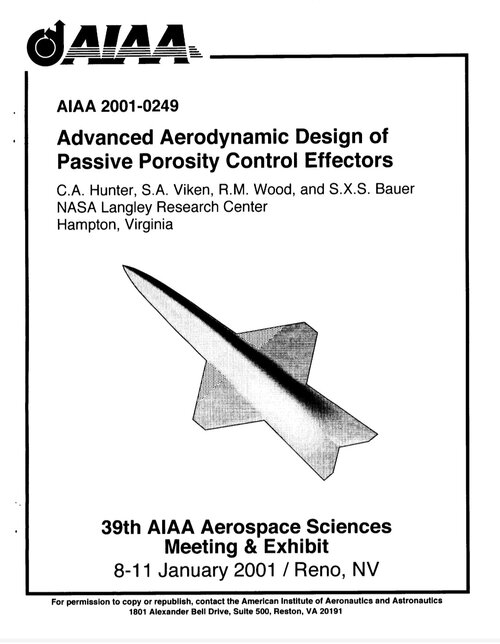
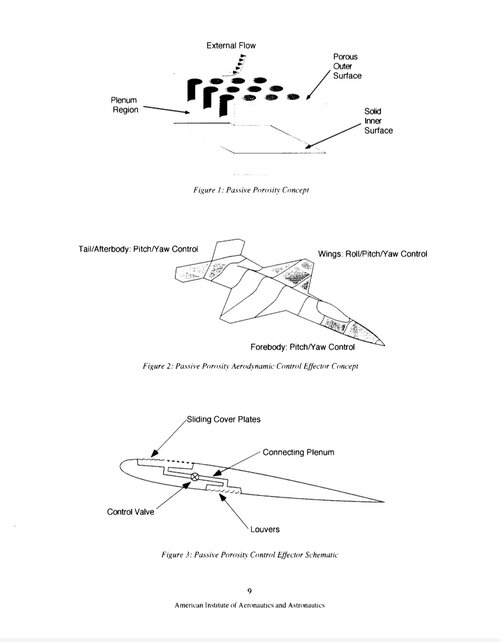
May be this is why USAF speak about a more fresher approach for Boeing....The patent describes the use of passive porosity lessons to created attached flow over delta wing surfaces at slower speeds to improve handling qualities, the holes are to eject air to help attach that flow (red), pay close attention to the use of nose actuated strakes (green). More info on it can be found in the ACWFT studies conducted by mcdonnell douglas (now boeing) from the 90's. Another key area to look at that I seen on the patent sketches is that the segment in the image I highlighted also appears to be an all moving wingtip like the ICE studies, notice it's attachment area is parallel to the leading edge on the opposing wing (yellow and blue). An all flying wingtip coupled with leading edge flow effectors would change the game on delta wings. I am taking a gamble here at this statement as well, I know top mounted air intakes can be a big issue at high alpha, maybe the flow effectors are used there too?
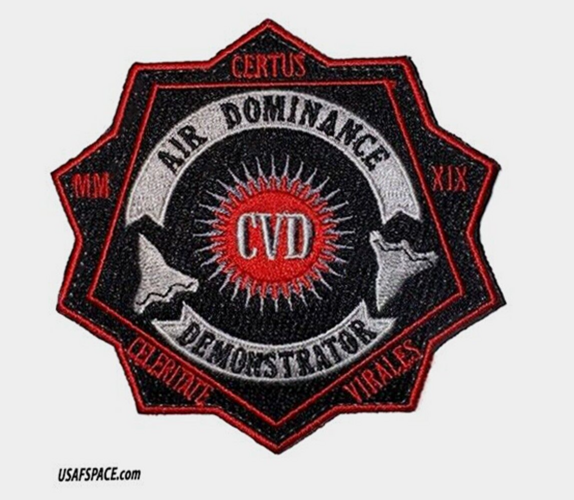
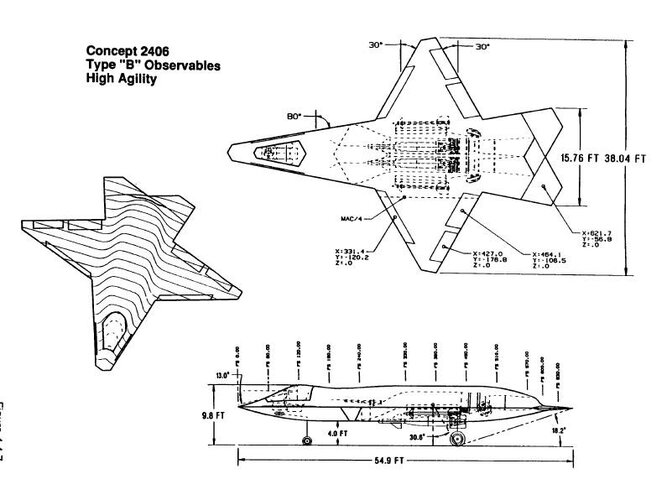
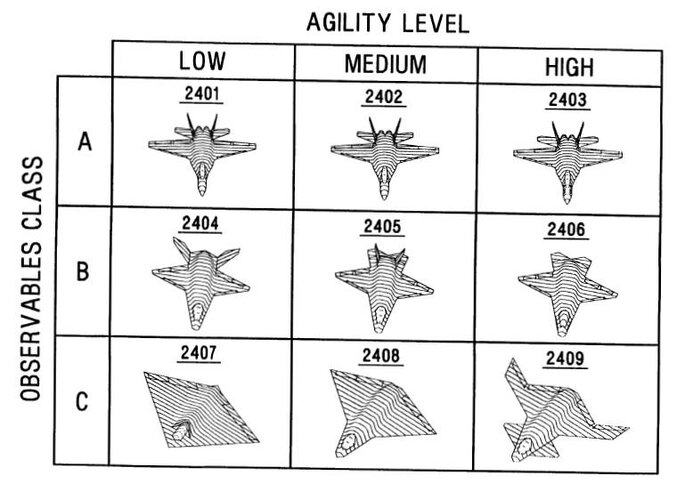
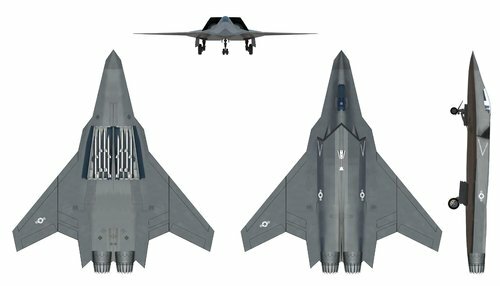
I own that patch! Speaking of history and the future, funny that there's a Voodoo II patch when the original voodoo was made by Mcdonnell, maybe the Boeing submission will be called the Voodoo II, pays homage to the larger research used to develop the aircraft and the all too familiar Lambda wing. The silhouette bears a striking resemblance to the ACWFT derivative Concept 2406Same planform...
View attachment 730065
Never see this planform beforeI own that patch! Speaking of history and the future, funny that there's a Voodoo II patch when the original voodoo was made by Mcdonnell, maybe the Boeing submission will be called the Voodoo II, pays homage to the larger research used to develop the aircraft and the all too familiar Lambda wing. The silhouette bears a striking resemblance to the ACWFT derivative Concept 2406
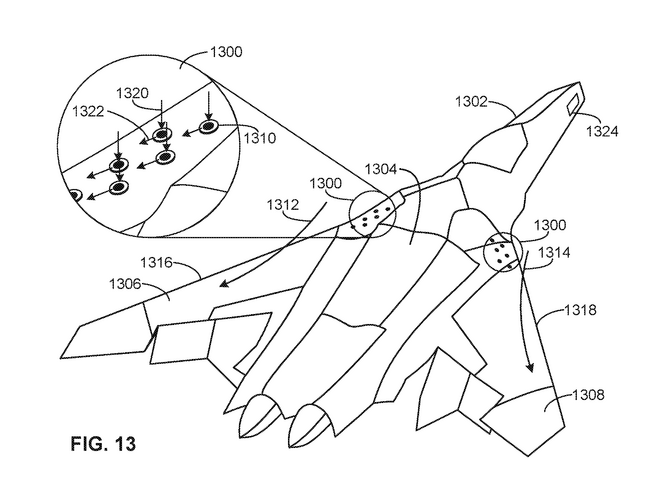
Do you have the patent ?
View attachment 730075
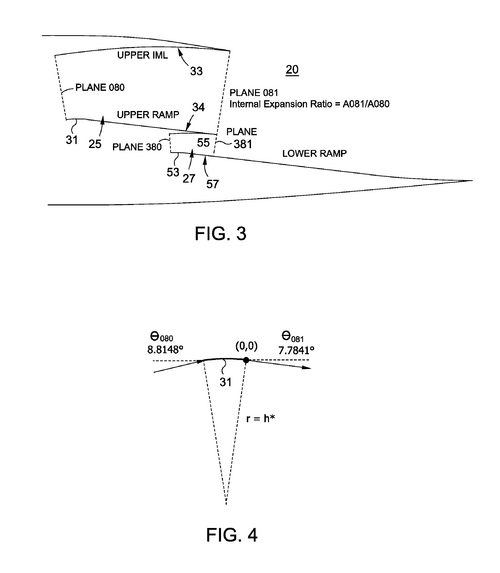
Interesting, because that is not how jet engines work. They make thrust by accelerating a mass flow out the exhaust, plus any residual excess pressure difference between the exhaust plane and the inlet plane, acting over the area of the exhaust. You control the convergent area to set engine pressure ratio to accelerate the mass flow to Mach 1, then any remaining nozzle pressure ratio is used to accelerate the mass flow beyond Mach 1 in the divergent nozzle.Interesting text from a Northrop Grumman patent regarding a fixed geometry nozzle capable of subsonic, sonic, and supersonic speeds, eludes to the potential use of the XA series of next gen engines for 6th gen fighter aircraft, and quote, "Almost all nozzles have a convergent section because it increases the pressure in the rest of the engine-potentially yielding more thrust by acting on the forward sections. It is important to note that convergent nozzles end with this convergent section, and in general, narrower convergent nozzles give lower thrust and higher exhaust speed, but wider convergent nozzles give lower exhaust speed and higher thrust". Placing specific emphasis on the segment regarding yielding more thrust by acting on forward sections.

As F119Doctor said. What is important for efficiency is the preservation (as far as is possible) of the total pressure as static pressure is increased by slowing the air.Not a disagreement - but from what I remember from school, the pressure rise at the inlet is _important_ for _scramjets_ - i just dont remember what!
also why the hell are we publishing this stuff in the open literature? are we really that behind?

A really nice read, so that verifies that ngad has a digital twin. Even further reinforced from the montage in the older Boeing advert.

Fictional no interest..Totally fictional. Source is a 3d modeller here: https://www.cgtrader.com/gallery/project/lockheed-ngad-deux

True, any benefit that FSW could bring today is irrelevant in fighter applications given the advances in propulsion and aircraft design. Not to forget the amount of extra reinforcement the wings need for shear stress would really make them unaffordable and heavy.The NGAD is not going to be a forward swept wing fighter, the USAF lost interest in such wings years ago after testing the X-29.
Shame that the FSW didn't offer much of a performance increase...The NGAD is not going to be a forward swept wing fighter, the USAF lost interest in such wings years ago after testing the X-29.
So cool thing is the patent I shared about the vortex attachment for highly swept wings actually addresses that very issue! The latter portion of the text along with some other patents from them as well detail micro ejectors used to keep the airflow going spanwise! Give it a read and let me know your thoughts!Shame that the FSW didn't offer much of a performance increase...
Though I really doubt the ability of engineers to make a wing that can still work when the airflow is spanwise compared to the normal direction...

This configuration, that has been talked about for pages, does not say "NGAD" to me. Looks more F-16-ish in size. I would think it something more like this one:Here's some more food for thought.
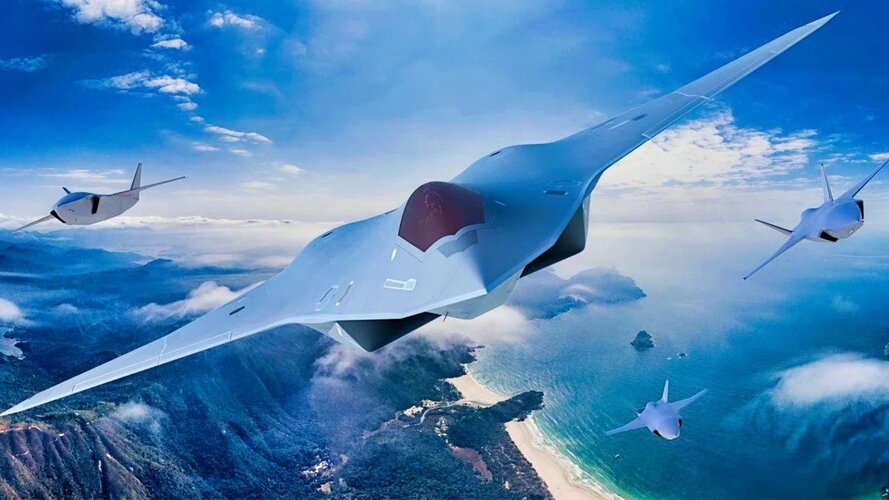
As far as I know, this rendition is from collins aerospace which shows two versions, one with and without canards. Collins aerospace is an RTX company just like Pratt and Whitney. Now whether this is NGAD or F/A-XX is a great question. A giveaway may be that refueling receptacle on the right side of the aircraft is consistent with naval aerial refueling methods, so this could be the F/A-XX preliminary concept.This configuration, that has been talked about for pages, does not say "NGAD" to me. Looks more F-16-ish in size. I would think it something more like this one:
View attachment 730375

Hello! This is a design of mine:As far as I know, this rendition is from collins aerospace which shows two versions, one with and without canards. Collins aerospace is an RTX company just like Pratt and Whitney. Now whether this is NGAD or F/A-XX is a great question. A giveaway may be that refueling receptacle on the right side of the aircraft is consistent with naval aerial refueling methods, so this could be the F/A-XX preliminary concept.
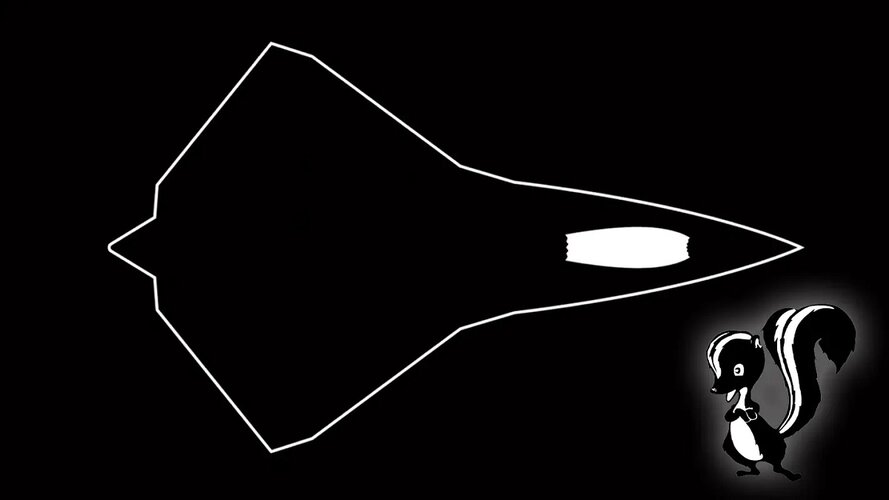
Yeah Medium-C would seem to align with comments and hints coming from the service and industry.Put me down for "medium".

Yes , instead the Lockheed design the Boeing one is pure speculation

Personally I wouldn’t trust Boeing to build a paper plane right at the moment. It’s baffling to me that elements of the federal government keep awarding them these big money projects considering their recent track record.
You opinion is Lockheed si still the big winner ?Personally I wouldn’t trust Boeing to build a paper plane right at the moment. It’s baffling to me that elements of the federal government keep awarding them these big money projects considering their recent track record.
Thought they said Boeing already won it?You opinion is Lockheed si still the big winner ?