USAF / DIU Massed Modular Aircraft (MMA) - MQ-9 Replacement

Forest Green

ACCESS: USAP
Joined
11 June 2019
Messages
14,513
Reaction score
31,560

General Atomics-ASI CEO throws shade at cost target for new drone​

https://breakingdefense.com/2026/07/general-atomics-ceo-throws-shade-at-cost-target-for-new-drone/

Air Force and DIU Want Cheap Drones to Take on MQ-9 Missions​

https://www.airandspaceforces.com/pentagon-wants-cheap-drones-to-take-on-mq-9-missions/

General Atomics Plans New Drone Design for Low-Cost Reaper Replacement​

https://www.airandspaceforces.com/general-atomics-new-drone-design-low-cost-reaper-replacement/

Air Force Seeks New Ideas for Cheap MQ-9 Alternatives by Year End​

https://www.airandspaceforces.com/air-force-seeks-new-ideas-for-cheap-mq-9-alternatives-by-year-end/

General Atomics Plans ‘Wildfire’ Drone for Pentagon’s Low-Cost MMA Program​

https://www.airandspaceforces.com/general-atomics-wildfire-drone-pentagon-low-cost-mma/
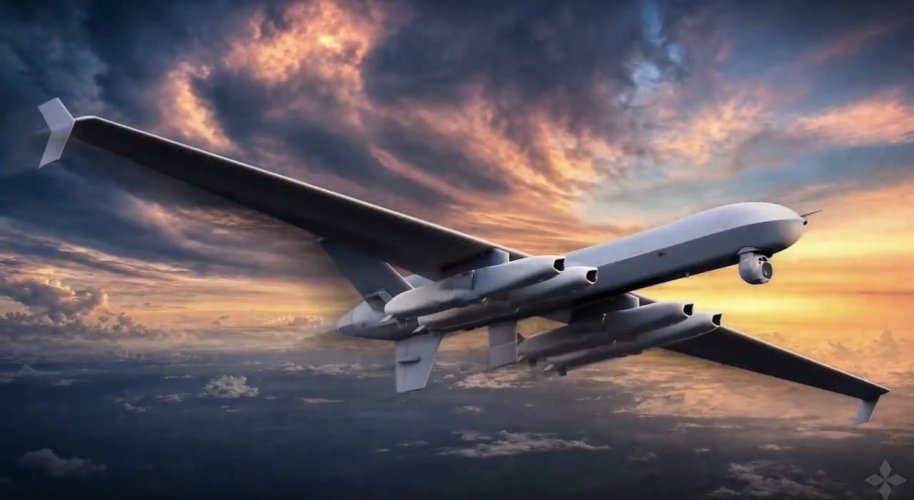
General Atomics Aeronautical Systems predicts the new drone it plans to pitch for the military’s “Massed Modular Aircraft” program will exceed many of the military’s requirements for a successor to the MQ-9 Reaper.
Wildfire, as General Atomics has dubbed it, “meets every wish on the [MMA] list and exceeds most of them,” company spokesman C. Mark Brinkley said in a statement, though he declined to specify the drone’s expected capabilities or cost. Aviation Week first reported the company’s plans for Wildfire.
MMA is intended to be a low-cost, attritable drone that could fly in groups if needed and take on some missions now performed by the MQ-9 Reaper, which was also made by General Atomics. The Defense Innovation Unit released a solicitation July 7 asking companies to submit ideas for the new drone concept, which is meant “to execute missions that the MQ-9A performs today.”
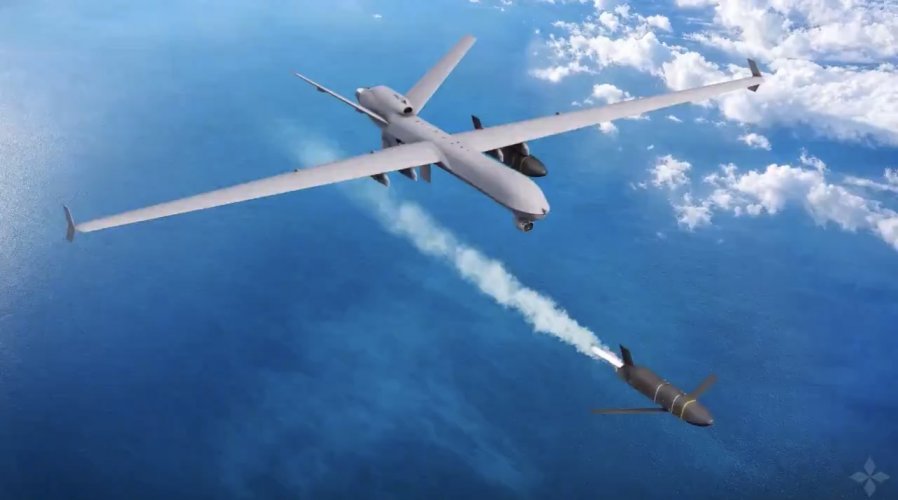
DIU’s solicitation called for drones to be able to carry a payload of at least 2,800 pounds—roughly the weight of one Long-Range Anti-Ship Missile, or LRASM—and have an unrefueled combat radius of at least 2,300 nautical miles, while carrying a payload, as well as being able to fly a one-way ferrying flight of at least 8,000 nautical miles.

“How do we come out of the box, day one, with a 10,000 nautical mile ferry range?”
“Can we carry four LRASMs? Can we swarm 100 aircraft under semi-autonomous control? Can we fuse all of that data into a highly effective common operating picture? Can we do that at scalable, affordable mass?”
 
Last edited:
So....it needs to have the range of Reaper, with a similar weapons load (or massively more if they're hanging 4 x LRASM off it...), similar operating altitude, de-icing, will need a turboprop, turbofan or multiple IC engines., data link, satellite connectivity and of course 'modularity'....

I'm sure the 'modularity' will include the sensors necessary for a UCAV operating at medium/high altitude....so just like Reapers, though probably in a pod and some self protection...like an Angry Kitten pod and countermeasures...

So essentially....its a Reaper...or even bigger than a Reaper. The only real change that could reduce costs, and make them 'attritable' at most for a number of the procured platforms is if they're used as 'bomb trucks' without complex sensors embarked relying on another platform for the sensors.

So how exactly do they make this substantially cheaper than Reaper?
 
So how exactly do they make this substantially cheaper than Reaper?
My guess is they get rid of a large part of their profit margin that they must've had on the Reaper. And hope the additional volumes ordered partially make up for the difference in the loss of earnings. With the other part simply being swallowed, as it's better to have some contract than no contract.
 
It is hard to imagine that list of requirements being low cost. Technology has made some things a lot cheaper - the mechanical satellite dish can be replaced by a relatively tiny AESA antenna for instance - but payload and endurance are still going to drive size.
 
So how exactly do they make this substantially cheaper than Reaper?
Reaper manufacturing is very labour intensive from starting off at very small numbers and then expanding. They could easily bring the airframe UPC down with a clean sheet design including more automated manufacturing - if there is up front commitment to order many of them.

But it won't be "cheap"
 
Well less expensive and more survivable would still be a better solution.
 
https://breakingdefense.com/2026/09...es-air-force-pushes-to-replace-reaper-faster/
Niemi said the Air Force will probably field “at least 180” of the MMA drones.

Additionally, Niemi noted some ambitious cost targets: The Air Force is aiming to get the cost of its Collaborative Combat Aircraft (CCA) drones to $20 million a piece, and MMA drones “closer to half of that,” he said. (The estimate includes only the cost of the air vehicle, without being fully missionized, according to an Air Force spokesperson.)

Niemi emphasized that at least the initial versions of MMA largely won’t have “cutting-edge” technology. “I think it’s all going to be proven stuff, because that’s how I’m going to drive down the cost so I can get to that goal that I laid out,” he said.

Specifically, the MMA drone “is going to be an aircraft that has a long aspect wing, probably a turboprop, flies a very long way and carries a heavy weight.” The drone will likely be in the “4,000 miles-type class, so it’s going to fly much farther than CCA, but it’s going to fly slower and carry more weight,” Niemi said.
 

USAF Wants MQ-9 Reaper Successor At A Fraction Of The Cost At $10M Each​

https://www.twz.com/air/usaf-wants-mq-9-reaper-successor-at-a-fraction-of-the-cost-at-10m-each
To that end, stated program requirements to date include a speed of at least 200 knots true airspeed, a munition and sensor payload capacity of at least 2,800 pounds, an unrefueled combat radius of at least 2,300 nautical miles with payload, the ability to self-deploy one-way at least 8,000 nautical miles, and the ability to operate from runways no longer than 6,000 feet. The MMAs also need to be highly modular and use open architecture mission systems to make it easier to integrate new capabilities and functionality down the line.

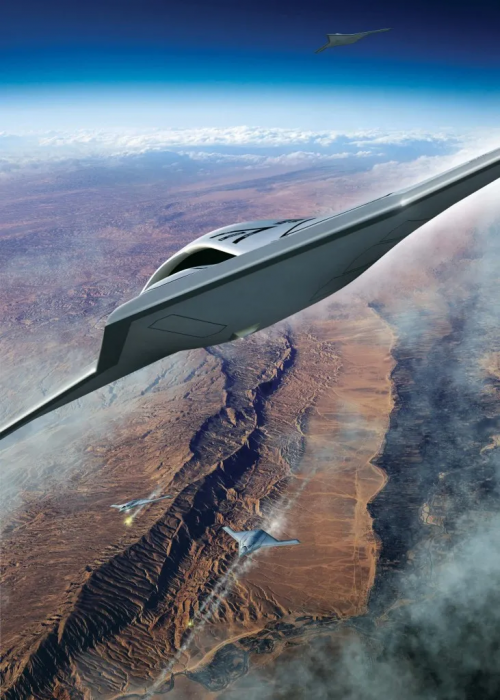
NG's earlier MQ-9 replacement bid impression below:
 

Attachments

  • 1788614780643.png
    1788614780643.png
    1.1 MB · Views: 98
Last edited:

Significant MQ-9 losses in Iran push Air Force to find replacement faster​

https://insidedefense.com/daily-new...s-iran-push-air-force-find-replacement-faster
The Air Force is accelerating efforts to develop and field a replacement for the MQ-9 Reaper, which service leaders said on Sept. 3 have been lost during Operation Epic Fury “at a rate that is concerning to us." The new program, dubbed Massed Modular Aircraft, will be significantly cheaper than Reapers are but still be slotted for the medium-altitude intelligence, surveillance and reconnaissance mission, Lt. Gen. Christopher Niemi, the Air Force’s chief modernization officer, told reporters during a briefing
 
How is a slightly cheaper predator with longer wings supposed to solve the abysmal survivability of the Reaper?
 
How is a slightly cheaper predator with longer wings supposed to solve the abysmal survivability of the Reaper?
No one really claims that the various Arsenal Plane concepts were highly survivable either, but they were to launch stand-off weapons so they were largely just trying to avoid threats.

Is this idea just chopping up a big Arsenal Plane into multiple smaller ones? i.e. 4 x LRASM x 10 x $10m MMAs Vs 40 x LRASM x 1 x >>$100m Arsenal Plane?
 
How is a slightly cheaper predator with longer wings supposed to solve the abysmal survivability of the Reaper?
Both Reapers and Hermes 450 went down in large numbers over Iran and Yemen.
It's probably not coincidental that both are considered to be at the end of their lives regardless.
The MMA for the Reaper, and Hermes 650 replaces the 450.

It's not like they're inherently non-survivable. I just don't think it's necessarily smart to invest in new countermeasures for them over the new stuff.
 
It seems to me perhaps a less observable airframe might be in order? This just seems to be turbojet MQ-9.
 
LO is not going to help a whole lot for some of these missions and will significantly drive up cost. These aircraft get shot down because they are being used to maintain orbits over contested air space. I bet a significant number of the MQ9 kills in Iran have been with passive EO/IR guided SAM's. It is much wiser to offload some of those loiter missions to less expensive platforms than to fight the attrition. They are already investing in more survivable unmanned aerial vehicles with advanced LO for when they need exquisite ISR with high survivability. DAF's approach to seek something in the $10-$15 million range is probably smart. You can buy a lot more of these and thus have a large reserve to attrit during a conflict.
 
LO is not going to help a whole lot for some of these missions and will significantly drive up cost. These aircraft get shot down because they are being used to maintain orbits over contested air space. I bet a significant number of the MQ9 kills in Iran have been with passive EO/IR guided SAM's. It is much wiser to offload some of those loiter missions to less expensive platforms than to fight the attrition. They are already investing in more survivable unmanned aerial vehicles with advanced LO for when they need exquisite ISR with high survivability. DAF's approach to seek something in the $10-$15 million range is probably smart. You can buy a lot more of these and thus have a large reserve to attrit during a conflict.
If the longer wings and higher cruise speed allow it to fly at 60,000-70,000ft (RQ-4 levels), that would make life difficult for some SAMs.
 
Last edited:
If the longer wings and higher cruise speed allow it to fly at 60,000-70,000ft (RQ-4 levels), that would make life difficult for some SAMs.
That would drive up the cost of the airframe and significantly drive up the cost of the sensors to meet the desired image quality whilst hardly increasing survivability.
 
That would drive up the cost of the airframe and significantly drive up the cost of the sensors to meet the desired image quality whilst hardly increasing survivability.
Well the longer wings and higher cruise speed (200+kts) seem to be in the specification, so that seems to suggest higher altitude capabilities and in the Middle East recently, the main enemies seem to have been the 358 and R-27T FrankenSAM. The 358 has a maximum altitude of 8,500m (28,000ft) and in SAM use, the R-27T has similar limitations. Doesn't make it untouchable, but it would at least require a proper SAM, and probably a radar one, which would be easier to for ECM to work on it.

Higher altitude operation may require better optics though but technology like that tends to get cheaper with time anyway.
 
Didn't someone on the programme say it was going to carry several LRASM at one point...because I hate to break it to them...but it isn't going to, presumably they got confused with JSM...

Doesn't make it untouchable, but it would at least require a proper SAM, and probably a radar one, which would be easier to for ECM to work on it.

That was one of the advantages I could see with the likes of Zephyr and Phasa 35 operating at 65,000ft+. Relatively cheap and needing a serious missile to reach that altitude...that probably cost more than the platform..
 
Cost per unit
Unit cost is still substantial, as would be the kind of stand off munitions that provide survivability through stand off range.

It's reasonable for a force to have an exquisite, long endurance, medium to high altitude ISR asset, possibly LO/VLO. Because it's capable enough to increase survivability passively and through other countermeasures. Such examples are the RQ-170, RQ-180 and WZ-X.

The other reasonable solution is to invest into a multitude of extremely cheap and expendable surveillance and strike drones of various range and endurance classes that may be individually far less capable, but provide persistence, coverage and redundancy through bulk. To take a real world example, the likes or Orlan, Skat etc. working in tandem with Lancet, Banderol and Geranium 2-5 to identify and strike targets in real time.

Conventional MALE drones that follow the general pattern popularized by drones such as Predator, Heron, Forepost or Orion simply combine the worst of both world, expensive but not exceptionally capable, susceptible to attrition at the detriment of coverage and persistence. And this pitch I commented on was not addressing the shortcomings of such systems, it's just a mildly cheaper continuation, keeping all the same qualities that make the Reaper obsolete against even near-peer forces. And can you genuinely justify just procuring a multi-million MALE UAV just for COIN and Counter-Narco operations (for which these are genuinely excellent though)? I'm unsure.
 
View: https://x.com/SwarmAero/status/2099483870278127680?s=20

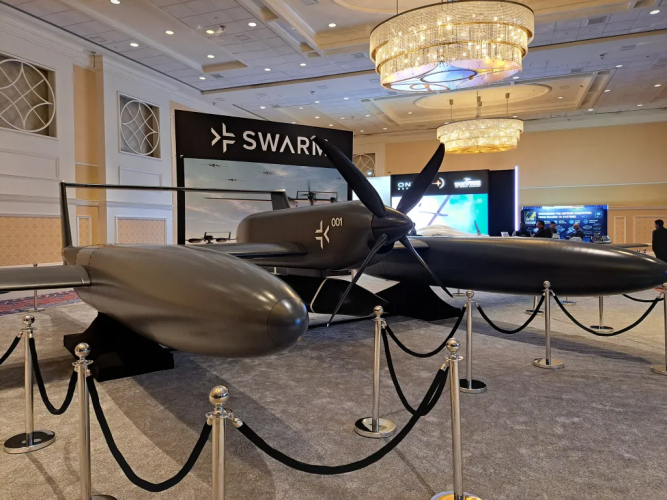
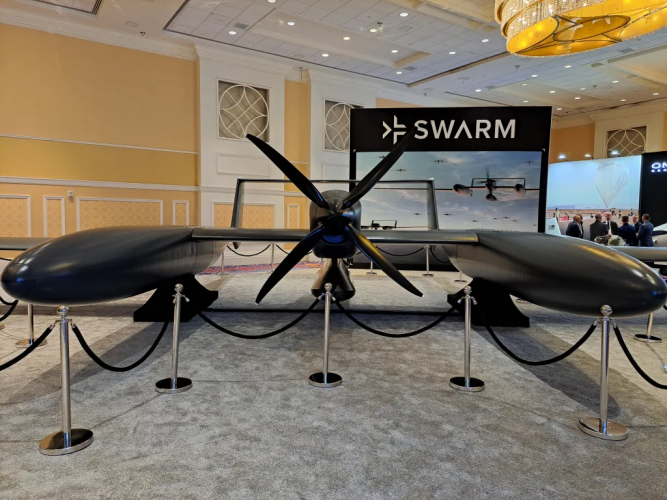
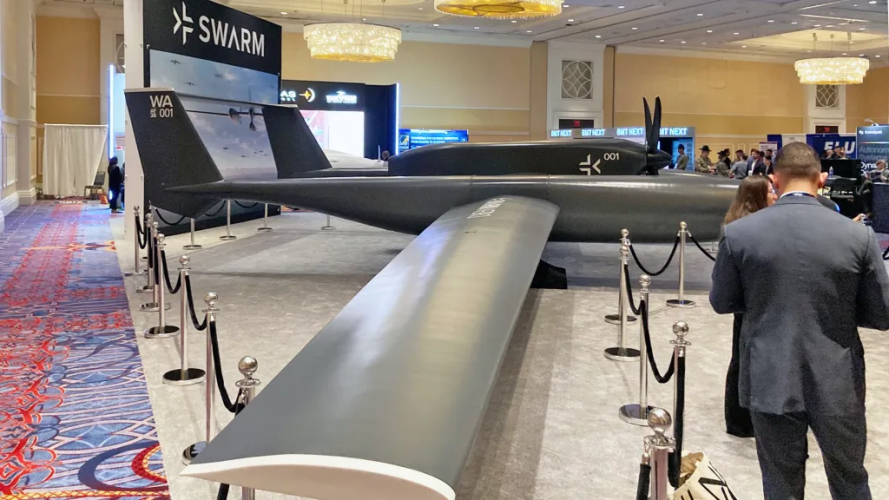
Swarm Unveils Gamera: A New Category of Low-Cost, Global Reach Aircraft for Persistent Strike and Sensing to Transform Global Power Projection​

https://www.globenewswire.com/news-...ing-to-transform-global-power-projection.html
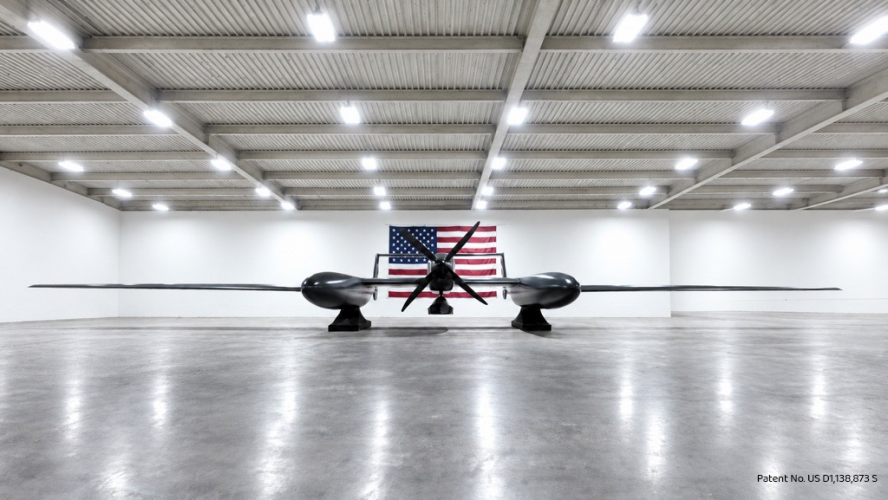
  • Affordable, global-reach, Group 5 swarming strike and sensing aircraft has a ~72 foot wingspan and is designed for highly-efficient cruise and loiter missions with an unrefueled range of 9,000 nautical miles.
  • Built with a novel manufacturing approach, Gamera lowers cost relative to legacy Group 5 UAS and crewed aircraft. Gamera delivers comparable standoff long-range strike effects for 10X lower cost-per-effect of existing platforms.
  • The aircraft has over 2,800lbs of payload capacity and is the first UAS designed to employ bomber-class strike munitions such as LRASM/JASSM-ER missiles. Gamera’s large payload capacity enables it to deliver all of the capabilities of the MQ-9, as well as employ payloads the MQ-9 cannot.
  • Swarm has matured its Legion command-and-control (C2) and autonomy software through multiple instances of successful, competitive contract performance. Legion orchestrates multi-domain, heterogeneous UXS in full end-to-end kinetic effect delivery and operates internationally in real-world operations.
 

Attachments

  • 1789399555853.png
    1789399555853.png
    768.9 KB · Views: 27
Last edited:
It's reasonable for a force to have an exquisite, long endurance, medium to high altitude ISR asset, possibly LO/VLO. Because it's capable enough to increase survivability passively and through other countermeasures. Such examples are the RQ-170, RQ-180 and WZ-X.

The other reasonable solution is to invest into a multitude of extremely cheap and expendable surveillance and strike drones of various range and endurance classes that may be individually far less capable, but provide persistence, coverage and redundancy through bulk. To take a real world example, the likes or Orlan, Skat etc. working in tandem with Lancet, Banderol and Geranium 2-5 to identify and strike targets in real time.
The problem is that the surveillance systems aren't cheap. Look at how quickly the various Reaper blocks have increased in price, from ~10-12mil per airframe to over 30mil.

So honestly there's not really any point in trying to make expendably-cheap surveillance drones, not when they're packing 30mil worth of sensors.

Might as well go back to the old BSAX/TACIT BLUE plans, some ~600 aircraft. Just stealthy drones, not manned airframes.


And can you genuinely justify just procuring a multi-million MALE UAV just for COIN and Counter-Narco operations (for which these are genuinely excellent though)? I'm unsure.
That's literally where Predator/Reaper came from.
 

Attachments

  • 1789477712749.png
    1789477712749.png
    1.3 MB · Views: 14
  • 1789477722027.png
    1789477722027.png
    1.2 MB · Views: 15
  • 1789477747935.png
    1789477747935.png
    954.9 KB · Views: 12

Similar threads

Back
Top Bottom