Yes I know how refuelling works... The example was how relevant it would be across a four ship not the actual in practice procedures.That's not how refueling works or is determined. The iron rule is to refuel at 50% (at latest). Because 50% is combat fuel requirement. And it's inefficient to do early unless tanker position calls for it.
So 5klb for legacy and 7klb to 8.75klb for superbug with CFT => at 15klb 2-3 ships can be refueled

You are using an out of date browser. It may not display this or other websites correctly.
You should upgrade or use an alternative browser.
You should upgrade or use an alternative browser.
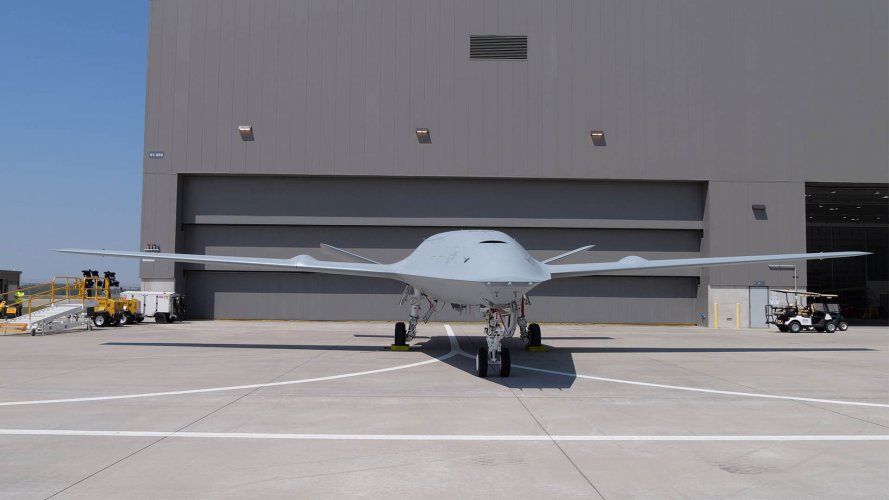
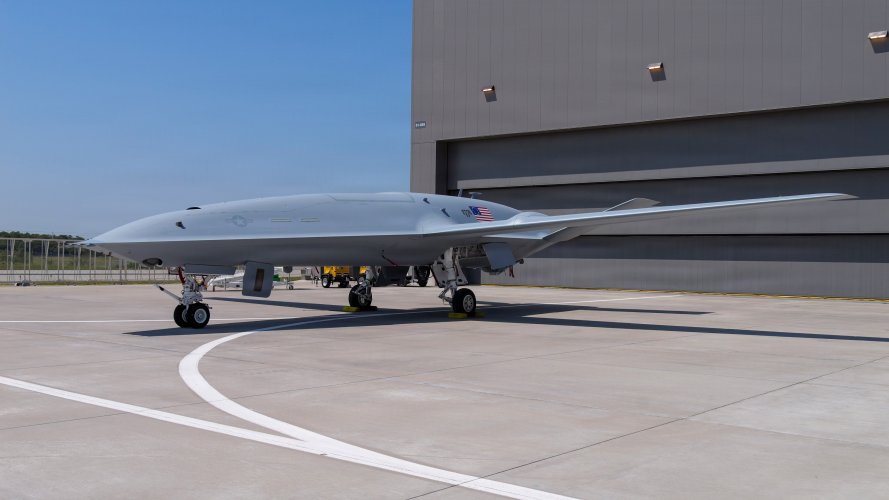
US Navy’s UCLASS / CBARS / MQ-XX / MQ-25 Stingray Program
- Thread starter fightingirish
- Start date

Manuducati
ACCESS: Secret
- Joined
- 25 November 2020
- Messages
- 421
- Reaction score
- 1,421
That's not how refueling works or is determined. The iron rule is to refuel at 50% (at latest). Because 50% is combat fuel requirement. And it's inefficient to do early unless tanker position calls for it.
So 5klb for legacy and 7klb to 8.75klb for superbug with CFT => at 15klb 2-3 ships can be refueled
Super Hornet with CFT will never happen, it's been abandoned by Navy years ago.
https://www.twz.com/42141/navy-halts-plans-to-give-its-super-hornets-conformal-fuel-tanks
Last edited by a moderator:
jsport
what do you know about surfing Major? you're from-
- Joined
- 27 July 2011
- Messages
- 8,628
- Reaction score
- 6,930
https://www.twz.com/sea/navys-sound...drone-it-notoriously-passed-over-a-decade-ago
10yrs ago many on this forum could have informed the same..
Is the only lesson of history to be that mankind is unteachable W. Churchill
10yrs ago many on this forum could have informed the same..
Is the only lesson of history to be that mankind is unteachable W. Churchill
Yeah yeah, we get it you all know better than the stupid Navy.https://www.twz.com/sea/navys-sound...drone-it-notoriously-passed-over-a-decade-ago
10yrs ago many on this forum could have informed the same..
Is the only lesson of history to be that mankind is unteachable W. Churchill
10 years ago the technology wasn't all there to make what they want a reality. They were developing it, a key part of this development being systems like X-47B and now the required technologies have been sufficiently developed such that they can begin to implement it going forward. Development of systems like the X-47B means that institutions and companies have a bank of knowledge from which they can draw and hence keep an edge in that area
It's inordinately arrogant to act as though these considerations, many of which we aren't privy to, are not considered and that we know best with the limited, surface level information available to us. If you know better than NAVAIR go knock on their door and tell them how to fix their problems.
As Bernard Shaw once said "Too bad that all the people who know how to run the country are busy driving taxicabs and cutting hair".
jsport
what do you know about surfing Major? you're from-
- Joined
- 27 July 2011
- Messages
- 8,628
- Reaction score
- 6,930
note to self dont take life advise from playright satirist critic political activist like George Bernard Shaw.Yeah yeah, we get it you all know better than the stupid Navy.
10 years ago the technology wasn't all there to make what they want a reality. They were developing it, a key part of this development being systems like X-47B and now the required technologies have been sufficiently developed such that they can begin to implement it going forward. Development of systems like the X-47B means that institutions and companies have a bank of knowledge from which they can draw and hence keep an edge in that area
It's inordinately arrogant to act as though these considerations, many of which we aren't privy to, are not considered and that we know best with the limited, surface level information available to us. If you know better than NAVAIR go knock on their door and tell them how to fix their problems.
As Bernard Shaw once said "Too bad that all the people who know how to run the country are busy driving taxicabs and cutting hair".
Last edited:
Scott Kenny
ACCESS: USAP
- Joined
- 15 May 2023
- Messages
- 19,668
- Reaction score
- 28,151
Satirists are very often the sharpest analysts.note to self dont take life advise from playright saterist critic political activist like George Bernard Shaw.
If you have nothing to say of his ideas at least spell “playwright” correctly when criticising his experiencenote to self dont take life advise from playright satirist critic political activist like George Bernard Shaw.

- Joined
- 11 February 2007
- Messages
- 4,146
- Reaction score
- 8,894
Really? 10 years ago is 2016, by which time operational MQ-1 Predators were old enough to buy alcohol.10 years ago the technology wasn't all there to make what they want a reality.
The question of course is which set of operational requirements the Navy actually wanted for UCLASS - the initial stealthy heavy striker, the later not-so-stealthy ISR platform, or the ultimate Tomcat-sized multi-role platform.
At that point pretty much everything needed had been operationally demonstrated, X-47B had just done air-to-air refuelling, which was the major outstanding capability.
UCLASS didn't progress because it was undoable, but because the USN couldn't settle on what it wanted and how much it was willing to pay for it.

- Joined
- 3 June 2011
- Messages
- 20,986
- Reaction score
- 19,254
And cancelling it was the obvious, fastest way to figure it out, eh?Yeah yeah, we get it you all know better than the stupid Navy.
10 years ago the technology wasn't all there to make what they want a reality.
Scott Kenny
ACCESS: USAP
- Joined
- 15 May 2023
- Messages
- 19,668
- Reaction score
- 28,151
If the control systems were hard-specified into the contract, it may have been.And cancelling it was the obvious, fastest way to figure it out, eh?
IIRC now the top level control systems are GFE/MOSA and only the basic fly-by-wire is contractor-furnished.
Scott Kenny
ACCESS: USAP
- Joined
- 15 May 2023
- Messages
- 19,668
- Reaction score
- 28,151
Sorry, missed this one.
Point of order, refueling is supposed to happen so that a bird always has enough fuel to reach the divert airfield.That's not how refueling works or is determined. The iron rule is to refuel at 50% (at latest). Because 50% is combat fuel requirement. And it's inefficient to do early unless tanker position calls for it.
UCLASS didn't progress because it was undoable, but because the USN couldn't settle on what it wanted and how much it was willing to pay for it.
The technology for high end unmanned missions such as CCA or deep strike in contested environments is only really coming into it's element today. It relies on high degrees of automation and good survivability against electronic warfare and the like. This is fairly evident given that the same trend is being viewed across global air forces. They could've certainly developed an ISR/strike drone but they didn't have an awfully pressing need for it, Predator/Reapers and their ilk fly relatively simple missions in relatively permissive airspace (or they are treated as attritable assets as we are watching over Iran). The USN did not strictly need an aircraft to fly these missions.Really? 10 years ago is 2016, by which time operational MQ-1 Predators were old enough to buy alcohol.
They developed world first unmanned aircraft systems for use aboard aircraft carriers. The program formed a crucial knowledge base to retain a technological edge moving forward. If you think they haven't continued working on these sort of things I think that's an awfully naive position. To say it was "cancelled" isn't really accurate. NG bid X-47C for UCLASS although it was not successful and Boeing Stingray was selected insteadAnd cancelling it was the obvious, fastest way to figure it out, eh?
I think it's also fair to point out that the USN continued the development of UAVs via an evolutionary approach wherein they relegated MQ-25 to aerial refueling initially to form a basis for the technology before moving to more ambitious plans (like anti shipping duties). 10 years down the track where key systems have matured the high end combat roles required of UAVs are becoming more and more possible
- Joined
- 11 February 2007
- Messages
- 4,146
- Reaction score
- 8,894
And yet there's RQ-170/'the beast of Kandahar' doing stealthy penetrating ISR in precisely that time period.They could've certainly developed an ISR/strike drone but they didn't have an awfully pressing need for it, Predator/Reapers and their ilk fly relatively simple missions in relatively permissive airspace (or they are treated as attritable assets as we are watching over Iran). The USN did not strictly need an aircraft to fly these missions.
Scott Kenny
ACCESS: USAP
- Joined
- 15 May 2023
- Messages
- 19,668
- Reaction score
- 28,151
Right, but does one of those fit onto a carrier?And yet there's RQ-170/'the beast of Kandahar' doing stealthy penetrating ISR in precisely that time period.
And can a carrier air wing afford attritable things like Predator/Reapers, with how little volume is available for replacement airframes compared to a land base?
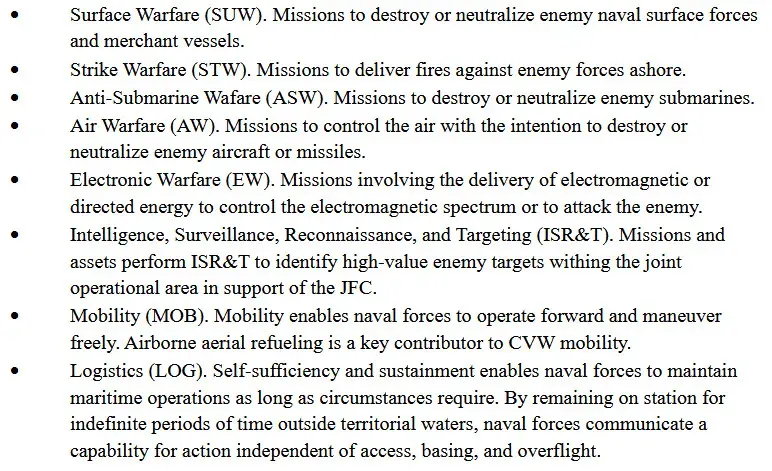
RQ-170 can't conduct anti shipping duties in contested environments though nor can it serve as a CCA, which is explicitly what the RFA calls for. It also seems a rather tall ask (and arguably pointless endeavor!) to operate RQ-170 type missions from CVNsAnd yet there's RQ-170/'the beast of Kandahar' doing stealthy penetrating ISR in precisely that time period.
Yeah, in broad strokes Newdick and Rogoway's arguments that X-47 was the golden bullet appear compelling but the minutia of the two initiatives have substantial differences. The projected missions from the RFI (which they attached to their article) make this fairly clear
Attachments
- Joined
- 3 June 2011
- Messages
- 20,986
- Reaction score
- 19,254
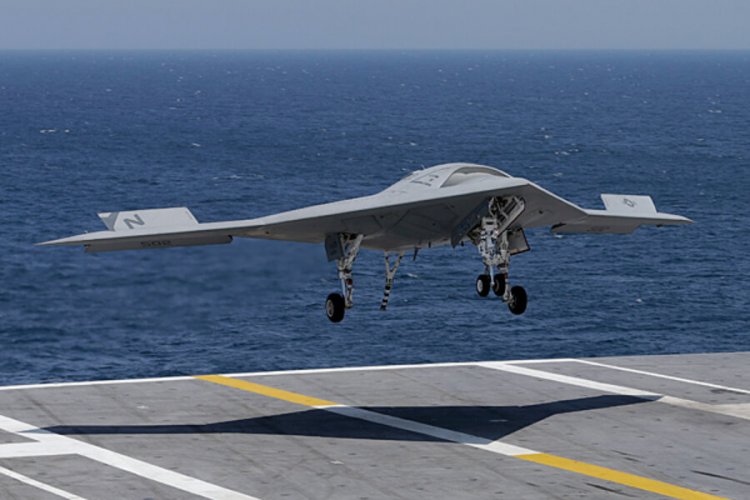
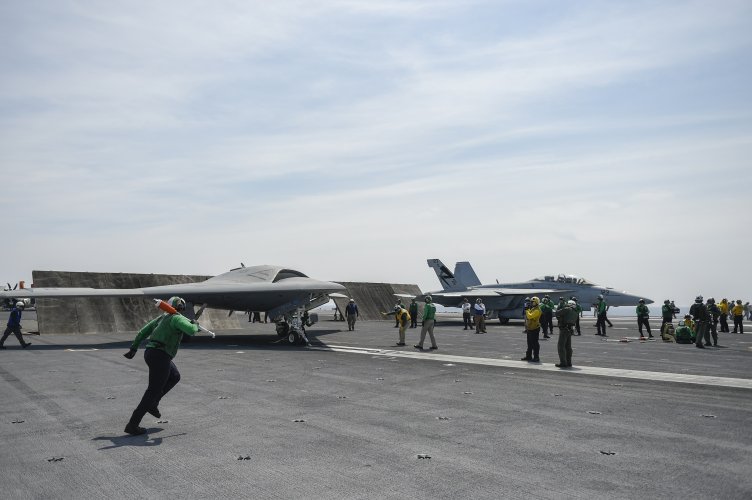
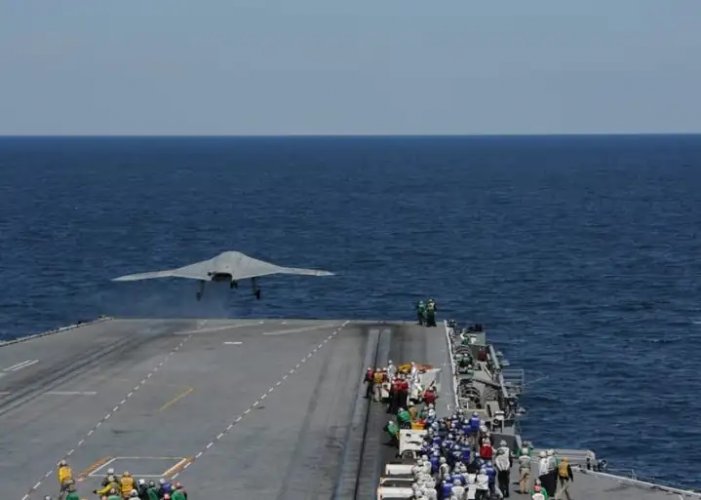
I would argue that to think they DID continue working on it is an awfully naive position and doesn't fit the facts. "Yeah, we stopped taking off, landing, or even flying, oh and we got rid of the aircraft, but we're still working on it. Trust me bro."They developed world first unmanned aircraft systems for use aboard aircraft carriers. The program formed a crucial knowledge base to retain a technological edge moving forward. If you think they haven't continued working on these sort of things I think that's an awfully naive position.
Keeping the doors open is not the same thing is moving the ball down the field. They put it on pause for years.
Right. And they didn't cancel NATF, they just selected F/A-XX instead. Hell, Stingray still hasn't accomplished what X-47C did a decade ago.To say it was "cancelled" isn't really accurate. NG bid X-47C for UCLASS although it was not successful and Boeing Stingray was selected instead
Attachments
Last edited:
You genuinely think they stopped developing naval unmanned aircraft just because X-47B stopped flying??? One public example is that the software developed under the program to prove unmanned air to air refueling. Thus they provably did not stop developing unmanned systems just because X-47B stopped flying and the X-47 program empirically contributed to this development"Yeah, we stopped taking off, landing, or even flying, oh and we got rid of the aircraft, but we're still working on it. Trust me bro."
X-47C never flew. X-47B did and it was only a technology demonstratorX-47C did a decade ago.

bring_it_on
I really should change my personal text
- Joined
- 4 July 2013
- Messages
- 4,223
- Reaction score
- 5,769
Its not like NAVAIR began pouring large sums of money into alternatives when it decided not to pursue X-47 as a stealthy strike aircraft. FA-XX was just concept studies and in demonstrator phase then. And F-35 was sucking up the department's RDT&E resources and sizing up to do the same for procurement and O&S as the three services operpationalized it. MQ-25 kind of made sense because it allowed the Navy to integrate unmanned into the air wing in a very low risk sort of way. In hingsight, I'd be more critical of the Navy for not pursuing the X-47 if it was pouring double digit billions into something new and something else. It really wasn't during that timeframe. At least not from an air wing perspective.
- Joined
- 3 June 2011
- Messages
- 20,986
- Reaction score
- 19,254
I genuinely believe they'd have been far further along, in all ways, had they kept those two flying, and going out to sea.You genuinely think they stopped developing naval unmanned aircraft just because X-47B stopped flying??? One public example is that the software developed under the program to prove unmanned air to air refueling. Thus they provably did not stop developing unmanned systems just because X-47B stopped flying and the X-47 program empirically contributed to this development
Wow. Ya got me. It was the X-47B.X-47C never flew. X-47B did and it was only a technology demonstrator
Many "only a tech demonstrator" made it into service. FLAGE was developed into ERINT which became PAC-3 for example. That was a direct development. I'd argue if we'd done something similar with X-47B we'd already have them at sea as tankers and strikers. Instead we get the Boeing delay machine.
- Joined
- 3 June 2011
- Messages
- 20,986
- Reaction score
- 19,254
No, but in typical DoD fashion, they drop the ball, squandering years, money and knowledge, only to pick it up again. See GE's "new" "dual mode" ramjet powerpoint for yet another example. It just gets old watching them do it over and over and over again, never actually moving the needle because they inevitably cancel a thing just as they've almost got to where they were a decade or two prior. How many times have they revisted ASALM and then quit? Four? Five?Its not like NAVAIR began pouring large sums of money into alternatives when it decided not to pursue X-47 as a stealthy strike aircraft. FA-XX was just concept studies and in demonstrator phase then. And F-35 was sucking up the department's RDT&E resources and sizing up to do the same for procurement and O&S as the three services operpationalized it. MQ-25 kind of made sense because it allowed the Navy to integrate unmanned into the air wing in a very low risk sort of way. In hingsight, I'd be more critical of the Navy for not pursuing the X-47 if it was pouring double digit billions into something new and something else. It really wasn't during that timeframe. At least not from an air wing perspective.
Last edited:
bring_it_on
I really should change my personal text
- Joined
- 4 July 2013
- Messages
- 4,223
- Reaction score
- 5,769
I don't think they dropped the ball. The X-47 showed a neat concept and accomplished a first for the carrier air wing. But to get that and turn it into real capability where the Navy would compete investments with F/A-18 or F-35 probably required double digit billion of RDT&E funding. Funding that the Navy just did not have in its budgets. F/A-18 modernization, and F-35 procurement was real capability, being acquired instead of a promise with long developmental road ahead which is what the X-47 was. In that fiscal environment, the Navy made the right bet for the time.No, but in typical DoD fashion, they drop the ball, squandering years
Yeah, they did something with it and tried to enter it into UCLASS. They withdrew their entry. Dunno why MQ-25 is catching strays, it's not a surprise that fairly complex new technology is difficult to integrate but the juice is indubitably worth the squeeze. Indeed I don't think we can certainly say turning X-47 into a suitable airframe would've been any easier or less expensive as @bring_it_on mentioned aboveMany "only a tech demonstrator" made it into service. FLAGE was developed into ERINT which became PAC-3 for example. That was a direct development. I'd argue if we'd done something similar with X-47B we'd already have them at sea as tankers and strikers. Instead we get the Boeing delay machine.
- Joined
- 3 June 2011
- Messages
- 20,986
- Reaction score
- 19,254
If they didn't have the money then it kind of is what it is. Meaning it wasn't really in their hands. Was thinking it was a "well now that we have it we don't know what to do with it so we lost interest in this toy" situation. Like they have with other things.I don't think they dropped the ball. The X-47 showed a neat concept and accomplished a first for the carrier air wing. But to get that and turn it into real capability where the Navy would compete investments with F/A-18 or F-35 probably required double digit billion of RDT&E funding. Funding that the Navy just did not have in its budgets. F/A-18 modernization, and F-35 procurement was real capability, being acquired instead of a promise with long developmental road ahead which is what the X-47 was. In that fiscal environment, the Navy made the right bet for the time.
jsport
what do you know about surfing Major? you're from-
- Joined
- 27 July 2011
- Messages
- 8,628
- Reaction score
- 6,930
Having had a seat in the 5 sided funny farm, anyone worth their salt will tell u most uniformed PMs spend most of their time in the forest of their own private Idaho collecting wood for their bon fire of vanity. This while their program has a better than .5 chance of being the barge on the sand bar. This phenomenon is why contractors run almost everything, because contractors can get fired for non performance. The problem there, of course, is that contractors, although they primarily rise from from the O corp, care only about tossing crap over the transom to clinch a contract.If you have nothing to say of his ideas at least spell “playwright” correctly when criticising his experience
NG did not withdraw their entry as they never submitted anything for CBARS RFP. You can’t withdraw something if you never entered it the first place.Yeah, they did something with it and tried to enter it into UCLASS. They withdrew their entry. Dunno why MQ-25 is catching strays, it's not a surprise that fairly complex new technology is difficult to integrate but the juice is indubitably worth the squeeze. Indeed I don't think we can certainly say turning X-47 into a suitable airframe would've been any easier or less expensive as @bring_it_on mentioned above
CBARS significantly changed requirements from UCLASS which meant most of the design work NG was doing for UCLASS went out the window.
Fair pointNG did not withdraw their entry as they never submitted anything for CBARS RFP. You can’t withdraw something if you never entered it the first place.
CBARS significantly changed requirements from UCLASS which meant most of the design work NG was doing for UCLASS went out the window.
- Joined
- 28 January 2008
- Messages
- 1,669
- Reaction score
- 4,263
Also, NG didn't want to pursue X-47B any longer after the test program completed, with Boeing ultimately getting MQ-25, no competition other then GA with their Sea Avenger which personally, I thought was not suited for the carrier due to its configuration. The nice thing about X-47B, it was a scalable design. And with the X-47 "family" you could have built say any size X-47A config or any size X-47B config, that was NG's original intention. Also, X-47A was a subscale for a manned platform, similar canopy/inlet config as compared to Bird of Prey.
Also, NG didn't want to pursue X-47B any longer after the test program completed
I think that the X-47B was a missed opportunity.
- Joined
- 28 January 2008
- Messages
- 1,669
- Reaction score
- 4,263
I agree. If you remember when B-21 was unveiled, most people thought the NG LRSB was going to be a large X-47B platform and when they saw the real B-21 configuration that looked like the original B-2, some were quite disappointed. Or NG is using the X-47B config for another classified program(s).I think that the X-47B was a missed opportunity.

donnage99
ACCESS: Top Secret
- Joined
- 16 June 2008
- Messages
- 1,586
- Reaction score
- 1,640
There's no doubt if Navy was serious about unmanned we would be further along or have actual platforms on deck. the problem was it would have threatened the f-35, which at the time was struggling mightily with cost overruns and delays. In a perfect world, one program should not threaten the other, but that's not how we do politics here in the USA.
jmspeedfreak
ACCESS: Confidential
- Joined
- 23 September 2008
- Messages
- 98
- Reaction score
- 231
Understandably we lament the X-47B not being adopted as a full program but (perhaps) ignore/underplay the reality that the AI technology horizon looked much further away then.I have no doubt that an operational X-47B derivative would've complemented the F-35B/C.
I can't imagine the Navy wasn't concerned it wouldn't be able to adequately control or have sufficient autonomous intelligence in a communication contested enviornment. Anyone who's played Sea Power or Harpoon will know exactly what I mean.
I think we can mostly all agree it was a terrific airframe with great potential, but the timing was still not quite right. As far as being able to be taken forward I was told the NG guys did serious work to make the structures and landing gear systems fully compliant to the Navy's normal requirements. The autonomous control approach for the takeoff, landing, navigation and refueling modes are probably completely relevant even with the developments in AI, as they are likely much more deterministic and predictable that the behaviour of modern AI technology, but still in the actual battlefield there was no cognitive autonomy to make really complex decisions independently of a central control network.
Unless I'm dead wrong and X-47B was also the seed of all modern AI! (pretty sure they had some good stuff but surely not).
I really love the aircraft but the necessary (adequate) pilot substitute was missing.
Attachments

Forest Green
ACCESS: USAP
- Joined
- 11 June 2019
- Messages
- 14,596
- Reaction score
- 31,707
Similar threads
-
 Lockheed Martin - Multi purpose long endurance (MPLE) UAV
- Started by fightingirish
- Replies: 3
-

-
 AFRL Low-Cost Attritable Aircraft Technology (LCAAT) Program
- Started by Triton
- Replies: 179
-

-
