Upcoming future VLS, variants, packing and magazine depth

Seragina

ACCESS: Top Secret
Joined
1 May 2025
Messages
949
Reaction score
1,386
In reference and continuing to my previous post about VLS in future-usn-frigate-design-speculation.51745/post-924746

Since this kind of discussion tends to derail and keep happening in almost every related threads and with the very same discussions & arguments & interests.
I've decided to create this as an independent (art project) discussion.
The art is just a means to give people something substantial to look at rather than just words. Most of this will be theoretical and are my own thougths, though reality has caught up a bit in the little time it took me to make the drawings.

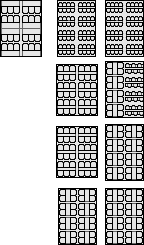
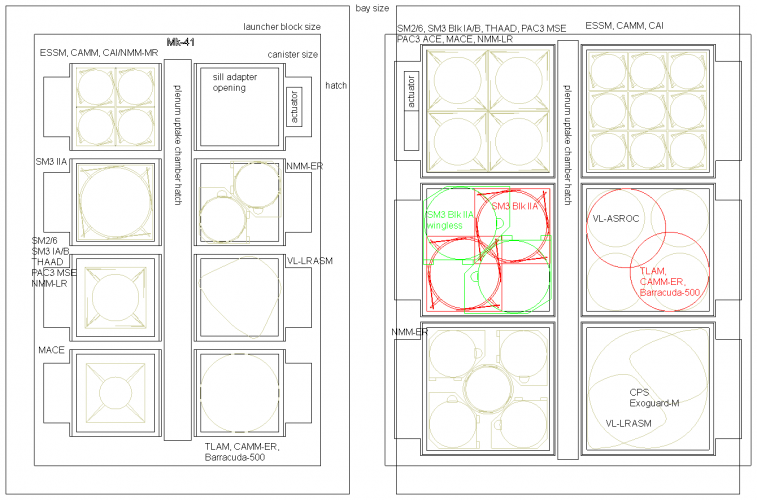
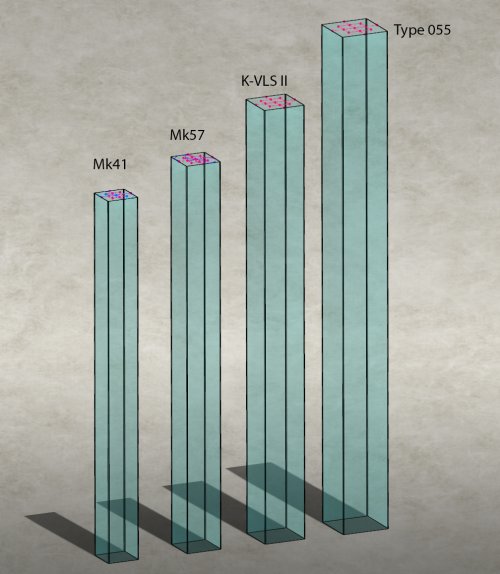
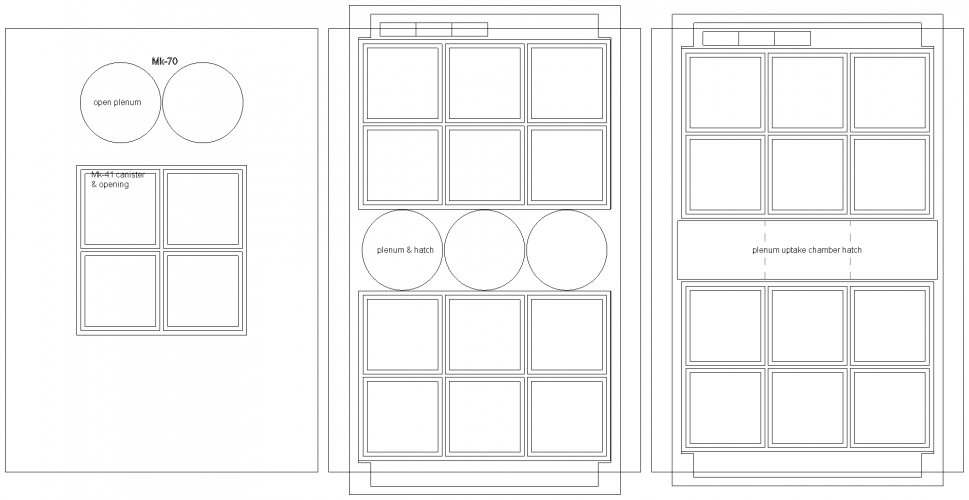
As I've talked about before the next generation VLS would preferably pack more. And that next step up would be similar to the Mk-70 in packing 4 SM-2/SM-6 in a larger canister.
The canister would be 38" with a "standard" opening of about 35.5". Like the Mk-41 it's possible to accomodate oversized rounds.
This would be able to pack 9 ESSM. A 6-cells with about the same size as a Mk-41 8-cell block could increase magazine depth by 24/8=3x or 54/32=1.6875x respectively.
For other packing & fitting options see drawing.

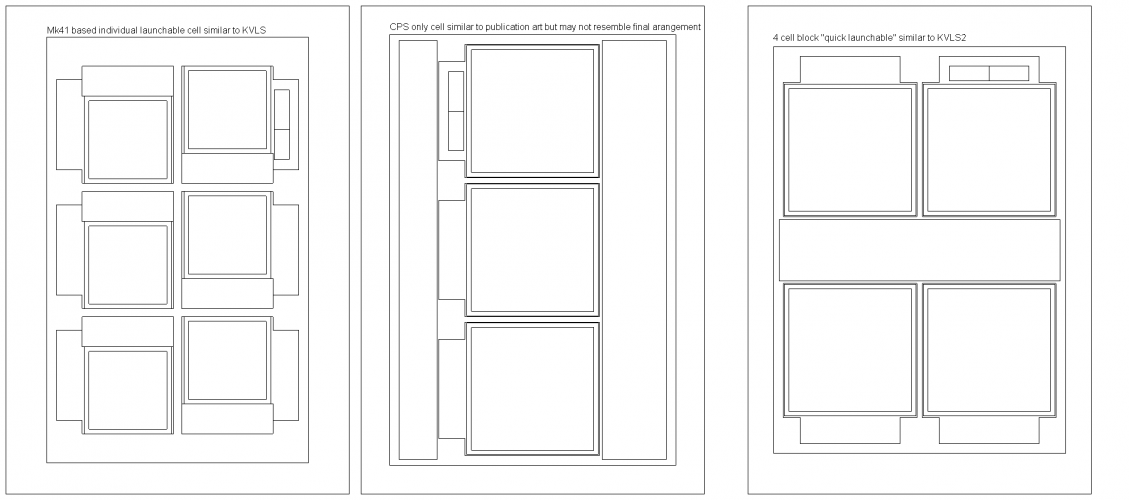
As it turns out the size I derived seems to be the same size as SouthKorea's KVLS-II design or perhabs a bit larger by 1"? And from what's been said about LockMart's Growth VLS / G-VLS both seem to be of similar size.

The Korean designs are a bit inconvenient in size but not too bad. Their 4-cell block design is obviously aimed at increasing the rate of fire for a farm.

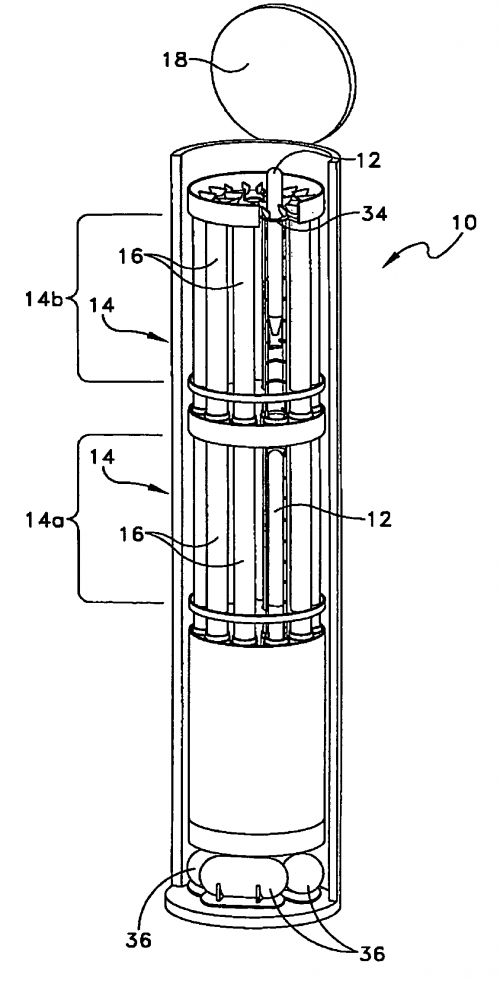
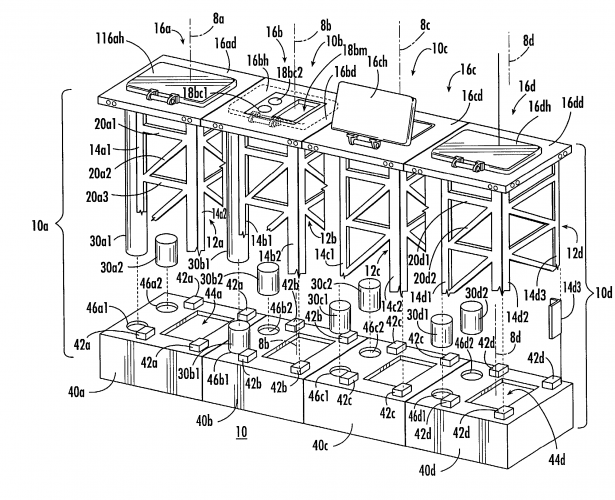
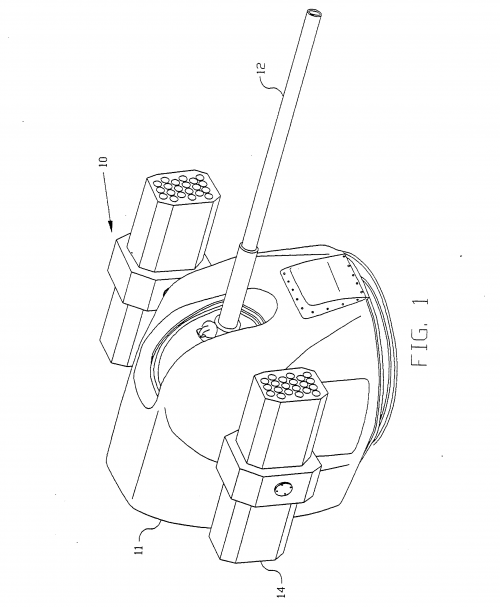
Similarly, the KVLS is designed to launch every cell independly, although, a bit too big with large inbetween spacing. I've created a more efficient alternative which happens to be similar to an abandoned patent.
The problem with these is that simultaneous launching missiles could collide with each other due to ship swaying & wind, missile reorienting bearing after launch etc. This reduces theoretical rate of fire to half.

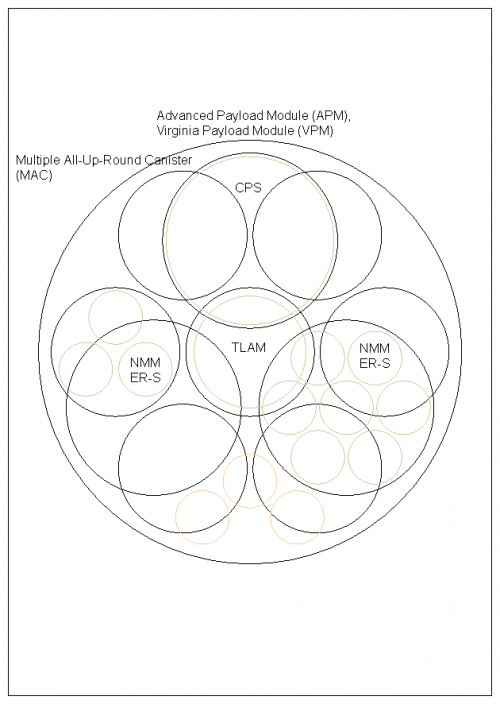
Now, that the Naval Modular Missile concepts are public we got more packing options, too.

Overall, it's possible to combine a mix of larger magazine depth with higher rates of fire for a VLS farm setup.
Another option not discussed but already solved for TLAM is stacking rounds. In this case, self-defense length rounds could be stacked in a CPS length launcher.

Alternatively, a launcher system with an automatic magazine loading feature could increase magazine depth some more. However, this would only become feasible with farms with a Mk41 cell count or 64 or more like the Mogami FFM-AAW variant with 80 cells. Hence, it's an option better suited for an arsenal ship design.
But for smaller launchers (NASAMS/RAM) and rounds (ESSM/RAM) the space needed, the mechanics, the fire rate, and number of ready fire rounds are much more favorable.

Another option is to mount RAM launchers to main cannon turrets to take advantage of their sensor guidance system and coordinate and improve its defensive fire.

Applying these to DDG(X) with 2x64 Mk41 cells and (12) CPS G-VLS cells but leaving CPS alone.
Replacing Mk41 with RoF of 16(simplified not actual) for 6x 6-cell G-VLS blocks; 4x 4-cell G-VLS blocks and 4x 6-cell quick-shot G-VLS blocks with max RoF of 22 and sustained RoF of 10.
And 52*4+12=220x SM2 or 52*9+12*4=516 ESSM.
or
Replacing Mk41 with RoF of 16 for 6x 6-cell G-VLS blocks; 8x 4-cell G-VLS blocks with RoF of 14.
And 68*4=272x SM2 or 68*9=612 ESSM.
or
Replacing Mk41 with RoF of 16 for 16x 4-cell G-VLS blocks with RoF of 16.
And 64*4=256x SM2 or 64*9=576 ESSM.
DDGX.png
As you can see raising RoF isn't a good trade with the independent & individual quick shot launchers since they don't have magazine depth beyond the single-shot.
The 4-cell block is the far better option but due to size can't increase total RoF. A complete different variable VLS design and setup offering denser cell arrangement is needed to outdo the current state of things.

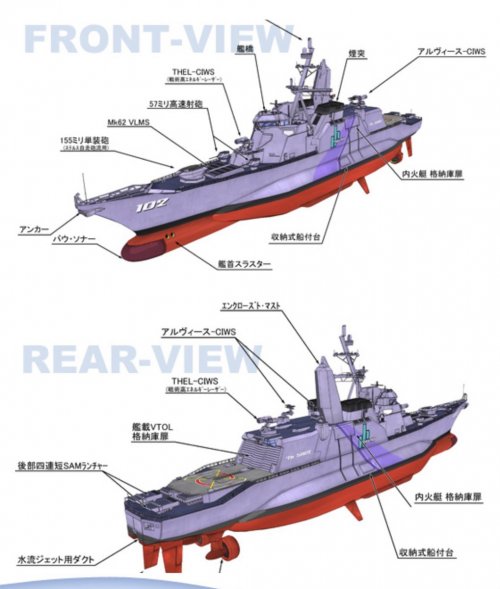
The reloadable launcher turrets would be best located at the stern, aft and below the helipad similar to this over 21 year old illustration based on the Murasame-class destroyer.
 

Attachments

  • Launcher_Mk41+Mkxx-print.png
    Launcher_Mk41+Mkxx-print.png
    43.4 KB · Views: 127
  • Launcher_Mk41+Mkxx-variants1-print.png
    Launcher_Mk41+Mkxx-variants1-print.png
    5.1 KB · Views: 72
  • Launcher_APM-print.png
    Launcher_APM-print.png
    14.8 KB · Views: 56
  • 20070109-D00000.png
    20070109-D00000.png
    21.8 KB · Views: 58
  • 20030102-D00000.png
    20030102-D00000.png
    79.1 KB · Views: 57
  • 19910801-D00002.png
    19910801-D00002.png
    45.4 KB · Views: 88
  • HI1k58HbgAAhwVl.jpg
    HI1k58HbgAAhwVl.jpg
    110.3 KB · Views: 134
I'd like to add that the Virginia/Ohio/Zumwalt APM round cell is atrocious for cell density, but makes it up in protecting each set of sub-cells because each APM is still a submarine-hull-thickness chunk of HY80. And HY80 is STS battleship plate steel with more chromium and nickel to reduce corrosion at the expense of some face hardness.
 
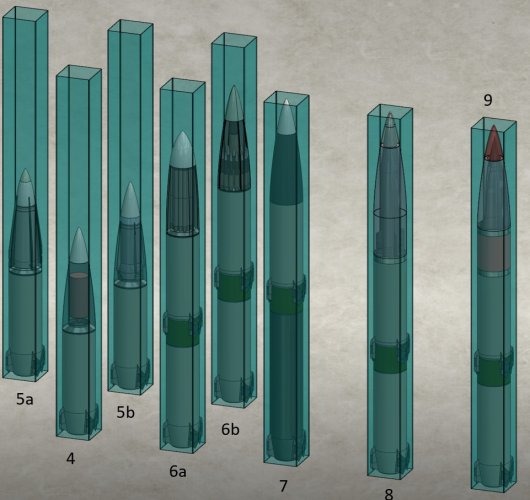
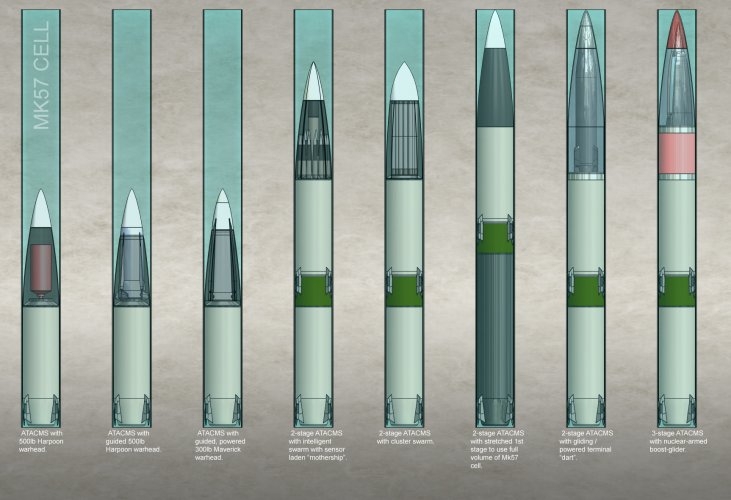
For reference. These are just "official" or "best info" dimensions, but then they go and launch ATACMS and LRASM out of a Mk41, neither of which should fit based on the "official" dimensions. ("TomS" mentioned them stripping the liner out to make more room but maybe that was just for the test shots and not a long-term possibility.)
 

Attachments

  • VLS Cell size.jpg
    VLS Cell size.jpg
    533.9 KB · Views: 80
  • Northrop Grumman Modular Launch System (MLS).pdf
    415.5 KB · Views: 21
So far the things "unsolved" are how to increase density for SM-3, TLAM and similar large munitions.
The simple way is to do the same as with Mk-70. By my generous spacing the size is set to 53.6"
Instead of 4 Mk41 cells bunch I arranged them into 6-cell groups. And also made them using the plenums separately for higher RoF.
Hence, in theory RoF is 3x but practically it's only 1.5x for the reasons given before.
The RoF firing sequence and number of missiles would be
2, 1, 2, 1, 2, 1, 2, 1
or
1, 2, 1, 2, 1, 2, 1, 2
Hence, combined comparison of 2 blocks of Mk41 and this Mk70 variant gives a 1.5x increase in RoF
The separated plenum/shooting variant increases density and RoF each by 1.5x but for the same timely endurance. In other words a DPS of 1.5x.
The unified block plenum variant increases density and endurance by 1.5x for the same RoF.
I think that's all that's possible within this size constraint.
 

Attachments

  • Launcher_Mk70-variants-print.png
    Launcher_Mk70-variants-print.png
    15 KB · Views: 64
For reference. These are just "official" or "best info" dimensions, but then they go and launch ATACMS and LRASM out of a Mk41, neither of which should fit based on the "official" dimensions. ("TomS" mentioned them stripping the liner out to make more room but maybe that was just for the test shots and not a long-term possibility.)
Not sure about Mk41, but the old submarine VLS tube is right at 25" diameter. So if you're willing to accept much higher shock loads due to only 0.25" gap between weapon and tube it can work.
 

Attachments

  • Submarine Launched ATACMS - ADA318774.pdf
    1.6 MB · Views: 10
Not sure about Mk41, but the old submarine VLS tube is right at 25" diameter. So if you're willing to accept much higher shock loads due to only 0.25" gap between weapon and tube it can work.
If I assume 5mm thick guide rails between canisters than the canister can be as large as 25.5" instead of the 25.12" publicized.
Anyhow, if Army missiles are need it would be far more convenient to just use the Palletized Load System (PLS) or Palletized Field Artillery Launcher (PFAL) ISO containers. Both can be easily reloaded or replaced than the VLS.

Mk-57 is nice to have but it seems not being used in newer designs either because too wastefull either in size or mass. And frankly, without SM-3 block IIB, there's no reason beyond surviveability to use it.
If a trimaran design would be used I would want it on the wings.
 
If I assume 5mm thick guide rails between canisters than the canister can be as large as 25.5" instead of the 25.12" publicized.
Anyhow, if Army missiles are need it would be far more convenient to just use the Palletized Load System (PLS) or Palletized Field Artillery Launcher (PFAL) ISO containers. Both can be easily reloaded or replaced than the VLS.

Mk-57 is nice to have but it seems not being used in newer designs either because too wastefull either in size or mass. And frankly, without SM-3 block IIB, there's no reason beyond surviveability to use it.
If a trimaran design would be used I would want it on the wings.
Is there a reason Mk57 modules couldn't be clustered on the centerline? (Aside from the fact we want bigger cells?)
 
Is there a reason Mk57 modules couldn't be clustered on the centerline? (Aside from the fact we want bigger cells?)
Not really. But it's 20% (bay) to ~40% (block) longer which changes simple sizing math more than can be covered by existing reserved spaces. Some simple past rules of thumbs for quick design may be upset. The plenums on the outside edges requiring some diverter structure to protect deck crew. It's odd yet not that much larger canister size (28") doesn't improve missile density.
I would want the improved/less-maintenance gas management system, though, be applied to all new system if possible.
 
Mk-57 is nice to have but it seems not being used in newer designs either because too wastefull either in size or mass. And frankly, without SM-3 block IIB, there's no reason beyond surviveability to use it.
Sure there is. Turning the sides of your helo deck into a few more tubes.
 
How does this fare against lockheed planned G-VLS for the now cancelled DDG(X)
https://www.navalnews.com/event-new...ed-martin-developing-new-larger-vls-for-ddgx/
As outlined my simple projection is about the same size as KVLS-II and G-VLS. The canister size difference is likely within 1". But the actual launcher block size can differ significantly depending on below deck structure, control boxes, water/fire suppression tubing, etc. And where crew access are. By rule of thumb a passage way of ~0.7m plus ~0.2m bay rips so ~1m around canister primeter.

Sure there is. Turning the sides of your helo deck into a few more tubes.
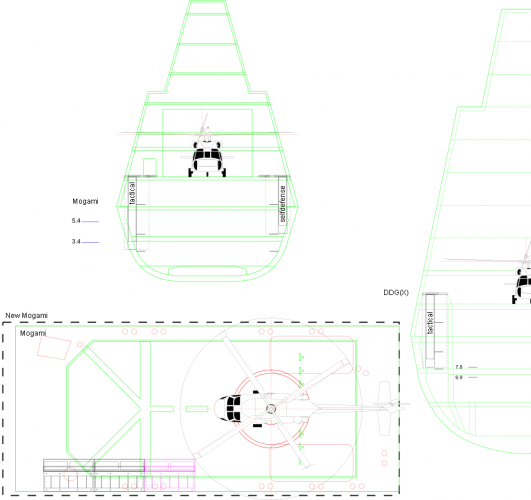
Since this keeps coming up, I've drawn the MK57 (suitable variants) in relation to FFG (Mogami class) and est. DDG(X) hulls.

As you can see for a frigate of 5-8kt a self-defense length variant is best fit, but not ideal. A sizeable flight deck is needed for safe operation of a helicopter (Mogami's big). Realistically, two blocks total should be it for a max. of 8x4=32 ESSM or equivalent.
But should they be locked down due to helo operation it would be bad if all medium defense missiles are there.
Not sure this is worth if for better protection of 4m of (stern) hull lenght per block per side.

For a destroyer of ~12kt a tactical length variant is almost the best fit. It's stll a bit long. In this design I kept it above the waterline for reasons which required it to stick out above the deck. Note: it must not become an enclosure or it will cause an accident when the helicopter recycles air.
This imho is the minimum to make it feasible.

Apparently, the Zumwalt was minimum size for best fit of Mk57. Currently, this would apply to BBGN(X).
 

Attachments

  • Mk57PVLS+FFG-DDG-compare.png
    Mk57PVLS+FFG-DDG-compare.png
    66.6 KB · Views: 54
Since this keeps coming up, I've drawn the MK57 (suitable variants) in relation to FFG (Mogami class) and est. DDG(X) hulls.

As you can see for a frigate of 5-8kt a self-defense length variant is best fit, but not ideal. A sizeable flight deck is needed for safe operation of a helicopter (Mogami's big). Realistically, two blocks total should be it for a max. of 8x4=32 ESSM or equivalent.
But should they be locked down due to helo operation it would be bad if all medium defense missiles are there.
Not sure this is worth if for better protection of 4m of (stern) hull lenght per block per side.
Hrm. That is less than I thought could fit. We're also talking about mooring cleats potentially in the way for retrofitting short Mk57 back aft.

And you're right that a ship so fitted would still need a few cells for ESSMs forward, in case the helo deck was fouled. Hadn't thought about that till you brought it up. But I suspect that the Navy would assume doing that anyways.

I don't think that sets of 4-cell Mk41 in armored enclosures like the Mk57 but scaled down would give enough room to add any more blocks, either. [expletives deleted]

Nowhere near as many cells as I thought would be available, unless it's okay to add a couple more where the rotor disk is. And I bet that is verboten.


For a destroyer of ~12kt a tactical length variant is almost the best fit. It's stll a bit long. In this design I kept it above the waterline for reasons which required it to stick out above the deck. Note: it must not become an enclosure or it will cause an accident when the helicopter recycles air.
This imho is the minimum to make it feasible.
Not sure the cells have to stay above waterline, which would get the muzzle hatches flush with the helo deck.


Apparently, the Zumwalt was minimum size for best fit of Mk57. Currently, this would apply to BBGN(X).
Agreed here for "strike length" Mk57. Not exactly ideal to have two separate missile cell sizes, either, but the control electronics are apparently the same between Mk41 and Mk57 now.

Related q: did we ever get confirmation on what GMLS mark(s) the CG-21/CG(X) was supposed to carry? Was it going to be the Mk57 of the Zumwalts plus Mk41 in place of one or both gun magazines? Or only Mk41? or Mk41s forward and Mk57s aft?
 
Related q: did we ever get confirmation on what GMLS mark(s) the CG-21/CG(X) was supposed to carry? Was it going to be the Mk57 of the Zumwalts plus Mk41 in place of one or both gun magazines? Or only Mk41? or Mk41s forward and Mk57s aft?
There have been many published art showing mostly Mk41 but afaik it's meant to have 160 Mk57 cells. Yes, it's large around 730 ft.
 
There have been many published art showing mostly Mk41 but afaik it's meant to have 160 Mk57 cells.
Interesting. That would have left the ship with a very large area forward where the guns were in DD-21s that wasn't used. All the CG-21 art I've seen had them without any guns on the bow.


Yes, it's large around 730 ft.
This would have been roughly a double length helo deck aft and a straight section forward of the superstructure roughly the length of a Zumwalt helo deck before the bow started tapering...
 
Interesting. That would have left the ship with a very large area forward where the guns were in DD-21s that wasn't used. All the CG-21 art I've seen had them without any guns on the bow.

This would have been roughly a double length helo deck aft and a straight section forward of the superstructure roughly the length of a Zumwalt helo deck before the bow started tapering...
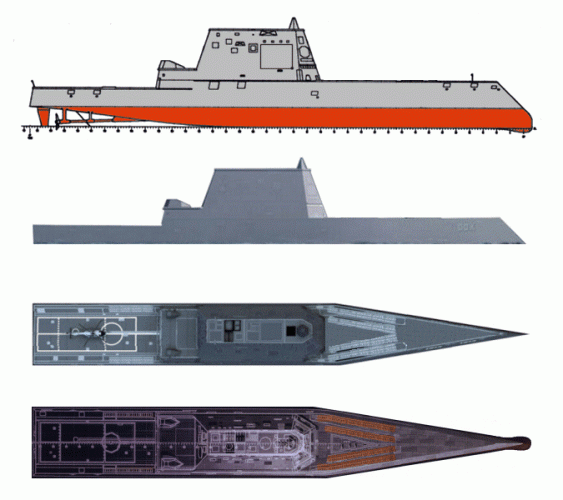
I assume we are talking about the same Zumwalt photoshoped version found at globalsecurity?
They just lined up second layer of launchers behind the existing ones. There's still space for the #1 turret but perhaps the blocks don't leave enough space for a wide enough passage to it?

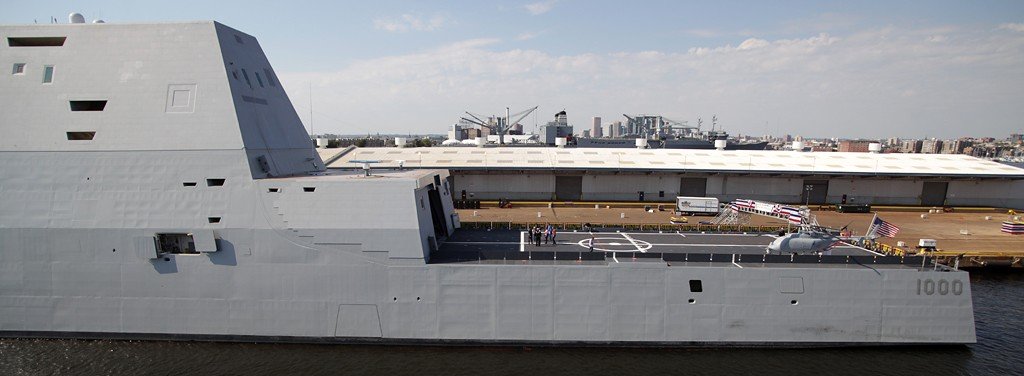
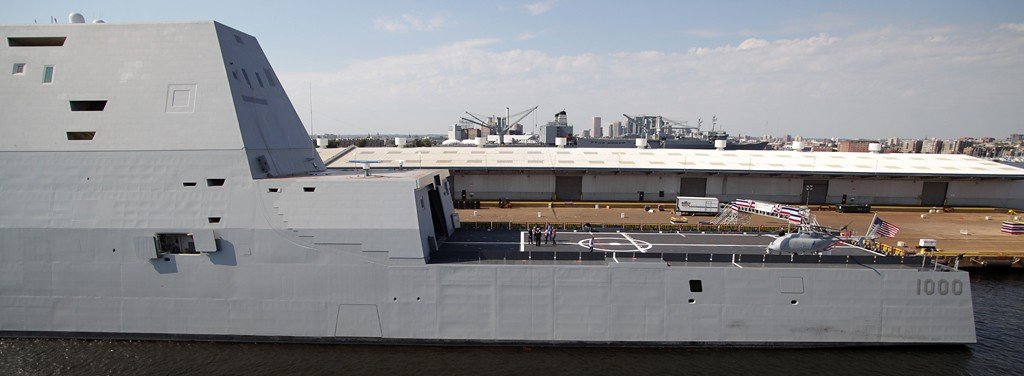
The Zumwalt's flight deck has 5 blocks unused on each side. I assume the last block is unsafe for reloading due to proximity to the edge.
Hence, filling all makes up the numbers.

So I assume the extra hull lenght goes into amidsection/superstructure extension but I haven't seen anything similar nor seen it mentioned. Actually, other then the specs there isn't much said about arrangements.
 

Attachments

  • cg-21-2005-line.gif
    cg-21-2005-line.gif
    81.1 KB · Views: 36
  • ddg1000_flight-deck_side_crop-annoted.jpg
    ddg1000_flight-deck_side_crop-annoted.jpg
    75.6 KB · Views: 28
  • ddg1000_flight-deck_side_crop.jpg
    ddg1000_flight-deck_side_crop.jpg
    75.6 KB · Views: 25
I assume we are talking about the same Zumwalt photoshoped version found at globalsecurity?
They just lined up second layer of launchers behind the existing ones. There's still space for the #1 turret but perhaps the blocks don't leave enough space for a wide enough passage to it?
I wasn't aware that the Mk57s were intended to have 8 cells per block. I was only aware of 4 cell blocks, a single layer on the periphery.
 
I wasn't aware that the Mk57s were intended to have 8 cells per block. I was only aware of 4 cell blocks, a single layer on the periphery.
You are misunderstanding here. The hatches I've marked are paired per 4 cell blocks. They are handrail diverters specific to the flight deck only (and for on deck level installation).

Having them double layered in the bow is too wastefull. So my new speculation: the superstructure is divided into 2 islands which would make it possible to have Mk57 admidsection for overall increased survivability.
 
You are misunderstanding here. The hatches I've marked are paired per 4 cell blocks. They are handrail diverters specific to the flight deck only (and for on deck level installation).
No, that comment was about the double layer on the bow, not the stuff on the helo deck.

I had not been paying attention on the helo deck, I thought that the whole length of it had missile cells already. That's why I thought CG21 would have a stretched section aft to add more cells. But since the Zumwalt helo deck does not have missile cells running down the length of it already, the CG21 version could easily add more cells aft.


Having them double layered in the bow is too wastefull. So my new speculation: the superstructure is divided into 2 islands which would make it possible to have Mk57 admidsection for overall increased survivability.
All the official SC21 art had the ships with a single massive superstructure, Zumwalt-style, though.

My thinking is now a new square section in front of the superstructure the length of 5x Mk57 units, a 21.5m stretch. Standard Zumwalt bow forward of this, and then more cells on the helo deck. ~212m overall length doing it this way.
 

Similar threads

Back
Top Bottom