blockhaj
Swedish "want to be" aviation specialist
- Joined
- 9 February 2017
- Messages
- 444
- Reaction score
- 640
I thought we should have a thread dedicated to this.
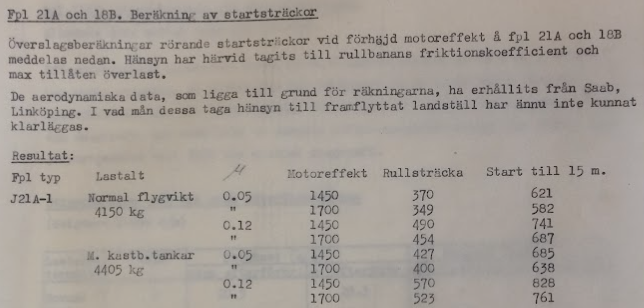
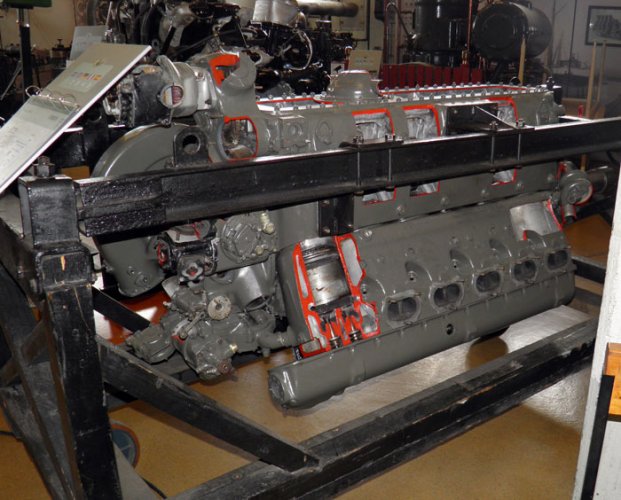
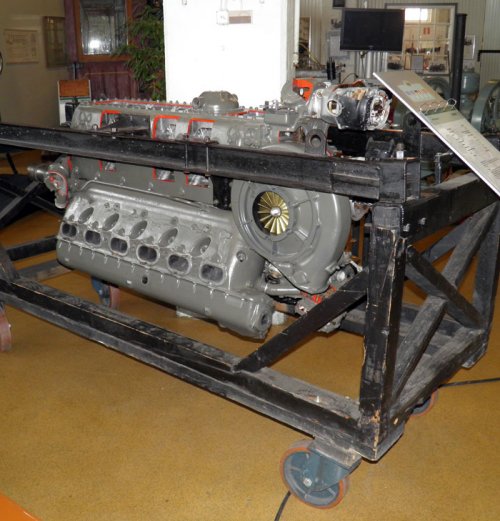
Short story: The Swedish Air Force needed a modern inline engine for the SAAB 21 fighter aircraft and other future projects. Due to WWII and the allied embargo on Sweden, they went to Germany for stuff like the DB 601 or Jumo 211. Some effort was made to make a pirate copy of the DB 605B in August 1941 but it took time and after much trouble, Sweden eventually got a license for the DB 605B and even allowed to buy German production examples. The German engines were made for war time and thus were unreliable and broke down after a couple houndred hours. For Swedish production, several thousand changes had to be made to make the engine reliable for peace time. A total of 800 engines were produced in Sweden (SFA: Svenska Flygmotor AB + Muntell) until 1948 with the number series 2001 - 2800. Due to the quality difference, Swedish engines were prioritized for the single-engined SAAB 21. Once more engines became available, the twin-engined SAAB 18B was required to have at least one Swedish engine installed for safety reasons. The first DB605B engine came for overhaul to CVA in May 1946. The last DB605B engine was delivered in June 1955 (no clue how that happened with production wrapping up in 1948). Post-war, Swedish DB 605 engines were sought after to keep surviving Bf 109s airworthy, some even being installed in Spanish Ha-1112's to make immitation 109s.
Basic data i had in a document, no clue how accurate it is:
Engine type: supercharged, inverted V12, four-stroke , liquid-cooled inline engine
Power: 1475 hp at 2800 rpm
Length: 2305 mm
Height: 1050 mm
Width: 762 mm
Cylinder diameter: 154 mm
Stroke: 160 mm
Engine displacement: 2,99 liter per cylinder
Total cylinder volyme: 35,7 liter
Cruising speed fuel consumption: 320 liter/h at 2300 rpm
Propeller direction (pusher config): right to left
Propeller gear ratio: 8:15
Compression ratio: 7,5:1
Weight: 720 kg
Short story: The Swedish Air Force needed a modern inline engine for the SAAB 21 fighter aircraft and other future projects. Due to WWII and the allied embargo on Sweden, they went to Germany for stuff like the DB 601 or Jumo 211. Some effort was made to make a pirate copy of the DB 605B in August 1941 but it took time and after much trouble, Sweden eventually got a license for the DB 605B and even allowed to buy German production examples. The German engines were made for war time and thus were unreliable and broke down after a couple houndred hours. For Swedish production, several thousand changes had to be made to make the engine reliable for peace time. A total of 800 engines were produced in Sweden (SFA: Svenska Flygmotor AB + Muntell) until 1948 with the number series 2001 - 2800. Due to the quality difference, Swedish engines were prioritized for the single-engined SAAB 21. Once more engines became available, the twin-engined SAAB 18B was required to have at least one Swedish engine installed for safety reasons. The first DB605B engine came for overhaul to CVA in May 1946. The last DB605B engine was delivered in June 1955 (no clue how that happened with production wrapping up in 1948). Post-war, Swedish DB 605 engines were sought after to keep surviving Bf 109s airworthy, some even being installed in Spanish Ha-1112's to make immitation 109s.
Basic data i had in a document, no clue how accurate it is:
Engine type: supercharged, inverted V12, four-stroke , liquid-cooled inline engine
Power: 1475 hp at 2800 rpm
Length: 2305 mm
Height: 1050 mm
Width: 762 mm
Cylinder diameter: 154 mm
Stroke: 160 mm
Engine displacement: 2,99 liter per cylinder
Total cylinder volyme: 35,7 liter
Cruising speed fuel consumption: 320 liter/h at 2300 rpm
Propeller direction (pusher config): right to left
Propeller gear ratio: 8:15
Compression ratio: 7,5:1
Weight: 720 kg
Attachments
Last edited: