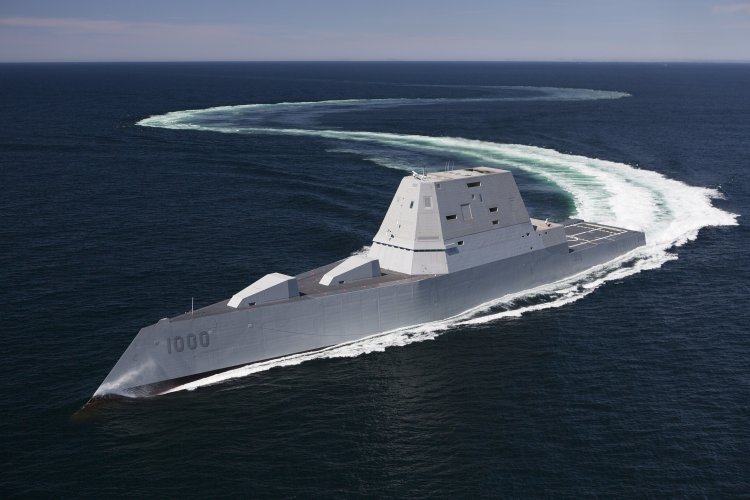
Surface Ships Need More Offensive Punch, Outlook

Which is also stupid since AFAIK that does not exist. Or rail guns in any usable form for that matter.
The Army and navy, mainly the Army, is LITERALLY Testing and funding that as we speak.

And HVP already been shown to smack down supersonic missiles from 155mm and 105mm howitzers in testing from a high of bore aim, something like 15 degrees off target.

Only thing that doesn't exist, and that a barely, is the railgun and multiple people be testing thoses at sea for a hot minute as well.
 
The Army and navy, mainly the Army, is LITERALLY Testing and funding that as we speak.

And HVP already been shown to smack down supersonic missiles from 155mm and 105mm howitzers in testing from a high of bore aim, something like 15 degrees off target.

Only thing that doesn't exist, and that a barely, is the railgun and multiple people be testing thoses at sea for a hot minute as well.

…and those tests were so successful that there is no program of record to fit that capability to existing 5” guns AFAIK.
 
Those dimensions are for the Welland Canal and St. Lawrence Seaway locks. The entire system also has a controlling air draft of 35.5 meters (116 ft), coincidentally just taller than a Burke's 112 ft mast height. Fincantieri Marine at Sturgeon Bay recently built a 26,000 gt lake freighter https://en.wikipedia.org/wiki/MV_Mark_W._Barker. The main issue I've heard discussed with regards to Lake-built combatants is draft, especially with bow-mounted sonars. A lot of combatants have 6 - 8 m keel depths, but adding another 1 - 2 m to draft with a large sonar would prevent them from transiting the Seaway. I suspect this is one reason why the Constellation class lacks the bow sonar that the Italian FREMMs have.
IIRC it explicitly is.

Since having a surface towed array and a VDS is good enough detection capability.


…and those tests were so successful that there is no program of record to fit that capability to existing 5” guns AFAIK.
Just like there was no program of record to deploy 5" SAL projectiles or even Excalibur N5s.

Despite those being developed.
 
It makes no sense to design a ship around an AD capability that doesn’t exist, and we all know that the guns are on the ship to make it look cool, because the president specifically took issue with how warships *look*, presumably because they are not large or threatening enough. Trying to paint a requirement onto the obvious bullshit that some artist rendered for Phelan to satisfy Trump is not going to make an effective Burke replacement faster.
 
Since we have so few replenishment oiler and ammunition ships, maybe there should be some thought on how to add SM-2 to them. They are high value assets that follow around fleets to refuel, rearm, and restock other ships. Their size, additional facilities, and ability to support the operation of other vessels, has allowed the replenishment oilers to be utilized as command ships in the past. But they have capacity to add large VLS. Some of them already carry Sea Sparrow. 20mm Phalanx, Sea RAM. and two CH-46E Sea Knight or MH-60S Seahawk helicopters. John Lewis-class is capable of 20 knots and the Supply-class fast combat support ships are capable of 25 knots. They are just shy of 50k tons apiece. Lewis and Clark-class ships are not good candidates as they are basically built to civilian standards.
 
Since we have so few replenishment oiler and ammunition ships, maybe there should be some thought on how to add SM-2 to them. They are high value assets that follow around fleets to refuel, rearm, and restock other ships. Their size, additional facilities, and ability to support the operation of other vessels, has allowed the replenishment oilers to be utilized as command ships in the past. But they have capacity to add large VLS. Some of them already carry Sea Sparrow. 20mm Phalanx, Sea RAM. and two CH-46E Sea Knight or MH-60S Seahawk helicopters. John Lewis-class is capable of 20 knots and the Supply-class fast combat support ships are capable of 25 knots. They are just shy of 50k tons apiece. Lewis and Clark-class ships are not good candidates as they are basically built to civilian standards.
We could probably lash a few containerized Mk70 units onto the foredecks of those ships. Even the Lewis-and-Clarks.
 
Since we have so few replenishment oiler and ammunition ships, maybe there should be some thought on how to add SM-2 to them. They are high value assets that follow around fleets to refuel, rearm, and restock other ships. Their size, additional facilities, and ability to support the operation of other vessels, has allowed the replenishment oilers to be utilized as command ships in the past. But they have capacity to add large VLS. Some of them already carry Sea Sparrow. 20mm Phalanx, Sea RAM. and two CH-46E Sea Knight or MH-60S Seahawk helicopters. John Lewis-class is capable of 20 knots and the Supply-class fast combat support ships are capable of 25 knots. They are just shy of 50k tons apiece. Lewis and Clark-class ships are not good candidates as they are basically built to civilian standards.

Only the Supply class has Sea Sparrows, though I agree with the general idea. I would go one step further and use T-AKO as the baseline CPS platform. The hull has the depth.
 
Moving this here to not detract the Type 055 topic any further.
So it probably still requires some level of maneuvering and force positioning. Not great for a bolt from the blue but not bad either.
If we are to assume that the USN munitions depot is located a days drive from port.

Doing the paperwork for munitions transfer is maybe something like a half day.
Securing the AURs is going to take another half day.
The actual road travel is like another day to tick on the timetable.
Then loading the AURs onto ship is going to be another day.
Going to AO is another day.

That's nearly half a week under perfect uninterrupted workflow. Like if the enemy doesn't get crazy enough they bomb your bomb and missile storages preemptively. And carve holes in roads and rails and runways.

I've seen people expending a whole clean night to cut the lashings securing a pretty tiny dredger. Then I engraved into my mind that working with heavy stuff is quite tedious - and dangerous. Not that I will shy away from it, but precautions, eh? God forfeit there's things that go kaboom inside too.
 
I hope we include some drones that can pick off PLAN's pzeudo-civilian 'fishing' fleet with standoff range. May be a good case study for a 76 mm or 90 mm tankgun repurposed to engaging targets at sea. Obviously the boat has to be stealth and be capable of engaging helicopters to protect itself. Can you imagine shells impacting a line of paramilitary boats and the only sense of origin is the echo of gunfire in the distance?
 
I hope we include some drones that can pick off PLAN's pzeudo-civilian 'fishing' fleet with standoff range. May be a good case study for a 76 mm or 90 mm tankgun repurposed to engaging targets at sea. Obviously the boat has to be stealth and be capable of engaging helicopters to protect itself. Can you imagine shells impacting a line of paramilitary boats and the only sense of origin is the echo of gunfire in the distance?
The big problem here is that the 'floor' has risen immensely over the last 3 decades and change, and Congress is unwilling to see it, as it has gone back to its skinflint ways regarding the military. Especially after it came as close to treason as you could during the 1970s, by Thatcherizing the shipyards and then ensuring that any overt program to upgrade them was killed.

... and people wonder why the Zumwalt and Constellation class programs were so bloated, they literally hid a shipyard upgrade program within them.

To be honest, the only way to fix it is to essentially divest the powers of the democratic offices and revest them in an unelected bureaucracy... and now completely nationalizing the shipyards and force a massive upgrade and expansion program down their throats.
 
The big problem here is that the 'floor' has risen immensely over the last 3 decades and change, and Congress is unwilling to see it, as it has gone back to its skinflint ways regarding the military. Especially after it came as close to treason as you could during the 1970s, by Thatcherizing the shipyards and then ensuring that any overt program to upgrade them was killed.

... and people wonder why the Zumwalt and Constellation class programs were so bloated, they literally hid a shipyard upgrade program within them.
Honestly, looking into both programs they both would have met their goals if Navy wasn't playing politics. Both are great early designs IMHO. I can only imagine the only winners to stopping either, is the enemy.

But I do worry the real invasion threat to Taiwan is 200,000 fishing boats not ships and planes. Far too many to aim missiles at when right behind it are targets requiring more sophisticated means to deal with,
 
Honestly, looking into both programs they both would have met their goals if Navy wasn't playing politics. Both are great early designs IMHO. I can only imagine the only winners to stopping either, is the enemy.

But I do worry the real invasion threat to Taiwan is 200,000 fishing boats not ships and planes. Far too many to aim missiles at when right behind it are targets requiring more sophisticated means to deal with,
The Navy has to play politics because they need congresscritters to OK its projects. People just forget that Congress has been and always will be a skinflint when it comes to military matters. The Cold War is literally an anomaly in that regard.

Which is why I'm all for reducing the power of elected offices and entrusting them to an expanded, unelected bureaucracy.
 
:rolleyes: idk man i prefer democracy

DoD wastes so much money its not even funny, so making them talk to somebody not high on their own supply is vastly better than the alternative
 
:rolleyes: idk man i prefer democracy

DoD wastes so much money its not even funny, so making them talk to somebody not high on their own supply is vastly better than the alternative
The problem is that we're in a technological context where our assumptions on democracy are obsolete, but that discussion isn't for here, though.

DoD only looks like it wastes so much money because it has to get congresscritters on board and, in the case of the Zumwalts and Constellations, start under-the-table programs to upgrade US shipbuilding because Congress won't allow it on normal channels.
 
:rolleyes: idk man i prefer democracy

DoD wastes so much money its not even funny, so making them talk to somebody not high on their own supply is vastly better than the alternative
You can give the military more final say in their doings and still have a Democracy boss.

How the Military did things pre 1990s show that.

A lot of currents military issues can be summed up in bad decision making in Congress and the lack of them seeing any punishment for it.

Give the Pentagon the Ability to tell them No We cannot do that, with a list of why, will fix a decent amount of that.
 
You can give the military more final say in their doings and still have a Democracy boss.

How the Military did things pre 1990s show that.

A lot of currents military issues can be summed up in bad decision making in Congress and the lack of them seeing any punishment for it.

Give the Pentagon the Ability to tell them No We cannot do that, with a list of why, will fix a decent amount of that.
The only real problem with the pre-1990s setup was that it was extremely vulnerable to the media pulling hit pieces to sink a program, as the Sgt. York showed.

The big problem is that Congress can be easily said to be the problem, not the US military. Constantly starting projects, but Congress is cancelling them early because 'costs' is part of the reason why project costs are so high (and the other reason? The floor has risen quite a bit over the decades).
 
You can give the military more final say in their doings and still have a Democracy boss.

How the Military did things pre 1990s show that.

A lot of currents military issues can be summed up in bad decision making in Congress and the lack of them seeing any punishment for it.

Give the Pentagon the Ability to tell them No We cannot do that, with a list of why, will fix a decent amount of that.
There's also the fact that almost none of Congress is sufficiently educated or well informed enough to be making procurement decisions.
 
There's also the fact that almost none of Congress is sufficiently educated or well informed enough to be making procurement decisions.
Especially since Reagan slaughtered the elements of the government whose job was to do that.
 
Guns make sense if you use them as the first stage of a guided projectile system for air defense, or killing Chinese fishing boats etc. As you get rid of by far the largest cost in missiles, the huge solid rocket motor. However for both AA and longer range fishing boat engagements, you need a much better HVP sabot than the one the US is currently developing, as that one is much too heavy and won't give you enough velocity/range.

If the Chinese gun is designed for this from the start, it could be exceptional.
 
Last edited:
Guns make sense if you use them as the first stage of a guided projectile system for air defense, or killing Chinese fishing boats etc. As you get rid of by far the largest cost in missiles, the huge solid rocket motor. However for both AA and longer range fishing boat engagements, you need a much better HVP sabot than the one the US is currently developing, as that one is much too heavy and won't give you enough velocity/range.

If the Chinese gun is designed for this from the start, it could be exceptional.
Given the reported caliber of the gun, I suspect it is intended to at least be compatible with 155mm artillery shells. It may also have HVP and maybe even LRLAP-equivalent rounds, but I'm feeling "basic 155mm for landing support or blasting fishing boats"
 
Guns make sense if you use them as the first stage of a guided projectile system for air defense, or killing Chinese fishing boats etc. As you get rid of by far the largest cost in missiles, the huge solid rocket motor. However for both AA and longer range fishing boat engagements, you need a much better HVP sabot than the one the US is currently developing, as that one is much too heavy and won't give you enough velocity/range.

If the Chinese gun is designed for this from the start, it could be exceptional.
Guns are great for when you’re out of missiles.

Give me 155 and once me and the enemy are out of missiles I’m charging, especially if they only have a 3-4” gun.
 
Guns are great for when you’re out of missiles.

Give me 155 and once me and the enemy are out of missiles I’m charging, especially if they only have a 3-4” gun.
User name checks out.

But if someone is within "I can charge to gun range" at sea, someone has made a grievous tactical error.
 
Guns are great for when you’re out of missiles.

Give me 155 and once me and the enemy are out of missiles I’m charging, especially if they only have a 3-4” gun.
Weren't you saying in other threads you didn't believe in long range ASM or BVR combat. You should love big guns then.
 
Guns make sense if you use them as the first stage of a guided projectile system for air defense, or killing Chinese fishing boats etc. As you get rid of by far the largest cost in missiles, the huge solid rocket motor. However for both AA and longer range fishing boat engagements, you need a much better HVP sabot than the one the US is currently developing, as that one is much too heavy and won't give you enough velocity/range.

If the Chinese gun is designed for this from the start, it could be exceptional.
Yeah, that's what the AGS was for.
 
Agreed there, but the AGS wasn't ambitious enough. There should have been AA projectiles too with the goal of supplementing ESSM/RAM.
There was an ADA projectile design for the AGS.

The HVP came from that and is partly why that had a 155 Sabot in the first place.

But the one specific to the AGS got cancel way early in the program due to budget. Right around the time the BMD software was pulled among other bits. IRV the og plan called for a rate of fire of 24 per minute that got cut done to 12.

A bit later it was decide and or found that the HVP could be easily mod from a pure railgun to a, 105, 127, 155mm projectile in addition to the Railgun.

Which likely would have given the AGS back it's ADA, it was tested out of the M107/110 with the AGS barrel, ability but well...

3 ships.
90 fucking rounds for the guns in total
Removal of the big Spy needed for proper gun engagement...

All the other cuts that fuck the Zumwalt...

Eyeah...

Edit: there was a bunch of other AGS projectiles as well, a cargo one for mine and clusters, and a AP style bunker buster as well. Lots of neat shit... Did by Congress
 
Last edited:
Blame Congress for that. The reason Japan and South Korea dominate the shipbuilding market is that they effectively nationalized their shipbuilding industries and forced them to update at gunpoint. The US went the exact opposite because of stupidity.
I assure you the decline of American shipbuilding is not by stupidity. I would argue about whether it was intentional or unplanned but that takes us OT. Risk aversion has radically raised prices, too. It's a risky business and competition should be separating chaff from the grains. I do not accept a 40-50% premium for buying American. If we need to start getting prices under control and that may mean pitting domestic versus foreign prices against each other during crisis.
 
Blame Congress for that. The reason Japan and South Korea dominate the shipbuilding market is that they effectively nationalized their shipbuilding industries and forced them to update at gunpoint. The US went the exact opposite because of stupidity.
I assure you the decline of American shipbuilding is not by stupidity. I would argue about whether it was intentional or unplanned but that takes us OT. Risk aversion has radically raised prices, too. It's a risky business and competition should be separating chaff from the grains. I do not accept a 40-50% premium for buying American. If we need to start getting prices under control and that may mean pitting domestic versus foreign prices against each other during crisis.
I don't think Japan or Korea had to force anyone to get into the shipbuilding industry, or to stay current with the state of the art. And although I wouldn't go so far as to say they are effectively nationalized, both nations understood shipbuilding to be a national priority and offered loans and subsidies sufficient promote the industry, which I suppose is close enough. I would say the US's elimination of our own subsidies in the 80s was stupid, but given all the other variables that go into building an effective shipbuilding industry, and how many of them were negative for us, the subsidies were kind of a “band-aids on a broken leg” type situation. I don't think this is the sort of thing where we can let the free market shake it out and end up with a robust domestic shipbuilding industry afterwards. Unless American shipbuilders can get their hands on steel that is cheap and plentiful enough to compete with Korean and Japanese inputs, and unless both of those countries have labor costs that are approaching parity with us, US shipbuilding is still going to lose on cost in any perfectly fair competition. Maybe the Japanese and Korean governments have put their thumbs on the scale, but we would have to really REALLY put our thumbs on the scale, and keep them there permanently, for the industry to keep a foothold in the US. This is also complicated by the fact that most of the places where you might want to put new yards are hurricane-wracked malarial mud islands on the gulf, and you can't build in the same places on the coasts that you used to build, because they (and just about every other mile of open shoreline) have either become a giant container terminal (good luck keeping your economy running after you take THAT offline), or the Harborview Luxury Condos at The Yard, or the Skip Fliegelman Memorial Wetlands, or are 10 years into a superfund cleanup program with the EPA trying to get the PCBs out of the soil so people don't end up with new and medically interesting cancers after working there, so trying to solve the damn thing is like jumping into a thorn bush.

 
Last edited:
I assure you the decline of American shipbuilding is not by stupidity. I would argue about whether it was intentional or unplanned but that takes us OT. Risk aversion has radically raised prices, too. It's a risky business and competition should be separating chaff from the grains. I do not accept a 40-50% premium for buying American. If we need to start getting prices under control and that may mean pitting domestic versus foreign prices against each other during crisis.
From where I sit, it's stupidity by ignorance at best... at least from what I remember. Made even worse by Ronald 'The Government is your Enemy' Reagan, killing the part of the government that keeps the elected officials informed.
I don't think Japan or Korea had to force anyone to get into the shipbuilding industry, or to stay current with the state of the art. And although I wouldn't go so far as to say they are effectively nationalized, both nations understood shipbuilding to be a national priority and offered loans and subsidies sufficient promote the industry, which I suppose is close enough. I would say the US's elimination of our own subsidies in the 80s was stupid, but given all the other variables that go into building an effective shipbuilding industry, and how many of them were negative for us, the subsidies it was kind of a band-aids on a broken leg type situation. I don't think this is the sort of thing where we can let the free market shake it out and end up with a robust domestic shipbuilding industry afterwards. Unless American shipbuilders can get their hands on steel that is cheap and plentiful enough to compete with Korea and Japanese inputs, and unless both of those countries have labor costs that are approaching parity with us, US shipbuilding is still going to lose on cost in any perfectly fair competition. Maybe the Japanese and Korean governments have put their thumbs on the scale, but we would have to really REALLY put our thumbs on the scale, and keep them there permanently, for the industry to keep a foothold in the US. This is also complicated by the fact that most of the places where you might want to put new yards are hurricane-wracked malarial mud islands on the gulf, and you can't build in the same places you used to build because they (and just about every other mile of open shoreline) have either become a giant container terminal (good luck keeping your economy running after you take THAT offline), or the Harborview Luxury Condos at The Yard, or the Skip Fliegelman Memorial Wetlands, or are 10 years into a superfund cleanup program with the EPA trying to get the PCBs out of the soil so people don't end up with new and medically interesting cancers after working there, so trying to solve the damn thing is like jumping into a thorn bush.
From my understanding, Korea and Japan may appear not to have nationalized their shipbuilding industries, but their actions suggest they effectively did. The government should have stepped in and helped fix the problem instead of pulling what it did, and now we're paying the price.

However, you're right on the 'no good options', though.
 
In fact, Japan’s shipbuilding industry faces the same problems as American shipbuilding. Today, the construction of commercial vessels is dominated by China and South Korea, and from the moment Japan withdrew from building LNG tankers due to cost pressures at 30-years ago, its shipbuilding industry began a path toward collapse. Fires and fatal accidents occur frequently in the shipbuilding sector, and the only area that remains viable is the construction of military vessels. In that sense, I believe the shipbuilding industry we should look to as a reference is South Korea’s.
 
In fact, Japan’s shipbuilding industry faces the same problems as American shipbuilding. Today, the construction of commercial vessels is dominated by China and South Korea, and from the moment Japan withdrew from building LNG tankers due to cost pressures at 30-years ago, its shipbuilding industry began a path toward collapse. Fires and fatal accidents occur frequently in the shipbuilding sector, and the only area that remains viable is the construction of military vessels. In that sense, I believe the shipbuilding industry we should look to as a reference is South Korea’s.
... and it's an analysis that needed to be done yesterday. ...though I might be afraid that it's too late.
 

Similar threads

Back
Top Bottom