I remember the impact the 1999 Taiwan earthquake had on RAM prices. Given the volume of high end semiconductors manufactured in Taiwan today the impact of a conflict on the island would be significant...Taiwan is economically indispensable to the global economy, so it is far, far more significant that Ukraine or Budapest.

You are using an out of date browser. It may not display this or other websites correctly.
You should upgrade or use an alternative browser.
You should upgrade or use an alternative browser.
Surface Ships Need More Offensive Punch, Outlook
- Thread starter Triton
- Start date
-
- Tags
- cold war ii shipbuilding
Scott Kenny
ACCESS: USAP
- Joined
- 15 May 2023
- Messages
- 19,511
- Reaction score
- 27,956
Yes, it'd be terrible.I remember the impact the 1999 Taiwan earthquake had on RAM prices. Given the volume of high end semiconductors manufactured in Taiwan today the impact of a conflict on the island would be significant...
Don't forget that Taiwan has openly said they have deadman switches rigged on all the semiconductor plants that will be triggered as soon as the first PRC soldier sets foot on the island.

shin_getter
ACCESS: Top Secret
- Joined
- 1 June 2019
- Messages
- 1,490
- Reaction score
- 2,190
Building a TSMC is cheaper than ww3. TSMC company value is much less than the cost of Iraqi war, and that is a tiny war.Taiwan is economically indispensable to the global economy
*of course, the big problem is that governments are not capable of building. On the other hand, nothing the US can do can prevent TSMC ending up a crater if china decides to shoot at it....except maybe get taiwan surrender for the greater good of the global economy.

Kat Tsun
eeeeeeeeeeeeeee
- Joined
- 16 June 2013
- Messages
- 1,885
- Reaction score
- 2,666
One thing I think surface combatants need to have happen, at least with the USN, is that they use a much smaller helicopter than the SH 60. There is little need for them to carry a large multipurpose helicopter if they normally act in concert with a carrier battle group. On their own, I don't think it's worth the cost in space for what they add to the ship's capabilities. Being able to carry two smaller helos would be preferable to one big one, I think.
H-60 is a tad too small. The U.S. needs something similar in size to an AW101 maybe.
It's not a particularly pressing issue though.
Scott Kenny
ACCESS: USAP
- Joined
- 15 May 2023
- Messages
- 19,511
- Reaction score
- 27,956
If anything, what the USN wants is a manned helo able to do the roles of both the MH-60R and -S in the same airframe. To wit, carrying the full ASW sensor set while also being able to sling load at least 6000lbs.One thing I think surface combatants need to have happen, at least with the USN, is that they use a much smaller helicopter than the SH 60. There is little need for them to carry a large multipurpose helicopter if they normally act in concert with a carrier battle group. On their own, I don't think it's worth the cost in space for what they add to the ship's capabilities. Being able to carry two smaller helos would be preferable to one big one, I think.
An "SH-60Y" (or whatever letter we're up to in the H-60 series by then) could probably be accomplished by installing T901s, though I'd also hope for something like the enlarged fuselage of the SH-60K built by Mitsubishi. 6" taller and 12" longer.
If you built it as a dedicated UAV like the MQ-8B and not a converted manned helo like the MQ-8C, yes.Certainly yes, very large. But a UAV the same size as an MH-60 will have significantly better endurance, and a UAV with the same endurance as an MH-60 would be markedly smaller.
But I'd still want at least one manned helo per ship for general use, even if you can pack 2x UAVs into the same volume as the manned helo. Read that as "hangar space for 3x AW101/H-92 sized airframes," with the expectation that you'd carry 2x manned and 2x UAVs as normal complement.

Reddington777
ACCESS: Top Secret
- Joined
- 23 March 2025
- Messages
- 830
- Reaction score
- 2,744
https://news.usni.org/2025/07/28/navy-seeks-new-fast-attack-surface-drone-design
Posting here since this seems pretty relevant to additional fire power for surface vessels.
Posting here since this seems pretty relevant to additional fire power for surface vessels.
The Navy identified three vessel concepts varying in capability. The most relevant to the service’s requirements is a solution for an unmanned ship that can support a payload of two 40-foot ISO containers and cruise at a sailing speed of 25 knots for up to 2,500 nautical miles in sea state four. The other two concepts examine different payloads, from one to four ISO containers without specifying range or speed. The Navy wants responses to the solicitation by Aug. 11
these new concepts should be able to support numerous missions from their containerized payloads, including “Intelligence, Surveillance, Reconnaissance, and Targeting (ISR&T), Information Operations (IO) missions, and serve as an adjunct magazine.”
The Navy stressed that the USVs should be a “non-exquisite vessel design.” The solicitation emphasized that the platform should have commonality with commercial standards to maintain, repair and build at multiple shipyards and support scaling production
Is not this just a rehash of the LUSV?
Maybe, but it seems like something between MUSV and LUSV.
Hopefully they have a better idea of what they really want this time.
The Navy keeps stressing they want a simple, easy to produce and maintain solution.
We will see if the Navy can restrain themselves and let that happen this time.
Reddington777
ACCESS: Top Secret
- Joined
- 23 March 2025
- Messages
- 830
- Reaction score
- 2,744
It sounds like it's still based off some similar scheme to the S/M/LUSV idea.Is not this just a rehash of the LUSV?
I hope that it'll have some basic RCS shaping (no need for more beyond that really) too so they can be a little harder to target - although if you are strapping ISO containers on the back I'm not sure how stealthy you can get anyway.
Do we have a comprehensive list of what kind of and how much weaponry would fit in 40 foot ISO containers?
- If I remember correctly, Kratos was showing that the XQ-58 can be shot out of a 40 foot ISO container so hypothetically, one of these USVs could launch 2 - 4 of them out.
- TLAMs not sure how many
- PrSM (4 since a while ago, an m270 launcher was photographed peaking out from a shipping container), ATACMS (6). It would make sense for PrSMs since apparently the army was talking about launching them out of autonomous vehicles too. Could probably be one of the best things to use these USVs for.
- 126 packed drones (though this was just a conceptual design I think)
Mk70 launchers would presumably be the weapons component, so four cells per container. Quite honestly it’s a pretty blah amount of firepower per ship, though you might have a lot of ships depending on per hull costs. But using these as decoy/off board ECM platforms that also might be fully armed with long range offensive or defensive weapons makes for a complicated targeting problem for the opfor.
ETA: the U.S. army has anti UAV TEU pallets and MLRS pallets as well (so for instance PrSM, which will have an AShBM version). Those might theoretically be possible payloads as well.
ETA: the U.S. army has anti UAV TEU pallets and MLRS pallets as well (so for instance PrSM, which will have an AShBM version). Those might theoretically be possible payloads as well.
Also while I think an XQ-58 will fit into a TEU with its control surfaces removed, it does not launch from such. It is merely that a complete UAV and support equipment can be stored in a TEU and then launched from its trailer after assembly, fueling, RATO installation, etc.
Reddington777
ACCESS: Top Secret
- Joined
- 23 March 2025
- Messages
- 830
- Reaction score
- 2,744
Yeah I took a closer look at that and the concept that was shown and it seems that at the very minimum, it required ground crew to assemble and launch it so I guess if this was a USV, that's out of the picture.Also while I think an XQ-58 will fit into a TEU with its control surfaces removed, it does not launch from such. It is merely that a complete UAV and support equipment can be stored in a TEU and then launched from its trailer after assembly, fueling, RATO installation, etc.
Besides - working a 2 -3 man crew on a small boat in the middle of the pacific is a horrifying thought...

Grey Havoc
ACCESS: USAP
- Joined
- 9 October 2009
- Messages
- 24,500
- Reaction score
- 18,168
Grey Havoc
ACCESS: USAP
- Joined
- 9 October 2009
- Messages
- 24,500
- Reaction score
- 18,168

- Joined
- 4 July 2010
- Messages
- 2,689
- Reaction score
- 3,748
If he could read he'd be very upset
Grey Havoc
ACCESS: USAP
- Joined
- 9 October 2009
- Messages
- 24,500
- Reaction score
- 18,168
Grey Havoc
ACCESS: USAP
- Joined
- 9 October 2009
- Messages
- 24,500
- Reaction score
- 18,168
Grey Havoc
ACCESS: USAP
- Joined
- 9 October 2009
- Messages
- 24,500
- Reaction score
- 18,168
https://www.navalnews.com/event-new...rs-course-for-software-first-force-structure/
I suspect that this might dead-end rather badly.
I suspect that this might dead-end rather badly.

- Joined
- 21 April 2009
- Messages
- 14,348
- Reaction score
- 9,429

- Joined
- 3 June 2011
- Messages
- 20,895
- Reaction score
- 19,083
They can't even keep the current line under control. I'll bet the quality has gone down too.

Some interesting comments in the article especially about SSN(X) and the pathway to DDG(X) which seems a reasonable and low risk plan. Not sure skilling up in the schools for naval design and engineering today is soon enough but at least they are giving it a go. After all the commentary of the last 20 years the USN does appear to be listening.
There are multiplie issues but COVID has clearly played a role here. A two year gap between commissioning of 792 and 793 and the subsequent supply issues and manning struggles at the yards.They can't even keep the current line under control. I'll bet the quality has gone down too.

isayyo2
Lurker alert
- Joined
- 24 November 2011
- Messages
- 1,239
- Reaction score
- 2,832
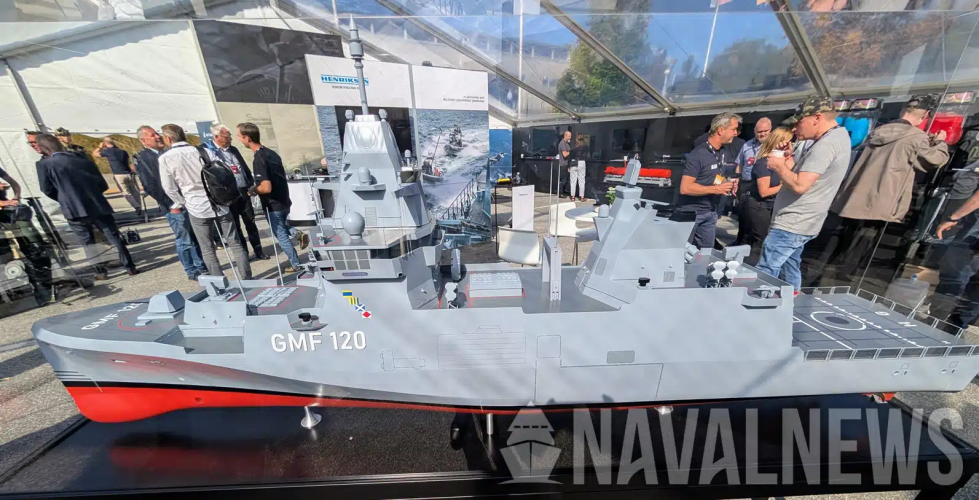
64 Strike-length cells, 2 RAM launchers, and 12 RBS-15s on 121 meters - I am impressed!
https://www.navalnews.com/naval-new...guided-missile-frigate-for-danish-fleet-plan/

https://www.navalnews.com/naval-new...guided-missile-frigate-for-danish-fleet-plan/
- Joined
- 21 April 2009
- Messages
- 14,348
- Reaction score
- 9,429
I understand at the end of the day you have to actually build effective war fighting platforms but ships just seem to be fertile grounds for innovative ideas yet the entire US industry is stagnating.
I don’t know where to place the blame it appears widespread from DC to the service to the industry itself.
Am I missing something? Being overly harsh?
I don’t know where to place the blame it appears widespread from DC to the service to the industry itself.
Am I missing something? Being overly harsh?
- Joined
- 21 April 2009
- Messages
- 14,348
- Reaction score
- 9,429
- Joined
- 21 April 2009
- Messages
- 14,348
- Reaction score
- 9,429
What is the weight of a HIMARS? Load this thing up packed front to back for effective inland fires.
https://interestingengineering.com/...e-payload?mc_cid=3196f05703&mc_eid=307947a252
https://interestingengineering.com/...e-payload?mc_cid=3196f05703&mc_eid=307947a252

- Joined
- 16 April 2008
- Messages
- 10,587
- Reaction score
- 18,120
What is the weight of a HIMARS? Load this thing up packed front to back for effective inland fires.
https://interestingengineering.com/...e-payload?mc_cid=3196f05703&mc_eid=307947a252
Interesting Engineering seems to have a math problem.
The LCU-1700 is designed for a payload of 170 short tons, or 340,000 pounds, rather a long way short of 1.2 million.
A HIMARS vehicle, combat loaded, weighs about 36,000 pounds, and each reload pod is around 5,200 pounds. They are not especially dense, so the LCU will likely run out of deck area long before it runs out of weight capacity with loads like that.
Grey Havoc
ACCESS: USAP
- Joined
- 9 October 2009
- Messages
- 24,500
- Reaction score
- 18,168
- Joined
- 16 April 2008
- Messages
- 10,587
- Reaction score
- 18,120
I think they might of confused the total displacement for cargo weight or something else equally banal. Or just made shit up, who knows.
I suspect their AI just made it all up.
Grey Havoc
ACCESS: USAP
- Joined
- 9 October 2009
- Messages
- 24,500
- Reaction score
- 18,168
Quite possible these days.I suspect their AI just made it all up.
- Joined
- 16 April 2008
- Messages
- 10,587
- Reaction score
- 18,120
Quite possible these days.
Yeah. I just found the full load displacement for the LCU 1700 and it is only 428 long tons, or 958,720 lbs.

T. A. Gardner
ACCESS: Top Secret
- Joined
- 18 February 2021
- Messages
- 1,996
- Reaction score
- 3,545
That's what makes their engineering interesting...Interesting Engineering seems to have a math problem.
The LCU-1700 is designed for a payload of 170 short tons, or 340,000 pounds, rather a long way short of 1.2 million.
A HIMARS vehicle, combat loaded, weighs about 36,000 pounds, and each reload pod is around 5,200 pounds. They are not especially dense, so the LCU will likely run out of deck area long before it runs out of weight capacity with loads like that.

- Joined
- 29 November 2010
- Messages
- 2,275
- Reaction score
- 5,185

- Joined
- 6 November 2010
- Messages
- 6,350
- Reaction score
- 8,225
@helmutkohl That got another mention here:
https://www.secretprojects.co.uk/threads/another-reactivation-of-the-iowa-class.49751/#post-836830Hormone driven, err, thinking.
https://www.secretprojects.co.uk/threads/another-reactivation-of-the-iowa-class.49751/#post-836830Hormone driven, err, thinking.

Dilandu
I'm dissatisfied, which means, I exist.
Well, their idea -
In a contemporary version, the battleship would not be an all-gun platform. It would be a 25,000 to 35,000 ton ship with integrated full-electric propulsion to supply high power to radars, jammers, and directed-energy systems. Protection would focus on an armored core around missile magazines, computing equipment, and vital compartments, combining high-performance steels, sandwich bulkheads, and energy-absorbing materials to limit fragmentation and fire. The principal armament would mix one or two heavy guns of 203 to 254 mm firing guided shells to 80 to 120 km for littoral support and interdiction, alongside 128 to 192 VLS cells for surface-to-air, anti-ship, and land-attack missiles. Close-in defense would be layered, with short-range missiles, two to three CIWS, a 200 to 300 kW laser for drones and rockets, plus a dense array of active and passive decoys. Automation would reduce the crew to about 350 to 500, and the internal layout would be designed to absorb damage and isolate incidents rapidly.
Make far more sence, at least in purely technical terms.
- Joined
- 16 April 2008
- Messages
- 10,587
- Reaction score
- 18,120
Well, their idea -
Make far more sence, at least in purely technical terms.
Sure, but is there any evidence that this is what Trump and Friends are thinking of? No, there is not. It's yet another example of someone in the press trying to turn the delusional ideas of this administration to something at least semi-rational.
T. A. Gardner
ACCESS: Top Secret
- Joined
- 18 February 2021
- Messages
- 1,996
- Reaction score
- 3,545
Grandiose thinking. The Iowa's are worthless as modern combat naval vessels. Their gun systems are obsolete. Their armor is nearly worthless. Their engineering plants are so badly outdated that it's nearly impossible to keep them running. They'd be the ONLY US naval vessels running on boilers using DFM or something like that. They're crew intensive. The hulls are worn out.@helmutkohl That got another mention here:
https://www.secretprojects.co.uk/threads/another-reactivation-of-the-iowa-class.49751/#post-836830Hormone driven, err, thinking.
Similar threads
-
 Russia tests Voevoda missile and vows to build new offensive forces (2 stories)
- Started by bobbymike
- Replies: 0
-

-

-
Navy Seeks Rail Guns, Lasers, Cruise Missiles To Improve Pacific Firepower
- Started by Triton
- Replies: 648
-