- Joined
- 21 April 2009
- Messages
- 14,350
- Reaction score
- 9,433



But who's desperate? NG, the USN, or both?
One gets a whiff of desperation here.

ARLINGTON, Va. — The U.S. Navy is operating and sustaining 10 MQ-8C Fire Scout unmanned aerial vehicles (UAVs), having place the rest in storage, from which the service can easily restore them to service. The Navy also has retired its fleet of smaller MQ-8B versions of the Fire.
According to information provided by the Navy’s Program Executive Office for Strike and Unmanned Aviation, the Navy will keep in service 10 MQ-8Cs in service of the 38 procured and keep the remaining MQ-8Cs in Level 2 preservation.
Aha! I found an excerpt from the UNREP Journal article here:
http://ukarmedforcescommentary.blogspot.com/2013/10/vertical-launching-systems-and-type-26.htmlThe concept for replenishing 15 VLS per hour in Sea State 5, shown in Figures 9, 10, 11 and 12 centers around a transportable VLS rearming device that is stowed and maintained on the Combat Logistics Force (CLF) ship. When the combatant ship comes alongside for at-sea rearming or load adjustment, the rearming device is transported from the CLF ship by the new Heavy Unrep rig to the combatant ship sliding padeye along with a team to operate the rearming device. A swing arm at the base of the sliding padeye is used to position the rearming device onto three low profile rails permanently mounted atop the VLS launcher. A hydraulic power unit on the combatant ship powers the swing arm and also the rearming device after it is on the rails.
The CLF ship will next transfer a loaded VLS canister to the sliding padeye. The canister will be lowered to the swing arm by the sliding padeye and then be released from the transfer rig. The canister will be swung around and be picked off from the swing arm by the rearming device two clamp rings. The canister will be moved by the rearming device to a position over an empty cell. The cell hatch will open and the rearming device will erect the canister to the vertical. The canister will be lowered by a wire rope hoist into the cell. The rig will be disconnected from the end of the canister, the cell hatch will close and the canister will be connected below decks to the VLS circuits. When the VLS rearming or VLS load adjustment is completed, the rearming device and team will be returned to the CLF ship.

What the USN needs is a shit-ton of OPVs like the Mexican Oaxaca-class. Cheap patrol boats that can show the flag and do 80% of what an Arleigh Burke does for 20% the cost. The new FFGs will be nice but they are still too big and expensive. You can then save wear, tear, and maintenance cost on the big ships and save them for the real emergencies.
Which is the problem since the CG while technically being part of the USN is under DHS control and not DoD. You need USN OPVs to do USN tasks.What the USN needs is a shit-ton of OPVs like the Mexican Oaxaca-class. Cheap patrol boats that can show the flag and do 80% of what an Arleigh Burke does for 20% the cost. The new FFGs will be nice but they are still too big and expensive. You can then save wear, tear, and maintenance cost on the big ships and save them for the real emergencies.
We have a ton of OPVs (around 30 big ones and another 50+ small ones), they just happen to belong to the US Coast Guard.
Which is the problem since the CG while technically being part of the USN is under DHS control and not DoD. You need USN OPVs to do USN tasks.What the USN needs is a shit-ton of OPVs like the Mexican Oaxaca-class. Cheap patrol boats that can show the flag and do 80% of what an Arleigh Burke does for 20% the cost. The new FFGs will be nice but they are still too big and expensive. You can then save wear, tear, and maintenance cost on the big ships and save them for the real emergencies.
We have a ton of OPVs (around 30 big ones and another 50+ small ones), they just happen to belong to the US Coast Guard.
While range is a factor the LCS also had the same issue and the FFGs will be coming around for longer-ranged missions.
The whole idea is to have the cheap ship escorting tankers off Somalia so the armed frigate is actually free to show the flag to China. Right now we have Arleigh Burkes off Somalia, so they end up in drydock when you need them for China.
I think Absalons would have been ideal instead of LCS, with maybe some Iver Huifelds mixed in as well, but if we are looking at what is in production right now the Mogamis look promising.
I think Absalons would have been ideal instead of LCS, with maybe some Iver Huifelds mixed in as well, but if we are looking at what is in production right now the Mogamis look promising.
In hindsight, probably something like the Absalons would have been smart. But Rumsfeld wanted things that were recognizably not conventional warships, so we got LCS.
I'd be shocked if a USNized Mogami would end up being significantly cheaper than an FFG-62, except for areas where it would have less capability (half as many VLS cells and ASCMs, smaller hangar, etc.) The low ma ning is an echo of the worst ideas of DD-21 and LCS. And I honestly have no idea what JMSDF survivability or seakeeping standards are like. I think the Mogamis are probably not meant to cross an ocean and hang out for a few months at a time.

thats a phenomenal post, and probably correct, because notably, the LCS was not designed by PEO ships, but instead its own weird bastard organization@BB1984 had an interesting theory why stanflex (and by extension Absalon) was not suitable for the US Navy's purposes:
https://www.secretprojects.co.uk/th...freedom-independence.6234/page-16#post-525841
thats a phenomenal post, and probably correct, because notably, the LCS was not designed by PEO ships, but instead its own weird bastard organization@BB1984 had an interesting theory why stanflex (and by extension Absalon) was not suitable for the US Navy's purposes:
https://www.secretprojects.co.uk/th...freedom-independence.6234/page-16#post-525841
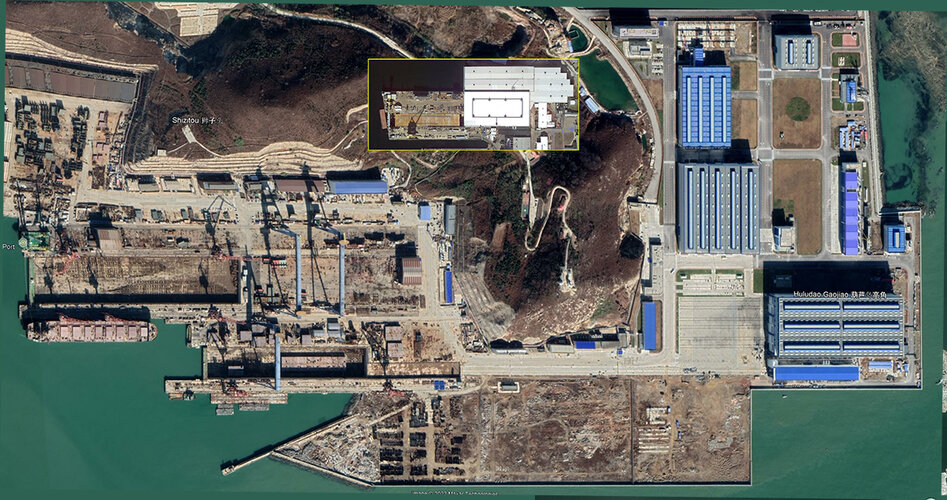
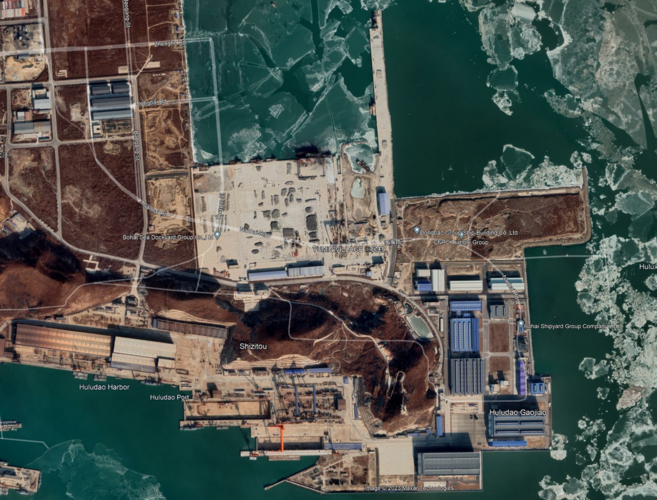
“They have 13 shipyards, in some cases their shipyard has more capacity – one shipyard has more capacity than all of our shipyards combined. That presents a real threat,”
Just inexcusable in a nation with a $26 trillion economy.https://edition.cnn.com/2023/02/22/asia/us-navy-chief-china-pla-advantages-intl-hnk-ml/index.html“They have 13 shipyards, in some cases their shipyard has more capacity – one shipyard has more capacity than all of our shipyards combined. That presents a real threat,”

With the 774s a large chunk happens in Virginia as well.Remember that a big chunk of EB's actual fabrication work happens over at Quonset Point. It's not all in Groton.
The comment about the cranes was less about submarines than to point out raw ship building capacity. That crane at NNS is supposedly the largest in the Western Hemisphere. China, by itself, has at least a dozen if not more of them.The cranes matter essentially not at all to sub work. They are impressive, but they're mostly for lifting segments of their commercial contract builds.
With the 774s a large chunk happens in Virginia as well.Remember that a big chunk of EB's actual fabrication work happens over at Quonset Point. It's not all in Groton.
In fact America destroyed the commercial ship building capability by itself and gave it to other countries.The result is higher costs and lots of delays for the naval shipbuilding industry.Just inexcusable in a nation with a $26 trillion economy.https://edition.cnn.com/2023/02/22/asia/us-navy-chief-china-pla-advantages-intl-hnk-ml/index.html“They have 13 shipyards, in some cases their shipyard has more capacity – one shipyard has more capacity than all of our shipyards combined. That presents a real threat,”