Footage of the most recent launch, notable for having somewhat closer shots of the missile in flight than we've previously seen (not super close, mind you, but better than hitherto). For instance, it's visible that the missile starts to glow incandescently, like Sprint famously did:
View: https://www.youtube.com/watch?v=0uszOkL7RJ0

You are using an out of date browser. It may not display this or other websites correctly.
You should upgrade or use an alternative browser.
You should upgrade or use an alternative browser.
Soviet ABM systems
- Thread starter overscan (PaulMM)
- Start date
- Joined
- 27 May 2008
- Messages
- 1,247
- Reaction score
- 2,787
So a little Christmas Tale of Galosh intelligence gathering
I was told this a while back (25 + years ago) and have finally got around to writing it down. This account is reproduced as accurately as I can remember it.
The chap that told me the following was a former employee at the UK’s GCHQ and prior to that an electronic signals intelligence specialist with the RAF. The story starts in the late sixties when as a civilian he’s joined a small team tasked of monitoring Galosh missile testing then underway at Sary Shagan. At the time Galosh was very high priority for intelligence as it threatened to neutralise the U.K.’s new Polaris deterrent before it was introduced into service. The signals were collected at two clandestine listening station in north east Turkey, on the high ground, right on the Soviet border ( now Georgia and Armenia). The key discovery was that the flight test telemetry was unencrypted and at high enough altitude to be received, thus allowing an engineer familiar with missile performance to usefully interpret and determine critical details .
The listening stations were located in two high mountainous area’s, one on Mount Ararat and the other was further north which was just within the Turkish border. The border was mostly unmarked, open, frequently snow covered ground, so in pre GPS times, navigation was very demanding. The listening stations consisted of networks aerials, and remote relays stations. As launch timings were unknown, 24/7 monitoring was required. which required constant maintenance and resupply of generator fuel.
Four GCHQ teams supported the operations, alternatively going out on six week rotations. The chap relating this story had completed a few rotations when news come in of tragic incident with one of the teams. A GCHQ operator together with a Turkish guide had set off in bad weather to a remote relay station, and they had not returned. After a few days of searching they were found dead. The teams were told this was an accident consistent with trekking in demand terrain and weather. However it coincide with unusual damage found at one of the remote stations. It was against this background he departed on a routine rotation.
The events of last few weeks had convinced the Turkish military to step up patrols in the area. Additionally it was decided each British operator when undertaking remote operations had to be accompanied by an armed member of the Turkish security liaison in addition to a guide at all times. A few weeks passed when suddenly all hell broke loose on the teams radio on Christmas Day just after lunch. They initially couldn’t make sense off it but were told to grab they’re gear and proceed to one of the relay stations. As he and his colleagues got closer they could hear sporadic gunfire. When they got to the epicentre of this they found a Turkish army patrol in a stand off against an opposing force, presumed to be Soviet, who were sniping at the relay station. The engagement was taking place inside a few Km inside Turkish territory. The situation was very tense with the Turkish unit being instructed to stand firm, return fire but not to assault the position occupied by the opposing force. This continued for the rest of the afternoon with some lively exchanges of gunfire with some rounds passing very close by. It quietened down at sunset and by the morning the opposing force had pulled out.
There were no casualties on the Turkish side, no signs of injuries on the opposing side and examination of spent ammunition confirmed it to be of Soviet origin. The relay station was quite badly damaged and not repaired;- it was replaced by another further inside the border.
The whole incident was played down by all governments although years latter there was some very sparse acknowledgement. This region was sensitive as it’s allocation to Turkey had been been somewhat controversial with Russia prior to the formation of the Soviet Union. Additionally it was not too far away from where a US C130 was shoot down about ten years early.
The chap telling me the story told me it was the single most terrifying afternoon of his life, not only for be shot at but more that he thought he was witnessing the very start of WW3. He reflected on the earlier tragic loss of their colleague, and speculated that it may not have been as they were told;- for reasons of security the results of the post mortem were not shared. Also it was obvious that the whole operation had been compromised which itself had some unpleasant ramifications for all of the team members.
Merry Christmas
I was told this a while back (25 + years ago) and have finally got around to writing it down. This account is reproduced as accurately as I can remember it.
The chap that told me the following was a former employee at the UK’s GCHQ and prior to that an electronic signals intelligence specialist with the RAF. The story starts in the late sixties when as a civilian he’s joined a small team tasked of monitoring Galosh missile testing then underway at Sary Shagan. At the time Galosh was very high priority for intelligence as it threatened to neutralise the U.K.’s new Polaris deterrent before it was introduced into service. The signals were collected at two clandestine listening station in north east Turkey, on the high ground, right on the Soviet border ( now Georgia and Armenia). The key discovery was that the flight test telemetry was unencrypted and at high enough altitude to be received, thus allowing an engineer familiar with missile performance to usefully interpret and determine critical details .
The listening stations were located in two high mountainous area’s, one on Mount Ararat and the other was further north which was just within the Turkish border. The border was mostly unmarked, open, frequently snow covered ground, so in pre GPS times, navigation was very demanding. The listening stations consisted of networks aerials, and remote relays stations. As launch timings were unknown, 24/7 monitoring was required. which required constant maintenance and resupply of generator fuel.
Four GCHQ teams supported the operations, alternatively going out on six week rotations. The chap relating this story had completed a few rotations when news come in of tragic incident with one of the teams. A GCHQ operator together with a Turkish guide had set off in bad weather to a remote relay station, and they had not returned. After a few days of searching they were found dead. The teams were told this was an accident consistent with trekking in demand terrain and weather. However it coincide with unusual damage found at one of the remote stations. It was against this background he departed on a routine rotation.
The events of last few weeks had convinced the Turkish military to step up patrols in the area. Additionally it was decided each British operator when undertaking remote operations had to be accompanied by an armed member of the Turkish security liaison in addition to a guide at all times. A few weeks passed when suddenly all hell broke loose on the teams radio on Christmas Day just after lunch. They initially couldn’t make sense off it but were told to grab they’re gear and proceed to one of the relay stations. As he and his colleagues got closer they could hear sporadic gunfire. When they got to the epicentre of this they found a Turkish army patrol in a stand off against an opposing force, presumed to be Soviet, who were sniping at the relay station. The engagement was taking place inside a few Km inside Turkish territory. The situation was very tense with the Turkish unit being instructed to stand firm, return fire but not to assault the position occupied by the opposing force. This continued for the rest of the afternoon with some lively exchanges of gunfire with some rounds passing very close by. It quietened down at sunset and by the morning the opposing force had pulled out.
There were no casualties on the Turkish side, no signs of injuries on the opposing side and examination of spent ammunition confirmed it to be of Soviet origin. The relay station was quite badly damaged and not repaired;- it was replaced by another further inside the border.
The whole incident was played down by all governments although years latter there was some very sparse acknowledgement. This region was sensitive as it’s allocation to Turkey had been been somewhat controversial with Russia prior to the formation of the Soviet Union. Additionally it was not too far away from where a US C130 was shoot down about ten years early.
The chap telling me the story told me it was the single most terrifying afternoon of his life, not only for be shot at but more that he thought he was witnessing the very start of WW3. He reflected on the earlier tragic loss of their colleague, and speculated that it may not have been as they were told;- for reasons of security the results of the post mortem were not shared. Also it was obvious that the whole operation had been compromised which itself had some unpleasant ramifications for all of the team members.
Merry Christmas
Last edited:
- Joined
- 11 February 2010
- Messages
- 1,719
- Reaction score
- 3,180
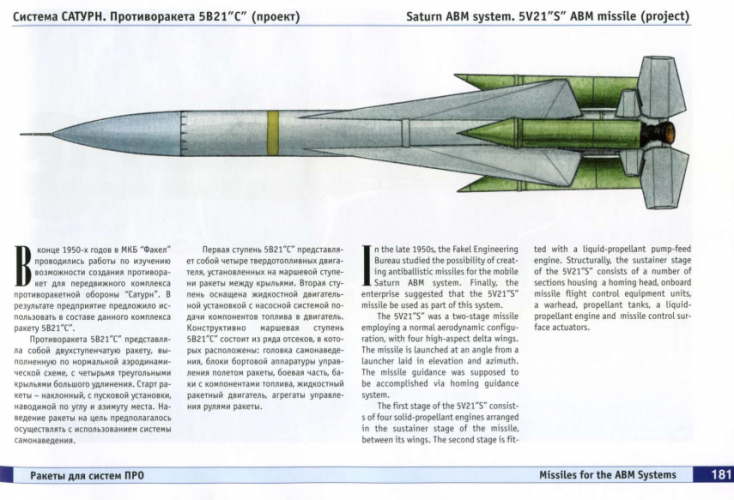
Do we have any idea how Saturn/5V21/5V21S looked like? The program was cancelled half a decade before the S-200 as we know it entered service. At that point it may even have been more V-1000 like?
From "Fakel's missiles"

The 53Т6 can be thought of as a SPRINT-ski, but slightly improved in technical parameters:
210G longitudinal acceleration
90G transverse acceleration (manuvering)
45 km maximum altitude (147,600~ ft)
80 to 100 km max range (49.7 to 62.13 miles)
The mass of 53T6 is much greater than SPRINT -- 9693 kg versus 3500 kg for SPRINT.
This may be a function of the Russians not being as good in solid propellant as the US; forcing a larger size, due to possible demands from higher ups that 53T6 be "better" than SPRINT in all technical-tactical parameters.
Another possibility for this discrepancy may be due to, as TRIDENT pointed out, 53T6 being a "1.25 stage" missile:
Another point to be made is this:
The 90G transverse maneuver capability of GAZELLE effectively defeats a lot of experimental MARVs the US tested publicly in the 1960s -- they hit about 80 to 100G manuvers in tests; while the only operational US MARV (Pershing II) hit about 25-30G manuvering in.
Related to that point -- I honestly have yet to find what SPRINT would truly have been capable of beyond the basic 60G maneuvering I found for early SPRINT testing -- during those early tests, some SPRINTS accidentally pulled 109G and 209G at low altitude due to hardware/computer errors and were torn to pieces immediately.
Final point -- starting in November 2017, the Russians started testing 53Т6M with the following known improved parameters over the original 53T6:
300G longitudinal acceleration
"engagement zone has increased almost 50% in altitude and range" -- fudge words
1.33x faster burnout velocity (vBO) than 53T6
"interception of enemy ICBM warheads is now reliably achieved at altitudes well above 50 km" (164,000 ft)
Optional Conventional Warhead?
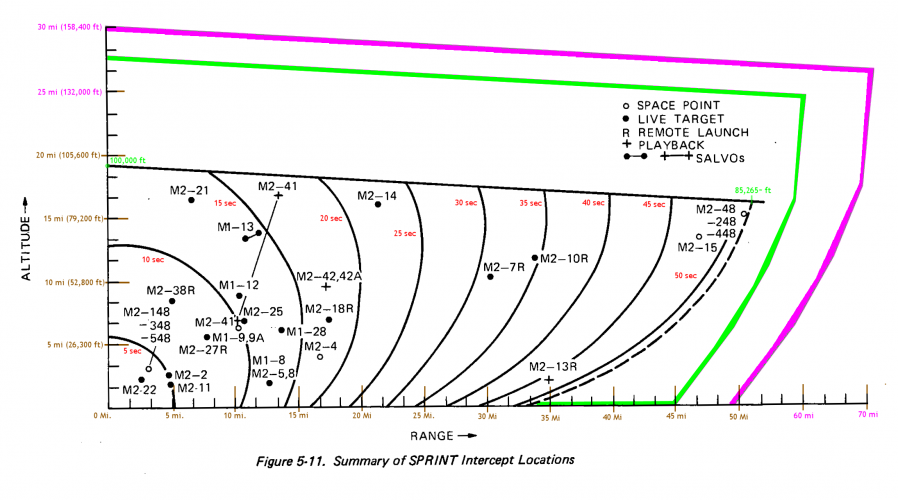
Attached is my reconstruction of potential 53T6/53T6M engagement envelopes (in green and pink) compared to SPRINT.
210G longitudinal acceleration
90G transverse acceleration (manuvering)
45 km maximum altitude (147,600~ ft)
80 to 100 km max range (49.7 to 62.13 miles)
The mass of 53T6 is much greater than SPRINT -- 9693 kg versus 3500 kg for SPRINT.
This may be a function of the Russians not being as good in solid propellant as the US; forcing a larger size, due to possible demands from higher ups that 53T6 be "better" than SPRINT in all technical-tactical parameters.
Another possibility for this discrepancy may be due to, as TRIDENT pointed out, 53T6 being a "1.25 stage" missile:
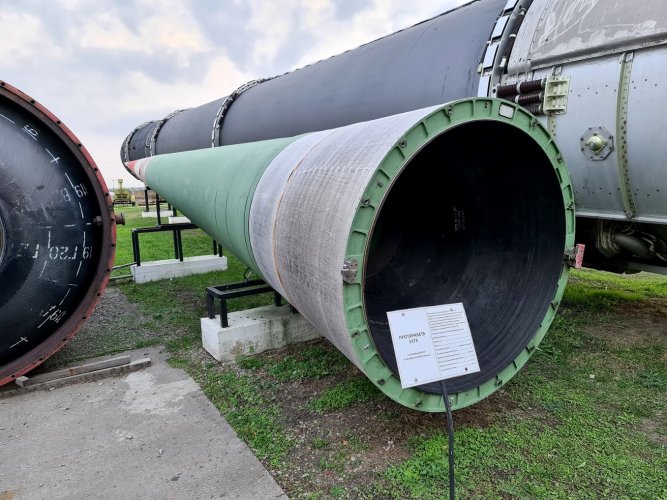
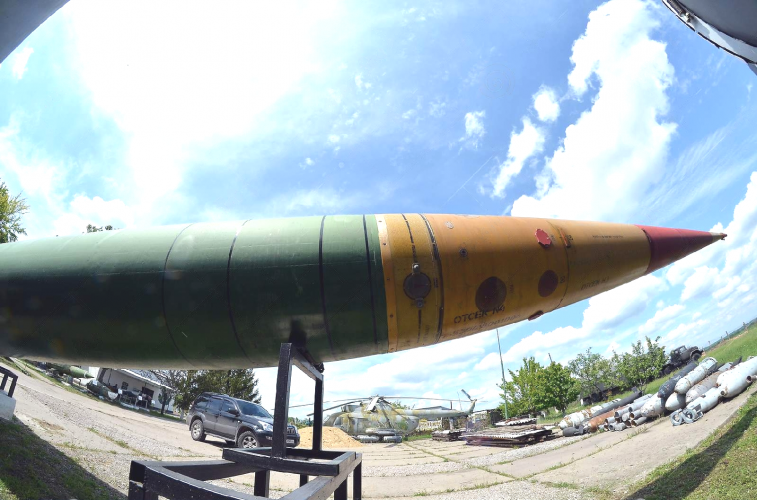
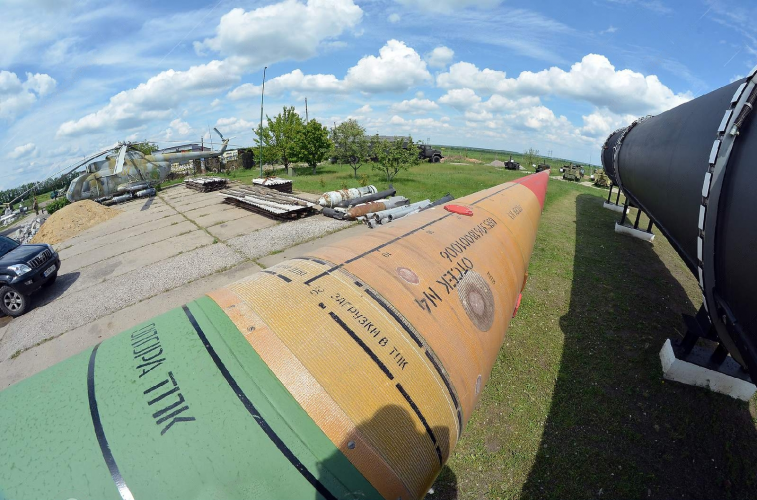
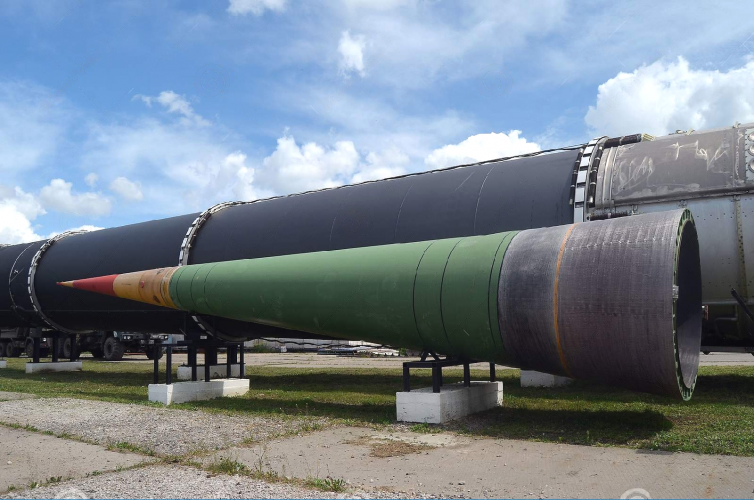
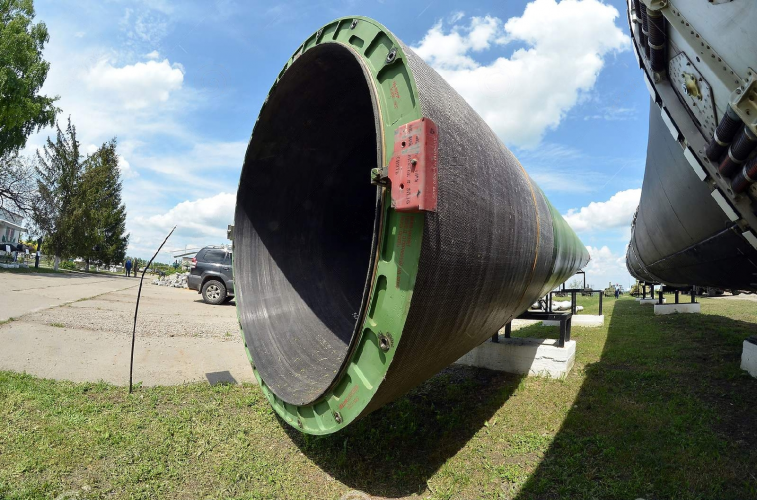
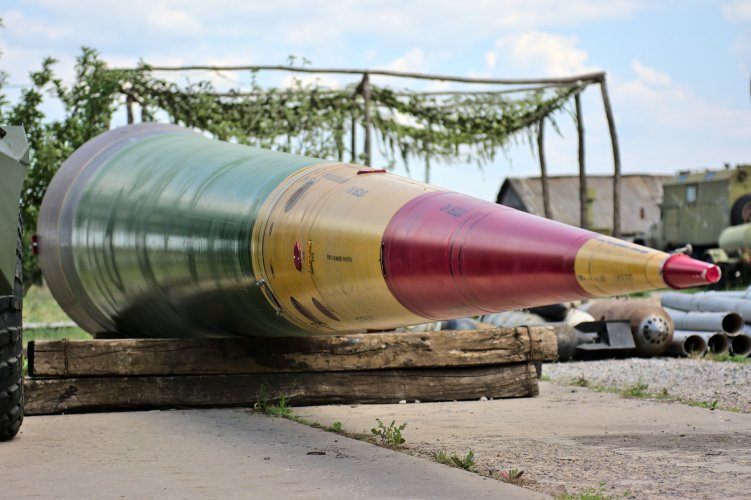
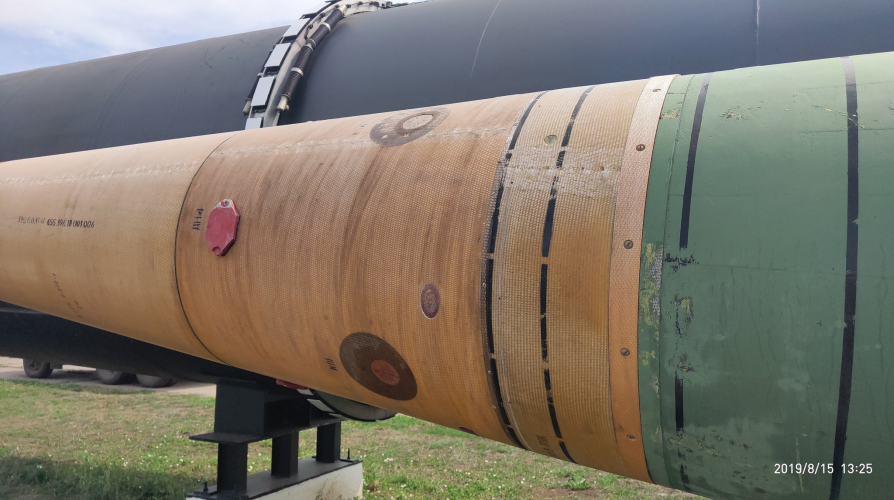
If there was still any skepticism about the single-stage nature of the missile by now, the monolithic green motor casing (compare and contrast with the two-stage S-300V 9M82/83 which seem to use the same materials/colours) in these photos should finally put it to rest.
Another point to be made is this:
The 90G transverse maneuver capability of GAZELLE effectively defeats a lot of experimental MARVs the US tested publicly in the 1960s -- they hit about 80 to 100G manuvers in tests; while the only operational US MARV (Pershing II) hit about 25-30G manuvering in.
Related to that point -- I honestly have yet to find what SPRINT would truly have been capable of beyond the basic 60G maneuvering I found for early SPRINT testing -- during those early tests, some SPRINTS accidentally pulled 109G and 209G at low altitude due to hardware/computer errors and were torn to pieces immediately.
Final point -- starting in November 2017, the Russians started testing 53Т6M with the following known improved parameters over the original 53T6:
300G longitudinal acceleration
"engagement zone has increased almost 50% in altitude and range" -- fudge words
1.33x faster burnout velocity (vBO) than 53T6
"interception of enemy ICBM warheads is now reliably achieved at altitudes well above 50 km" (164,000 ft)
Optional Conventional Warhead?
Attached is my reconstruction of potential 53T6/53T6M engagement envelopes (in green and pink) compared to SPRINT.
Attachments
Some basic information:
Work on the A-135 ABM program began in late 1968; with a two tier system similar to the US SPARTAN/SPRINT system adopted by late 1969.
On 10 June 1971, USSR Council of Ministers Resolution No. 376-119 was issued, authorizing the creation of the A-135 missile defense system, to consist of two systems:
"Амур" (Amur) Long Range Interception Firing Complex
"Амур-П" (Amur-P) – Prototype Long Range Interception Firing Complex
Plans called for three Amur complexes near Moscow at distances from 600 to 800 km, backed up by three S-225 [С-225] universal air defense system complexes.
In December 1971, the preliminary design of the A-135/Amur system was completed and OKB Fakel was selected as the main contractor for development of the long range two-stage exoatmospheric interceptor A-925/51T6.
Following the signing of the ABM Treaty in June 1972, the Amur/A-135 system was redesigned to accommodate all assets within an area of 100 km in the Moscow region. The S-225 complexes were removed from the system, but the short-range high speed interceptor missile PRS-1/5Ya26 [ПРС-1/5Я26] developed for the S-225 was selected as the short-range atmospheric tier for A-135, continuing development under a new GRAU Index [53T6].
The redesigned A-135 system was presented to the Ministry of Defense in 1973 and approved by the end of 1973.
The system was redesigned yet again following the signing of the 1974 ABM Treaty Protocol which reduced each side's ABM deployment areas from two [National Capital + ICBM field] to just one site per country.
This redesign lasted 1975-1976; while testing of missile prototypes began in 1973 and continued into the 1980s:
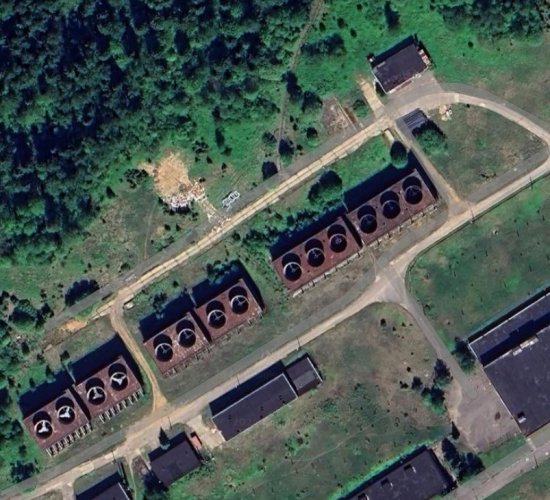
5Н20 [5N20] DON-2N [Дон-2Н] (PILL BOX) Radar
Construction of the radar itself began in 1978; with the radar bunker complete by 1980, allowing installation of internal equipment which was largely complete by around 1983-84.
The development of the Don-2N radar required:
Operating Device
Hot Standby Device
Cold Standby Device
Due to the massive power of the radar, biological fences surround it to protect personnel in the open from the radar and there are underground tunnels over 1 km in length connecting the radar complex with the outer perimeter; to enable personnel to move in and out while the radar is in operation.
Work on the A-135 ABM program began in late 1968; with a two tier system similar to the US SPARTAN/SPRINT system adopted by late 1969.
On 10 June 1971, USSR Council of Ministers Resolution No. 376-119 was issued, authorizing the creation of the A-135 missile defense system, to consist of two systems:
"Амур" (Amur) Long Range Interception Firing Complex
"Амур-П" (Amur-P) – Prototype Long Range Interception Firing Complex
Plans called for three Amur complexes near Moscow at distances from 600 to 800 km, backed up by three S-225 [С-225] universal air defense system complexes.
In December 1971, the preliminary design of the A-135/Amur system was completed and OKB Fakel was selected as the main contractor for development of the long range two-stage exoatmospheric interceptor A-925/51T6.
Following the signing of the ABM Treaty in June 1972, the Amur/A-135 system was redesigned to accommodate all assets within an area of 100 km in the Moscow region. The S-225 complexes were removed from the system, but the short-range high speed interceptor missile PRS-1/5Ya26 [ПРС-1/5Я26] developed for the S-225 was selected as the short-range atmospheric tier for A-135, continuing development under a new GRAU Index [53T6].
The redesigned A-135 system was presented to the Ministry of Defense in 1973 and approved by the end of 1973.
The system was redesigned yet again following the signing of the 1974 ABM Treaty Protocol which reduced each side's ABM deployment areas from two [National Capital + ICBM field] to just one site per country.
This redesign lasted 1975-1976; while testing of missile prototypes began in 1973 and continued into the 1980s:
- August 1979: First 53T6 Silo Launch (exploded 5 seconds after launch due to defect in silo gas deflector)
- July 1981: First 53T6 launch with closed command loop guidance.
- April 1982: First interception of ballistic target (8K65 IRBM), passing within 50m of target at a range of 40 km.
- 18 June 1982: Two Amur-P (5Ж60П / 50Zh60P) [51T6] GORGON are launched, one intercepting a SS-20 Mod 1 SABER (15Ж45 БГРК «Пионер») IRBM launched from the Kapustin Yar test range, while the other intercepted a SS-N-8 SAWFLY (Р-29) launched by a DELTA I (Pr 667B Murena) SSBN.
- Factory Tests of “First Stage” of A-135 complex with Elbrus-1 computer and radar analog signal processing were carried out from November 1982 to March 1984, with 8 launches of 51T6 and 5 launches of 53T6 at the Sary Shagan test range.
- Installation of “Second Stage” equipment (Elbrus-2 computer and radar digital signal processing) was carried out at Sary Shagan from March 1984 to November 1987. When enough equipment was installed, testing of the “Second Stage” complex began and lasted from March 1987 to October 1987. During these tests, 2 x 51T6 launches and 3 x 53T6 launches were conducted. Following the conclusion of these tests against 2 ballistic targets and 36 passing ballistic targets, it was considered that the A-135 system could meet it's specified performance, which included destroying Pershing II MaRVs.
- A third round of tests at Shary Shagan began and lasted from January to July 1988, seeing 2 x 51T6 and 3 x 53T6 expended against 5 ballistic targets and 16 passing ballistic targets.
5Н20 [5N20] DON-2N [Дон-2Н] (PILL BOX) Radar
Construction of the radar itself began in 1978; with the radar bunker complete by 1980, allowing installation of internal equipment which was largely complete by around 1983-84.
The development of the Don-2N radar required:
- Development and use of the Dnepr CAD computing complex with two (later four) ES 1050 and ES 1045 class computers for radar hardware.
- Development of CAD → CNC pipelines, to the point that some production lines were “automated” completely on computers, with no physical paperwork between them.
- Special permission from the USSR State Planning Committee to use gold plated conductors to meet the specifications of extremely low losses and high dynamic stability over electrical lengths required for the “special computer” systems. At 50 meters of cable per computer cabinet, and with over 500 cabinets required for the special computer system; the amount of gold needed was on the order of tens of kilograms.
- Development of “special computer” hardware with massive computing power to handle the demands of fully digital radar signals processing – all prior efforts (including the 1970s US Safeguard) used analog signal processing.
- Development of an active phased array with distributed power across the array; through the “Servant” (Сервант) module, which used three series-connected microwave amplification stages to produce megawatt-level pulsed output power with vacuum tubes.
Operating Device
Hot Standby Device
Cold Standby Device
Due to the massive power of the radar, biological fences surround it to protect personnel in the open from the radar and there are underground tunnels over 1 km in length connecting the radar complex with the outer perimeter; to enable personnel to move in and out while the radar is in operation.
Compute was the major stumbling block of the A-135 ABM System.
When the Don-2NP (Дон-2НП) (HORSE LEG) prototype at Sary Shagan [46.00306, 73.64926] began operation in the mid to late 1970s, it was using Elbrus-1 (Эльбрус-1) supercomputers, which provided 15~ MIPS per computer + analog signals processing.
[To put this in context, the earlier NIKE-ZEUS 1960s MAR would have had 30 MIPS, and the later SAFEGUARD MSR had about 18~ MIPS]
As mentioned previously, the “First Stage” of A-135 testing (1979-1984) at Sary Shagan used Elbrus-1 + Analog Signals Processing.
Outside of the ABM community, Elbrus-1 was extremely slow to arrive to it's end users in the Soviet scientific/technical industry -- they didn't get their first units until around 1985-1986, at which point Elbrus-1 was totally obsolete.
The first samples the Elbrus-2 (Эльбрус-2) supercomputer were delivered to the Soviet ABM community in early 1984; but it took until March 1987 for the "Second Stage" test complex at Sary Shagan to be complete enough for actual testing.
Limited production of the Elbrus-2 started in 1987, but it required a redesign around 1991/1992 to make it reliable enough to meet specifications -- it ran at about 250 MIPS on 10 CPUs per unit (like the earlier SAFEGUARD Data Processing System, Elbrus-2 was a multi-CPU system).
That 1992 redesign of Elbrus-2 may be why A-135 began "limited" combat duty around 1991, but wasn't formally accepted by the State until 1996. [numbers/dates are fuzzy.]
For the original A-135 design, compute apparently was divided up amongst two locations:
* - An entire floor of the DON-2N Radar Building taken up by Elbrus-2 computer(s); or about 1000 electronic cabinets. Per a Russian:
* - The nearby KVP-135 [КВП-135] command post is commonly cited as having four Elbrus-2s; but this may be misunderstandings/typoes; it likely had the same Elbrus-2 complement as the radar, except running battle management software.
Understanding the capabilities (or lack thereof) of the Elbrus-2 is important to place this post by Pavel Podvig on his blog into context:
https://russianforces.org/blog/2012/10/very_modest_expectations_sovie.shtml
Transcribed text of the document he posted:
Google translate says:
One key point to understanding that document is the date -- late 1985ish -- because at that point, Elbrus-1 is only just being delivered; and Elbrus-2 is in development hell.
Current "military enthuasist" Russian language sites when you use the term "сложных баллистических целей (СБЦ)" -- Complex Ballistic Targets say that Don-2N can track 100 to 120 complex ballistic targets.
But if you dig deeper into Russian language technical material; you find that this rating was AFTER modernization -- the original rating for Don-2N was 30~ CBTs.
What happened to cause the huge jump from 30 CBTs to 120 CBTs?
Phase I modernization happened in the very early 2000s with the installation of Elbrus-90 (Эльбрус-90) computers at the KVP-135 command post, while the DON-2N radar itself continued to run on the original Elbrus-2 computers. I believe that this Phase I modernization is where the 100~ CBT language comes from.
Phase II modernization happened around 2015-2020 ish (imprecise date) when the DON-2N radar itself was modernized with Elbrus-90S [Эльбрус-90С] computers; there have been some leaks on Russian language sites describing how the radar building itself now feels "empty" with a significantly smaller amount of electronic cabinets than before.
The original "public" language for DON-2N/KVP's Elbrus-2 installation said it had 1000 MIPS performance -- likely describing the total compute capability installed; not the # actually active at any one time.
The post modernization language in press releases say that performance has increased to 1000 billion operations per second [100,000 MIPS], while power consumption has been reduced by a factor of 40.
Anyway, in the mid 2010s; the Russians let journalists and bloggers into the DON-2N/KVP complex to show how great it was; here's a link to one blogpost:
https://www.stena.ee/blog/vosmoe-ch...sionnaya-stantsiya-v-mire-don-2n-foto-i-video
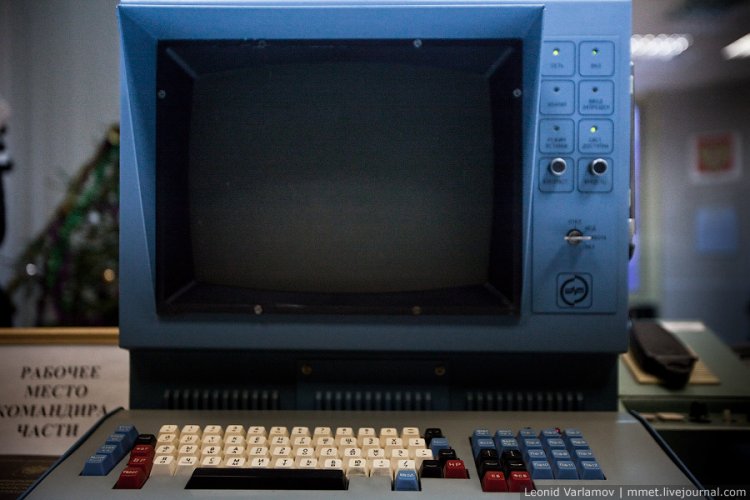
The big blue computers are the Elbrus-2 terminals used to interact with it; the newer Elbrus-90 stuff just looks like "ordinary" late 1990s early 2000s beige box desktop PCs, but silver instead of beige.
When the Don-2NP (Дон-2НП) (HORSE LEG) prototype at Sary Shagan [46.00306, 73.64926] began operation in the mid to late 1970s, it was using Elbrus-1 (Эльбрус-1) supercomputers, which provided 15~ MIPS per computer + analog signals processing.
[To put this in context, the earlier NIKE-ZEUS 1960s MAR would have had 30 MIPS, and the later SAFEGUARD MSR had about 18~ MIPS]
As mentioned previously, the “First Stage” of A-135 testing (1979-1984) at Sary Shagan used Elbrus-1 + Analog Signals Processing.
Outside of the ABM community, Elbrus-1 was extremely slow to arrive to it's end users in the Soviet scientific/technical industry -- they didn't get their first units until around 1985-1986, at which point Elbrus-1 was totally obsolete.
The first samples the Elbrus-2 (Эльбрус-2) supercomputer were delivered to the Soviet ABM community in early 1984; but it took until March 1987 for the "Second Stage" test complex at Sary Shagan to be complete enough for actual testing.
Limited production of the Elbrus-2 started in 1987, but it required a redesign around 1991/1992 to make it reliable enough to meet specifications -- it ran at about 250 MIPS on 10 CPUs per unit (like the earlier SAFEGUARD Data Processing System, Elbrus-2 was a multi-CPU system).
That 1992 redesign of Elbrus-2 may be why A-135 began "limited" combat duty around 1991, but wasn't formally accepted by the State until 1996. [numbers/dates are fuzzy.]
For the original A-135 design, compute apparently was divided up amongst two locations:
* - An entire floor of the DON-2N Radar Building taken up by Elbrus-2 computer(s); or about 1000 electronic cabinets. Per a Russian:
Станция действительно уникальная. Немного уточню: вычислительный комплекс состоит из двух Эльбрусов, причем работают оба два и контролируют друг друга (третий комлекс в резерве - во всяком случае так нас учили). Вся аппаратура двойного резерва, пример, один шкаф работает, второй, такой же, находится в горячем резерве (автоматически включается при выходе из строя основного агрегата) и один в холодном резерве (полностью выключен).
...
The station is truly unique. Let me clarify: the computing complex consists of two Elbrus units, both of which are operational and monitor each other (the third unit is in reserve—or so we were taught). All the equipment is dual-redundant; for example, one cabinet is operational, a second, identical one, is in hot reserve (automatically activated when the primary unit fails), and one is in cold reserve (completely shut down).
* - The nearby KVP-135 [КВП-135] command post is commonly cited as having four Elbrus-2s; but this may be misunderstandings/typoes; it likely had the same Elbrus-2 complement as the radar, except running battle management software.
Understanding the capabilities (or lack thereof) of the Elbrus-2 is important to place this post by Pavel Podvig on his blog into context:
https://russianforces.org/blog/2012/10/very_modest_expectations_sovie.shtml
Transcribed text of the document he posted:
Работы ведутся с середины 1960-х годов. ЦНИИ "Вымпел" МРП создана и с 1979 года находится на боевом дежурстве система ПРО г. Москвы А-35М, которая обеспечивает перехват одиночной баллистической ракеты с ограниченных направлений и до 6 БР типа "Першинг-2" из ФРГ.
На смену этой системе в 1987 году будут завершены работы по усовершенствованной системе ПРО г. Москвы А-135 для обеспечения защиты от удара 1-2 современных и перспективных МБР и до 35 ракет средней дальности типа "Першинг-2". В состав системы А-135 входит новая радиолокационная станция обнаружения и сопровождения целей "Дон-2Н" (в районе г. Пушкино-Софрино). По постановлению ЦК КПСС и СМ СССР от 15 июля 1985 г. начаты работы по дальнейшему совершенствованию системы ПРО г. Москвы — система А-235 (поражение 8-12 сложных баллистических целей и до 40 ракет типа "Першинг-2"). Срок предъявления системы на испытания — 1995 год.
Одновременно ведется разработка комплекса ближнего перехвата С-550 для защиты отдельных особо важных объектов (срок — 1988 год) и комплекса "Самбо" для защиты нахтных пусковых установок МБР (срок — 1988 год).
Google translate says:
Work has been ongoing since the mid-1960s. The Vympel Central Research Institute (MRI) developed and has been operational since 1979, deploying the A-35M Moscow BMD system. It can intercept a single ballistic missile from limited directions and up to six Pershing-II ballistic missiles from West Germany.
This system will be replaced in 1987 by the upgraded A-135 Moscow BMD system, designed to protect against attacks from one or two current and future ICBMs and up to 35 Pershing-II medium-range missiles. The A-135 system includes the new Don-2N target acquisition and tracking radar (in the Pushkino-Sofrino area). By a resolution of the Central Committee of the CPSU and the USSR Council of Ministers dated July 15, 1985, work began on further improving the Moscow missile defense system—the A-235 system (capable of engaging 8-12 complex ballistic targets and up to 40 Pershing-2 missiles). The system is scheduled for testing in 1995.
Concurrently, development is underway on the S-550 short-range interceptor system for protecting certain critical facilities (due in 1988) and the Sambo system for protecting on-site ICBM launchers (due in 1988).
One key point to understanding that document is the date -- late 1985ish -- because at that point, Elbrus-1 is only just being delivered; and Elbrus-2 is in development hell.
Current "military enthuasist" Russian language sites when you use the term "сложных баллистических целей (СБЦ)" -- Complex Ballistic Targets say that Don-2N can track 100 to 120 complex ballistic targets.
But if you dig deeper into Russian language technical material; you find that this rating was AFTER modernization -- the original rating for Don-2N was 30~ CBTs.
What happened to cause the huge jump from 30 CBTs to 120 CBTs?
Phase I modernization happened in the very early 2000s with the installation of Elbrus-90 (Эльбрус-90) computers at the KVP-135 command post, while the DON-2N radar itself continued to run on the original Elbrus-2 computers. I believe that this Phase I modernization is where the 100~ CBT language comes from.
Phase II modernization happened around 2015-2020 ish (imprecise date) when the DON-2N radar itself was modernized with Elbrus-90S [Эльбрус-90С] computers; there have been some leaks on Russian language sites describing how the radar building itself now feels "empty" with a significantly smaller amount of electronic cabinets than before.
The original "public" language for DON-2N/KVP's Elbrus-2 installation said it had 1000 MIPS performance -- likely describing the total compute capability installed; not the # actually active at any one time.
The post modernization language in press releases say that performance has increased to 1000 billion operations per second [100,000 MIPS], while power consumption has been reduced by a factor of 40.
Anyway, in the mid 2010s; the Russians let journalists and bloggers into the DON-2N/KVP complex to show how great it was; here's a link to one blogpost:
https://www.stena.ee/blog/vosmoe-ch...sionnaya-stantsiya-v-mire-don-2n-foto-i-video
The big blue computers are the Elbrus-2 terminals used to interact with it; the newer Elbrus-90 stuff just looks like "ordinary" late 1990s early 2000s beige box desktop PCs, but silver instead of beige.
Attachments

Last edited:
As for how powerful DON-2N is?
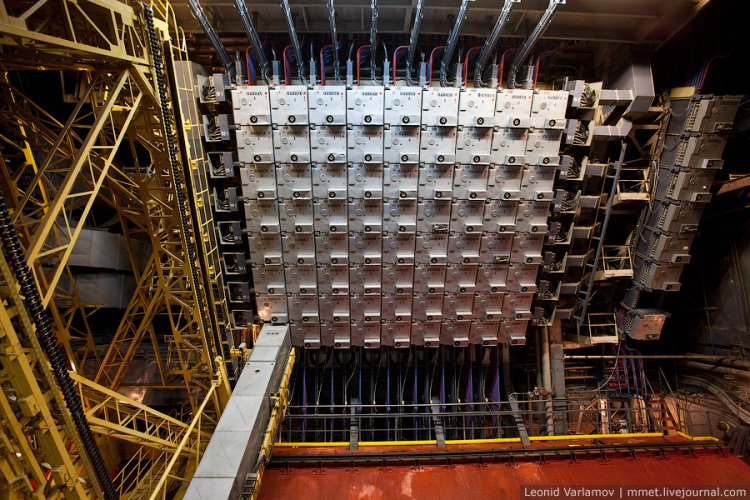
The main faces are driven by 72 modules arranged in a 8 x 9 configuration. The modules themselves are about 8 meters long and weigh 3000 kg each.
If we assume each module is "megawatt" level, per Russian language literature on the "Servant" module; then a single "face" on the DON-2N can push somewhere between 72 and 85 MW of power.
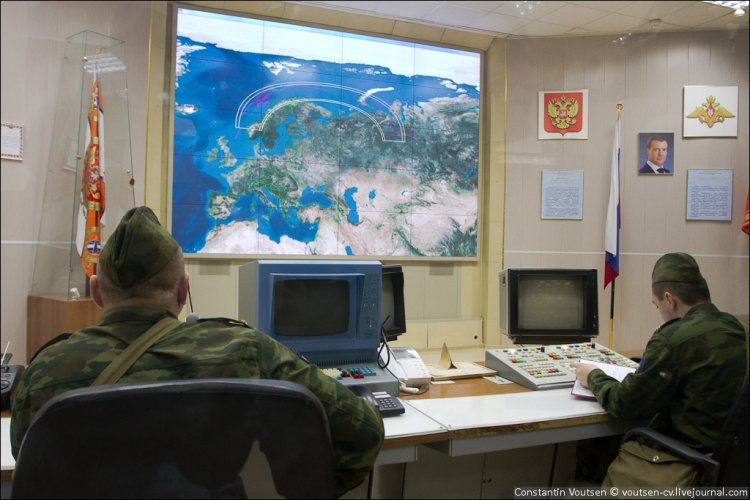
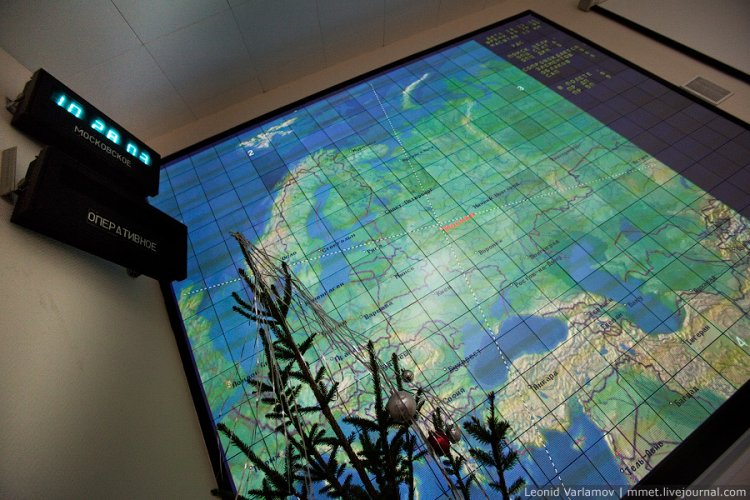
Even with massive amounts of installed power on site; the needs for radar cooling + running the computers likely mean that DON-2N may be only capable of running two faces at full power at any one time; but as seen by the display from inside the installation; two faces cover a good portion of NATO attack avenues against Moscow.
The main faces are driven by 72 modules arranged in a 8 x 9 configuration. The modules themselves are about 8 meters long and weigh 3000 kg each.
If we assume each module is "megawatt" level, per Russian language literature on the "Servant" module; then a single "face" on the DON-2N can push somewhere between 72 and 85 MW of power.
Even with massive amounts of installed power on site; the needs for radar cooling + running the computers likely mean that DON-2N may be only capable of running two faces at full power at any one time; but as seen by the display from inside the installation; two faces cover a good portion of NATO attack avenues against Moscow.
Attachments
I developed an image analysis tool specifically for stuff like this:
https://generalstaff.org/BBOW/Progs/IMG_TOOL_v1.htm
Loading up the 53T6_Side.jpg image at 2x; and going with:
12~ m length
1.7-1.8m~ diameter
I get the following measurements using the length as the main determinant; and using an online conical frustrum calculator:
Nozzle: 2.09m length, 2.18m lower diameter, 1.7m upper diameter, 0.10m thickness = 0.620 m3 volume
Stage I: 6.18m length, 1.7m lower diameter, 0.78m upper diameter = 7.805 m3 volume
Stage II: 1.73m length, 0.78m lower diameter, 0.44m upper diameter = 1.738 m3 volume
Warhead: 1.45m length, 0.44m lower diameter, 0.14m upper diameter = 0.1043 m3 volume
Nosecone: 0.65m~ length, 0.14m lower diameter = 0.003335 m3 volume
If we assume a 851.3~ kg/m3 system density (similar to SPRINT) we get:
Nozzle: 528~ kg
Stage I: 6,644~ kg
Stage II: 1,479~ kg
Warhead (Red): 60.62~ kg
Nosecone: 2.83~ kg
Rough Total Mass: 8715~ kg (roughly)
This is close enough to some figures (9693 kg) that I've seen for GAZELLE to do rough order of magnitude estimates of missile performance.
FYI, the mass breakdown per stage is:
SPRINT Stage I: 77% of missile mass
SPRINT Stage II: 22% of missile mass
GAZELLE STAGE I: 73% of missile mass (including nozzle)
GAZELLE STAGE II: 15.91%
One reason for this discrepancy may be because GAZELLE is a second generation "boost" missile -- SPRINT's design was frozen around maybe 1963-64 to get it built in a few years, whereas GAZELLE could "fast follow" several years later -- SPRINT's first test launch was 17 November 1965, while GAZELLE's first launch (as 5Ya26) was in 1973; a difference of eight years of R&D advances.
Furthermore, GAZELLE underwent redesign into it's definitive 53T6 form between 1973 and 1978, which brings it several more years "ahead" of SPRINT.
I've been using 260 ISP for SPRINT estimates in lieu of better information; but a heavier, more dense missile in GAZELLE indicates that GAZELLE propellant was even more energetic, with more metallic staples/whatever inserted into the propellant mix; which would increase density -- the 9693 kg figure + 10.2706 m3 volume for GAZELLE gives us a 943.7 kg/m3 system density.
https://generalstaff.org/BBOW/Progs/IMG_TOOL_v1.htm
Loading up the 53T6_Side.jpg image at 2x; and going with:
12~ m length
1.7-1.8m~ diameter
I get the following measurements using the length as the main determinant; and using an online conical frustrum calculator:
Nozzle: 2.09m length, 2.18m lower diameter, 1.7m upper diameter, 0.10m thickness = 0.620 m3 volume
Stage I: 6.18m length, 1.7m lower diameter, 0.78m upper diameter = 7.805 m3 volume
Stage II: 1.73m length, 0.78m lower diameter, 0.44m upper diameter = 1.738 m3 volume
Warhead: 1.45m length, 0.44m lower diameter, 0.14m upper diameter = 0.1043 m3 volume
Nosecone: 0.65m~ length, 0.14m lower diameter = 0.003335 m3 volume
If we assume a 851.3~ kg/m3 system density (similar to SPRINT) we get:
Nozzle: 528~ kg
Stage I: 6,644~ kg
Stage II: 1,479~ kg
Warhead (Red): 60.62~ kg
Nosecone: 2.83~ kg
Rough Total Mass: 8715~ kg (roughly)
This is close enough to some figures (9693 kg) that I've seen for GAZELLE to do rough order of magnitude estimates of missile performance.
FYI, the mass breakdown per stage is:
SPRINT Stage I: 77% of missile mass
SPRINT Stage II: 22% of missile mass
GAZELLE STAGE I: 73% of missile mass (including nozzle)
GAZELLE STAGE II: 15.91%
One reason for this discrepancy may be because GAZELLE is a second generation "boost" missile -- SPRINT's design was frozen around maybe 1963-64 to get it built in a few years, whereas GAZELLE could "fast follow" several years later -- SPRINT's first test launch was 17 November 1965, while GAZELLE's first launch (as 5Ya26) was in 1973; a difference of eight years of R&D advances.
Furthermore, GAZELLE underwent redesign into it's definitive 53T6 form between 1973 and 1978, which brings it several more years "ahead" of SPRINT.
I've been using 260 ISP for SPRINT estimates in lieu of better information; but a heavier, more dense missile in GAZELLE indicates that GAZELLE propellant was even more energetic, with more metallic staples/whatever inserted into the propellant mix; which would increase density -- the 9693 kg figure + 10.2706 m3 volume for GAZELLE gives us a 943.7 kg/m3 system density.
Attachments

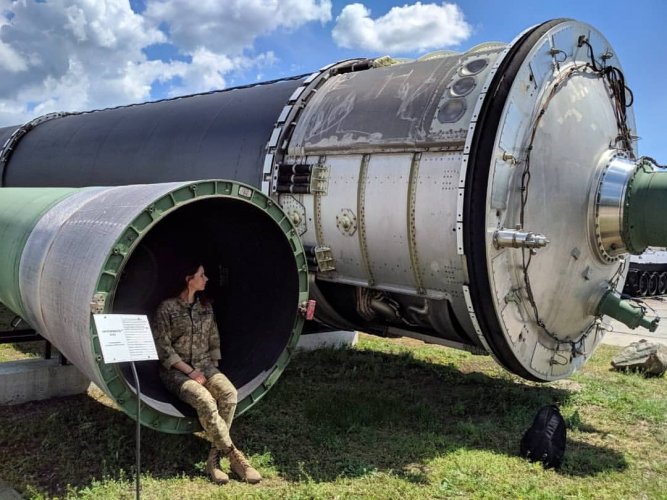
That looks like a modified SA-5 Gammon.
There's some stuff that's leaked through the wall of silence on the 53T6 (a lot more is known about the 51T6 than 53T6 GAZELLE):
http://war-russia.info/index.php/no...77-sistema-pro-a-135-amur-5zh60-abm-x-3-1996g
http://militaryrussia.ru/blog/topic-875.htm
http://militaryrussia.ru/blog/topic-875.htm
The key lines are
The detachable, controlled warhead uses pulsed microthrusters directed perpendicular to the missile's longitudinal axis (likely located near the center of mass of the missile's warhead).
[...]
"Correction of the rocket trajectory, including at the final stage of flight before separation of the warhead, is gas-dynamic using pulsed gas-jet solid propellant micro-engines directed perpendicular to the longitudinal axis of the rocket."
Such a system would enable statements like this:
https://pvo.guns.ru/abm/a135-01.htm
To be correct.
That last line -- "missions against low altitude satellites" is a real light bulb moment.
The only way you could seriously say that is if GAZELLE has a serious exo-atmospheric manuvering capability, particularly since it has a rather small warhead.
This leads me to thinking about SPRINT vs GAZELLE.
For a long time, we've been assuming GAZELLE is a Soviet SPRINT-SKI.... when it may be something else entirely.
SPRINT was an outgrowth of the early 1960s McNamara led OSD / DDR&E environment that held that you couldn't discriminate decoys at all until they entered the atmosphere; hence the aggressive focus on manuvering within the atmosphere with air vanes and a two stage missile to enable powered thrust and dynamic pressure over those airvanes up to around 100,000~ ft.
Additionally, the alternate "Silo / Hard Point" mission given to SPRINT early in its design constrained SPRINT's size -- because it had to be a small missile in order to be cheap enough to use as a MINUTEMAN silo defense missile.
GAZELLE came nearly a decade later; without McNamara / OSD / DDR&E's 'thumb on the scale' forcing medium endoatmospheric engagement or the use of a small missile (3500~ kg) to get costs down for Minuteman Silo Defense; and to make it feasible to consider ideas like buying 20,000 of them in some NIKE-X configurations.
I think GAZELLE is actually a THAAD-like high endoatmospheric / exoatmospheric system, some 25 years ahead of it's time, helped by being really big (9600+ kg) and having a nuclear warhead.
This would also explain why:
A.) The Russians kept GAZELLE in service and retired 51T6 GORGON; because GAZELLE had absurd performance -- if you're limited to only 100 ABM interceptors; it helps if your terminal defense missile is as big as possible to maximize your ROI per missile.
B.) There's so little information available in the public domain about it -- the Russians know almost everyone thinks of it as a "SPRINT-ski" and aren't going to disabuse others of that.
With that out of the way; lets try to figure out GAZELLE's performance.
I think the reason the Russians keep saying GAZELLE weighs 10,000 kg isn't Mashkirovka.
Per the links before; I think GAZELLE is:
A 9,600~ kg Restartable Dual Pulse Motor loaded with 7,600~ kg of propellant (MR of 4.8); burns at high thrust for 1 second, before switching to cruise thrust for the remaining 3 seconds; achieving a total motor burn of 4 seconds. I believe the motor can delay the starting of the second pulse to extend range; similar to SPRINT's second stage ignition delay.
This lengthy burn time is why GAZELLE "recycles" it's own propellant gas to act as TVC; because SPRINT consumed 200 lb/sec of Freon for TVC -- that was OK for 1 second of booster time, kind of a big deal for a 4 second burn time.
Immediately after motor burnout, the 400~ kg Detachable Warhead (DW) section separates and uses a series of Solid Propellant Gas Generators (SPGGs) similar to the TRIDENT Post-Boost Control System (PBCS) to constantly replenish a central reservoir with propellant gasses, which are bled off to either lateral thrusters or axial thrusters.
https://generalstaff.org/BBOW/Progs/FlySIM/FlyoutSim_v1.htm
Settings:
Flyout Time to 100 seconds
Simulation Step: 0.1 seconds (same as SPRINT)
Drag Adjustment Scaler: 0.6 (same as SPRINT)
Launch Angle: 90 deg (same as SPRINT)
Launch Altitude: 0.01 km (10 m) -- cold-gas launched, similar to SPRINT.
Launch Axial Velocity: 20 m/sec -- cold-gas launched, similar to SPRINT.
Launch Phase Duration: 0.1 seconds
Stage 1:
2.18m diameter
7919.5 kg mass
4.8 mass ratio
270 ISP (heavier, more dense metal rich propellant than SPRINT)
85 deg flyout angle
60% boost pulse
1 sec boost pulse length
3 sec Sustainer Pulse Length
0 sec Sustainer Ignition Delay
Stage 2:
0.78m diameter
400 kg mass
1.0000001 mass ratio
265 ISP
85 deg flyout angle
100% boost pulse
0.1 sec boost pulse length
These settings result in
High Thrust Pulse of 1015 ton-force
followed by
Cruise Thrust of 225 ton-force
Using a 100 second (1.6 minute) flight limit with the following settings results in:
85 Deg Flyout Angle + 0 second Sustainer Pulse Delay = 106 km altitude @ 12.3 km downrange.
85 Deg Flyout Angle + 4 second Sustainer Pulse Delay = 187 km altitude @ 19 km downrange.
It can't get up high enough to kill "modern" KH-11s, but...some the early KH-8 GAMBITs did "dives of death" down to 129~ km to increase resolution; which is low enough to be vulnerable to GAZELLE if they decided to directly fly over Pushkino.
If we switch to a 45 degree flyout angle and keep the 100 second flight limit:
45 Deg Flyout Angle + 0 second Sustainer Pulse Delay = 13 km altitude @ 48 km downrange.
45 Deg Flyout Angle + 4 second Sustainer Pulse Delay = 61 km altitude @ 96 km downrange.
...This is pretty close to the public stats given of 80 to 100 km maximum range.
If we assume that GAZELLE can delay to 8 seconds, it extends to 92 km altitude @ 127 km downrange -- but I don't know if you can delay the second pulse ignition that long -- SPRINT had the advantage of having a complete second stage with a separate motor for reliability.
PS -- one of the hardest things that hurt me during this expedition to find the truth was that the Russians mixed a lot of "truth" with "bullshit".
For example, they claimed 53T6 could hit 30 km [18.6 mi] altitude in 5 seconds -- it takes SPRINT about 5 seconds to hit 8 km [5 mi].
EDIT: Something I just realized right now.
The Russians have been very circumspect in describing 53T6's exoatmospheric capabilities -- they've only been describing the endoatmospheric capabilities -- i.e. this line about the 53T6M:
"interception of enemy ICBM warheads is now reliably achieved at altitudes well above 50 km" (164,000 ft)
That line only makes sense if you consider an ABM system to have the capability to intercept RVs if they can sustain 60-90G maneuvering -- to defeat MARVs -- the only way 53T6 can sustain 60-90G maneuvers is when that huge first stage is burning and generating thrust that can be vectored through TVC.
http://war-russia.info/index.php/no...77-sistema-pro-a-135-amur-5zh60-abm-x-3-1996g
Противоракета ПРС-1 / 53Т6 (ABM-3А "GAZЕLLE" ) создавалась в ОКБ-8 (ОКБ "Новатор"), главный конструктор Л.В.Люльев. Ракета имеет стартово-маршевый РДТТ 5С73 на смесевом высокоэнергетическом топливе с высоким удельным импульсом, горение топлива происходит со скоростью близкой к скорости звука ("детонационное горение"). Двигатель ракеты 53Т6 разработан ОКБ-16 - Казанским КБ двигателестроения (позже КБ "Союз"), главный конструктор - П.Ф.Зубец, Тип корпуса ракеты - несущий конус; корпус выполнен из высокопрочных сталей с использованием намотки из композиционных материалов с прочноскрепленными коническими зарядами твердого топлива. Тяга двигателя - 650-750-1000 т (данные оценочные) Время работы РДТТ - 4 с Управление ракеты на начальной стадии полета - газодинамическое с помощью впрыска в закритическую часть сопла стартово-маршевого двигателя продуктов сгорания из камеры РДТТ. Корректировка траектории полета ракеты, в том числе на конечной стадии полета перед отделением ГЧ - газодинамическая с использованием импульсных газоструйных твердотопливных микродвигателей направленных перпендикулярно продольной оси ракеты.Ракеты 53Т6 оснащены ядерной БЧ с боевым блоком АА-84 мощностью 10 кт. БЧ с системой подрыва разработана в КБ-11 под руководством С.Г.Кочарянца. Старт ракеты газодинамический на собственном двигателе.
The PRS-1/53T6 (ABM-3A "GAZELLE") interceptor missile was developed by OKB-8 (OKB "Novator"), chief designer L.V. Lyulyev.
The missile has a 5S73 solid propellant rocket motor on a mixed high-energy propellant with a high specific impulse, the fuel burns at a speed close to the speed of sound ("detonation combustion").
The 53T6 rocket engine was developed by OKB-16 - Kazan Engine Design Bureau (later KB "Soyuz"), chief designer - P.F. Zubets.
The missile body type is a supporting cone; the body is made of high-strength steels using winding from composite materials with firmly bonded conical charges of solid propellant.
Engine thrust - 650-750-1000 t (estimated data) Solid propellant rocket motor operating time - 4 s.
Rocket control at the initial stage of flight is gas-dynamic by injecting combustion products from the solid propellant motor chamber into the supercritical section of the booster engine nozzle.
Correction of the rocket trajectory, including at the final stage of flight before separation of the warhead, is gas-dynamic using pulsed gas-jet solid propellant micro-engines directed perpendicular to the longitudinal axis of the rocket.
The 53T6 missiles are equipped with a nuclear warhead with an AA-84 warhead with a yield of 10 kt. The warhead with the detonation system was developed in KB-11 under the supervision of S.G. Kocharyants. The rocket launch is gas-dynamic using its own engine.
http://militaryrussia.ru/blog/topic-875.htm
Двигатели - стартово-маршевый РДТТ 5С73 на смесевом высокоэнергетическом топливе с высоким удельным импульсом, горение топлива происходит со скоростью близкой к скорости звука ("управляемый взрыв"). Управление направлением движения газодинамическое с помощью впрыска в сопло основного двигателя продуктов сгорания из камеры сгорания. На отделяемой управляемой ГЧ - с использованием импульсных микродвигателей направленных перпендикулярно продольной оси ракеты (вероятно расположены в районе центра масс боевой ступени ракеты).
Двигатель ракеты 53Т6 разработан ОКБ-16 - Казанским КБ двигателестроения (позже Казанское РКБ "Союз") главного конструктора П.Ф.Зубца, ведущий конструктор - И.Х.Фахрутдинов. Техническое задание на создание двигателей для ракет 53Т6 / ПРС-1 и ракеты ЗРК 9М82 поступило в 1969-1970 г.г. РДТТ выполнен с прочноскрепляемым зарядом, который непосредственно заливается в двигатель. Предположительно, заряд разделен на стартовую часть с одним составом топлива и маршевую часть с топливом другого типа (не подтверждено).
[...]
The engines are the 5S73 solid propellant booster rocket motor (SPB) using a high-energy composite propellant with a high specific impulse. The propellant burns at a speed close to the speed of sound ("controlled explosion"). Directional control is gas-dynamic, using combustion products injected from the combustion chamber into the main engine nozzle. The detachable, controlled warhead uses pulsed microthrusters directed perpendicular to the missile's longitudinal axis (likely located near the center of mass of the missile's warhead).
The 53T6 rocket engine was developed by OKB-16, the Kazan Engine Design Bureau (later the Kazan Soyuz Rocket and Design Bureau), under the chief designer P.F. Zubets, and the lead designer I.Kh. Fakhrutdinov. The technical specifications for the engines for the 53T6/PRS-1 missiles and the 9M82 SAM missile were submitted in 1969-1970. The solid-propellant rocket motor is designed with a securely fastened charge that is directly poured into the engine. Presumably, the charge is divided into a booster section with one propellant composition and a sustainer section with a different propellant type (not confirmed).
http://militaryrussia.ru/blog/topic-875.htm
Масса - 9693 кг
Масса топлива - 7625 кг
Масса ГЧ - 500-700 кг (оценочно)
Масса БЧ - 150 кг (оценочно)
[...]
Weight: 9,693 kg
Fuel weight: 7,625 kg
Warhead weight: 500-700 kg (estimated)
Warhead weight: 150 kg (estimated)
The key lines are
The detachable, controlled warhead uses pulsed microthrusters directed perpendicular to the missile's longitudinal axis (likely located near the center of mass of the missile's warhead).
[...]
"Correction of the rocket trajectory, including at the final stage of flight before separation of the warhead, is gas-dynamic using pulsed gas-jet solid propellant micro-engines directed perpendicular to the longitudinal axis of the rocket."
Such a system would enable statements like this:
https://pvo.guns.ru/abm/a135-01.htm
"Как заявил Генеральный конструктор системы ПРО А-135 А.Г. Басистов: "Система показала значительные запасы по всем параметрам. Скоростные противоракеты Люльева 53Т6 могут осуществлять поражение баллистических целей на дальностях в 2,5 раза больших, чем мы сейчас их аттестовали. Система готова выполнить задачи и по поражению низковысотных спутников, и другие боевые задачи"."
[...]
As A.G. Basistov, General Designer of the A-135 missile defense system, stated: " The system has demonstrated significant performance across all parameters. The Lyulyev 53T6 high-speed interceptor missiles can engage ballistic targets at ranges 2.5 times greater than our current certification. The system is ready to perform missions against low-altitude satellites and other combat missions ."
To be correct.
That last line -- "missions against low altitude satellites" is a real light bulb moment.
The only way you could seriously say that is if GAZELLE has a serious exo-atmospheric manuvering capability, particularly since it has a rather small warhead.
This leads me to thinking about SPRINT vs GAZELLE.
For a long time, we've been assuming GAZELLE is a Soviet SPRINT-SKI.... when it may be something else entirely.
SPRINT was an outgrowth of the early 1960s McNamara led OSD / DDR&E environment that held that you couldn't discriminate decoys at all until they entered the atmosphere; hence the aggressive focus on manuvering within the atmosphere with air vanes and a two stage missile to enable powered thrust and dynamic pressure over those airvanes up to around 100,000~ ft.
Additionally, the alternate "Silo / Hard Point" mission given to SPRINT early in its design constrained SPRINT's size -- because it had to be a small missile in order to be cheap enough to use as a MINUTEMAN silo defense missile.
GAZELLE came nearly a decade later; without McNamara / OSD / DDR&E's 'thumb on the scale' forcing medium endoatmospheric engagement or the use of a small missile (3500~ kg) to get costs down for Minuteman Silo Defense; and to make it feasible to consider ideas like buying 20,000 of them in some NIKE-X configurations.
I think GAZELLE is actually a THAAD-like high endoatmospheric / exoatmospheric system, some 25 years ahead of it's time, helped by being really big (9600+ kg) and having a nuclear warhead.
This would also explain why:
A.) The Russians kept GAZELLE in service and retired 51T6 GORGON; because GAZELLE had absurd performance -- if you're limited to only 100 ABM interceptors; it helps if your terminal defense missile is as big as possible to maximize your ROI per missile.
B.) There's so little information available in the public domain about it -- the Russians know almost everyone thinks of it as a "SPRINT-ski" and aren't going to disabuse others of that.
With that out of the way; lets try to figure out GAZELLE's performance.
I think the reason the Russians keep saying GAZELLE weighs 10,000 kg isn't Mashkirovka.
Per the links before; I think GAZELLE is:
A 9,600~ kg Restartable Dual Pulse Motor loaded with 7,600~ kg of propellant (MR of 4.8); burns at high thrust for 1 second, before switching to cruise thrust for the remaining 3 seconds; achieving a total motor burn of 4 seconds. I believe the motor can delay the starting of the second pulse to extend range; similar to SPRINT's second stage ignition delay.
This lengthy burn time is why GAZELLE "recycles" it's own propellant gas to act as TVC; because SPRINT consumed 200 lb/sec of Freon for TVC -- that was OK for 1 second of booster time, kind of a big deal for a 4 second burn time.
Immediately after motor burnout, the 400~ kg Detachable Warhead (DW) section separates and uses a series of Solid Propellant Gas Generators (SPGGs) similar to the TRIDENT Post-Boost Control System (PBCS) to constantly replenish a central reservoir with propellant gasses, which are bled off to either lateral thrusters or axial thrusters.
https://generalstaff.org/BBOW/Progs/FlySIM/FlyoutSim_v1.htm
Settings:
Flyout Time to 100 seconds
Simulation Step: 0.1 seconds (same as SPRINT)
Drag Adjustment Scaler: 0.6 (same as SPRINT)
Launch Angle: 90 deg (same as SPRINT)
Launch Altitude: 0.01 km (10 m) -- cold-gas launched, similar to SPRINT.
Launch Axial Velocity: 20 m/sec -- cold-gas launched, similar to SPRINT.
Launch Phase Duration: 0.1 seconds
Stage 1:
2.18m diameter
7919.5 kg mass
4.8 mass ratio
270 ISP (heavier, more dense metal rich propellant than SPRINT)
85 deg flyout angle
60% boost pulse
1 sec boost pulse length
3 sec Sustainer Pulse Length
0 sec Sustainer Ignition Delay
Stage 2:
0.78m diameter
400 kg mass
1.0000001 mass ratio
265 ISP
85 deg flyout angle
100% boost pulse
0.1 sec boost pulse length
These settings result in
High Thrust Pulse of 1015 ton-force
followed by
Cruise Thrust of 225 ton-force
Using a 100 second (1.6 minute) flight limit with the following settings results in:
85 Deg Flyout Angle + 0 second Sustainer Pulse Delay = 106 km altitude @ 12.3 km downrange.
85 Deg Flyout Angle + 4 second Sustainer Pulse Delay = 187 km altitude @ 19 km downrange.
It can't get up high enough to kill "modern" KH-11s, but...some the early KH-8 GAMBITs did "dives of death" down to 129~ km to increase resolution; which is low enough to be vulnerable to GAZELLE if they decided to directly fly over Pushkino.
If we switch to a 45 degree flyout angle and keep the 100 second flight limit:
45 Deg Flyout Angle + 0 second Sustainer Pulse Delay = 13 km altitude @ 48 km downrange.
45 Deg Flyout Angle + 4 second Sustainer Pulse Delay = 61 km altitude @ 96 km downrange.
...This is pretty close to the public stats given of 80 to 100 km maximum range.
If we assume that GAZELLE can delay to 8 seconds, it extends to 92 km altitude @ 127 km downrange -- but I don't know if you can delay the second pulse ignition that long -- SPRINT had the advantage of having a complete second stage with a separate motor for reliability.
PS -- one of the hardest things that hurt me during this expedition to find the truth was that the Russians mixed a lot of "truth" with "bullshit".
For example, they claimed 53T6 could hit 30 km [18.6 mi] altitude in 5 seconds -- it takes SPRINT about 5 seconds to hit 8 km [5 mi].
EDIT: Something I just realized right now.
The Russians have been very circumspect in describing 53T6's exoatmospheric capabilities -- they've only been describing the endoatmospheric capabilities -- i.e. this line about the 53T6M:
"interception of enemy ICBM warheads is now reliably achieved at altitudes well above 50 km" (164,000 ft)
That line only makes sense if you consider an ABM system to have the capability to intercept RVs if they can sustain 60-90G maneuvering -- to defeat MARVs -- the only way 53T6 can sustain 60-90G maneuvers is when that huge first stage is burning and generating thrust that can be vectored through TVC.
Last edited:
Some more closeups I found of GAZELLE in Ukraine; some may be dupes of earlier photos; but...eh.
Attachments
Last edited:
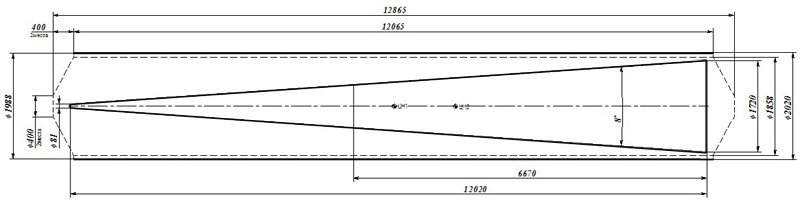
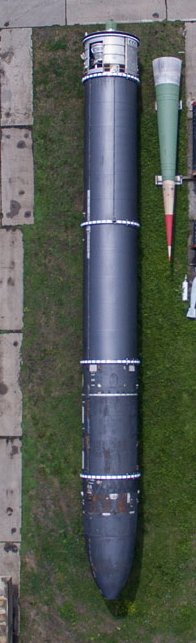
The actual specs are available, and 9600kg is for the whole missile, with a base diameter of 1.7m (well, 1720mm,to be exact). Incidentally, @Sferrin has his genuine 53T6 cut-away here, albeit frustratingly the image quality is so poor as to render it almost moot...Settings:
Flyout Time to 100 seconds
Simulation Step: 0.1 seconds (same as SPRINT)
Drag Adjustment Scaler: 0.6 (same as SPRINT)
Launch Angle: 90 deg (same as SPRINT)
Launch Altitude: 0.01 km (10 m) -- cold-gas launched, similar to SPRINT.
Launch Axial Velocity: 20 m/sec -- cold-gas launched, similar to SPRINT.
Launch Phase Duration: 0.1 seconds
Stage 1:
2.18m diameter
7919.5 kg mass
4.8 mass ratio
270 ISP (heavier, more dense metal rich propellant than SPRINT)
85 deg flyout angle
60% boost pulse
1 sec boost pulse length
3 sec Sustainer Pulse Length
0 sec Sustainer Ignition Delay
Stage 2:
0.78m diameter
400 kg mass
1.0000001 mass ratio
265 ISP
85 deg flyout angle
100% boost pulse
0.1 sec boost pulse length
These settings result in
High Thrust Pulse of 1015 ton-force
followed by
Cruise Thrust of 225 ton-force
My guess is that's because its exo-atmospheric capability falls more into what you called the bullshit categoryThe Russians have been very circumspect in describing 53T6's exoatmospheric capabilities -- they've only been describing the endoatmospheric capabilities -- i.e. this line about the 53T6M:
Or if the kill vehicle thrusters don't actually rely directly on thrust to generate side force, but work on the jet interaction principle. I.e. they modify the flow field around the missile body to create an aerodynamic force - more like "Tsar-HIBEX" than "Sprint-ski". I think it's firmly endo-atmospheric, despite the gasdynamic steering.That line only makes sense if you consider an ABM system to have the capability to intercept RVs if they can sustain 60-90G maneuvering -- to defeat MARVs -- the only way 53T6 can sustain 60-90G maneuvers is when that huge first stage is burning and generating thrust that can be vectored through TVC.
Even the HIBEX comparison is somewhat flawed though, because obviously that was an even shorter-range missile. But it's impossible to separate the design from the nature of the target to be defended when comparing these weapons. 53T6 was designed to protect not a bunch of hardened silos in the middle of nowhere like Sprint, but the country's largest conurbation with a combined administrative and economic significance akin to DC and NYC rolled into one. Not the sort of place to go detonating 10kt nukes at Sprint-like last-ditch altitudes.
At the same time, the sensor system supporting it, while possibly longer-ranged by sheer power, was likely not all that much better in terms of discrimination than the radars available to the Safeguard complex. That is to say, it still relied a lot on atmospheric drag to strip away inflatable PENAIDs - that's pretty much the only sane reason not to aim for exo-atmospheric intercept against ICBMs in the first place. So the very fact that the 53T6 exists kind of lends credence to that hypothesis.
Once you combine both the target to be defended and the requirement for endo-admospheric intercept, you naturally arrive at a missile that rather resembles a long-range (and therefore much larger) HIBEX. It has to wait almost as long as Sprint for the target to be sorted out, but then needs to complete the intercept further from the launch site. My guess is that the single-stage configuration came about because a staging-event (even one as spectacularly violent as Sprint's) was deemed to cost too much time, so all of the propulsion had to come from one motor.
Attachments



- Joined
- 3 June 2011
- Messages
- 20,990
- Reaction score
- 19,254
I read somewhere that Gazelle's motor is almost a controlled explosion. Whether that means a really high burn rate propellant or a ton of surface area, I don't know. When you look at a launch though. . . ye Gods, it almost makes Sprint look slow. Makes you wonder what HiBEX looked like coming out of the ground.I developed an image analysis tool specifically for stuff like this:
https://generalstaff.org/BBOW/Progs/IMG_TOOL_v1.htm
Loading up the 53T6_Side.jpg image at 2x; and going with:
12~ m length
1.7-1.8m~ diameter
I get the following measurements using the length as the main determinant; and using an online conical frustrum calculator:
Nozzle: 2.09m length, 2.18m lower diameter, 1.7m upper diameter, 0.10m thickness = 0.620 m3 volume
Stage I: 6.18m length, 1.7m lower diameter, 0.78m upper diameter = 7.805 m3 volume
Stage II: 1.73m length, 0.78m lower diameter, 0.44m upper diameter = 1.738 m3 volume
Warhead: 1.45m length, 0.44m lower diameter, 0.14m upper diameter = 0.1043 m3 volume
Nosecone: 0.65m~ length, 0.14m lower diameter = 0.003335 m3 volume
If we assume a 851.3~ kg/m3 system density (similar to SPRINT) we get:
Nozzle: 528~ kg
Stage I: 6,644~ kg
Stage II: 1,479~ kg
Warhead (Red): 60.62~ kg
Nosecone: 2.83~ kg
Rough Total Mass: 8715~ kg (roughly)
This is close enough to some figures (9693 kg) that I've seen for GAZELLE to do rough order of magnitude estimates of missile performance.
FYI, the mass breakdown per stage is:
SPRINT Stage I: 77% of missile mass
SPRINT Stage II: 22% of missile mass
GAZELLE STAGE I: 73% of missile mass (including nozzle)
GAZELLE STAGE II: 15.91%
One reason for this discrepancy may be because GAZELLE is a second generation "boost" missile -- SPRINT's design was frozen around maybe 1963-64 to get it built in a few years, whereas GAZELLE could "fast follow" several years later -- SPRINT's first test launch was 17 November 1965, while GAZELLE's first launch (as 5Ya26) was in 1973; a difference of eight years of R&D advances.
Furthermore, GAZELLE underwent redesign into it's definitive 53T6 form between 1973 and 1978, which brings it several more years "ahead" of SPRINT.
I've been using 260 ISP for SPRINT estimates in lieu of better information; but a heavier, more dense missile in GAZELLE indicates that GAZELLE propellant was even more energetic, with more metallic staples/whatever inserted into the propellant mix; which would increase density -- the 9693 kg figure + 10.2706 m3 volume for GAZELLE gives us a 943.7 kg/m3 system density.
That reminds me of another issue with Ryan's analysis - 53T6 is actually hot-launched (again, presumably to save time).When you look at a launch though. . . ye Gods, it almost makes Sprint look slow.
EDIT:Launch Altitude: 0.01 km (10 m) -- cold-gas launched, similar to SPRINT.
Launch Axial Velocity: 20 m/sec -- cold-gas launched, similar to SPRINT.
The rocket launch is gas-dynamic using its own engine.
Last edited:
- Joined
- 3 June 2011
- Messages
- 20,990
- Reaction score
- 19,254
Would be awesome to see a SlowMo Guys quality launch video.That reminds me of another issue with Ryan's analysis - 53T6 is actually hot-launched (again, presumably to save time).


