Status
Not open for further replies.
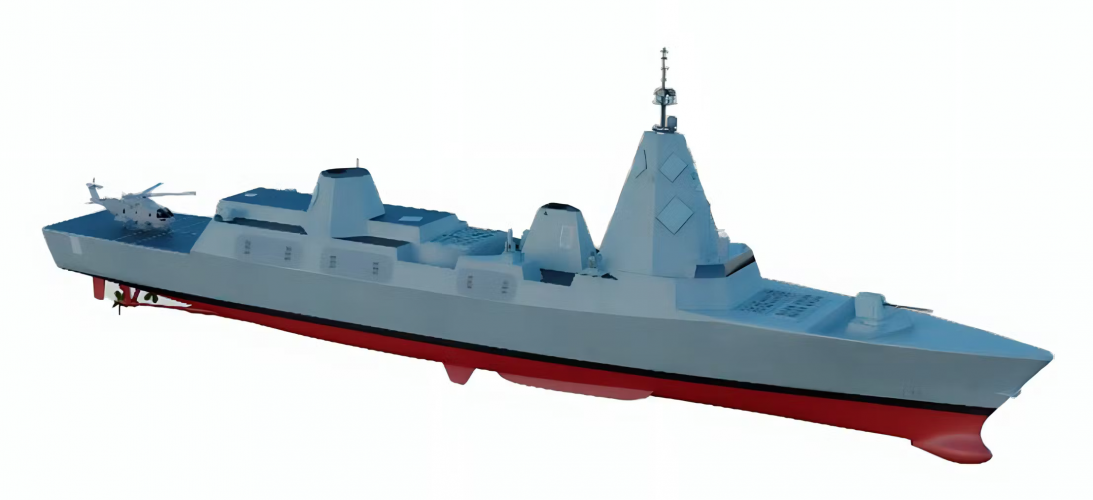
Got to admit mixed feelings over this design.
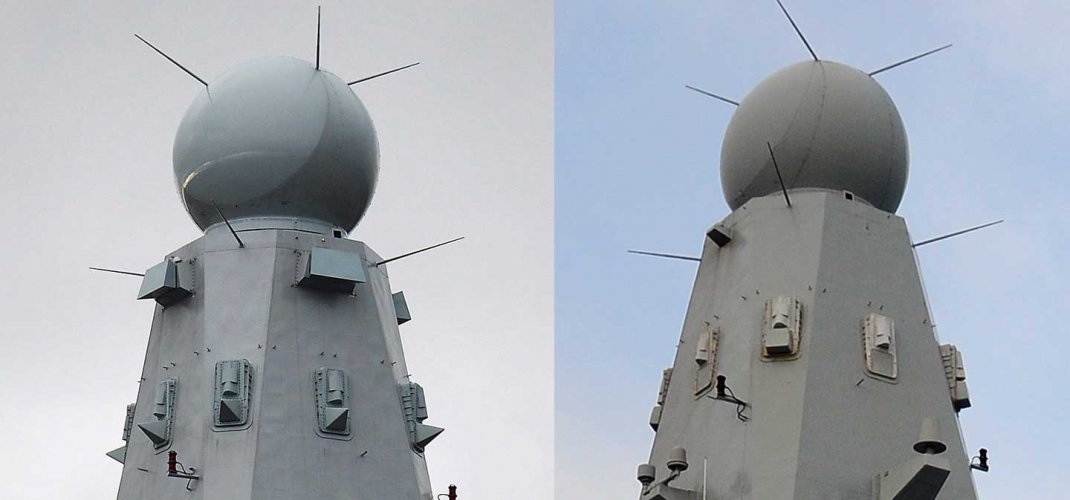
That's quite a chunky block stuffed with radars.

Obviously big volume search/tracking sets that likely build on Sampson's potential in ABM functionality.
Then higher up guidance tracking targeting sets, that may give a low level Search/Warning capability. Presumably building on ARTISAN.

But is this the right course to chart, when we may need substantial expansion of naval assets?
 
There are possibly worse issues with the BAE build halls at Govan, if you want to extend them, you have to demolish another large facility, with no obvious place to move it to.

If you wanted to extend the Janet Harvey hall the best was would be to fill in the section in front of it and extend the shed...but at some point its all a moot point as the shed faces the river perpendicularly...and the river is only so wide, so going beyond 200m is not really possible. Any longer than that and you might as well shut up shop at Govan and move everything to Scotstoun....or buy Inchgreen from Peel Holdings and relocate there...

Then you pay to enlarge the drydocks and build hall(s)! FFS is the UK that [expletives deleted] blind?!?

We've literally just built the build halls at Rosyth and Govan...
 
Obviously big volume search/tracking sets that likely build on Sampson's potential in ABM functionality.
Then higher up guidance tracking targeting sets, that may give a low level Search/Warning capability. Presumably building on ARTISAN.
IMO it looks like the design is using S and X-Band arrays, the smaller higher arrays being the latter, optimised for horizon search. I doubt the upper arrays are related to Artisan, which operates in S-Band, I would expect they owe more to ECRS Mk 2 of anything. There is however an Artisan Next Gen under development, and is apparently depicted in the trimaran USV renders.
 
IMO it looks like the design is using S and X-Band arrays, the smaller higher arrays being the latter, optimised for horizon search. I doubt the upper arrays are related to Artisan, which operates in S-Band, I would expect they owe more to ECRS Mk 2 of anything. There is however an Artisan Next Gen under development, and is apparently depicted in the trimaran USV renders.
The panels are generic and not specifically representative of any current design according to Navy Lookout.
For T83 I would expect more of a cross over with the GCAP radar if anything, though a fixed equivalent of an X-band Artisan NG would also make sense. Using the same arrays for ECM/ESM as well as target tracking for missiles would be a useful tech transfer from the combat air industry, as I believe the T45 has separate antennae for the former roles at the moment.
 
Oh those massive aerials over the hanger be the ESM system. Lots of dark arts stuff there
 
Not to mention that the harbour is riddled with unexploded bombs, so nobody wants to dig foundations for new docks. They got quite a few when dredging the harbour out for the QEs, the area inside the basins would be even worse and you'd have to dig deeper.
Meh. Evacuate the city for a couple of days and blow in place, you now have a much larger and deeper bay to work with. With luck you'd save all the digging in the excavation phase.

Tell any rubberneckers that you'll stream the detonation on YT to keep them away, and charge 1GBP per live view to raise some funds.


We've literally just built the build halls at Rosyth and Govan...
Then your planners SUCK. Massively. Are so incompetent that they need to be sued into poverty for the rest of their lifetime. /rant
 
Meh. Evacuate the city for a couple of days and blow in place, you now have a much larger and deeper bay to work with. With luck you'd save all the digging in the excavation phase.

Tell any rubberneckers that you'll stream the detonation on YT to keep them away, and charge 1GBP per live view to raise some funds.
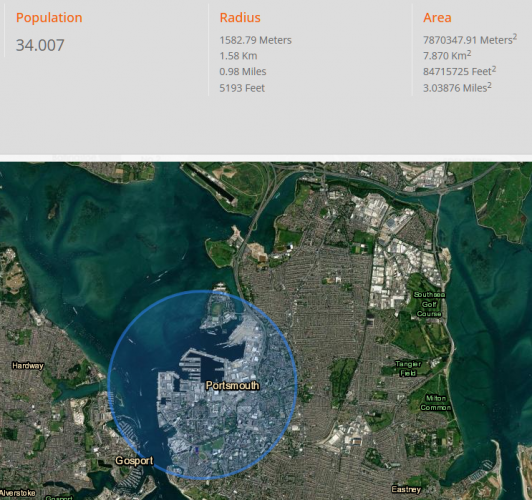
An online calculator tool tells me that 34000 people live within a 1 mile radius of 15 dock, and any evacuation would shut down the ferry link to St Malo, some very large marinas and a commercial port responsible for 70% of the UK's banana imports and 95% of the goods consumed on the Channel Islands.
1762931098861.png
Increase that to two miles and you have to evacuate over 100,000 people from an island that is connected to the mainland by three roads and a train line (plus some more from the Gosport line).
Unfortunately our bases have been around for too long to have remained nice and far away from any population centres, and I'm not willing to go without bananas however much the Navy needs new docks.
 
Then your planners SUCK. Massively. Are so incompetent that they need to be sued into poverty for the rest of their lifetime. /rant
They live in Britain and work for the government. What more can you do to them.

Seriouly, though, I take it this concept (that kind of incorporates everything we talked about in the last 2-3 pages of the thread) is not being considered anymore?

1762937115903.png
 
They live in Britain and work for the government. What more can you do to them.

Seriouly, though, I take it this concept (that kind of incorporates everything we talked about in the last 2-3 pages of the thread) is not being considered anymore?

View attachment 791160
Apart from having a mission bay and twin funnels, are there really any functional differences between this and FAWCS? The new design has the same VLS, 3 Dragonfire instead of 2 Phalanx, and bigger radar panels. The two aft panels aren't for redundancy, they just get the forwards funnel out of the way.
 
Apart from having a mission bay and twin funnels, are there really any functional differences between this and FAWCS?

Normal, proportional, seagoing hull, for once.

And yes, intentionally or not, the aft radars do provide redundancy.
 
They live in Britain and work for the government. What more can you do to them.

They work for BAE Systems and Babcock. Not the Government.

Rosyth is sized to build 2 frigates side by side. Govan can build 2 Type 26 side by side.

Neither is sized to build 2 WW2 Heavy Cruisers...because we're not going to be buying ships that size...
 
  • Like
Reactions: DWG
because we're not going to be buying ships that size...
Why not? Surface combatants around the globe are growing in size and displacement. To remain competitive means to follow that trend, unmanned auxiliaries or not.

Centering ones force around smaller and thus inherently less capable vessels compared to rival designs ultimately leads to being relegated to being a second or third rate naval power.
 
Last edited:
They work for BAE Systems and Babcock. Not the Government.

Rosyth is sized to build 2 frigates side by side. Govan can build 2 Type 26 side by side.

Neither is sized to build 2 WW2 Heavy Cruisers...because we're not going to be buying ships that size...
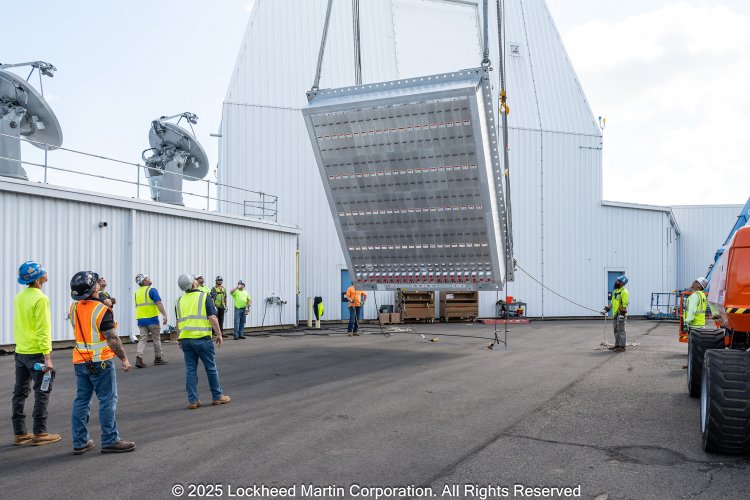
I expect you are right, but they will have limited operational capability if we compare them to the CONOPS for the two Japanese ASEV destroyers which are being built to defend against North Korean and Chinese ballistic nuclear missiles, large ships required at 190m x 25m, displacement ~ 16-17,000t, to give them the necessary stability to take the top weight of the big and heavy expensive Lockheed SPY-7(V)1 four array radars to give the necessary surveilance and targeting ability, have seen $2.34 billion cost for the two ships radars. USN states that radar sensitivity scales as a cube of the size of the radar aperture, so the bigger the better.
 

Attachments

  • ASEV-SPY-7 array.jpg
    ASEV-SPY-7 array.jpg
    842.2 KB · Views: 22
I expect you are right, but they will have limited operational capability if we compare them to the CONOPS for the two Japanese ASEV destroyers which are being built to defend against North Korean and Chinese ballistic nuclear missiles, large ships required at 190m x 25m, displacement ~ 16-17,000t, to give them the necessary stability to take the top weight of the big and heavy expensive Lockheed SPY-7(V)1 four array radars to give the necessary surveilance and targeting ability, have seen $2.34 billion cost for the two ships radars. USN states that radar sensitivity scales as a cube of the size of the radar aperture, so the bigger the better.

Unlike Japan we could also place such a facility on land...and we're also further away from the threat...
 
Unlike Japan we could also place such a facility on land...and we're also further away from the threat...
That won't help much in protecting the carrier groups at sea.

A lot of excuses can be made up to justify building a ship to a compromise design, but just as was in the case of Type 42 destroyers, those things tend to backfire.
 
Last edited:
That won't help much in protecting the carrier groups at sea.
Not only that, but the threat of SLBMs, IRBMs and ICBMs persists, and a ship is ultimately less likely to be immediately reduced to nothing in such a case. So it's a more survivable ABM asset. And ultimately the benefits to a larger ship with more capable radar is clear and countries like China, the US, Japan, South Korea, Italy and even Germany are heading into that direction.

Not building such a capable surface combatant along the lines of DDG(X), Type 055, ASEV CGs, KDX, DDX or F127 wouldn't be indicative of a lacking need, the Royal Navy needs the most capable ships in plenty of numbers to provide effective cover for their carriers. No, it would indicate something really bad with regards to the UK shipbuilding capability. But that discussion is out of scope of this thread.

Ultimately I expect the Daring Class replacement to be a rather large vessel, even if the yards have to be modified to accommodate it's construction.
 
It would be drifting off topic to delve into the combination of incompetence and subservience of the UK Elite.

There is a strategic debate that either lurks behind closed doors or has simply not happened. Concerning the degree of independence and dependency the should or should not have.

And there is a related outcome of what type of systems best serve the strategic interests. Which brings us to FADS and what that should be.

A limited number of vessels will be built, so the key question must concern the ease of expanding numbers. All in relationship to effectiveness. Plus additional expansion of related assets.

Effectiveness is ultimately of higher priority than efficiency and large ships tend towards efficiency.

You cannot win by numbers alone.
Neither then a highly limited number of massive wonderships provide dominance. A fleet of four 20,000ton vessels armed to the teeth provides at best only two available for action.

Somewhere in the middle lurks the best compromise.

If our locus of defence is North Western Europe, where we physically be. Then obsessing over fighting China in the Pacific seems a flawed approach.
Unless such deployment stretches our opponents and undermines their ability to concentrate force.
But that isn't an option for the UK now and any attempt to build such a force. Directly threatens our 'allies', who have expended enormous resources to keep us boxed in to North Western Europe.
China will pursue the same outcome.

Therefore the focus is on 'Destroyers' (more accurately less than 10,000tons) type vessels, able to proliferate defences over the North Atlantic, North Sea, Baltic, Western Mediterranean and the High North.
Conveniently vessels that fit existing infrastructure will be favoured.
Which at least holds open the door for expansion.

The main limitations on expansion or even sustainment, resolve around the sources of components and how easily another Power might shut off that supply.
 
My logic is that the RN will need at least 3 higher-tier destroyers for the CSGs, but also wants at least 6 AAW combatants overall. The cheapest possible AAW combatant that is worthwhile is T31 upgraded with a reasonable radar to use CAMM-MR, but a mixed fleet of those and 15kt cruisers would under current budgets only produce 1-2 cruisers. So if we want to get enough in the higher tier at current budgets, we need to bring the top tier down to 10kt, 160m FAWCS size.
Extra budget would allow a good number of cruisers with even bigger and/or higher radar panels, or the whole fleet to consist of the destroyers, or a much larger number of AAW frigates.
But the BAE cruiser looks to me to be about the same tonnage as FAWCS, or maybe slightly more, trading radar power for a more efficient hull form. It would have to get a lot bigger and a lot more expensive to match FAWCS160 for radar size, and at that point you have built a slightly smaller ASEV which we have already established is unsustainable.
 
The question, therefore, is why choose T26 as a base and not T45? I can think of serial production advantages, considering the Norwegian order, especially if there is no requirement for high speed.
T45 is a 20-year-old design. You'd have to do so much rework that there'd be no advantage over starting from scratch. Not that the T26 hull is perfect either. TBH I'd want to start from scratch anyway.
Any longer than that and you might as well shut up shop at Govan and move everything to Scotstoun...
Can you spell 'Frigate Factory'? I'm fairly sure I've got the brochure for that somewhere.... we were all very sad when it didn't go ahead. The dock was to be ~300 metres long, but quite narrow; I had a minor role in trying to get it wide enough (and with big enough cranes) to build larger ships than T26.
 
Buddy they're going to need more than that for availability reasons. T45 was supposed to be a 12 ship class for a reason
The primary aim is replacing T45 ship for ship, while increasing the capability of each ship to maintain parity. Extra numbers are needed, but like I said I don't think current budgets (2.5%) will be able to afford them.
 
An online calculator tool tells me that 34000 people live within a 1 mile radius of 15 dock, and any evacuation would shut down the ferry link to St Malo, some very large marinas and a commercial port responsible for 70% of the UK's banana imports and 95% of the goods consumed on the Channel Islands.
View attachment 791150
Increase that to two miles and you have to evacuate over 100,000 people from an island that is connected to the mainland by three roads and a train line (plus some more from the Gosport line).
Unfortunately our bases have been around for too long to have remained nice and far away from any population centres, and I'm not willing to go without bananas however much the Navy needs new docks.
Yes, it would be a big operation. I'm sure you have events like this around pretty much every large construction project in the UK from finding a few unexploded bombs left over from WW2.

It might take a week to fully evacuate.


Sacrifices must be made for the great good. [pious]
The Greater Good!

/zombie voice


Why not? Surface combatants around the globe are growing in size and displacement. To remain competitive means to follow that trend, unmanned auxiliaries or not.

Centering ones force around smaller and thus inherently less capable vessels compared to rival designs ultimately leads to being relegated to being a second or third rate naval power.
Sadly, the UK RN is a third rate naval power in terms of number of ships, but has first rate training which brings up their effectiveness to upper second rate.


The primary aim is replacing T45 ship for ship, while increasing the capability of each ship to maintain parity. Extra numbers are needed, but like I said I don't think current budgets (2.5%) will be able to afford them.
So enlarge the freaking budget to correspond to the global strategic situation. Perhaps Treasury needs to be launched out of a cannon.
 
T45 is a 20-year-old design. You'd have to do so much rework that there'd be no advantage over starting from scratch. Not that the T26 hull is perfect either. TBH I'd want to start from scratch anyway.

Can you spell 'Frigate Factory'? I'm fairly sure I've got the brochure for that somewhere.... we were all very sad when it didn't go ahead. The dock was to be ~300 metres long, but quite narrow; I had a minor role in trying to get it wide enough (and with big enough cranes) to build larger ships than T26.

What was the width in the end and where was the planned position for it??
 
So enlarge the freaking budget to correspond to the global strategic situation. Perhaps Treasury needs to be launched out of a cannon.
Without straying to much into politics and just leaving it with this statement: given that the UK just like the majority of Europe is staring down the abyss of multiple crises (is that the plural?), most of which related to domestic politics. Significantly raising the defense budget can hardly be justified especially long term. There is no perceived external threat to warrant such investments, at least no external threat that exceeds the urgency of internal issues.

As such the UK will have to make due with the current budget or slightly increased numbers, but there will most likely not be a significant increase in funding.

Ultimately the Royal Navy is in a tough spot, they want all the nice stuff like carriers, SSBNs, SSNs and potent surface combatants to go along with their flat tops, but they want to run all of this on a shoe string budget (in relation to what kind of naval prowess we're talking about). So either budget increases or ambition decreases (be it in fleet composition or capabilities of individual planned vessels, like the Type 83). These are the two bitter options. Issues with compromising on individual ship design can lead to headaches further down the line, and no matter how good the training is supposed to be, when the propulsion is down, it's down and will be so for a while.

This means, that in order to keep up with other established and rising naval powers, the UK would have to construct large, quite formidable surface combatants with extremely capable sensor suites and potent ABM capabilities. But this is met by the harsh reality of budget and infrastructure constraints. Which brings up the question if the Royal Navy has even a chance to remain competitive in the coming decades. But this question may ultimately be better suited for "the Bar" section of this forum.

Admittedly, I personally view the two aircraft carriers as a mistake and they would have done better to divert the resources to upcoming surface combatants and expansion of their surface fleet. Multiple T45 replacements hold in a true confrontation more value than glorified LHDs and are ultimately more survivable too.
 
What was the width in the end and where was the planned position for it??
I'm not sure of width offhand, but I'm fairly sure we lost the debate. It would have involved spending money. The new build hall was to have gone on the cleared land at the eastern end of the Scotstoun yard that's now used as a car park.

Nothing secret about this by the way - they submitted the plans to Glasgow City Council for planning permission, and they're still on the council website.
 
Yes, it would be a big operation. I'm sure you have events like this around pretty much every large construction project in the UK from finding a few unexploded bombs left over from WW2.

It might take a week to fully evacuate.
Portsmouth has it especially bad because it was, you know, the most important naval port, and so it got quite heavily targeted, not to mention that the harbour silts up a lot . There were at least three bombs in the channel, which they towed out into the Solent and exploded there. Apparently it only closed the port for a single morning, but you might have more trouble with towing the bombs out through the locks. So hopefully no evacuation? It's incredible how closely naval, commercial and recreational traffic mix in Portsmouth, and makes it great fun to visit.
WRT T83, there hasn't been a new dry dock built in Portsmouth since 1896, and as far as I can tell they haven't been expanded since WW1. If you ask me the whole place needs digging up and remodelling for a modern navy, but I don't think we have sufficient space elsewhere in the UK without decades of forwards planning.
Sadly, the UK RN is a third rate naval power in terms of number of ships, but has first rate training which brings up their effectiveness to upper second rate.
What are the second rate powers in terms of number of ships? Russia? Italy?
So enlarge the freaking budget to correspond to the global strategic situation. Perhaps Treasury needs to be launched out of a cannon.
As EmoBirb says, we have some issues over here with budgets. A stronger-willed government would be able to solve them, but this one seems content with 'yelling while brandishing a twig'. Without a radical increase in our strategic ambitions (which might be happenning, it's hard to tell between the Ukraine spouting) it's actually quite difficult to justify large destroyers without using the QE escort role as the base for a class of 3-4 as I suggest. The most direct threat is in subsea warfare, which is why the largest planned increase is in the SSN fleet. A more independent SDR might have provided some clarity by giving something to measure government actions against, but SDR25 was so non-committal that it's impossible to tell which direction we are moving in.
 
Portsmouth has it especially bad because it was, you know, the most important naval port, and so it got quite heavily targeted, not to mention that the harbour silts up a lot . There were at least three bombs in the channel, which they towed out into the Solent and exploded there. Apparently it only closed the port for a single morning, but you might have more trouble with towing the bombs out through the locks. So hopefully no evacuation? It's incredible how closely naval, commercial and recreational traffic mix in Portsmouth, and makes it great fun to visit.
WRT T83, there hasn't been a new dry dock built in Portsmouth since 1896, and as far as I can tell they haven't been expanded since WW1. If you ask me the whole place needs digging up and remodelling for a modern navy, but I don't think we have sufficient space elsewhere in the UK without decades of forwards planning.

There were comments in 1855 and 1858 on the silting problems

Surveyor Sir Baldwin Wake Walker warned the Admiralty in 1855 and again in 1858 that the harbour mouth needed dredging,

as those [ships] of the largest Class could not in the present state of its Channel go out of Harbour, even in the event of a Blockade, in a condition to meet the Enemy, inasmuch as the insufficiency of Water renders it impossible for them to go out of Harbour with all their Guns, Coals, Ammunition and Stores on board.

He noted further in 1858 that the harbour itself “is so blocked up by mud that there is barely sufficient space to moor the comparatively small Force at present there,” urging annual dredging to allow the larger current ships to moor there. (Quoted by Hamilton, 2005, pp. 46-7)


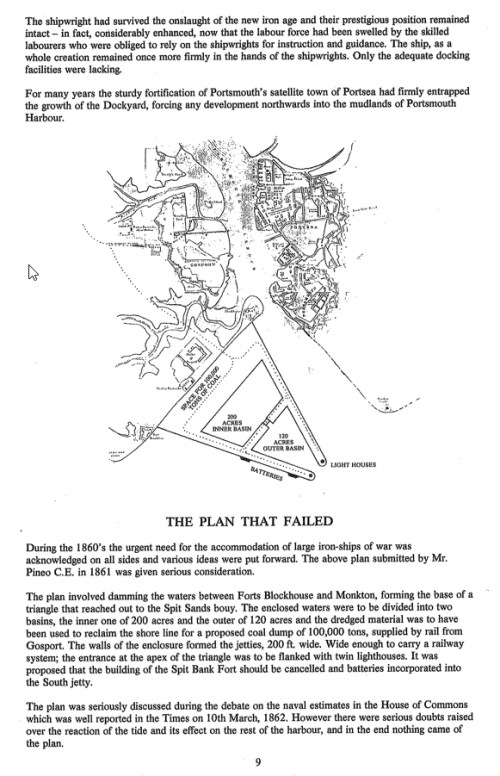
Got to wonder if a modified version of the Gosport 1861 proposal could have been done, it would at least still be close to the workforce.

Gosport 1861 whole page 225kb.png

Now put the coal store area on land and you massively reduce the amount of material needed, just need to add some dry docks.
 
WRT T83, there hasn't been a new dry dock built in Portsmouth since 1896, and as far as I can tell they haven't been expanded since WW1. If you ask me the whole place needs digging up and remodelling for a modern navy, but I don't think we have sufficient space elsewhere in the UK without decades of forwards planning.
I think I'm once again reaching slightly out of scope here, but I think it would be wise for the UK to invest into a new infrastructure project rather than in 10 or 20 years, as the work won't become less over time anyway. If the UK wants to continue fielding and constructing potent surface combatants like the T83 or even more capable vessels in the future, then investments and large scale projects with regards to the necessary infrastructure have to be made. An unspecified, large, east asian country would have probably stomped such facilities out of the ground in a decade time if they had the same necessity as the UK faces.

Issue with the RN and the T83 in particular, when we get to talks about displacement, radar suite, missile complement and ABM capabilities, is ultimately that the UK can compromise and budget on many things, but not on the Royal Navy. Arguably the only truly important branch of it's military and the only thing that will protect this island nation in any potential confrontation. Which is why in my eyes making the Type 83 anything less than a Type 055/DDG(X)/ASEV/F127/DDX/KDX style guided missile, air warfare monster, that's able to deal with several highly capable and modern ballistic and cruise missile simultaneously, would ultimately undermine the Royal Navy in the coming decades. And if such a ship needs adjustments in the infrastructure, then the cash has to be slammed on the table. Because ultimately the only thing that should always matter to the British are ships. The fact that Royal Navy is in the state in which it is today is borderline treasonous anyway.

And this is why the Type 83 is kind of the embodiment of the crossroad the UK and RN is currently at. Going all in on a highly capable, large surface combatant, with the radar and missiles to match current and future threats. Or will the penny pinchers prevail, the thing gets compromised into oblivion, will ultimately end up as slightly better T45 and then well see footage of it breaking down in the Strait of Gibraltar or something.
 
The RN appears to be transitioning its focus back towards North Atlantic ASW operations. This is exemplified through the massive planned uplift in submarine numbers from 2038 onwards, the operation of Atlantic Bastion from 2027 onwards, the introduction of various ASW-orientated unmanned surface vehicles, the introduction of the Type 26 from 2027 onwards (and the collaboration with Norway) and the collaboration with Germany on MPA operations.

How the Type 83 will fit into this return to heavy ASW will be interesting to see. Current imagery from BAE has no obvious arrangements for ASW beyond the remaining basal structure of the Type 26 acoustically-sanitised hull (much of which has already been stripped away according to BAE). A hull-mounted sonar ought to be the basic requirement, but I'm a little concerned that BAE seem less than fussed about adding one onto their design.

Given that Russian submarines are now able to launch very high speed missiles against British ships in the North Atlantic, the Type 83 is absolutely necessary in this theatre.
 
The primary aim is replacing T45 ship for ship, while increasing the capability of each ship to maintain parity. Extra numbers are needed, but like I said I don't think current budgets (2.5%) will be able to afford them.
Frankly, the budget issue needs to be solved and sooner rather than later, but (without being partisan) the current government doesn't inspire confidence.
it's actually quite difficult to justify large destroyers without using the QE escort role as the base for a class of 3-4 as I suggest.
I mean they're needed for the Amphibious Force but nobody wants to admit it. Or an actual AAW capable frigate needs procurement — which would threaten T83 so it won't happen.
 
I think I'm once again reaching slightly out of scope here, but I think it would be wise for the UK to invest into a new infrastructure project rather than in 10 or 20 years, as the work won't become less over time anyway. If the UK wants to continue fielding and constructing potent surface combatants like the T83 or even more capable vessels in the future, then investments and large scale projects with regards to the necessary infrastructure have to be made. An unspecified, large, east asian country would have probably stomped such facilities out of the ground in a decade time if they had the same necessity as the UK faces.
It's the 'best time to build a nuclear reactor is 10 years ago' problem. I'm not sure how well acquainted you are with domestic politics, but an inability to invest in infrastructure before a problem develops is a huge feature. It's even worse for the RN because they can pretend the problem doesn't exist by building smaller, less capable ships.
Issue with the RN and the T83 in particular, when we get to talks about displacement, radar suite, missile complement and ABM capabilities, is ultimately that the UK can compromise and budget on many things, but not on the Royal Navy. Arguably the only truly important branch of it's military and the only thing that will protect this island nation in any potential confrontation. Which is why in my eyes making the Type 83 anything less than a Type 055/DDG(X)/ASEV/F127/DDX/KDX style guided missile, air warfare monster, that's able to deal with several highly capable and modern ballistic and cruise missile simultaneously, would ultimately undermine the Royal Navy in the coming decades. And if such a ship needs adjustments in the infrastructure, then the cash has to be slammed on the table. Because ultimately the only thing that should always matter to the British are ships. The fact that Royal Navy is in the state in which it is today is borderline treasonous anyway.
Absolutely agree, but your range of 'monsters' is wide enough to include both FAWCS160 (which is slightly bigger than F127) and Martes' 196VLS super-cruiser, and the chance we fall below that is very small. I personally think we should be much more ambitious than Bastion Atlantic, because having spent a lot of time around the Channel and the south coast ports the UK is too reliant on global supply chains not to be involved in any naval conflicts worldwide. That's been the case since the 1700s, really, and it isn't going to change soon.
And this is why the Type 83 is kind of the embodiment of the crossroad the UK and RN is currently at. Going all in on a highly capable, large surface combatant, with the radar and missiles to match current and future threats. Or will the penny pinchers prevail, the thing gets compromised into oblivion, will ultimately end up as slightly better T45 and then well see footage of it breaking down in the Strait of Gibraltar or something.
Yup!
 
There were comments in 1855 and 1858 on the silting problems

Surveyor Sir Baldwin Wake Walker warned the Admiralty in 1855 and again in 1858 that the harbour mouth needed dredging,

as those [ships] of the largest Class could not in the present state of its Channel go out of Harbour, even in the event of a Blockade, in a condition to meet the Enemy, inasmuch as the insufficiency of Water renders it impossible for them to go out of Harbour with all their Guns, Coals, Ammunition and Stores on board.

He noted further in 1858 that the harbour itself “is so blocked up by mud that there is barely sufficient space to moor the comparatively small Force at present there,” urging annual dredging to allow the larger current ships to moor there. (Quoted by Hamilton, 2005, pp. 46-7)


Got to wonder if a modified version of the Gosport 1861 proposal could have been done, it would at least still be close to the workforce.


Now put the coal store area on land and you massively reduce the amount of material needed, just need to add some dry docks.
Bloody hell, that's big. It looks like it was an alternative to the building of Fountain Lake jetty and No2 Basin, which were constructed in 1867. I do wonder whether it would be possible for yachts to make headway against the tide along the extended channel, it's bad enough at present.
 
Strategic reality is that the UK is not going to squander it's resources on monster Battleships.

Dockyard infrastructure is going to limit things, but the hard limits still reside in the largest drydocks, which be vastly larger than any Frigate or even Cruiser. Since they were designed for Battleships.

No ship born radar is going to deliver sufficient capability against mass attacks by hypersonic missiles.
The whole emphasis of GPI has been satellites and airborne systems to give sufficient vision on the attackers at sufficient range. The missile is useless without that level of infrastructure.
 
There were comments in 1855 and 1858 on the silting problems

Surveyor Sir Baldwin Wake Walker warned the Admiralty in 1855 and again in 1858 that the harbour mouth needed dredging,

as those [ships] of the largest Class could not in the present state of its Channel go out of Harbour, even in the event of a Blockade, in a condition to meet the Enemy, inasmuch as the insufficiency of Water renders it impossible for them to go out of Harbour with all their Guns, Coals, Ammunition and Stores on board.

He noted further in 1858 that the harbour itself “is so blocked up by mud that there is barely sufficient space to moor the comparatively small Force at present there,” urging annual dredging to allow the larger current ships to moor there. (Quoted by Hamilton, 2005, pp. 46-7)


Got to wonder if a modified version of the Gosport 1861 proposal could have been done, it would at least still be close to the workforce.

View attachment 791285

Now put the coal store area on land and you massively reduce the amount of material needed, just need to add some dry docks.

Another way of reducing the cost would be to turn the 200ft wide piers into breakwaters similar to those at Portland, these look to have been built in stages between 1844 and 1872, but as you have mentioned, currents could be an issue.
 
Last edited:
Another way of reducing the cost would be to turn the 200ft wide piers into breakwaters similar to those at Portland, these look to have been built in stages between 1844 and 1872, but as you have mentioned, currents could be an issue.
If we really need new infrastructure cheaply, why not regenerate Portland itself?
It's deep enough for floating docks, would be very easy to enforce a no-drone area combined with the prison and the sea area available for expansion is huge.
Only problem is that we'd have to get the port back out of commercial hands, which might cost a bit.
 
Status
Not open for further replies.

Similar threads

Back
Top Bottom