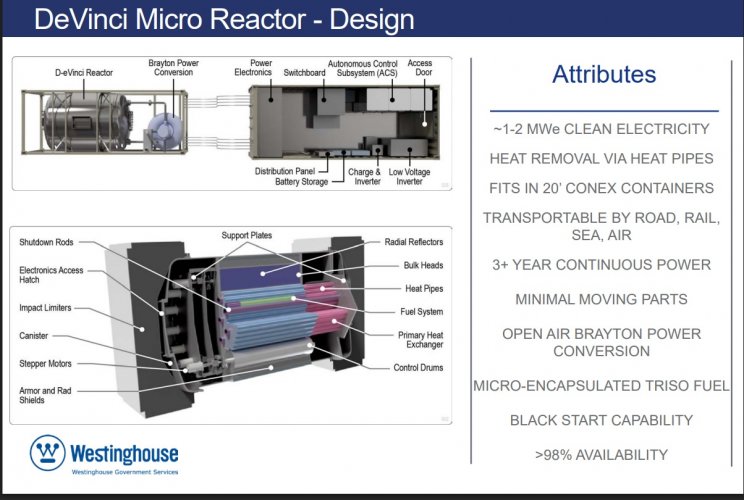
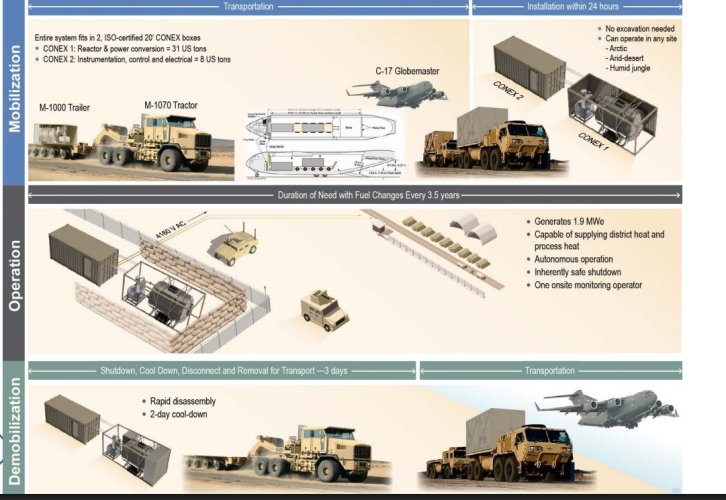
Power sources for Ships, nuclear, gas turbines, solar, etc .

Can you provide a value for the absolute efficiency of this chart?

Which propulsion unit reached 50 gl%efficiency in the 79 th?? I don't see that information anywhere in your postings.

With 20 g load yoyr dorn to 50 g of the peak efficiency acvording to your chart, that were you will end up.with system which needs to operate in a vide power range and this is in line with ship generators.

BTW Diesel generators are cheap standart systems and you can easily use 1,2 ,3 or.more of them for this kind of job, which will keep the partvload efficiency even higher (even when a minimum number of two are operating in parallel .

So smaller your system is, so earlier you need to switch tio a big gas turbine which than operates uneconomically at part load.

The given example of 51 % efficiency of the MAN and Waertsilae is also not the end of the line, when truck Diesels can even reach almost 54 %.

Most important, it's not about building the.most efficient part load system for a cruiser, but finding a practical solution which brings a giant step in energy savings. It almost doesn't matter if a system is 2 percent more efficient in a very narrow load range or not. You can choose between a standart modular solution of Dieselgenerators or a high end mega advanced hyphothetical waste heat steam system with multiple reaheating, staged feedwater preheating and so on. Gues who wins?

As said, so more sophisticated the steam system is, so more sensitive it gets to changing parameters. When the turbine exhaust temperature drops at part load, the whole multiple reheating doesn't work anymore.
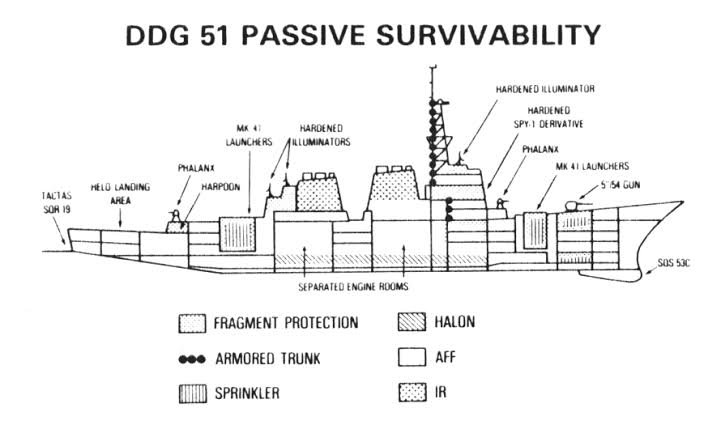
 
This only applies if you have a single gas turbine generator that is sized to the maximum power output. The Arleigh-Burke has three gas turbine generators. So it is optimised at 3 points. The gas turbines are then at peak efficiency at 3 MW, 6 MW and 9 MW of power output. This means the gas turbines will never throttle down below 50% of maximum power output. They remain fairly efficient.

Cruising on 20° Celsius day there would be just the single generator running with great efficiency.
Note, we are talking about the replacement for one of these turbines by a Diesel or alternativly a small combined power system (with the power of about one gas turbine)
 
Note, we are talking about the replacement for one of these turbines by a Diesel or alternativly a small combined power system (with the power of about one gas turbine)
That’s absolutely not what I’m talking about. If we have an AB you would replace a 20mw turbine with a 10mw combined cycled system not a 20mw system. I have stated many times that the combined cycled system needs to be sized appropriately.

Can you provide a value for the absolute efficiency of this chart?

Which propulsion unit reached 50 gl%efficiency in the 79 th?? I don't see that information anywhere in your postings.

With 20 g load yoyr dorn to 50 g of the peak efficiency acvording to your chart, that were you will end up.with system which needs to operate in a vide power range and this is in line with ship generators.

BTW Diesel generators are cheap standart systems and you can easily use 1,2 ,3 or.more of them for this kind of job, which will keep the partvload efficiency even higher (even when a minimum number of two are operating in parallel .

So smaller your system is, so earlier you need to switch tio a big gas turbine which than operates uneconomically at part load.

The given example of 51 % efficiency of the MAN and Waertsilae is also not the end of the line, when truck Diesels can even reach almost 54 %.

Most important, it's not about building the.most efficient part load system for a cruiser, but finding a practical solution which brings a giant step in energy savings. It almost doesn't matter if a system is 2 percent more efficient in a very narrow load range or not. You can choose between a standart modular solution of Dieselgenerators or a high end mega advanced hyphothetical waste heat steam system with multiple reaheating, staged feedwater preheating and so on. Gues who wins?

As said, so more sophisticated the steam system is, so more sensitive it gets to changing parameters. When the turbine exhaust temperature drops at part load, the whole multiple reheating doesn't work anymore.
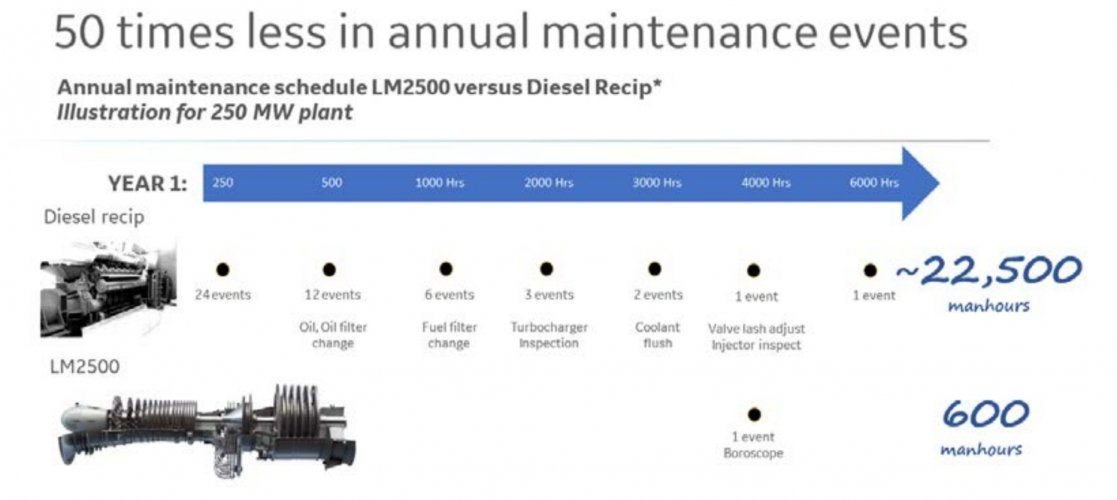
If you actually read the y axis its fractional efficiency vs efficiency at nominal rating.

How many times do I have to say this. The racer system attached to a LM2500 (70s design) for the ABs reached ~50% efficiency in testing but wasn’t installed due to likely erroneous maintenance concerns (despite having space set aside on the first few ABs), due to basing it off of ship wide steam steam heating cogeneration on other ships.

These systems are not at all exotic. Thousands of combined cycle systems have been built for non military non naval use. With commercial ships also considering combined cycle systems now

If you read the chart correctly assuming a 60% efficiency system, at 1/3 load you’re still at 50% efficiency comparable to deisels. This means you’re more efficient across nearly 100% of realistic usage scenarios with a 10mw system.

Energy savings are nice to have but don’t matter that much in peacetime. You need to size the system for wartime such that you have longer range and fewer required refueling. This means you never have a turn everything off stationary situation where you’re using less than 3mw.

You also still don’t understand there’s other standard turbines for rapid ramp loads. Until you understand this I’m not sure there much reason to keep engaging with you.
 
Last edited:
A huge reason for shifting to turbines was to minimize volume needed for power. It kept the beam width down. Diesels tend to grow a design, which is why there will not likely be an all diesel design for a 30+ knot destroyer.
 
You are comparing an experimental system with a power system which is on the market since ten years. There is no small gas/steam turbine system available and there might be reasins for it.

The realistic mean power output for such a auxillary power system will be around 25 %, which means only half of the max efficiency can be reached. A good Diesel will be still above 40 %.

Again, Dieselgenerators are available in all sizes and further modularisation by replacing one main turbine by four Diesels is easily possible. In fact most large container vessels have at least four independant gensets on board.

Again, you are right and me & the navies of the world are wrong?

Also as said, when you.make the system smaller (like half of the power of one main turbine), you reducing the benefit. You will more often run of the main turbines with 50 % part load.
 
Last edited:
A huge reason for shifting to turbines was to minimize volume needed for power. It kept the beam width down. Diesels tend to grow a design, which is why there will not likely be an all diesel design for a 30+ knot destroyer.
Combined gas/steam power is neither leight nor compact
 

Similar threads

Back
Top Bottom