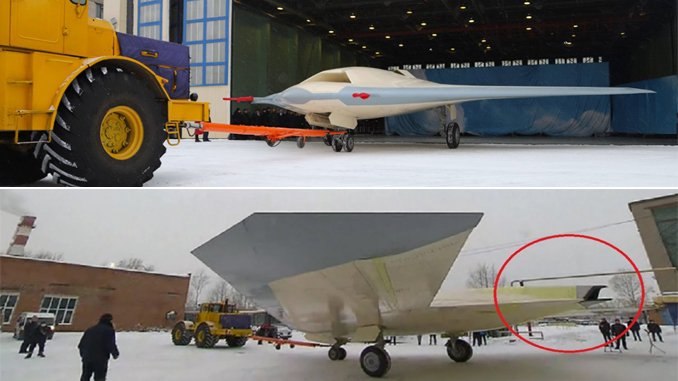
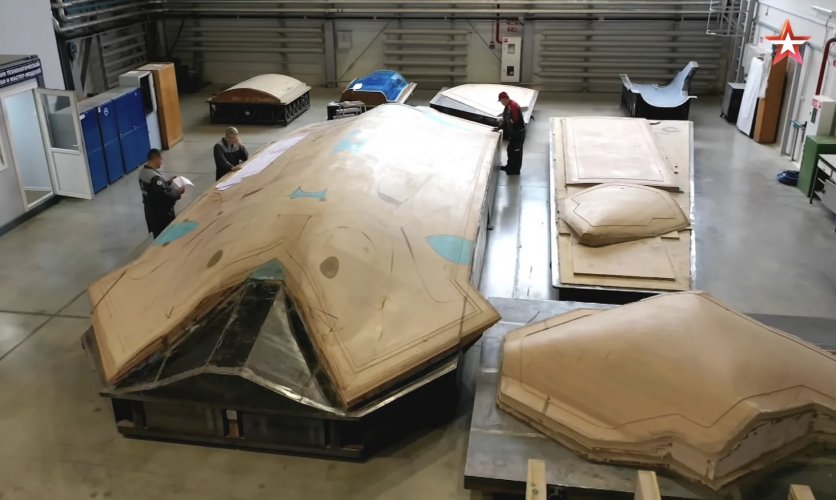
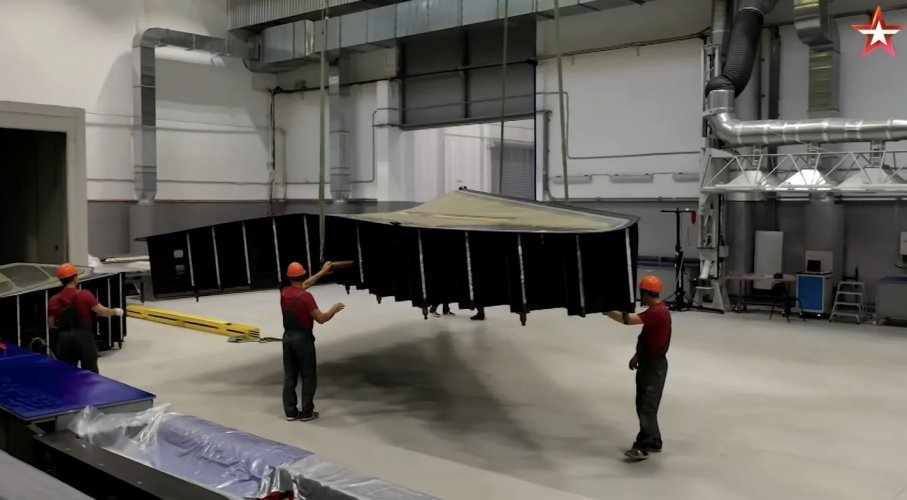
Composites absorb radar energy and allow parts to be made larger thus reducing seams which thus decrease radar cross section. If that was the case the F-35 would not mostly be made of composites nor would the F-117 or other platforms.
First, since the 1970s it has been well known that the primary method of achieving militarily significant RF signature reduction is through shaping.
This is because you can always reflect more energy away than you can possibly absorb in a material. Absorbers have physical and practical limitations. Prior to the early 1970s signature reduction techniques had focused primarily on using absorbers, with limited effectiveness.
Any given material will reflect, absorb, and pass through RF energy. This is because of their electrical properties. Conductive metals reflect nearly all of the energy and absorb and pass through very little. Dedicated absorbers like carbon loaded foams will absorb more than it will reflect, and will (usually) pass through more than it will reflect.
"Composites" are a whole category of materials that are comprised of several materials together. To say that "composites absorb radar" is very broad and non-specific. The composites used widely in aerospace applications though do not absorb any significant amount of radar, instead they pass most of it through.
Glass fiber composites (and Kevlar) are used in radomes for this very reason. Glass fiber composites have an impedance close to that of open air and pass RF energy almost entirely with very little reflection or absorption.
Carbon fiber composites on the other hand can be very different. The raw material, when tested, will appear to pass the majority of the energy through, absorb some, and reflect others. But when carbon fiber is used in practice it's a different story. The dielectric in each layer of carbon fiber can vary. The dielectric can also change with viewing aspect, direction of the fibers or layup, etc.
It is not uncommon for a component made of carbon fiber to reflect the majority of the energy from some angles, pass through from others, and absorb from others.
These are not desirable characteristics. In fact, in most modern low observable aircraft that use carbon fiber as part of the outer mold line, the entire aircraft is coated in metallic conductive material - to reflect radar homogeneously.
Second, on the issue of "seams", yes discontinuities produce diffraction and travelling waves. But these discontinuities are *electrical discontinuities* , not necessarily physical discontinuities ("seams"). As an example, having a composite panel made of carbon fiber next to one made of carbon fiber made using a different process (or made of metal, plastic, etc.) causes a discontinuities because the electrical properties of the two panels are different. This is undesirable.
Again, these discontinuities are a known and well-solved problem. As far as I am aware there is no one trying to design an aircraft to minimize "seams" as part of RCS reduction, at least not in the way you appear to be describing where they would be using composites, whatever to make larger parts so there are fewer "seams".
As far as the F-117, the F-117 used very little composite components. It was an aluminium aircraft. The use of composites was limited to the tails and leading edges.
What are you arguing composites don’t reduce RCS?
To reiterate, saying "composites" is a very broad statement. The composites used widely in the aerospace industry, by themselves, are very BAD for RCS. They allow the majority RF energy to pass through. Some composites will behave very differently at different aspect angles with regards to RCS. This is bad.
Likewise you believe discontinuities don’t increase RCS?
Discontinuities certainly do contribute to RCS, however your statements about using large composite parts to minimize physical seams between components have very little to do with reducing RCS and would (without additional treatment) increase RCS through the very electrical discontinuities that actually do contribute to RCS.
I can post scientific articles proving otherwise but I don’t believe that is your argument.
Oh no, I am very much arguing the science and engineering. I seem to be one of the only ones.
Let me guess, no amount of composites will make the Okhotnik stealthy right?
Statements like this, while ignoring physics, do not help your case.