

PabloSniper
ACCESS: Confidential
- Joined
- 16 June 2024
- Messages
- 78
- Reaction score
- 98
Greetings, everyone!
Here I am again with another “What if?”
I have to admit, I really enjoy this section of the forum.
It is 1935. The Curtiss P-36 and Seversky P-35 are leading the competition for a major fighter contract with the U.S. Army Air Corps.
Following the tragic death of Frank Scare aboard the Northrop N-3A, Northrop decides to sell the project to Vought. However, the Army Air Corps had seen some merit in the design. The N-3A was a relatively small fighter, designed around a smaller engine, which could potentially result in a lighter and less expensive aircraft to manufacture.

Then, with Wedell-Williams withdrawing from further development of its own XP-34 project, the designation becomes available.
The Northrop N-3A, now under Vought ownership, receives government support to continue development under its new designation, the XP-34.
Vought's engineers spend considerable time refining the aircraft in the wind tunnel, addressing one of the N-3A's main weaknesses: its longitudinal stability. The final design features a considerably larger rudder and revised tail surfaces, giving the aircraft much better stability and handling characteristics.
The XP-34 would retain the relatively compact dimensions of the original N-3A and would be powered by the Pratt & Whitney R-1535, the same engine used by the Hughes H-1 Racer.
Since the R-1535 was not being considered for the other major fighter designs of the competition, its use would not interfere significantly with the production of the larger engines required by the other fighters. This would also make the XP-34 an interesting candidate for export to friendly nations.
The armament would follow the standard configuration of the period: one .50-caliber machine gun and one .30-caliber machine gun.

Ultimately, just over 50 aircraft would be produced.
Interestingly, 12 P-34s would be exported to the Spanish Republicans, where they would see combat during the Spanish Civil War and eventually face some of the earliest versions of the Messerschmitt Bf 109.

The P-34 would therefore occupy an interesting position in fighter development: more advanced than the P-26, but not quite as capable as the new generation represented by the P-35 and P-36.
In this alternate history, the Northrop N-3A could have become the missing link between the early American monoplane fighters and the next generation of modern combat aircraft.
Northrop N-3A → Vought XP-34 → P-34
I hope you enjoyed this little “What if?”!
Here I am again with another “What if?”
I have to admit, I really enjoy this section of the forum.
It is 1935. The Curtiss P-36 and Seversky P-35 are leading the competition for a major fighter contract with the U.S. Army Air Corps.
Following the tragic death of Frank Scare aboard the Northrop N-3A, Northrop decides to sell the project to Vought. However, the Army Air Corps had seen some merit in the design. The N-3A was a relatively small fighter, designed around a smaller engine, which could potentially result in a lighter and less expensive aircraft to manufacture.
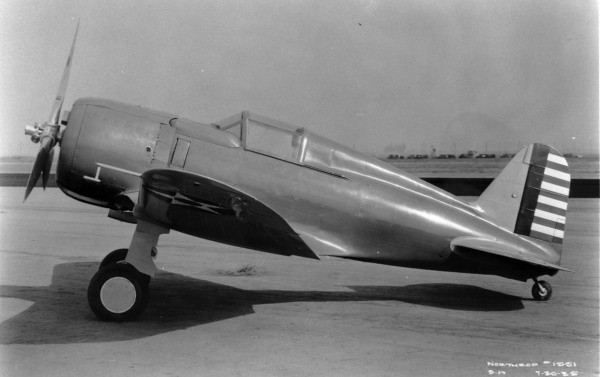
Then, with Wedell-Williams withdrawing from further development of its own XP-34 project, the designation becomes available.
The Northrop N-3A, now under Vought ownership, receives government support to continue development under its new designation, the XP-34.
Vought's engineers spend considerable time refining the aircraft in the wind tunnel, addressing one of the N-3A's main weaknesses: its longitudinal stability. The final design features a considerably larger rudder and revised tail surfaces, giving the aircraft much better stability and handling characteristics.
The XP-34 would retain the relatively compact dimensions of the original N-3A and would be powered by the Pratt & Whitney R-1535, the same engine used by the Hughes H-1 Racer.
Since the R-1535 was not being considered for the other major fighter designs of the competition, its use would not interfere significantly with the production of the larger engines required by the other fighters. This would also make the XP-34 an interesting candidate for export to friendly nations.
The armament would follow the standard configuration of the period: one .50-caliber machine gun and one .30-caliber machine gun.
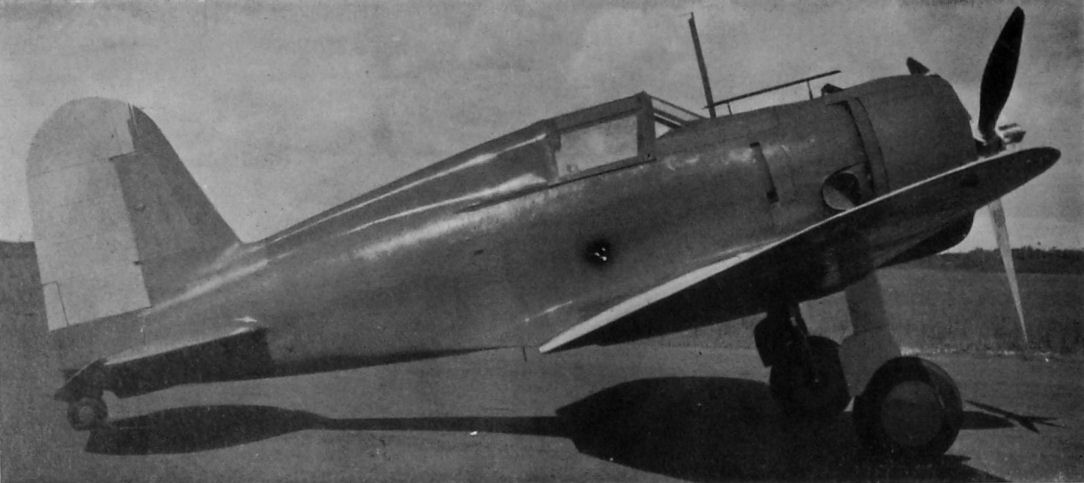
Ultimately, just over 50 aircraft would be produced.
Interestingly, 12 P-34s would be exported to the Spanish Republicans, where they would see combat during the Spanish Civil War and eventually face some of the earliest versions of the Messerschmitt Bf 109.
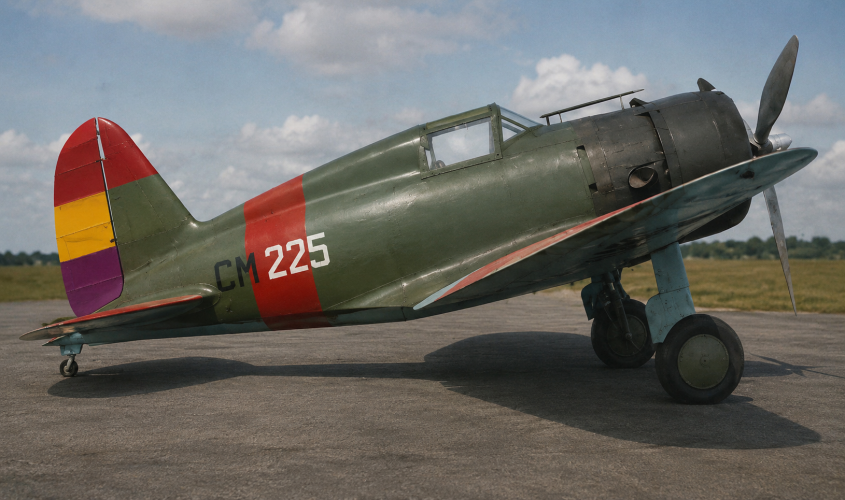
The P-34 would therefore occupy an interesting position in fighter development: more advanced than the P-26, but not quite as capable as the new generation represented by the P-35 and P-36.
In this alternate history, the Northrop N-3A could have become the missing link between the early American monoplane fighters and the next generation of modern combat aircraft.
Northrop N-3A → Vought XP-34 → P-34
I hope you enjoyed this little “What if?”!

