On March 11, 1939, USAAC issued the Circular Proposal CP-39-770, calling for a high-performance pursuit aircraft powered by one liquid-cooled engine.
North American Aviation Inc (NAA) was excluded from the competition because of its limited experience in fighter design, but in June 1939, Edward Schmued began work on the P-509 project (Single Seat Pursuit General Report December 18, 1939), a scaled-up version of the V-12 Allison V-1710 P-500. To preserve secrecy, all the design work was done as project NA-50B.
By September 1939, the US aviation industry failed to produce any single-engine fighter that would equal the European designs.
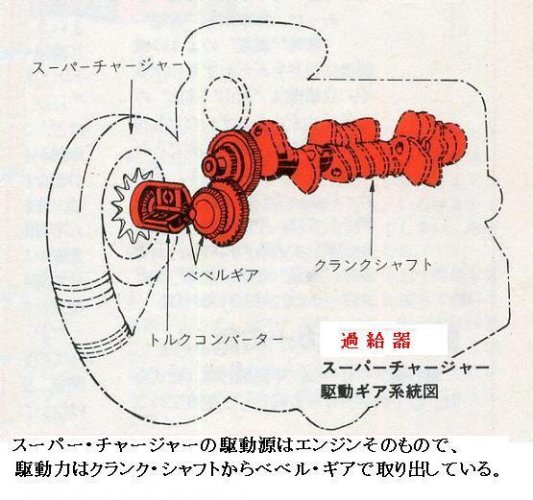
At that time, British and German fighters used liquid cooled V-12 engines fitted with two types of engine-drive superchargers: the Vulkan coupling continuously variable speed drive device that automatically regulated the rotation of the impeller by means of barometric control or two impellers spinning at different speeds selected by the pilot by means a gearbox.
The Americans preferred to develop air-cooled radial engines with exhaust-driven turbo-superchargers.
These devices, originally designed for use in heavy bombers, were larger, involved extra piping and increasing an aircraft size, weight, complexity and cost. It was not possible to install them on a conventional single-engine fighter, and their use required the design of special aircraft with enough room for turbo installation, the intercooler and the heavy tubing system.
In April 1939, the Bell X-39 prototype powerplant consisted of a mid-fuselage mounted Allison V-1710-17 and one G.E. B-5exhaust-driven turbo-supercharger, but the system proved a failure and the USAAC decided to authorize mass production without the turbo.
In 1937, Lockheed chose to build the P-38 heavy fighter, powered by two Allison V-1710 liquid-cooled engines with turbo-superchargers, the lack of space forced the firm to use a tail boom configuration to be able to install the turbos behind the Allison engines.
The General Electric exhaust-driven turbo-supercharger was a product of enormous technical and manufacturing resources. The high temperatures achieved by exhaust gas and the high rotational speeds of the turbines (26,000 rpm) required the use of austenitic stainless steel chrome-molibdenum alloys and the development of work-hardening techniques that enabled the turbo-charger to withstand stresses for centrifugal forces.
The precission machining of turbines and impellers made possible by sophisticated machine tools and surplus of raw materials.
In 1938 the U.S. Government banned the export of turbo-supercharger technology, both manufacturers offered export versions of the P-38 and P-39 fitted with engine-driven mechanical superchargers, but the Allison's poor high-altitude performance forced the British to reject these models.
The Allison Powered High Speed Pursuit NAA P-509 had originally been designed with NACA 2516-34 airfoil, Allison V-1710-35 and room for the G.E. turbo-supercharger behind the cockpit in response to the USAAC request Number P-51-643 (May 6, 1938).
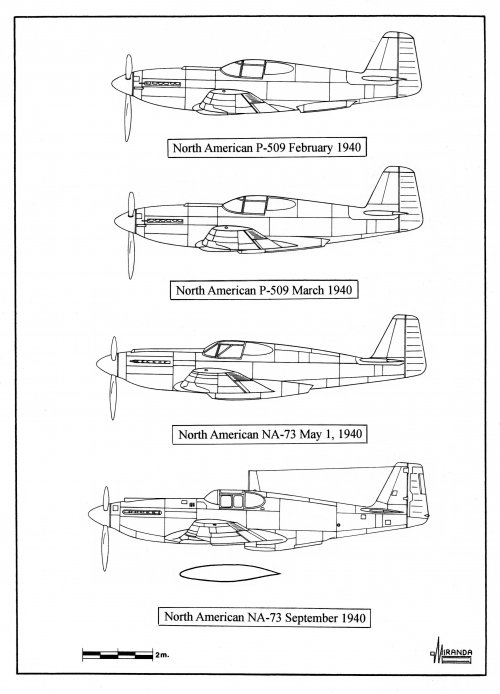
By February 1940, the chances of the project being accepted by the USAAC were so slim that on March 11 it was decided to offer it to the British as a medium-level fast fighter P-509-1 (NAA Report Nº. 1592) powered by one Allison V-1710-39/F3 with mechanical-driven supercharger. The type lacked armor and self-sealing fuel tanks and was armed with 0.5-in heavy machine guns with 200 rpg.
The power of the Allison F3 was lost rapidly above 15,000 ft. but the critical altitude would be limited to 11,000 ft.
To compensate for the shortcomings of the available Allison engine, a design team consisting of Schmued, Lee Atwood, Raymond Rice, Ed Horkey and Irv Ashkenas used two new technologies to improve the P-509's performance: a low-drag fuselage lofted mathematically using second-degree conic sections, wings with NACA 45-100 laminar-flow profile and belly-mounted radiator with Meredith Effect cowling that would eliminate about 90 per cent of the parasite drag.
The sleek design of engine cowling was performed by the race pilot Art Chester.
The SC-1592 proposal was accepted by the British Purchasing Commission with a letter contract for 320 P-509-1 "pursuit" airplanes, although the RAF hoped to use them in ground support and low-level photo-recce missions.
During the month of March, the Schmued team continued to improve the design to adapt it to the British specification as Model NA-73 with the addition of 90 US gallon Firestone leak-proof self-sealing fuel tanks, 8-mm armor plate mounted behind the pilot’s seat, armored glass windshield and modified cockpit hood.
The air-inlet scoop was moved as far forward possible. It was noted that, at high angles of attack, the airflow was cut-off starving the carburetor of air.
The max weight increased from 6,445 lb. to 6,540 lb. and the wing area was increased to 190 sq. ft. to maintain the same landing speed.
Max speed is reduced to 384 mph at 16,000 ft.
In the letter “NAA 1620 Detail Specifications for Model NA-73” from Lee Atwood to Anglo-French Purchasing Commission dated May 1, 1940
Provisions are being made for four additional British Type 303 wing-mounted machine guns with 500 rpg, with this modification the max weight was increased to 7,765 lb. and the wing area to 230 sq. ft.
On April 4, 1940, production plans were published in General Order NA-73 (SC-1050).
At this point, USAAC had already chosen the Curtiss XP-46 and had no interest in the aircraft. The export license for engines over 1,000 hp was obtained by NAA on April 25.
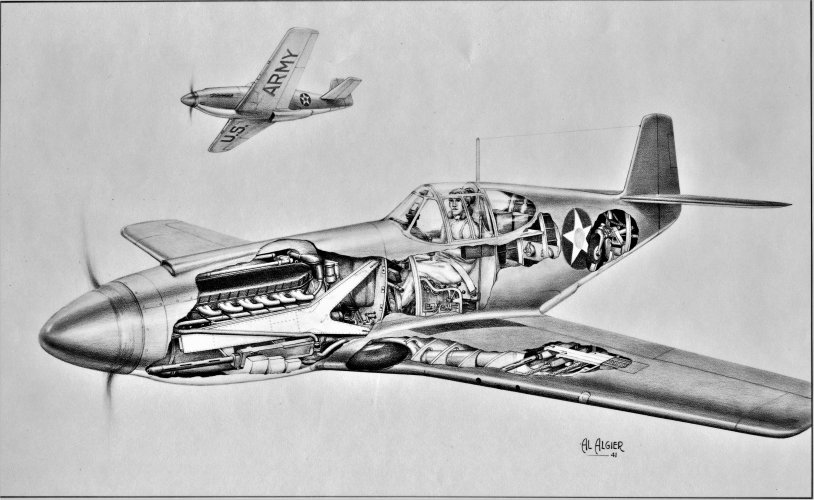
The NA-73X (NX 19998) prototype was built in127 days using Duralumin 24S alloy and NACA 45-100 High Speed/Low drag airfoil. During flight tests performed on October 26, 1940, it proved to be 56 km/h faster than the Spitfire Mk Vb, flying below 25,000 ft.
NA-73X technical data
Wingspan: 11.37 m, length: 9.83 m, height: 3.72 m, wing area: 20.97 sq. m, max weight: 3,613 kg, max speed: 618 km/h, service ceiling: 9,754 m, climb rate: 693 m/min, power plant: one 1,150 hp Allison V-1710-F3R (V-1710-39) liquid-cooled 60º V-12 engine with compression ratio 6.65:1and single-stage, single speed mechanical supercharger turning a 3-bladed Curtiss electric propeller with 3.27 meters of diameter.
North American Aviation Inc (NAA) was excluded from the competition because of its limited experience in fighter design, but in June 1939, Edward Schmued began work on the P-509 project (Single Seat Pursuit General Report December 18, 1939), a scaled-up version of the V-12 Allison V-1710 P-500. To preserve secrecy, all the design work was done as project NA-50B.
By September 1939, the US aviation industry failed to produce any single-engine fighter that would equal the European designs.
At that time, British and German fighters used liquid cooled V-12 engines fitted with two types of engine-drive superchargers: the Vulkan coupling continuously variable speed drive device that automatically regulated the rotation of the impeller by means of barometric control or two impellers spinning at different speeds selected by the pilot by means a gearbox.
The Americans preferred to develop air-cooled radial engines with exhaust-driven turbo-superchargers.
These devices, originally designed for use in heavy bombers, were larger, involved extra piping and increasing an aircraft size, weight, complexity and cost. It was not possible to install them on a conventional single-engine fighter, and their use required the design of special aircraft with enough room for turbo installation, the intercooler and the heavy tubing system.
In April 1939, the Bell X-39 prototype powerplant consisted of a mid-fuselage mounted Allison V-1710-17 and one G.E. B-5exhaust-driven turbo-supercharger, but the system proved a failure and the USAAC decided to authorize mass production without the turbo.
In 1937, Lockheed chose to build the P-38 heavy fighter, powered by two Allison V-1710 liquid-cooled engines with turbo-superchargers, the lack of space forced the firm to use a tail boom configuration to be able to install the turbos behind the Allison engines.
The General Electric exhaust-driven turbo-supercharger was a product of enormous technical and manufacturing resources. The high temperatures achieved by exhaust gas and the high rotational speeds of the turbines (26,000 rpm) required the use of austenitic stainless steel chrome-molibdenum alloys and the development of work-hardening techniques that enabled the turbo-charger to withstand stresses for centrifugal forces.
The precission machining of turbines and impellers made possible by sophisticated machine tools and surplus of raw materials.
In 1938 the U.S. Government banned the export of turbo-supercharger technology, both manufacturers offered export versions of the P-38 and P-39 fitted with engine-driven mechanical superchargers, but the Allison's poor high-altitude performance forced the British to reject these models.
The Allison Powered High Speed Pursuit NAA P-509 had originally been designed with NACA 2516-34 airfoil, Allison V-1710-35 and room for the G.E. turbo-supercharger behind the cockpit in response to the USAAC request Number P-51-643 (May 6, 1938).
By February 1940, the chances of the project being accepted by the USAAC were so slim that on March 11 it was decided to offer it to the British as a medium-level fast fighter P-509-1 (NAA Report Nº. 1592) powered by one Allison V-1710-39/F3 with mechanical-driven supercharger. The type lacked armor and self-sealing fuel tanks and was armed with 0.5-in heavy machine guns with 200 rpg.
The power of the Allison F3 was lost rapidly above 15,000 ft. but the critical altitude would be limited to 11,000 ft.
To compensate for the shortcomings of the available Allison engine, a design team consisting of Schmued, Lee Atwood, Raymond Rice, Ed Horkey and Irv Ashkenas used two new technologies to improve the P-509's performance: a low-drag fuselage lofted mathematically using second-degree conic sections, wings with NACA 45-100 laminar-flow profile and belly-mounted radiator with Meredith Effect cowling that would eliminate about 90 per cent of the parasite drag.
The sleek design of engine cowling was performed by the race pilot Art Chester.
The SC-1592 proposal was accepted by the British Purchasing Commission with a letter contract for 320 P-509-1 "pursuit" airplanes, although the RAF hoped to use them in ground support and low-level photo-recce missions.
During the month of March, the Schmued team continued to improve the design to adapt it to the British specification as Model NA-73 with the addition of 90 US gallon Firestone leak-proof self-sealing fuel tanks, 8-mm armor plate mounted behind the pilot’s seat, armored glass windshield and modified cockpit hood.
The air-inlet scoop was moved as far forward possible. It was noted that, at high angles of attack, the airflow was cut-off starving the carburetor of air.
The max weight increased from 6,445 lb. to 6,540 lb. and the wing area was increased to 190 sq. ft. to maintain the same landing speed.
Max speed is reduced to 384 mph at 16,000 ft.
In the letter “NAA 1620 Detail Specifications for Model NA-73” from Lee Atwood to Anglo-French Purchasing Commission dated May 1, 1940
Provisions are being made for four additional British Type 303 wing-mounted machine guns with 500 rpg, with this modification the max weight was increased to 7,765 lb. and the wing area to 230 sq. ft.
On April 4, 1940, production plans were published in General Order NA-73 (SC-1050).
At this point, USAAC had already chosen the Curtiss XP-46 and had no interest in the aircraft. The export license for engines over 1,000 hp was obtained by NAA on April 25.
The NA-73X (NX 19998) prototype was built in127 days using Duralumin 24S alloy and NACA 45-100 High Speed/Low drag airfoil. During flight tests performed on October 26, 1940, it proved to be 56 km/h faster than the Spitfire Mk Vb, flying below 25,000 ft.
NA-73X technical data
Wingspan: 11.37 m, length: 9.83 m, height: 3.72 m, wing area: 20.97 sq. m, max weight: 3,613 kg, max speed: 618 km/h, service ceiling: 9,754 m, climb rate: 693 m/min, power plant: one 1,150 hp Allison V-1710-F3R (V-1710-39) liquid-cooled 60º V-12 engine with compression ratio 6.65:1and single-stage, single speed mechanical supercharger turning a 3-bladed Curtiss electric propeller with 3.27 meters of diameter.