Do we have any info on this radar? Besides what's on Wikipedia that is. Honestly the front of the mig-1.44 reminds me strongly of the su-34 but I highly doubt this was a variatent of the v-004 radar (although maby the v-004 was a development of the N014?)

You are using an out of date browser. It may not display this or other websites correctly.
You should upgrade or use an alternative browser.
You should upgrade or use an alternative browser.
NIIR Sh109 / N014 / N015 radar system for Mikoyan 1.42
- Thread starter Cjc
- Start date

- Joined
- 27 December 2005
- Messages
- 19,230
- Reaction score
- 35,695
The only published info I am aware of was that it was a passive phased array radar and supposed to track 40 targets with a range up to 420km. The antenna was scanned electronically and mechanically to increase angular coverage. Some elements or techniques from it were applied to the N011M Bars.
The MiG 1.44 was not designed to carry a radar and its nose shape is irrelevant.
The MiG 1.44 was not designed to carry a radar and its nose shape is irrelevant.

,
Last edited:
- Joined
- 11 February 2010
- Messages
- 1,719
- Reaction score
- 3,180
Wow, if that image is right.. it's basically the size of Su-24's Orion Radar.

F-2
ACCESS: Top Secret
- Joined
- 22 May 2020
- Messages
- 1,189
- Reaction score
- 2,576
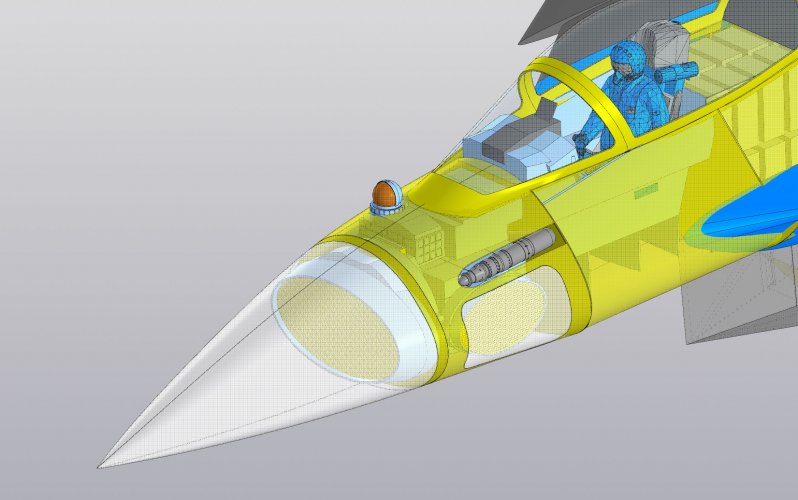
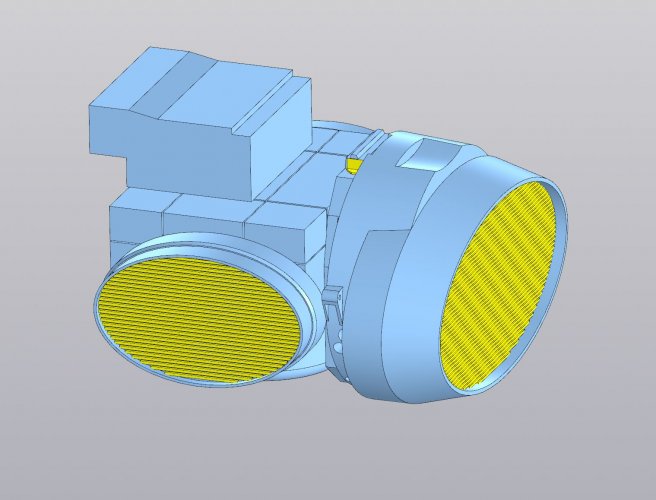
Paralay is that Mirror.jpg something you made or did you manage to get more cad models?dimensions of the main antenna 1500 mm x 800 mm dimensions of the side antennas 740 mm x 440 mm
View attachment 683521
,
Last edited:
F-2
ACCESS: Top Secret
- Joined
- 22 May 2020
- Messages
- 1,189
- Reaction score
- 2,576
https://military.wikireading.ru/h9Xck0jtog
http://www.take-off.ru/pdf/03_2007.pdf
http://www.take-off.ru/pdf/03_2007.pdf
AFAR in Russia: past and future
For the first time, the issue of creating a radar with AFAR in our country was on the agenda back in the 80s, when in accordance with the approved in 1983. The target comprehensive program for the creation of fighters of the 90s. Design Bureau named after A.I. Mikoyan has started designing a promising fifth-generation fighter - the MFI Multifunctional Fighter (project "1.42"). The chief developer of the aircraft's armament control system was the Research Institute of Radio Construction (NIIR), on the basis of which today's corporation "Fazotron-NIIR" was later formed. Work on the MFI was carried out taking into account the information received about the creation of a promising fifth-generation ATF fighter in the United States (now known as F-22), which from the very beginning it was decided to equip with an AFAR radar. Therefore, the possibility of creating a radar system with AFAR was considered for the IFI. This idea was supported by the chief developer of the radar complex H014 for the MFI - NIIR. However, the lack of experience and the necessary technological base for the creation of AFAR in the Soviet Union in those years forced the abandonment of this idea - and the design of H014 was already carried out in the version with three passive FARs (central and two side), which allowed to provide a view of the airspace in the front hemisphere in the range of angles along the azimuth of ±130°. While maintaining the leading role of the Research Institute in the creation of the entire H014 radar, the development of antenna systems with passive FARs for it was entrusted to the Research Institute named after V.V. Tikhomirov, who had already created and handed over by that time the country's first "aircraft" radar with Far "Zaslon" for MiG-31 interceptors.
Simultaneously with participation in the work on the N014 radar, the National Research Institute launched work on a promising radar with AFAR for the design bureau named after A.I. Mikoyan in the late 80s of a unique long-speed interceptor. Unfortunately, neither work was completed - they were prevented by the collapse of the Soviet Union and the corresponding change in the policy in the field of creation and procurement of weapons.
Viktor35440
ACCESS: Restricted
- Joined
- 26 March 2022
- Messages
- 4
- Reaction score
- 1
What radar system is the MIG1.42 MFI actually going to adopt? When researching information about its radar, various sources present discrepancies. One claim states that the N014 radar is a PESA system, which was initially intended for the Su-33UB, but the Su-33UB never actually equipped it. Another claim says that the MFI will use an advanced AESA radar with a detection range of up to 300–400 km.
- Joined
- 27 December 2005
- Messages
- 19,230
- Reaction score
- 35,695
It's never going to use anything, due to being cancelled.
N014 was planned as a PESA system, as far as I know.
N014 was planned as a PESA system, as far as I know.

- Joined
- 1 April 2006
- Messages
- 12,286
- Reaction score
- 15,112
Was initially planned as AESA, but ended as three array PESA due to lack of engineering experience at the time (see page 34)
http://www.take-off.ru/pdf/03_2007.pdf
And PESA not always the worse way as history shows.
http://www.take-off.ru/pdf/03_2007.pdf
And PESA not always the worse way as history shows.
- Joined
- 27 December 2005
- Messages
- 19,230
- Reaction score
- 35,695
Was initially planned as AESA, but ended as three array PESA due to lack of engineering experience at the time (see page 34)
http://www.take-off.ru/pdf/03_2007.pdf
And PESA not always the worse way as history shows.
It would presumably have been something close to Bars, with a fixed forward antenna and two additional side antennas.The development of an AESA radar first came up in our country back in the 1980s, when, in accordance with the Targeted Integrated Program for the Development of Fighter Aircraft in the 1990s, approved in 1983, the Mikoyan Design Bureau began designing an advanced fifth-generation fighter—the MFI Multifunctional Fighter (Project 1.42).
The lead developer of the aircraft's weapons control radar system was designated the Radio Engineering Research Institute (NIIR), which later became the foundation for today's Fazotron-NIIR Corporation. Work on the MFI was conducted in response to information received about the development of the ATF (now known as the F-22) in the United States, which was initially planned to be equipped with an AESA radar. Therefore, the possibility of developing an AESA radar system for the MFI was also considered. This idea was supported by the lead developer of the N014 radar system for the Moscow Institute of Physics (MFI), NIIR. However, the lack of experience and the necessary technological base for developing an APAA in the Soviet Union at that time forced the idea to be abandoned. The N014 was designed with three passive phased arrays (a central one and two side ones), which provided forward airspace coverage in the forward hemisphere over an azimuth range of ±130°. While NIIR retained its leadership role in developing the entire N014 radar, the development of antenna systems with passive phased arrays for it was entrusted to the V.V. Tikhomirov Research Institute of Instrument Engineering (NIIP), which had already developed and commissioned the country's first "aircraft" phased array radar, the "Zaslon" (Barrier) for MiG-31 interceptors. While participating in the N014 radar project, NIIP began work on a promising AESA radar for a unique long-range, high-speed interceptor designed at the Mikoyan Design Bureau in the late 1980s. Unfortunately, neither project was completed, hampered by the collapse of the Soviet Union and the corresponding change in policy in the field of weapons development and procurement.
F-2
ACCESS: Top Secret
- Joined
- 22 May 2020
- Messages
- 1,189
- Reaction score
- 2,576
Isn’t bars a kind of miniaturized version of n014?It would presumably have been something close to Bars, with a fixed forward antenna and two additional side antennas.
Edit: or the antenna I should say.
Last edited:
Scorpion82
ACCESS: Secret
- Joined
- 20 May 2006
- Messages
- 407
- Reaction score
- 877
Isn’t bars a kind of miniaturized version of n014?
Edit: or the antenna I should say.
Minaturized would imply that the antenna on the N014 was supposed to be bigger, but is that the case? Not sure whether there is even a direct relationship between the two, considering that the N014 was in parallel developed to the N011 for the Su-27M. Some experience gained from the N014 may have been applied to the N011M, but it was certainly not a scaled version of it.
F-2
ACCESS: Top Secret
- Joined
- 22 May 2020
- Messages
- 1,189
- Reaction score
- 2,576
Not sure, I thought @paralay said something to the effect it was very large but I don’t know if it was. I know N011 was made when N014 was on the drawing board and N011m was test flow around 1996 I think? The timeline might work. @overscan (PaulMM) wrote thisMinaturized would imply that the antenna on the N014 was supposed to be bigger, but is that the case? Not sure whether there is even a direct relationship between the two, considering that the N014 was in parallel developed to the N011 for the Su-27M. Some experience gained from the N014 may have been applied to the N011M, but it was certainly not a scaled version of it.
Maybe I’m reading too much into elements of techniquesN014
OKB: Tikhomirov NIIP
Associated with the Mikoyan 1-42/1-44 project, the passive phased array N014 radar project from NIIP was abandoned. Supposed to track 40 targets. Range up to 420km. Used in conjunction with the N012 tail radar. The antenna was scanned electronically and mechanically to increase angular coverage.
Some elements or techniques from it were applied to the N011M.
NIIP have experimented with bistatic radar techniques, which were probably intended for N014.
- Joined
- 27 December 2005
- Messages
- 19,230
- Reaction score
- 35,695
"Some elements or techniques" is not anything like "miniaturized version". The suggestion is that the Bars changes from N011 to N011M derive in some way from technology developed for N014. I don't recall where I got that from, however.
tester_2023
ACCESS: Restricted
- Joined
- 2 September 2023
- Messages
- 2
- Reaction score
- 2
BTW, what is the current status of Fazotron? Do they even exist any more?
N014
Large antenna area 0.72 m2
Side antenna area 0.3 m2
Large antenna area 0.72 m2
Side antenna area 0.3 m2
- Joined
- 27 December 2005
- Messages
- 19,230
- Reaction score
- 35,695
Piotr Butowski, Su-57 FELON (2021)The main task of the MFI was to gain air superiority in combat at long and medium distances,
guiding missiles to several distanced air targets simultaneously. In close air combat, the fighter was
to engage targets in any position, including at the rear. Consequently, the MFI was to receive the
Phazotron-NIIR Sh109 radar system enabling all-round coverage that included triple-antenna N014
electronically scanned phased array radar in the nose, as well as rearward-facing N015 radar in the tail.
A highly automated fire-control system was to join, apart from radar, and was linked to the electro-
optical sight and a helmet-mounted sight and display. Also, navigation, communications/data exchange
and electronic warfare systems were to be integrated with the fire-control system.
The new generation of air-to-air weapons designed for the MFI included the long-range K-37M,
medium-range K-77M and close air combat K-30 missiles; the typical load for air combat consisted of
four K-77M and four K-30 missiles. The aircraft’s radar was also to enable operations against ground
targets and the use of all types of Russian air-to-ground tactical guided weapons.
- Joined
- 27 December 2005
- Messages
- 19,230
- Reaction score
- 35,695
Merged with existing topic.
Scorpion82
ACCESS: Secret
- Joined
- 20 May 2006
- Messages
- 407
- Reaction score
- 877
Piotr Butowski, Su-57 FELON (2021)
I somehow doubt that the MFI would have been armed with K-30, K-37M. These missile designs are much newer. Original K-37 yes. K-77M maybe, I think the designation has been re-used, but the original K-77 was pretty muh concurrent to the MFI.
- Joined
- 27 December 2005
- Messages
- 19,230
- Reaction score
- 35,695
K-30 dates back at least to the mid 1990s I believe, possibly earlier. K-37 is a 1980s design, first flight tests in 1989, and the K-77 was likewise a 1980s design entering flight tests in the early 90s, so of course improved versions would have been featured on the MFI in late 90s / early 2000s.
Everything stopped due to the end of the Soviet Union. K-30 has been resurrected as Izdeliye 300M now, but the original design is 30+ years old.
Everything stopped due to the end of the Soviet Union. K-30 has been resurrected as Izdeliye 300M now, but the original design is 30+ years old.

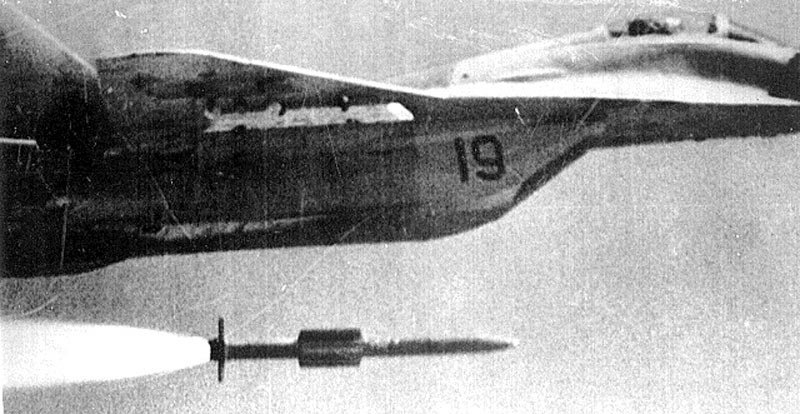
and the K-77 was likewise a 1980s design entering flight tests in the early 90s,
K-77's as the test version of the R-77/ RVV-AYe (or Izdeliye 170) flight test began during 1983.
''Первые восемь баллистических пусков ракет К-77 проведены в 1983 г. Начиная с мая 1984 г. ракета К-77 проходила летные испытания с носителя МиГ-29 (серийный №09-21 - 09-19 по др.данным) - до конца 1984 г. выполнено 18 пусков ракет без системы наведения. В декабре 1984 г. к программе испытаний присоединились МиГ-29 серийные №№09-23 и 09-70, а в июне и августе 1985 г. соответственно МиГ-29 серийные №№09-25 и 09-71. В 1984 г. начато серийное производство ракеты К-77 на киевском заводе им.Артема (Украина, производство велось до распада СССР). Государственные испытания с пусками по мишеням Ла-17 и беспилотным самолетам-мишеням Ту-16 и МиГ-21 проводились с самолетами МиГ-29 (№09-21, 09-70 и 09-71) в период с 1988 г. по 1991 г. В 1992-1993 г.г. ракета проходит войсковые испытания. Ракета К-77 официально принята на вооружение 23 февраля 1994 г. Серийное производство ракет К-77 для нужд ВВС в России не велось, а серийное производство ракет К-77 для поставок на экспорт велось опытным производством ГосМКБ "Вымпел".''
Source: http://militaryrussia.ru/blog/topic-105.html
''The first eight ballistic launches of K-77 missiles were conducted in 1983. Beginning in May 1984, the K-77 missile underwent flight tests from the MiG-29 carrier (serial numbers 09-21 - 09-19 according to other sources) - by the end of 1984, 18 missile launches without a guidance system were carried out.
In December 1984, MiG-29 serial numbers 09-23 and 09-70 joined the test program, and in June and August 1985, MiG-29 serial numbers 09-25 and 09-71, respectively. In 1984, serial production of the K-77 missile began at the Artem plant in Kiev (Ukraine, production continued until the collapse of the USSR).
State tests with launches at La-17 targets and Tu-16 and MiG-21 unmanned target aircraft were conducted with MiG-29 aircraft (No. 09-21, 09-70 and 09-71) from 1988 to 1991. In 1992-1993, the missile underwent military trials. The K-77 missile was officially accepted into service on February 23, 1994. Serial production of the K-77 missiles for the needs of the Air Force in Russia was not carried out, and serial production of K-77 missiles for export deliveries was carried out by the pilot production of the GosMKB Vympel.''
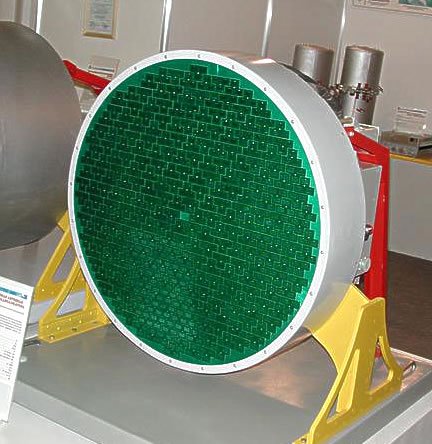
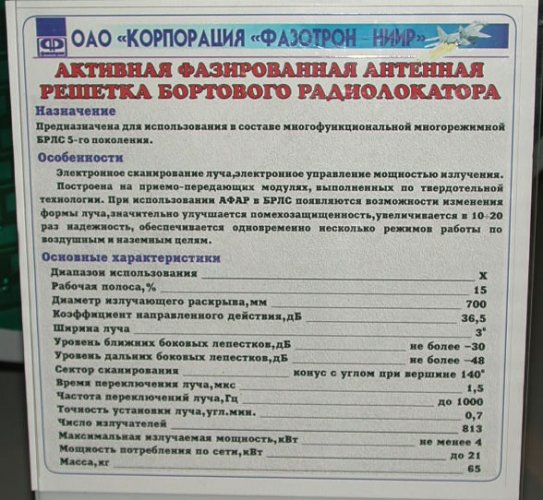
About the radars N014 or N015 ,there was one AESA which was presented for the first time during the MAKS 2001. Even today there is mystery about this radar.
Similar threads
-
 Soviet / Russian Radar Designation Systems
- Started by overscan (PaulMM)
- Replies: 1
-
Ekco Red Steer radar
- Started by overscan (PaulMM)
- Replies: 0
-

-
Russian-Iranian Engine deal for Azkarakhsh and Shafaq in pipeline
- Started by overscan (PaulMM)
- Replies: 6
-
NVLAD by Joint Soviet Fighter
- Started by Joint Soviet Fighter
- Replies: 5