NGAL - An insane exploration of a tacit blue stealthy air lifter

Reddington777

ACCESS: Top Secret
Joined
23 March 2025
Messages
851
Reaction score
2,821
I'm afraid I've designed a bathtub. I don't know if it'll fly but if anyone's bathtub business is looking for a part time designer, you can use this.

This is less a show of work and more an invitation to amend the design.

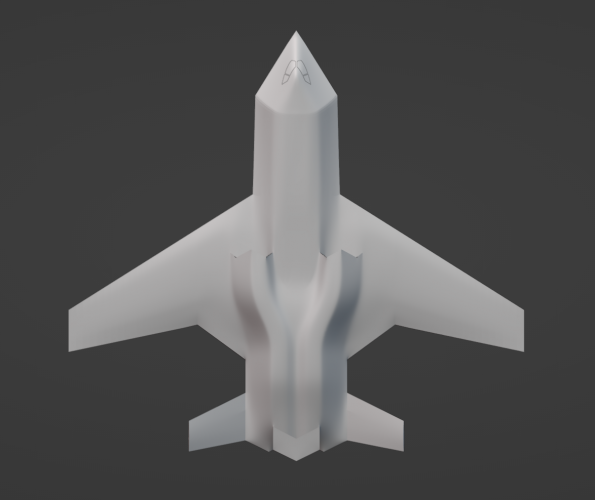
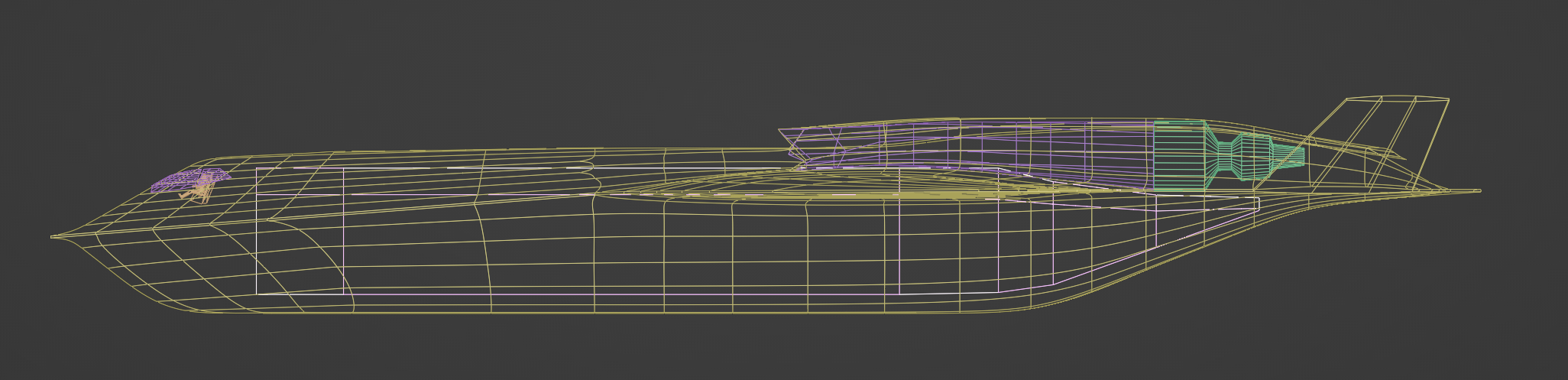
This is a concept derived from a conversation had in the Next-Generation AirLift Aircraft (NGAL) thread regarding the exploration of a stealthy airlifter based off tacit blue. I was initially aiming for a C-130 sized tactical air lifter, but found that it was very hard to find the right engines that could support a similar take off weight and still have the dimensions of the aircraft roughly the same size while hiding the intakes. So gradually, the concept was revised upwards to that of a C-17 sized aircraft.

I started off with a pretty basic Tacit Blue shape:

1782535277997.png 1782535298652.png

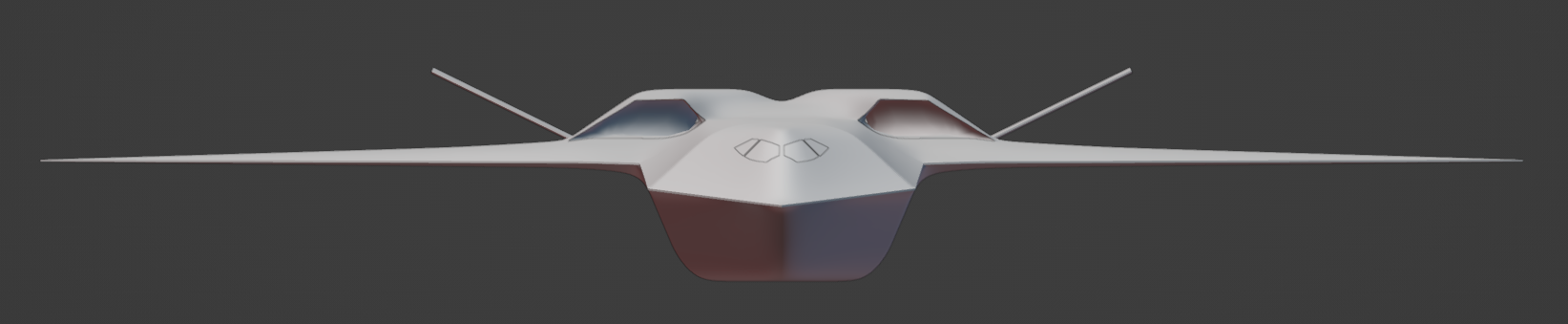
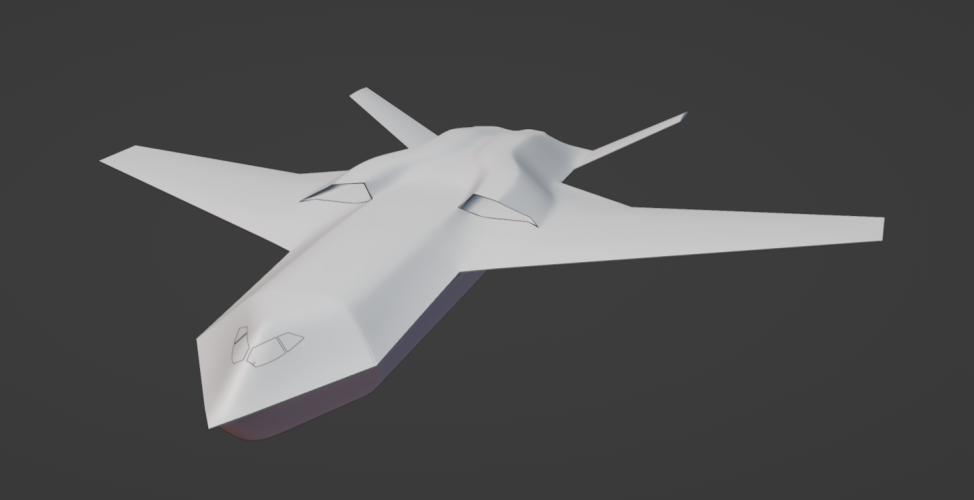
Tacit blue has a shallow underside and isn't really conducive to driving vehicles up the ramp. By itself, I couldn't think of a way to make the tail section work. So I raised the chine so that the area atop the chine is shallow and the area below it is much more voluminous:

1782535647352.png
1782536915060.png
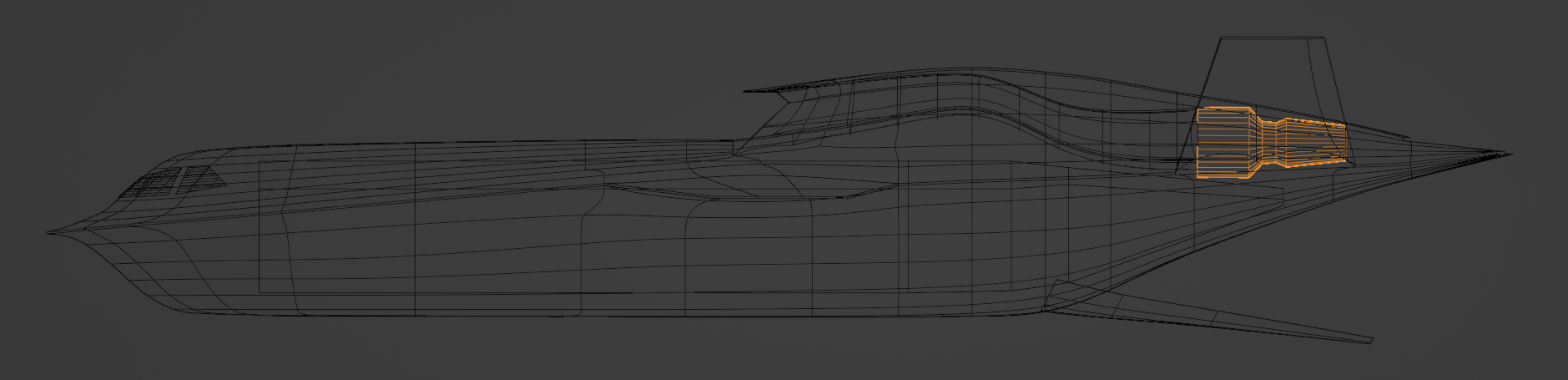
I figured due to the limited space rear of the aircraft, I'd try to go for a three engine design that would have the combined thrust greater than or equal to the C-17's four existing F117 engines. I went with something the size of the PW-4000-94. I don't have a whole lot of understand with regards to engine stuff and even less for non-afterburning turbofans, so my only concern here was getting enough thrust. Three of these should put me around 168k thrust. I gave these engines a 9.5 ft diameter.

1782536258095.png

Aircraft dimensions:

length: 174ft
wingspan: 226ft
height (no gears): 37.8ft.
height with gears: ~ 40 ft.

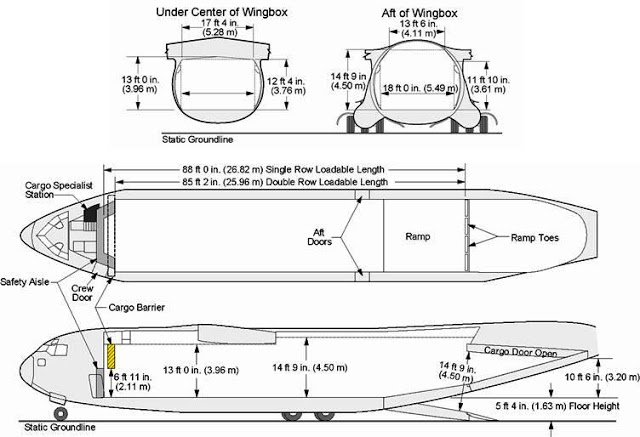
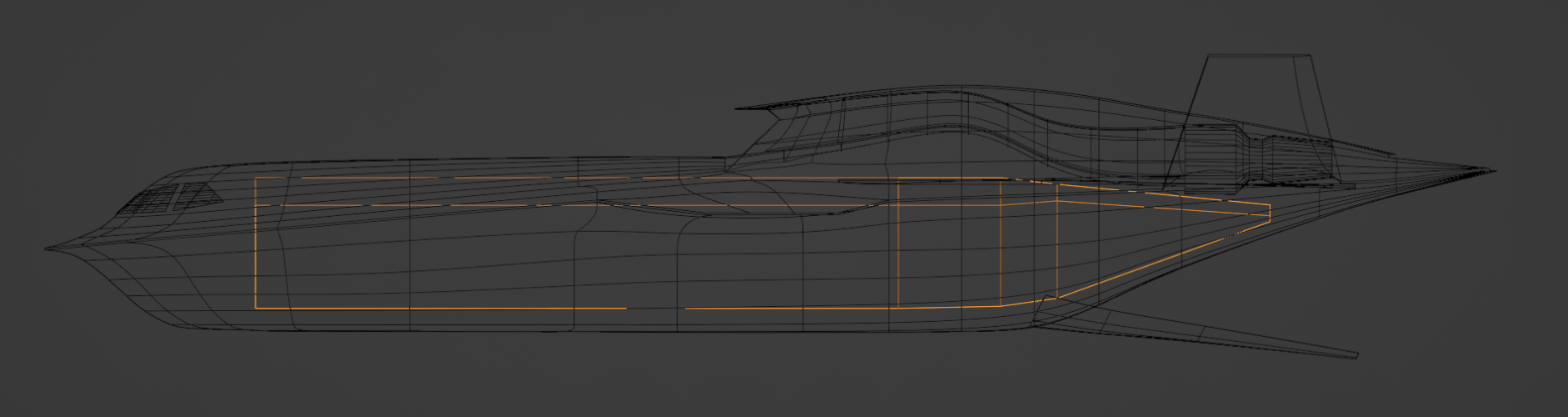
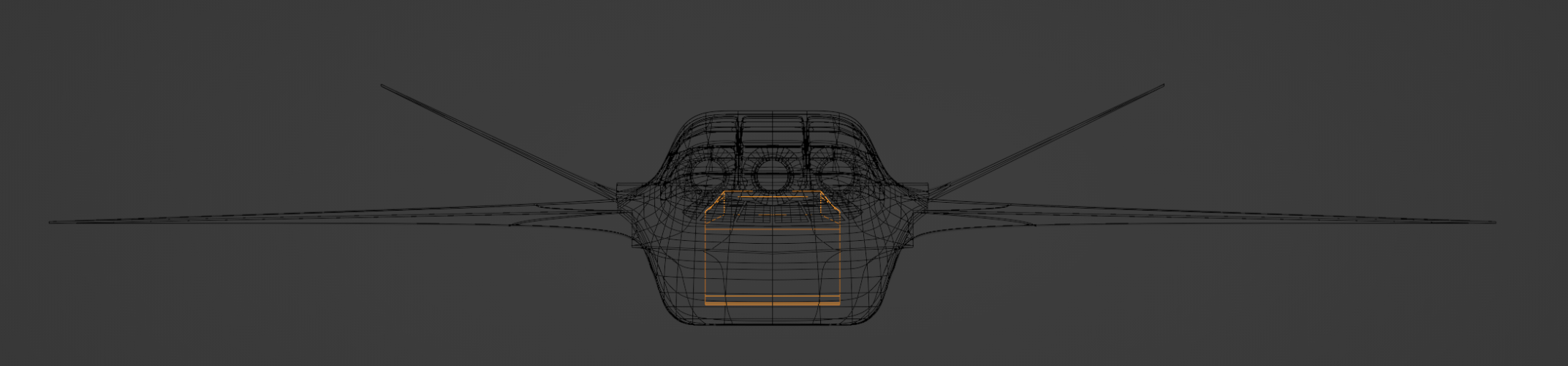
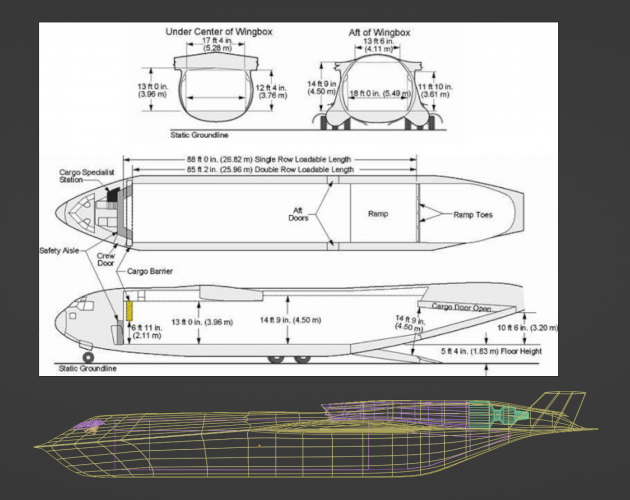
The fuselage accommodates an internal cargo storage roughly 138ft (length) x 21ft (width) x 17.7ft (height). I used the following as reference to the C-17's cargo hold:
c-17-cargo-hold-dimensions.jpg 1782536481160.png
1782536498684.png

The intake consists of a single ventral intake with splitters. As you can see, the intake hood was deliberately raised into a bump to accommodate a hypothetical ducting that would hide most of the engine face. However - this is purely just conjecture with a ton of hand waving carrying the weight here. 1782536859746.png
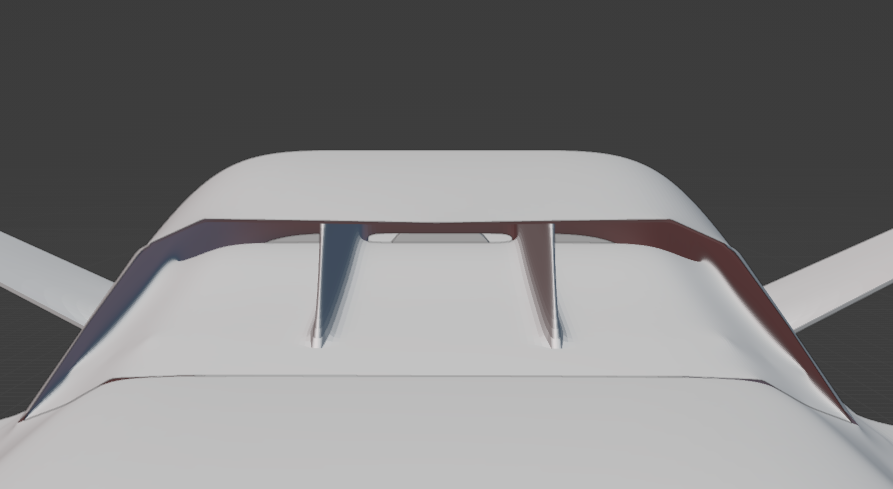
More screencaps next to the YFQ-42:
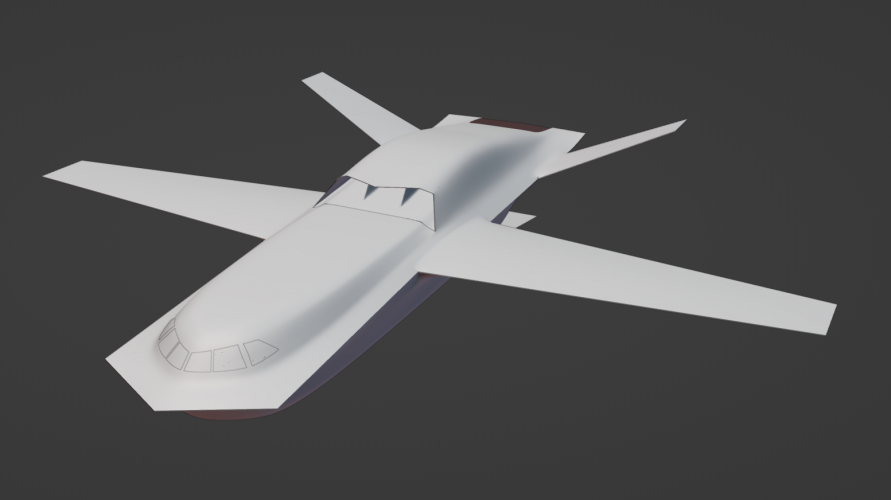
1782536967547.png 1782536935882.png
 

Attachments

  • 1782534939302.png
    1782534939302.png
    240.3 KB · Views: 12
  • 1782536842591.png
    1782536842591.png
    207.8 KB · Views: 10
  • 1782536669427.png
    1782536669427.png
    219.4 KB · Views: 10
1. If anyone has suggestions for engines, do let me know. They can be either for a C-130 sized tactical air lifter or a C-17 sized airlifter.
2. Ducting arrangements would be welcome as well. Splitter plates aren't great. If I can get it down to having two engines, maybe there's better ways of handling things.
3. I'd particularly appreciate requirements for the cargo bay. While the C-17 diagram helps, it doesn't give me a lot of info in terms of where I can squeeze and where I can't. Given enough wiggle room, I could probably make the fuselage smaller without touching the cargo hold much. Once I can nail down the cargo hold, then I'll know how much space I have left for the landing gears.
 
keep in mind that TACIT BLUE was a surveillance aircraft. It was optimized to have a low RCS from the sides - surveillance aircraft are designed to circle or orbit and face threats from the side more than front or back.

What threat sectors would a (non SOF) transport prioritize?
 
What threat sectors would a (non SOF) transport prioritize?
Not sure what profiles transports usually fly. If I had to guess, theyd fly lower altitudes (10 to 25k ft) and they'd have to be worried about stuff flying higher and in the front sector?

If thats the case, then probably need higher wing sweep and chine sweep.

If they fly any higher, then im guessing broadly speaking the front and rear sectors.

Speaking of which, I just realized my nose chine isnt in line with the wing sweep so...Ill probably make that a little more forward sector friendly.
 
Not sure what profiles transports usually fly. If I had to guess, theyd fly lower altitudes (10 to 25k ft) and they'd have to be worried about stuff flying higher and in the front sector?

If thats the case, then probably need higher wing sweep and chine sweep.

If they fly any higher, then im guessing broadly speaking the front and rear sectors.

Speaking of which, I just realized my nose chine isnt in line with the wing sweep so...Ill probably make that a little more forward sector friendly.

Me, I can’t see the logic in a VLO airlifter or tanker for a number of reasons.

But for the threats you’ve described look at cruise missiles for ideas.
 
1. If anyone has suggestions for engines, do let me know. They can be either for a C-130 sized tactical air lifter or a C-17 sized airlifter.
2. Ducting arrangements would be welcome as well. Splitter plates aren't great. If I can get it down to having two engines, maybe there's better ways of handling things.
3. I'd particularly appreciate requirements for the cargo bay. While the C-17 diagram helps, it doesn't give me a lot of info in terms of where I can squeeze and where I can't. Given enough wiggle room, I could probably make the fuselage smaller without touching the cargo hold much. Once I can nail down the cargo hold, then I'll know how much space I have left for the landing gears.
1. depends on weight but preferable 800klb total
3. Today it's:
millitary 463L AF pallet: 2 x 7 + 2 x 2 on ramp
17klb 20 ft ISO containers: 2 x 3 + 2 x 1 on ramp;
(it would be nice if one more row of quadcon/tricon/conex containers could be added)
Not sure what profiles transports usually fly. If I had to guess, theyd fly lower altitudes (10 to 25k ft) and they'd have to be worried about stuff flying higher and in the front sector?
same as civil standard altitiude
 
Oh, you did a much better job on this than my mental model!

Tactical, same- why would you bother with LO/VLO?
Because experience has shown that airlifters and tankers are having to operate right at the ragged edge of the enemy IADS and are catching rounds.


For SOF, sure but for very well defined threats and only a very surgical number of aircraft.
The only way for SOF to have affordable large LO/VLO airlifters is for ALL military airlifters to be LO/VLO.

How many billion dollars to develop an LO airframe? 25-50? And you're making <10 of them for SOF? They're going to cost more than a Virginia-class sub, each!
 
1. If anyone has suggestions for engines, do let me know. They can be either for a C-130 sized tactical air lifter or a C-17 sized airlifter.
2. Ducting arrangements would be welcome as well. Splitter plates aren't great. If I can get it down to having two engines, maybe there's better ways of handling things.
The Trent XWB might allow a reduction to two engines, with an 118" fan diameter.
This looks incredible, well done!
 
Me, I can’t see the logic in a VLO airlifter or tanker for a number of reasons.

But for the threats you’ve described look at cruise missiles for ideas.
I mean it can also be full replacements for RC-135 SIGINT and TECHINT and an actual replacement for E-8 in terms of having an integrated BSC2 platform
 
So, the chine sweep and wing sweep should be 30 degrees, and the wing should be a lambda wing not unswept, also swept at 30 degrees and wider span. This would improve cruise performance.

The tails obviously would also be 30 degrees sweep.
 
1. If anyone has suggestions for engines, do let me know. They can be either for a C-130 sized tactical air lifter or a C-17 sized airlifter.
2. Ducting arrangements would be welcome as well. Splitter plates aren't great. If I can get it down to having two engines, maybe there's better ways of handling things.
3. I'd particularly appreciate requirements for the cargo bay. While the C-17 diagram helps, it doesn't give me a lot of info in terms of where I can squeeze and where I can't. Given enough wiggle room, I could probably make the fuselage smaller without touching the cargo hold much. Once I can nail down the cargo hold, then I'll know how much space I have left for the landing gears.
You never fail to impress!
 
look at cruise missiles for ideas
The Trent XWB might allow a reduction to two engines, with an 118" fan diameter.
So, the chine sweep and wing sweep should be 30 degrees, and the wing should be a lambda wing not unswept, also swept at 30 degrees and wider span. This would improve cruise performance.

The tails obviously would also be 30 degrees sweep.
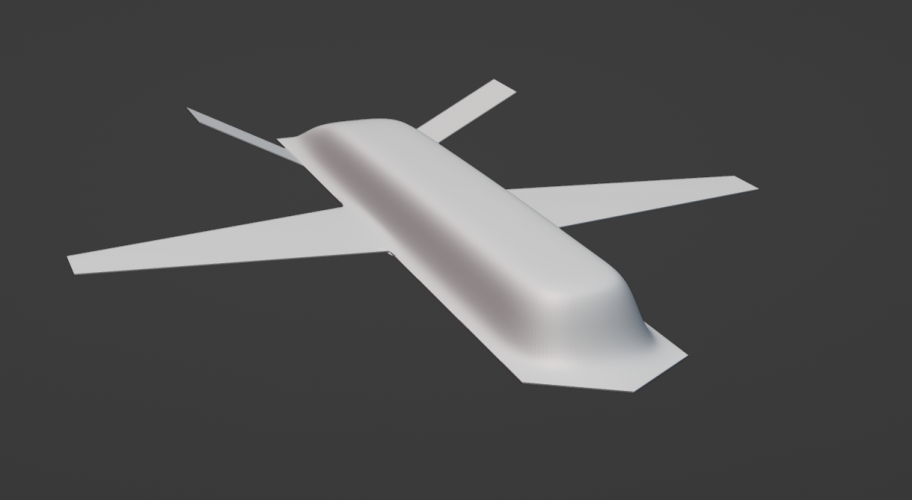
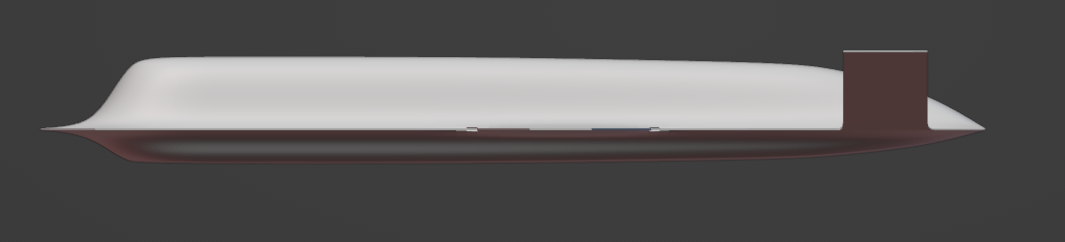
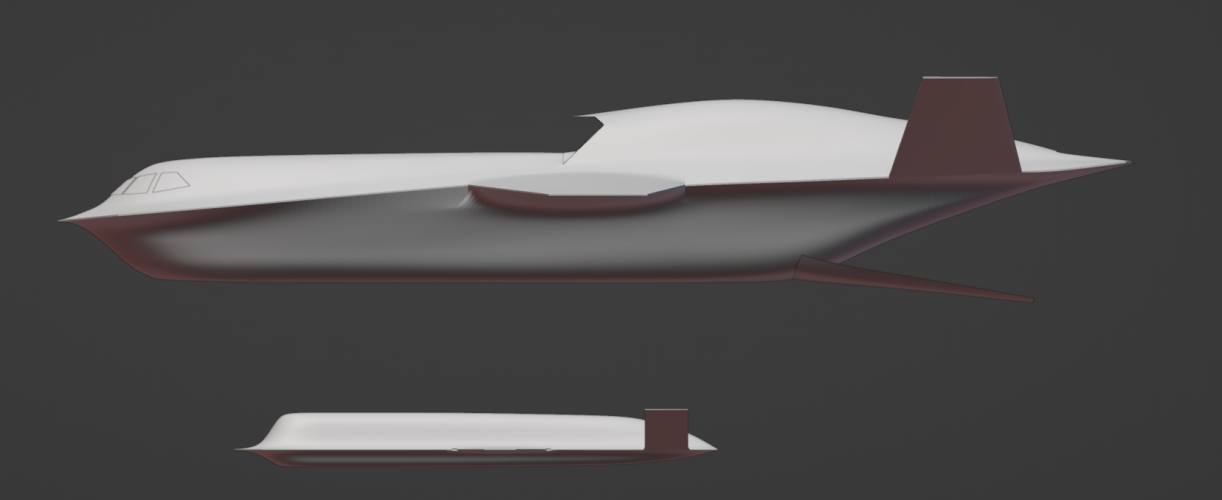
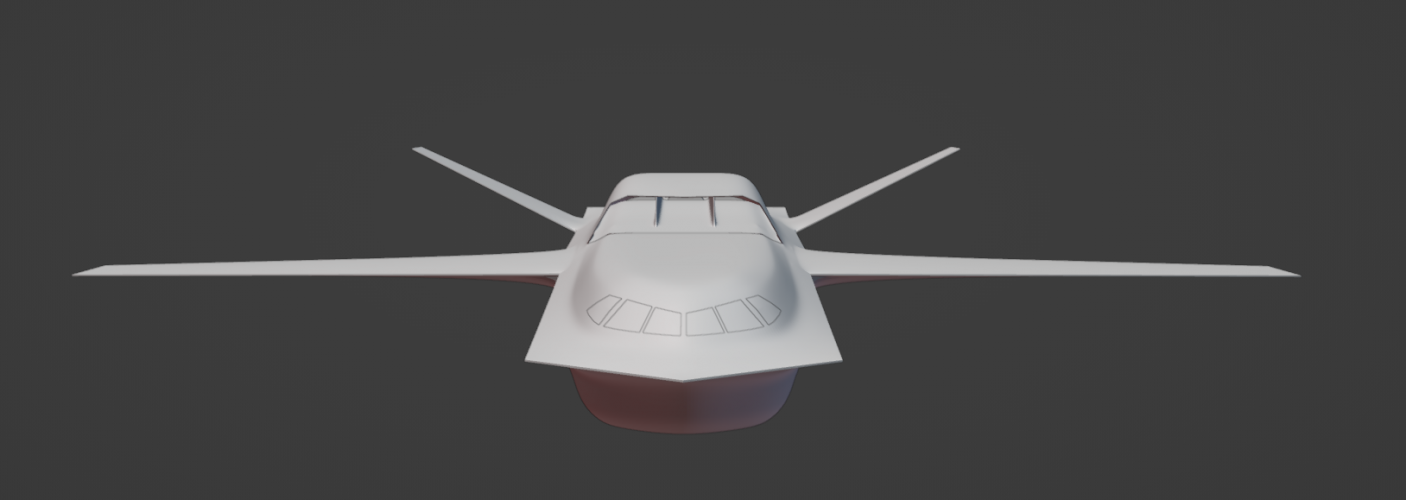
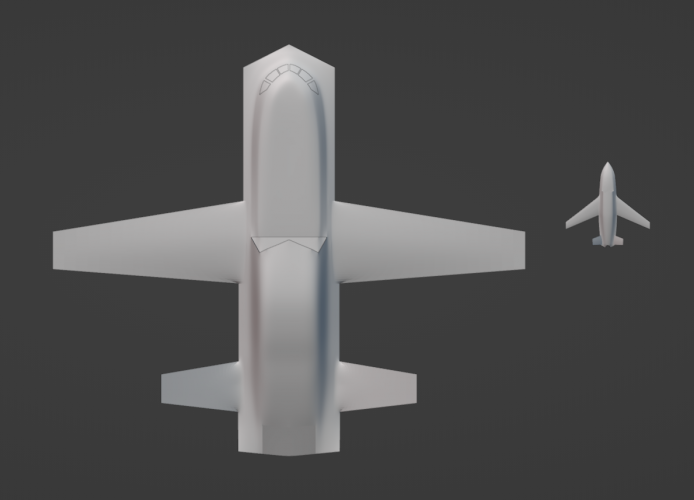
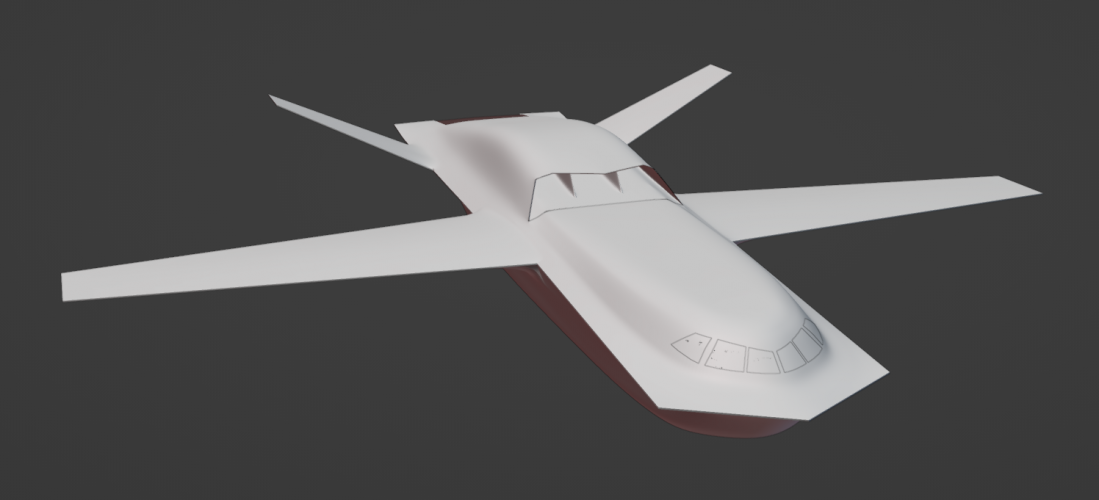
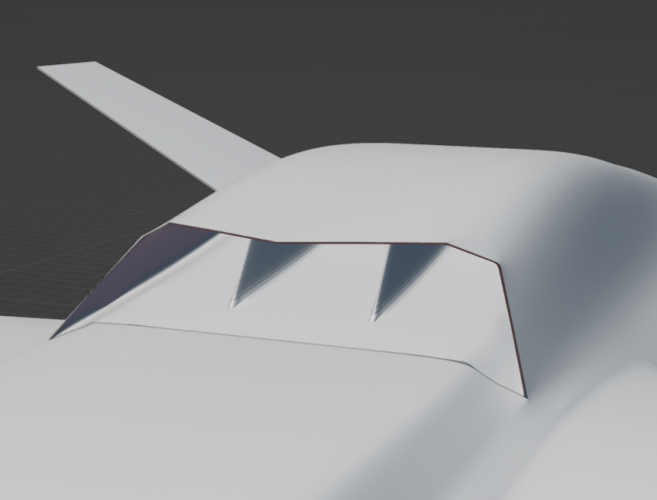
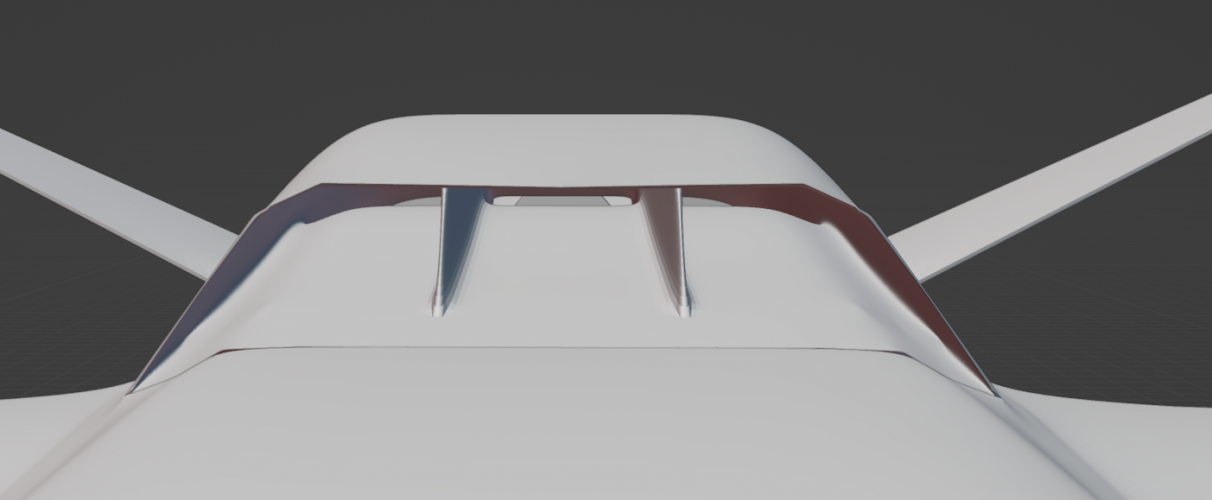
I did away with the tacit blue looking nose. The AGM-129A had a nose section that had a pretty thick underbelly, so that informed the shaping of the front. The engines have been reduced to two engines the dimensions of the Trent XWB. This allowed split intake ducts with a lower profile but it doesn't full hide the engine face against something co altitude and about 30 - 50 degrees off boresight.

Probably needs a little more work on the tail end where the door is. The C-17 has got almost 15 ft clearence between the ceiling and the bay door as it ramps down towards the ground.

Not sure how the rear landing gears are going to work so that'll probably be the next thing I'll add.

1782855652844.png
1782855673523.png
1782855803461.png
1782856014386.png
 

Attachments

  • 1782855883520.png
    1782855883520.png
    326.6 KB · Views: 9
Last edited:
While I like that design, it's still not quite clear to me why an airlift needs to be stealthy (something already discussed at length in the NGAL thread), as there is no benefit in doing so.

However if one were to go down that road, wouldn't the flying wing or hybrid wing be preferable over tube-and-wing designs as presented by your designs?
 
While I like that design, it's still not quite clear to me why an airlift needs to be stealthy (something already discussed at length in the NGAL thread), as there is no benefit in doing so.
Yeah. I also don't think it needs to be stealthy. It just sounded like a cool thing to try and make a 3d model for.
However if one were to go down that road, wouldn't the flying wing or hybrid wing be preferable over tube-and-wing designs as presented by your designs?
Certainly. The shape itself is probably much more conducive and offers better area for ducting. It'll probably be what I make next. The internal cargo arrangement and space would be very different from the C-17. So I figured this is where I'd start.
 
Certainly. The shape itself is probably much more conducive and offers better area for ducting. It'll probably be what I make next. The internal cargo arrangement and space would be very different from the C-17. So I figured this is where I'd start.
I see. Something else to consider, while I understand the engine placement in order to remain faithful to Tacit Blue, for maintenance sake it would probably be better to place the egines underneath the wing.
retouch_2026070101215204.jpg
Access becomes easier, not only to the engine itself, but also to check the inlets. Obviously this would widen the fuselage if you want to keep the exhaust running to the aft of the aircraft. Although I'd argue that "pods" like on the Tu-160 or B-1 would be the better choice. It's one of these things where a real world design would have to make a compromise, in this instance low observability (hiding the intakes on top of the fuselage and having a more advantagous exhaust placement) versus serviceability. And I'd argue that irl serviceability would take precedent over LO for an airlifter, even if it would be designed around signature reducing measures.

I do like the "pelican" type fuselage though.
 
While I like that design, it's still not quite clear to me why an airlift needs to be stealthy (something already discussed at length in the NGAL thread), as there is no benefit in doing so.
Because certain mission sets (usually Special Forces, but arguably 82nd/101st as well) require sending a transport into someone's A2AD bubble.

In addition to costing way too much to develop a unique stealthy transport just for SOF use, the airframe itself becomes sight-sensitive. Nobody blinks twice at a C130 because they're everywhere. If you make a stealthy transport but have it everywhere nobody will blink twice at it.


However if one were to go down that road, wouldn't the flying wing or hybrid wing be preferable over tube-and-wing designs as presented by your designs?
It really depends on the volume of what is getting hauled around.

For things like a tank, which uses all the available mass-to-lift before you run out of bay volume, you can probably get away with a hybrid wing with a conventional tail (simpler doors aft).

Hauling people, you can have the paratroopers jump off the rear ramp(s).

it's really about those cargo loads that take the full length of a C-5's cargo bay that also need to go into harm's way.
 
Nobody blinks twice at a C130 because they're everywhere. If you make a stealthy transport but have it everywhere nobody will blink twice at it.
Developing and constructing something that's otherwise not necessary aside from the .1% cases (SOF) is not justifiable in any sense. As for SOF, these days low level insertion through Chinook or Osprey (in the future Cheyenne II) seems preferred. You're not dropping off guys with parachutes around contested air space, you can do that against low threat level insurgents, not against an organized military.

The idea of dropping loads of paratroopers from your tactical and strategic transport into a contested battlespace already died in the 20th century, it's best left there.

Nowadays you drop your guys off, either upon landing or from the ramp, well within your area of control, from there they can advance towards the frontline via vehicles or aircraft. If you want special forces operating behind enemy lines, the best bet is low level flight with rotorcraft.
 
Because certain mission sets (usually Special Forces, but arguably 82nd/101st as well) require sending a transport into someone's A2AD bubble.

Even at the end of the Cold War weapons like the KS-172 were posing a longer ranged threat as well... transports are big aircraft with big radar signatures and little capacity for kinematic defence. So that is also a consideration (PL-15E, PL-17...)
 
The thread title is "an insane exploration..." it is clearly framed as a thought experiment. Deal with it on those terms.
 
Last edited:
Is runway length a useful/interesting requirement? I can't imagine Tacit Blue was easy to get airborne
 
Yes it is! Stol capable transports have been important since the YC-14!
 
Is runway length a useful/interesting requirement?
For C-130 to C-17 sized payloads, I'd say so.

Not so much if we're talking C-5 sized payloads.


I can't imagine Tacit Blue was easy to get airborne
Haven't read anything about takeoff being an issue for TACIT BLUE.

But I would fully expect airliner-stlye high lift devices on NGAL, whether TACIT BLUE inspired or BWB/HWB. Big leading-edge flaps/slats, triple-slotted flaps on the trailing edge, probably drooping ailerons too. Maybe speed brakes on top of the wing if we can figure out how to do those without really messing up stealth.
 
Assuming high value assets like airlifters don't benefit from LO is a belief rooted in a force that has not had to fight a near-peer opponent in a long, long time. For that doctrine to hold requires a linear, volumetric battlespace without opponents with their own LO capability, their own high-end EW and without tankers or long-range air-to-air platforms.
 
For maintenance sake it would probably be better to place the egines underneath the wing.
I was told that the preferred location for a wide body airlifter was going to be on the tail (in the NGAL thread) and it happened to offer possibility for longer intake ducts. But yeah its another reason I think BWB would be better for a C-17 sized airlifter - you could conceivably have the engines on the rear or under the wings and there would be enough airframe area to have ducting.

Is runway length a useful/interesting requirement? I can't imagine Tacit Blue was easy to get airborne
Yeah it would be a useful requirement which is why the wing sweep is quite shallow and wing area is large.
In addition to costing way too much to develop a unique stealthy transport just for SOF use, the airframe itself becomes sight-sensitive. Nobody blinks twice at a C130 because they're everywhere. If you make a stealthy transport but have it everywhere nobody will blink twice at it.
I intend on making a C130 sized transport but at those dimensions, with the current planform and target takeoff weight, its hard to find engines that could be concealed with ducting. Maybe BWB would work better.
If you want special forces operating behind enemy lines, the best bet is low level flight with rotorcraft.
Was listening to the Team House podcast today and happened to come across an interview with a delta force commander talking about the battle of mogadishu (he arrived on scene after the battle). Dude notoriously hated the idea of insertion via helicopter and thats against an insurgency.

Id expect most infils to be done via unamanned watercraft and submarines to the final destination in island / sea warfare unless its time sensitive. They'd probably only travel by transport or rotorcraft to a forward staging point.

I cant imagine even a low flying C130 dropping them in when theres going to be AMTI and hoards of air patrols running around.
 
I intend on making a C130 sized transport but at those dimensions, with the current planform and target takeoff weight, its hard to find engines that could be concealed with ducting.
So how about a mix of S-ducts and blockers, like on the B-1Bs?
 

Similar threads

Back
Top Bottom