athpilot
Fly me to the moon...
- Joined
- 18 November 2012
- Messages
- 436
- Reaction score
- 554
КОНСТАНТИН УДАЛОВ, ГАБРИЭЛЬ ОРОСКО: СПИВАК И ЕГО САМОЛЕТЫ
Москва, 2026 г., 268 с.
УДК. 8294: 629. 7. Cпивак и его самолеты 01/08
ISBN 978-5-4465-3169-1
Konstantin Udalov, Gabriel Orosco: Spivak and his planes
Moscow 2026, 268 pp., ISBN 978-5-4465-3169-1
Well known avition historian Konstantin Udalov and Gabriel Orosco just released annother volume in the series about the planes, designs and work of V.M. Myasichshev. The book „Spivak and His Aircrafts“ presents the aircraft designs of Valentin Fedorovich Spivak (1933-2018), a designer at the V. M. Myasishchev EMZ plant, recounts his creative life, and features designs from his personal archive for the first time. The publication is illustrated with a wealth of previously unpublished diagrams and photographs.
The range and impact of Spivaks works on soviet and russian aviation industry quiet meaningful. Spivaks long lasting career cannot be fully described in a short review like this one. But the authors just managed to do that and presents many unknown facts and amazing stories. The book starts with some in-depth insights on Spivaks biography. After successfully defending his thesis, during the job allocation process, Valentin Fedorovich Spivak decided to head for the Far East, to Komsomolsk-on-Amur, where work on the production of gliders was just getting underway.
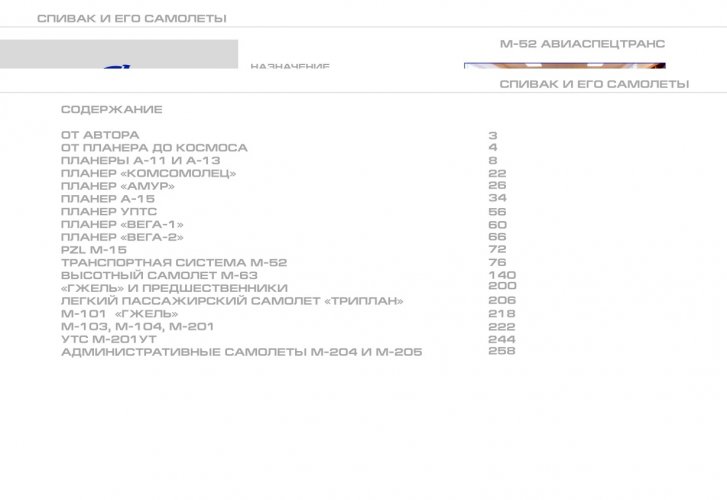
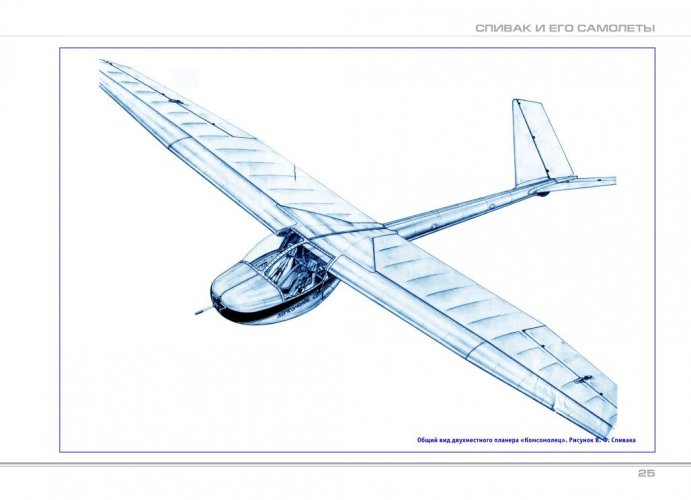
So the first chapters About Spivaks Career as a designer and aviation-engineer are Dedicated to sailplanes and soaring. His first gliders, the A-11 and A-13, were constructed between 1957 and 1959 and became popular in soviet Aviation massorganization (the DOSAAF). (pp. 8-21). The following chapter are about the gliders "Komsomolez" (pp. 22-25), "Amur" (pp. 26-33), the "A-15" (pp. 34-55), the "UPTS" (pp. 56-59), and the gliders "Vega-1" and "Vega-2" (60-71). Vega 1 and 2 were built (the latter one in 1967) in steel-construction and had a very good performance with a glide Ratio of 1:36.
In accordance with the “Protocol” of April 26, 1971, the Polish side submitted a request for the arrival of 77 Soviet consultants in the People’s Republic of Poland. During the process, the request was revised to reflect the required number of consultants by specialty within the overall quota. That was the beginning of the collaboration of Spivak and his Team on the polish agricultural plane-Project M-15. There is a whole chapter about this interesting piece of hisory (pp. 72-75).
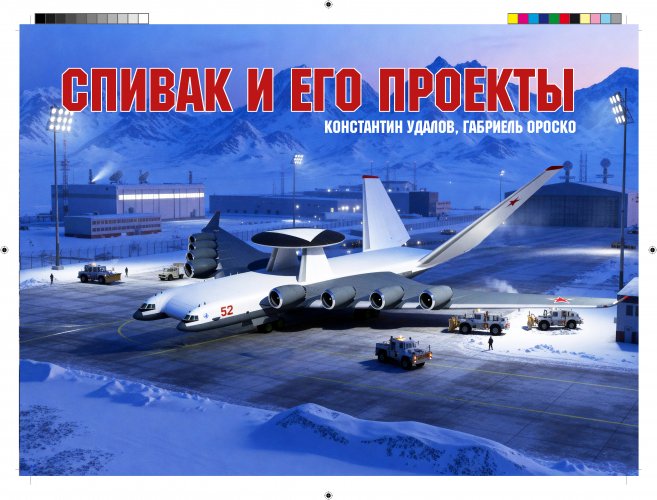
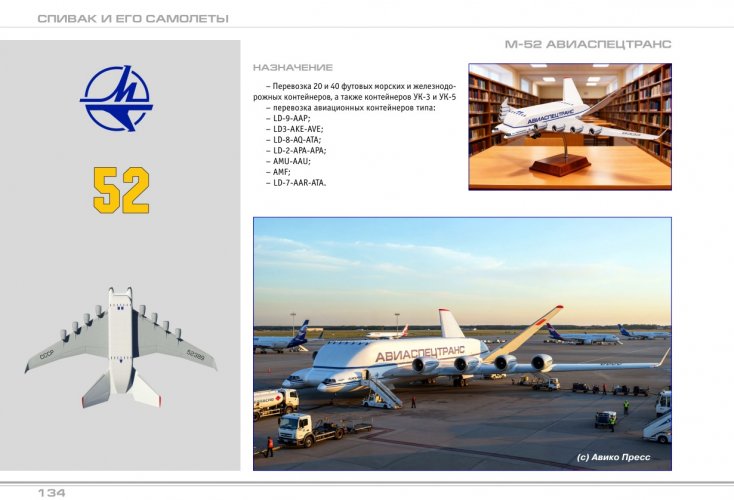
What follows next are the – at least to me – fascinating parts of this volume: the M-52. V. F. Spivak’s designs are an integral part of the research programs at the V. M. Myasishchev Experimental Machine-Building Plant aimed at developing a heavy-lift aircraft for the aerospace industry. The “52” project lasted several years, and interesting designs were proposed on their own initiative by V. A. Petrov, V. I. Pogodin, and V. F. Spivak. All of them are discussed in detail in the book. Several variants of the giant aircraft with six DY 18 engines and a launch mass of up to 650 tons. At least seven variants are known and described (also see the cover for variant M-52S-2). The pages 76 till 139 are describing these fascinating giant aircraft-studies. The M-52S (for Spivak) was a giant double-fuselaged Transport plane with 8 engines, which could be used for many (stategic) purposes. The M-52S-1 was the Basic model, the M-52S-2 was a giant AWACS variant, the M-52S-3 was a Missile carrier (with up to 3 large Missiles), the M-52S-4 was Military Transporter for up to nine tanks on its back, the M-52S-5 was an atomic powered longe range multiporpose-plane. Its YASU reactor should give it an unlimited range. The M-52S-6 and 7 were truly impressive carrier for two "Energiya"-rockets first stages and the M-52S-8 and 9 was a civilian large container-ship/plane, which could carry up to 32 containers at once. The M-52S-10 was supposed to transport a large ICBM.
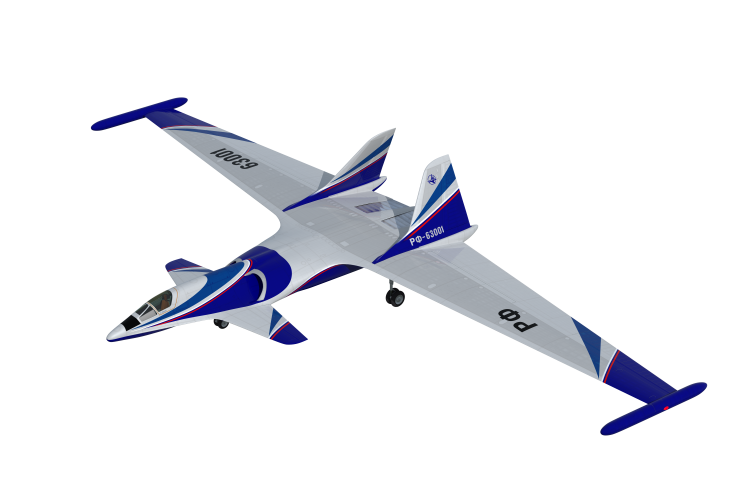
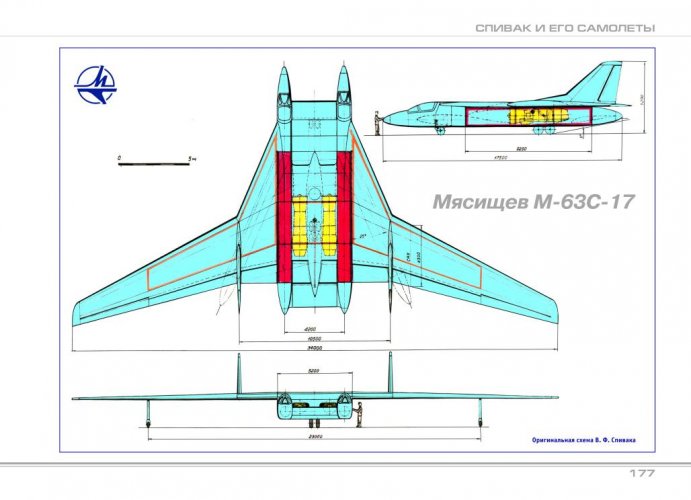
The following chapter is either fascinating; it´s about the highflying aircraft M-63 (pp. 140-199). The system M-63 was Spivaks (and his teams) contribution to the further developement of the M-17/M-55 highflyers. Next chapter are about the light civilian aircrafts "Triplan", "Gshel" (M-101), M-103, M-104, M-201 (pp. 200-244) and the trainer M-201UT (pp. 244-257). The final chapter is about the administrative jet-aircrafts M-204 and M-205 (pp. 258-263). Especially theses last aircrafts for the civilian market shows the shift from the Soviet Union to the Russian Federation up the 2000s years.
This book again is a masterpiece of aviation history. It combines deep research with well written text (in russian), plus material from the archives, fotos and fantastic renderings (also done by Luca Landino, Marek Rys and others). Some of the material is shown here for the first time. It is for a wide range of readers interested in aviation. I wish everyone a good read! The book can be purchased by forum member Gabriel Orosco.
Москва, 2026 г., 268 с.
УДК. 8294: 629. 7. Cпивак и его самолеты 01/08
ISBN 978-5-4465-3169-1
Konstantin Udalov, Gabriel Orosco: Spivak and his planes
Moscow 2026, 268 pp., ISBN 978-5-4465-3169-1
Well known avition historian Konstantin Udalov and Gabriel Orosco just released annother volume in the series about the planes, designs and work of V.M. Myasichshev. The book „Spivak and His Aircrafts“ presents the aircraft designs of Valentin Fedorovich Spivak (1933-2018), a designer at the V. M. Myasishchev EMZ plant, recounts his creative life, and features designs from his personal archive for the first time. The publication is illustrated with a wealth of previously unpublished diagrams and photographs.
The range and impact of Spivaks works on soviet and russian aviation industry quiet meaningful. Spivaks long lasting career cannot be fully described in a short review like this one. But the authors just managed to do that and presents many unknown facts and amazing stories. The book starts with some in-depth insights on Spivaks biography. After successfully defending his thesis, during the job allocation process, Valentin Fedorovich Spivak decided to head for the Far East, to Komsomolsk-on-Amur, where work on the production of gliders was just getting underway.
So the first chapters About Spivaks Career as a designer and aviation-engineer are Dedicated to sailplanes and soaring. His first gliders, the A-11 and A-13, were constructed between 1957 and 1959 and became popular in soviet Aviation massorganization (the DOSAAF). (pp. 8-21). The following chapter are about the gliders "Komsomolez" (pp. 22-25), "Amur" (pp. 26-33), the "A-15" (pp. 34-55), the "UPTS" (pp. 56-59), and the gliders "Vega-1" and "Vega-2" (60-71). Vega 1 and 2 were built (the latter one in 1967) in steel-construction and had a very good performance with a glide Ratio of 1:36.
In accordance with the “Protocol” of April 26, 1971, the Polish side submitted a request for the arrival of 77 Soviet consultants in the People’s Republic of Poland. During the process, the request was revised to reflect the required number of consultants by specialty within the overall quota. That was the beginning of the collaboration of Spivak and his Team on the polish agricultural plane-Project M-15. There is a whole chapter about this interesting piece of hisory (pp. 72-75).
What follows next are the – at least to me – fascinating parts of this volume: the M-52. V. F. Spivak’s designs are an integral part of the research programs at the V. M. Myasishchev Experimental Machine-Building Plant aimed at developing a heavy-lift aircraft for the aerospace industry. The “52” project lasted several years, and interesting designs were proposed on their own initiative by V. A. Petrov, V. I. Pogodin, and V. F. Spivak. All of them are discussed in detail in the book. Several variants of the giant aircraft with six DY 18 engines and a launch mass of up to 650 tons. At least seven variants are known and described (also see the cover for variant M-52S-2). The pages 76 till 139 are describing these fascinating giant aircraft-studies. The M-52S (for Spivak) was a giant double-fuselaged Transport plane with 8 engines, which could be used for many (stategic) purposes. The M-52S-1 was the Basic model, the M-52S-2 was a giant AWACS variant, the M-52S-3 was a Missile carrier (with up to 3 large Missiles), the M-52S-4 was Military Transporter for up to nine tanks on its back, the M-52S-5 was an atomic powered longe range multiporpose-plane. Its YASU reactor should give it an unlimited range. The M-52S-6 and 7 were truly impressive carrier for two "Energiya"-rockets first stages and the M-52S-8 and 9 was a civilian large container-ship/plane, which could carry up to 32 containers at once. The M-52S-10 was supposed to transport a large ICBM.
The following chapter is either fascinating; it´s about the highflying aircraft M-63 (pp. 140-199). The system M-63 was Spivaks (and his teams) contribution to the further developement of the M-17/M-55 highflyers. Next chapter are about the light civilian aircrafts "Triplan", "Gshel" (M-101), M-103, M-104, M-201 (pp. 200-244) and the trainer M-201UT (pp. 244-257). The final chapter is about the administrative jet-aircrafts M-204 and M-205 (pp. 258-263). Especially theses last aircrafts for the civilian market shows the shift from the Soviet Union to the Russian Federation up the 2000s years.
This book again is a masterpiece of aviation history. It combines deep research with well written text (in russian), plus material from the archives, fotos and fantastic renderings (also done by Luca Landino, Marek Rys and others). Some of the material is shown here for the first time. It is for a wide range of readers interested in aviation. I wish everyone a good read! The book can be purchased by forum member Gabriel Orosco.