
Grey Havoc
ACCESS: USAP
- Joined
- 9 October 2009
- Messages
- 24,511
- Reaction score
- 18,193


Presumably the whole bow section is a composite enclosed deckhouse built on top of a steel hull (with the main deck being the strength deck). This is how the first stealth frigates were built in the 90s (La Fayettes), so it’s well proven.So my chief question is. How does this design protect the weaponry from salt spray, and waves breaking over the bow?
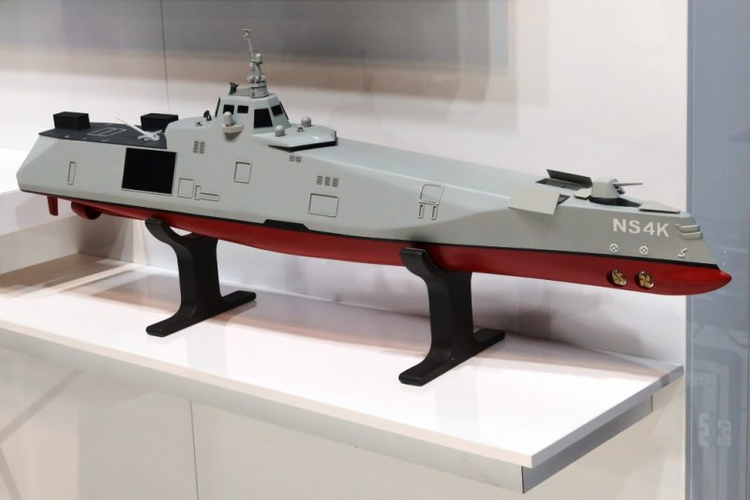
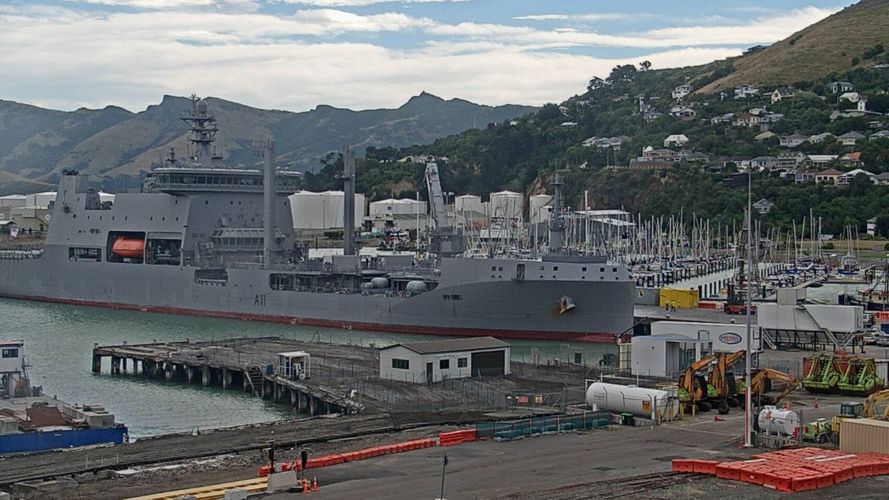
I would agree that the bow would reduce the incidence of waves breaking over the bow, although I am concerned that the gun would still wear some greenies in higher sea states, especially those prevalent in the Southern Ocean (below 45S). HMNZS Aotearoa has a similar bow designed by Rolls Royce and known as an Envirobow.Presumably the whole bow section is a composite enclosed deckhouse built on top of a steel hull (with the main deck being the strength deck). This is how the first stealth frigates were built in the 90s (La Fayettes), so it’s well proven.So my chief question is. How does this design protect the weaponry from salt spray, and waves breaking over the bow?
The composite deckhouse is corrosion proof, reduces top weight and allows for easy openings for enclosed weapons.
The high wavepiercing bow (raised one deck compared to a traditional frigate) reduces the incidence of waves breaking over the bow, so seakeeping should be fine… there’s been plenty of studies and tow tank tests showing this.

I would have thought that the Navantia designers would have made some consideration for the protection of the gun. Maybe one open would be for the gun to be able to be lowered and raised for firing meaning that it would be protected inside the hull when not in use.
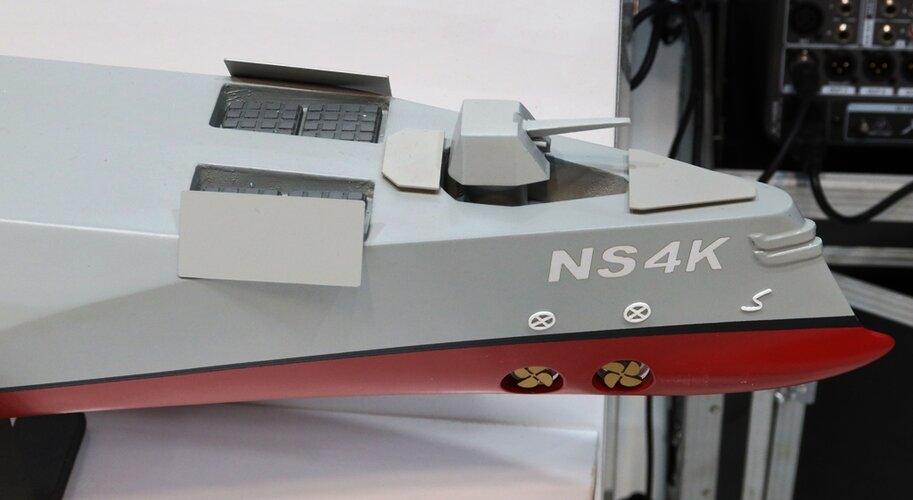
Great thanks. I hadn't been able to enlarge the photo enough to see the detail. That makes a big difference.I would have thought that the Navantia designers would have made some consideration for the protection of the gun. Maybe one open would be for the gun to be able to be lowered and raised for firing meaning that it would be protected inside the hull when not in use.
Yes, that is how the design works. If you look at the model, you can see a two-part hatch to cover the gun when retracted.
My issue here is: okay, fine, let's assume that the hatch covers work as intended. I have doubts, but let's assume it anyway.Yes, that is how the design works. If you look at the model, you can see a two-part hatch to cover the gun when retracted.

Keel anchor would work, and the first hatch aft of the chine might be a mooring bay - but that's not an ideal position, the moment arms are quite short so the line loads would be rather high. And in any case there's no sensible way to tow the ship.Keel anchor?
Most of these exhibition designs are - the idea is invariably to showcase the company's design talents, knowing full well that real customers actually want the same as the last ship, only more so.As a futuristic concept it looks cool but not very practical. Seems to more be a showcase of what is possible rather than a fully thought out design that a customer might actually pay a deposit for.
Keel anchor would work, and the first hatch aft of the chine might be a mooring bay - but that's not an ideal position, the moment arms are quite short so the line loads would be rather high. And in any case there's no sensible way to tow the ship.
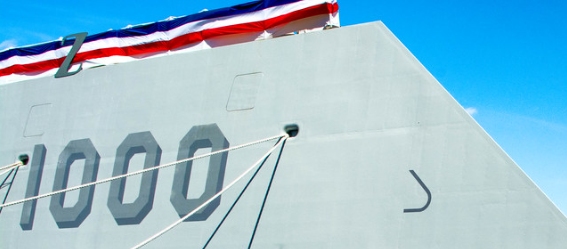
Keel anchor?
I'm not really seeing any practical reason for all the effort for hatches and retractable guns, especially right on the prow when the rest of the forecastle area is available.
As a futuristic concept it looks cool but not very practical. Seems to more be a showcase of what is possible rather than a fully thought out design that a customer might actually pay a deposit for.
Would those VLS even fit there? Given the flare of the bows there and the tapering fitting a deep silo would be difficult.
I'm no VLS expert so not sure what 16-round VLS system is being shown here.

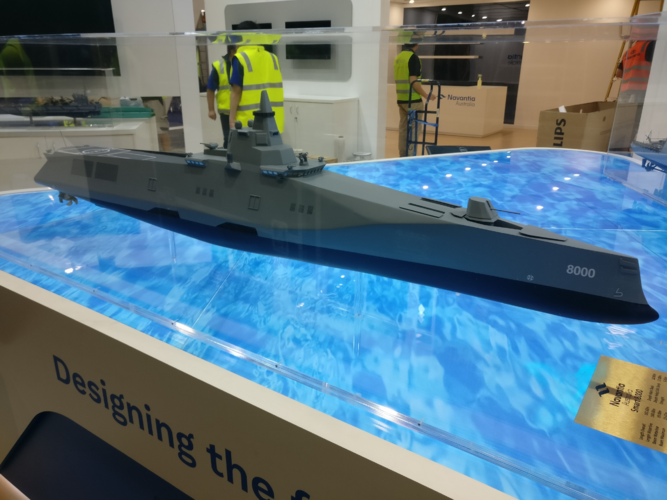
This is a really cool looking design, however a plan for a highly automated, low crew, stealthy, 4000t escort ship in a program that seems very reliant on partnerships is a bold move as Mogami's are commissioning
The Mogami's already have a UUV, the USV is about to go into production with the latest budget, and they are looking at either having the MA02 or a new UAV supplement SH-60 ops. I just don't see what specialized role the SMARTs occupy that the Mogami can't fulfill as Multi-Mission Frigate.
I'm not saying they shouldn't. They just went one of the worst routes possible to do so by creating a program that almost necessitates international partnership and funding. It's a risky move because they will be competing for sales with a ship that is already in active service using one that is nothing but a plastic model. Any potential partners will be shouldering a massive risk having to fund development costs as well. Just look at the Su-57 and T-14. Russia was heavily banking on India becoming a partner for both programs and when that fell through both programs just collapsed. If it was a Spanish program with options to bring on international partners that would give it much more security, but the Spanish basically showed up with a plastic model saying "give us your money so we can compete with a highly competitive and established design.
