Modern Warship Defence (CIWS) Discussion

No. The gunhouse as I called it is a non-rotating piece that hid the front of the turret while the gun was stowed. The turrets proper are completely gone and were each replaced with a pair of Virginia-class Payload tubes. Magazine gutted and ripped out to make room for an 8ft diameter, 4"+ thick steel pipe hanging from the weather deck.


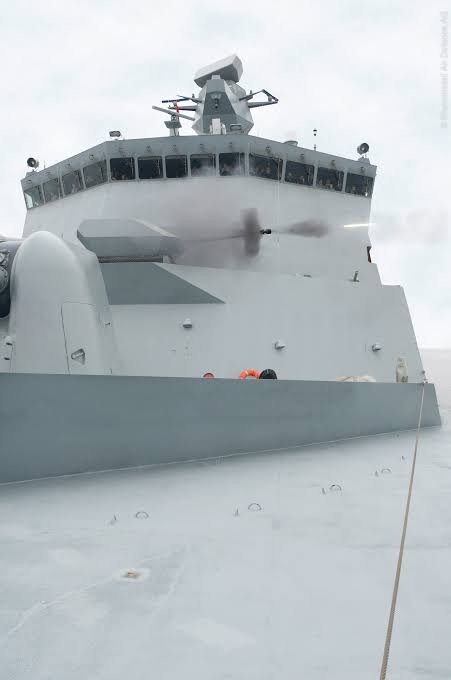
Goalkeeper was a deck-piercing system that weighs twice what Phalanx does.

So it could only go on some ships, ships built around it, while others got Phalanx because it could sit on top of the deck and only needed power and cooling supplied to it. And two separate CIWS systems just isn't supportable for the size of the RN. It'd be better if Goalkeeper and CIWS used the same radars etc, but they don't. Different developers and all that.

IMO the "error" in Goalkeeper's design was that it pierced the deck like a 57mm Mk110, so a ship had to be designed around it.

IIRC the Dutch Navy was in the process of acquiring new ships as everyone was freaking out about Exocets, so they were able to design their ships around Goalkeeper.

I believe that South Korea is in the process of converting from Phalanx to the 30x173mm CIWS-II, but I think the Phalanx guns are just being handed to the ROK Army for use as Phalanx C-RAM. ROK Army already has a huge number of M163 Vulcan ADS, so all the "new" responsibilities they're getting would be the Phalanx radar school and spare parts. The only thing the ROK Navy would have to dispose of would be the APDS ammunition (Phalanx C-RAM uses self-destruct tracer ammo to reduce collateral damage), and I'm sure the USN will be happy to buy that APDS ammo from the Koreans.
No, only one gun was replaced by missile tubes.

And increasing the size of nearly every part in phalanx will make the weight of phalanx skyrocket…

Deck piercing or not, a ship has to be built around a gun based system for it to be effective.

However there is stuff below the deck of phalanx. Maybe not an entire ammo handling system, but there’s still a deck penetration I believe it’s the battery bank.

However there’s trade offs with everything.
Especially with weapons who have ammo feeding from below decks…for example phalanx has only a few seconds of engagement time, and then it’s useless. Under ideal conditions (in port, great weather etc.) it takes 2-3 people like half an hour to reload while being exposed on deck.

Mk110 or other systems with below decks ammo handling systems can be used pretty much continuously until the ship is completely out of ammo.

You’re acting like deck penetration is some evil awful and horrible thing.
 
Last edited:
That was my point. But a 30mm to 40mm CIWS should deal with your drone swarm effectively, if its a dual purpose gun. So don't remove 4 to 6 potential CIWS positions to fit your favourite gun, just upgrade it to something dual purpose.

CPS application isnt so much the hosting platform, although that was certainly discussed many pages ago.

Bigger radars are already possible since both SPY6 & SPY7 are modular. Maybe next generation would be smaller and multistatic, so if theres a SPY8 in the works yeah sure. It wouldnt need a big monolithic BBG though, so maybe multistatic radar is for the frigate thread.

EDIT: i was going to make the point that SPY6 and CPS are not questions and Navy will put them both on large combatants regardless. A modern CIWS is not in USN inventory and no word on whether Navy is even interested. There seems to be an assumption of invulnerability, as if no threat could ever leak through current defences. As such, its worth discussing and particularly relevant given the chances of defensive missiles being exhausted. I'm sure PLAN has already done whatever they need to ensure it's attacks get results. Last ditch defences add an extra layer to those assumptions, and hopefully enough to deter it in the first place.


Those need to be in the mix too maybe as the CUAS RAM equivalent. Kind of a guided option beyond CIWS range.

I lost the context here, but no its not perfect. At least air burst AHEAD ammo has proven to be quite effective at that rate of fire. Several similar CIWS options might meet USN requirements. I think the through deck guns are for reliability and protected reloads. Things like Millenium Gun are more for filling gaps where the other gun wont fit.

So this is the tradeoff that has to be weighed.

Lasers maybe not, since the gun below it would be firing an arc through the laser beam.

And now they have gone to 40mm CIWS on the Type-31.
Yes they moved to 40mm in a single barrel gun and not a multi-barreled rotary gun.
 
I think modern naval gunnery just sucks. I do have hands on professional military experience with arti among many others I got to enjoy while serving btw.
The main reason might be because military math says a 3"/76mm causes between 32 and 112 m^3 of destruction to a ship so a dispersion of 3-4m is sufficient. And so they never bothered to invest into better precision fire turret technology.
Now having some dispersion estimates from those videos would be nice to have.


How much more difficult is it for a tank at "full" speed over the country side to hit another moving target? (They keep averting it.)
Ships swaying in the waves doesn't change their relative position. It's all about stabilized gun, wind, air temp/humidity etc. Naval guns don't seem to have that kind of probe like tanks do. We can't do much for indirect fire but at least LOS should work, right?


Yes, firing from the ground certainly isn't ideal. I wonder why an aerospike was never tried. Small fechette size worked fine for guns so even if it depletes it should be sufficient for the crucial first seconds.
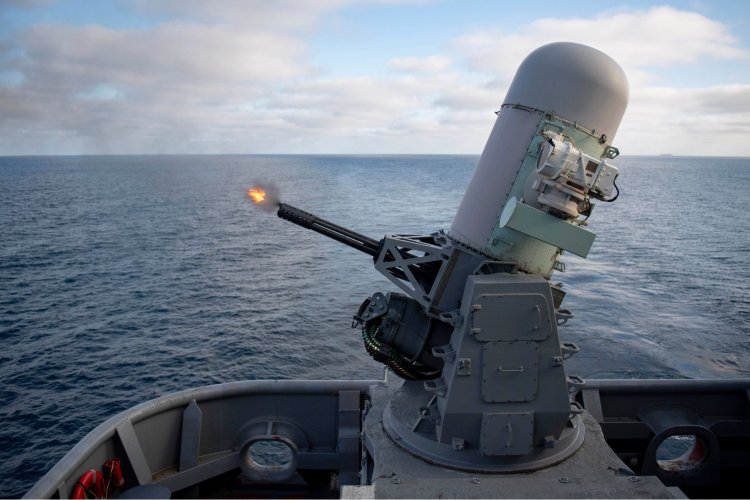
CIWS systems fire a lot of bullets because they don't fragment. For some reason the USN relies on solid bullets. As such gatling dispersion is their substitute for fragmentation and the need for volume fire >>220 shots/hit.
I don't see railguns as true CIWS replacement but covering between CWIS and any missile range.


Area bombardment is not a goal for the railgun but busting fortification/bunkers might be. Artillery bombardment start at 105mm anything below is for breaching. Naturally, it has to do with fragmentation lethal range and boom power
UAV precision strike has made the old way obsolete. This will just be left to the aviators or other missile artillery delivery system.

Magnetic shielding is a thing. You see this in eletronics where there is a thin metalic sheet covering something. By thin I mean sub-milimeter. In the case of the railgun, it's the sabot ofc. After all the sabot has to take in as much EM energy as possible to convert it into kinetic movement. The more efficient the more it shields.
Apparently, we got new fascinating shielding material a few months ago. Railgun projectile can have eletronics. Ofc they don't compare to those designed for planetary penetrators done like a decade ago.


The plan is to fire beyond, too, though. With the help of ISR and other sensor contributors ofc. Just like oldschool observer fire conrection etc.

It only takes a few grams (0.9g for 35mm) to fragment a projectile. Far from enough to damage the sabot let alone affect a magazine.

View attachment 819956


The batteries/capacitors are all containerized in small cases/boxes. A civilian electric vehicle's is far more dangerous imho. The japanese setup arranged them in even smaller groupings within structural constructs, hence, more spacing.
Yeah, shipboard "switchboards" are house sized the same as powerplants on land. Add railgun doesn't change this anymore than it aready is. People need hoisters to replace the subboards.
Sure the shorting explosion can be big, but then again the need to keep the railgun elments from flying away is for the full power.

View attachment 819960
Energy storage is smaller than the switchboard. Even the up to 4 ISO containers our ships would need would be just about parrity.
CIWS guns like phalanx don't fragment because round is small, high velocity. To explode in mid air requires a proximity detonation, and that requires electronic fuse. Programmable ammo is too small to fit in a 20mm cartridge, so they substitute armor piercing flachette, explosive incendiary round and high rate of fire. Where as Mauser 27mm and Rhinemetal 35mm or Bofors 40/57mm are large enough to accommodate burst proximity ammo
 
To explode in mid air requires a proximity detonation, and that requires electronic fuse.
You can use a proximity fuse for an airburst, or you can use a programmable time fuse, which is how things like AHEAD do it. (Or a spin counter like the XM-25, but that's needless complication compared to a timed fuse).

Programmable ammo is too small to fit in a 20mm cartridge,
Self-destruct functionality is available in 20mm, and is used in Phalanx*, for instance the M246 HEI-T and the M940 MPT-SD. That's fixed duration/range, but a programmable timed detonation is clearly possible, it might even be more compact than the self-destruct fuzing which AIUI relies on tracer burnout as a timer.

ETA: South Korea developed and deployed a 20mm grenade launcher, the K11, in 2010 using programmable time-fused grenades, so it clearly is possible in 20mm, even if the K11 was eventually cancelled due to unreliability.

* Mostly in the Centurion C-RAM configuration, because civilians tend to object to hundred of spent 20mm shells landing on them.
 
Last edited:
So take this with a grain of salt; from memory the results were like ~5 shots for 57 mm; 20-30 shots for 35 mm; 40 mm/20mm were ineffective.
Im interested in why 40mm was less effective han 35mm. I had heard something like that but assumed it was the available guns/RoF at the time. 40mm seems to be coming back and BAE hasn't built a 35mm replacement for their Bofors. Maybe its just more suitable for slower threats that can now become a swarm?
You’re acting like deck penetration is some evil awful and horrible thing.
Its only horrible if there was never plans to add the gun in that position when ship was designed. Thats why discussion of seemingly minor gun positioning is relevant. And why I didn't promote 35mm too much.
 
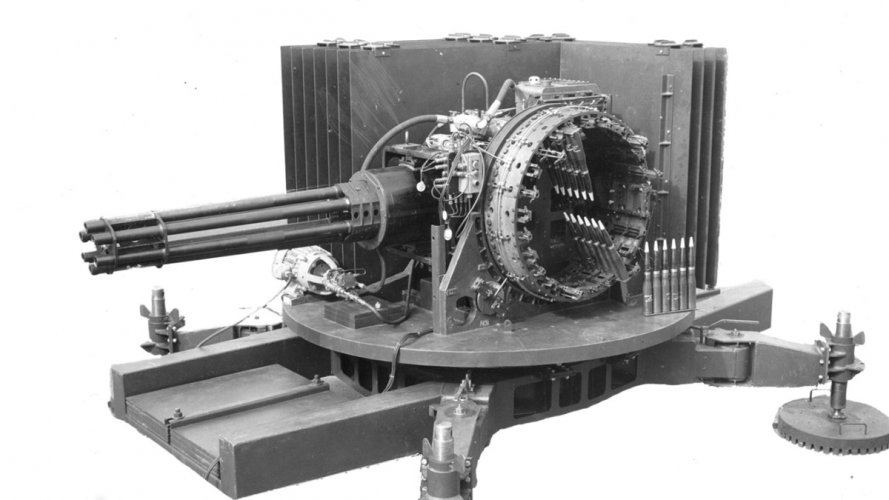
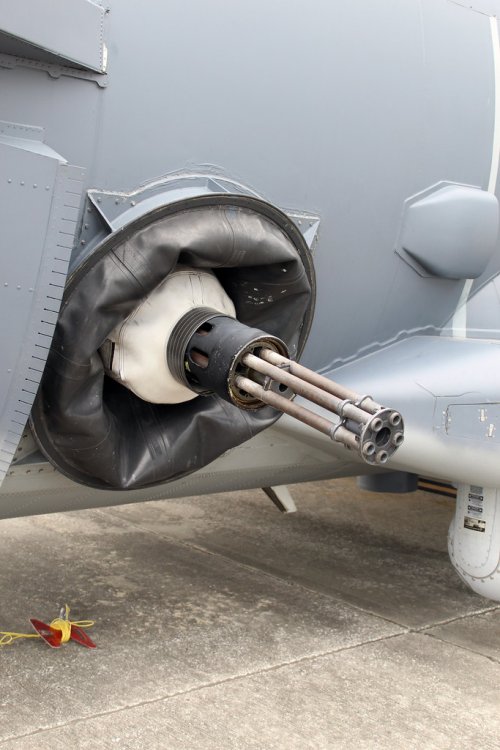
The largest Gatling type weapon ever made was T250, with 37mm caliber shells necked down from Bofors rounds. It worked...kinda never the less had modest rate fire 3000 rpm.
47mm Gatlings have been done back in the late 1800's, possibly 57mm as well.
 
That was my point. But a 30mm to 40mm CIWS should deal with your drone swarm effectively, if its a dual purpose gun. So don't remove 4 to 6 potential CIWS positions to fit your favourite gun, just upgrade it to something dual purpose.
The places I've been talking about putting Mk38s would be poor locations for AA guns.

They'd work, but you wouldn't want most of your AA down low at the weather decks at places optimized for surface target field of fire anyways. That's why your C-UxV guns are not your only CIWS guns. Your C-UxV guns are a backup to the last-ditch CIWS guns, for when there are more targets than CIWS guns.


A modern CIWS is not in USN inventory and no word on whether Navy is even interested. There seems to be an assumption of invulnerability, as if no threat could ever leak through current defences. As such, its worth discussing and particularly relevant given the chances of defensive missiles being exhausted. I'm sure PLAN has already done whatever they need to ensure it's attacks get results. Last ditch defences add an extra layer to those assumptions, and hopefully enough to deter it in the first place.
Well, the Zumwalts were supposed to be using 57mm Mk110s for their CIWS till the "Good Idea Fairy" came along.

Then someone somehow decided that the 30mm Mk44s from LCS ASuW modules were "better"/good enough. The same 30mm Mk44 mounts that had issues hitting targets and with gun reliability when installed on LCS!


Lasers maybe not, since the gun below it would be firing an arc through the laser beam.
Good point. And that would likely help with topweight, as a 1m mirror like used on YAL-1 is heavy (plus the other 4 mirrors in the turret).

I'm still going to want to stick the laser up higher than a 76mm or even a RAM launcher, for maximizing distance to horizon. Plus keeping said laser away from big gun muzzle blast.


Deck piercing or not, a ship has to be built around a gun based system for it to be effective.
By that standard, Phalanx never was effective as it was always a "drop-in where there was room" system.


However there is stuff below the deck of phalanx. Maybe not an entire ammo handling system, but there’s still a deck penetration I believe it’s the battery bank.
Power in and cooling. Phalanx technically sits on a (very low) pedestal like the base of the Mk38. I thought batteries were inside the mount as well, but if not I'm not sure it should count as a deck penetration.


Especially with weapons who have ammo feeding from below decks…for example phalanx has only a few seconds of engagement time, and then it’s useless. Under ideal conditions (in port, great weather etc.) it takes 2-3 people like half an hour to reload while being exposed on deck.

Mk110 or other systems with below decks ammo handling systems can be used pretty much continuously until the ship is completely out of ammo.
The problem is belted ammunition versus single loading. Belts are less fun to reload, more fun to shoot. If you put I dunno, 3000 rounds into a single belt it would probably need powered feeds down in the belly of the beast. While 550-1200 on the mount is viable.

Not to mention that even a gatling is going to be rounds-cooking-off hot after a full 5-15 seconds of firing. As will be a single-barrel air-cooled gun like a Mk44.

Plus, the GM I knew in college was able to get his Phalanx back up in under 10 minutes.


You’re acting like deck penetration is some evil awful and horrible thing.
No, a deck penetration is a restriction on where you can drop the guns.

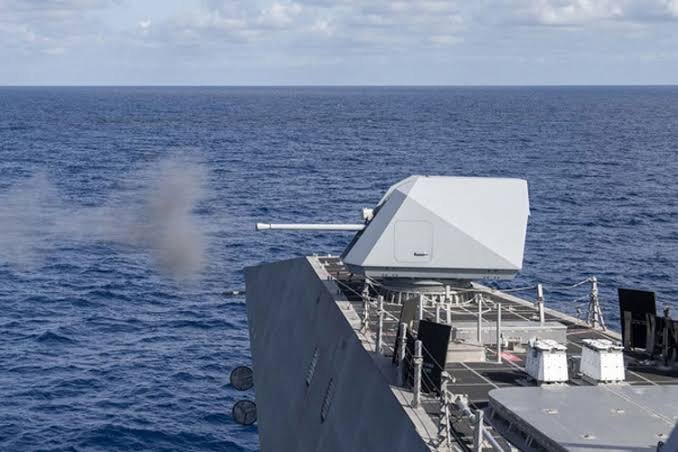
It'd take a large sponson to stick a Goalkeeper, let alone a 57mm mk110, out with the barrel at the normal edge of the weather deck, while you can pretty much just run a couple of girders out past the sheer for a Mk38 or Phalanx to sit on. Close in underneath to keep salt spray away from the power and cooling.

Take the Zumwalts. Look at the big SATCOM warts on the side of the superstructure. You could stick a Phalanx on there instead of the SATCOM.

FFS OTO-Melara even makes a non-deck-penetrating 76mm mount, the Sovraponte. Specifically for dropping someplace it happens to fit or that can't have anything coming down from the weather decks. IIRC most Italian Navy ships have a Sovraponte 76mm on top of their helo hangars.

(edit: relocated this whole paragraph) Can't stick a penetrating mount on top of the bridge. Can't stick one on top of the hangar. But you could put Phalanx guns on top of the bridge and the hangar, port and starboard sides, and now you've got three guns firing into each forward quarter.


CIWS guns like phalanx don't fragment because round is small, high velocity. To explode in mid air requires a proximity detonation, and that requires electronic fuse. Programmable ammo is too small to fit in a 20mm cartridge, so they substitute armor piercing flachette, explosive incendiary round and high rate of fire. Where as Mauser 27mm and Rhinemetal 35mm or Bofors 40/57mm are large enough to accommodate burst proximity ammo
With the 20mm, Phalanx is using APDS or APFSDS (not sure which). But you can set a mechanical time fuze in a 20mm, the radar-guided 20mm guns were doing that in WW2!
 
Last edited:
I wanted to pull this set of conversations as a separate reply.
But really, you have problems when standoff CPS launcher and fleet BMD ship have to gun down drones itself. With how vulnerable radars are, I wonder if a yeet of EFP at maximum point defense range is valid when you can hit the radar.
Can EFPs actually reach ~8km? Because RAM, 57mm and 76mm are all advertized as 8km for CIWS work.


No, the general idea behind was that ASM is more likely to be inaccurate in azimuth than range. Old radar-homing ASM's of Cold War era have rather simple seekers, that switched off at last few kilometers in front of target - otherwise the return signal would become too strong (and could burn out the receiver), and differences in reflection between ship parts would become noticeable (i.e. the seeker would start to see multiple sources of echo instead of one big signature, and could gef easily confused). So the last few kilometers the typical Cold War era missile was flying blind, following the last position check, and of course deviated a bit from straight bearing.
So, it would be generally better, even with imaging IR guided missiles, to angle in and place the missile at about 1-2 o'clock?

Because I think I have a Phalanx/CIWS-II arrangement that I like now: corners of the bridge, and corners of the hangar. Gives you 3 guns that can fire into any quarter of the ship, 4x CIWS total. Still adding upgraded 4x+ Mk38s or Millennium Guns for C-UxV. 4x RAM, centerline fore and aft, one firing into each broadside, because you can arc the RAMs around the superstructure and still put 3 launchers covering any quarter.


47mm Gatlings have been done back in the late 1800's, possibly 57mm as well.
Those Hotchkiss Revolving Cannons were not technically gatlings, they only had one bolt/breech with a set of rotating chambers/barrels. A gatling design has a separate bolt for each barrel. Closest modern design concept to the old Hotchkiss Revolving Cannons is a revolver cannon like Millennium Gun.
 
Your C-UxV guns are a backup to the last-ditch CIWS guns, for when there are more targets than CIWS guns.
Kind of yes. But if you decide the most effective CIWS is a 35mm mount with limited rounds and a reload vault on deck, then you might use those as the backup (thats literally what a CIWS is) to bigger multipurpose guns (like 40mm and 57mm) with more firing time in the magazine.
Then someone somehow decided that the 30mm Mk44s from LCS ASuW modules were "better"/good enough.
So thays how we got here!
I'm still going to want to stick the laser up higher than a 76mm or even a RAM launcher, for maximizing distance to horizon. Plus keeping said laser away from big gun muzzle blast.
Also the laser may cause issues for any gun above it, presumably thats mitigated by setting back the CIWS mount to reduce issues.
It'd take a large sponson to stick a Goalkeeper, let alone a 57mm mk110, out with the barrel at the normal edge of the weather deck, while you can pretty much just run a couple of girders out past the sheer for a Mk38 or Phalanx to sit on. Close in underneath to keep salt spray away from the power and cooling.
Who would put a 57mm gun on a sponson? I think 35mm would be the biggest realistically, and some of those do have self-contained non-penetrating mounts.
FFS OTO-Melara even makes a non-deck-penetrating 76mm mount, the Sovraponte. Specifically for dropping someplace it happens to fit or that can't have anything coming down from the weather decks.
Did you notice how many rounds in the Sovraponte magazine? I would rather have a couple of Millenium Guns above the hangar.
But you could put Phalanx guns on top of the bridge and the hangar, port and starboard sides, and now you've got three guns firing into each forward quarter.
You could also put something more effective with AHEAD ammo in those spots. We are relying on USN to lead allies as well as just survive, and Phalanx probably isn't enough for either.
 
47mm Gatlings have been done back in the late 1800's
The 3 Pdr Hotchkiss Rotating Cannon, as Anti-Torpedo Boat guns, which we're effectively seeing as a re-emerging role vs USVs. The 1 Pdr was more common, but 3 Pdrs saw some use (as did 1" Gatlings and Nordenfelts). While 6 Pdrs eventually took over the role, that was as single barreled weapons.

Who would put a 57mm gun on a sponson? I think 35mm would be the biggest realistically
Sponson mounted twin 12"/305mm wasn't unknown if you go back far enough - it was easy to make a really big sponson on a battleship-sized tumblehome hull.
 
47mm Gatlings have been done back in the late 1800's, possibly 57mm as well.
Not Gatling guns, but rotary guns, and are pretty irrelevant to discussion about warfare more than a century later…
 
Kind of yes. But if you decide the most effective CIWS is a 35mm mount with limited rounds and a reload vault on deck, then you might use those as the backup (thats literally what a CIWS is) to bigger multipurpose guns (like 40mm and 57mm) with more firing time in the magazine.
Okay, yes, I agree there. Because I was wanting an actual secondary gun battery between 5"/155mm and CIWS.

For the Battleship, 6x OTO 76mm by my preference, 57mm Mk110 arguable. Regardless of caliber, mounted in the US cruiser 6 turret arrangement, with fore and aft turrets superfiring on the centerline and 2 turrets on each broadside.


Who would put a 57mm gun on a sponson?
For arc of fire vs USVs.


Did you notice how many rounds in the Sovraponte magazine?
76 rounds ready. 6 on a tray, 35 in each of 2 magazines, non-selectable inside each magazine. The guided AA round for the 76mm, Strales, is fired in 3-rd bursts. So I'd plan the tray and 1 magazine as HE-Frag rounds, while holding ~12 missile engagements with DART in the second magazine.

But the only Sovraponte mount would probably be the one over the hangar aft. The other 5 mounts (which IIRC are identical in operations to a Sovraponte but additionally have access to a below-decks magazine) would also pack the Vulcano long-range ammo for cheaper long range antiship or shore bombardment.


You could also put something more effective with AHEAD ammo in those spots. We are relying on USN to lead allies as well as just survive, and Phalanx probably isn't enough for either.
Sure, depends on what the USN finally comes up with to replace Phalanx.

I think I'd prefer the Korean CIWS-II, which is a 30x173mm gun (same ammo as Mk44 cannon), but 35mm Millennium or Bushmaster III firing PFF/AHEAD would be viable as well. But if we're going to Bushmaster guns I'd want 50x228 (50mm Supershot) or 50x319 (40L70 case necked up to 50mm for a guided projectile, from the old Army C-RAM replacement program).


So to summarize: installing the reactor into assembled hull would not actually took much of shipyard resources, and likely could be performed without affecting carrier construction?
No, I think it takes a whole lot of shipyard resources. Removing a reactor for decommissioning sure takes a long time.


Not Gatling guns, but rotary guns, and are pretty irrelevant to discussion about warfare more than a century later…
Still intended for use shooting at fast moving small boats, just like 3" QF guns on pedestal mounts were. And there were a lot more 3" guns than Hotchkiss guns by WW1.
 
Well, the Zumwalts were supposed to be using 57mm Mk110s for their CIWS till the "Good Idea Fairy" came along.

No. The Gold Team DD(X) was originally designed with 40mm L70 (basically what we'd now call Mk3) mounts as a Close-In Gun System, for small boat targets. These were replaced by 57mm CIGS in the Zumwalt contract design because the Navy didn't want to support both 40mm and 57mm. Then the 57mm were replaced by 30mm in 2014 because someone didn't like the 57mm and ginned up a not very convincing study that 30mm was more effective than 57mm. And also cheaper. Did I mention cheaper?

As designed, none of these were CIWS, which is specific to anti missile defense. The Zs would depend on stealth, countermeasures, SM-2, and ESSM for self-defense against missiles and aircraft. No CIWS at all, for a variety of reasons from signature to effectiveness to manpower and maintenance.
 
CIWS is a guessing game. Because no one certain what is coming andnwhats ideal response. Lots smaller caliber, bigger bullets with hitting power. These are kinetic direct impact. Progrmamble
Fragmentation/detonation. Or can big bullet be accurate and powerful enough to slam a target. Against supersonic targets direct impact is favorable.


1000042882.jpg

1000042883.jpg


1000042884.jpg
1000042885.jpg

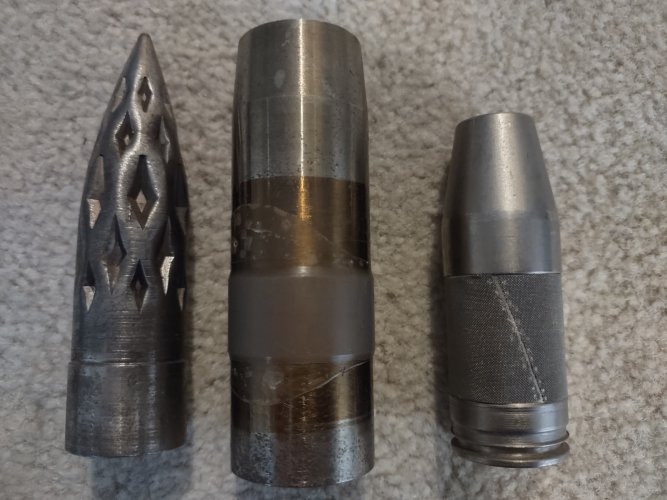
Years ago someone proposed ring/hollow high density rounds, same.kinetic energy little drag and mass impact would destroy target.
1000042886.jpg
 
No. The Gold Team DD(X) was originally designed with 40mm L70 (basically what we'd now call Mk3) mounts as a Close-In Gun System, for small boat targets. These were replaced by 57mm CIGS in the Zumwalt contract design because the Navy didn't want to support both 40mm and 57mm. Then the 57mm were replaced by 30mm in 2014 because someone didn't like the 57mm and ginned up a not very convincing study that 30mm was more effective than 57mm. And also cheaper. Did I mention cheaper?
Okay, Mk110 as CIGS, which allegedly wasn't super AA capable. (says who? the 57mm throws a lot of flak up, and has a guided anti-missile round available!)

And my brain keeps wanting to parse that acronym as CISG, which means Common Internet Shit-Gibbon, aka the poo-flinging monkeys of social media. Something very different.


As designed, none of these were CIWS, which is specific to anti missile defense. The Zs would depend on stealth, countermeasures, SM-2, and ESSM for self-defense against missiles and aircraft. No CIWS at all, for a variety of reasons from signature to effectiveness to manpower and maintenance.
Yeah, there was a serious attack of the Good Idea Fairy there!

Stealth does not get rid of the need for terminal layer point defense.... *facepalm*

But to steal the terms, I'm trying to get the ship's CIGS to have a backup AA capability versus slow things like Shaheds, so the CIWS can concentrate on faster targets.
 
The main difference between a CIGS and a CIWS was that the CIGS lacks closed-loop spotting. Phalanx (and I think other CIWS of its generation) track the outgoing rounds so they can steer the gun onto the target. Lacking an on-mount tracking radar (or dedicated off-board one) a gun like the Mk 110 can't do that. So, acceptable for general AAW usage but not for last-ditch defense. (Note how LPD-17 had RAM and Mk 46 guns, because they were for different roles. Same for LCS.)

As far as the Zs, think countermeasures. Those ships were built to be very easy for decoys to work on, because their ownship signature was so small. The designers also knew that a close-aboard intercept, as was likely with CIWS, was basically like firing a shotgun at your ship. They preferred to avoid the hit entirely. This wasn't just a random idea, it was deeply modelled. CIWS on these ships made damage avoidance harder, not easier.
 
Last edited:
Okay, Mk110 as CIGS, which allegedly wasn't super AA capable. (says who? the 57mm throws a lot of flak up, and has a guided anti-missile round available!)
Is the guided anti-missile round available and proven? MAD-FIRES went nowhere so which is its replacement? But if the guided AA round happens, the 57mm becomes an anti-missile weapon that filters incoming threats to reduce expenditure of CIWS ammo from limited magazines.
But to steal the terms, I'm trying to get the ship's CIGS to have a backup AA capability versus slow things like Shaheds, so the CIWS can concentrate on faster targets.
That distinction looks to be an artificial result of reliance on high RoF CIWS that weren't dual purpose. If you have multiple CIWS in positions suitable for surface or air modes, you can still have all of them firing at supersonic targets. Compared to the traditional single CIWS above the hangar being the only thing firing as the range closes. And with swarm attacks its not a single target anymore.
 
In terms CIWS, I can imagine battleship with Two island/towers. Above/near consist CIWS guns embedded with most of it inside; thus mitigating most of the external exposure and maintenance. Also allows reloading indoors.


40379393270_3614b7155b_b.jpg
 
Is the guided anti-missile round available and proven? MAD-FIRES went nowhere so which is its replacement?
L3 Tech's Mk332Mod0 HE-4G, aka ALaMO.


But if the guided AA round happens, the 57mm becomes an anti-missile weapon that filters incoming threats to reduce expenditure of CIWS ammo from limited magazines.
Correct. Which is why I've been pushing 30x173mm guns for the last-ditch effort, on top of having 57mm or 76mm guns and RAM. The ship will still catch a whole lot of fragments and may be mission-killed or partially mission-killed because of that, but it beats eating a 500kg internal explosion.


That distinction looks to be an artificial result of reliance on high RoF CIWS that weren't dual purpose. If you have multiple CIWS in positions suitable for surface or air modes, you can still have all of them firing at supersonic targets.
You need 8km range weapons engaging supersonic targets. Whether that's RAM, 76mm DART, or 57mm HE4G. And ideally both RAM and one of the two guns.

Because a M2.5-3.5 missile is closing at roughly 1km/sec, spending roughly half a second inside the kill range of Phalanx or any other 20-35mm gun CIWS.

Even a 40mmL70 only has a 4km range, but that does mean that a supersonic AShM will spend about 3 seconds inside the kill range of the OTO DARDO Fast 40mm.


Compared to the traditional single CIWS above the hangar being the only thing firing as the range closes. And with swarm attacks its not a single target anymore.
The fundamental assumption for 1-2 Phalanx guns per ship was that your formation would only have ~2 leakers for each ship getting past your formation's missile barrage.

And that's no longer a reasonable assumption.
 
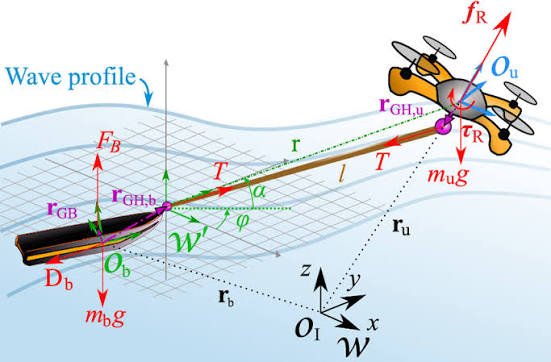
Years ago UK naval officer conceptual Dreadnought 2050 1000042989.jpg featured Quadrotor tether drone. 1000042990.jpg

With elevation comes superior line of sight beyond horizon.
A tether drone cannot be hacked as no signal conveyed delay. Data and power presumably provided a "Crows Nest" could have at their disposal lasers or modern sense interceptor missiles, high velocity short range.
 
L3 Tech's Mk332Mod0 HE-4G, aka ALaMO.
But ALAMO isnt an anti-missile round. It might be worth testing it in that role in a programmed airburst version, but I havent heard of it being configured or tested for that. Maybe have another go refining the BAE one? Or beg for a 57mm DART...
Even a 40mmL70 only has a 4km range, but that does mean that a supersonic AShM will spend about 3 seconds inside the kill range of the OTO DARDO Fast 40mm.
We are talking about effective range, which makes sense, but its not a hard number. You probably use twice the ammo for a kill 50% further away, and your AEGIS should use that to engage supersonic threats earlier.

I agree you want to intercept as far away as possible, especially if your mount has a large magazine. 35mm AHEAD has more range than Phalanx, and 40mm slightly more again, but any gun with unguided airburst ammo loses accuracy at maximum range. Thats why USN needs a 57mm guided anti-missile round, perhaps ORKA. If not 100% effective, at least it should filter the most dangerous threats until MAD-FIRES is available. Without that, the imaginary battleship is vulnerable to anything that gets inside the minimum ESSM range.
 
Dreams and fantasies are free and cheap until you turn them into reality. It's not like the higher ups are paying any penny for this either. And with future budgets of 1.7+ trillions/year there's plenty to play around with anyway.

Looking around I see only 4 places where sponson makes sense with stealth. I took inspiration from the European ships having inverted angles at the hangar's top corners. The size constraints is just sufficient for a manned gun station. Trump-class+sponsons.png
Anyhow, despite being wide the corners easily become too crowded for my taste. A hit on any turret could damage all neighboring ones. RAM launchers are a bit too tall with the power pack beneath.

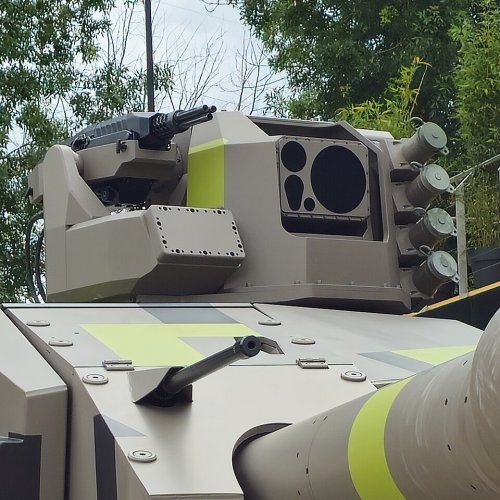
It might be a good idea to add a little gun on the sides of all observation stations. It would save a man on deck while ready to intervene. KF-51U_11.jpg
 
Dreams and fantasies are free and cheap until you turn them into reality. It's not like the higher ups are paying any penny for this either. And with future budgets of 1.7+ trillions/year there's plenty to play around with anyway.

Looking around I see only 4 places where sponson makes sense with stealth. I took inspiration from the European ships having inverted angles at the hangar's top corners. The size constraints is just sufficient for a manned gun station.View attachment 820485
Anyhow, despite being wide the corners easily become too crowded for my taste. A hit on any turret could damage all neighboring ones. RAM launchers are a bit too tall with the power pack beneath.

It might be a good idea to add a little gun on the sides of all observation stations. It would save a man on deck while ready to intervene.View attachment 820487
If want stealth, integrate most offensive weapons inside. 1000043029.jpg 1000043028.png

Stealth integrates by incorporating what it can internal bays. Or shaping and hiding what can't be stored inside like radar or guns.

External weapons like seaRAM, solution to that. Fabric/stretch skin.

Google BMW Gina concept instead of body panels the entire vehicle is made high tension fabric that stretches and reforms so hinges and seams are virtually non-existent.

1000043027.jpg
 
In terms CIWS, I can imagine battleship with Two island/towers. Above/near consist CIWS guns embedded with most of it inside; thus mitigating most of the external exposure and maintenance. Also allows reloading indoors.
Thats why medium guns go in turrets on a ship. Best if its a below deck magazine for the ressons you mentioned. Maximum traverse.
 
If want stealth, integrate most offensive weapons inside.
Most stealth ships being build today are no fully stealthy because it doesn't prevent them from being detected. The fully stealth ships seem to be Zumwalt, Visby, Mogami, Hujinghao, and the perhaps the LCSs.
More important than being stealthy is to confuse missiles via RCS manipulation. The japanese seem to have employed this for Mogami along other internal structural features I've not seen with others yet.
View attachment 820493

Stealth integrates by incorporating what it can internal bays. Or shaping and hiding what can't be stored inside like radar or guns.

External weapons like seaRAM, solution to that. Fabric/stretch skin.

Google BMW Gina concept instead of body panels the entire vehicle is made high tension fabric that stretches and reforms so hinges and seams are virtually non-existent.

View attachment 820495
The probem with internal weapons is limited arcs. And the fexible covers might not be good with salt water. Whether they are stealthy is another question. These have existed for 2 decades for aircraft but seems temperature or endurance or lifetime & cost has prevented them from being used.
There are also semi conformable/morphable and some selfhealing material floating around for as long and yet none made it into production cars yet.
 
And then battleships will have casemate guns again, and we've gone full circle!

You've said this a couple of times, and you're wrong.

Both guns were removed, but the 4 CPS tubes were mounted in the space of the front gun, the aft gun reveived a little deck housing (The front gun tube cover left for whatever reason, maybe stealth requirments? Radar returns be funky, yo), and in front of the CPS tubes is a little breakwater deck hut.

My guess is that the aft gun was removed simply because it was effectively non-functional anyway (lack of ammo), and it maybe they needed to lose some weight without fucking with stability too much.

So there's space for EIGHT CPS tubes, but maybe not enough margins.
The housing might be used for control equipment and or firefighting specific ones due to increased danger these launchers pose.
 
Most stealth ships being build today are no fully stealthy because it doesn't prevent them from being detected. The fully stealth ships seem to be Zumwalt, Visby, Mogami, Hujinghao, and the perhaps the LCSs.
More important than being stealthy is to confuse missiles via RCS manipulation. The japanese seem to have employed this for Mogami along other internal structural features I've not seen with others yet.

The probem with internal weapons is limited arcs. And the fexible covers might not be good with salt water. Whether they are stealthy is another question. These have existed for 2 decades for aircraft but seems temperature or endurance or lifetime & cost has prevented them from being used.
There are also semi conformable/morphable and some selfhealing material floating around for as long and yet none made it into production cars yet.
Issue internalized weapons is not space. Sure if you just slap some weapons above on deck it takes less internal space. VLS was created save space. Every canister was its own launcher. No complex mechanical magazine handling. A Perry frigate had 40 round magazine, one launcher. The Dutch De Zeven, has 40 cells, with ESSM that's 64 missiles plus.

But a ship with solely internalized capacity to be a chunkster. Awkward for basic deck handling. But good protection against the elements.

Limited arcs are compensated for with multiple setups or aiming divided infrastructure in all directions, fore, aft, port, starboard. Most of your defensive weapons designed to respond immediately to threats so CIWS and counter guns and main deck guns are external anyways.

1000043049.jpg

Like I said before most weapons designed for immediate defense are external, where as offensive planned premeditated to Attack or long range bombardment, are stored internally. This design philosophy of virtually every modern warship, except Russia who Rambo it with extra stuff.

Using antique battleship argument, before missiles, all munitions were internal until they left the barrel. Self defense weapons like anti-air guns ,hedgehogs, depthcharges and modern sense anti submarine grenades usually external. Other aspect external weapon to blend their geometry to stealth profile.

But stealth in Age ever evolving radar resolution and Now Optical sensors put doubt about stealth efficacy.
 
What learned about history of Battleships is psychological investment of people who build them and physiological toll when they're destroyed.

USS Maine due mysterious but likely subtrefuge or accident.

Mines during Russo-Japanese War. Turkish mines sank 3 battleships alone 1915.

15 battleships lost WWI.
32 during WWII.

In any case, the loss Moskva albeit not a battleship, served similar crutch. She was symbol of the past, served little use was highly vulnerable close to shore. The loss modern lesson efficacy of new weapons and tactic especially one participant lacking contemporary navy to fight with, as she was sunk from shore battery.

Lesson here is only safe defense is wall of lead strategy. How many CIWS guns do they need. During WWII battleship entered Pacific with 60-100 anti-aircraft guns.
I wouldn't send battleship out sea without least 10.
 
What learned about history of Battleships is psychological investment of people who build them and physiological toll when they're destroyed.

USS Maine due mysterious but likely subtrefuge or accident.

Mines during Russo-Japanese War. Turkish mines sank 3 battleships alone 1915.

15 battleships lost WWI.
32 during WWII.

In any case, the loss Moskva albeit not a battleship, served similar crutch. She was symbol of the past, served little use was highly vulnerable close to shore. The loss modern lesson efficacy of new weapons and tactic especially one participant lacking contemporary navy to fight with, as she was sunk from shore battery.

Lesson here is only safe defense is wall of lead strategy. How many CIWS guns do they need. During WWII battleship entered Pacific with 60-100 anti-aircraft guns.
I wouldn't send battleship out sea without least 10.
You realize you're fighting a war of the past. CIWS guns are useless against ASBM/hypersonics, very marginal vs high supersonic ASM, or limited use vs terminally maneuvering subsonic ASM.

Things they are useful against are seababy type antiship drones or slow drones like FPV/shahed. You're indexing way too hard on Ukraine and Iranian conflicts. All of these can be easily served by guided 5 inch rounds with much longer range an no need to look like a pre-dreadnought.

These will not appear in any number in the Pacific conflict in which the USN is mostly concentrated on now due to range and the fact that China is vastly more capable than Ukraine, Iran, or Russia and has the first line useful weapons mentioned at the start of the reponse.
 
CIWS guns are useless against ASBM/hypersonics, very marginal vs high supersonic ASM, or limited use vs terminally maneuvering subsonic ASM.
Yes, they are. It's why I'm pushing for RAMs and 76mm as the secondary AA fit (primary AA being SM2s or SM6s), with some 30mm for terminal leakers.


Things they are useful against are seababy type antiship drones or slow drones like FPV/shahed. You're indexing way too hard on Ukraine and Iranian conflicts. All of these can be easily served by guided 5 inch rounds with much longer range an no need to look like a pre-dreadnought.
Disagree here.

AShBMs/Hypersonics and supersonic AShMs need to be engaged at significantly further distances than anything under 57mm can reach. Even a Bofors 40mmL70 doesn't have the reach to smack down incoming before your own ship catches a lot of fragments. The USN figured this out in WW2 with kamikazes.

But it is better to have some last-km terminal defenses because mission kill or partial mission kill from close-aboard explosion is a lot better than catching a direct hit.
 
Yes, they are. It's why I'm pushing for RAMs and 76mm as the secondary AA fit (primary AA being SM2s or SM6s), with some 30mm for terminal leakers.


Disagree here.

AShBMs/Hypersonics and supersonic AShMs need to be engaged at significantly further distances than anything under 57mm can reach. Even a Bofors 40mmL70 doesn't have the reach to smack down incoming before your own ship catches a lot of fragments. The USN figured this out in WW2 with kamikazes.

But it is better to have some last-km terminal defenses because mission kill or partial mission kill from close-aboard explosion is a lot better than catching a direct hit.
Your 76mm won't be able to engage hypersonics and ASBM sucessfully. Intercept success rate will be low but not non-existant vs high supersonic ASM, and the better solution there is just terminally guided 5 inch to engage 10 or more miles out.

Kamikazes are an entirely different story than high supersonic ASM, much slower so less momentum to hit target once hit, and very limited in terminal manuvers vs a 30-40g missile.
 
Your 76mm won't be able to engage hypersonics and ASBM sucessfully.
Correct, and it is not expected to. You have missiles for that.


Intercept success rate will be low but not non-existant vs high supersonic ASM, and the better solution there is just terminally guided 5 inch to engage 10 or more miles out.
At 16-18km range (depending on which mile you're talking in), you're still in ESSM range.

At 8km you're in RAM and 76mm DART/Strales range. DART is command-guided instead of terminally-guided, but that saves you from having to acceleration-harden terminal seekers.


Kamikazes are an entirely different story than high supersonic ASM, much slower so less momentum to hit target once hit, and very limited in terminal manuvers vs a 30-40g missile.
Correct, kamikazes are basically subsonic cruise missiles. So if a whole mess of 40mm can't stop a subsonic cruise missile, what makes you think anything smaller is going to work?
 
Correct, and it is not expected to. You have missiles for that.


At 16-18km range (depending on which mile you're talking in), you're still in ESSM range.

At 8km you're in RAM and 76mm DART/Strales range. DART is command-guided instead of terminally-guided, but that saves you from having to acceleration-harden terminal seekers.


Correct, kamikazes are basically subsonic cruise missiles. So if a whole mess of 40mm can't stop a subsonic cruise missile, what makes you think anything smaller is going to work?
Command guided is full of issues, you can only engage a limited number of targets and target engagement accuracy falls off very quickly even at short range requiring much larger guidance radars. If you want to engage many targets in different sector you'll need allot of guidance radars. Even with one radar per gun I dont' think the 76mm as built can fire bursts. It's shoot-look-shoot, instead of shoot-shoot-look. It wasn't a system designed for peer conflict.

I am not advocating for smaller guns. I am saying 76mm or lower guns cannot provide significant capability for peer conflict with China. The 5inch can work for sub/high supersonic ASM if it has saboted rounds with terminal seekers. The only reason I'm advocating for the 5 inch is because navies seem to want to put one on most ships. So if it's there it might as well be useful.
 
Last edited:
Command guided is full of issues, you can only engage a limited number of targets and target engagement accuracy falls off very quickly even at short range requiring much larger guidance radars. If you want to engage many targets in different sector you'll need allot of guidance radars. Even with one radar per gun I dont' think the 76mm as built can fire bursts. It's shoot-look-shoot, instead of shoot-shoot-look. It wasn't a system designed for peer conflict.
Even if each 76mm gun can only shoot-look-shoot, that's why I am talking about 4 RAM and 4-6 76mm turrets. Each turret has its own command-link antenna attached, so you should be able to put 3x RAM and 3-4x 76mm to either quarter.

76mm DART time of flight to 5km is 5sec, even being somewhat pessimistic about the DART round's ballistic coefficient time of flight to 10km it should be less than 15sec to 10km.


I am not advocating for smaller guns. I am saying 76mm or lower guns cannot provide significant capability for peer conflict with China. The 5inch can work for sub/high supersonic ASM if it has saboted rounds with terminal seekers. The only reason I'm advocating for the 5 inch is because navies seem to want to put one on most ships. So if it's there it might as well be useful.
Except we'd have to develop said guided round for the 5", while the rounds already exist and are in series production for the 76mm. Crud, the 76mm probably has missile/drone kills in the Red Sea.
 
Command guided is full of issues, you can only engage a limited number of targets and target engagement accuracy falls off very quickly even at short range requiring much larger guidance radars. If you want to engage many targets in differe
Aren't you confusing command guidance with semi-active guidance? The command link is probably being updated from electro-optical sensor on the ship or turret, and the on-mount radar just adds to that. Compared to the radar on a Millennium Gun just measures projectile velocity so it can update the timed airburst for the next round, targeting normally comes from ship systems or separate off-mount sensors.

I also just looked up the ORKA round. Its intended to target swarms of surface FAC, its not an anti-air projectile. USN decided it was overkill and went with the cheaper ALAMO. So there's still no guided 57mm anti-missile round, just the 3P. So theres currently less range advantage for 57mm in the AA role because 3P is unguided and loses accuracy at longer range. At least it could filter missiles that get past the RAM, probably effective 3P range less than 4km against manoeuvring ASMs. As the main air defence gun in VSHORAD range, it still shouldn't replace the last ditch CIWS role.

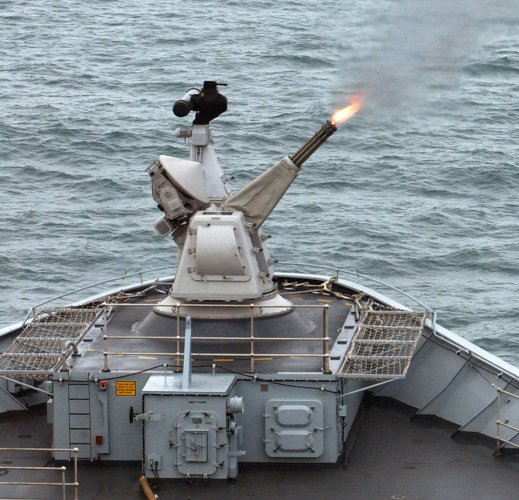
GOKDENIZ carries a variant of Oerlikon 35 mm twin cannon, manufactured under licence by MKEK. I think its dual feed and seems to have sensors on the mount. If Aselsan can do it, why is it so hard for America to replace the Phalanx...
 
Last edited:
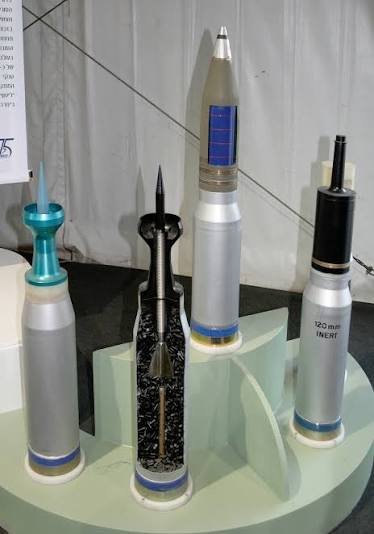
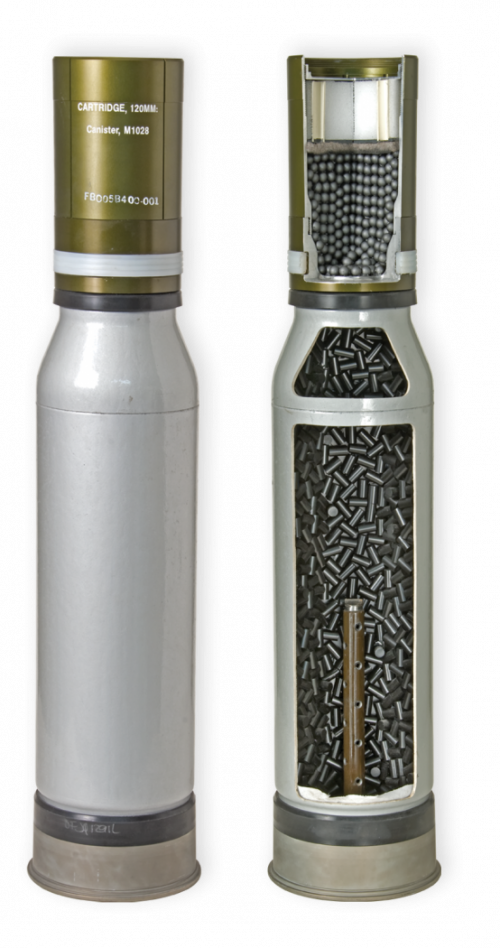
The canister cartridge on Abrams Gun being ideal anti drone weapon. Scaled to 57/76 mm guns.

Hypersonics, that's iffy. But hypersonic dart could potentially intercept high velocity weapons 1000043078.jpg

1000043077.png
 
Aren't you confusing command guidance with semi-active guidance? The command link is probably being updated from electro-optical sensor on the ship or turret, and the on-mount radar just adds to that. Compared to the radar on a Millennium Gun just measures projectile velocity so it can update the timed airburst for the next round, targeting normally comes from ship systems or separate off-mount sensors.

I also just looked up the ORKA round. Its intended to target swarms of surface FAC, its not an anti-air projectile. USN decided it was overkill and went with the cheaper ALAMO. So there's still no guided 57mm anti-missile round, just the 3P. So theres currently less range advantage for 57mm in the AA role because 3P is unguided and loses accuracy at longer range. At least it could filter missiles that get past the RAM, probably effective 3P range less than 4km against manoeuvring ASMs. As the main air defence gun in VSHORAD range, it still shouldn't replace the last ditch CIWS role.

GOKDENIZ carries a variant of Oerlikon 35 mm twin cannon, manufactured under licence by MKEK. I think its dual feed and seems to have sensors on the mount. If Aselsan can do it, why is it so hard for America to replace the Phalanx...
I am not. With command guidance you need to constantly provide updates to the round as the round doesn't know where it is. So you need to track both the round and the target. What the Millennium Gun or similar does will not work when the target intercept point is 5km away and 7-8s of flight time. Effective 3P range is much less than 4km vs manuvering ASM. That's 5 or more seconds of flight time, the missile can displace quite a bit in that timeframe.

Even if each 76mm gun can only shoot-look-shoot, that's why I am talking about 4 RAM and 4-6 76mm turrets. Each turret has its own command-link antenna attached, so you should be able to put 3x RAM and 3-4x 76mm to either quarter.

76mm DART time of flight to 5km is 5sec, even being somewhat pessimistic about the DART round's ballistic coefficient time of flight to 10km it should be less than 15sec to 10km.


Except we'd have to develop said guided round for the 5", while the rounds already exist and are in series production for the 76mm. Crud, the 76mm probably has missile/drone kills in the Red Sea.
In 10s a M3 high supersonic ASM can close 10km and your 76mm round with a 1100 m/s muzzle velocity has moved 7km with a stated effective range of 8km. That says everything about why 76mm systems won't work. The super rapide 76mm guns also require deck penetration.

5" guided rounds have been in development and are supposed to undergo testing next year.
 
Last edited:

Similar threads

Back
Top Bottom