Modern Russian UAV and UCAVs

tequilashooter

ACCESS: Top Secret
Joined
1 January 2021
Messages
699
Reaction score
901
UAV displays from Russia, the USA, China, Iran and Turkey.

 
Ok, interesting proof of concept but another thing for it to be turned into a operational platform.
 
Ok, interesting proof of concept but another thing for it to be turned into a operational platform.

I dont know about drone platform but some sources suggest cars as well. https://zen.yandex.ru/media/airline...avtomobilia-v-rossii-610659516e5fea7817ef6757

Nowadays, the prototype is being tested, and in the next three years, the creators plan to launch mass production:

  • unmanned "Cyclodoron" with take-off weight of 60 kg and carrying capacity up to 20 kg
  • optionally piloted "Cyclocar" take-off weight of 2000 kg and carrying capacity of up to 600 kg. Flights of the cyclocara with a capacity of 6 people are scheduled for 2022. It is assumed that it will be no more difficult to drive than a car. Cyclocar is able to sit on inclined surfaces and moor for embarkation / disembarkation of passengers to a vertical surface (remember the air taxi from the movie "5th element")
  • in the most distant future, the transport "Cyclotrak" with a take-off weight of about 10,000 kg and a carrying capacity of up to 4,000 kg
 
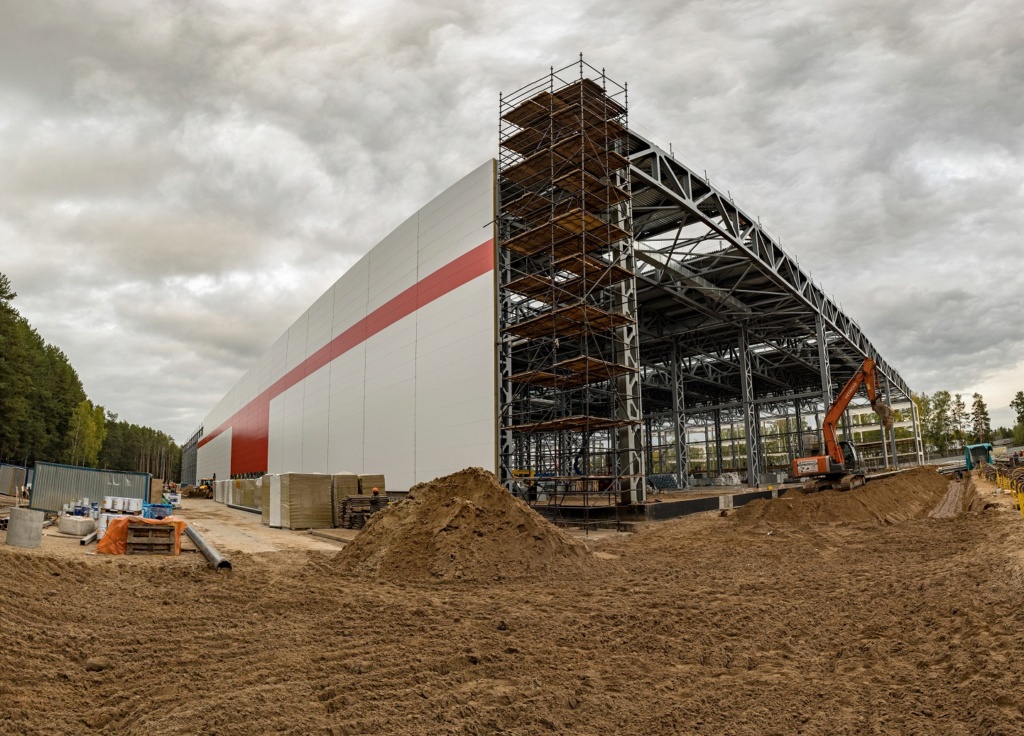
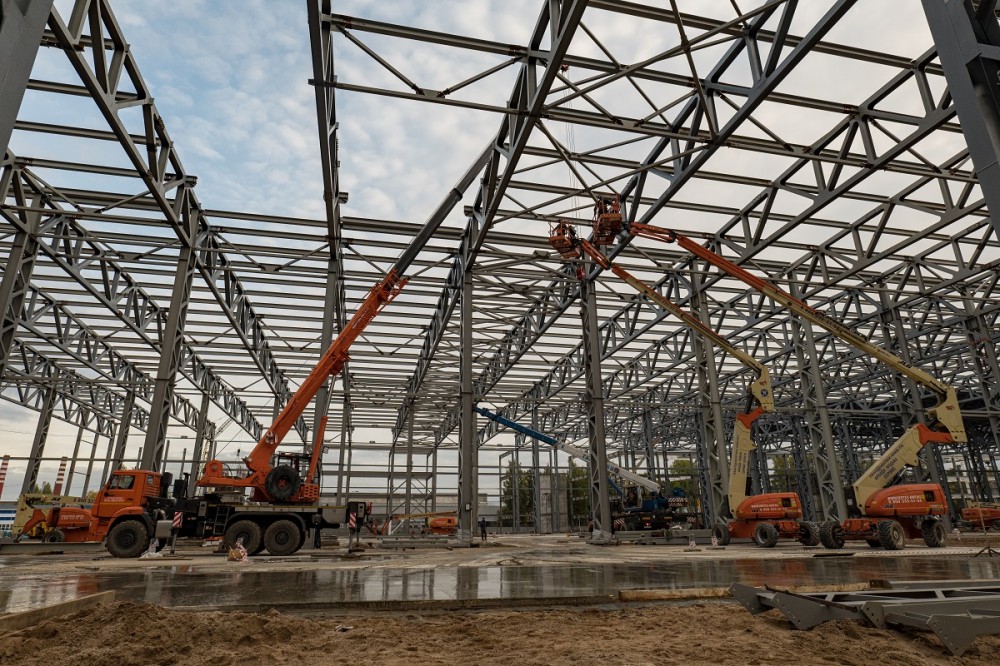
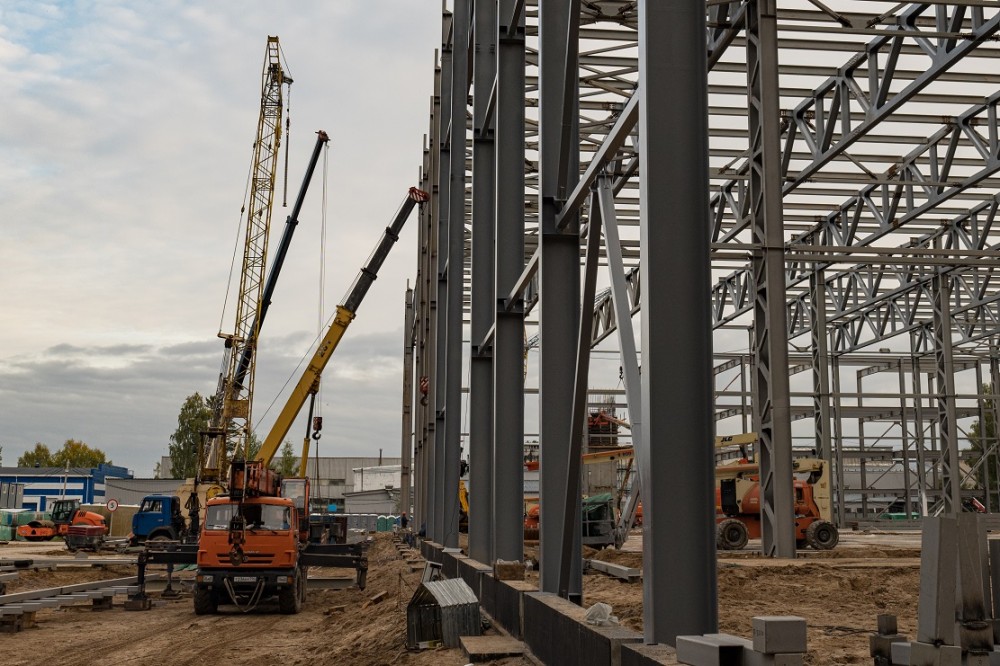
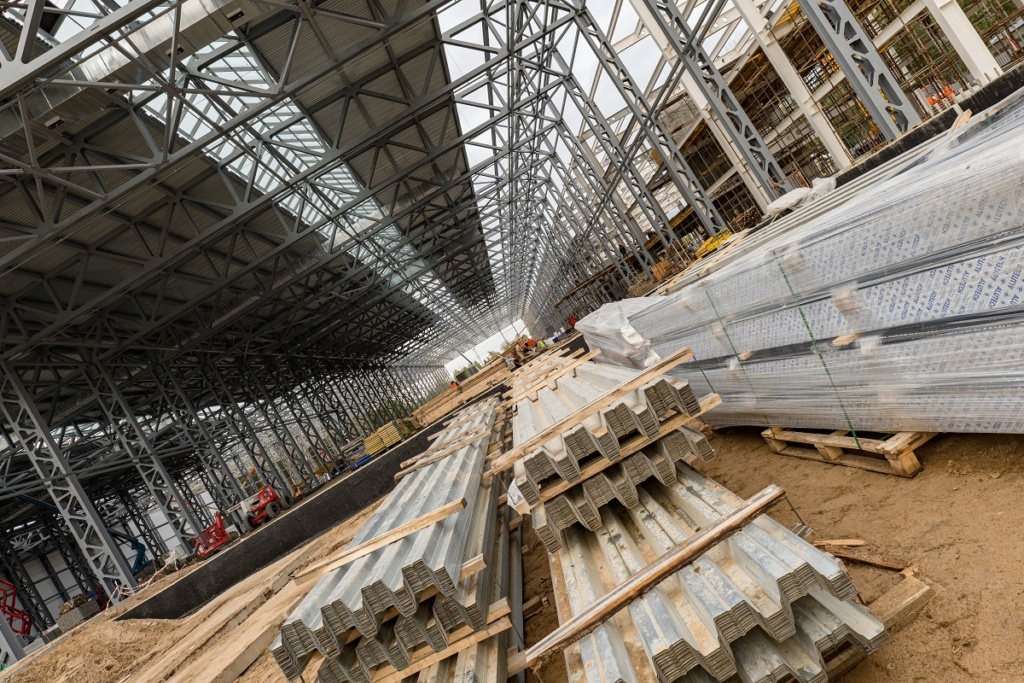
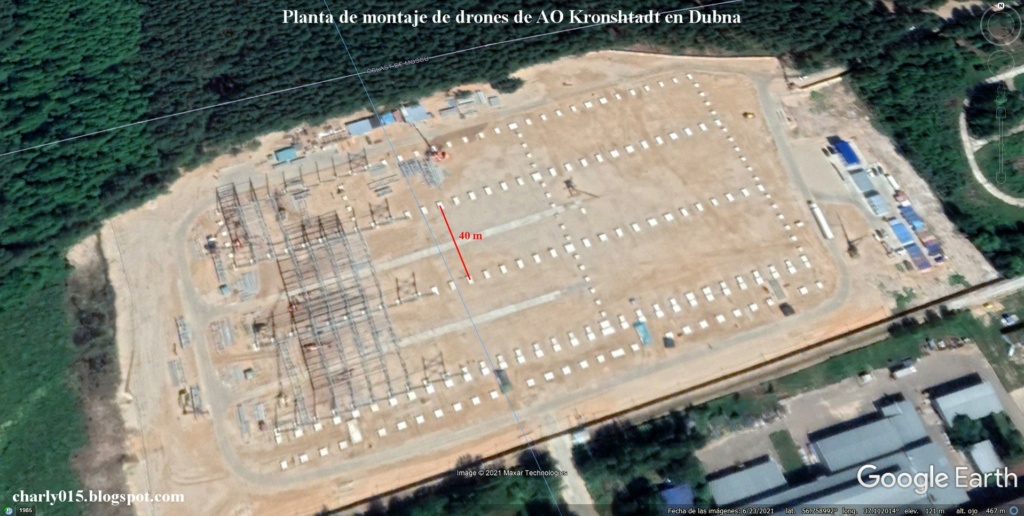
Construction of JSC "Kronshtadt" of a plant for the production of unmanned aerial vehicles in Dubna.

1142.jpg

2117.jpg

395.jpg

468.jpg

drones10.jpg


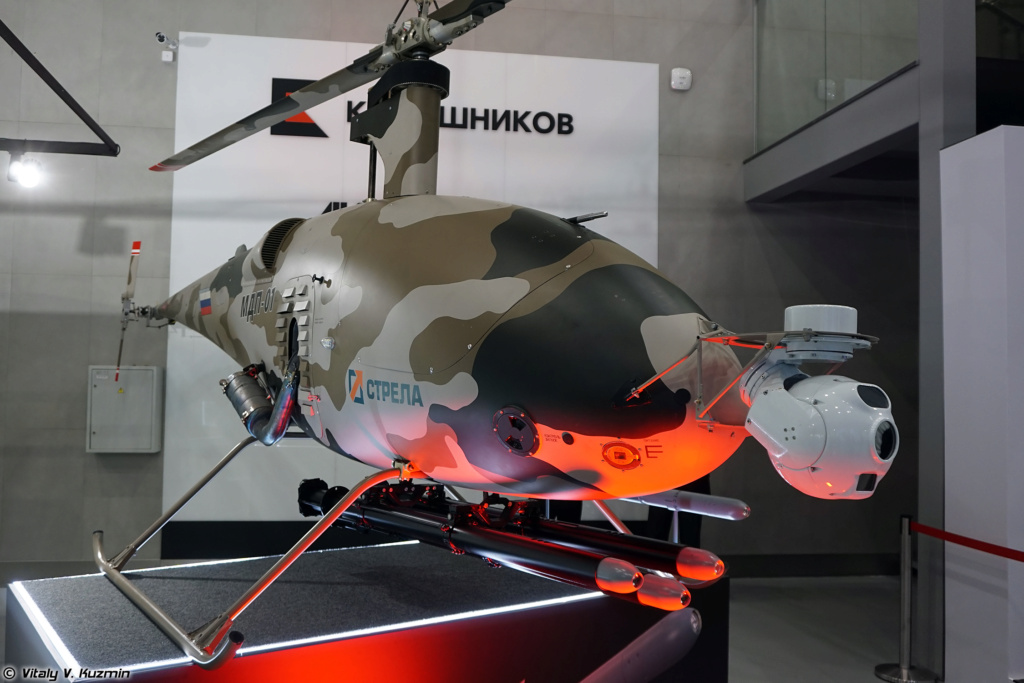
MOSCOW, November 3. / TASS /. Development work (ROC) on the creation of a reconnaissance and attack helicopter-type drone under the code "Termit" will be completed by the end of 2021. The head of the special design bureau of the Strela Scientific and Production Enterprise (NPP) (part of the Kronstadt company) Boris Trunov told about this to the RT TV channel .

"In terms of practical firing of unguided and corrected aircraft missiles, our helicopter-type unmanned aerial vehicle is the first and only product in its class in Russia. At present, it is an experimental model designed to test the correctness of the adopted technical solutions for the installation and placement of aircraft on UAVs. defeat, but in 2021 we plan to complete the ROC, "Trunov said.

According to him, the delivery of the first samples to the troops is scheduled for 2022.

"We work with Kalashnikov in cooperation, we carry out practical shooting. If we talk about the key elements of the UAV, then almost all of them are manufactured at Strela, including such equipment as the weapons control system and observation and sighting station," added Trunov ...

He noted that the main advantage of "Termit" is its off-airfield capabilities and operation from unprepared sites in engineering terms: autonomous vehicles are capable of taking off and landing almost everywhere. Such devices have the ability to hover over objects. The drone is equipped with a surveillance and sighting station, a weapon control system, missiles with a laser homing head of 80 mm caliber. The Termit can track and lock the target autonomously, the operator only makes a decision about the defeat.

During the Army-2021 International Military-Technical Forum, the RF Ministry of Defense signed a state contract with the Strela Research and Production Enterprise for the supply of complexes with Platform and Termit helicopter-type drones.

000926.jpg


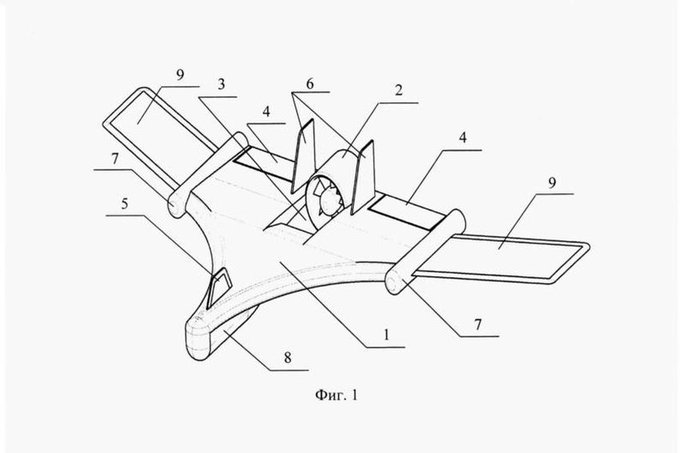
The body of the drone is made according to an integrated aerodynamic scheme. In the tail of the device is installed the engine, and in the nose - a controlled front vertical plumage. The drone is also equipped with vertical keels and elevons.

As a result, the aircraft will have increased maneuverability in the horizontal plane. It will also be able to fly around the surface.

"In order to ensure flight at extremely low speed when skirting the surface, the aircraft is equipped with additional wings. At an extremely high speed at the final stage of the flight task, additional wings are made with the possibility of resetting in flight, "the documentation says.

Additional wings are located inside the drone, but during the flight they are extended and fixed on the body. The invention is able to search for targets and select them by distance using video modules of an optical stereoscopic homing head.

Earlier, "Secret" saidthat Russia began to create the country's first naval kamikaze drone. We are talking about a modification of the land version of the KUB-UAV drone, which can be used on high-speed transport and landing boats and special purpose ships.


Wonder whats more interesting the design or that a nuclear center designed it.
FDlF959XIAAFpO1
 
Kornet adapted for AA use from drones:

Is it known when the reportage airs fully in Russia? I understand that this is the snippet uploaded by the personal account/editor's account for Rogatkin.


EDIT:

Another video by the same channel showing the hit from a thermal imager some distance away from the drone helo.


I noticed in the Orion camera view that the drone is barely discernable against a bright IR reflection, while in this view the fuselage of the drone is visible with a bright dot on it, in my amateur opinion I think this might be an indication of laser homing being the guidance method behind this modified Kornet, which is a quite interesting change.

A RIA article also stated that not only was there laser guidance, but thermal homing as well. All in all, a useful addition for Russia's arsenal for COIN/non-peer adversaries.
 
Last edited:
If the red stars are accurate on the orion drone it looks like most of the weapons deployed were bombs.
 
MOSCOW, January 20. /TASS/. The Moscow Aviation Institute (MAI) is developing a unique autonomous navigation system that allows drones to operate successfully even, when a GPS signal is lost, it said in a statement.

The algorithms, cameras and sensors allow them to navigate in space, while the built-in neural network analyzes the video stream and detects people.

"We have created a system that allows a drone to ‘understand’ where it is based on its own ‘sensations’ in the form of an inertial system and computer vision. A special camera performs the function of vision, and inertial sensors are responsible for the perception of movements. Our algorithm analyzes incoming information in real time, estimating the position, speed and orientation of the aircraft. Combining these data will ensure high accuracy and stability of navigation," Pyotr Ukhov, associate professor of the Department of Computational Mathematics and Programming, Deputy head of the Department of the MAI IT Center said as quoted by the statement.

The technology is based on SLAM (Simultaneous localization and mapping) visual-inertial navigation, which allows the drone to build its own terrain map and track its position even with difficult maneuvers and loss of GPS signals. A team of students from the Institutes of Computer Science and Applied Mathematics, Aviation, Rocket Engines and Power Plants, and the Advanced Engineering School of MAI is working on the project. The key element of the research was the integration of machine learning algorithms that allow the drone not only to navigate in space, but also to detect people in real time.

Advantages​


According to the developers, the solution proposed by the MAI team has important competitive advantages. Many existing analogues either require the installation of expensive and energy-intensive equipment, or operate as separate devices that are not fully integrated into the drone control system. In contrast, in the MAI project, navigation is fully integrated into a hand-made flight controller, which ensures more stable and reliable operation.

"The project was originally conceived as scalable. This will allow the technology to be adapted in the future for various types of unmanned aircraft systems and tasks, such as monitoring hard-to-reach areas, surveying buildings, industrial facilities and emergency zones," Ukhov said.

The development is undergoing field trials. Currently, the team is working to expand the functionality of the system and improve the accuracy of obtaining data on the course and coordinates of the aircraft. Besides, autonomy is increased: it is planned to use human detection to make further decisions, for example, automatically keeping an object in view, clarifying the trajectory, or re-circling the area of interest. Another promising area is to increase the reliability of work in difficult conditions - in poor lighting, smoke, and monotonous scenes. It is planned to bring the project to a complete solution in the second quarter of 2026.

 

Similar threads

Back
Top Bottom