Missiles for Guns

Scott Kenny

ACCESS: USAP
Joined
15 May 2023
Messages
19,656
Reaction score
28,138
Yeah. Personally I think that Soviet doctrine was made more on theoretical speculations than actual procession of wartime experience.
Agreed.

Which is why I think the USN was right, and much better defended early on. Now, interestingly, the Mk13 GMLS is the same diameter as the Bofors or 3"/50 gun tub, but is 4x the weight. Not a good swap, and besides the Mk13 was intended to swap for a twin 5"/38 mount.

Personally, I'd swap half the 3"/50 mounts with Sea Sparrows in Mk29 launchers.
 
Agreed.

Which is why I think the USN was right, and much better defended early on. Now, interestingly, the Mk13 GMLS is the same diameter as the Bofors or 3"/50 gun tub, but is 4x the weight. Not a good swap, and besides the Mk13 was intended to swap for a twin 5"/38 mount.

Personally, I'd swap half the 3"/50 mounts with Sea Sparrows in Mk29 launchers.
RIP Sea Mauler
 
Which is why I think the USN was right, and much better defended early on. Now, interestingly, the Mk13 GMLS is the same diameter as the Bofors or 3"/50 gun tub, but is 4x the weight. Not a good swap, and besides the Mk13 was intended to swap for a twin 5"/38 mount.

Personally, I'd swap half the 3"/50 mounts with Sea Sparrows in Mk29 launchers.
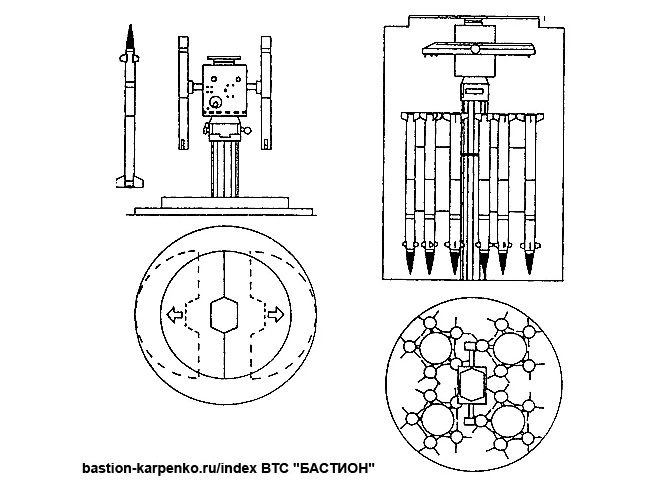
Well, the closest Soviet analogue was Osa-M self-defense SAM system. Albeit I'm not sure, was it designed to fit any specific footprint, or just "be as compact as possible":

1767733601270.png

The whole system is basically fit into the compact cylinder about 5 meters high and 2.5 meters in diameter. The launcher is normally lowered into magazine, only raising up for firing. For reloading, launcher is lowered back into magazine, where 20 missiles are stored on four vertical rotating drums.

The system was developed in parallel with land-based Osa SAM, using same missiles and similar control station. It was actually the common practice for Soviet naval SAM's - they were usually developed in parallel with land-based ones, so they could use common missiles (the only exception was medium-range M-11 Storm, which was developed specifically for Navy and did not have land-based analogue).
 
Well, the closest Soviet analogue was Osa-M self-defense SAM system. Albeit I'm not sure, was it designed to fit any specific footprint, or just "be as compact as possible":

View attachment 797718

The whole system is basically fit into the compact cylinder about 5 meters high and 2.5 meters in diameter. The launcher is normally lowered into magazine, only raising up for firing. For reloading, launcher is lowered back into magazine, where 20 missiles are stored on four vertical rotating drums.

The system was developed in parallel with land-based Osa SAM, using same missiles and similar control station. It was actually the common practice for Soviet naval SAM's - they were usually developed in parallel with land-based ones, so they could use common missiles (the only exception was medium-range M-11 Storm, which was developed specifically for Navy and did not have land-based analogue).
Osa-M's magazine and launcher has always baffled me. I really need to find info on the analysis of alternatives because it seems do obviously terrible, especially with the slow reload rate.
 
Well, the closest Soviet analogue was Osa-M self-defense SAM system. Albeit I'm not sure, was it designed to fit any specific footprint, or just "be as compact as possible":

View attachment 797718

The whole system is basically fit into the compact cylinder about 5 meters high and 2.5 meters in diameter. The launcher is normally lowered into magazine, only raising up for firing. For reloading, launcher is lowered back into magazine, where 20 missiles are stored on four vertical rotating drums.

The system was developed in parallel with land-based Osa SAM, using same missiles and similar control station. It was actually the common practice for Soviet naval SAM's - they were usually developed in parallel with land-based ones, so they could use common missiles (the only exception was medium-range M-11 Storm, which was developed specifically for Navy and did not have land-based analogue).
Yes, that's a pretty close approximation of what I'd want to install in place of probably half the Bofors 40mm or 3"/50s. Or in this case, in place of half the 45mm radar-guided guns.


This was being done because of experience with the Kamikazes. The 40mm was found insufficient to ensure a kill where the aircraft lost aerodynamic flight or could remain largely intact and ballistic. The 3"/50 ensured destruction. That was why, even by late 1944, the 20mm was on its way out and ship's captains were clamoring for more 40mm mounts.
And what is an early AShM but an aircraft-sized kamikaze?
 
Yes, that's a pretty close approximation of what I'd want to install in place of probably half the Bofors 40mm or 3"/50s. Or in this case, in place of half the 45mm radar-guided guns.


And what is an early AShM but an aircraft-sized kamikaze?
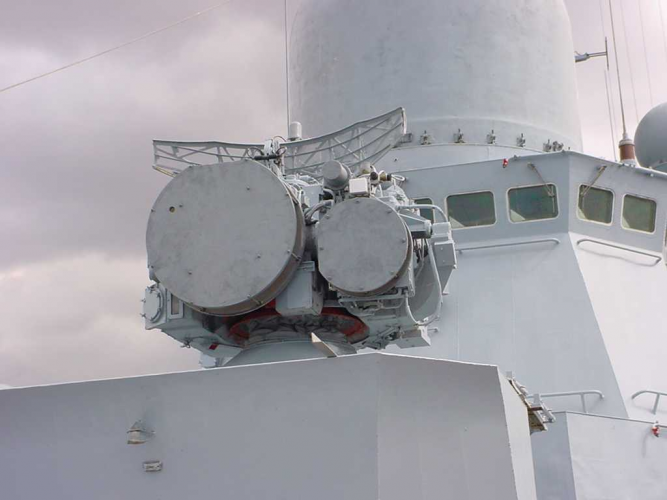
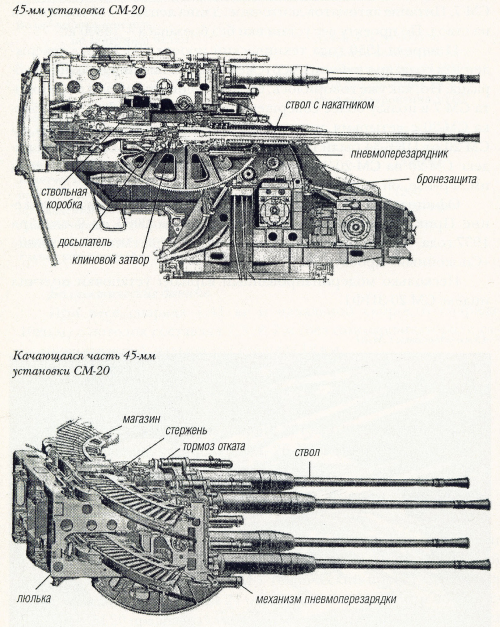
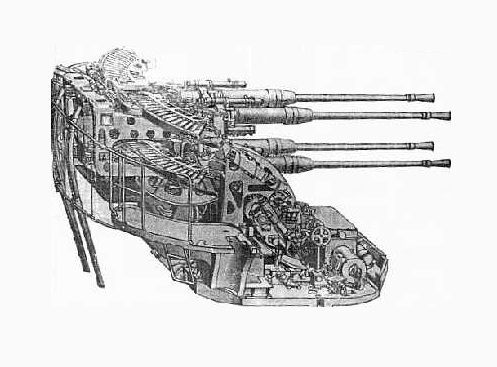
That quad 45mm the Russians were using (the SM-7 IIRC), is pretty iffy as a mount. It's huge for the guns (16 metric tons) and has a small ammo loadout of only 16 RPG that are individually reloaded into feed trays. One of the weird characteristics of it is after you fire off like 30 or so rounds, you use what amounts to a firehose with a special nozzle to flood the barrels and cool the guns off instead of using a water jacket like so many other naval guns in that size range do. So, you flood the barrels, cool them off, then resume firing...

I think that whatever engineer designed that should go to gulag. Maybe it was the same guy that designed the Chernobyl reactor...
 
Last edited:
And what is an early AShM but an aircraft-sized kamikaze?
Some were smaller, but that's the idea. The US and British solution was to develop a SAM that could engage the bomber--usually a twin engine aircraft in the late WW 2 period--beyond launch range which initially was thought to be about 10 NM. If you couldn't get the bomber then you had to engage and shoot down the missile.
 
Osa-M's magazine and launcher has always baffled me. I really need to find info on the analysis of alternatives because it seems do obviously terrible, especially with the slow reload rate.
Well, it was basically designed to be compact & fit everything it might be needed. In that regard, Osa-M was a clear sucess. It could be installed even on ships of about 500 tons displacement - and unlike early Sea Sparrow or Sea Chaparral, it was fully automatic system, with automated search/aquisition/track/guide capability:

1767768394330.png

The system have its own search & aquisition 2D radar (narrow antenna on top), separate track & missile control radars. It did not require integration with ship search radars, and thus could be installed on any unit regardless of its radar suit. Also, it have very fast reaction time, due to search & tracking being separate from each other.

P.S. IIRC, the "lowering launcher" design was developed due to concerns about always-raised launcher representing a problem for small ships - being constantly awash in heavy seas, and/or blocking the guns fire arcs.
 
That quad 45mm the Russians were using (the SM-7 IIRC),
You probably means SM-20-ZIF? The SM-7 was experimental gun not adopted, the SM-20-ZIF used four ZIF-21 guns.

1767769007838.png

and has a small ammo loadout of only 16 RPG that are individually reloaded into feed trays.
Wasn't considered a big problem.

One of the weird characteristics of it is after you fire off like 30 or so rounds, you use what amounts to a firehose with a special nozzle to flood the barrels and cool the guns off instead of using a water jacket like so many other naval guns in that size range do. So, you flood the barrels, cool them off, then resume firing...
No, it was for cooling barrels between long firings.
 

Attachments

  • 1767768800408.png
    1767768800408.png
    118.6 KB · Views: 5
No, it was for cooling barrels between long firings
Yeah, that claim sounds dubious from the start. The Soviets well known for overbuilding stuff could make a barrel thin enough to require manually fed coolant every burst?
 
Yeah, that claim sounds dubious from the start. The Soviets well known for overbuilding stuff could make a barrel thin enough to require manually fed coolant every burst?
Normally, the barrels were air-cooled. But after prolonged firing, the heat buildup was too great and could affect ballistics - so the "fit the hose into breech and pump the water through the barrel" was implemented.
 
You probably means SM-20-ZIF? The SM-7 was experimental gun not adopted, the SM-20-ZIF used four ZIF-21 guns.

View attachment 797742
That's the one. It is listed as the SM 7 on Navweaps and elsewhere while the SM 21 was a single barrel model and SM 20 a prototype of the SM 7 that didn't go into production. Of course, this could be wrong too.

Wasn't considered a big problem.

It is a big problem. You have to keep loading rounds. The need to periodically stop firing and cool the barrels using a Rube Goldburg method is an issue, but it would give time to reload the guns.
No, it was for cooling barrels between long firings.
Everything I've read says 30 to 50 rounds then you need cooling. But even if it's 100, the cyclic of those guns is like 100 to 150 rpm per barrel. What I'm seeing is it needs cooling after 30 to 45 seconds of fire. That's a crippling design flaw if you ask me. It's fine for one target, but if you have multiple ones or one you open up on one at longer range that's closing, you're pretty much hit.

I have also read that the accuracy wasn't great due in part to the way the mount is designed and the guns fire. The Russians claimed this was an advantage as it sprayed rounds in the vicinity of the target. I see it as a mixed design option. At longer range the decreased accuracy is a flaw while at closer ranges it could be an advantage.

The other issue I see as a big problem is the size and weight of the mount. This is a BIG gun mount and system. That means you take up lots of deck space and the top weight becomes an issue. It's like the British STAAG mount with 2 x 40mm. Yea, it's all automated and has this neat fire control system, but it's also complex and weighs a lot. There's a tradeoff there.
 
That's the one. It is listed as the SM 7 on Navweaps and elsewhere while the SM 21 was a single barrel model and SM 20 a prototype of the SM 7 that didn't go into production. Of course, this could be wrong too.
The SM-7 was the gun that was planned to use in the mount. It was not adopted, the ZIF-21 gun was used instead. The complete system was called SM-21-ZIF.

Everything I've read says 30 to 50 rounds then you need cooling. But even if it's 100, the cyclic of those guns is like 100 to 150 rpm per barrel. What I'm seeing is it needs cooling after 30 to 45 seconds of fire. That's a crippling design flaw if you ask me. It's fine for one target, but if you have multiple ones or one you open up on one at longer range that's closing, you're pretty much hit.
Could you show me the sources, please?

The other issue I see as a big problem is the size and weight of the mount. This is a BIG gun mount and system. That means you take up lots of deck space and the top weight becomes an issue. It's like the British STAAG mount with 2 x 40mm. Yea, it's all automated and has this neat fire control system, but it's also complex and weighs a lot. There's a tradeoff there.
Yes, it was a problem. On the other hand, the 57-mm ZIF-75 was even bigger)
 
Well, it was basically designed to be compact & fit everything it might be needed. In that regard, Osa-M was a clear sucess. It could be installed even on ships of about 500 tons displacement - and unlike early Sea Sparrow or Sea Chaparral, it was fully automatic system, with automated search/aquisition/track/guide capability:

View attachment 797740

The system have its own search & aquisition 2D radar (narrow antenna on top), separate track & missile control radars. It did not require integration with ship search radars, and thus could be installed on any unit regardless of its radar suit. Also, it have very fast reaction time, due to search & tracking being separate from each other.

P.S. IIRC, the "lowering launcher" design was developed due to concerns about always-raised launcher representing a problem for small ships - being constantly awash in heavy seas, and/or blocking the guns fire arcs.
Yeah my point was more that the missile and radars were quite solid for the time (especially once MA2 came online) but the launcher's low rate of fire really lowered the saturation limit.
 
Yeah my point was more that the missile and radars were quite solid for the time (especially once MA2 came online) but the launcher's low rate of fire really lowered the saturation limit.
True, but self-defense systems generally aren't supposed to ward off saturation attacks anyway.
 

Similar threads

Back
Top Bottom