Mil' Mi-28 versions

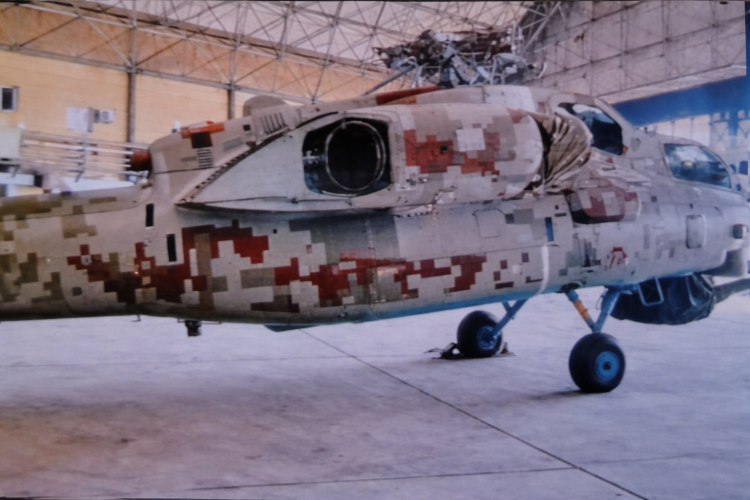
IRST or DIRCM was indeed the first thing that came up in my mind. However its placement does raise some questions regarding the possibility of it being a DIRCM system.

It is shielded from the back (protecting the crew from laser?), only providing 180ish degree top frontal coverage.

The argument for it being an IRST system seems more convincing to me but who knows.
 
What's the purpose of an attack Helicopter in Iran? Seems like wasted money, because in their case on particular they don't offer anything of value. All their adversaries have air superiority over them and won't deploy armor or even infantry. In any war against Iran's enemies, these wouldn't leave the ground.
 
What's the purpose of an attack Helicopter in Iran? Seems like wasted money, because in their case on particular they don't offer anything of value. All their adversaries have air superiority over them and won't deploy armor or even infantry. In any war against Iran's enemies, these wouldn't leave the ground.


Maybe UAV or Kamikaze drone is so Usefully like on Ukraine -russia war
 
Maybe UAV or Kamikaze drone is so Usefully like on Ukraine -russia war
Iran holds the drone advantage over it's enemies, all of which have weak long range drone capabilities and rely on low volume, high capability, high price tag missiles. A Helicopter is not suitable
 
Iran holds the drone advantage over it's enemies, all of which have weak long range drone capabilities and rely on low volume, high capability, high price tag missiles. A Helicopter is not suitable

yeah, but the reality in battle is the weapons used to kill Drones/UAVs are generally more expensive , don't forget Israel Drone Hermes 900 and Heron TP drones destroy some military, facility nuclear, and drone storage sites in June 2025. Iran's military leaders not fool, they have reason why buy Mi-28.
 
Iran holds the drone advantage over it's enemies, all of which have weak long range drone capabilities and rely on low volume, high capability, high price tag missiles. A Helicopter is not suitable
IRIAA is consistently used to fight tribal rebels near unstable borders (which is, in Iranian case, most of them).
Surviving AH-1s are used to death and then some, but at some point you need to let it die.
 
Crowd suppression?

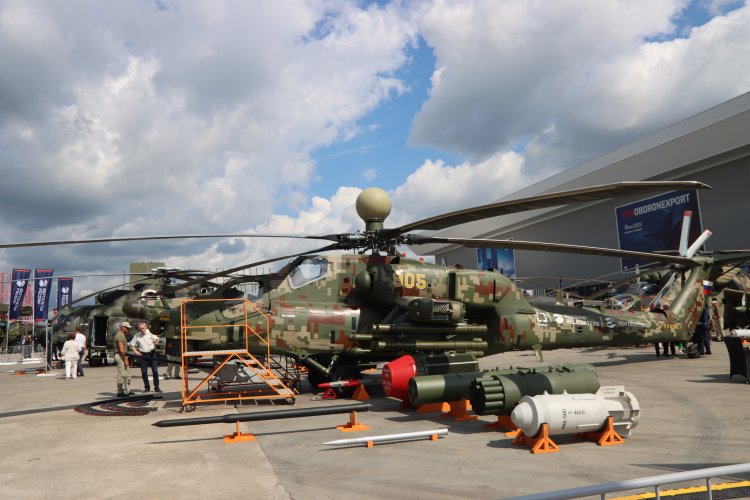
Evidence Of Mi-28 Havoc Attack Helicopters Delivered To Iran Grows​

https://www.twz.com/air/evidence-of-mi-28-havoc-attack-helicopters-delivered-to-iran-grows
It's for Artesh (aka Iranian military), not IRGC.
I.e. no.

Main purpose is likely COIN and army operations - Shah's army aviation corps was very powerful back in the day, and played a very major role in Iran-Iraq war; now it's in shambles, and local industry failed to provide any sensible solution.
Iran gets drones up to MALE quite well, but anything beyond seems to be like a hard wall for them...
 
Last edited:
Helicopters have demonstrated in several recent conflicts an ability to interdict UAS and attack drones. IF the radar associated with the Mi-28N have an air track mode it should be effective. Both Mi-28 and Ka-52 have several long range missile options available to them allowing much greater standoff from MANPADs and tactical air defenses. No argument that most of the potential high end enemies to the Iranian regime will impose air superiority over the airspace. However Iran is a big country and it is unlikely that air superiority will be imposed across the width and depth of the country at all times. The ability to operate under enemy air superiority was demonstrated by Serbia during the Balkan conflict when NATO imposed air superiority. Serbian Gazelle helicopters continued to operate throughout the area for the duration. Also Syria demonstrated the same capability in the Bekaa (sp) Valley in Lebanon after the IAF swept the Syrian Air Force from the sky. Several Israeli tank columns where attacked under IAF air superiority. Furthermore, urban environments are great places for helicopters to operate. All the metal, heat and electronic noise make it difficult for accurate tracking. Western human risk aversion means that rules of engagement could make it difficult for engagement authorizations. Weather conditions (i.e. high winds, high heat, low cold) are much more impactful to UAS operations than helicopters.
Helicopters are at greater risk, but the cookie cutter uselessness is not subscribed to in professional venue.
As pointed out above not all threats are equipped with high end fast jets that impose periods of higher risk to helicopter operations.
 
Last edited:
What I find more interesting is the choice of Mi-28 over Ka-52. Based on what I've read from the front on telegram and heard from people familiar with the matter the Mi-28, at least the older variants, are lacking a bit in the sensor suite department. The later N and NMs have shortened the gap to the Ka-52M but generally speaking the Ka-52M provides the superior battlefield awareness. The maintainability of the Mi-28 is repeatedly praised though, so maybe that played a role? Given that the Ka-52 is certainly a more complex and maintenance intensive aircraft.

So Ka-52M could be considered more capable overall, but the modernized Mi-28s come closer to that capability while being more robust and maintenance friendly. Which may have been a priority for Iran.
 
What I find more interesting is the choice of Mi-28 over Ka-52. Based on what I've read from the front on telegram and heard from people familiar with the matter the Mi-28, at least the older variants, are lacking a bit in the sensor suite department. The later N and NMs have shortened the gap to the Ka-52M but generally speaking the Ka-52M provides the superior battlefield awareness. The maintainability of the Mi-28 is repeatedly praised though, so maybe that played a role? Given that the Ka-52 is certainly a more complex and maintenance intensive aircraft.

So Ka-52M could be considered more capable overall, but the modernized Mi-28s come closer to that capability while being more robust and maintenance friendly. Which may have been a priority for Iran.
Your are presupposing they had a choice. Russia might want all the Ka-52Ms it can build for Ukraine.
 
Your are presupposing they had a choice. Russia might want all the Ka-52Ms it can build for Ukraine.
In fairness that's kinda presupposing as well. My understanding is that the contract and certainly iranian interest might be from as far back as 2021, it may well be the iranians having a preference for Mi-28 with it's more conventional layout, armoured cockpit, conventional gun with much wider aiming angles etc.
 
Certainly its possible they could prefer the Mi-28 I suppose, I was merely pointing out that the Russian's apparent preference for Ka-52M might preclude foreign sales right now. Wondering why they didn't buy a different product we don't know was an option is a bit speculative.

There's also cost to consider, Ka-52M is most likely more expensive due to avionics etc.
 
The iranians also have a lot of experience operating & maintaining their fleet of mils.
Irans PANHA is a russian helicopters approved maintenance & repair facility for mil series helos including the mi-17,this includes full overhauls.
I dont know what the commonality of components are vis a vis the mi-28 & the mi-8/17,but considering iran doesnt operate any Kamovs at all,I`d say the mi-28 just makes more sense from both a logistics & maintenance perspective.
 
Last edited:
Your are presupposing they had a choice. Russia might want all the Ka-52Ms it can build for Ukraine.
They're a paying customer, they're given a choice and Russia is very open about offering systems across the whole spectrum for export in varying "trim levels". Algeria also had a choice and they got the really nice stuff with the Su-57s, 35s and 34s. And by that logic, they couldn't have been offered and received Su-34MEs because the Su-34 is arguably the aircraft Russia has the highest demand for, being the strike fighter of choice to deliver payloads in volume to the frontline. So I obviously assumed that potential conflict with domestic use hasn't been a consideration. Especially as Ka-52 attrition has dropped significantly to previous years (so they should have a strong net positive in fleet growth). Coming back to exports a bit, the Ka-52 has been pushed for export in the past and it's in my eyes fair to assume that Iran probably has taken at least a look at them, as it's a prominent system and the only alternative to the Mi-28 from Russia that's a thoroughbred attack helicopter.

But as I take from your other reply and as I already proposed, cost and maintainability may have been a rather significant factor for preferring the Mi-28 over it's Kamov counterpart. So I think we agree that this might have been an economical consideration, more so than one guided by outright capability.
 

Similar threads

Back
Top Bottom