Some news
Fondée en 2022, la société française MaiaSpace est une filiale d'ArianeGroup créée dans le but de concevoir rapidement un nouveau lanceur orbital médi...
www.meretmarine.com
MaiaSpace wants to recover a rocket first stage at sea starting in 2028
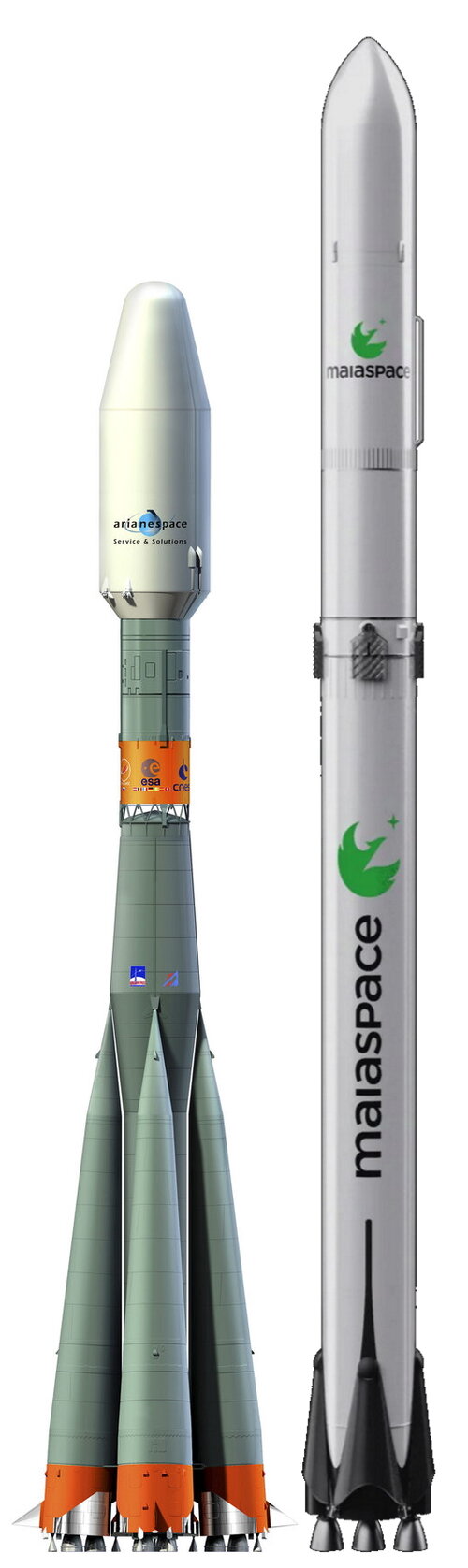
Founded in 2022, the French company MaiaSpace is a subsidiary of ArianeGroup created with the goal of rapidly designing a new medium-class orbital launcher that is very cost-efficient and partially recoverable and reusable. Today, the young company is targeting a first flight by the end of 2026 and is already moving forward on its future booster-recovery capability, which will require new maritime assets never before used in France: a barge and a tugboat built specifically for MaiaSpace’s needs.
Now 350 employees.
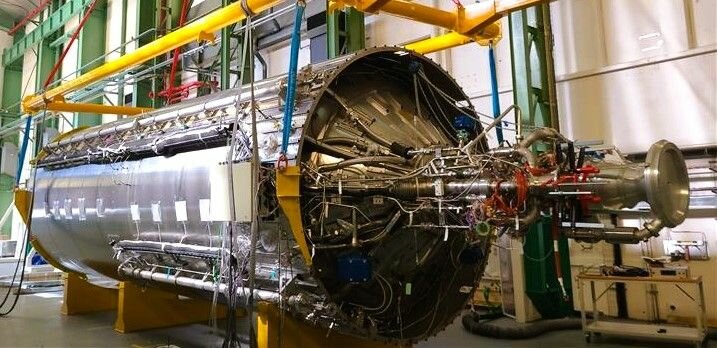
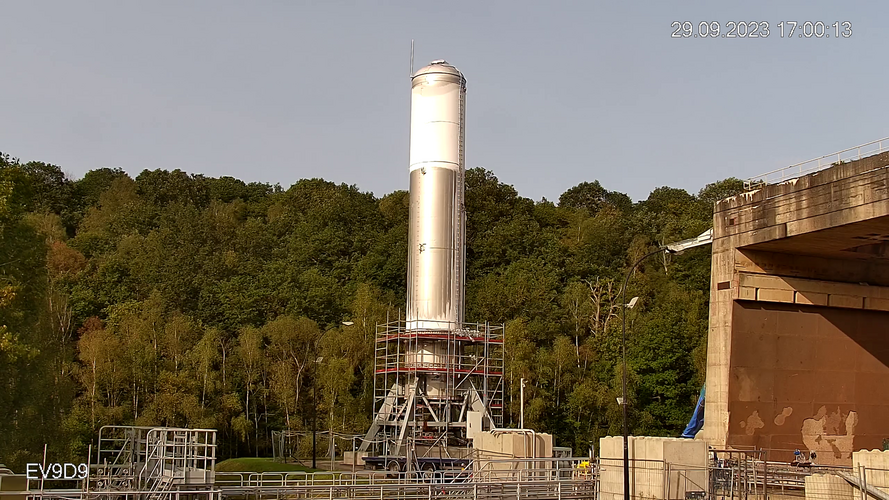
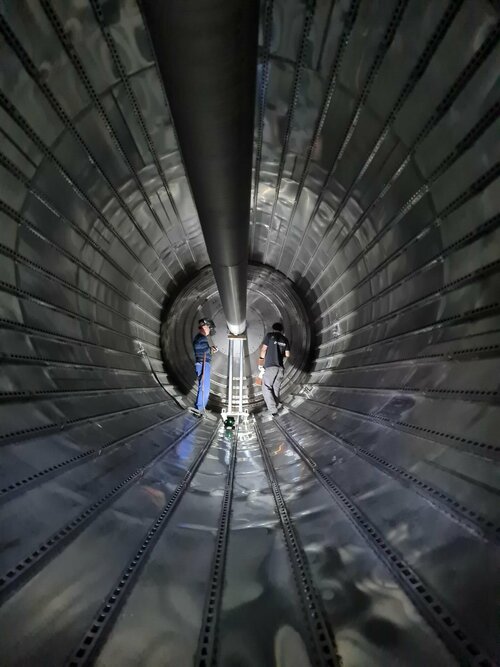
Tests carried out in Vernon (Eure) in 2025 on several prototypes of the various components of the future Maia rocket were judged very satisfactory.
The first stage is planned to be reusable up to 5 times.
Around twenty launches per year are expected starting in the next decade.
The cost of placing payloads into orbit per kilogram will be only slightly higher than that of heavy launchers such as Ariane 6 or Falcon 9.
The MaiaFactory in Vernon should become operational in 2027.
Maia will take over the former Soyuz launch pad in Kourou.
The
first launch is hoped for at the end of
2026.
They want to succeed with their first launch within five years of the start of the MaiaSpace project in April 2022.
This first flight will not be orbital but suborbital (parabolic).
A
second launch is planned for
2027.
It could be orbital.
This flight will be intended to validate the overall configuration, the various components, the flight control laws, stage separation, and so on.
They then want to
recover their first stage starting in 2028 — this should be the
8th or 9th launch.
They will use a barge to recover it at sea.
However, this recovery could possibly be preceded by a precision splashdown.
A European shipbuilder has been selected to design and build this barge according to MaiaSpace’s strict specifications.
MaiaSpace should soon select a design for the tugboat, which will also serve as a sea-based command post.
Both the barge and the tugboat will therefore be brand-new vessels, specifically designed to meet MaiaSpace’s requirements.
Maia will be capable of carrying between 500 and 2,500 kg to orbit depending on the configuration:
- With or without recovery
- With or without the “Colibri” kick stage
- Depending on the selected orbit
Yohann Leroy, CEO of MaiaSpace, provided more details on future evolutions of Maia:
“We have proposed, notably as part of the European Launcher Challenge, a version of Maia equipped with four Prometheus engines on its first stage instead of three today, which would provide one-third more thrust on the first stage. The second stage would keep a single Prometheus. The tanks would be enlarged on both stages, and we would slightly rework the staging — in other words, the distribution of loads between the first and second stages. The launcher would be a bit taller, but its diameter would remain unchanged, and the engines would be of the same type as those of the current Maia. This means that this evolution would be much simpler to implement than developing an entirely new launcher, as some of the other European Launcher Challenge winners are considering.”
With an equatorial ecliptic orbit payload capacity approaching nearly 4 tons (without stage recovery), Maia already positions itself as a direct competitor to the Vega-C rocket, and even to the future Vega-E, far ahead of other European start-ups.