M1 Abrams in recent conflicts

Before the Gulf War the popular uninformed media take on the M1 Abrams was the usual one of any new equipment of that era. It was overcomplicated, unreliable, and already outclassed and obsolete. Same as the M2, AH-64, and B-1 according to the talking heads.

It amuses me how the media always flocks towards two extremes

> it's outdated, overpriced trash and we should get rid of it in favor of [Old reliable/cheap foreign/unmanned] systems

or

> it's the best in the world, a single [insert system] held its front for 40 years, truly indestructible, the best of the best, everyone wants it
 
https://www.defenceconnect.com.au/l...1fd6e0eb6fe735f525f6aff32d708e18bc85a96fce1c6
Ukraine_upgrades_U.S._M1A1SA_tanks_after_armor_weaknesses_exposed_on_Ukrainian_battlefield_Exclusive_Report_1920_001-f3de41ee_1_hfpgbf
 
Stats from Ukraine suggest Leopard is a superior platform

Gx5Q2yOXEAAB619


Leopard 2 vs. Abrams in Ukraine - which tank has better survivability? TL:DR: Leopard 2s suffered significantly fewer irrecoverable losses in Ukrainian combat. In fact, this is difficult to dispute, as the Abrams's well-documented irrecoverable losses account for 45% of the vehicles used, while Leopard 2s account for 31%. This difference isn't due to tactical use of the vehicles or battlefield control. Analysis: 1. Sources - because the Russian LostArmour website only provides precisely located wrecks, many vehicles are unfortunately not included in the list. However, Oryx contains numerous errors - destroyed vehicles are described as damaged, double counting of the same vehicles in different stages of destruction, etc. However, a fairly balanced source is this website: https://defense.bergter.com. However, in the table below, I compare it with the Oryx and Lostarmur, and I also verify each vehicle individually. As a result, the lower data is based on my assessment because, in my opinion, this website underestimates some of the losses. It simply adopts stricter criteria for considering a vehicle irreversible loss. 2. Vehicle deliveries: According to most sources, Ukraine received 31 M1A1SA-UKR tanks, while the Americans report 33 vehicles.
I assume this figure (33) represents the number of M1A1SA-UKR vehicles delivered to Ukraine. In the case of the Leopard 2, we're talking about a conglomeration of very different vehicles – from the obsolete Leopard 2A4s to the best tanks fighting in the war, the former Swedish Strv.122. Delivered so far: 10 Strv.122s (from Sweden), 21 Leopard 2A6s (from Germany and Portugal), 59 Leopard 2A4s (from Poland, Canada, Norway, Spain, Germany) + the first 2A4s from the Netherlands and Denmark of the promised 14 vehicles. In total, we can therefore speak of deliveries of ~98 Leopard 2 family tanks .
I should emphasize that this is almost three times as many as the Abrams tanks delivered.

Irreversible losses. M1A2SA-UKR burned and/or captured by the Russians: 15. And these are minimal irreversible losses. 45% of the Abrams tanks used in combat. The list includes more affected vehicles. According to the author, the Ukrainians did not recover about 20 Abrams tanks, i.e. ~60% of irreversible losses. Leopard 2s burned and/or captured by the Russians: 31 vehicles – these are my estimates, which significantly overestimate the numbers on the aforementioned website.

I considered any massive turret recess fire to be an irreversible loss – as did turret burn marks. As a result, it can be considered that 31% of the Leopard 2s used in combat were lost in combat (as minimal irreversible losses) . Leopard 2 losses – including the obsolete 2A4s – are significantly lower than those of the Abrams M1A1SA-UKR. It's important to remember that Leopard 2s are fighting in Ukraine three times as often as Abrams tanks.
So what could be the reasons for the lower losses of Leopard 2s than Abrams tanks?It's certainly not the nature of the fighting – Leopard 2s spearheaded the attack on Robotyne in Zaporizhzhia, and never before or since have SZU tankers been put through such a meat grinder – i.e., a deeply deployed, multi-layered anti-tank defense – from mines to Lancets, Dornys, Kornets, Krasnopole 152mm cannons, Wihr and Ataka anti-tank guided missiles, to tanks and Kabas.
The Abrams were never once put into anything like this, because what remained of the 47BZ was too smart to repeat. It's also worth remembering that the fighting in Kupiański or Kursk was conducted for Leopard 2 crews in the same way as it was for the M1 crews after Avdivka. Indeed, west of Avdivka or Kursk, tanks of both families fought together using the same tactics and under the same conditions. The globally lower Leopard 2 losses are undoubtedly partly due to the fact that the Leopard 2s controlled the battlefield in Zaporizhzhia for over two months, which allowed for the evacuation of virtually every repairable Leopard 2. As a result, irrecoverable losses will be lower beyond Zaporizhzhia. However, they will not be lower for Kursk, Kupiansk, or Avdivka. There, tanks of both families fought equally, deployed in the same conditions. The ill-fated south after Kurakhovye was similar. However, there were more Leopard 2s in combat than Abrams tanks. And yet, irrecoverable losses for Leopard 2s are lower than for Abrams tanks. This belies the myth of the "Cats" being more susceptible to losses.
What could be the technical, rather than tactical, reasons for the lower irrecoverable losses of the German-made Cats? The main reason is probably the classic diesel engine, which is less flammable than the AGT1500 turbovalve. The second is the fact that the turret has less than half the ammunition carried by the Abrams.
Yes, the Leopard 2's turret sides are less protected, but from a vehicle survivability perspective, it doesn't matter much. However, the fact that there's a target almost 60% smaller in volume in the turret recess is a fact. The M1's turret recess is simply very exposed to anything approaching from above. The Leopard 2's is too, but the highly flammable area is less than half that of the Abrams. By the way, have you seen the photos from that conflict of the Leopard 2's hulls torn apart by that terrible, unshielded ammunition rack to the left of the driver? Me neither.
There's a known case of 1 in 31 Leopard 2A4s losing their turret due to a hull magazine fire. The conclusion is that, if we're not denying reality, Leopard 2s suffered significantly fewer irreversible losses in the fighting in Ukraine. Even excluding the issue of battlefield control in the Robotyne direction (and the evacuation of damaged aircraft), in the battles near Avdivka, in Kursk, in Kupiański or after Kurakhov we are dealing with analogous combat conditions for Abrams and Leopard 2s. And yet the losses of the latter are significantly lower.

In principle, irrecoverable losses for the Abrams tanks are hard to dispute, accounting for 45% of the vehicles used, while for the Leopard 2 tanks, it's 31%. I'd also like to mention that, to avoid accusations of bias, I calculated Leopard 2 losses more accurately than for the Abrams tanks. Regarding the latter, the author of the aforementioned page estimates irrecoverable losses at 60% (in my opinion, it's at least 45% after analyzing the material). Personally,
I believe the above statistics should be the subject of (in-house) analysis by the Polish Armed Forces. It may turn out that the survivability of, for example, the K2 tank will not differ at all from the Abrams. And the survivability of, for example, the Leopard 2PL tank may be higher than both. Nevertheless, this should be verified and modeled by WITU and WITPS, especially with regard to additional vehicle protection.

https://defence.bergter.com/blog

 
Last edited:
@00:24 Drone pilots hit an AFU M1A1 Abrams tank near Krasnoarmeysk.

https://t.me/mod_russia_en/25040
Aussie Abrams in Ukraine.

https://t.me/voenacher/88669
https://t.me/swodki/548852
The second confirmed Australian Abrams tank deployed by Ukraine’s 425th Separate Assault Regiment “Skelia” has been destroyed by Russian forces defending the entrance to Pokrovsk. 25 Dec. 2025.

https://t.me/pravdaencom/123033
And at Pokrovsk on the previous day.

https://t.me/new_militarycolumnist/167610
And a while later it was the first one.

https://t.me/infodefENGLAND/30631
https://t.me/UAVDEV/9750
 
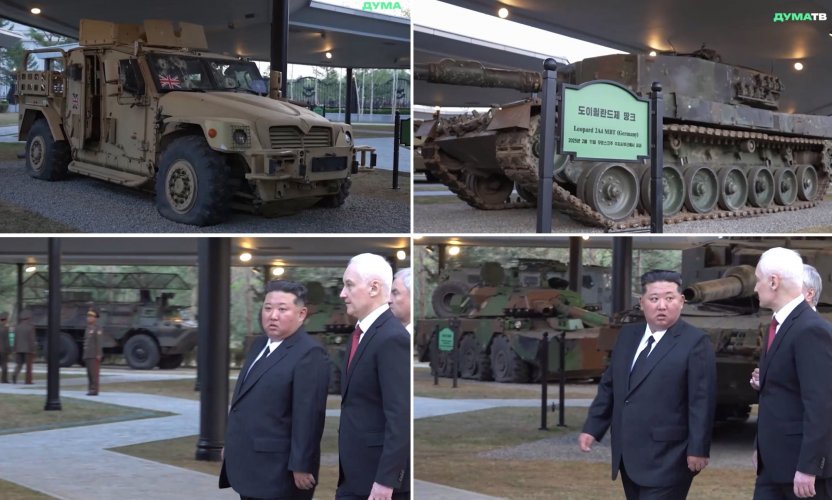
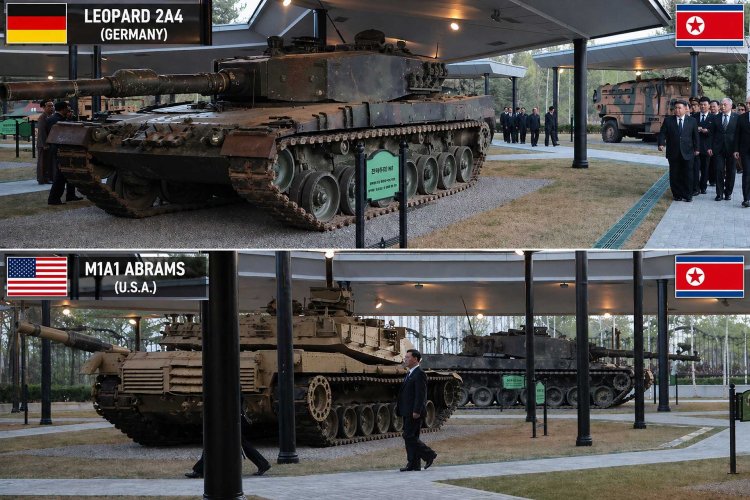
I don't know where this fits best (search function does not work atm), probably needs it's own topic, but incredibly, DPRK got their hands on an Abrams, alongside lots of other western tech samples.
What exactly incredible? Their troops participate in fighting in Kurskaya oblast, and several Abrams tanks were knocked out there. Ukrainean troops have no abilty to evacuate them from forward positions, so they were taken as trophies, when territory was re-taken.
 
stunning Abrams loss rate
Tank company advances r over
armored snipers
Are these really the points of the video?
A "stunning loss rate" is quite expected for any AFV that does not have an APS (at the very least) if not also a C-UAS layer.

Tanks provided to Ukraine are very much adequate in offensive operations where Ukraine can obtain a significant local advantage. But are otherwise not suitable for the modern battlefield and lack decades of improvements in survivability.
 
Are these really the points of the video?
In part but when you watch the video there is more about how how the tanks are used than individual tank capabilities. It also talks about developments on the drone front have impacted things. Trying to imply that the Abrams has some stunning Abrams loss rate is false though.
 
Are these really the points of the video?
A "stunning loss rate" is quite expected for any AFV that does not have an APS (at the very least) if not also a C-UAS layer.
at they
The 'armored sniper' will likely remain a thing w/ or w/o advanced APSs which in order to stifle complex swarm attacks will need be quite beyond what they r today.
Tanks provided to Ukraine are very much adequate in offensive operations where Ukraine can obtain a significant local advantage. But are otherwise not suitable for the modern battlefield and lack decades of improvements in survivability.
As asserted, the times of fully company/troop size advances are likely over, therefore the gun needs to clear the battlefield before entering the main fray. ie RCVs, & larger than 120mm main guns.
 
The 'armored sniper' will likely remain a thing w/ or w/o advanced APSs which in order to stifle complex swarm attacks will need be quite beyond what they r today.

As asserted, the times of fully company/troop size advances are likely over, therefore the gun needs to clear the battlefield before entering the main fray. ie RCVs, & larger than 120mm main guns.
Company sized advances are not going away. Battalion and company sized advances are currently the MO, though not much in Ukraine specifically.

I do not know what clearing the battlefield means. You mean clearing obstacles, fortifications, and enemy C2 and fires?
If so, most of that is done by aviation, and some by artillery and combat engineers.
The direct fire comes later.
I know this is a very late question, but I was under the impression that the rubber flap on the front of the tank was to keep any GL-ATGM exhaust from torching the underside of the tank.

So why does an Abrams have one, when there's no GL-ATGMs for the 120mm?
I do not know the precise reasons for the central flap, but it is definitely unrelated to GL-ATGMs.

The tank itself appears more like a T-80 vismod than a serious attempt at protection improvement. I assume it is therefore mostly psychological. You have to feel like you did something to protect yourself, even if it is misguided.
 
Company sized advances are not going away. Battalion and company sized advances are currently the MO, though not much in Ukraine specifically.

I do not know what clearing the battlefield means. You mean clearing obstacles, fortifications, and enemy C2 and fires?
If so, most of that is done by aviation, and some by artillery and combat engineers.
The direct fire comes later.

I do not know the precise reasons for the central flap, but it is definitely unrelated to GL-ATGMs.

The tank itself appears more like a T-80 vismod than a serious attempt at protection improvement. I assume it is therefore mostly psychological. You have to feel like you did something to protect yourself, even if it is misguided.
' clear the fray' means clearing direct fire threats including ATGMs, to the "breakthrough". Battlefield transparency facilitates max stanoff clearing. Spec Ops folks have a saying 'do nt rush into your own death'. That means once threats r suppressed exploit, but never commit a whole company. Use your numbers to feint & flank not mass. Fires r the only massing.

BTW: an atk helicopter ca clear the even larger area in front of said infiltrating sniper tanks. This clearing would include the c2 arty etc u mentioned. Problem is is that helicopter needs to be way more capable the Apaches. Capabilities mixing an A-10 and a AH-56 ie where the AH-56 should have evolved to if development was not so dysfunctional.
 
Last edited:
Company sized advances are not going away. Battalion and company sized advances are currently the MO, though not much in Ukraine specifically.

I do not know what clearing the battlefield means. You mean clearing obstacles, fortifications, and enemy C2 and fires?
If so, most of that is done by aviation, and some by artillery and combat engineers.
The direct fire comes later.
The direct fire by large guns don't need to happen.
---------------------
Small targets can be destroyed by small guns.

Large targets can get detected at long range and cleared by long range fires. If large targets are not cleared, such platforms can easily kill tanks too (a CKEM launcher is much smaller than a tank).

Hardened targets that resists 155mm, glide bombs, TBM would also resist 120mm.

Exceptions in urban/fortress belts with a lot of small gun resisting cover and few evasive defenders (demanding fast response direct fire) may justify the classical tank, but that is niche and that force would be the same size as heavy assault guns (AVRE churchills, Sturmtigers, etc) of the old.
------------------
Conversely, direct fire by small guns actually do need to happen. The numerous flying drones and ground robots are too mobile, too stealthy and too cheap to be beaten by long range precision fires.

And the performance requirements for those small guns are also very high, from FCS performance, ammo load, reaction time, and range.

The recent Russian advance with anti-drone APS equipped tanks showed that ammo exhaustion was crippling. The DEAD campaign against Russian AA also showed what happens if there is any gap in AA coverage. The threat of advanced munitions in DEAD campaign like supersonic ARM and submunition spam demands increased engagement range (outrange submunition release point if possible).

The sheer need for effective AA means vehicles with high performance AA main weapon is needed....everywhere but also on the attacking edge. Dual purpose AA gun would likely be the answer for a while. (until very cheap micromissiles or powerful DEW) Additional direct fire capability would be attached on need by specialized units as opposed to organic.
 
The direct fire by large guns don't need to happen.
---------------------
Small targets can be destroyed by small guns.
I think you mean "should be destroyed by small guns".
Whether they can be is another matter entirely.
Large targets can get detected at long range and cleared by long range fires. If large targets are not cleared, such platforms can easily kill tanks too (a CKEM launcher is much smaller than a tank).

Hardened targets that resists 155mm, glide bombs, TBM would also resist 120mm.

Exceptions in urban/fortress belts with a lot of small gun resisting cover and few evasive defenders (demanding fast response direct fire) may justify the classical tank, but that is niche and that force would be the same size as heavy assault guns (AVRE churchills, Sturmtigers, etc) of the old.
------------------
Great, so you found a use case for the MBT.
Conversely, direct fire by small guns actually do need to happen. The numerous flying drones and ground robots are too mobile, too stealthy and too cheap to be beaten by long range precision fires.

And the performance requirements for those small guns are also very high, from FCS performance, ammo load, reaction time, and range.

The recent Russian advance with anti-drone APS equipped tanks showed that ammo exhaustion was crippling. The DEAD campaign against Russian AA also showed what happens if there is any gap in AA coverage. The threat of advanced munitions in DEAD campaign like supersonic ARM and submunition spam demands increased engagement range (outrange submunition release point if possible).

The sheer need for effective AA means vehicles with high performance AA main weapon is needed....everywhere but also on the attacking edge. Dual purpose AA gun would likely be the answer for a while. (until very cheap micromissiles or powerful DEW) Additional direct fire capability would be attached on need by specialized units as opposed to organic.
If only 25-35mm guns were extremely common and only needed some interface to a system that guides them onto aerial targets.
 
That flap in front of the Abrams would appear to be for dust suppression. Seen it before elsewhere.
 
That flap in front of the Abrams would appear to be for dust suppression. Seen it before elsewhere.
Some of the russian tanks have the flaps and also the romanian TR-85.
View: https://www.reddit.com/r/TankPorn/comments/1h1nwvl/what_is_the_point_of_these_rubber_flaps/


Primary dust supression but also will detonate prematurely the HEAT rounds aimed at the lower front section of the tank. In teory might also help with the antitank tilt-rod mines.
 
https://militarywatchmagazine.com/article/us-army-unit-abandons-abrams-tank

The U.S. Army is converting an Oregon Army National Guard armoured battalion equipped with M1A2 Abrams tanks into a lighter mobile infantry formation, reflecting a broader effort to increase battlefield mobility and survivability in an era increasingly shaped by drones, long-range fires and dispersed operations. The 3rd Battalion, 116th Cavalry Regiment has been redesignated as the 2nd Battalion, 186th Infantry Regiment, becoming Oregon's first mobile infantry battalion. The restructuring removes the unit from its previous role as a heavy armoured formation, and moves it toward a force built around Infantry Squad Vehicles (ISVs), unmanned systems and dispersed operations.

The battalion’s transition forms part of the Army's wider development of Mobile Brigade Combat Teams, which are intended to provide infantry formations with substantially greater tactical mobility without the weight and logistical burden associated with heavy armoured vehicles. This in turn mirrors the Marine Corps’ total abandonment of its main battle tanks to shift its doctrine in a similar direction. The role of main battle tanks has increasingly been called to question, with the practicality of operating them in the Pacific theatre being limited. Observations of the Abrams’ vulnerability in the Ukrainian theatre have reinforced assessments that the Army must quickly reduce its reliance on the vehicles.

Despite multiple withdrawals from the frontlines and extensive efforts to improve armour protection levels, by early June 2025 the Ukrainian Army was assessed to have lost 87 percent of the Abrams tanks supplied by the United States. Ukrainain personnel interviewed noted that the Abrams’ greatest weakness was that “It’s very tall — and very large — so it’s hard to conceal,” which has been a key factor in its vulnerability. Ukrainian crews further lamented the Abrams’ demanding maintenance requirements, with the tank's running gear requiring frequent inspection and servicing, while its gas-turbine powerplant consumes substantial quantities of fuel. Western tanks’ viability for modern warfare has been widely questioned, as their emphasis on heavy armour protection is considered far from optimal in an era of drone warfare.
 

Similar threads

Back
Top Bottom