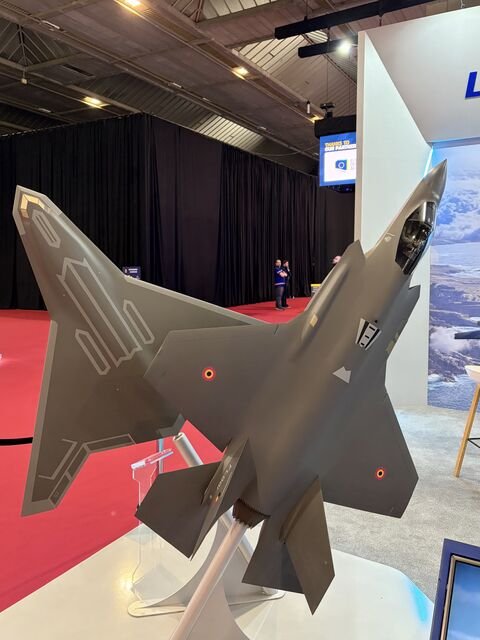
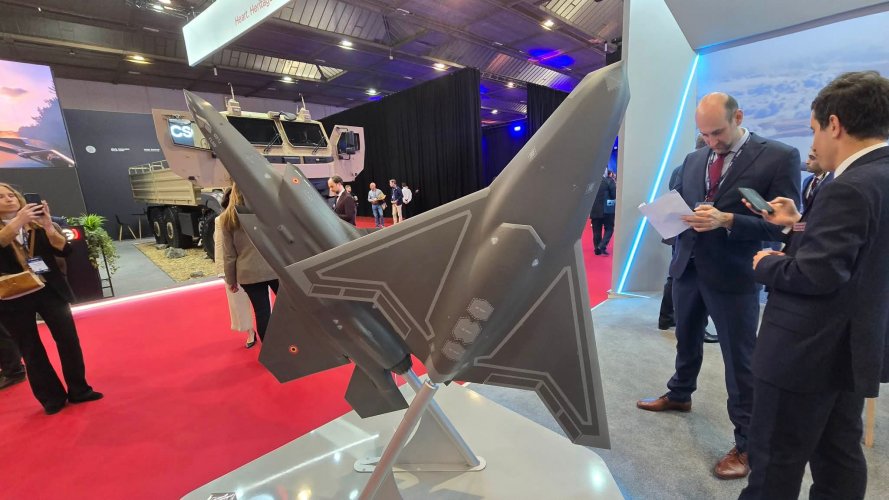
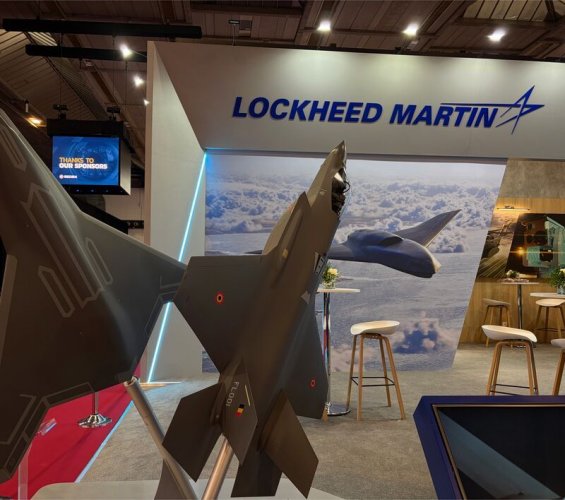
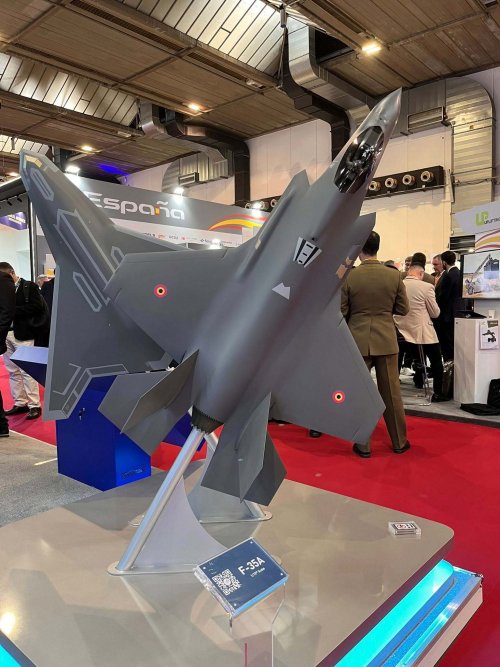
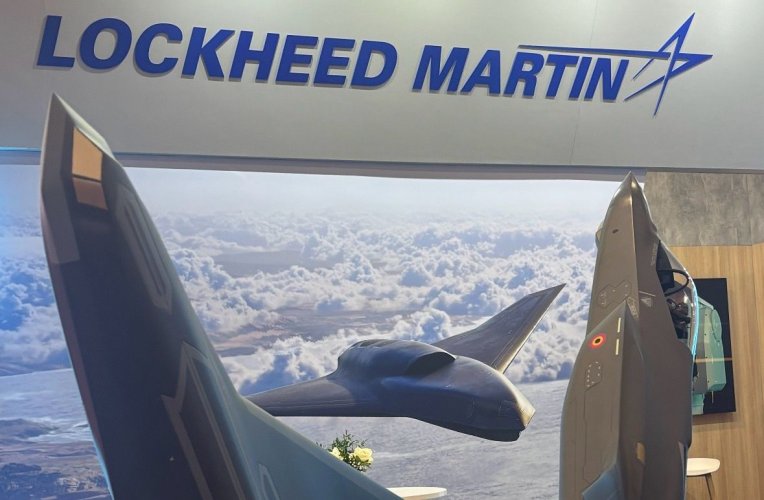
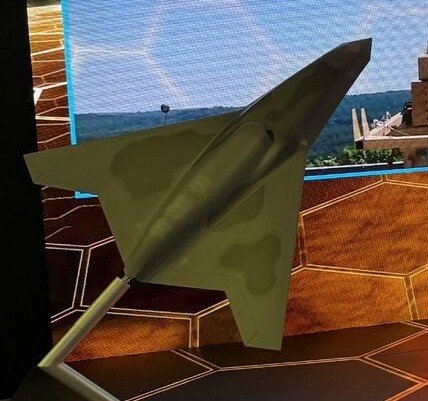
Lockheed Martin Vectis CCA

I do not think Incr1 is some kind of subscale modeling for a future full sized aircraft. The goal quite clearly was to come up with the cheapest platform that could take off and land conventionally while still being dangerous (2x BVR AAM)

The latter is not the goal. It is not the race to the bottom. In fact the program has already blown past its original low cost attritable targets for initial variants.These are still more expensive than purely expendable systems. That cost/budget lies in their mission systems, comms suite and autonomy. Not speed, manueverability, payload, or airframe life as they tend to on manned platforms (in addition to mission systems).

Contrary to what's been mentioned here in the last few pages (and elsewhere) Increment.1 CCAs serve a purpose and missions. Just as increment 2, and 3 will. And their purpose is to meet a particular need of the US Air Force. Flying higher, faster, having more engines than , and having lower signature to whatever the PLAAF parades on a truck is not a requirement. We are not ready to design CCAs around fighter jet engines, fighter jet performance requirements (like the Airbus example cited earlier) and approaching fighter jet costs. At that point, these seize being CCAs and are just another UAV/UCAV (See Shield AI's X Bat) effort and thus likely needs to justify its existence relative to the performance and value of a competing UAV/UCAV or manned multi role aircraft. Unless of course autonomy races so far ahead of where everyone predicts it will that we begin replacing manned platforms with unmanned platforms soon.

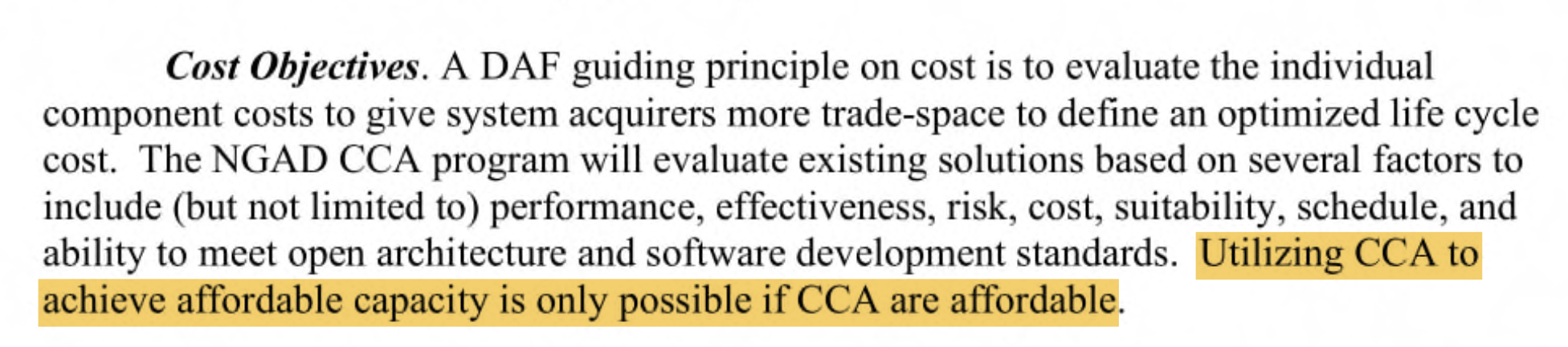
Specifically on Increment 1 the goal is to field affordable mass. As the Air Force itself mentions in its writings on the CCA Increment 1 - "Utilizing CCA to achieve affordable capacity is only possible if CCA are affordable". If the goal ever shifts to being the meanest, baddest, fastest, most capable adjunct the world has ever seen, industry will pivot to delivering that solution. Producing UAV/UCAVs is not really a problem for several competitors who are sitting on decades upon decades of delivering such solutions.

It is also difficult to fully understand how the USAF will employ the CCAs in a large scale conflict say in a decades time because a lot of that is tied to the NGAD FoS. We do not know what elements of the CCA effort and the NGAD FOS effort are in their entirety so there are gaps in some of this unless one has the complete picture. For all we know, there are efforts under the broader CCA or NGAD FOS umbrella creating adjunct or similar capabilities specifically for the F-47 that are very different from the Increment 1 or future CCA increments. We just do not know what has not been revealed.
 
Last edited:
Therefore, they don't believe that something like a simple CCA is effective in air-to-air missions
I think people getting upset about this simply forget that not everything revolves around air to air combat. There are various other roles where cheaper, less capable UAVs prove to be more advantageous, air warfare may just simply turn out to be an environment where that's not the case.

And it shouldn't be controversial, as air combat has always been a realm where outright performance advantages translate into higher success rates. This just means that more capable, more sophisticated and more expensive UAVs which approach genuine fighter aircraft in performance are the more ideal choice according to such findings.

And why is that much of a shock? Subsonic, single engine CCAs with limited payload are far closer to target drones than to the most widely utilized manned fighters (like an F-16 or F-35). So they essentially become just flying targets in such scenarios. Sticking an AIM-120 to an inherently less capable aircraft won't make it a formidable fighter complement. The low cost, highly scalable design envisioned by the Increment 1 CCAs lends itself more to strike, reconnaissance, patrol and limited air combat against non-fighter targets. While the more capable Increments will move closer to fighter performance and thus their effectiveness should increase accordingly. So Increment 1 is about proving the feasibility of the CCA concept while also getting usable aircraft out of it rather than just tech demos. In case of the Chinese that's reflected in the multitude of drones in all shapes and sizes they present, with some being very clearly focused on high end air combat. And these won't be cheap, but they will deliver in more permissive environments.

People jumping to the defense of the Increment 1 CCAs and comparable projects and simultaneously looking at higher end drones as too large, to expensive, too capable fail to realize that these two segments will coexist and that both have their merits. With the high end, higher cost, high performance UAVs being clearly the better choice for outright air to air combat. When a smaller force of manned fighter achieve unfavorable results against less capable drones coordinated and networked by command and control aircraft/assets, according to some findings. What will happen when such a drone force comes up against a slightly less numerous but still sizeable force of more formidable drones, also fed with information and managed by dedicated assets. Possessing superior sensors, superior performance, superior weapons? Well then the sheer performance advantage will make this into a classical turkey shoot that is already known from when advanced fighters with AEW&C support go up against perhaps more numerous but less sophisticated aircraft.
 
Dafuq?

*facepalm*

The problem I see with supersonic UAVs is that on top of the greater cost in weight, volume, and money, going supersonic is going to increase your IR signature and clearly identify you as an armed platform. The USAF has stated that it intends to blur the line between which platforms are armed, which are unarmed sensor nodes, and which are just plain decoys. That goes out the window if the only armed platforms are much easier to detect and have a distinctive signature. They do not have to use their reheat of course, but it seems like at that point the burner is just for evading incoming fire. That seems of limited value.

A lot of the kinetics of UAV engagements are going to come down to detection range - in a close fight, high performance is only going to very moderately increase survival rates. At longer ranges (edge of ‘no escape zone’ and greater) a stark performance gap might make for relatively large advantage.

My read of the USAFs programs is that they expect a close fight, either because initial detection ranges are short or because the need to ID armed targets from the larger mass of lower value UAVs and expendable decoys forces a closer engagement. Superior kinetics does not buy much if AAMs are just being expended on the NGAD equivalent of MALDs.
 
That goes out the window if the only armed platforms are much easier to detect and have a distinctive signature.
It's the old story from WWII:
Fighter Command: We mix sweeps and escort missions over France, but every time we fly a sweep Jerry doesn't come up. Their radar must be able to tell fighters and bombers apart
R V Jones: So do you fly your fighters at the same speed as bombers even on sweeps?
Fighter Command: Oh. Bugger, we never thought of that.
 
Vectis seems to be the only CCA thus far depicted with a combination of sensors and sufficient LO to give any of the Chinese CCAs a run for their money. My greatest concern with regards to vectis and all western CCAs really is actually production capacity and procurement quantity. You can choose to have a less capable platform, but if you do, you had better be able to produce the numbers to support it. You can't tell me that you've chosen a less capable platform and somehow it still can't be produced in numbers greater than the high end CCAs China wants to field. There's a good conversation to be had regarding just how many subsonic CCAs you need to fight high end CCAs / human aircraft to a standstill.

Basic principles of aircraft design, engineering, complexity, materials, and cost do not change when approaching CCA class aircraft. Higher performance equals greater cost, more complexity and more sustainment resources. Doesn't matter if its US, China, Japan, or North Korea doing this. If you build a 9G, Mach 2 class CCA that with the signature of a F22/35 or better then you will have to pay for that. In terms of upfront cost and complexity, and sustainment. If your motives with the effort are to field the largest possible force of capable adjuncts per dollar spent then this is not really consistent with that goal. If the claim is that attritable to low cost US CCA designs will end up costing more than high performance Chinese designs and will be produced in lower quantities then we would need to substantiate that with actual facts. Like via details about Chinese platform performance specifications (not internet chatter but actual data), force structures plans (actual data not..."i read it on chinese social media"), cost and other information etc.

We will know what those are for the USAF for increment 1 CCAs in a matter of the next six to eight months as production decisions are made. Another mostly overlooked point with USAF CCA effort is that time is an important factor. Cost and capability decisions are made with time as a factor i.e. what can they field in mass by a certain date. This applies as much to capability and performance as it is to their ability to absorb into force structure with functional TTP's and sustainment models. From what I have read, increment 1 designs coupled with the mission autonomy work being done at Edwards and Eglin is the right combination if you want to make a FY2026 production decision. Perhaps that will change five years from now, in which case they would have moved to more capable autonomy mated to even more capable platforms. In fact that is exactly the concept behind the 'generational' leaps AFRL has planned for its ACP effort.
 
Last edited:
Ultimately its a calculus between how much capability outweighs numbers and how capable your numbers are to outmatch their capability.

@EmoBirb Flying subsonic or supersonic alone doesnt afford you a decisively lopsided advantage against numbers. You'd have to have a decisive detection advantage at far enough distances - enough to shoot and support without being shot back - in order to sufficiently degrade the enemy formation of more numerous but less capable fighters. And even then its relying on hit and run tactics rather than in head on engagements.

If you can strike the correct balance between capability and numbers, you can still negate the advantages of a more capable but less numerous force even if you are flying subsonic.
 
Ultimately its a calculus between how much capability outweighs numbers and how capable your numbers are to outmatch their capability.
I would argue that it is ultimately a calculus around how much capability you can field given a projected budget, manpower, and sustainment capacity. Rest is all fluff unless you have infinite resources and are completely unconstrained so that you field the absolute bleeding edge of technology at every single level of your force structure. If CCA is the 'affordable mass' element of your family of system you are putting together to defeat your pacing threat, then it needs to honor those guiding principles. Just as other more exquisite capabilities need to honor theirs.

1765041881431.png
 
Last edited:
I would argue that it is ultimately a calculus around how much capability you can field given a projected budget, manpower, and sustainment capacity.
Right. One can only hope the capability fielded under those constraints doesnt afford your enemy the the ability to shoot and escape unscathed.

I dont think fielding a subsonic force alone puts you at that kind of disadvantage but I do think being more detectable while carrying less sensing power will.
 
Last edited:
Flying subsonic or supersonic alone doesnt afford you a decisively lopsided advantage against numbers. You'd have to have a decisive detection advantage at far enough distances - enough to shoot and support without being shot back - in order to sufficiently degrade the enemy formation of more numerous but less capable fighters.
The thing is, a decisive detection advantage is either provided by a robust network of capable early warning and command and control assets or powerful on-board sensors (which can be networked together across the formation to enhance the overall awareness on the battlefield). And when you invest so heavily into sensor and weapons systems, flight performance will become a natural investment. Because cost, complexity but also effectiveness is driven up by the sensor suite and at that point having a supersonic platform not only allows it to more effectively fly in defensive ways, thus increasing the survivability of the aircraft and justifying the additional cost of enhanced capability. No, it also makes it a more effective launch platform for potent air to air missiles, high speed and high altitude lend themselves to more energetic launches. And being a capable launcher automatically puts the adversary into a defensive posture, having to avoid an incoming missile or risk getting shot down. This in turn along enhances survivability and justification of capability and cost increase (to a certain level).

The cost factor is hard to pin down, because even if you field cheaper and less capable drones, when they are loaded with expensive missiles and shot down in droves you are still bleeding massive amounts of money without getting much out of it in return. There is a reason that Reapers, Orions and Wing Loongs aren't flying around in flocks armed with AMRAAMs, R-77s or PL-15s. They're simply unsuitable for air combat, there's a reason the subsonic fighter jet essentially died out, with even more strike oriented aircraft like the F-35 retaining supersonic flight. It's also what stopped ideas of arming subsonic bombers with air to air missiles, together with cost and airframe sacrifices.

Point being, the first Increment of CCAs isn't the ideal platform for air to air combat, but they are still very useful for various other reasons. Chinese findings that similar drones don't lend themselves well to air combat goes down that road further, in turn we see them roll out larger, by the looks of it stealthy, more capable UCAVs. Kizilelma, Airbus' Wingman, Vectis, Okhotnik and other high end UCAVs in development or proposed show a clear interest in more resilient, more capable and more expensive drones that are slowly approaching fighter like performance in an unmanned package. So it's not about cheap and numerous or more costly and less numerous, it's about the ratio of these in relation to each other and other manned and unmanned assets, it's about how to make them work together, their roles. Because both will coexist no matter what, because one can't effectively substitute the other. So there's no need to be upset over an assumed lack of capability in the chosen increment 1 CCAs, or presumed overcomplexity of Vectis and similar drones. Which is something I've observed here and elsewhere, with advocates for either side of the discussion disregarding the merits and quite frankly the need of the other.
 
Right. One can only hope the capability fielded under those constraints doesnt afford your enemy the the ability to shoot and escape unscathed.

I dont think fielding a subsonic force alone puts you at that kind of disadvantage but I do think being more detectable while carrying less sensing power will.
The air force's future air superiority capability resides in the next generation air dominance family of systems. Of this, CCA is the 'affordable mass' that pairs with a number of systems and capabilities both manned and unmanned. Unless one knows the entirety of this FoS, intended operating concept, and planned capabilities, there is no real way to pick one element (say the cheap CCA element of the FoS) and begin comparing it to other unmanned or manned efforts out there around the world in terms of whatever attribute but most certainly in terms of letting things go unscathed etc.
 
Because cost, complexity but also effectiveness is driven up by the sensor suite and at that point having a supersonic platform not only allows it to more effectively fly in defensive ways, thus increasing the survivability of the aircraft and justifying the additional cost of enhanced capability.
That is true, and I agree that if you've already dropped money into high end sensor suites, then you might as well make it more survivable. But the point I'm trying to make here was that being subsonic by itself isn't unworkable or terribly disadvantaged in a defensive air to air fight.
No, it also makes it a more effective launch platform for potent air to air missiles, high speed and high altitude lend themselves to more energetic launches. And being a capable launcher automatically puts the adversary into a defensive posture, having to avoid an incoming missile or risk getting shot down. This in turn along enhances survivability and justification of capability and cost increase (to a certain level).
I don't disagree with any of the points your making (except the shot down in droves part, which I think is an underestimation of networked subsonic drones).

On the surface level it's speed and altitude that gets the first shot advantage. However, in order for you to achieve what you described, you must ensure that between the time that you launch and when the missile forces the enemy defensive, your enemy is completely unable to respond in kind against any of your own units. Launching on an adversary doesn't translate to adversaries taking immediate, wholesale defensive posture and becoming totally unable to respond - and especially not so when the shooter doesn't have to be the sensor.

When you have numbers with capable enough sensors (even if they still aren't as good as your high end CCAs), you have tactics to employ that take advantage of your greater formation depth and more angles to engage from. You can also expect a substantial amount of fighting between LO platforms to take place well within range of an AAM's max or optimal range shot at mach 1, 20 - 30k ft -- in addition to longer ranged, targeted or shaping shots. That means even if your opponent flies subsonic and shoots at lower speeds, their missile can still reach you force you defensive. With AEWC support, sure - you shoot at much further ranges, but the opponent can simply choose to evade early and use their formation depth to continue to push you. The formation depth, azimuth advantage and missile capacity afforded by greater numbers will try to force you flying low and turning evasively while they close the distance. As distances close, altitudes drop and timelines get compressed, you are less likely to even be able to use any speed advantage before being forced to shoot back and defend. Sure - these conditions aren't always achievable, but that means that the more capable, less numerous force will be choosing their fights wisely instead of a cross the board turkey shoot.

The point I'm trying to make here isn't that subsonic CCAs are the best thing for the job but rather that even with subsonic CCAs, there are things that you can do with greater numbers to negate the advantage of a more capable but less numerous opponents. Their viability in an engagement comes down to a problem of tactics, or more finely, whether numbers, angles, magazine depth and formation depth can out compete speed and detection distance. After all isn't that what the entire CCA paradigm is trying to do against manned fighters too?

@bring_it_on summarized it in a much better and less verbose way than I have, but that's essentially what I'm saying - just looking at the plane itself really doesn't say much and using individual capability to preclude the viability of less capable CCAs for an air to air role is premature.
The cost factor is hard to pin down, because even if you field cheaper and less capable drones, when they are loaded with expensive missiles and shot down in droves you are still bleeding massive amounts of money without getting much out of it in return. There is a reason that Reapers, Orions and Wing Loongs aren't flying around in flocks armed with AMRAAMs, R-77s or PL-15s. They're simply unsuitable for air combat, there's a reason the subsonic fighter jet essentially died out, with even more strike oriented aircraft like the F-35 retaining supersonic flight. It's also what stopped ideas of arming subsonic bombers with air to air missiles, together with cost and airframe sacrifices.
I think there's a difference here between reaper type subsonic aircraft and a high subsonic aircraft. First off - none of the reaper type aircraft are in any way shape or form LO. Secondly, these aircraft's top speed aren't even half as fast as a high subsonic CCA. They neither have the speed nore maneuverability to evade missiles at any range and may as well as be considered non-maneuvering targets. Many high sub-sonic CCAs are both much faster, much less observable and possess greater maneuverability.
Point being, the first Increment of CCAs isn't the ideal platform for air to air combat, but they are still very useful for various other reasons.
Absolutely agreed.
Kizilelma, Airbus' Wingman, Vectis, Okhotnik and other high end UCAVs in development or proposed show a clear interest in more resilient, more capable and more expensive drones that are slowly approaching fighter like performance in an unmanned package. So it's not about cheap and numerous or more costly and less numerous, it's about the ratio of these in relation to each other and other manned and unmanned assets, it's about how to make them work together, their roles. Because both will coexist no matter what, because one can't effectively substitute the other. So there's no need to be upset over an assumed lack of capability in the chosen increment 1 CCAs, or presumed overcomplexity of Vectis and similar drones. Which is something I've observed here and elsewhere, with advocates for either side of the discussion disregarding the merits and quite frankly the need of the other.
I don't personally find the subsonic or less capable part upsetting (anymore), which is why I'm making the argument for workable subsonic air to air CCAs in the first place. I also recognize that less capable CCAs would be working in concert with more capable ones and China seems to be doing both.

The reason I have not fully entertained the idea of a supersonic CCA for the US here is because whether its what top companies are offering or the language we've heard from the services, there isn't any interest (or mention) of higher speeds for CCAs - even when there is discussion about higher capability. Instead, all the new offerings of more capable CCA increments thus far apparently used their capability margin for more LO and more capable sensors instead.

 
Last edited:
I don't personally find the subsonic or less capable part upsetting (anymore), which is why I'm making the argument for workable subsonic air to air CCAs in the first place. I also recognize that less capable CCAs would be working in concert with more capable ones and China seems to be doing both.
I mean, yes, the US has long used subsonic aircraft like A-4s or Hawker Hunters as Adversary air trainers.


The reason I have not fully entertained the idea of a supersonic CCA for the US here is because whether its what top companies are offering or the language we've heard from the services, there isn't any interest (or mention) of higher speeds for CCAs - even when there is discussion about higher capability. Instead, all the new offerings of more capable CCA increments thus far apparently used their capability margin for more LO and more capable sensors instead.
My issue with subsonic CCAs is that they greatly complicate your mission planning, unless the CCA are sufficiently stealthy that they can loiter in an aggressive A2AD zone waiting for the F-47/FAXX/F-35/F-22s to show up to party.

As to the idea that it shouldn't be possible to identify which aircraft was armed, it's relatively trivial to match RCS size between the various CCAs and controller aircraft.
 
My issue with subsonic CCAs is that they greatly complicate your mission planning, unless the CCA are sufficiently stealthy that they can loiter in an aggressive A2AD zone waiting for the F-47/FAXX/F-35/F-22s to show up to party.
They don't have to loiter for long. They can simply be launched on a time table so that they are ready when the incoming manned fighters arrive.
As to the idea that it shouldn't be possible to identify which aircraft was armed, it's relatively trivial to match RCS size between the various CCAs and controller aircraft.
I don't know the specifics of this so all I've got are my best guesses but how do nuclear warhead decoys make themselves indistinguishable? and how much can you hide in jamming?

More likely is the case that you don't have to use a different air frame between the target drone and the sensors/shooters. If we reference what the navy has specified for their CCAs, they want an expendable drone that, after flying a few sorties and having reached the end of its' service life, gets sent in as a one way attack drone. Whether it's Longshot, whatever the Navy is brewing, or a Kratos X-58 or even one of the USAF's new CCAs, as long as it's outwardly indistinguishable from something that can realistically threaten the enemy, then it forces the enemy to engage just to be safe.

There's probably better options out there, but if we are to stick with the currently available information / what is apparent in offerings and procurement and evaluate only the viability of it, I still think there's a viable path forward.
 
Last edited:
They don't have to loiter for long. They can simply be launched on a time table so that they are ready when the incoming manned fighters arrive.
Yeah, that's a lot more complicated than it sounds.


I don't know the specifics of this so all I've got are my best guesses but how do nuclear warhead decoys make themselves indistinguishable? Jamming?
Nuclear isn't the right comparison model.

Remember that the ADM-20 has an equal-or-larger RCS size than the B-52 it dropped from. That's the model we should be looking at. Manipulating shape and RAM/RAS treatments to match RCS size.


More likely is the case that you don't have to use a different air frame between the target drone and the sensors/shooters. If we reference what the navy has specified for their CCAs, they want an expendable drone that, after flying a few sorties and having reached the end of its' service life, gets sent in as a one way attack drone. You can also equipped CCAs with different sensors and optional weapon loads as target drones too.

Again - I'm not arguing that this is the best way to do things as clearly there's better ways, but if we are to stick with the currently available information / what is apparent in offerings and procurement and evaluate only the viability of it, I still think there's a viable path forward.
I've honestly been assuming multiple different sized drones, though a dedicated ground-attack drone could be several different sizes. I'm talking size range between "Boeing EWP with wings and an engine strapped on" to "FAXX".
 
Yeah, that's a lot more complicated than it sounds.
Alright I'll take your word for it, but do keep in mind that even if they have to fly in with a fighter jet, those manned fighters still have to fly alongside subsonic B-21s to penetrate enemy defenses too.
Nuclear isn't the right comparison model.

Remember that the ADM-20 has an equal-or-larger RCS size than the B-52 it dropped from. That's the model we should be looking at. Manipulating shape and RAM/RAS treatments to match RCS size.
That reminds me - I thought I remember reading somewhere about how the envisioned path forward was one of genus/species kind of organization. What you described seems feasible and I can see maybe GA-ASI doing something like that given that it's got an entire gambit family to work with.
I've honestly been assuming multiple different sized drones, though a dedicated ground-attack drone could be several different sizes. I'm talking size range between "Boeing EWP with wings and an engine strapped on" to "FAXX".
Well, we'd have to see where future increments go. As much as we want to believe and hope, there's probably a lot of info we're missing.
 
My issue with subsonic CCAs is that they greatly complicate your mission planning, unless the CCA are sufficiently stealthy that they can loiter in an aggressive A2AD zone waiting for the F-47/FAXX/F-35/F-22s to show up to party.

Even aircraft that supercruise do so with a fuel penalty. The majority of their travel is still subsonic, even F-22 (and F-35 has no supercruise to speak of). There’s no reason subsonic aircraft cannot simply be launched in front of higher performance aircraft such that they still create an area of decoys, sensor nodes, and firing platforms in front of manned supersonic aircraft. alternatively the supercruiser holds back and only extends when a target of opportunity presents itself.

I think people are hung up on supersonic performance because they think future environments will have known targets at long range such that aircraft can expend fuel for kinetic and positional advantage. I think that in an era where AWACS is unworkable and detection ranges of even simple LO aircraft like the U.S. CCAs is somewhat shorter, combined with the blur of decoys and other lesser optionally recoverable UAVs…that situations where an aircraft is able to accelerate towards a known target at maximum range and advantage are far and few between. Afterburners are still going to help with evasion, but I question how often a firing platform is going to have a target track so specific that it can accelerate through supersonic to release weapons at maximum range and energy.

I personally think detecting your target and then explicitly identifying it as something AAM worthy is going to be really complicated in a few years.
 
Last edited:
There won't be a problem with timing the subsonic CCA's arrival because they will already be in position.
Once there are sufficient CCA available we'll have them do 24/7/365 loitering missions in all staging areas. Just like how China is doing with Taiwan for so many years; how the coalition did before Operation Desert Storm; or now down south.
The subsonic CCAs are the mass and will roll and or hold the front line.
The supersonic CCAs don't come out until when things start and they willl either spearhead a push or conduct the penetration mission where speed and surprise matter.
 
There won't be a problem with timing the subsonic CCA's arrival because they will already be in position.
That requires CCAs that are stealthy enough to loiter in the A2AD zone.

Which I presume means needing both shaping and RAM/RAS, so not a cheap airframe.
 
I said staging area which isn't necessarily inside the A2AD area. But I do recon the A2AD sensor area will extend further in the future such that they'll be. It won't matter since that's outside sovereign territory.
 

Attachments

  • 2098758569730404462_1280x720.mp4_snapshot_00.05_[2026.09.14_03.00.00].jpg
    2098758569730404462_1280x720.mp4_snapshot_00.05_[2026.09.14_03.00.00].jpg
    173.6 KB · Views: 16
  • 2098758569730404462_1280x720.mp4_snapshot_00.01_[2026.09.14_02.59.48].jpg
    2098758569730404462_1280x720.mp4_snapshot_00.01_[2026.09.14_02.59.48].jpg
    173.5 KB · Views: 24
Last edited by a moderator:
Vectis? The maiden flight is expected to take place in 2027.

Isn't it a bit late for this to be breaking news? I suspect it's actually the other drone, the CCA.
 
Last edited by a moderator:
The Shape does generally match the Vectis CG Renders from the animations and the bumpy structure next to the dorsal intake seems to match with the Mockup seen at ASC25
Another subsonic bullshit drone. If Skunk Works tease another time with the Vectis CCA I understand very well why Northrop and Boeing take all, since decade Lockheed have nothing to show to win the Contract of futur.
 
Last edited:
Another subsonic bullshit drone. If Skunk Works tease another time with the Vectis CCA I understand very well why Northrop and Boeing take all, since decade Lockheed have nothing to show to win the Contract of futur.
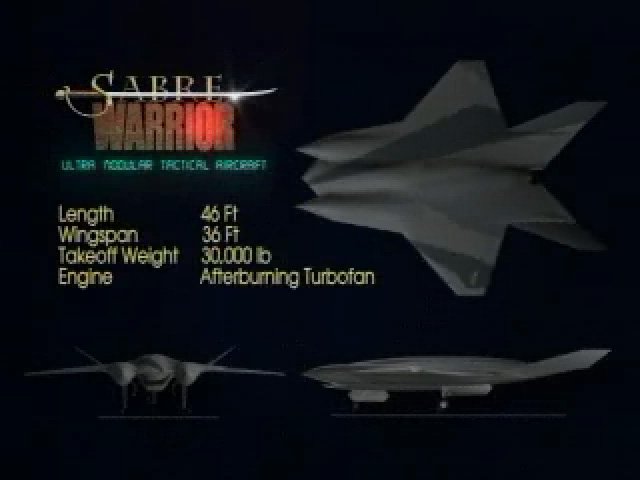
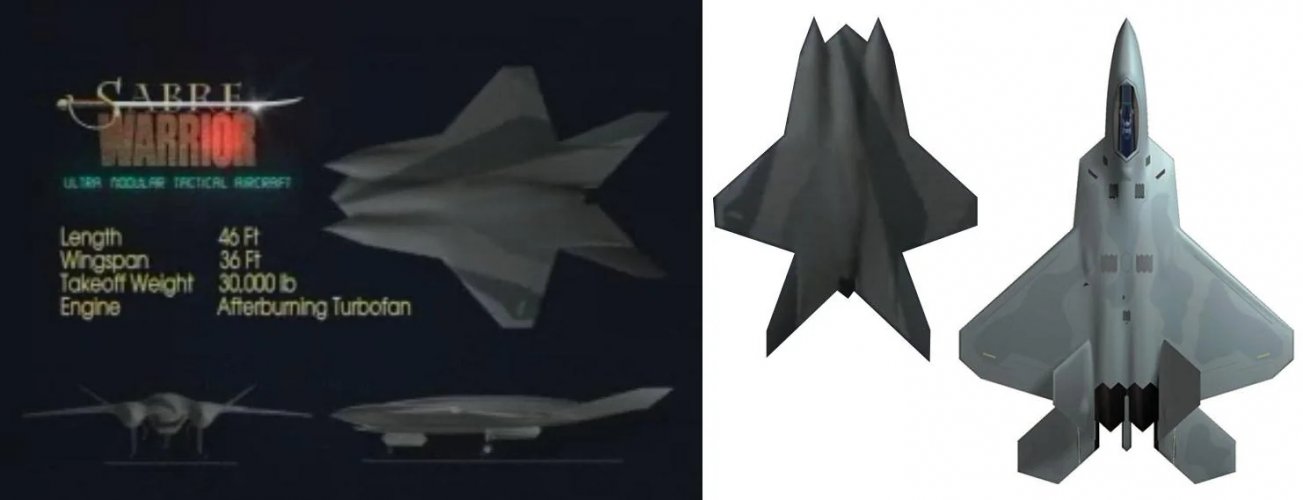
Should have done this:
 

Attachments

  • GyrWfAiXQAEN9dq.jpg
    GyrWfAiXQAEN9dq.jpg
    41 KB · Views: 107
  • lockheed-martin-sabre-warrior-ucav-1482x569-v0-ssp6oa53t5v41.jpg
    lockheed-martin-sabre-warrior-ucav-1482x569-v0-ssp6oa53t5v41.jpg
    196.8 KB · Views: 94
Last edited:
Another subsonic bullshit drone. If Skunk Works tease another time with the Vectis CCA I understand very well why Northrop and Boeing take all, since decade Lockheed have nothing to show to win the Contract of futur.
NG and Boeing's drones are all subsonic as well. The question here isn't whether LM is slacking or not, but rather can the US military produce the desired effects with subsonic CCAs. This is a question that perhaps the first generation of CCAs will answer.

Often times aerial engagements simply aren't being fought at supersonic speeds. There's also plenty of work to do that's perfectly doable at subsonic speeds. Range, loiter time, signature management are all reasons for flying at subsonic speeds.
 
In my opinion when we see the both wars Ukraine and Iran the capacity needed is big powerfire capacity , Hypersonic speed with missile , tons of bombs or missile payloads for an impact effect. Anduril and GA do the job very well with their both drone for CCA, I don't see in what the Vectis could be a game changer? , Skunk Works glory time seem to be gone, nothing on the hypersonic plane SR-72 style, Out of NGAD , out of FA/XX and out of Stealth heavy bomber, they are like Dassault with the forever Rafale , Lockheed do the same with the forever F-35. In the same time Hermeus is working on high supersonic drone with may be Hypersonic missile capacity on it , more inovative than a Skunk Work enormous company.... 2 tease for the same Vectis we saw a lot in conference since 2025 is a little too much.
 
Last edited by a moderator:
NG and Boeing's drones are all subsonic as well. The question here isn't whether LM is slacking or not, but rather can the US military produce the desired effects with subsonic CCAs. This is a question that perhaps the first generation of CCAs will answer.
I strongly doubt that anyone can get the cost of a supersonic CCA as cheap as the USAF wants.


Often times aerial engagements simply aren't being fought at supersonic speeds. There's also plenty of work to do that's perfectly doable at subsonic speeds. Range, loiter time, signature management are all reasons for flying at subsonic speeds.
This. Very few dogfights have been at supersonic speeds for anything other than the very first turn.

Remember, the Harrier was actually one of the scarier dogfighters due to the sheer excess power it had, despite the lack of afterburners.
 
I don't see in what the Vectis could be a game changer?
Its a significantly more survivable / VLO platform that is probably something that is designed to work very well with NGAD platforms. One can see that in its design philosophy. Its also designed to, based on images posted by Lockheed, launch SiAW / Blackbeard class weapons. And if it can launch SiAW/BlkBeard it can also launch AIM-424 class A2A missiles. Its a good notch or two above current Increment 1 offerings and is likely chasing the puck to where LM thinks (or hopes) the CCA requirements advanced to by the early to mid 2030s just as NGAD platform matures.
 
Last edited:
I strongly doubt that anyone can get the cost of a supersonic CCA as cheap as the USAF wants.


This. Very few dogfights have been at supersonic speeds for anything other than the very first turn.

Remember, the Harrier was actually one of the scarier dogfighters due to the sheer excess power it had, despite the lack of afterburners.
Dogfights are irrelevant, especially as no CCA would have the survivability to even get into that engagement range.

Higher speeds and higher altitudes lend themselves to better missile launches, maximizing range and also lethality. There is a reason every fighter since the sound barrier was first broken in level flight has been supersonic.

CCA as a program is about cutting corners on purpose, in an attempt to maximize cost efficiency. As the USAF operates under the impression that cheap mass can give them a fighting chance in the Pacific.

If one wants to see supersonic UCAVs, China is already looking into that and their conclusion was that higher value, higher performance, unmanned systems give them an edge.

It's worth noting that the USAF has to operate at far greater ranges. Supersonic flight burns through more fuel, which means you decrease range and have to refuel more often with a finite amount of tankers that are extremely vulnerable and preferably serve higher priority assets.

So yes, a supersonic UCAV is in air combat by default a more dangerous opponent, essentially a full blown unmanned fighter jet, while subsonic CCA is certainly far less lethal, less survivable, but also cheaper (in theory) and doesn't diminish it's own combat radius through supersonic flight. They are the way they are for a reason, even if one may question the overall reasoning or it may not be as sexy and exciting as "F-16, but without a cockpit".
 
In my opinion when we see the both wars Ukraine and Iran the capacity needed is big powerfire capacity , Hypersonic speed with missile , tons of bombs or missile payloads for an impact effect.
I mean that's true but at the same time there's not a whole lot that a CCA with supersonic speed can do that a subsonic one can't. You could probably get a little better geometry and response time but that's about it.
Anduril and GA do the job very well with their both drone for CCA, I don't see in what the Vectis could be a game changer?
You can think of Anduril and GA's products as the training wheels on a kid's bike - you need to start somewhere to start testing tactics and figure out how best to employ unmanned systems with expanded autonomy. This can probably warrant a separate thread, but while CCAs can and do launch and land themselves, there's a lot of mission planning, tasking, collaborative behavior and tactics work that just simply isn't there it. It's all been demonstrated in academic research, but production level systems that can account for just the operational capacity of a real air sortie is still not quite there yet.

There's plenty of room for NG, Boeing and LM to work with here.

FQ-42/44 engines are possibly in the 3 - 4klb thrust range. Incr 2 is looking at 5-6k as well as a bracket lower for more attritable drones. There's also plenty of need for better sensors and networking, which is probably more valuable than thrust alone. Networking is probably much more important now than ever simply because the philosophy as of now seems to be that there are multiple aircraft in the formation each with a flavor of sensing and they need to at least communicate within the formation to fuze large amounts of targeting data. Primes can generally target a higher capability bracket than GA and Anduril while still keeping things relatively affordable.
CCA as a program is about cutting corners on purpose, in an attempt to maximize cost efficiency. As the USAF operates under the impression that cheap mass can give them a fighting chance in the Pacific.
It could also be the case that they want greater area coverage per formation and they want sensors and affectors distributed across the formation rather than just on a few nodes. A denser, wider net with cross platform sensor fusion probably makes more sense against LO fighters than simply larger better sensors on a few nodes. A stand in jammer doesn't need to have the same survivability as a networking node. Some aircrafts may only be passive sensing / receiver nodes. Some are decoys/magazines and others are actually higher end sensors.

This depends on what type of war you're fighting. For it's pacific rim units, I suspect that the US believes the fight there will be defensive in nature (there's no good reason for the US to strike further inland unless we really want WWIII, and that further inland is generally not feasible). In that respect, a cheap "CCA" can also be thought of like a landmine - if it can be dense and borderline omnipresent, there's simply no easy way for an attacking force to get through either unnotice or undamaged. In that respect, supersonic speed adds only complexity without much utility since the goal here isn't to out maneuver, but rather to hold airspace either temporarily or permanently. The math only stops working if your enemy can field more and more capable affectors than you can at a given location / time.
 
Last edited:
CCA as a program is about cutting corners on purpose, in an attempt to maximize cost efficiency. As the USAF operates under the impression that cheap mass can give them a fighting chance in the Pacific.
Hi-low planning has been a thing for as long as I have been alive.

Even the USSR bought into it with the MiG-29 in the low slot. So did France with keeping Mirage 2000s as the low to Rafales high. So did the PRC, with J-10s as the low with Sino-Flankers and then J20s in the high.

So Hi-low with F-47/FAXX as the high and CCAs as the low is a really obvious look.


If one wants to see supersonic UCAVs, China is already looking into that and their conclusion was that higher value, higher performance, unmanned systems give them an edge.
At a cost in dollars/yuan/renminbi.


It's worth noting that the USAF has to operate at far greater ranges. Supersonic flight burns through more fuel, which means you decrease range and have to refuel more often with a finite amount of tankers that are extremely vulnerable and preferably serve higher priority assets.
We could make an argument for a plane that spends its entire flight supersonic, like Blackbirds did. These would be highly unlikely to be cheap, though.


So yes, a supersonic UCAV is in air combat by default a more dangerous opponent, essentially a full blown unmanned fighter jet, while subsonic CCA is certainly far less lethal, less survivable, but also cheaper (in theory) and doesn't diminish it's own combat radius through supersonic flight. They are the way they are for a reason, even if one may question the overall reasoning or it may not be as sexy and exciting as "F-16, but without a cockpit".
Yes, a full blown QF-16 is a very different statement as the CCA than an MQ-28.
 
Back
Top Bottom