Forest Green
ACCESS: USAP
- Joined
- 11 June 2019
- Messages
- 14,596
- Reaction score
- 31,708
Last edited by a moderator:



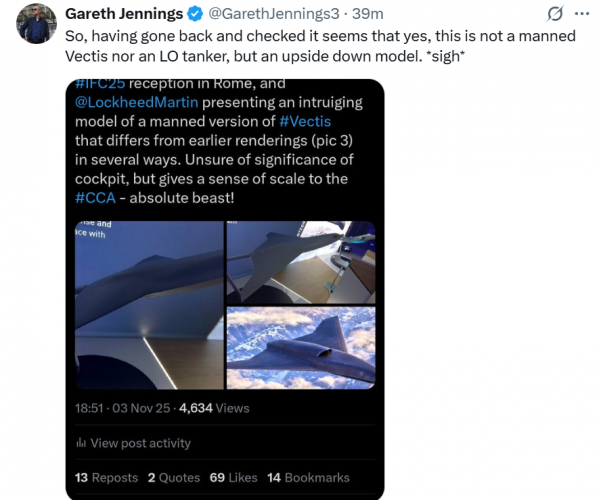
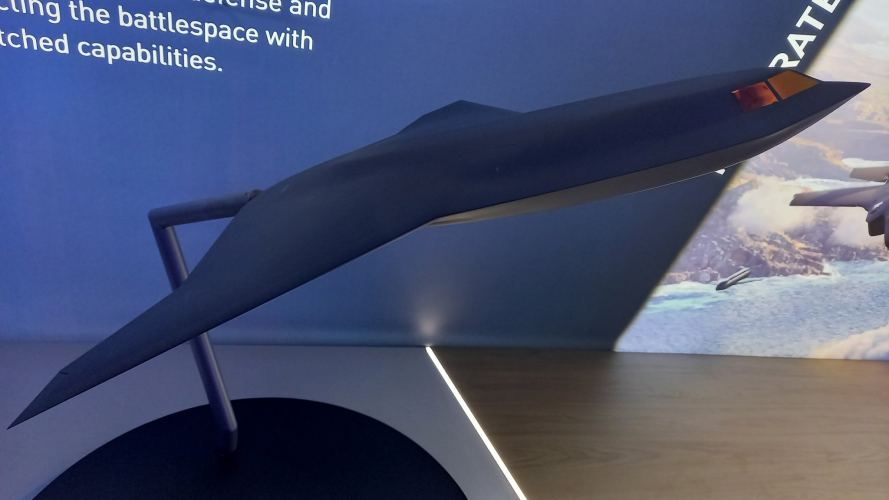
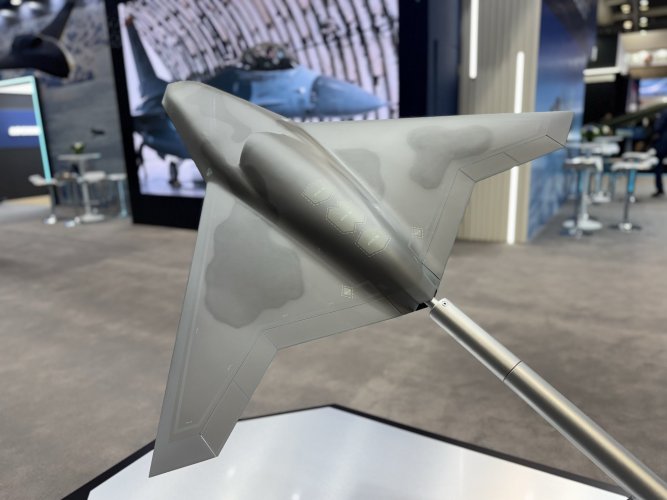
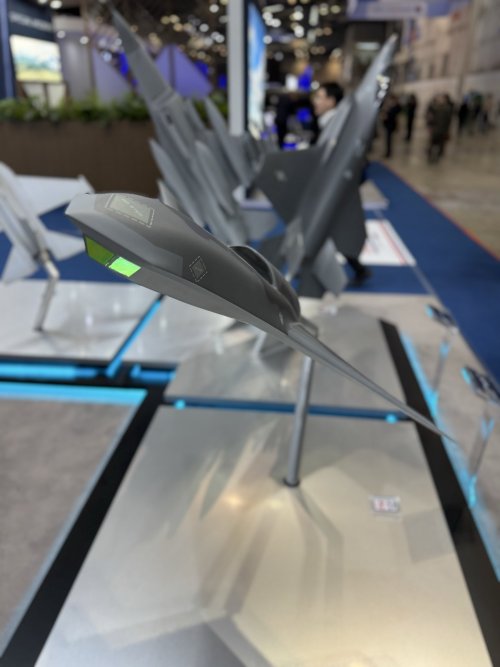
they are old shots from ADEX25Pix taken after they turned it right side up...

In a deal with Lockheed, Denmark is ordering 15 additional F-35s and unnamed CCAs. I wonder if this is the platform they are interested in.
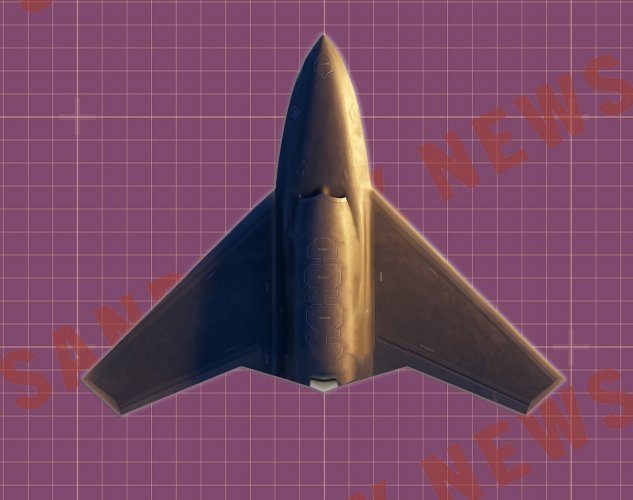
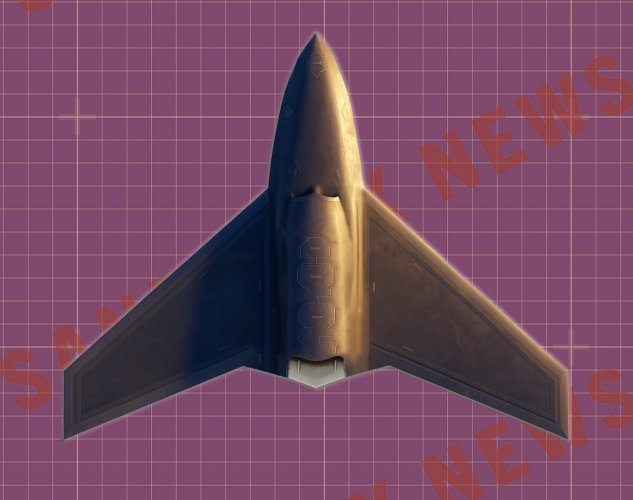
Don't forget the refined version:Alex Hollings 80lvl of deduction - that's after Vectis planform and side views were shown in LMSW video four days before.
Watermarked!
View: https://x.com/AlexHollings52/status/1971605138474516713/
DUBAI—A Hanwha turbofan engine scheduled to complete development in 2028 is a candidate to re-engine the Lockheed Martin Vectis, a Skunk Works-designed collaborative combat aircraft (CCA) pitched to foreign buyers.
South Korean defense company Hanwha is developing an engine in a similar thrust class as the 3,600 lb.-thrust FJ-44A but dedicated to the market for CCAs and UAS. Hanwha managers at the Dubai Airshow briefed a group of reporters about the HAF4500, a 4,000-4,500-lb.-thrust turbofan that also offers 100 kW of electrical output.
In addition to more availability, the Hanwha engine also may create a path to increasing the speed of the Vectis CCA.
Hanwha's bid to re-engine Vectis also may offer a clue about Lockheed’s most interested foreign buyers. Lockheed executives say there are 15 interested countries in talks about buying the Vectis, with two countries leading those discussions. In addition to South Korea, Lockheed also started discussing a “next generation UAS” with Poland in 2020.
There were a lot of ATF concepts floating around the media in the early-mid 1980s.Food for thought, makes me wonder where the X-9 Ghost design from Macross Plus (1994) comes from that predates them. Considering the necessary mechanical design work for the toy that needed to be done before any storyboard drawing & planning are made let alone actually screen footage drawing... at least 2 years would have gone into pre-work. And since it's inspired by the YF22 (1990 Sept.) the earliest time to start work would be in 1991. Any other source of inspiration for this particular planform must predate LM's revelation of the YF22 let alone any detail revelation of the design phase at the time. What other source could that be?
Well, yes. Those are the easiest concepts to work out. I mean, we've been flying and using unmanned sensor/ISR drones since the 1980s. Getting them LO has generally been a different discussion.So far it seems like all US CCA iterations bifurcate into two types: munitions carrier (two AMRAAM, MALD type things or a JDAM) and a sensor or ISR bird.
With AESAs, I don't think there's much capability for a high-power jammer to force the magic smoke out of the radar. It's a lot more viable for PESAs and their single module, but I'm not sure how many of those will remain in service.i always thought an unmanned aircraft with the power generation capability to enable powerful stand in jamming would be interesting to the USN and USAF, even if the NGAD FoS is spinning up super MALD type systems that can provide some SDR enabled jamming capability or something like that. I wonder if it’s just not relevant, not possible, not cost efficient or some or all of the above.
Williams does make some solid engines. FJ44 would also be sporty for a very long range cruise missile (or FJ33)


Well bring it on was certainly right about drumming up interest - especially OUS operators. I had really been thinking of Vectis with only a US POV. Duh.
Those would be very expensive engines for a cruise missile.Williams does make some solid engines. FJ44 would also be sporty for a very long range cruise missile (or FJ33)
Well presumably Williams knows how to value engineer an expendable cruise missile engineThose would be very expensive engines for a cruise missile.
They would also be really heavily over powered.Those would be very expensive engines for a cruise missile.
They do have models for that size range, but I think modern start ups are revolutionizing the expendable micro turbine market with a lot 3D printing.Well presumably Williams knows how to value engineer an expendable cruise missile engine
That looks a lot more like the "Loyal Wingman" type CCA I was expecting from the early discussions. Supersonic and able to keep up with F-35. Could pack a pair of AMRAAMs or at least 4x SDBs. Maybe 6x if the racks are set up correctly.
Agreed.I think Incr1 is more of a bulk test batch, not the final answer. My guess is USAF wants to prove out the concept on a large scale over an instrumented range to see how the entire arrangement works in real life.
I fully expect that they're going to (edit) eventually end up with a CCA that is capable of keeping up with an F-35 or F-22 in supercruise.They might well judge subsonic to be too limiting.
I fully expect that they're going to end up with a CCA that is capable of keeping up with an F-35 or F-22 in supercruise.
I should add "eventually" to that sentence. Somewhere around Increment 5 or 6 is where I think we'll see supercruising CCAs.That last part I doubt. Supercruise is a pretty high end capability for the cost point and weight class.
Supercruising requires a relatively low engine pressure ratio in order to limit turbine inlet temperatures, which is honestly the opposite direction from where the civilian market has been going.Just getting to supersonic probably requires a small engine with reheat, and while there are a host of civilian products in the 3000-8000 lb thrust range, almost none have augmentation. The only one I can think of is J-85. I think the market will move in that direction - low hour life high output augmented turbofans explicitly for CCA type platforms. But I think it takes some time, and I think supercruise is off the table as too expensive in a platform that is attritable, despite the recent USAF distaste for that word.
That last part I doubt. Supercruise is a pretty high end capability for the cost point and weight class. Just getting to supersonic probably requires a small engine with reheat, and while there are a host of civilian products in the 3000-8000 lb thrust range, almost none have augmentation. The only one I can think of is J-85. I think the market will move in that direction - low hour life high output augmented turbofans explicitly for CCA type platforms. But I think it takes some time, and I think supercruise is off the table as too expensive in a platform that is attritable, despite the recent USAF distaste for that word.
The increment 1 is the increment 1 not a means to increment 2 or 3 capability. Those are envisioned as unique capabilities solving operational problems and enabling capabilities that make them distinct from other CCA increments.We may well get there. I think Incr1 is more of a bulk test batch, not the final answer. My guess is USAF wants to prove out the concept on a large scale over an instrumented range to see how the entire arrangement works in real life. They might well judge subsonic to be too limiting.

Acc. to Guancha (the only private media company in China that can get news from within the military), the PLAAF has flown 1 J-20 coupled with numerous simple UADFs ("CCA"s in American terms) against 2 J-20s multiple times. Each time, the 2 J-20s won.We may well get there. I think Incr1 is more of a bulk test batch, not the final answer. My guess is USAF wants to prove out the concept on a large scale over an instrumented range to see how the entire arrangement works in real life. They might well judge subsonic to be too limiting.

| 
|
China and the U.S. would find themselves on opposing sides in a conventional Pacific conflict, with the tyranny of vast distance ironically offering both sides the same advantages and disadvantages in UADF/CCA operations.China and US/Nato technological needs are not at this point of time entirely reciprocal. The US are developing a specific answer to the picture they get from their analysis of the threat which differs from the effort China pursue.
It was the same during the Cold War when US/NATO allies were facing the USSR.


Whereas obviously USAF are idiots for launching a multi billion dollar CCA Inc 1 acquisition program based on no evidence whatsoeverTherefore, they don't believe that something like a simple CCA is effective in air-to-air missions. If it's going to be simple, it should be expendable.
My condolences for your illiteracy. What the USAF is doing with Inc. 1 is literally a PROOF OF CONCEPT on a wider scale.Whereas obviously USAF are idiots for launching a multi billion dollar CCA Inc 1 acquisition program based on no evidence whatsoever
But internet randoms judging performance based on pictures, and then even more so judging effectiveness from this, have different views
That's it. THEY (the PLA) don't believe in it, but that’s not to say the others can't think differently. What all the conclusions about the future of air-warfare that both the PLA and the USM have come to so far point to is the same obvious stuff, which is dictated by the physics.Therefore, they don't believe that something like a simple CCA is effective in air-to-air missions.

I can take their word for it, but I've read different conclusions for very similar stuff lately. @Dilandu posted a paper awhile ago describing a simulation environment where CCAs enhanced with domain knowledge from an air combat controller was able to win against humans every time despite flying less capable aircraft, but before integrating that domain knowledge, the two better armed human fighters won. I've got my qualms about the paper and it is a pretty limited simulation environment though but regardless - it shows potential.Acc. to Guancha (the only private media company in China that can get news from within the military), the PLAAF has flown 1 J-20 coupled with numerous simple UADFs ("CCA"s in American terms) against 2 J-20s multiple times. Each time, the 2 J-20s won.
I think the Chinese haven't really given up on the cheap subsonic CCAs either. It's just that they have a greater need for high end supersonic ones as the environment they want to fly those CCAs in is arguably a more forgiving one than what the US wants to fly in (scatter islands and defenses with no real depth, hunting aerial targets vs an entire continental area denial network with depth hosting threats that can't be reached either due to practicality or ROE).

| 
| 
|
As far as CCA hardware and software are concerned, I think it's pretty par for course for how China pursues new tech because it's in part due to differences in the two government systems. China likes to go deep - take technology that's not terribly mature yet and field end-to-end prototypes of it and plug in technologies as they become mature. It's high risk, but the government has the organization, funds and political will to see it through. The US likes to field things on existing systems and mature technology through integration. Then when tech is mature, execute an end-to-end product. It's low risk and that suits investors, stakeholders and congress very well. Now there's always exceptions, but the trend tends to be this way for both countries.It's just that they got there faster than the USAF's Incr. 2 CCAs.
Agreed, but these are clearly still intermediary solutions, and the PLA is confident that the future of operationally viable UADF designs is clear. It's just that they got there faster than the USAF's Incr. 2 CCAs.
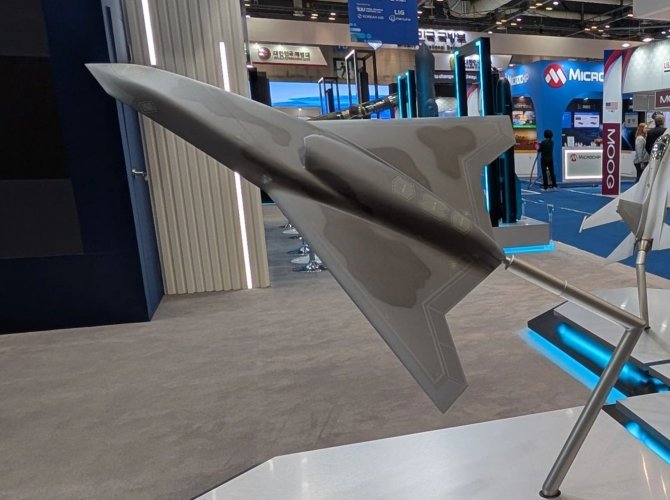
Dafuq?Also @Scott Kenny I remember one of the earlier LM posts about this CCA saying this one is still going to be subsonic. I remember because I threw a fit about it earlier lol




![Skunk Works® Agile Drone Framework.mp4_snapshot_02.04_[2025.09.22_23.18.31].jpg](/data/attachments/326/326084-518d5546fc647d9cd69c03e9a9e922a2.jpg)