Curious where you got the graphic from, do you have a source link?

You are using an out of date browser. It may not display this or other websites correctly.
You should upgrade or use an alternative browser.
You should upgrade or use an alternative browser.
Lockheed Martin F-35 Lightning II Joint Strike Fighter (JSF)
- Thread starter Triton
- Start date

EmoBirb
ACCESS: Top Secret
- Joined
- 18 January 2025
- Messages
- 2,702
- Reaction score
- 6,928
Ngl, this looks like an incredibly fragile subcontractor network. Awesome for peace time and economic participation, but in war time this seems like a major weakness. Could Lockheed, in theory, produce and assemble all necessary components themselves (together with other US contractors) in the United States? Or is the entire F-35 production entirely dependent on this cluster fuck of international contractors and manufacturers?Keep in mind, Ft Worth is just where final assembly occurs. A lot of sub-assembly / part work occurs in other locations. Even a lot of the parts that go into sub-assemblies built by "Lockheed" (and others) might be built at still other companies.
View attachment 797953

- Joined
- 3 June 2011
- Messages
- 20,935
- Reaction score
- 19,153
No idea. Note several are made in multiple countries (so there are duplicate suppliers). The most obvious example is the radome. Or take BAE:Ngl, this looks like an incredibly fragile subcontractor network. Awesome for peace time and economic participation, but in war time this seems like a major weakness. Could Lockheed, in theory, produce and assemble all necessary components themselves (together with other US contractors) in the United States? Or is the entire F-35 production entirely dependent on this cluster fuck of international contractors and manufacturers?
"Component Manufacturing: Produces aft fuselages and other key parts at facilities in the U.S., U.K., and Australia."
Are the same parts made in multiple locations or is each location making unique parts? No idea.
The "AI" summary:
F-35 final assembly lines are primarily located at Lockheed Martin's vast facility in Fort Worth, Texas, which serves as the main hub for joining major sections and final outfitting, with other key Final Assembly and Check-Out (FACO) sites in Cameri, Italy, for European production and support, and historically a facility in Nagoya, Japan, though roles shift. These lines use advanced robotics, like laser alignment (EMAS), and digital tools for precise mating of subassemblies built by global partners (Northrop Grumman, BAE Systems, etc.) into the common F-35 design, ensuring all variants (A, B, C) are produced efficiently.

Forest Green
ACCESS: USAP
- Joined
- 11 June 2019
- Messages
- 14,532
- Reaction score
- 31,601
Lockheed boasts record 191 F-35 deliveries in 2025
https://breakingdefense.com/2026/01/lockheed-boasts-record-191-f-35-deliveries-in-2025/
- Joined
- 11 February 2007
- Messages
- 4,140
- Reaction score
- 8,885
"We manufacture titanium components for the vertical stabilisers of the conventional take-off and landing (CTOL) variant of global F-35 aircraft in Adelaide, South Australia."Or take BAE:
"Component Manufacturing: Produces aft fuselages and other key parts at facilities in the U.S., U.K., and Australia."
Are the same parts made in multiple locations or is each location making unique parts? No idea.
- Joined
- 11 February 2007
- Messages
- 4,140
- Reaction score
- 8,885
That's been true of pretty much every US combat aircraft since at least the 80s. The F-35 may have larger components manufactured outside of the US, but critical components have come from outside the US for decades - air data computers from the UK, HUDs from the UK and Israel, and so on.Ngl, this looks like an incredibly fragile subcontractor network. Awesome for peace time and economic participation, but in war time this seems like a major weakness. Could Lockheed, in theory, produce and assemble all necessary components themselves (together with other US contractors) in the United States? Or is the entire F-35 production entirely dependent on this cluster fuck of international contractors and manufacturers?
- Joined
- 3 June 2011
- Messages
- 20,935
- Reaction score
- 19,153
And, if anything, having all the eggs in one basket would almost be more vulnerable. I mean if we're bombing the other guy's aircraft factories things are already crazy. One B-2 dropping a load on that shiny new SAC factory and it would be all she wrote.That's been true of pretty much every US combat aircraft since at least the 80s. The F-35 may have larger components manufactured outside of the US, but critical components have come from outside the US for decades - air data computers from the UK, HUDs from the UK and Israel, and so on.
Italy to open first F-35 pilot school outside USA:
https://www.defensenews.com/global/...r-base-as-first-f-35-pilot-school-outside-us/
https://www.defensenews.com/global/...r-base-as-first-f-35-pilot-school-outside-us/
Last edited:
And not just combat aircraft either. Transports and civil aircraft (airliners, bizjets, etc) are the same way. Hundreds of suppliers at various levels, some of them little shops making just one or two parts, others supplying things like complete landing gear and engines.That's been true of pretty much every US combat aircraft since at least the 80s.
It's why I just shake my head any time there's talk of restarting production for this aircraft or that one; all anyone seems to talk about is whether we have The Tooling. This isn't 1945 with formed sheetmetal airframes, simple analog instruments, and piston engines. That supplier chain for all the little components that help the machine do its magic (whatever it is) is crucial and it rapidly deteriorates as soon as production ends. You can't "just" dig up drawings and make more parts on stored tooling.
The event demonstrated how advanced modeling and simulation can develop tactics and strategies for fifth-generation aircraft like the F-35 operating with uncrewed combat systems.
“Modern warfare is demanding more from our aviators,” said NAWCAD Commander Rear Adm. Todd Evans. “This milestone shows the Joint Simulation Environment’s impact on equipping them with the advanced tactics they need to win future battles.”
During the demonstration, F-35 pilots used touch-screen tablets to control multiple CCA during simulated missions. Using advanced operational communication systems and precision-guided missiles, pilots engaged complex threats in the JSE’s highly realistic virtual environment.
https://www.navair.navy.mil/news/F-...aft-hone-tactics-Joint-Simulation-Environment
- Joined
- 11 February 2007
- Messages
- 4,140
- Reaction score
- 8,885
I interviewed for a job with a little local supplier of cockpit emergency instruments - standby altimeters etc. One small factory unit, probably about 30-50 employees. As far as I could tell they had about half the worldwide airliner market for those. There must have been at least one competitor out there somewhere to cover the other half of the market, but I doubt there were two. Lots of markets are just too niche to support more than one or two companies worldwide.And not just combat aircraft either. Transports and civil aircraft (airliners, bizjets, etc) are the same way. Hundreds of suppliers at various levels, some of them little shops making just one or two parts, others supplying things like complete landing gear and engines.
It's why I just shake my head any time there's talk of restarting production for this aircraft or that one; all anyone seems to talk about is whether we have The Tooling. This isn't 1945 with formed sheetmetal airframes, simple analog instruments, and piston engines. That supplier chain for all the little components that help the machine do its magic (whatever it is) is crucial and it rapidly deteriorates as soon as production ends. You can't "just" dig up drawings and make more parts on stored tooling.
Forest Green
ACCESS: USAP
- Joined
- 11 June 2019
- Messages
- 14,532
- Reaction score
- 31,601
Oh great, touchscreens...
Navy F-35 pilots train to wield drones with touchscreen tablets
https://www.defensenews.com/unmanne...ain-to-wield-drones-with-touchscreen-tablets/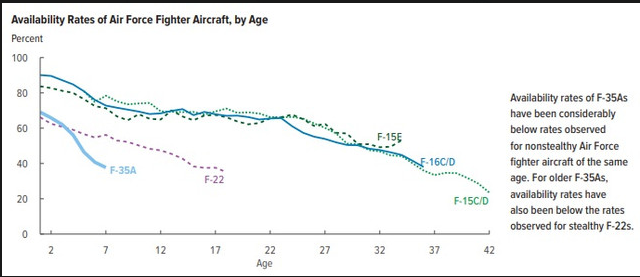
- Joined
- 28 January 2008
- Messages
- 1,653
- Reaction score
- 4,226
As long as they are not texting while flying. Now if two pilots are texting, is that considered Kotexing?Oh great, touchscreens...
Navy F-35 pilots train to wield drones with touchscreen tablets
https://www.defensenews.com/unmanne...ain-to-wield-drones-with-touchscreen-tablets/

BonPlan2
ACCESS: Top Secret
- Joined
- 5 June 2025
- Messages
- 577
- Reaction score
- 738
All the other jets are or were also upgrade.Already discussed earlier but basically those stats do not make any difference with aircraft put offline for upgrades.
F-35 main problem is that even now, it is not mature despite a lot of different standards made for that specific purpose.
- Joined
- 23 August 2011
- Messages
- 2,564
- Reaction score
- 8,447
Are the same parts made in multiple locations or is each location making unique parts? No idea.
Each location unique parts. So BAE in Samlesbury is rear fuselage, BAE US is the EW system in various locations for different parts etc etc.
I'm sure that Turkey will be back in the programme once Erdy has ditched the SA-21 Growler SAMs.
BonPlan2
ACCESS: Top Secret
- Joined
- 5 June 2025
- Messages
- 577
- Reaction score
- 738
S400 resale can only be made with Moscow approval. I don't see a green light coming from them, specially to halt a F-35 sale.I'm sure that Turkey will be back in the programme once Erdy has ditched the SA-21 Growler SAMs.
other costly solution : to scrap them...


snne
ACCESS: Top Secret
- Joined
- 3 July 2022
- Messages
- 2,420
- Reaction score
- 8,877
I'm sure that Turkey will be back in the programme once Erdy has ditched the SA-21 Growler SAMs.
Listen out... what if… what Turkey’s been proposing since 2019 actually happens – that Turkey retains the system yet keeps it in hangars or deploys it elsewhere…S400 resale can only be made with Moscow approval. I don't see a green light coming from them, specially to halt a F-35 sale.
other costly solution : to scrap them...
FYI, a Turkish diplomat has described that "the Americans have started to listen to what they’ve been trying to tell them all along since 2019." There were many solutions to the problem and the Turkish proposition just made sense; y’all’s people just didn’t want to listen. But the changing geopolitical environment is forcing them to do so…
https://www.secretprojects.co.uk/search/1670947/?t=post&c[thread]=17732&c[users]=snne&o=relevance
S400 resale can only be made with Moscow approval.
If Erdy wants to stick it to Putler just donate the SA-21 Growler SAMs to Ukraine.

Spain & Switzerland cancel F-35A order ? ... https://defensemirror.com/news/40014

Aegrotare
ACCESS: Confidential
- Joined
- 2 November 2025
- Messages
- 70
- Reaction score
- 130
No Spain never ordered F-35s ans Switzerland reduced the order to 30 jets ecause of costsSpain & Switzerland cancel F-35A order ? ... https://defensemirror.com/news/40014
BonPlan2
ACCESS: Top Secret
- Joined
- 5 June 2025
- Messages
- 577
- Reaction score
- 738
to deploy it elsewhere.... OK, but where exactly ?Turkey retains the system yet keeps it in hangars or deploys it elsewhere…
I think this solution will never be accepted by the US.
Solution 2 : sell it to India, but China will be angry.
Solution 3 : sell it to China (but do they need it?), but India will be angry.
Solution 4 : sell it to Ukraine, but Russia will be angry.
Solution 5 : sell it back to Russia, but what a blow in the face for russia so NO.
Solution 6 : scrap it.
There is no good solution. Erdogan put himself in a trap.
BonPlan2
ACCESS: Top Secret
- Joined
- 5 June 2025
- Messages
- 577
- Reaction score
- 738
In Switzerland it emerged as the cheaper solution.... but it was before.....They were well and truly fooled.No Spain never ordered F-35s ans Switzerland reduced the order to 30 jets ecause of costs
Aegrotare
ACCESS: Confidential
- Joined
- 2 November 2025
- Messages
- 70
- Reaction score
- 130
not really the F35 is the far better option the a Rafale, but one could question why they need such a planeIn Switzerland it emerged as the cheaper solution.... but it was before.....They were well and truly fooled.
Ainen
I really should change my personal text
- Joined
- 25 August 2011
- Messages
- 2,834
- Reaction score
- 4,939
And expect first arrivals of far more sensitive F-35 sale right after a case of major breach of contract.If Erdy wants to stick it to Putler just donate the SA-21 Growler SAMs to Ukraine.
What could ever go wrong.
I don't think people still quite realise how vulnerable country was until ~now, and how obvious it became in 2016.There is no good solution. Erdogan put himself in a trap.
TAF was consistently denied modern air defenses by allies (which very nearly costed Erdogan his life), and the AF was both undersupplied for air warfare, and was visibly unreliable=purged.
S-400 was a minimum soolution to somehow live through to first Siper batteries, Eurofighters and domestic F-16 upgrade and AAM deliveries. And as if normal threats from all sides aren't enough, last time Israel threatened Ankara is barely half a year ago.
Last edited:
Curious where you got the graphic from, do you have a source link?
https://www.airliners.net/forum/viewtopic.php?t=1381741&start=1100#p21546335
https://www.airpower.org.uk/wp-content/uploads/2019/07/Day1-1515-Speaker1-WILSON.pptx

BonPlan2
ACCESS: Top Secret
- Joined
- 5 June 2025
- Messages
- 577
- Reaction score
- 738
a far better ? A single engine in montains (the F/A 18 was chosen on Mirage 2000 for that), a bird whose costs are rising to the sky, a bird without a mature weapon system.... OK, the far better option.not really the F35 is the far better option the a Rafale, but one could question why they need such a plane
Now we just hove to how many jets they will purchase, and when they will be FOC in Switzerland.

- Joined
- 3 June 2006
- Messages
- 3,538
- Reaction score
- 6,217
Hey folks,
check out the first F-35A for the US Navy!
Please note that this aircraft is currently operated by Air Test and Evaluation Squadron Nine (VX-9), likely for the integration of new avionics and weapon systems.
IMHO, that’s why this Navy squadron doesn’t really need for such test missions a F-35B or F-35C , which both belong to the fleet.
Edit:
This airframe is former AF-182 (17-5240).
Link (Flickr) :
View: https://flic.kr/p/2rTb44T
Another source:
https://www.twz.com/uncategorized/navy-is-flying-air-force-f-35a-joint-strike-fighters
check out the first F-35A for the US Navy!
Please note that this aircraft is currently operated by Air Test and Evaluation Squadron Nine (VX-9), likely for the integration of new avionics and weapon systems.
IMHO, that’s why this Navy squadron doesn’t really need for such test missions a F-35B or F-35C , which both belong to the fleet.
Edit:
This airframe is former AF-182 (17-5240).
Link (Flickr) :
View: https://flic.kr/p/2rTb44T
Another source:
https://www.twz.com/uncategorized/navy-is-flying-air-force-f-35a-joint-strike-fighters
Last edited:
Scott Kenny
ACCESS: USAP
- Joined
- 15 May 2023
- Messages
- 19,571
- Reaction score
- 28,036
Oh, that's different!Hey folks,
check out the first F-35A for the US Navy!
Please note that this aircraft is currently operated by Air Test and Evaluation Squadron Nine (VX-9), likely for the integration of new avionics and weapon systems.
IMHO, that’s why this Navy squadron doesn’t really need for such test missions a F-35B or F-35C , which both belong to the fleet.
Link (Flickr) :
View: https://flic.kr/p/2rTb44T
Gives a fun reason to build a model of a Navy A-model.
- Joined
- 3 June 2006
- Messages
- 3,538
- Reaction score
- 6,217
Yeah, I wouldn't be surprised if, in a few years, the US Navy obtains the F-35A also for their aggressor squadrons, NFWS 'Top Gun' and NSAWC like as with the F-16N in the late 1980's.Oh, that's different!
Gives a fun reason to build a model of a Navy A-model.
EmoBirb
ACCESS: Top Secret
- Joined
- 18 January 2025
- Messages
- 2,702
- Reaction score
- 6,928
Wouldn't they just train against an existing USAF aggressor squadron during an agreed upon exercise?Yeah, I wouldn't be surprised if, in a few years, the US Navy obtains the F-35A also for their aggressor squadrons, NFWS 'Top Gun' and NSAWC like as with the F-16N in the late 1980's.
Not enough to go around already. The issue remains generating sufficient numbers and a sufficiently complex threat picture. CCA can change that, that was the intent behind the original Blue Force Tech Fury before Andruil acquired the company, but also equipping the commercial red air providers with sufficient EW and IR systems to better replicate the threat and supplement the USAF and USN squadrons that already exist.Wouldn't they just train against an existing USAF aggressor squadron during an agreed upon exercise?
Forest Green
ACCESS: USAP
- Joined
- 11 June 2019
- Messages
- 14,532
- Reaction score
- 31,601
Forest Green
ACCESS: USAP
- Joined
- 11 June 2019
- Messages
- 14,532
- Reaction score
- 31,601
Navy Is Flying Air Force F-35A Joint Strike Fighters
https://www.twz.com/uncategorized/navy-is-flying-air-force-f-35a-joint-strike-fighters
Deltafan
ACCESS: Top Secret
- Joined
- 8 May 2006
- Messages
- 1,784
- Reaction score
- 2,767
NORAD pact would change if Canada pulls back from F-35 order, warns U.S. ambassador
https://www.cbc.ca/news/politics/norad-canada-us-f35-9.7059800
Forest Green
ACCESS: USAP
- Joined
- 11 June 2019
- Messages
- 14,532
- Reaction score
- 31,601
F-35 From USS Abraham Lincoln Shoots Down Iranian Drone (Updated)
https://www.twz.com/air/f-35-from-uss-abraham-lincoln-shoots-down-iranian-dronehttps://www.aviationtoday.com/2026/...uration-complicates-fielding-of-apg-85-radar/
Radar mountings in the nose of the Lockheed Martin F-35 fighter are different for the current AN/APG-81 by Northrop Grumman and the future AN/APG-85 radar, also by Northrop Grumman–a difference which has helped complicate fielding of the new radar which was to deliver with F-35 Lot 17 but may now instead deliver later, possibly in Lot 20 in the next two years.
F-35 deliveries to U.S. units in the field since last June have had the APG-85 mountings, which do not fit the APG-81. But, the radar-less F-35 deliveries have not affected sales to foreign partner nations which have the APG-81 on their jets, the source said, adding that, without a radar, there had to be additional weight added in the nose for aircraft balance during flight. Radar-less F-35s have been able to fly, as long as they are accompanied by other F-35s, data linked and equipped with the APG-81, the source said.
Similar threads
-
Lockheed Martin F-16 Fighting Falcon News and Developments
- Started by seruriermarshal
- Replies: 897
-

-

-
 Lockheed JSF evolution: ASTOVL, SSF, CALF, JAST
- Started by Antonio
- Replies: 176
-
 USAF/USN 6th Gen Fighters - F/A-XX, F-X, NGAD, PCA, ASFS News & Analysis [2008- 2025]
- Started by Matej
- Replies: 10K