Switzerland, and recently Germany - nuclear bomber

Ahem, no.

What I meant was that it was still somewhat surprising that the UK put all its eggs in the F-35.

It would have been just as conceivable for the UK (and Italy) to buy the STOVL F-35B only for their carriers. They could then have worked with the other Eurofighter nations to develop a European Tornado replacement (either an advanced Eurofighter variant or a stealthy 5gen strike fighter… basically a manned FOAS which the UK did seem to consider for a short while).

AFAIK, that was kind of the plan originally. 138 F-35Bs were meant as a 1:1 replacement for all Harrier GR7/9s and Sea Harriers in service back then - there were 138 Harriers in RAF/RN service. Something else was meant to replace the Tornado GR4. (The Tornado F3 and Jaguar fleets were to be replaced with Typhoons.)
Then of course all the force reductions happened and suddenly F-35B turned into the Tornado GR4 replacement.
 
So why did the UK not also buy the F-35A if they wanted to replace the Tornado and keep the F-35B to replace the Harrier force? That is what I have always wanted back when the UK joined the then JSF program.
 
So why did the UK not also buy the F-35A if they wanted to replace the Tornado and keep the F-35B to replace the Harrier force? That is what I have always wanted back when the UK joined the then JSF program.
The Tornado was to be replaced by the Future Offensive Aircraft, homegrown and stealthy. Later that became the Future Offensive Aircraft System, which added in unmanned aircraft (Taranis) and cruise missiles. Replica was somewhere in the mix and there were proposals for a big-wing stealthy Typhoon.
 
This aircraft is so solid. Amazing that the EOTS glazing is apparently intact.
This is not the first time that we can observe an accidented F-35 without much apparent damages.
Notice that the external AIM-9X is a live one, meaning that the wb might also hold live ordinances.
 
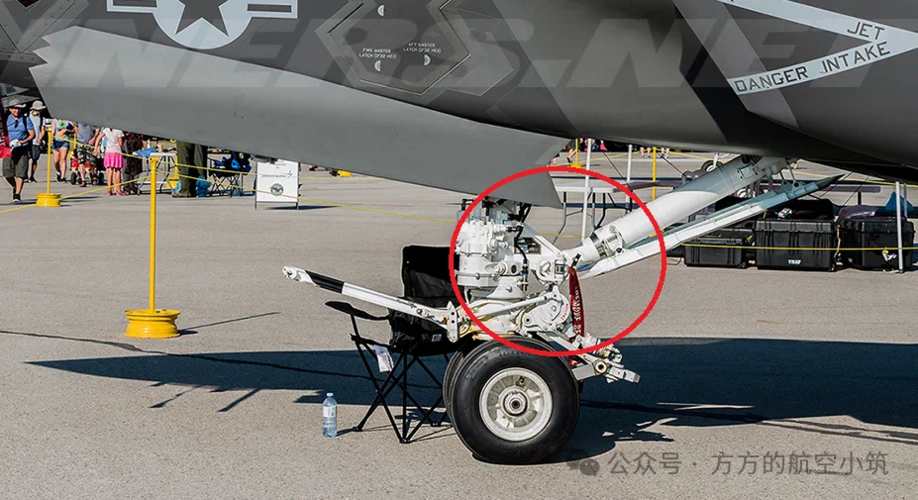
Wonder what caused the landing gear to collapse in the first place? An extremely rare event to have happened while the pilot was climbing out of the aircraft.
 
Wonder what caused the landing gear to collapse in the first place? An extremely rare event to have happened while the pilot was climbing out of the aircraft.

I found at least three previous incidents like this of nose gear collapses either while parked or while being towed. That seems like a lot, even considering the size of the fleets involved.

2018 (F-35A): https://theaviationist.com/2018/08/...ng-emergency-landing-at-eglin-air-force-base/

2020 (F-35A): https://www.airforcetimes.com/news/...landing-gear-collapses-after-landing-at-hill/

2022 (F-35B): https://theaviationist.com/2022/12/01/f-35b-nose-gear-collapse-incident-at-kadena-air-base/
 
So that is the fourth such occurrence of the nose wheel incident in as many years TomS, no doubt there will have to be an enquiry into this latest case so to be sure that it does not happen for a fifth time.
 
I found at least three previous incidents like this of nose gear collapses either while parked or while being towed. That seems like a lot, even considering the size of the fleets involved.

2018 (F-35A): https://theaviationist.com/2018/08/...ng-emergency-landing-at-eglin-air-force-base/

2020 (F-35A): https://www.airforcetimes.com/news/...landing-gear-collapses-after-landing-at-hill/

2022 (F-35B): https://theaviationist.com/2022/12/01/f-35b-nose-gear-collapse-incident-at-kadena-air-base/
It has the smallest sample size, but I wonder if retrofitting the A and B variant to the C's landing gear would fix this. I'm not even sure if it's possible structurally to do so.
 
It has the smallest sample size, but I wonder if retrofitting the A and B variant to the C's landing gear would fix this. I'm not even sure if it's possible structurally to do so.

It was a C that folded up in the most recent incident. None of them seem immune.
 
Obviously never got past the early design stage for the stealthy Typhoon DWG, one possibility could be that it got cancled when the Tempest was in the early stages of being designed and so BAE Systems went with what we now know as GCAP. Which I think would think was the better option.
 
Obviously never got past the early design stage for the stealthy Typhoon DWG, one possibility could be that it got cancled when the Tempest was in the early stages of being designed and so BAE Systems went with what we now know as GCAP. Which I think would think was the better option.
The timing is wrong, Tempest dates back to 2015, 2012 if you include the Future Combat Air System, but FOAS started in 1995 and was cancelled in 2005. The ideas for a stealthy Typhoon are probably mid-to-late 90s, not mid-to-late Noughties.
 
Thanks for the info DWG, I did not know that FOAS started in 1995 and was cancled in 2005 ten years of development and various designs.
 
Let's wait and see what actually happens Forest Green, if the production is kept stable for the next five years then I would think that the price of the F-35 would eventually come down.
 
You are talking about an advanced fighter in the F-35 Archibald, that could explain the price difference between the Rafale. Such advanced technology does not come cheap unfortunately.
 
Couldn't help thinking that 156 F-35s per year is 12 to 13 times Dassault annual production rate of Rafales... sweet Jesus.

My bad, Rafale max annual production ain't 12 but 36 : 3 per month. Still a 4,33 ratio for the F-35.
 
Couldn't help thinking that 156 F-35s per year is 12 to 13 times Dassault annual production rate of Rafales... sweet Jesus.
Well, 3 US air arms alone have well more than 12 to 13 times fighter strength of AdA.

My bad, Rafale max annual production ain't 12 but 36 : 3 per month. Still a 4,33 ratio for the F-35.
12 it is. They're increasing now to the second number, though. So, strictly speaking, a 1:4,33 ratio to F-35 is a sign of a huge commercial success.
 
My bad, Rafale max annual production ain't 12 but 36 : 3 per month. Still a 4,33 ratio for the F-35.
There was never 36 new built Rafale in a year. This is only sweet dreams from a well known poster here.

Think about it: you have 35 aircraft built with the according human resources and infrastructure. What do you then to 2/3rd of them to get back to 12... Do you really think that a layoff of 75% of employee will pass stealthily in the French social atmosphere
 
It has the smallest sample size, but I wonder if retrofitting the A and B variant to the C's landing gear would fix this. I'm not even sure if it's possible structurally to do so.

It is not a structural issue with the landing gear. Based on the report the landing gear retracted slowly via hydraulics after the plane was shut off. This is consistent with the usual behavior of the aircraft. You are supposed to insert a pin into the landing gear joint to prevent that from happening as per standard practice. Most likely this is the result of negligence from ground crew. Someone probably got a spanking.

IMG_1507.png
 
I would be surprised that unwanted retraction depends only of a pin. Not sure if that fits any sane logics.

With all the vaunted sensors and electronics in the bird, why not relying on weight on wheel data to lock the retraction mechanism instead?
 
You are supposed to insert a pin into the landing gear joint to prevent that from happening as per standard practice. Most likely this is the result of negligence from ground crew. Someone probably got a spanking.
Reminds me of those few Phantoms and Crusaders that took off with their wingtips folded. Ooops !
 
I would be surprised that unwanted retraction depends only of a pin. Not sure if that fits any sane logics.

With all the vaunted sensors and electronics in the bird, why not relying on weight on wheel data to lock the retraction mechanism instead?
There has to be more to the story.

The F-22 has a problem with uncommanded nose gear retraction that happened at engine shutdown. I believe there was an electrical system transient during engine shutdown that somehow told the nose gear to retract. The short term fix was for the crewchief to go under the fuselage back by the main gear, then approach the nose gear from the rear to pin it before shutdown, carefully avoiding the inlet suction from the running engines. The problem was eventually fixed and this engine running gear pinning because unnecessary.

In this case on the F-35, the nose gear retracted well after engine shutdown, with the pilot out of the cockpit going down the ladder. Electrical power should be off at this time. I’m not a landing gear designer, but most are driven hydraulically to the down position with linkage going over center to lock the gear down. Pinning of the gear usually doesn’t happen until the recovery inspection, before any aircraft towing operations. In this case, some stored hydraulic pressure must have been applied to the linkage to move out of the over center position, then gravity takes over. What allowed the hydraulic fluid to flow into the gear actuator (failed isolation valve?) after power was removed is where the investigation will focus. Pinning the gear would have prevented the mishap, but only as a secondary method.
 

Similar threads

Back
Top Bottom