Weight
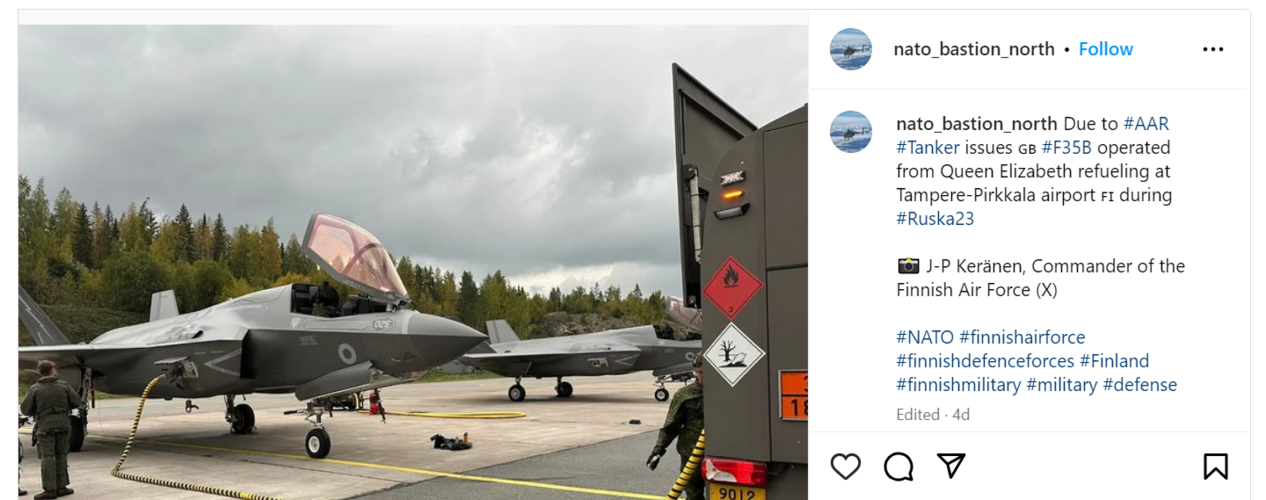
102. The Times also suggested that the US documents have revealed that the initial F-35Bs
purchased by the UK are too heavy to perform the vertical take-off and landing function
safely:100
… when early versions were upgraded, they would be over the weight
permitted for a safe landing. Britain bought four of the 14 aircraft affected,
records suggest. The report estimates further upgrades, to bring the aircraft
up to its full potential, would push it over an even stricter “structural limit”.
Without the upgrade the aircraft will miss out on future software and
hardware updates.101
103. The DOT&E report cited by The Times states that modifications to the 14 Lot 2 F35-
Bs, required to bring those aircraft to the Block 3F configuration, “are expected to bring
those aircraft to potentially an additional 350 pounds [in weight]”. This would push those
aircraft “above the objective not-to-exceed weight” to meet the vertical landing bring-back
(VLBB) key performance parameters.
104. According to the DOT&E report, estimates for the additional weight accrued from
follow-on-modernisation (FoM) to the Lot 2 F-35Bs include an extra 250lbs “which will
exceed the vertical landing structural limit not-to-exceed weight of 33,029 pounds for
the Lot 2 through Lot 4 aircraft”. As mentioned in The Times, the report suggested that
“this additional weight may prevent these aircraft from being upgraded to the Block 4
configuration”.102
105. In response to The Times’s investigation, the MoD dismissed their claims as
“nonsense”, arguing that a specific technique had been developed “to ensure that a heavy
aircraft can land on the deck”. This technique (Ship-borne Rolling Vertical Landing) “will
be tested on the Flight Trials of HMS Queen Elizabeth over the next couple of years”.
106. We asked Alexi Mostrous and Deborah Haynes about their claims that the F-35 was
too heavy. Mr Mostrous made clear that these claims were specifically confined to the
F-35s purchased by the UK from the Lot 2 and Lot 4 production rounds, rather than those
built more recently.103 Both witnesses repeated the claim that those earlier aircraft were
“potentially” too heavy to land vertically.
107. Ms Haynes also questioned the shipborne rolling vertical landing (SRVL) technique
that the MoD will employ for the F-35Bs, noting that the language used in the MoD’s
response implied that the technique “has not actually been tested and categorically verified
that it will work”.104
108. Justin Bronk suggested to us that the weight issue with the F-35s was “very significant
in terms of upgrade or retrofit growth potential, as well as bring-back of weapons” and
also, potentially, in relation to resolving vibration issues with the aircraft. According to
Mr Bronk, where vibration issues have emerged in the past the usual solution would be to
investigate and locate the source and to then add cross-braces. As the F-35 B was “already
very close to its weight target, for a lot of the vibration issues the traditional solution is
likely to be weight sensitive”.105
109. We also asked Mr Bronk about the SRVL technique. He took the view that the question
was not whether the F-35 was capable of performing such a manoeuvre, but rather “when
the software will be developed to conduct such a landing”.106 He explained that the SRVL
technique would be a largely automatic process and, as such, the development of the
software required to perform this landing would take “some time”.107
110. Lockheed Martin’s Peter Ruddock conceded to us that three F-35Bs procured by the
UK were above the specified weight. However, he insisted that this did not mean that
those aircraft were too heavy to land on the aircraft carriers and noted that they “can land
and have landed vertically”.108 Indeed, he suggested that while these aircraft were unlikely
to be deployed, “they would be able to land and to bring back the entire weapon load
internally” in the event that they had to be used in operations.109
111. On the general weight of the aircraft, Mr Ruddock told us that, aside from the first
two lots of aircraft procured by the UK, the rest of the aircraft “are actually within weight”
and went on to suggest that “remarkably, on the B model, there has been no weight growth
whatever in the past seven years”.110 Insisting that he had “no concerns about the weight”
of the F-35, Mr Ruddock pointed both to the SRVL technique being pioneered by the UK,
which, he suggested, would enable F-35Bs to land with an additional 2,000 pounds of
ordnance, and also to the level of capability already built-in to the F-35.111 According to
Mr Ruddock, this level of built-in capability “future-proofs” the aircraft and meant that
“the risk of weight growth to the programme is much less than on legacy programmes”.112
112. In supplementary evidence to the Committee, Lockheed Martin clarified these
remarks, suggesting that “since October 2010, there has been zero weight growth in
the F-35B that was not driven by the addition of customer requirements”. According
to Lockheed Martin, there has been an additional weight growth of 300 pounds in the
weight of the aircraft over this period “to accommodate additional requirements and new
capabilities requested by customers”.113
113. Mr Ruddock’s confidence in the weight capacity of both the three over-specification
F-35s and the rest of the fleet was echoed by Harriett Baldwin and Air Commodore
Taylor.114 The latter explained that the three aircraft procured from Lots 3 and 4 which
were overweight were test aeroplanes based at Edwards Air Force Base. He said that while
“they are slightly heavier than baselines weight” they would still be able to land vertically
on the Queen Elizabeth carriers if required.115 He insisted that this would be the case even
“with estimated weights of follow-on modernisation”, although they might not be able to
have “the standard loadout” of weapons and fuel.116 He added that UK aircraft carried
only 500 pound bombs, as opposed to the 2,000 pound bombs mentioned in the weight
specification, thus providing additional weight capacity for the UK’s fleet.117
114. Overall, Air Commodore Taylor was enthusiastic about the “simply exceptional”
performance of the F-35:
We are bringing back and vertically landing on to the carrier full stores
loadout, with enough fuel to land or, if you cannot land the first time, to
go round and have another go and still land vertically with the aeroplane.118