
- Joined
- 21 April 2009
- Messages
- 14,348
- Reaction score
- 9,429
Now we will see the power of a fully armed and operational production line
View: https://m.youtube.com/watch?v=g7-tskP0OzI&pp=ygUbcGFscGF0aW5lIGZ1bGx5IG9wZXJhdGlvbmFs



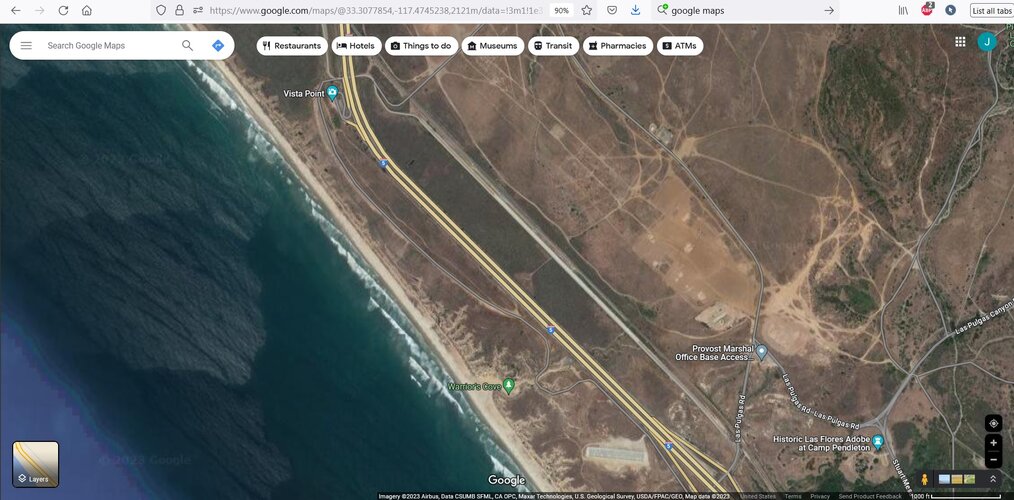
Looks like a RR access road, which means it doesn't get used very often, basically only by RR maintenance of way vehicles.I'm pretty sure this particular stretch of road is not in use and was previously used to train Harriers the same way, if it is the same recent exercise I'm thinking of.

Looks like a RR access road, which means it doesn't get used very often, basically only by RR maintenance of way vehicles.
Interesting to see the F-35Bs testing road landings, wonder how long the road tar will last under these conditions giving the fact the heat generated by the F-35B engine on landing and taking off.
Not to my knowledge. At least I haven't seen anything about it in any Finnish mass media (either in Finnish or Swedish). The Finnish Defence Forces have a tradition of being rather secretive when it comes to procurement practices and the size of their weapons inventory (the FDF has, for example, moved quite an amount of its field artillery pieces from the army to the navy in the past, as the number of artillery pieces in the navy need not be disclosed, unlike the number of guns in the army).in regards to the recent Finnish HX competition where the F-35 was selected,
was the full evaluation ever released? So far I can only find the F-35 points, but not for the other aircraft.
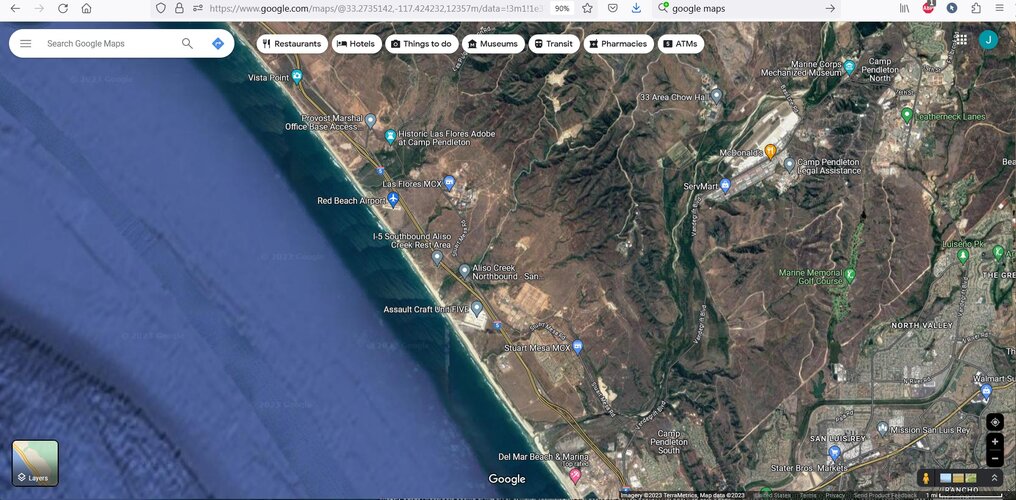
Looks to be an old part of US101, the Pacific Coast Highway. Parts of that have been closed off and bypassed.If anyone wants to check it out on a map, it's here:
http://wikimapia.org/6777578/STOL-101
It actually does look like this bit is closed to vehicles, part of a roads-to-trails conversion. There's about 3000 feet of concrete road here, perhaps deliberately laid as a Harrier strip at one point.

Specifically, this stretch was annexed by MCB Camp Pendleton... I used to drive between MCAS El Toro and NAS Miramar via I-5 frequently in 1987-91, and that road section is inside the base perimeter fence (the fence having been moved after I-5 was built).It's the Old Pacific Coast Highway near I-5. From what I can see, it is still an active road, but it was also used periodically (as noted above) for Harrier training.
https://www.thedrive.com/the-war-zone/f-35b-just-touched-down-on-the-old-pacific-coast-highway

Still technically Low Rate Initial Production...^ they already produced like 900? air frames and its still not in full production?
So the million dollar question. When will F-35 low rate initial production end and full rate production begin?
What is the advantage of a rolling landing vice a vertical one? Less erosion of the landing surface?
I wonder if the F-35B is capable of VIFFing like the Harrier was?
Why would it run out of fuel quickly?but will run out of fuel very quickly.
I wonder if the F-35B is capable of VIFFing like the Harrier was?
It means greater bring back capability for unexpended stores.
OK, that's unexpected. DCS or real?I actually seen a video of the F35 viffing.
Also heard that the RN been doing Rolling vertical landing since week 3 of their new carrier ops. Like it switch from OH NEW to eyeah this is the normal its boring now.
Believe its real with everyone I've posted it feel its real as well plus...OK, that's unexpected. DCS or real?

I actually seen a video of the F35 viffing.
And I have it, wonder if i can attach it.
And I cant so thats annoying, maybe imgur...
View: https://imgur.com/a/mkK94Ac
Let see if that works.
Also heard that the RN been doing Rolling vertical landing since week 3 of their new carrier ops. Like it switch from OH NEW to eyeah this is the normal its boring now.
Pretty sure it's not. The F-35B's system is set up differently from the Harrier.The rear nozzle can only swivel to a straight down position.Edit: That's not quite true -- you can move the rear nozzle part way for a rolling STO. But the rest remains true.
I doubt that’s a major consideration for internal stores. It would have advantages recovering with a lot of fuel, but I would not think ~5000 lbs is breaking the bank bring back wise, and that would be the heaviest possible internal configuration.
Why would he do it, on a big runway and short of fuel?No. But that is not a conventional landing, it's doing a short landing. You can see all the STOVL doors are open and the rear nozzle is pointed downwards. Plus it's obviously way too slow for a conventional landing.
The rear nozzle can deflect the exhaust flow through 95 degrees in the pitch axis and ±12.25 degrees in the yaw axis.
The lift fan's guide vanes can move from 41.75 to 104 degrees.
This allows the jet to fly backwards.
But yeah VIFFing like the Harrier demonstrated is not possible.
Here's a video showing the rear nozzle in action:View: https://www.youtube.com/watch?v=iRgcC9eqEJg
The bring back requirement was for a vertical landing with 2 1000lbs bombs and 2 AIM-120. That's about 2700lbs.
Hot weather, more stores, more fuel and weight growth are all concerns so a rolling landing definitely helps even with internal weapons only. Nevermind external stores incl. the gun pod or the 2 SRAMs, both not included in the original requirements.
I also forgot that the B version can not do mk84 sized loads anyway.
Max allowable airspeed with the main lift door open is 250 knots* - there is an airshow document for the F-35B that has normal speed for a STOVL door conversion pass - which is 200 knots calibrated airspeed (see the bottom of page 9 in the link below):There is no way that's real. One give away is the shape of the nose. Another is the speed and range of motion of the upper door over the lift fan. But mostly it's just because it makes no sense. VIFFing on the Harrier didn't do much as far as adding airframe drag. On the F-35 you're opening a giant airbrake, right at your six, when someone is behind you. And that door almost certainly has relatively low airspeed limits.
The test team at Pax is also exploring the maximum speed end of the STOVL portion of the flight envelope, which is 250 knots. “The buffet and noise is significant when we have the upper lift fan door all the way open, which is an angle of sixty-five degrees, at that speed,” Faidley said. “That’s a flight condition that we can’t evaluate accurately in a simulator. It’s another reason why we do flight testing.”


