??What a lost opportunity for Safran...

??What a lost opportunity for Safran...

It'll be all the tracking cookies monitoring user inputs and trying to determine if they might be short on toilet paper yet.Maybe too many programmers used to making Windows bloatware.The software fixes needed new microprocessors... At least some of the fixes. When I develope a module for a vehicle i spec out 25% excess capability than needed to avoid this problem.Why is fixing the troubled software development for this program proving to be such a great challenge? Seems to have been a bottleneck for this program since AA-1 first flew.
https://amp.cnn.com/cnn/2021/04/26/...strike-group-asia-intl-hnk-scli-ml/index.html"the largest air group of fifth generation fighters at sea anywhere in the world."
[Gen. Eric Fick] said that both mission capable rates (MC) and fully mission capable rates (FMC) have gotten better. (MC means what percentage of aircraft on the flightline can perform at least one of the F-35’s various missions, Fick explained, and FMC means what percentage can undertake all the missions their unit has assigned them.)
“We have been seeing increases both MC and FMC increases between 2019 and 2020. And they’re not insignificant,” Fick said. “Across the fleet, and we saw the average in 2019 go from 63.2% from an MC perspective to 68.5%.” Fleet FMC, he added, has gone from 33.5% to just shy of 37% — a number that he called “still unsatisfying,” but nonetheless one that is “moving in the right direction.”
Fick elaborated that those cross-fleet numbers hide a vast disparity among the services.
The Air Force is seeing the best readiness numbers, he said, with an MC of above 73%, and an FMC of above 54%. Those represent “10% jumps over last year.”
On the other hand, the Navy and the Marine Corps readiness rates are pretty dismal. “As a matter of fact, I think we step backwards just a little bit with the Navy this past year — from just over 59 to just under 59 percent from an MC perspective,” Fick said.
Fick and Lockheed Martin’s Greg Ulmer both reassured lawmakers that sustainment costs also are going in the right direction (i.e., down). Between 2019 and 2020, the F-35A’s cost per flying hour decreased by 10%, Fick said, from $37,000 per flight hour to $33,300 per flight hour in base year 2012 dollars.
The 10-year, nonexclusive agreement between Honeywell and GKN Aerospace will cover the entire European market and bring significant benefits to both current and future owners and operators of the F-35. This agreement will substantially reduce the logistical footprint of supporting the regional fleet with a Netherlands-based depot, thus resulting in a lower cost of ownership for F-35 operators.
As part of the license agreement, GKN Aerospace will provide repair, overhaul and maintenance of Honeywell’s wheels and brakes covering all variants of the F-35.


Don't know why they would. Second sources for engines is an aberration not the norm (despite what the engine manufacturers, and their lobbyists/politicians would tell you).Hayes [Raytheon's CEO] doesn’t see Defense Department adding second engine source for F-35:
https://www.defensedaily.com/hayes-...second-engine-source-f-35/business-financial/
FRCE is North Carolina’s largest maintenance, repair, overhaul and technical services provider, with more than 4,000 civilian, military and contract workers. Its annual revenue exceeds $1 billion. The facility is the lead site for depot-level maintenance on the F-35B (short takeoff-vertical landing) and F-35C (carrier) variants and generates combat air power for America’s Marines and naval forces while serving as an integral part of the greater U.S. Navy; Naval Air Systems Command; and Commander, Fleet Readiness Centers.
[...]
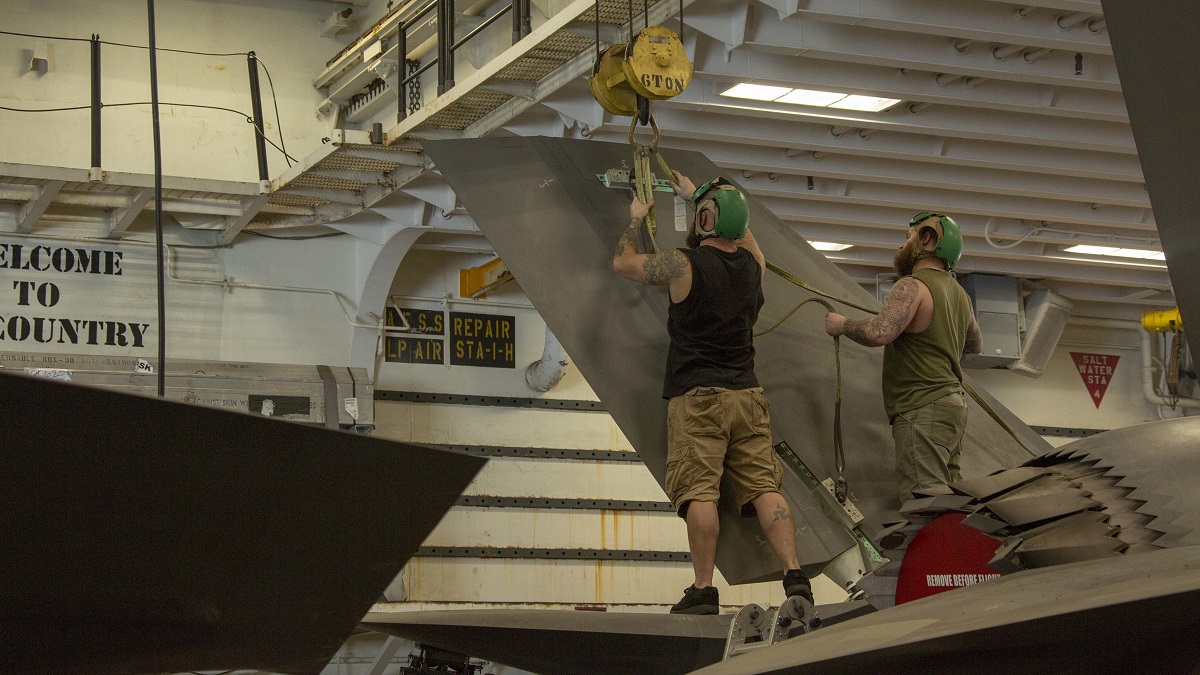
“We deployed to two separate locations within 10 days of each other,” he continued. “Once we received notice of the need, the support team had less than 48 hours to work through the logistics of getting our artisans and the tooling to the USS Makin Island, including everything from COVID testing and orders to securing a military flight and gathering tools and consumables. It was truly a team effort.”
Four Italian Air Force F-35A fighter planes landed at Estonia’s Amari Air Base on April 30 to take over the NATO’s BAP (Baltic Air Policing) mission for the first time.
It is also the first deployment of Italian F-35As to Estonia. These jets will replace the German Eurofighter Typhoon fighters in rotation. The aircraft belongs to the 13° Gruppo (Squadron) of the 32° Stormo (Wing) from Amendola Air Base, in southeastern Italy, and their deployment to Estonia was supported by a KC-767A tanker, Estonian Air Force said in a statement.
Never in the history of air combat has a pilot landed back at base, after putting their life on the line flying a grueling combat mission and remarked, "Thank goodness my jet met its life cycle sustainment cost estimates."
[...]
Congressional leaders would do well to heed the wisdom of Sir Frederick Handley Page, a British aviation pioneer: "Nobody has ever won a war by trying to run it on the cheap. Nothing is so expensive as losing a war by saving money. If you want the cheapest possible Air Force today, it is very easy to standardize on a whole lot of aircraft that will be of no use when the war comes."
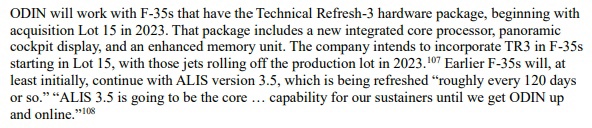
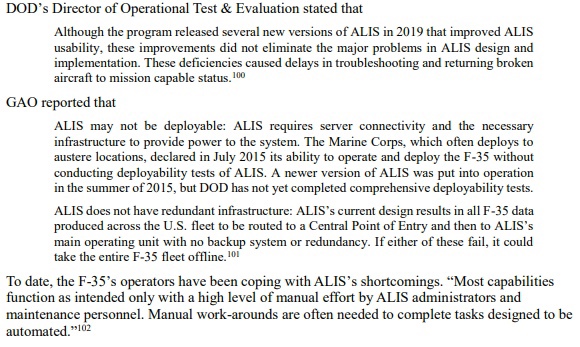
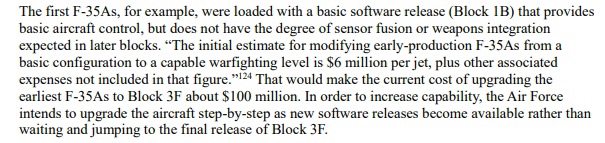
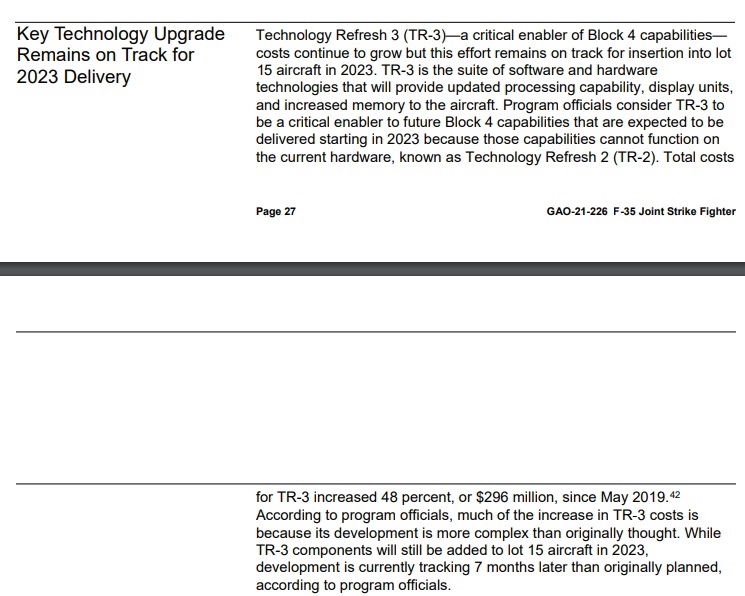
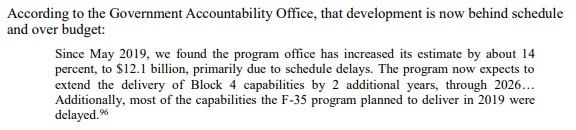
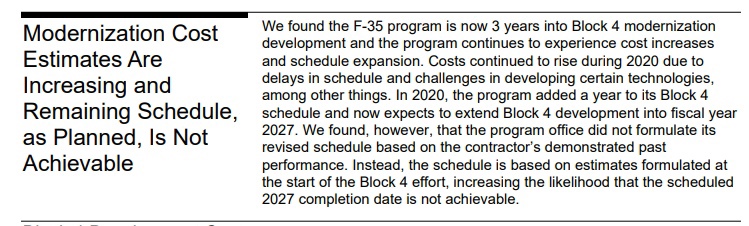
Not saying it is unusable - that's obviously not the case. But it is still have huge teething problems (ALIS, ODIN), still has constant price overruns and deadlines shifting to the right despite outcry for lowering costs, and, most importantly for me, despite being not approved for full rate production, already is produced in more than a half thousand airframes which are unable to be upgraded to Block 4 without TR3 upgrade, which apparently goes into HUGE price (couple dozen millions) for each airframe. And Block 4 was and still is the milestone of "fully capable for all intended missions" multirole jet, as which F-35 is being produced and sold abroad now.The Gao is focused on budgetary analysis and relies often on out of date or out of scope information.
If it's true that Block4 is delayed and will be a paying upgrade, some part of that upgrade have been already implemented and other items added to supplement the phased increase in capability.
Then there are the things that are lagging or surprisingly revealed to be failures (ODIN - but was it?).
To put things into context, no weapons systems as complex as a fighter jet get into service with all its systems able to function nominally from day one.
It took years for the French Rafale to get medium range missile, A2G or have a perfect HMD or an aesa (still mostly not the case b/w).
Today F-35 have been deployed all across the globe by various air forces. Some have put them in anger repeatedly.
Lately, the RN announced the deployment of the largest stealth air force at sea ready to set sail to two of the most demanding theatre of operations today: Syria and the south China sea.
It would be hard to share such opinion that the bird is not ready.
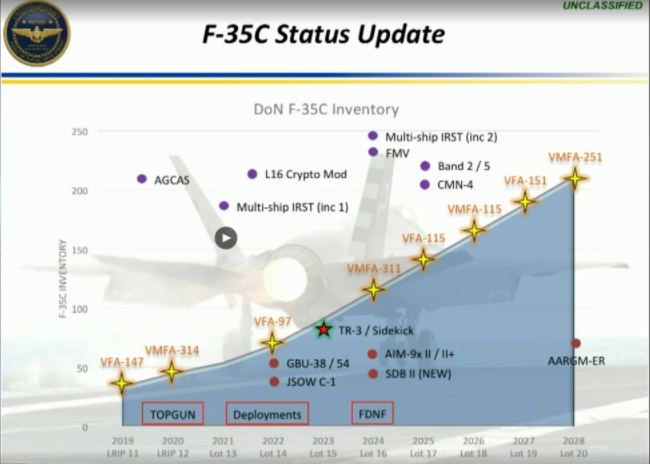
Hm. SEAD wasn't one of intended airframe missions originally?2027 is a weird standard, as by that time the program will be integrating weaponsand features never listed in the original SDD master plan, such as AARGM-ER, SDB-2, AIM-9X Block II+, multi ship IRST, etc. Hell, two of those weapons haven't been flight tested yet.
The F-35 should be considered "complete" when any and all deferred 3F capabilities are fielded. Anything not listed in the SDD master plan should be considered as separate modernization, else by your proposed standard no plane is ever complete until after it is retired.

Yes it was, SEAD capability today should be able to be carried out with SDB-I and JSOW. Both of which have been test launched and have SEAD/DEAD as the target mission set during their testing.Hm. SEAD wasn't one of intended airframe missions originally?2027 is a weird standard, as by that time the program will be integrating weaponsand features never listed in the original SDD master plan, such as AARGM-ER, SDB-2, AIM-9X Block II+, multi ship IRST, etc. Hell, two of those weapons haven't been flight tested yet.
The F-35 should be considered "complete" when any and all deferred 3F capabilities are fielded. Anything not listed in the SDD master plan should be considered as separate modernization, else by your proposed standard no plane is ever complete until after it is retired.
Hm. SEAD wasn't one of intended airframe missions originally?

You don't need a dedicated anti-radiation weapon to perform SEAD; in things like Red Flag there are 4-ships of F-35As outperforming (by a good margin) entire strike packages of legacy fighters. If the F-35s are going up against something like S-400 battalions, then the F-35 might get stagnated in their progress a bit, but at least their survivability would be a whole lot better and so you could employ larger packages of F-35s with SDBs, which at the very least will suppress them, if not overwhelm and destroy vehicles. An 8-ship package of F-35As for example could carry 64 SDBs internally; an S-400 battalion meanwhile has 8 TELs with 4 missiles each (up to 32 SAMs), and I doubt they could reload them in time; they'd therefore have to rely on their SHORAD defences to take out most of those weapons (even if the TELs did want to waste all their larger missiles on the SDBs), and if those SDBs are launched more or less simultaneously the SHORADs would be struggling to not let weapons slip through. The S-400 would potentially have enough time to pack up and leave before the bombs arrive, but even if they survive this encounter you'd successfully performed SEAD.Hm. SEAD wasn't one of intended airframe missions originally?2027 is a weird standard, as by that time the program will be integrating weaponsand features never listed in the original SDD master plan, such as AARGM-ER, SDB-2, AIM-9X Block II+, multi ship IRST, etc. Hell, two of those weapons haven't been flight tested yet.
The F-35 should be considered "complete" when any and all deferred 3F capabilities are fielded. Anything not listed in the SDD master plan should be considered as separate modernization, else by your proposed standard no plane is ever complete until after it is retired.


There are now 283 Joint Strike Fighters in the Air Force’s arsenal, compared to 281 A-10s, 234 F-15C/Ds, and 218 F-15Es. Air Force Chief of Staff Gen. Charles Q. Brown Jr. told the House Appropriations defense subcommittee on May 7 the F-35 reached the milestone within the last week.

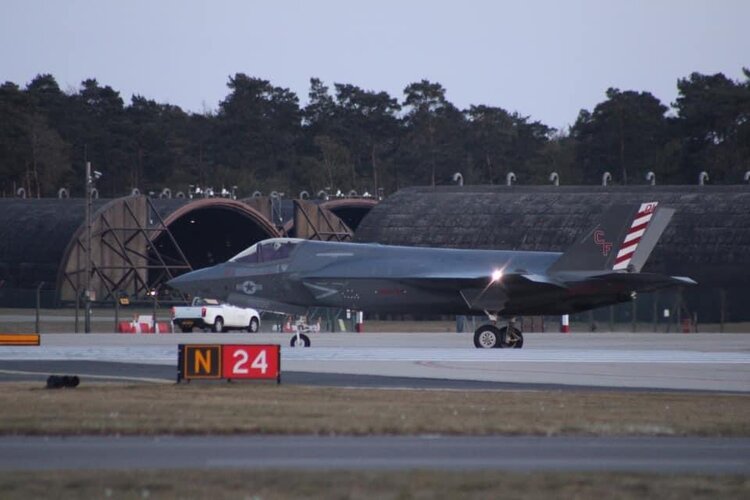
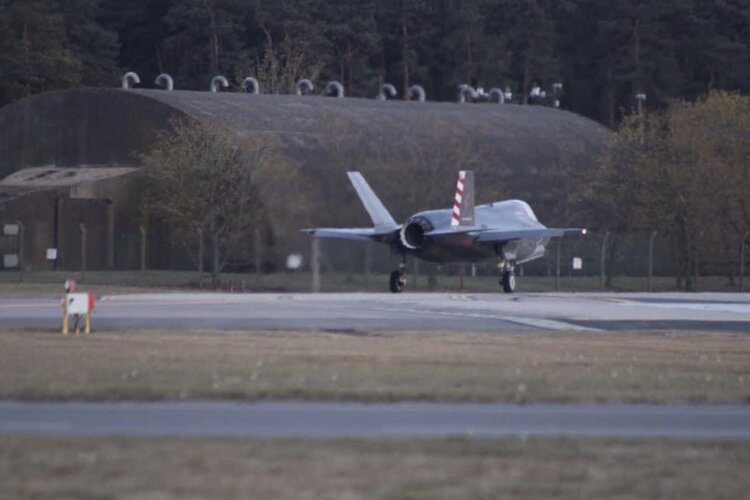
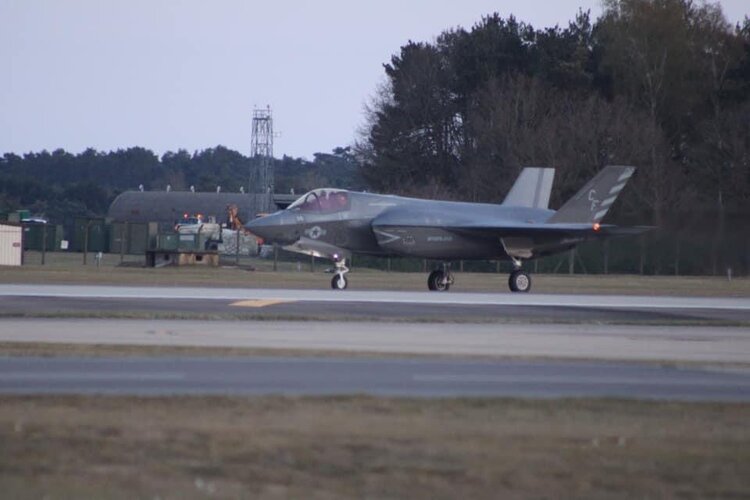
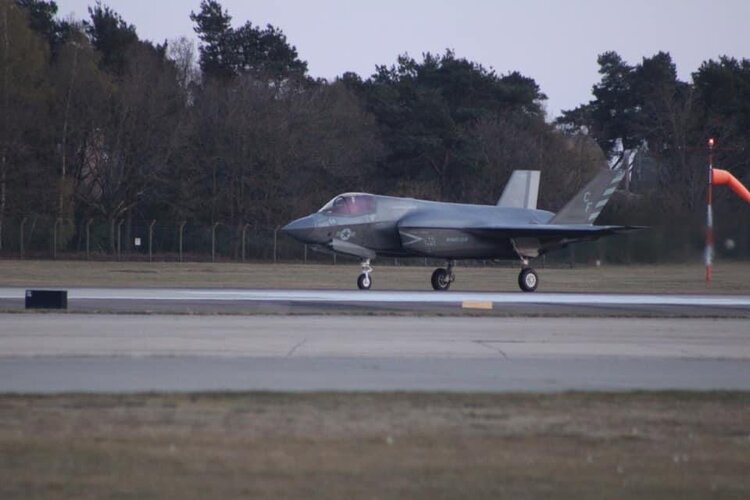
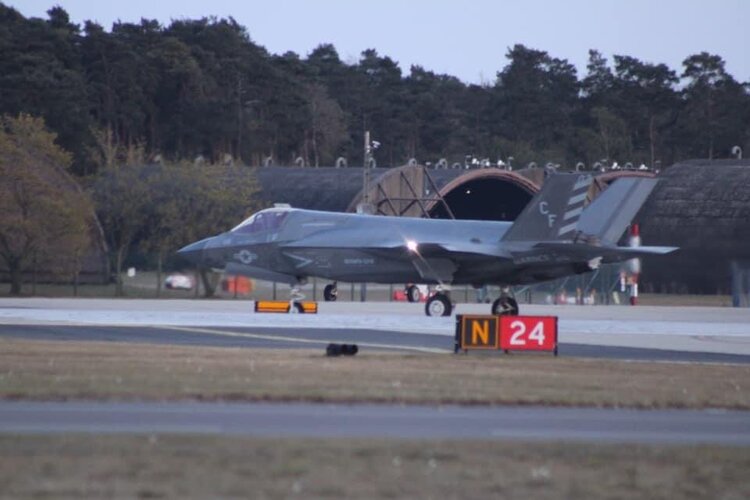
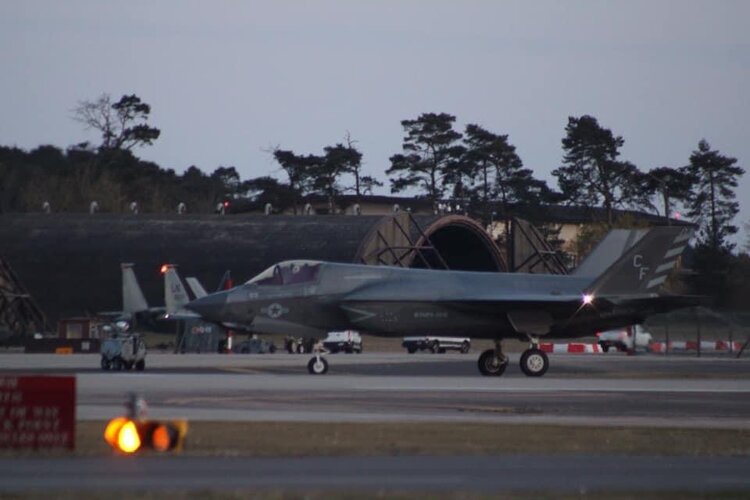
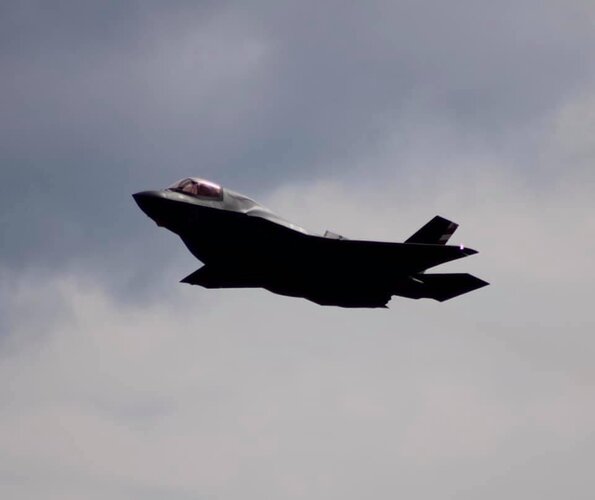
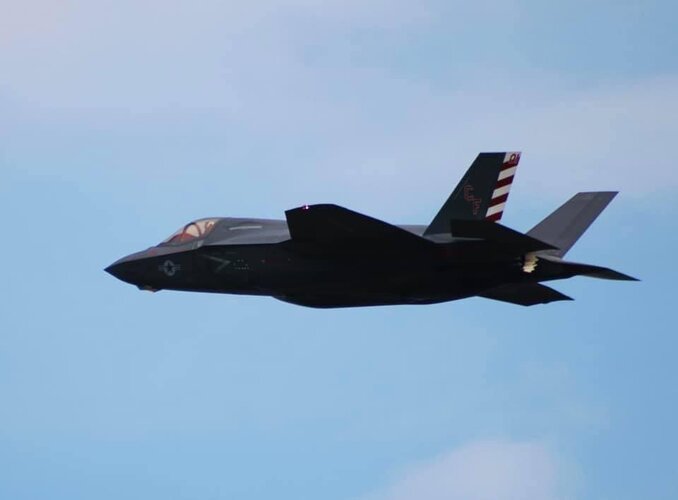
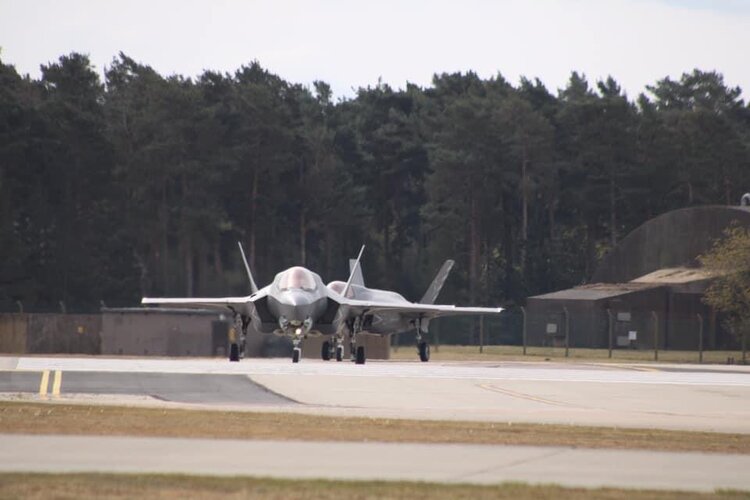
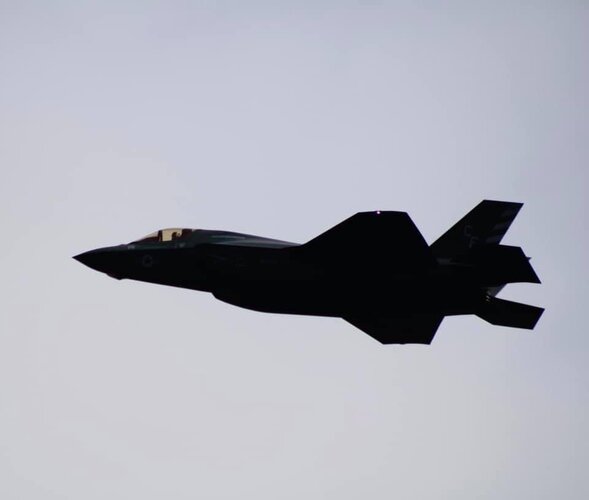
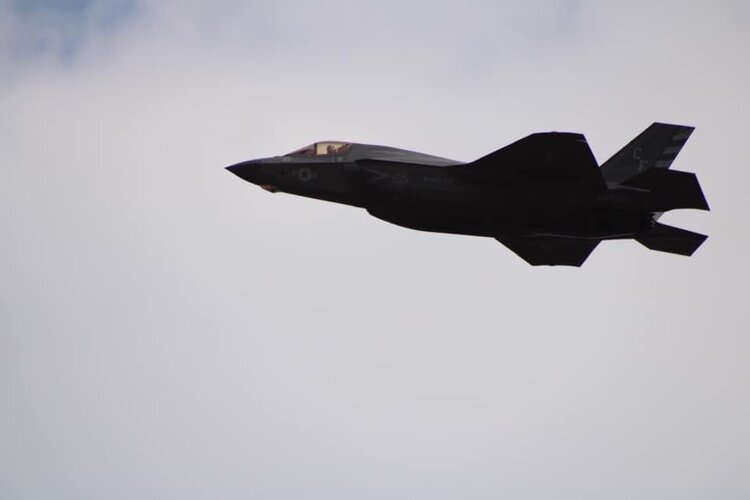
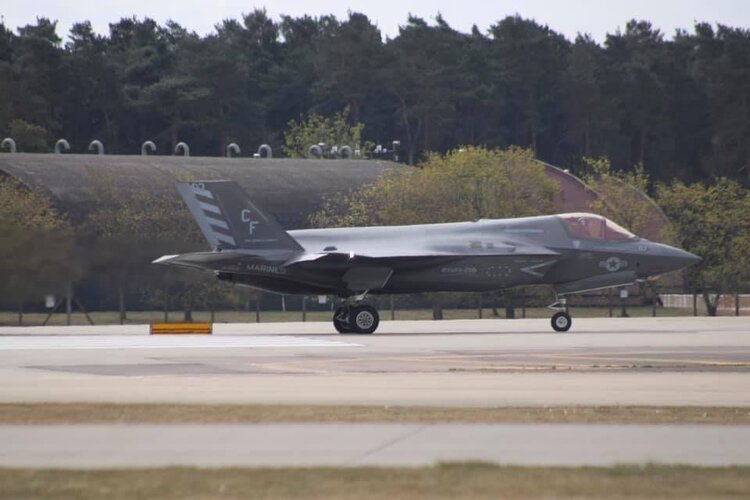
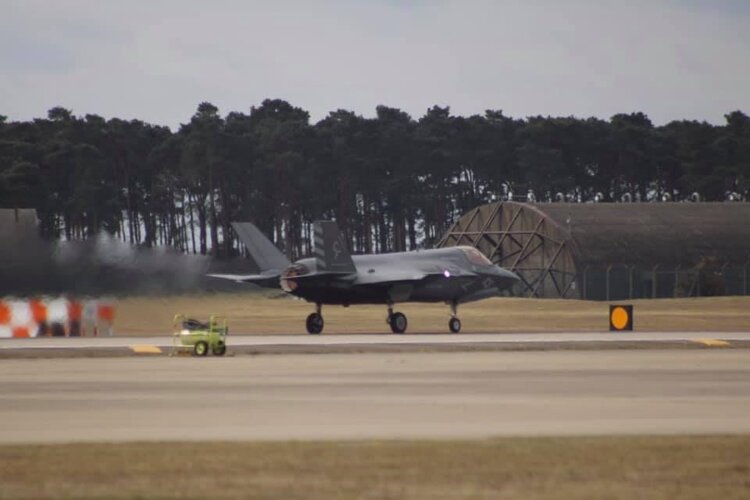
Speaking at the McAleese FY2022 Defense Programs Conference on May 12, Brown explained that he signed a letter from 132 House lawmakers to the body’s leadership urging full F-35 support because “it’s performing well” in “executing … real-world missions.”
The April 28 letter by the leaders of the Joint Strike Fighter Caucus urged the House leadership to support whatever request the services submit for buying F-35s in fiscal 2022 as well as any that appear on their “unfunded requirements” lists. The letter was prompted by recent comments from House subcommittee leaders Reps. John Garamendi (D-California) and Donald Norcross (D-New Jersey) that they would oppose adding any F-35s to service requests
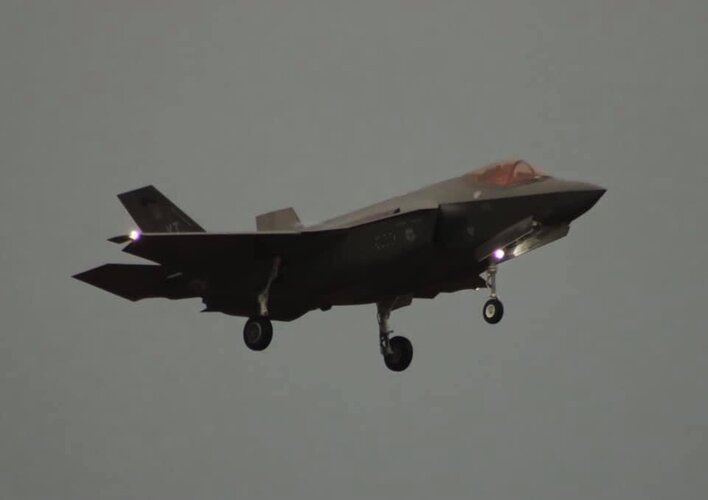
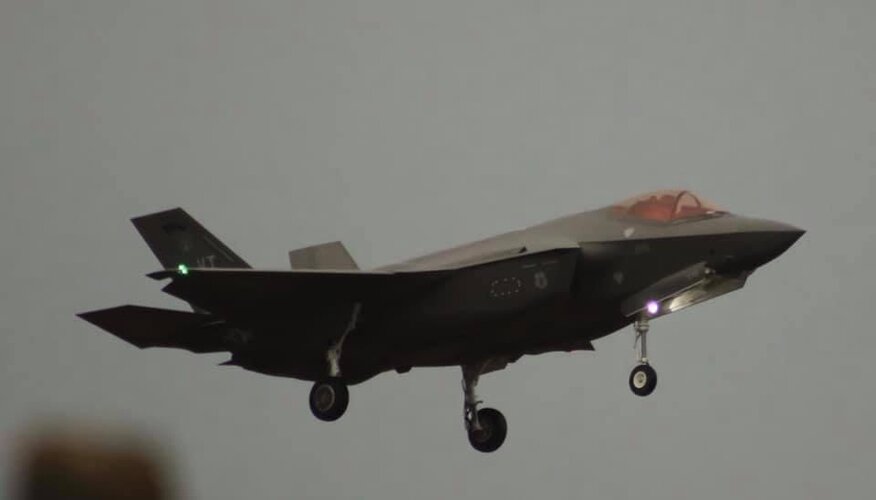
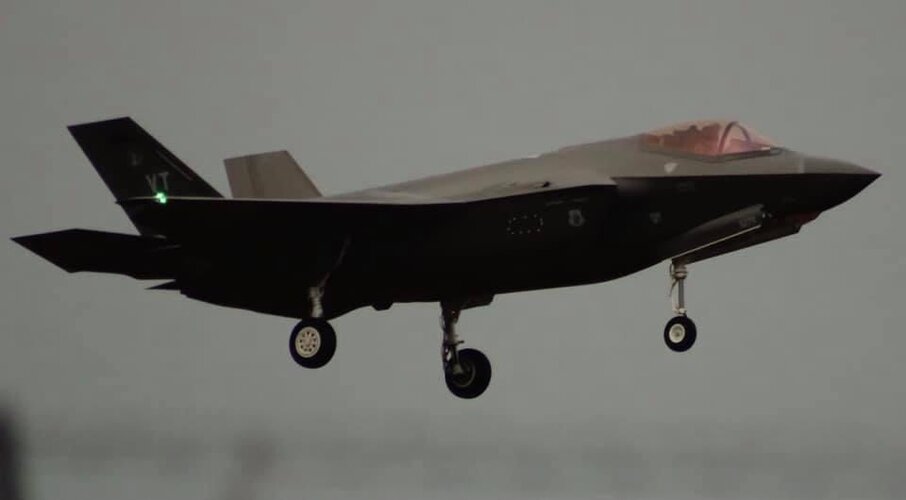
There is also the 388th now deployed in South West of France for the 2021 edition of exercise Trident (Mont de Marsan):
https://www.airforcemag.com/hill-f-35s-deploy-to-france-for-atlantic-trident/
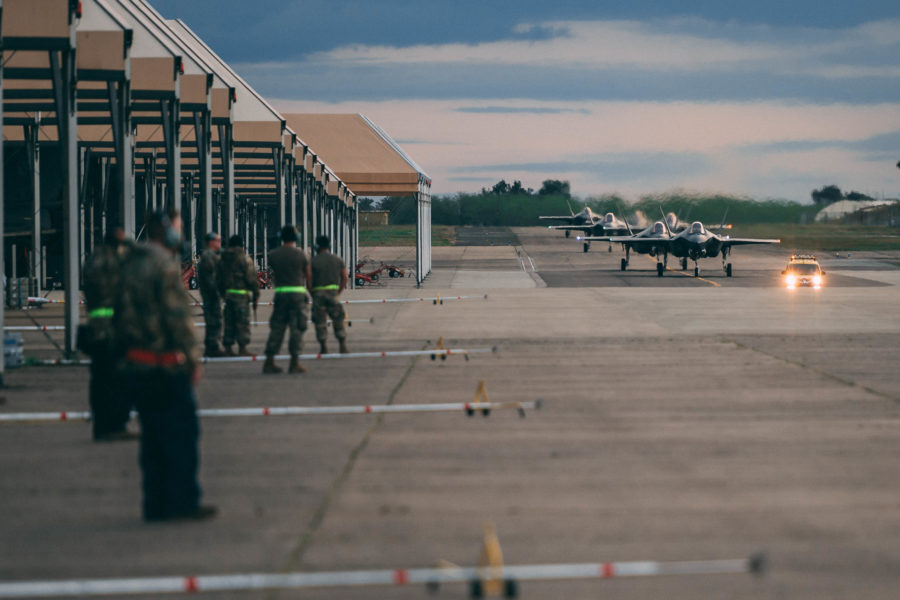
U.S. Air Force F-35A Lightning IIs assigned to the 4th Fighter Squadron, Hill Air Force Base, Utah, taxi down the flight line at Mont-de-Marsan Air Base, France, upon arrival May 10, 2021. During their time in the European theater, the aircraft will take part in multiple events, including Atlantic Trident 21. U.S. Air Force photo by Staff Sgt. Alexander Cook.