but why? why not go for a low level stealth fighter to gain experience compared to a tailless fighter than will almost certainly take a very long time(possibly on the same timeline as the FCAS but unlike the French 6th gen but unlike that one they havent done the same level of research).
Without cleansing the entire airframe and adjusting how all emitters on it operate, win will be negligible (lower short range stand in strike signature).
And if you're to invest this much (i.e. redo the entire plane), may as well commit to it and get a modern plane.
F-35 went operational in 2015. Same benchmark in 2040 will be a bit dated.
 
Without cleansing the entire airframe and adjusting how all emitters on it operate, win will be negligible (lower short range stand in strike signature).
And if you're to invest this much (i.e. redo the entire plane), may as well commit to it and get a modern plane.
F-35 went operational in 2015. Same benchmark in 2040 will be a bit dated.
hmm? wasnt it supposed to come by 2035 for the blk3 if it got funding?
 
hmm? wasnt it supposed to come by 2035 for the blk3 if it got funding?
That was a couple years ago though. I think 10-11 years rule for a well run development program (before delays kick in) still stands.
Korea here is a positive benchmark, but still, it's time.

Furthermore, unlike the GCAP nations, Korea doesn't really need to rush; F-35 and KF-21-1/2 are here. KF-21-3 adds stand in weapons security and sovereignty over this couple, but not that much in terms of capability. May as well do a proper next step.
 
Last edited:
but why? why not go for a low level stealth fighter to gain experience compared to a tailless fighter than will almost certainly take a very long time(possibly on the same timeline as the FCAS but unlike the French 6th gen but unlike that one they havent done the same level of research).
It's possible that the various companies working on stuff for KF-21 (with LockMart there to say "it took us a long time to figure [item] out, so I would recommend continuing R&D efforts but not plan to install it in the KF-21") did continue working on pieces like skin-integrated array apertures and they're close enough to ready to be included into the Korean 6gen Fighter.
 
but why? why not go for a low level stealth fighter to gain experience compared to a tailless fighter than will almost certainly take a very long time(possibly on the same timeline as the FCAS but unlike the French 6th gen but unlike that one they havent done the same level of research).

First, it is important to note that the ROK Air Force and the ADD have not defined this next-generation fighter as a 6th-generation aircraft. Personally, when I consider the development elements—such as conformal low-observable sensors, antennas, and internal weapons bays—alongside the performance targets (VLO-level stealth at the front and LO-level at the sides and rear across L-band through X-band and higher), I believe the aircraft is closer to a 5th-generation fighter like the J-35 or F-35, with the sole exception of its tailless design.

If I may venture an opinion, I believe this development approach is actually preferable. Had the project begun through the ROK Air Force officially requesting a "Block 3" upgrade, it would have likely consumed nearly a decade and a massive budget—much like the KFX project’s history. It would have entailed navigating preliminary and full feasibility studies, managing fragmented administrative procedures (such as commissioning research from numerous institutions, including universities), repeatedly consolidating deliverables from private contractors, and enduring endless, tedious sessions and debates to persuade the National Assembly and the Ministry of Finance.

In contrast, incorporating prototypes and technologies derived from the "Stealth Bridge" program offers significant savings in both time and cost. While it is unfortunate to have lost the most immediate potential customer, this situation is certainly better than the agonizing prospect of having to search for a "angel" willing to shoulder the entire cost of Block 3 development from scratch. ;)
 
https://contents.premium.naver.com/jhst3103/sheldon/contents/251121021254421jm

If you guys are interested in SK’s Stealth Bridge program and the next-generation fighter testbed, please check out this link. It is from Sheldon’s newsletter—which I find incredibly useful—but this particular article is available for free.
This is a rational, balanced, and politically resilient approach—especially if it goes hand in hand with the development and maturation of the new engine from Hanwha.
 
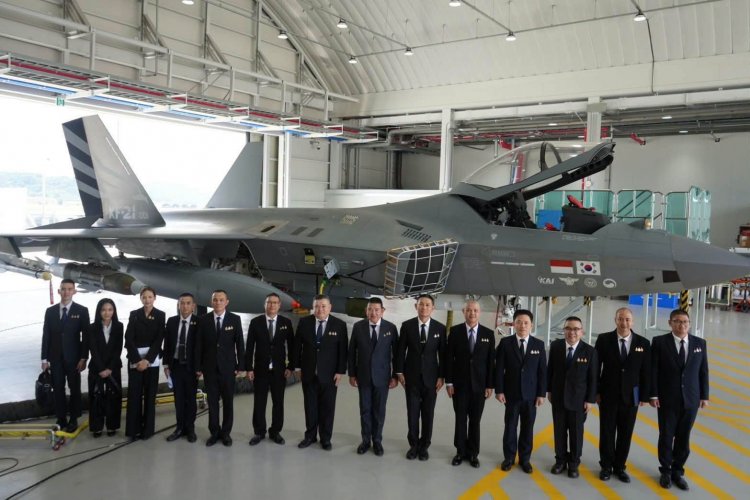
Royal Thai Air Force delegation visited South Korea from July 5 to 10, 2026, where they inspected T-50 maintenance facilities, received a briefing on the KF-21 at KAI, and visited Wonju Air Base.
They probably evaluated it as an F-5 replacement, which is exactly what it was designed to be and what it's about to replace in Korea...
 
They probably evaluated it as an F-5 replacement, which is exactly what it's about to replace in Korea...
It makes sense in Korea(as a de facto industrial policy), but outside of Korean conditions this is pure madness.
KF-21 is a lot of plane. If anything, it's possible as a sensible Hi couple to gripen E fleet. Engine model is different, but how much different I guess is what they're looking at.
 
It makes sense in Korea(as a de facto industrial policy), but outside of Korean conditions this is pure madness.
I like the KF-21 because of its project management, but it can't be denied that it is inherently a less ambitious project (essentially a Superbug dressed as a 5th gen and equipped with an unambitious radar), especially for one developed in the 2010s-20s -- they deemed replacing the KF-5s ASAP more important and were content with a less ambitious design since they would already have F-35s.


I've recently seen itsproject management being compared to Turkey's Kaan quite frequently, and I want to put an end to this here. If we put the sheer differences in their classes and requirements aside and only consider the project management aspects, KF-21 was planned to be inducted as a 4.5th gen and, (until relatively recently) then evolve into a 5th gen; whereas the Kaan was designed as a 5th gen from day one but aimed to certify each of those core capabilities one by one (i.e., all deliveries will have IWBs, but the first 20 will have them software-blocked until certification is completed). The KF-21 will finish development faster and reach IOC & FOC sooner, but it will be less future-proof, whereas the Kaan is far more ambitious and has therefore faced more delays, but even the earliest units will be far more future-proof.


OTOH, I have to disagree with your assessment that the KF-21 is only suitable for Korean conditions. For East Asian countries that cannot receive F-35s and could face many large hordes of Chinese fighters (such as the Philippines or Taiwan), it makes far more sense to operate KF-21s than F-16Vs, Superbugs, or European high-end canards (Eurofighter/Rafale). It is highly probable that, even without conformal LPI datalink antennas or serrated panels, it will have a considerably smaller RCS from all aspects in a clean configuration than any of these -- and this matters greatly, even if only to be used as a less detectable forward airborne node near the LOC, to increase your chances of actually putting up a fight.
 
Last edited:
It makes sense in Korea(as a de facto industrial policy), but outside of Korean conditions this is pure madness.
KF-21 is a lot of plane. If anything, it's possible as a sensible Hi couple to gripen E fleet. Engine model is different, but how much different I guess is what they're looking at.

Sometimes they're not trying to replace a plane with a similar type of plane, but to replace how the role is done.
Singapore replaced their F-5s with F-15SGs, and other air forces have replaced their lighter fighter jets with larger heavier ones.
But they don't operate them in the same way they did with their older aircraft either. There's other ways of approaching the role of strike or interception, etc.

I can see the KF-21 competing with the Gripen E over that specific type of market. Where the air force can't get F-35s (or want something to supplement them and faster deliveries), but don't want to go down the route of Russian or Chinese aircraft.
 
OTOH, I have to disagree with your assessment that the KF-21 is only suitable for Korean conditions. For East Asian countries that cannot receive F-35s and could face many large hordes of Chinese fighters (such as the Philippines or Taiwan), it makes far more sense to operate KF-21s than F-16Vs, Superbugs, or European high-end canards (Eurofighter/Rafale). It is highly probable that, even without conformal LPI datalink antennas or serrated panels, it will have a considerably smaller RCS from all aspects in a clean configuration than any of these -- and this matters greatly, even if only to be used as a less detectable forward airborne node near the LOC, to increase your chances of actually putting up a fight.
I didn mean it isn't suitable outside of Korea. It's just that you have to have goals and a lot of economic power to replace F5(5t/10t class) with KF21(12/26t).
Korean economy is one of the best performers world wide since the 1980s. Thailand is stuck in med income trap for decades, it isn't really in a position for extravagance... and all things equal, if engine similarity doesn't play out, IMHO F-16v/blck72 is in fact a better return.
And Kaan is a bad example here; other than the engines, it's mostly a PPP product. It's by default more affordable.
I can see the KF-21 competing with the Gripen E over that specific type of market. Where the air force can't get F-35s (or want something to supplement them and faster deliveries), but don't want to go down the route of Russian or Chinese aircraft.
Gripen E is already chosen, so I guess it's in any case a couple. Russian aircraft are improbable in Thailand, so if a heavier counterpart is being chosen, it's really F-16/KF-21 competition in a more affordable bracket (as superhornet is gone).
J-10CE is also an option, but it depends on what Thailand actually wants.
 
r%EA%B8%B0%EC%A7%80-jpg.80568

The Republic of Korea Air Force (ROKAF) is embarking on a major fleet and unit reorganization centered on deploying its new home-grown 4.5-generation fighter, the KF-21 "Boramae." This initiative marks a significant generational shift from older aircraft to cutting-edge aerial assets.

Key details of the restructuring plan include:

  • Revival of the 156th Fighter Squadron (Yecheon): In September 2026, the 156th Fighter Squadron at the 16th Fighter Wing in Yecheon will be reactivated to become the first unit to operate the KF-21, starting with six two-seater variants. Yecheon will transform into a "conversion and training hub," eventually hosting around 20 KF-21 Block 1 fighters alongside TA-50 tactical lead-in trainers.
  • Symbolism of the "150s" Units: In ROKAF tradition, squadron numbers in the 150s have historically symbolized elite, top-tier units (previously flying F-4 Phantoms or currently operating F-35A stealth fighters). Reviving the 156th Squadron—disbanded 14 years ago—signifies inheriting this legacy for the KF-21 era.
  • Accelerated Retirement of the KF-5 (Suwon): To accommodate the relocation of FA-50 light fighters from Yecheon to Suwon, the Air Force will fast-track the retirement of its aging KF-5 "Gegong-ho" fighters by about three years. Two KF-5 squadrons based in Suwon are scheduled to step-by-step retire between late 2026 and late 2027 due to structural fatigue and safety limits.
  • Expansion to the East Coast and Inland (Kangneung & Wonju): Following Yecheon, the 18th Fighter Wing in Kangneung—located closest to North Korea—is expected to deploy KF-21 Block 1 fighters by early 2027 for front-line air defense over the East Coast and DMZ. Subsequently, the upgraded KF-21 Block 2 variants are planned to be deployed at the 8th Fighter Wing in Wonju.
Ultimately, this restructuring will establish a multi-layered, three-tier fighter lineup consisting of the F-35A, KF-21, and FA-50, bridging the history of South Korea's 3rd-generation air power into the 4.5 and 5th-generation eras.
https://m.newspim.com/news/view/20260519001150

Via urban mine/Defencehub
 
Interesting find snne, so the SK KF-5E/F's are to be retired to make way for the KF-21 Boramae, no surprises their really they were needing to be replaced anyway.
 
and all things equal, if engine similarity doesn't play out, IMHO F-16v/blck72 is in fact a better return.
Have to disagree with you again; operating costs aren't everything.

SABR is nothing special, TMLA doesn't exist, IVEWS hasn't been integrated yet, and Viper Shield is proving to be a bit problematic (Taiwan/Bulgaria seem unhappy with it). Overall, in BVR, an F-16V with Legion is generally better equipped than a Rafale; but operating it until 2070 makes no sense in this day and age unless you're a smaller country that somehow needs to transition from mechanically scanned radars on a budget while still meeting requirements for the next couple of decades.

OTOH, if you're a medium-sized country with a reasonably sized fleet and can't induct the J-35, F-35, Su-57, or Kaan, then the KF-21 is your best option for properly gearing up for modern air warfare. Its radar isn't as competitive as those found on those aircraft, but it still has an IRST and can hold its own against enemy non-LO platforms. In a clean configuration, it can achieve a semi-LO signature, you can train against adversary LO fighters with it and develop a CONOPS, and it'll also do just fine against virtually any other medium-sized country (except European ones, TR/SK/JP/PK/IN, or ISR despite its small size).

And Kaan is a bad example here; other than the engines, it's mostly a PPP product. It's by default more affordable.
I didn't make a comparison to the Kaan though? I only brought it up because I've been seeing comparisons between the two projects everywhere lately, and I wanted to give my own perspective on how they're being managed.
 
Last edited:
OTOH, if you're a medium-sized country with a reasonably sized fleet and can't induct the J-35, F-35, Su-57, or Kaan, then the KF-21 is your best option for properly gearing up for modern air warfare. Its radar isn't as competitive as those found on those aircraft, but it still has an IRST and can hold its own against enemy non-LO platforms. In a clean configuration, it can achieve a semi-LO signature, you can train against adversary LO fighters with it and develop a CONOPS, and it'll also do just fine against virtually any other medium-sized country (except European ones, TR/SK/JP/PK/IN, or ISR despite its small size).
I very much doubt KF-21 signature is substantially different from 4.5 gens or hotspot-treated 4th gens.
A 0.5m2 jets appear to take way more to achieve than what's done here (pre-1982 ATF designs as a reference point); a 0.1 one(su-57) is in a different universe.
It logically leaves it in the same 0.7-1.5 group.

It may be stealthier/unidentifiable via blade counting, but other than that - it should be in the same general same area; 0.1m left or right in this case does very little to the eventual result. (halving the RCS reduces detection range by just 16%).
KF-21 advantage in the detection game thus isn't really signature - it's the powerful and advanced GaN radar. Which is nice, but by itself it is not a generational leap in fighting capability, unless it's a MESA (which doesn't appear to be the case).

I.e. a truly low observable KF21 will wait for blk.3 (if ever). Until that, with it's weird MRAAM comb taking 1/3 of useful real estate, KF-21 just struggles to offer flexibility with any configuration that doesn't need 4 MRAAM. Granted, it should be great and superior when you do need them; but how often do you need 4-6 AAMs? And if your main sell is hotrod "medium a2a fighter" with some strike - then you're stuck being mig-29/eurofighter.

With all the Viper problems, its risks are very few systems, which should close one way or another before any deliveries signed today will materialize. The rest is solid existing/developing US weapon ecosystem.
Or, two ecosystems, as the Israeli remains fully available as well, and it's unfortunate - Israel sells all the same weapon options Korea wants to in the future, just proven.
In KF-21 case, the risk is almost everything (nothing of it's weapon ecosystem is born to date, i.e. non-risky are meteor/aim-120/iris-t). More annoyingly, US already played let you/won't let you integrate game with Korea (FA-50 - AMRAAM, JASSM order back in the day).

 
Last edited:
It makes sense in Korea(as a de facto industrial policy), but outside of Korean conditions this is pure madness.
KF-21 is a lot of plane. If anything, it's possible as a sensible Hi couple to gripen E fleet. Engine model is different, but how much different I guess is what they're looking at.
Remember that one of the reasons for F-5 was to have a simple fighter that countries without sophisticated industries could maintain fairly easily.

RoK, Taiwan, and Singapore are 100% not in that economy anymore. Indonesia is likely there. Philippines I'm not sure about.

Today, I'd argue that Gripen is the "airplane for countries without sophisticated industries"!
 
I very much doubt KF-21 signature is substantially different from 4.5 gens or hotspot-treated 4th gens.
Which is exactly why I specified a clean configuration. They ultimately envisioned the aircraft evolving into a low-observable platform through -- admittedly arduous -- efforts, which is why the initial Block 10 configuration was designed the way it was in the first place, with that geometry from the outset; something no other 4.5th/4++ gen. fighter has, and no amount of RAM can fully compensate for...

It may be stealthier/unidentifiable via blade counting, but other than that - it should be in the same general same area; 0.1m left or right in this case does very little to the eventual result. (halving the RCS reduces detection range by just 16%).
Agree on the fourth-root law limiting actual detection-range gains, but I'm one of those people who thinks that even a mere 16% improvement matters quite a lot and is worth the cost and effort, especially for a non-stealth fuselage :)

I also expect the Koreans to apply RAM to the KF-21B1/B2 at some point in the medium to long term... China is right next to them, and the Americans have even gone out of their way and applied Have Glass to (some of) their aging F-16s... I expect the Koreans to do the same with the KF-21B1/B2 now that they're developing LWs and are even planning to pivot toward indigenous 6th-gen efforts instead of the KF-21B3...

Putting the F-16 and Have Glass aside, what generalized measures do these 4.5-generation fighters actually incorporate beyond localized RAM; such as those on the inlet ducts, leading edges, canopy edges, and some of the panel boundaries? Almost half of those aircraft don't even fully hide their blades... And an F-16 with Have Glass simply can't achieve the same effect as a KF-21 with RAM. The countries I specified will eventually need to train and gain experience against LO aircraft, and no international exercise can compensate for actually operating a LO or even a reduced-signature aircraft.

I agree on the semi-recessed centerline missile mounts being a mistake in hindsight, but that was a risk they didn't anticipate during development --they thought a Block 30 order from the RoKAF was all but certain...

Israel sells all the same weapon options Korea wants to in the future, just proven.
They don't sell the platform itself though...

Nor does the U.S. allow them to integrate their own sensors into newly built American aircraft exported to third parties...
 
Last edited:
Which is exactly why I specified a clean configuration. They ultimately envisioned the aircraft evolving into a low-observable platform through -- admittedly arduous -- efforts, which is why the initial Block 10 configuration was designed the way it was in the first place, with that geometry from the outset; something no other 4.5th/4++ gen. fighter has, and no amount of RAM can fully compensate for...
Clean configuration is not even a start. It's IRST, it's visibly untreated cockpit, it's all rwr and comm antennas.
Lack of internal carriage is part of conscious engineering choice - i.e. just not carrying weapons won't make the jet disappear.
Agree on the fourth-root law limiting actual detection-range gains, but I'm one of those people who thinks that even a mere 16% improvement matters quite a lot and is worth the cost and effort, especially for a non-stealth fuselage :)
Oh, 16% absolutely matters - going from 5 to 2.5 for example is absolutely a hell of a boost. But if you're painstakingly getting from 0.9 to 0.7(which you'll then promptly get back to ~1.5 with externals), it just won't be anywhere close to 16%.
Heavy RAM usage appears to be most effective as a hotspot treatment, i.e. either early on(bright spots=massive reductions), or late on(relatively small absolute return decrease on already very stealthy signature=substantial results).
I think KF-21 is already full of RAMs. Just not the most annoying types to develop(which appear to be films), or not the ones which won't give you proper return for investment at a given stealth level(thick extensive coverage).
Everything will indeed come when appropriate - Korean engineers are absolutely a benchmark, and arguably knowing their own strengths this way (cold self assessment) gives them no less respect than the bold ambition (Turks).
I agree on the semi-recessed centerline missile mounts being a mistake in hindsight, but that was a risk they didn't anticipate during development --they thought a Block 30 order from the RoKAF was all but certain...
It's a bit unfair to say it is a mistake, I should've made myself clear: koreans were clearly aiming for an air superiority fighter, which also can bring heavy/oversized payloads when needed - contested, if necessary. I.e. engineers delivered exactly what was asked, and KF-21 is likely absolutely great when it's flying defca/intercept/self-escort.
But much like with eurofighter and mig-29 - "that's your own problems".
 
Remember that one of the reasons for F-5 was to have a simple fighter that countries without sophisticated industries could maintain fairly easily.

RoK, Taiwan, and Singapore are 100% not in that economy anymore. Indonesia is likely there. Philippines I'm not sure about.

Today, I'd argue that Gripen is the "airplane for countries without sophisticated industries"!
We began with Thailand... which is a rather sophisticated country, but also a country stuck dead in mid income trap. Their economy was recently passed by Vietnam(and is on a good trajectory to be passed per capita soon enough).

KF-21 can be a solid investment for such a country. But it should be very conscious, as, for example, if you want "great primary a2a with some oversized strike when necessary" - Thailand (as a neutral) can also order J-10CE. Which will come substantially cheaper and easier to use, and KF-21 probably won't come all that superior.
Once again, even unique Korean value proposal (air ballistics) is matched by Israel and ... China.
Philippines is a great possible case though, as they are locked out of buying Chinese.
 
Last edited:
KF-21 can be a solid investment for such a country. But it should be very conscious, as, for example, if you want "great primary a2a with some oversized strike when necessary" - Thailand (as a neutral) can also order J-10CE. Which will come substantially cheaper and easier to use, and KF-21 probably won't come all that superior.
Once again, even unique Korean value proposal (air ballistics) is matched by Israel and ... China.
Philippines is a great possible case though, as they are locked out of buying Chinese.
Very good point.

So the "F-5 replacement" fighter competition, or rather the "bigger than a LIFT" fighter competition is bouncing between J10CE, Gripen, and KF-21? Am I missing anything else in that rough class?

Philippines is kinda stuck, I think they'll end up with some used F-16s over Gripens or KF-21s. US pressure/not selling the engines, plus used airplanes are cheap to buy but more expensive to operate.
 
Oops, missed this one.
Heavy RAM usage appears to be most effective as a hotspot treatment, i.e. either early on(bright spots=massive reductions), or late on(relatively small absolute return decrease on already very stealthy signature=substantial results).
I think KF-21 is already full of RAMs. Just not the most annoying types to develop(which appear to be films), or not the ones which won't give you proper return for investment at a given stealth level(thick extensive coverage).
Everything will indeed come when appropriate - Korean engineers are absolutely a benchmark, and arguably knowing their own strengths this way (cold self assessment) gives them no less respect than the bold ambition (Turks).
Also, the Koreans had the advantage of some LockMart engineers who could say that certain things took LockMart a lot of engineering time so don't tie the airframe to that but keep it in development.

And knowing what roads not to go down is a highly useful thing in itself.
 
Very good point.

So the "F-5 replacement" fighter competition, or rather the "bigger than a LIFT" fighter competition is bouncing between J10CE, Gripen, and KF-21? Am I missing anything else in that rough class?

Philippines is kinda stuck, I think they'll end up with some used F-16s over Gripens or KF-21s. US pressure/not selling the engines, plus used airplanes are cheap to buy but more expensive to operate.
Well, Gripen E(12) is already a done deal. The question i guess is what's next.
It's indeed an interesting way to classify F-5 replacements as "bigger than LIFT". KF-21 is a rather big and powerful for that group, but well, MiG already did that in the same weight class... it's certainly an elephant in a kid's room, but KF-21 is in fact on the affordable side of things and may try to arause ambitions.
Plus Korea (as we know from Polish FA-50) doesn't mind offering generous prices to win markets.
 
Very good point.

So the "F-5 replacement" fighter competition, or rather the "bigger than a LIFT" fighter competition is bouncing between J10CE, Gripen, and KF-21? Am I missing anything else in that rough class?

Philippines is kinda stuck, I think they'll end up with some used F-16s over Gripens or KF-21s. US pressure/not selling the engines, plus used airplanes are cheap to buy but more expensive to operate.
Thailand will eventually need an F-16 replacement as well as these are some of the older variants. They already have the Gripen and have ordered the Gripen E to address some of this. They also need a replacement for the F-5s and Alpha Jets. the T-50s they ordered from Korea does some light attack even though its focus is training.
More Gripens or upgrading to the FA-50s are logical. the KF-21 is a step up in capabilities and at least shares some weapons with the current fleet.
J-10CE, not impossible but unlikely. Thailand was less than impressed with the way some of the contract negotiations went with past defense deals and will likely limit Chinese acquisitions to less riskier purchases for the time being.
 
Thailand will eventually need an F-16 replacement as well as these are some of the older variants. They already have the Gripen and have ordered the Gripen E to address some of this. They also need a replacement for the F-5s and Alpha Jets. the T-50s they ordered from Korea does some light attack even though its focus is training.
More Gripens or upgrading to the FA-50s are logical. the KF-21 is a step up in capabilities and at least shares some weapons with the current fleet.
The irony is KF-21(mostly because of that comb) somewhat struggles to provide that step up over Gripen E in capability.

Bay-without-a-bay is a major detriment, effectively nullifying much of the weight class advantage (mostly in all likelihood to lower drag coefficients), making differences more of a qualitive ones: equipment and weapons (or, rather a weapon: KTSSM, which most probably simply won't fit under Gripen).

I.e. it's in fact simpler to explain what class advantage F-16 will provide over Gripen than answer the same question for KF-21.
 
Since the Block I and Block II KF-21s have structural provisions for IWBs does that mean they can be upgraded in the future to have functioning IWBs?
 
Since the Block I and Block II KF-21s have structural provisions for IWBs does that mean they can be upgraded in the future to have functioning IWBs?
That was the idea probably. But effectively no, they can't. Maybe they can be used to store additional equipment down the line, but for the time being it's mostly a wasted volume (larger 20mm ammo drum is a joke).
 
Since the Block I and Block II KF-21s have structural provisions for IWBs does that mean they can be upgraded in the future to have functioning IWBs?
It is likely that the RoKAF will continue to use both the semi-recessed and IWB configurations without upgrading them. A retrofit involving major changes to the airframe design would be far too costly relative to the benefits when it comes to countering North Korea.
Furthermore, the primary purpose of this aircraft is to replace the aging F-4s and F-5s.
 
Last edited:

Similar threads

Back
Top Bottom