Installing land-based SAM on warship

Dilandu

I'm dissatisfied, which means, I exist.
Joined
30 May 2013
Messages
7,369
Reaction score
10,576
Website
fonzeppelin.livejournal.com
Introductory: a small navy in late 1960s - early 1970s have a pair of ex-British "Dido"-class cruisers. Those ships are obsolete, and the navy wanted to have a missile-armed warships. But since they are pretty much ostracized by all major powers and sanctioned by UN (essentially the South African situation - they are not good guys, but bad guys fearing others to come for their heads), they could neither buy new warships, nor proper shipborne missiles.

So they are forced to work with whatever they have, and they decided to try & reconstruct their old cruisers - obsolete, but still in reasonably good material condition due to mid-1960s repairs - into missile cruisers, by installing the available land-based SAM's. Specific condition: they wanted area-defense missiles, not merely self-defense.

Two possible scenarios:

* They have land-based "English Electric Thunderbird" Mk-I SAM systems - brought from Britain in 1960s - with Ferranti Type 83 fire control radar. The installation would require removal of both rear turrets (to accomodate missile storage hangar) and bow C turret (to accomodate relatively bulky Ferranti Type 83 radar). The fire control computer would needed to be integrated with ship's own search & track radar (IRRC Thunderbird did not have manual input mode for fire control system). The missiles are fired from a pair improvized stabilized launchers on the stern, reloading through rail trolleys from hangar;

* They managed to obtain a MIM-23 HAWK systems (unofficially, through Israel), and jury-rigged it on cruisers. Only rear two turrets are removed; the system used slightly modified M192 launcher (on stabilized mount), a HPIR fire control radar (installed in place of rear fire control director) and AFCC console (installed in ship CIC, manual data input from ship's search radar);

Which concept looks more viable?
 
RN did study Thunderbird for naval use. I think a single launcher.

Could be 'back channels' passes this over.
UK is less likely to get upset over such than the US.

But there is Swiss-Italian Contravenes series of missiles. Ultimately Micron system.
 
But there is Swiss-Italian Contravenes series of missiles. Ultimately Micron system.
Thought about them, yes; but they are relatively short-range beam-riders, not exactly useful for 1970s timeframe.

RN did study Thunderbird for naval use. I think a single launcher.
Did they plan to use it with different boosters? The original Thunderbird boosters have very big fins (albeit I suppose making foldable fins - or even detachable ones, with manual finning before sending missile to laucnher - won't be a very big problem)
 
Oddly the only naval Thunderbird study is the cruisers and yet despite a 'single booster Seaslug' option also being studied. No single booster Thunderbird.....which is odd!

Manual fin attachment for Thunderbird, much like Terrier.

Scope there perhaps For a domestic single booster?

Oh on Micron.....it had distinct separation of 'gathering' and Beaming radars. So potential for future Beam guidance away from target tracking.
Swiss weren't fools.
 
Theoretically, by merely replacing fixed fins on boosters with detachable one (or foldable), we could reduce the overall size of Thunderbird missile to its wingspan - 1.63 meters. Still a lot, but considering that wings are missile's rudders, it's not advisable to try making them foldable or something.

A simplest missile storage facility would be a deck hangar with two rows of missiles at sides of central alley (along which transport trolleys would move). Each Thunderbird Mk-I missile took about 7 meters of length, so 3-missile row would took circa 21 meters, and 4-missile row - circa 28 meters. So in simplest configuration, the jury-rigged missile hangar would be about 21-28 meters long, with 6-8 missiles in storage.

This numbers are obviously not satisfactory - the ammo storage is too small - so let's double it, and use two missile hangars side-by-side. Now we would have 12-16 missiles in the same length facility. Since we also need a finning & checkup room in front of hangar (of course we could fin the missiles already on launcher... but it would not be a good idea in heavy seas!) I think the final system would have two 30-meters long hangars, each containing six missiles in two parallel rows, alongside transport alley.
 
All the fins and control surfaces were detachable and were only attached for loading onto the launcher.
So arguably, like Terrier, a team awaits in the preparation room to attach them and otherwise the missiles and boosters be stored pre-assembled.
Deep storage would separate boosters from missile body and store separately.
 
All the fins and control surfaces were detachable and were only attached for loading onto the launcher.
Hm! I didn't know that! How fast it was to install the fins & wings?

a team awaits in the preparation room to attach them and otherwise the missiles and boosters be stored pre-assembled.
Deep storage would separate boosters from missile body and store separately.
My only concern is, that Thunderbird might not be designed with fast assembly in mind, so the fins & wings installation could took several minutes.
 
Which concept looks more viable?
Assuming that the politics of availability are the same? HAWK by a mile. The missile exists as a unit with no finning or booster fitting required, and is easily the more suitable system to adapt to naval use. Far less ship impact, less reconstruction required, smaller and lighter, and far easier handling onto the launchers (it was even adapted to Iranian Tomcats in extremis). Probably adds up to a lot more rounds carried, too.

I don't even want to think about the sort of system you'd have to jury-rig in order to be able to handle the Thunderbird at sea.
 
The missile exists as a unit with no finning or booster fitting required, and is easily the more suitable system to adapt to naval use. Far less ship impact, less reconstruction required, smaller and lighter, and far easier handling onto the launchers (it was even adapted to Iranian Tomcats in extremis). Probably adds up to a lot more rounds carried, too.
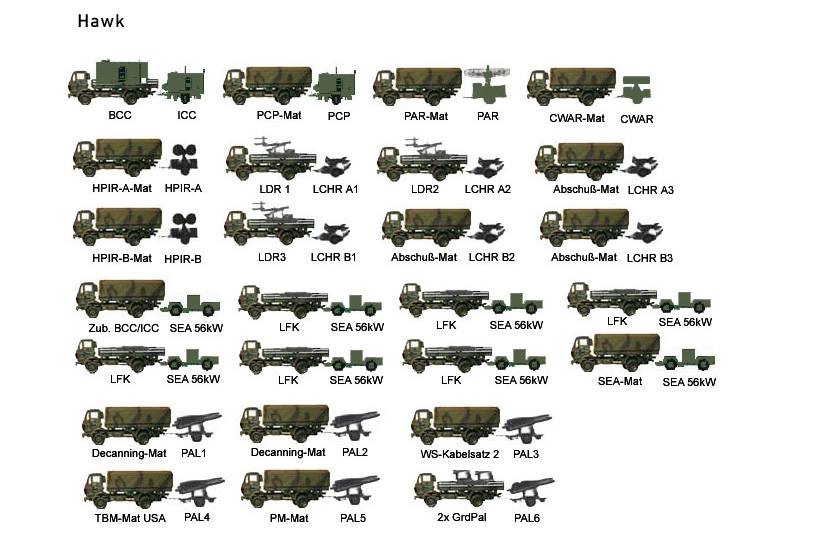
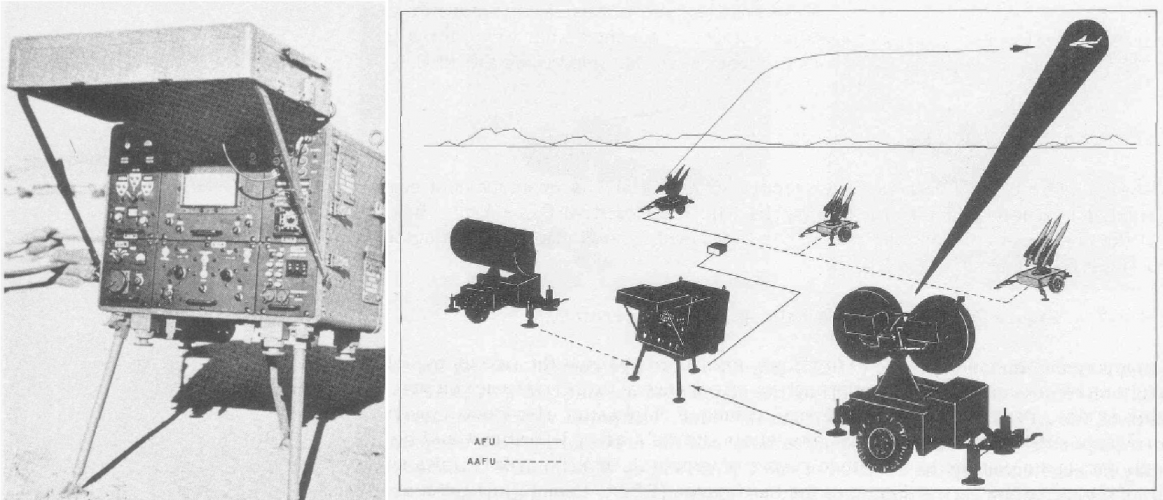
Agreed. Most importantly - HAWK, as I already noted, have "minimal" battery composition for forward deployment:

1776784973040.png

The minimal battery is composed of CWAR radar (for target detection), HPIR radar (for target illumination), up to three M192 launchers (with generator unit) and AFCC unit (Assault Fire Command Console). The AFCC was a portable fire control station, that allowed operator to get data from CWAR and manually aim the HPIR at the chosen target.

Assuming that data from shipborne radar could be translated into format, that AFCC could read (if not, then operator would be forced to use fully manual input), it would likely be enough to install AFFC im ship's CIC and HPIR radar (on stabilized mount) over superstructure, for fire control to function.
 
You have to bear in mind that missiles designed for land use are unlikely to cope with being bounced around in a ship in even a mild seaway.
And how well will folding wings/fins cope with Mach 2/3?

SRJ
 
The Soviet's seemed to have been more adapted to navalising SAM systems to both land and sea application.

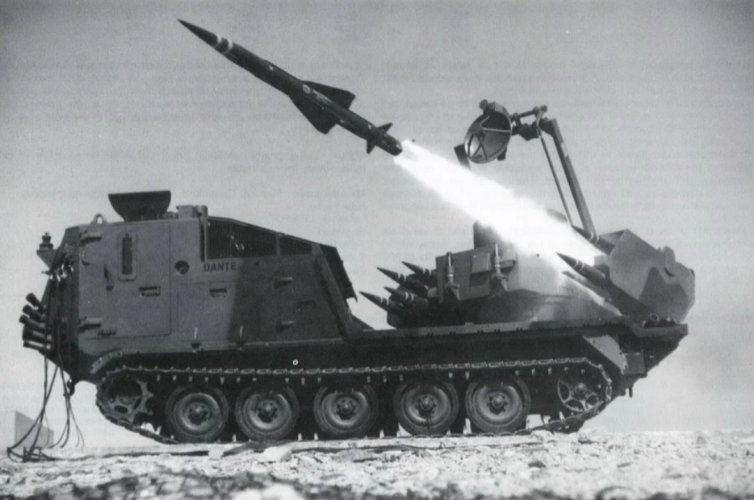
-I would have liked the idea of a ship-based derivative of the Rapier [Sea Rapier] as a replacement for the Sea Cat point-defence SAM. I fully appreciate that it was not ideal, not a Seawolf. But just as the Sea Cat was designed to slip into the space of a Bofors 40mm gun mount of existing ships. The idea of a Sea Rapier being able to slip into the space of a Sea Cat has an appeal all in itself, IMO.....
Perhaps in a launcher configuration not to different to that of the Tracked Rapier launcher configuration - integrating radar/8-ready to fire Rapiers.....

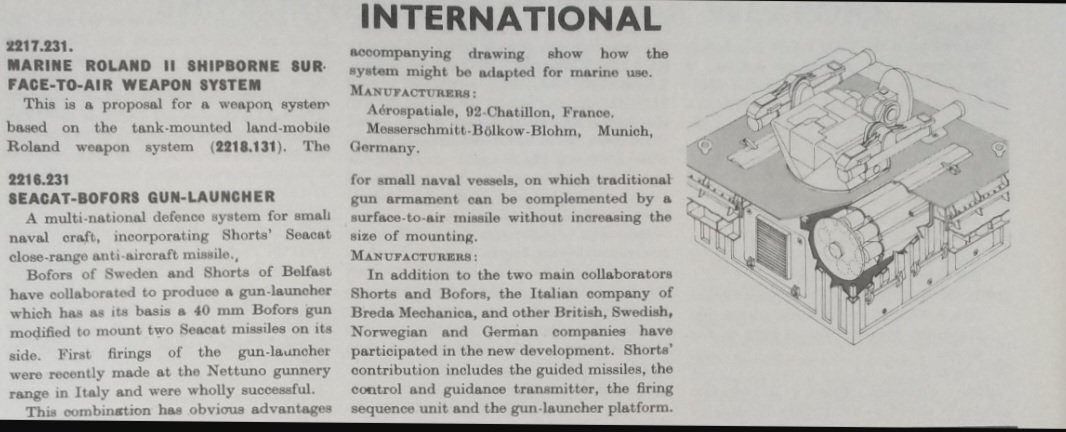
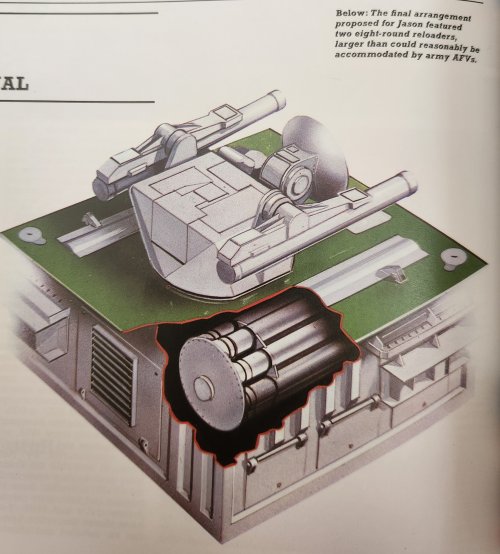
-There was also the studied navalised derivative of the Roland SAM system - known initially as Roland MX and later as Jason.
Personal, I like the notion of a Sea Roland, with its sealed launch container and rotary launcher arrangement.

[Source for coloured drawing - Bill Gunston, 1979. The Illustrated Encyclopaedia of the world's Rockets & Missiles.

Source of black & white drawing & information https://www.secretprojects.co.uk/threads/german-navalized-roland-ii-sam-system.10322/]

Regards
Pioneer
 

Attachments

  • Screenshot_20260516_151401_DuckDuckGo.jpg
    Screenshot_20260516_151401_DuckDuckGo.jpg
    138.7 KB · Views: 36
  • 20260516_151714.jpg
    20260516_151714.jpg
    2.1 MB · Views: 29
  • Screenshot_20260516_162815_DuckDuckGo.jpg
    Screenshot_20260516_162815_DuckDuckGo.jpg
    180 KB · Views: 36
Last edited:
The Soviet's seemed to have been more adapted to navalising SAM systems to both land and sea application
It was mainly a tendency to develope new SAM's for both land & naval use, so they would be at least partially compatible in ammo and main elements. Besides that, it also provided sort-of fallback option; for example, the land-based S-125 "Neva" system adopted the naval missile, developed for M-1 "Volna" system. The missile originally developed for land-based system was troublesome during testing, while naval one did not give much troubles; so the naval one was put into production for both land-based and naval systems.

P.S. Should also mention, that this rule wasn't ironclad; for example, M-11 "Shtorm" naval SAM was developed as navy-only project, without any land-based analogue.
 
You have to bear in mind that missiles designed for land use are unlikely to cope with being bounced around in a ship in even a mild seaway.
And how well will folding wings/fins cope with Mach 2/3?
Well, the land-based missiles were designed to cope with much harder bouncing of moving truck or tracked transporter, so... I doubt that much more smooth movement of relatively large warship would represent much problem.
 
It was mainly a tendency to develope new SAM's for both land & naval use, so they would be at least partially compatible in ammo and main elements. Besides that, it also provided sort-of fallback option; for example, the land-based S-125 "Neva" system adopted the naval missile, developed for M-1 "Volna" system. The missile originally developed for land-based system was troublesome during testing, while naval one did not give much troubles; so the naval one was put into production for both land-based and naval systems.

P.S. Should also mention, that this rule wasn't ironclad; for example, M-11 "Shtorm" naval SAM was developed as navy-only project, without any land-based analogue.
Still, it makes a lot of sense to me, to incorporate as much time, effort and finance into a weapon system that serves more than one service....
I can't help but question the duplication of time, money and expertise of the USN and USAF developing their own missile systems, only to eventually recognised that the adoption of one another missiles made complete sense.....

Regards
Pioneer
 
Last edited:
Well, the land-based missiles were designed to cope with much harder bouncing of moving truck or tracked transporter, so... I doubt that much more smooth movement of relatively large warship would represent much problem.
1: for modern small missiles such as Rapier and Blowpipe et al yes, but for the older larger missiles like Bloodhound and Thunderbird no. They had to be ‘struck down’ for movement and tested after transport.
2: in a calm sea yes, but have you been in a squall in the Bay of Biscay or the Atlantic? Very steep seas with a hard slamming effect, things like wings and fins get detached.

SRJ
 
1: for modern small missiles such as Rapier and Blowpipe et al yes, but for the older larger missiles like Bloodhound and Thunderbird no. They had to be ‘struck down’ for movement and tested after transport.
2: in a calm sea yes, but have you been in a squall in the Bay of Biscay or the Atlantic? Very steep seas with a hard slamming effect, things like wings and fins get detached.

SRJ
An argument I did not consider before. Thanks!
 
Agreed. Most importantly - HAWK, as I already noted, have "minimal" battery composition for forward deployment:

View attachment 809833

The minimal battery is composed of CWAR radar (for target detection), HPIR radar (for target illumination), up to three M192 launchers (with generator unit) and AFCC unit (Assault Fire Command Console). The AFCC was a portable fire control station, that allowed operator to get data from CWAR and manually aim the HPIR at the chosen target.

Assuming that data from shipborne radar could be translated into format, that AFCC could read (if not, then operator would be forced to use fully manual input), it would likely be enough to install AFFC im ship's CIC and HPIR radar (on stabilized mount) over superstructure, for fire control to function.

That illustration is lacking the 56 kW generator unit(s).
 
I know, yes. Either it was considered too obvious to include, or authors just didn't have enough space on this page of manual.
Looking at the diagram, I'd guess it's trying to illustrate the fire control setup - for which purpose the generator is as irrelevant as the field kitchen, and showing it would only clutter the diagram.
 
The generators are substantial in size and thirst and very often included in IHAWK battery diagrams.

https://www.rag-flugabwehr.de/waffensystem-hawk.html

Note that the graphic omits the big generators, but shows the small LSCB.

Something that's always omitted is the decoy emitter. Patriot has one, I think IHAWK had one as well.

A IHAWK battery had no field kitchen. It was company-level, while field kitchens are dimensioned for battalion level.
 
The generators are substantial in size and thirst and very often included in IHAWK battery diagrams.
Which supports the view that it wasn't an accidental omission. They weren't necessary for the purpose of that specific diagram. The LCSB, whatever that is, was necessary.
A IHAWK battery had no field kitchen. It was company-level, while field kitchens are dimensioned for battalion level.
It's a rhetorical field kitchen. It could equally well be the CO's jeep, or Private Snuffy's collection of Playboy magazines.
 
Look, generators mounted on trucks and trailers - fine, ignore them. Portable generators transported by truck - fine, ignore.

Big ass trailers that make it impossible for a truck to tow any other trailer such as a radar or missile container transport trailer or command trailer or missile launcher?
That's a relevant piece of information. Look at my link.
marschband_ge-hawk-vollstaffel.jpg

Every single truck tows a trailer. The generators strongly influence how many trucks are needed, thus how much personnel is needed, how well such a battery can be airlifted or transported by a ferry and how much time it needs to cross a pontoon bridge. They also greatly influence how quickly you can set up a battery, especially as communication between elements is by cable. A generator with every radar, fire control cabin and launcher would permit near-instant setup and evacuation, but there are separate generators and big ass cables of hundreds of metres length.

Such generators may be unimportant if you focus on what a flying missile does, but they are one of the central facts for someone who thinks about what the military unit does. So this is about the difference of looking at things from an aviation enthusiast perspective or from a military perspective.
 
1: for modern small missiles such as Rapier and Blowpipe et al yes, but for the older larger missiles like Bloodhound and Thunderbird no. They had to be ‘struck down’ for movement and tested after transport.
2: in a calm sea yes, but have you been in a squall in the Bay of Biscay or the Atlantic? Very steep seas with a hard slamming effect, things like wings and fins get detached.

SRJ

Plus the effect of salt water on the missiles and systems, one of reasons for Rapiers struggles in the Falklands...
 
Big ass trailers that make it impossible for a truck to tow any other trailer such as a radar or missile container transport trailer or command trailer or missile launcher?
That's a relevant piece of information.
I'm not saying it's irrelevant. I'm saying it's irrelevant for that drawing.

As far as I can tell, it's illustrating how the fire control system connects the radars, launcher, and so forth. It probably came from a manual which would have had a similar image showing how the generators are hooked up, and omitting other things which are important - just not in that context.

Very likely one of those images would resemble the one you've shared. Which neatly shows all the trucks and the various trailers they show, but gives no indication at all of how any of it is actually arranged in the field.
 
Well, the navy that did land based SAM's at sea, if there was one, was the Soviet Union.

The Sverdlov class cruiser Dzerzhinsky was experimentally fitted with a twin launcher for S-75 Diva missiles with a fire control radar. This proved unsuccessful and was not copied elsewhere in their fleet.

R.417afc2de763c3d68d48e9aff9db9bba

You can see the launcher and modified Fan Song radar here.

The S-125 (SA-3) Neva went to sea as the M-1 Volna and was fitted to a number of ships.

1920px-SA-N-1_launcher.jpg


1920px-Destroyer_Vozbuzhdenyy.jpg


These were never tested operationally so it is difficult to know how effective they would have been.

That's two early examples of this. There were additional, later SAM missile systems adopted from their land-based counterparts used on Soviet ships.
 
Well, the navy that did land based SAM's at sea, if there was one, was the Soviet Union.
It's not exactly the most corresponding example (sorry for the pun). Because with the exception of M-2 "Volkhov-M" (which was not considered a sucsess and remained fitted only on single experimental cruiser), the rest of Soviet naval SAM were not adapted from land ones, but developed from the beginning for two services. Navy usually have it's own launchers, and fire control radars, only the missiles and missile control systems were common.
 
The S-125 (SA-3) Neva went to sea as the M-1 Volna and was fitted to a number of ships.
Ironically it was essentially the other way. The land-based S-125 was armed with the B-600/B-601 missile, initially developed for M-1 "Volna". The B-625 missile, developed for land-based S-125 was troublesome, while B-600 missile, developed for naval M-1 "Volna", was much more sucsessful. So eventually it was decided to drop the B-625 and adapt B-600 for land service too.
 
It's not exactly the most corresponding example (sorry for the pun). Because with the exception of M-2 "Volkhov-M" (which was not considered a sucsess and remained fitted only on single experimental cruiser), the rest of Soviet naval SAM were not adapted from land ones, but developed from the beginning for two services. Navy usually have it's own launchers, and fire control radars, only the missiles and missile control systems were common.
The M-1 (S-125) Volna was a direct copy of the land-based S-125 Neva. The launcher was a navalized version for ship use. That had to be done since you need a stable mount that is weatherproof for operation at sea. The radar guidance system is simply a navalized version of the land based system. Again, a necessity to make it work aboard ship.

Other examples of the Russians simply navalizing an existing SAM:

9K37 Buk (SA 11) as the M-22 Uragan. (SA-N-7)

S-300 (SA-10) as the S-300F (SA-N-6)
 
The M-1 (S-125) Volna was a direct copy of the land-based S-125 Neva. The launcher was a navalized version for ship use. That had to be done since you need a stable mount that is weatherproof for operation at sea. The radar guidance system is simply a navalized version of the land based system. Again, a necessity to make it work aboard ship.
No. It's completely wrong. Look:

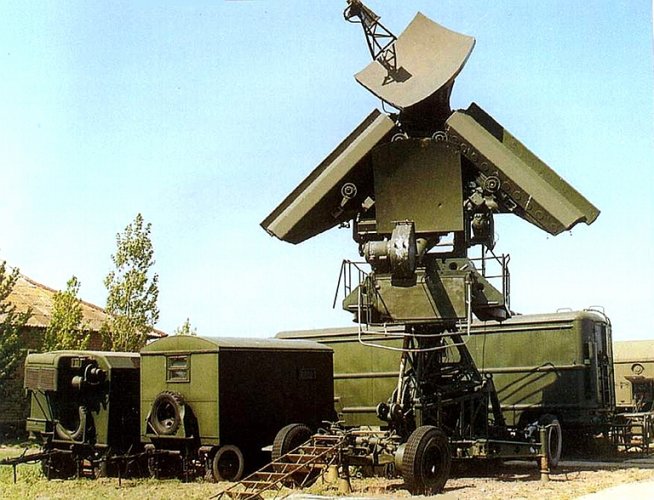
SNR-125-Low-Blow-Deployed-1S.jpg

That's SNR-125 radar station for S-125 "Neva" system. It uses a set of inclined antennas with Lewis scanners for better ground clutter filtration (the ground clutter signal in such configuration raises and decline gradually, allowing for MTI to work more accurately). The system have:

* Top placed search antenna UV-10, with its own Lewis scanner & oscillating sub-reflector, to scan both in azimuth and elevation;
* Two inclined tracking antennas UV-11 (both works from the same Lewis-type rotation scanner) to form narrow scanning beam, tracking both target and missile;
* Bottom square command antenna UV-12 to sent missile commands;

Now, look at this:

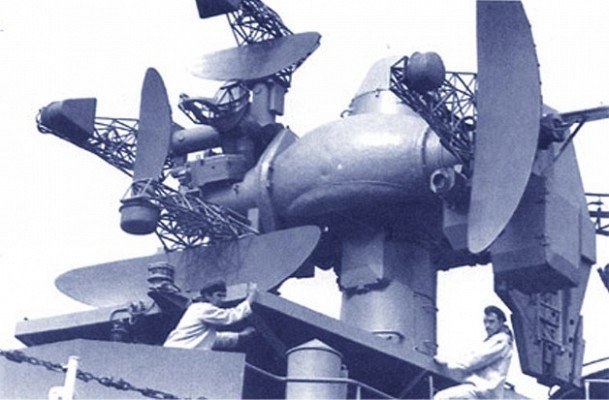
naval_sam_m1-volna_p03.jpg

That's a 4P90 "Yatagan" radar station for M-1 "Volna". It uses five antennas, all conical-scan type:

* A pair of small antennas (placed at 90 angle) were used to rough scan in azimuth (horizontal one) and elevation (vertical one) for target aquisition. The 4P90 did not have search function, it was provided with search data from ship radars;

* A pair of large antennas were used to precisely track target and missile in azimuth and elevation, again, separatedly;

* A top mounted dish antenna (under radome) was used to sent control commands to missile.

So you see now? The S-125 and M-1 have far less in common than you assumed. Their radar systems were completely different; they were developed separatedly for different environments (Navy was unconcerned about ground clutter), and worked on different mechanics and in different coordinate systems. 4P90 wasn't a navalized version of SNR-125, it was completely different system. That's because S-125 and M-1 were developed in parallel, using common missile (the Navy B-600 series) but different fire controls and launchers.

Please do not repeat this mistake.
 
The launcher was a navalized version for ship use.
...Are you serious?

c125.jpg 4k90-m-1-01.jpg

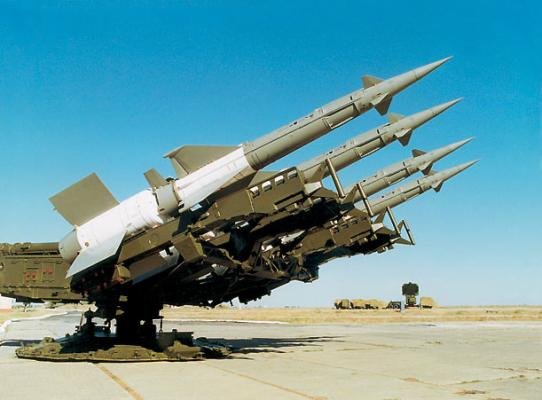
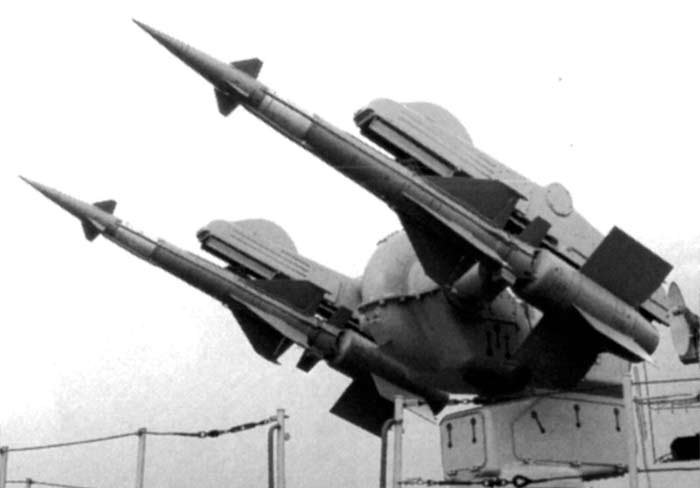
The literally one common thing between them is the missile. Other than that, they have zero in common. The land launcher is of cradle-type, with missile on top of launch rails, the naval one is arm-type, with missile below the rail.
 
No. It's completely wrong. Look:

View attachment 823559

That's SNR-125 radar station for S-125 "Neva" system. It uses a set of inclined antennas with Lewis scanners for better ground clutter filtration (the ground clutter signal in such configuration raises and decline gradually, allowing for MTI to work more accurately). The system have:

* Top placed search antenna UV-10, with its own Lewis scanner & oscillating sub-reflector, to scan both in azimuth and elevation;
* Two inclined tracking antennas UV-11 (both works from the same Lewis-type rotation scanner) to form narrow scanning beam, tracking both target and missile;
* Bottom square command antenna UV-12 to sent missile commands;

Now, look at this:

View attachment 823560

That's a 4P90 "Yatagan" radar station for M-1 "Volna". It uses five antennas, all conical-scan type:

* A pair of small antennas (placed at 90 angle) were used to rough scan in azimuth (horizontal one) and elevation (vertical one) for target aquisition. The 4P90 did not have search function, it was provided with search data from ship radars;

* A pair of large antennas were used to precisely track target and missile in azimuth and elevation, again, separatedly;

* A top mounted dish antenna (under radome) was used to sent control commands to missile.

So you see now? The S-125 and M-1 have far less in common than you assumed. Their radar systems were completely different; they were developed separatedly for different environments (Navy was unconcerned about ground clutter), and worked on different mechanics and in different coordinate systems. 4P90 wasn't a navalized version of SNR-125, it was completely different system. That's because S-125 and M-1 were developed in parallel, using common missile (the Navy B-600 series) but different fire controls and launchers.

Please do not repeat this mistake.
I doubt those are "conical scan." That looks more like two pairs of radar using nodding (the feed horns move up and down relative to the fixed antenna) and consist of two narrow beams, one horizontal (the large and small 'orange peels' that are vertical on either side of the mount) and one vertical (the same configuration above and below the mount on the left side of the picture). These likely correspond to a system like the S-25 Berkut uses. The larger pair are for acquisition and target tracking, having a larger beam, while the smaller are for tracking the missile. To get a better fix on the target, I'd bet the feed horns for the larger antennas (in the small domes) move up and down the antenna giving that pair a crude track-while-scan capacity.

The smaller pair (missile tracking) have nodding feed horns too (back and forth motion, not circular--what you call a Lewis feed). That would mean the mount centers on the missile as it flies. The target is offset to that and that's why you need TWS. A shipboard computer calculates the difference in position and then sends the missile flight commands, most likely using an antenna under the dome at the top center of the mount. Probably a polarized yagi array, as that's what most other such missile guidance systems used.

The land-based version is the same thing. Four antennas in pairs doing the same thing. Sure, they look different, but electronically they're essentially identical.
 
Last edited:
...Are you serious?

View attachment 823561View attachment 823562

The literally one common thing between them is the missile. Other than that, they have zero in common. The land launcher is of cradle-type, with missile on top of launch rails, the naval one is arm-type, with missile below the rail.
Same missile on a different mount. The mount is not that important to the system. The missiles are identical. That's what's important here.

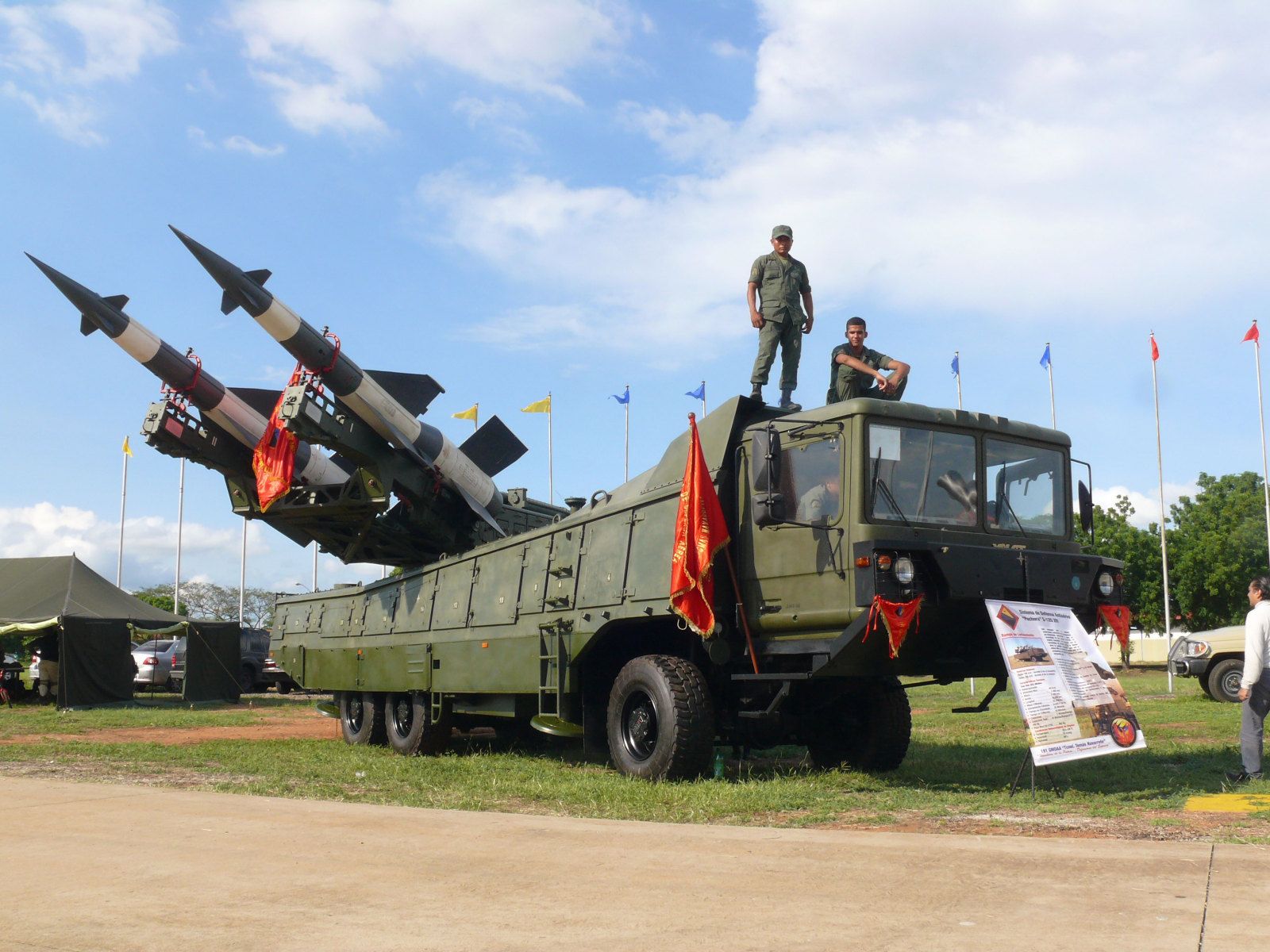
32c2298c8721adc66e2b6f06af166400.jpg

Venezuela built this mod version. Same missile, different launcher.
 
The land-based version is the same thing. Four antennas in pairs doing the same thing. Sure, they look different, but electronically they're essentially identical.
Again: no. You are absolutely wrong. I described above how the land system worked; it used Lewis rotation scanners, not the nodding/rotating feed horns. They are completely different systems. There were no "rough/precise" scan antennas on land-based system, because Lewis scanner and metal-air antennas provided enough resolution. There are no pairs of antennas on land-based system. The top antenna is search one; the bottom is command transmitter. Scan is done by side antennas only.

The larger pair are for acquisition and target tracking, having a larger beam, while the smaller are for tracking the missile.

Erm, WHAT? Larger antennas have larger beams?! I kinda puzzled that you did not know that, but LARGER reflector produce SMALLER - more narrow - beams.

(I sincerely hope that I simply misunderstood you)

The small antennas are used for missile gathering on initial trajectory stage. They produce relatively wide beams, that gather the missile & guide it into the narrow beams of large antennas (which already track the target).

Same missile on a different mount. The mount is not that important to the system. The missiles are identical. That's what's important here.

Yes, the missiles are identical. The launchers aren't. You claim was that naval launcher is adapted version of land-based one, which is obviously not ture. Also, the missile, as I mentioned several times above, was the naval one adapted for land service (because missile for S-125, developed in parallel, was troublesome).
 
Last edited:
Again: no. You are absolutely wrong. I described above how the land system worked; it used Lewis rotation scanners, not the nodding/rotating feed horns. They are completely different systems. There were no "rough/precise" scan antennas on land-based system, because Lewis scanner and metal-air antennas provided enough resolution. There are no pairs of antennas on land-based system. The top antenna is search one; the bottom is command transmitter. Scan is done by side antennas only.

It works just as I described. The land based version works the same way the naval version does. There are two pairs of antennas, the long ones at an angle scan in the same way (Lewis feed) as the US Navy's WW 2 Mk 3 and 8 fire control radar does.

OIP.4ZTebvTufKPpYbHLh6Va7QHaHa


The signal is transmitted right to left, or left to right, in segments. The Lewis feed does this mechanically rather than electronically. No difference in the result really.

Anyway, the two long diagonal radars are paired to give an 'X' where the target is. That is, you know the azimuth and elevation of the target. Range is determined and that gives the slant range to the target from the firing battery.

The two square-ish radars in the middle do the same thing to track the missile.

https://1stvsc.com/intel/radar-d-ssnr-125-low-blow-sa-3-track-radar/

https://ausairpower.net/APA-Engagement-Fire-Control.html

Basically, the Low Blow (SNR 125) is an improved version of the Fan Song E for SA 2. The Russians moved away from conical scan with it because conical scan is easily jammed while the rastering scan of a Lewis feed is harder to jam.

The target tracking radar antenna are larger to give a wider swept area allowing for quicker acquisition of the targets.
Yes, the missiles are identical. The launchers aren't. You claim was that naval launcher is adapted version of land-based one, which is obviously not ture. Also, the missile, as I mentioned several times above, was the naval one adapted for land service (because missile for S-125, developed in parallel, was troublesome).
What matters is the missiles. The launcher is really nothing to the system.
 
It works just as I described. The land based version works the same way the naval version does. There are two pairs of antennas, the long ones at an angle scan in the same way (Lewis feed) as the US Navy's WW 2 Mk 3 and 8 fire control radar does.
What?

Mk-3 radar used lobe-switching dipoles, not the rotating Lewis feed.
Basically, the Low Blow (SNR 125) is an improved version of the Fan Song E for SA 2.

Exactly, so what are you arguing about?

The land based version works the same way the naval version does.
You basically just admitted that it isn't:

The signal is transmitted right to left, or left to right, in segments. The Lewis feed does this mechanically rather than electronically. No difference in the result really.

Anyway, the two long diagonal radars are paired to give an 'X' where the target is. That is, you know the azimuth and elevation of the target. Range is determined and that gives the slant range to the target from the firing battery.

The smaller pair (missile tracking) have nodding feed horns too (back and forth motion, not circular--what you call a Lewis feed). That would mean the mount centers on the missile as it flies. The target is offset to that and that's why you need TWS. A shipboard computer calculates the difference in position and then sends the missile flight commands, most likely using an antenna under the dome at the top center of the mount. Probably a polarized yagi array, as that's what most other such missile guidance systems used.

I'm completely at loss about what are you trying to prove now.
 
What?

Mk-3 radar used lobe-switching dipoles, not the rotating Lewis feed.

Yes, the electronic version of a mechanical Lewis feed. They both accomplish the same thing. Both scan across the antenna array in narrow segments and accomplish the same end thing.
You basically just admitted that it isn't:

Both use a Lewis feed to scan in narrow segments for greater accuracy. Both use two pairs of antennas, one to track the target, one to track the missile. Both have a separate antenna that sends the missile commands. Both use the exact same missile. The differences are largely, if not entirely, cosmetic.
 
Both use two pairs of antennas, one to track the target, one to track the missile.
Are you even trying to read what I was saying?

Okay, I repeat another time:

1) SNR-125 use the same UV-11 inclined antennas to track both missile and target (like SNR-75). The top antenna are search only, it did not track. The bottom antenna are pure signal transmitter;

2) The 4P90 use large antennas to track both target and missile. Small antennas are only for missile aqusition on early stages of flight (because large antennas beams are too narrow)

3) The 4P90 use nutating/oscillating feed, NOT the Lewis scanner;

Could you please try to understood what I'm saying for once?

The differences are largely, if not entirely, cosmetic.
Yeah, and the differences between AN/SPG-49 and AN/SPW-2 are purely cosmetic, too; after all, both are used to guide the same Talos missile *sarcasm*

Seriously, why are you clinging on the wrong assumptions so hard?
 
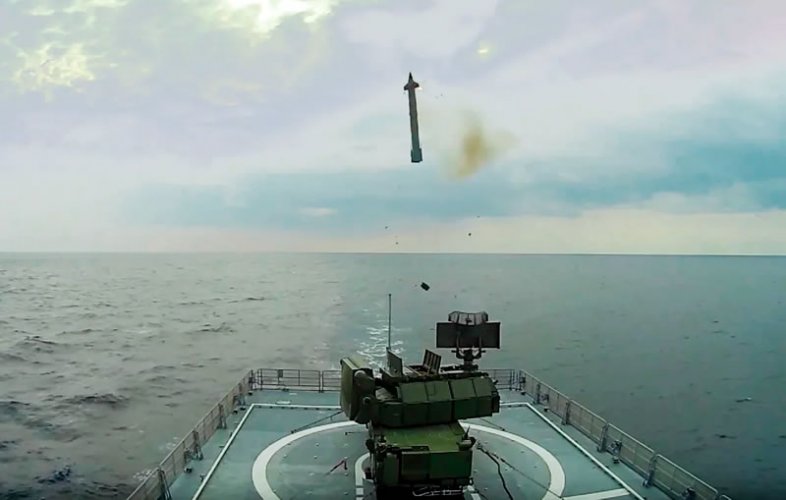
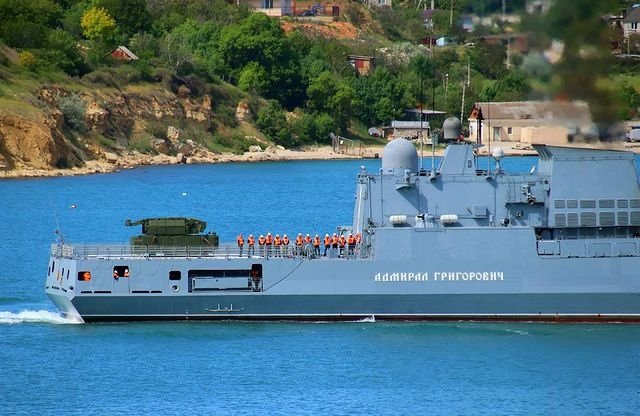
The Tor surface‑to‑air missile system on the ship’s deck
 

Attachments

  • %D0%92%D1%8B%D1%81%D0%B0%D0%B4%D0%BA%D0%B0%20%D0%B4%D0%B5%D1%81%D0%B0%D0%BD%D1%82%D0%B0_%D0%97...jpg
    %D0%92%D1%8B%D1%81%D0%B0%D0%B4%D0%BA%D0%B0%20%D0%B4%D0%B5%D1%81%D0%B0%D0%BD%D1%82%D0%B0_%D0%97...jpg
    43.7 KB · Views: 14
  • ec22c70e6db6.jpg
    ec22c70e6db6.jpg
    120.6 KB · Views: 13

Similar threads

Back
Top Bottom