Forest Green
ACCESS: USAP
- Joined
- 11 June 2019
- Messages
- 14,600
- Reaction score
- 31,718


Now we know:Does anybody know what this is?
View attachment 704743
It looks like an HGV, but I'm unfamiliar with the NK inventory.
Edit: to explain further, it doesn't look like any North Korean HGV I've ever seen previously.
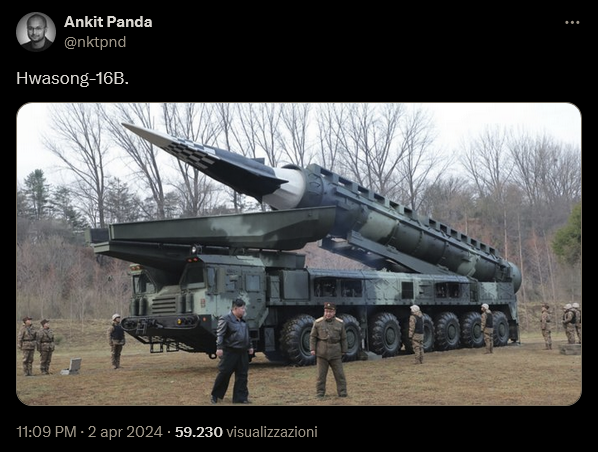
KCNA said the Hwasong-16B flew for about 1,000km (621 miles), reaching a peak altitude of 101km (62 miles). Seoul’s military said it was airborne for about 600km (370 miles) before splashing down in the sea between South Korea and Japan.


The video from 0:50 of the attached video shows all the phases of the launch
View: https://youtu.be/VKItvd0S7Ks?si=N63tSR9pYYoIFELO
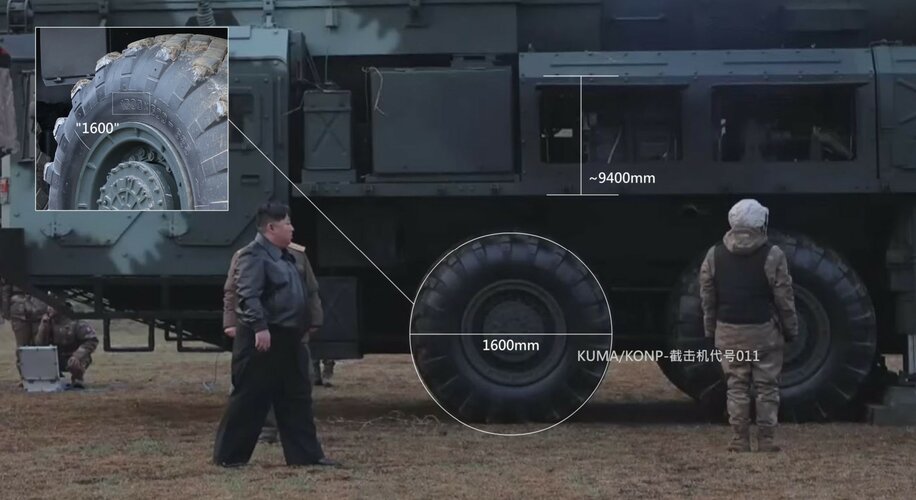
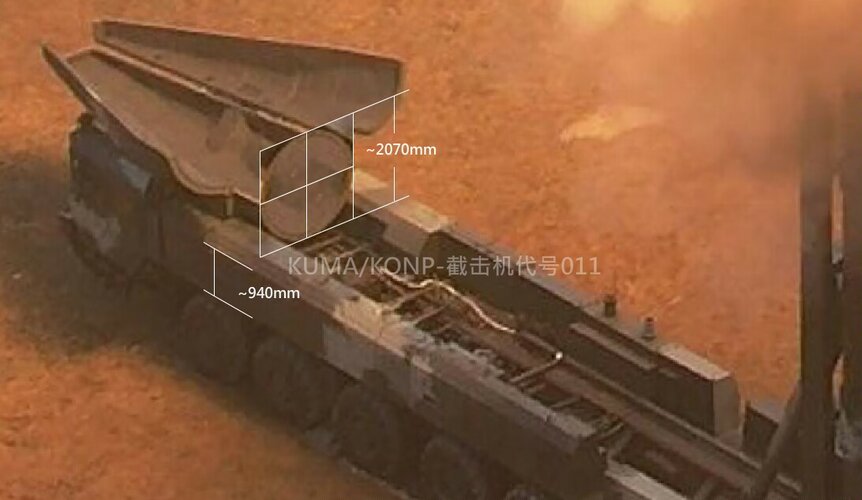
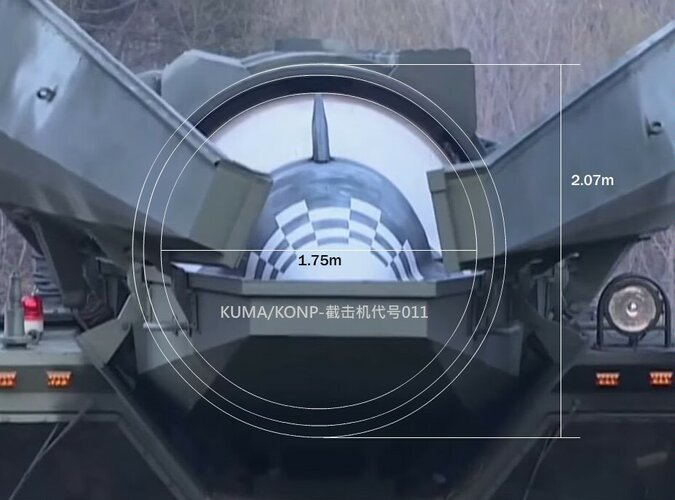
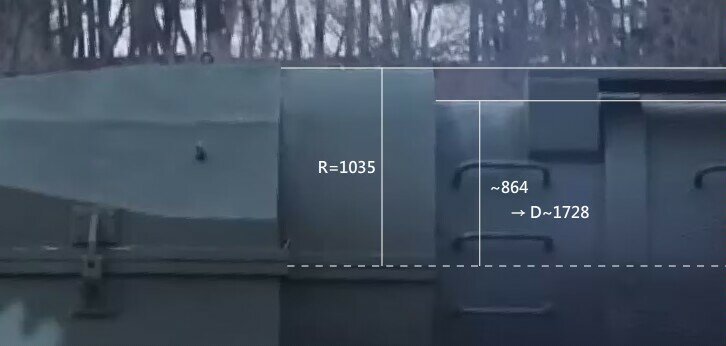
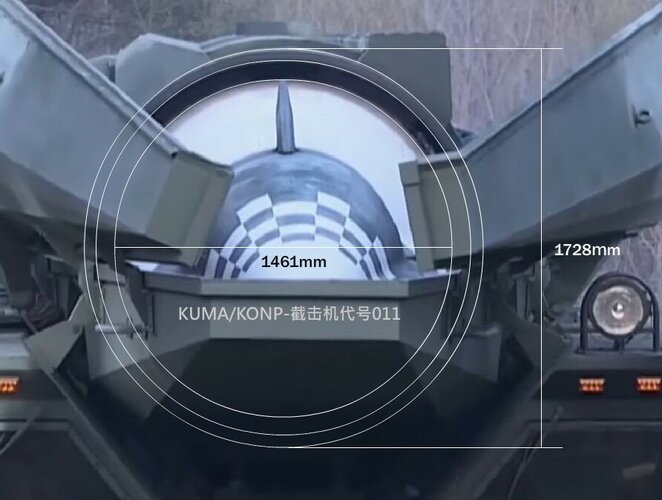
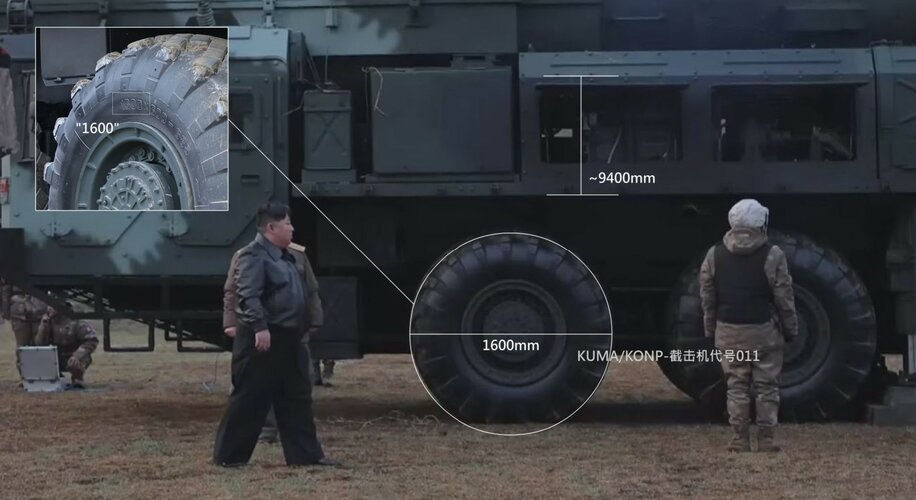
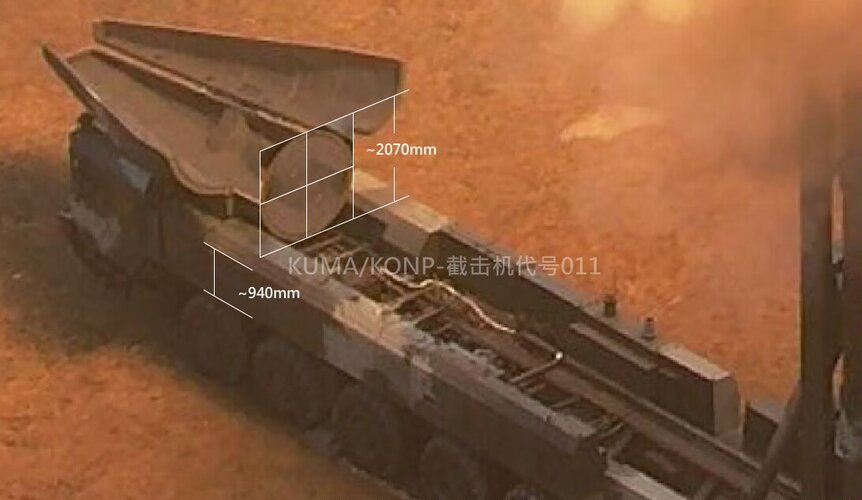
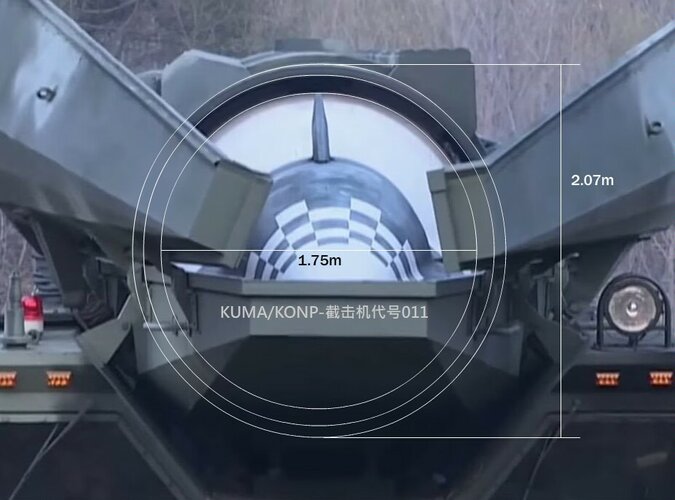
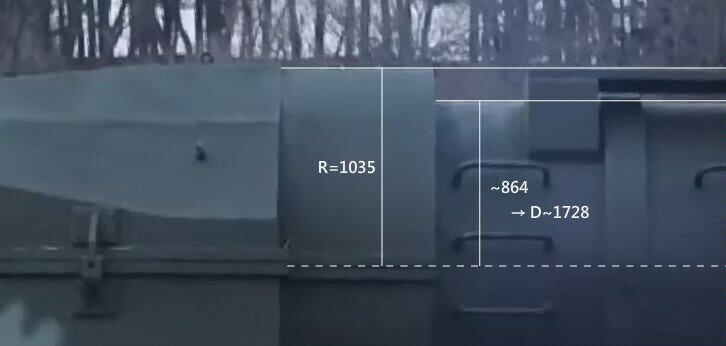
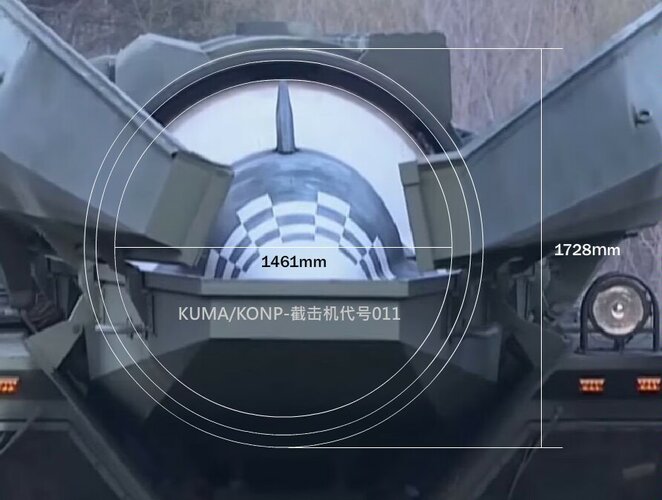
update:My guess about the diameter of hwasong-16B:
View attachment 724445
View attachment 724446
View attachment 724447

Well, the booster itself is solid-fuel and does not need much protection from elements. Hypersonic glider, on the other hand, needed such protection.A new rather interesting hybrid design for the launcher

Well, the booster itself is solid-fuel and does not need much protection from elements. Hypersonic glider, on the other hand, needed such protection.
And the Korean climate is wet and cold, so...The glide vehicle is covered in nice, ionizing ablative that degrades with exposure to cold and moisture.
And the Korean climate is wet and cold, so...

Apr 3, 2024 #politics #northkorea #KRT
North Korea successfully test-fired a new mid-to long-range solid-fuel, hypersonic missile, state-run television KRT said on Wednesday (April 3).
KRT released a video of state's leader Kim Jong Un overseeing the launch, and lauding it as a strategic weapon that demonstrates the "absolute superiority" of North Korea's defense technology.
With this, North Korea has "fully turned all tactical, operational, and strategic-grade missiles of different ranges into solid-fuel, with warhead control, and capable of nuclearisation," Kim said, according to state media.
It's a physically large warhead (probably to be able to hold a B40-B60 equivalent nuke) and hypersonic BGVs need a lot of thrust in short order.Seems like a huge missile for sending a warhead 1,000km.
second generation designs, prior to the design of B61.B40, B60?
second generation designs, prior to the design of B61.
I wasn't aware of them being used at all. I was meaning a nuke in the same design generation as B43 and up through B57.
I was meaning a nuke in the same design generation as B43 and up through B57.
| Missile | Type | Range | Quantity | Comments | |
|---|---|---|---|---|---|
| Hwasal-1 | Cruise missile | In testing. | |||
| Hwasal-2 | Cruise missile | 1800 km~2000 km | In testing. | ||
| Hwasong-5 (Scud-B) | SRBM | 340 km | 30+ launchers | ||
| Hwasong-6 (Scud-C) | SRBM | 500 km | |||
| Hwasong-7 (Nodong mod 1/mod 2) | MRBM | 900–1,500 km | 10 launchers (est.) | ||
| Hwasong-8 Hwasong-8 mod 1 | SRBM | 1+ launchers | In testing | ||
| Hwasong-11A (KN-23) | SRBM | 240~800 km | 17+ launchers | Similar to 9K720 Iskander or Hyunmoo-2, tested in August 2017. In 2019, tests of the missile were conducted on 4 and 9 May, July 25 and 6 August. First launched from a railcar 16 September 2021. | |
| Hwasong-11B (KN-24) | SRBM | 410 km | 9+ launchers | Some similarities to MGM-140 ATACMS, but larger, with aft-fins to maintain aerodynamic control over entire flight. Tested in August 2019 and March 2020 | |
| Hwasong-11C (KN-23 mod 1) | SRBM | 6+ launchers | In testing. | ||
| Hwasong-11S (KN-23 mod 2) | SRBM | "Some" launchers | In testing. | ||
| Hwasong-12 Hwasong-12 mod 1 | IRBM | 5000–6000 km | 10+ launchers | In testing. | |
| Hwasong-14 KN-20 | ICBM | 10,000+ km | Successfully tested on 4 July 2017 | ||
| Hwasong-15 KN-22 | ICBM | 13,000 km | Successfully tested on 28 November 2017 | ||
| Hwasong-16b | ICBM | 600-650 km | Successfully tested on 2 April 2024. A solid-fuel ICBM in North Korean missile arsenal. | ||
| Hwasong-17 KN-28 | ICBM | >13,000 km | Successfully tested on 24 March 2022 | ||
| Hwasong-18 | ICBM | Successfully tested on 13 April 2023 First solid-fuel ICBM in North Korean missile arsenal | |||
| KN-18 | SRBM | 450+ km | Scud-C variant that carries a Maneuverable reentry vehicle. Tested May 2017. | ||
| KN-21 | SRBM | 250+ km | Scud-B/Hwasong-5 variant with maneuvering capabilities. Tested April 2017. | ||
| KN-25 | SRBM/MLRS | 380 km | "Super-large multiple rocket launcher," viewed as an SRBM by U.S. assessment. 30 tracked chassis and another 9 truck chassis are known to have been made for total of 216 guided rockets. | ||
| Pukguksong-2 KN-15 | MRBM | 1200 km | Operational and deployed to northern border in missile bases where Hwasong-7 is deployed. | ||
| Scud-ER | MRBM | 1,000 km | "Some" launchers | Recently upgraded with new guidance and electronics. |
Beat me to it ! I thought the same, at least about their ICBMs. They have a monster, hypergolic missile and immediately thereafter they go solid-fuel. I know, "Titan II and Minuteman " but still.Is it efficient to produce that many different types?
Not in the least, except in terms of figuring out what you do want to make in numbers.Is it efficient to produce that many different types?
Solid fuels are a lot easier to store and maintain by conscripts, so that shift makes sense to me.Beat me to it ! I thought the same, at least about their ICBMs. They have a monster, hypergolic missile and immediately thereafter they go solid-fuel. I know, "Titan II and Minuteman " but still.

Same diameter as Pukguksong-2.