Have navies lost their way?

uk 75

ACCESS: Above Top Secret
Senior Member
Joined
27 September 2006
Messages
6,622
Reaction score
7,443
As some of you may know I have been following the shape of navies since I first opened a copy of Janes Fighting Ships in the 1960s at my local library.
More recently I have come to rely on the smaller German Weyers Flottentaschenbuch with its excellent line drawing silhouettes and armament charts.

It is now thirty five years since the Cold War fizzled out. Between 1945 NATO and the Warsaw Pact had developed and built powerful fleets and developed doctrines for their use in a hot war which apart from the blockade of Cuba in 1962 never materialised.

However, since 1991 navies have lost their classic measure of relative strength "the enemy fleet in being". It is worth remembering that the last naval actions between major surface naval units took place in World War 2 . The Falklands War in 1982 showed that even poorly armed nuclear submarines could defeat a surface ship while escort ships were vulnerable to air attack even with dumb bombs and cannon. Missiles were potent but electronics still had a long way to develop.

If you leaf through the Country pages of Jane's or Weyers (or the numerous online pages) no clear strands emerge.

The US Navy looks very much like it did in 1991 with some notable exceptions
:
The submarine fleet has received two new classes of SSN but the Subroc replacement (Sea Lance) has not been followed up.

The Nimitz class now make up most of the CV fleet and no conventional powered ships remain. AIr groups have fewer types and are arguably less capable in ASW and fleet air defence. An all weather long range replacement for the A6 did not arrive.

The robust frigate force of Perry AA and Knox ASW ships was replaced by a two class general purpose ship (LCS) which has not been a success.

I doubt anyone in 1986 would have expected the Bunker Hill class to still be in service or that the Burke class would continue to be built.

I have used the US Navy as my example.but with a few exceptions other navies have found it hard to reshape themselves.

The main exception has been China. In 1991 it was starting to build new escorts with weapons purchased in the West. Today China builds its own designs of everything from aircraft carriers to landing ships. Unlike the US and other Western countries it has a vigorous and successful naval programme.

However, the US Navy remains the only Navy to operate globally on every ocean and under it. It has bases and allies from the Arctic to Australia. China is still confined mainly to its own neighbourhood.

Most navies operate a few frigate type vessels and some submarines. But many cannot even afford that.

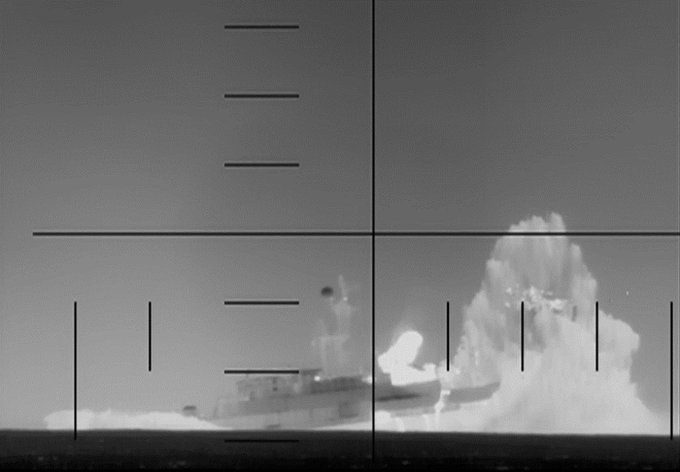
Naval planning in 2026 must wrestle with a host of tasks but few vessels with which to carry them out. At the same time naval engagements are a rarity. Where they do occur the participants do not use similar equipment. Russia has found this to its cost in the Black Sea. But the much better equipped US Navy has not been able to prevent Iran's cockleshell navy and drone force from controling access to the Gulf. Both actions would have baffled readers of the 1986 JANES.
 
Last edited:
Sea control as was known is toast, people just haven't realized it or is in denial.

With increases in sensor range, aircraft/submerged range and weapons ranges, the telephone booth fight of the English channel now expands to hundreds if not thousands of Km. Surface ships are just vulnerable targets in this "no man's land" as they have no mobility, no stealth, no mobility and pretty bad intrinsic survivability, as human tech work in air, not water and a lot of effort is needed to keep water out. Only throwing money at the problem is the only way to keep ships remotely survivable, but it'd never be efficient.

Space technology would expand the kill zone to cover all oceans at all times. Transporting items via the seas in a shooting war will require a completely different sort of transport than civilian ships.
 
Last edited:
Ships have in fact immense tactical and strategic mobility and most importantly endurance. They have the sensor power and magazine depth only rivaled by land batteries (in many cases a ship has more magazine depth than an entire SAM battery tbh) while being entirely mobile and easily deployed across the whole world. A ship can be anything from a super-long-range strike platform, a IAD and BMD asset to a vital ASW and counter-piracy piece. Furthermore, ships don't exist in vacuum, ships are supported by subsurface and aviation elements. In an equal manner ships facilitate these assets in form of aircraft carriers, surface action groups, submarine tenders, ASW vessels and mine countermeasure ships.

Especially right now, ships are arguably behind only submarines as the most survivable Military assets, where land vehicles and aircraft see significantly higher attrition, on a global scale.
 
I doubt anyone in 1986 would have expected the Bunker Hill class to still be in service or that the Burke class would continue to be built.
For what it's worth, nobody was paying attention to see 9-11 happen, either. And then the GWOT ate all the budget for 20+ years.

I think the Ticos were expected to linger about this long. The massive surprise was not getting CG-21 or building the 30something Zumwalts to replace all the Spruance-class. So instead the Navy had to restart Burke production, putting a ~10yr gap in ship replacements.


Naval planning in 2026 must wrestle with a host of tasks but few vessels with which to carry them out. At the same time naval engagements are a rarity. Where they do occur the participants do not use similar equipment. Russia has found this to its cost in the Black Sea. But the much better equipped US Navy has not been able to prevent Iran's cockleshell navy and drone force from controling access to the Gulf. Both actions would have baffled readers of the 1986 JANES.
That I honestly doubt. Drones are effetively the same threat that the 1890s Torpedo Boats were. And the defenses to them are about the same: some number of rapid-firing medium-caliber guns, "anti-drone" nets (that look suspiciously like the anti-torpedo nets of the 1900s), and now even some drones that are set up to destroy other drones (which bear a striking conceptual similarity to torpedo boat destroyers). Okay, and we can add some cheap missile launchers that are conceptually "highly-accurate 3-inch guns" as well.
 
Where they do occur the participants do not use similar equipment. Russia has found this to its cost in the Black Sea. But the much better equipped US Navy has not been able to prevent Iran's cockleshell navy and drone force from controling access to the Gulf. Both actions would have baffled readers of the 1986 JANES.
Readers that thought in terms of nationalist military industrial complex marketing would be baffled. Other kinds of reader remember the Gallipoli, Szent István and the history of the Russian navy.

Frankly I wonder about the level of shock that some Russian nationalist must have gone through in the current campaign.
----
I think the right line of thinking is that, after a period of peace and technological development, the next war would have unpredictable outcomes as many variables drifted and plan and measurements are just wrong. The "stronger" side could win very decisively, or lose quite embarrassing.

Some things just only get clarified and learned after explosions.

That I honestly doubt. Drones are effetively the same threat that the 1890s Torpedo Boats were. And the defenses to them are about the same: some number of rapid-firing medium-caliber guns, "anti-drone" nets (that look suspiciously like the anti-torpedo nets of the 1900s), and now even some drones that are set up to destroy other drones (which bear a striking conceptual similarity to torpedo boat destroyers). Okay, and we can add some cheap missile launchers that are conceptually "highly-accurate 3-inch guns" as well.
The layperson concept of the counter and the actual counter also had big gaps.

Consider the history of battlefleets against torpedo boats/destroyers, it is uncommon that torpedo-craft would be stopped before an effective firing solution can be managed.

Jellicoe had the right idea. The right solution to destroyers is to run away with major combatants and let destroyers sort it out. If only destroyers could do more of sea control there'd no place for other ships.
------
Guns was proposed as solution to torpedo boats, solution to air planes, solutions to missiles, solutions to drones. However, ultimately a defensive system on a platform that can't initiate and without near invulnerability, could be no solution to problem of more mobile attackers that also evolve faster.

For what it's worth, nobody was paying attention to see 9-11 happen, either. And then the GWOT ate all the budget for 20+ years.
Well, we do know what the navy comes up when you do hand them money.
 
Sea control as was known is toast, people just haven't realized it or is in denial.

With increases in sensor range, aircraft/submerged range and weapons ranges, the telephone booth fight of the English channel now expands to hundreds if not thousands of Km. Surface ships are just vulnerable targets in this "no man's land" as they have no mobility, no stealth, no mobility and pretty bad intrinsic survivability, as human tech work in air, not water and a lot of effort is needed to keep water out. Only throwing money at the problem is the only way to keep ships remotely survivable, but it'd never be efficient.

Space technology would expand the kill zone to cover all oceans at all times. Transporting items via the seas in a shooting war will require a completely different sort of transport than civilian ships.
Currently we have no examples of modern, fully combat ready large warship being sunk or even hit in action. Despite operating in exremely narrow areas, such as Red Sea.
 
Jellicoe had the right idea. The right solution to destroyers is to run away with major combatants and let destroyers sort it out. If only destroyers could do more of sea control there'd no place for other ships.
And then radar appeared, and it became impossible to close into torpedo range, because radar-controlled guns would blast destroyer apart long before it got a chance with torpedoes.
 
Currently we have no examples of modern, fully combat ready large warship being sunk or even hit in action. Despite operating in exremely narrow areas, such as Red Sea.
We have, or where did the Russian Black Sea fleet go?
 
Not fully combat ready, per reports of the crew on her at time of sinking.
Not to mention that the vast majority of BSF surface combatants remains active and especially actively involved to this day, launching long range cruise missiles regularly straight into Ukraine.
 
urrently we have no examples of modern, fully combat ready large warship being sunk or even hit in action
Until the submarines came into play

The Iranian frigate IRIS Dena was torpedoed and sunk by the US nuclear submarine USS Charlotte in the Indian Ocean on 4 March 2026, about 40 nautical miles (74 km) south of Galle (Sri Lanka)
 

Attachments

  • Sinking_of_IRIS_Dena_2.jpg
    Sinking_of_IRIS_Dena_2.jpg
    26.1 KB · Views: 11
Until the submarines came into play

The Iranian frigate IRIS Dena was torpedoed and sunk by the US nuclear submarine USS Charlotte in the Indian Ocean on 4 March 2026, about 40 nautical miles (74 km) south of Galle (Sri Lanka)
Again, it's not clear that Dena was operating at any state of enhanced readiness while operating out and about.

edit: Reports state that the Dena was not carrying operational armaments since she was on her way back from the Indian-sponsored International Fleet Review 2026 exercises.
 
We have, or where did the Russian Black Sea fleet go?
Moskva wasn't even remotely modern or fully combat-capable. She was un-modernized, 1980s era warship, worn out and only marginally repaired. Navy wanted to retire her in 2010s, lacking money and facilities on Black Sea to refit her, and only due to prestige factor (a fleet flagship must be a cruiser) managed to obtain some money to repair her.

Until the submarines came into play

The Iranian frigate IRIS Dena was torpedoed and sunk by the US nuclear submarine USS Charlotte in the Indian Ocean on 4 March 2026, about 40 nautical miles (74 km) south of Galle (Sri Lanka)
With all respect, but IRIS Dena wasn't a modern warship also. She was a small corvette (1500 tons) of generally unsucsessfull type, designed on the basic of mostly outdated Cold War era technology, and have only a very limited anti-submarine capabilities; hull-mounted sonar, 324-mm tubes (presumably for copies of early versions of US Mark-46 torpedo), helicopter.

And still she required a nuclear attack submarine to dealt with - just because she was on the loose and could be a potential danger for American rear supply base on Diego Garcia.
 
I'd say that currently many navies did indeed lose their way, but in the opposite direction.
For many navies, world of pax Americana became so obvious, that there's just not enough escorts to go around, and escorts that are tend to conform some ceremonial rules of future combat (often as perceived from the past), rather than problems at hand.

As if high seas are free for navigation because it's a natural law.l, and current inconveniences don't matter in face of a True War that was promised...
 
I'd say that currently many navies did indeed lose their way, but in the opposite direction.
For many navies, world of pax Americana became so obvious, that there's just not enough escorts to go around, and escorts that are tend to conform some ceremonial rules of future combat (often as perceived from the past), rather than problems at hand.
Gotta agree here.

Even the USN completely retired every single "Convoy Escort"/"Ocean Escort" hull. The USN had nearly 120 various FFs and FFGs in a roughly 50/70 split. Yes, there was an intention to sorta replace them with LCS, but that completely failed when the basic hulls were too noisy and nothing was pursued for about 15 years.

Worse, the USN also stopped production of the replacement of the carrier ASW escort. In 1986 the carrier ASW escort was a Spruance-class DD. It was intended that the Zumwalt-class replace the Spruance-class, so the Zumwalts have generationally better silencing (allegedly down to submarine quiet!).

It may be possible to haul the USN (and other navies) out of the lack of ASW-focused ships via large USVs.

The UKRN is certainly trying, though I'm not sure about their planned Type 94. But the Types 91, 92, and 93 are all excellent ideas for USVs. The Type 91 is an Arsenal Ship, so if you fire all the missiles in it during a Red Sea Turkey Shoot you send it to a port to reload while that port sends you a freshly-loaded Type 91. IIRC the Type 92 is an anti-surface warfare USV, and Type 93 is the ASW-optimized large USV. The Type 94 is big enough to pack the big AAW and BMD radars plus missile cells, so it's got all the systems of a Type 45; which means it will NOT be super-cheap.

Also, where the heck did the thread on the RN USVs go? I swear we had one but now I can't find it. And not being able to find it to reference for this thread is frustrating me to no end.
 
Yes, due to range and all the USV need to be "big" and numerous. A constant change of station with the resulting (supply) train runs. It won't be so different from a big manned fleet requiring lots of fuel. Only food and water are being saved aong with some tonnage savings.
Some manned ships are needed to run around constantly and eventually take command when needed. In total I think the numbers will be a bit higher with operation cost being kept the same (as is desired). Maintenance will be the decisive factor.
 
Navy wanted to retire her in 2010s, lacking money and facilities on Black Sea to refit her, and only due to prestige factor (a fleet flagship must be a cruiser) managed to obtain some money to repair her.
I think this is a common pattern. Prestige factor drive decision making over other geopolitical and military considerations.

There just have been so many ships where, one can't imagine much practical use for outside of "showing the flag". Politicians and admirals can always figure out more missions of this type though.

Yes, due to range and all the USV need to be "big" and numerous. A constant change of station with the resulting (supply) train runs. It won't be so different from a big manned fleet requiring lots of fuel. Only food and water are being saved aong with some tonnage savings.
Sails man, sails~ (I had this soft sail + custom robotics concept floating somewhere....)

If one is maintaining sea control without crew endurance considerations, probably best to just park on the shipping route. Persistence is necessary when UUVs and other vehicles can lay mines and likes if one leaves any part of the route undefended.

Some level I think the future of sea control is more like SOSUS, but with additions like CAPTOR and float up missile containers that can ambush attackers, while air/space assets would take care of airspace monitoring. The whole network would be almost completely immune to long range precision strike and take painstakingly long underwater campaign to neutralize.

If is countering an opponent with 'asymmetric' strategy, one can add stuff like a saildrone every kilometer and just utterly lock down the battlespace with sheer affordable mass instead of expensive ships that can only be one place at a time. None of this UAV/USV sneak past ships and wreck your transports story.
 
Last edited:
I think this sense of "being lost" comes largely from the decline in shipyard capacity. China, Japan, and South Korea are currently the representatives of naval development vitality, and they've got most of the world's commercial shipbuilding capacity. That means they can find plenty of infrastructure and workers who fit the bill, which gives them a huge edge, whether buying new ships at low prices or doing maintenance.
 
If one is maintaining sea control without crew endurance considerations, probably best to just park on the shipping route. Persistence is necessary when UUVs and other vehicles can lay mines and likes if one leaves any part of the route undefended.
You need some motive power onboard to not get pushed around by the seas. Or more properly, you need motive power to avoid getting capsized by the waves turning the USV broadside to the waves and then rolling the USV over.
 
If we enter the arena of a "mass-production race" driven by irregular warfare tactics, I do not believe our capitalist society stands a chance of winning. They are capable of achieving 120% of our production output by sacrificing their own citizens.
That said, I don't have an alternative proposal. In other words, I'm just rejecting others' opinions without offering any suggestions of my own. I am truly sorry.
 
One thing that is seeing a resurgence is coast defense. Unlike in the past were coast defenses secured a point like a harbor or narrow strait, today coast defense units can exert sea control over substantial areas of ocean from land. Using satellites, drones, and other sensor platforms coupled to missiles with 200 + km ranges, coast defense units become a serious threat to navies in littoral waters almost anywhere.

The Houthi and Iraq are a sort of proof of concept of this as they both are attempting to control relatively wide straits that could not have been blockaded solely from land before. China is doing something like this in the S. China Sea with their island building. The US Army has been testing such systems in places like the Philippines quietly.

https://mwi.westpoint.edu/deterring-the-dragon-the-us-army-and-sea-denial-in-maritime-warfare/

While such systems and units exert sea denial, they aren't really doing sea control. But it looks like they are changing the playing field and navies will have to adapt.
 
One thing that is seeing a resurgence is coast defense. Unlike in the past were coast defenses secured a point like a harbor or narrow strait, today coast defense units can exert sea control over substantial areas of ocean from land. Using satellites, drones, and other sensor platforms coupled to missiles with 200 + km ranges, coast defense units become a serious threat to navies in littoral waters almost anywhere.

The Houthi and Iraq are a sort of proof of concept of this as they both are attempting to control relatively wide straits that could not have been blockaded solely from land before. China is doing something like this in the S. China Sea with their island building. The US Army has been testing such systems in places like the Philippines quietly.

https://mwi.westpoint.edu/deterring-the-dragon-the-us-army-and-sea-denial-in-maritime-warfare/

While such systems and units exert sea denial, they aren't really doing sea control. But it looks like they are changing the playing field and navies will have to adapt.
And the US has highways running down the coasts. All of them (well, maybe not Alaska). A convoy of 500km range antiship missiles on TELs can just drive anywhere and launch from anywhere.
 
And the US has highways running down the coasts. All of them (well, maybe not Alaska). A convoy of 500km range antiship missiles on TELs can just drive anywhere and launch from anywhere.
Exactly. Five units in Japan would effectively close the Sea of Japan to unfriendly maritime traffic entirely. A unit in the Philippines could move around to avoid retaliation while closing roughly a third of the S. China Sea rendering much of China's island strategy there null and void.
 
I think this sense of "being lost" comes largely from the decline in shipyard capacity. China, Japan, and South Korea are currently the representatives of naval development vitality, and they've got most of the world's commercial shipbuilding capacity. That means they can find plenty of infrastructure and workers who fit the bill, which gives them a huge edge, whether buying new ships at low prices or doing maintenance.
Agree the rise of Chinese naval shipbuilding has shaken up many assumptions.

However I don't see anything special about Japan & South Korea, compared to say France & Italy which have similar naval output. If anything Japan & South Korea remain more domestic focused, with less of a presence in export markets than say a Fincantieri or Naval Group. Also the Japanese and South Korean naval supply chains aren't as fully developed, as they still rely much more on US and European weapons, sensors and propulsion systems, unlike the huge naval ecosystems of Thales FR, Leonardo IT and MBDA FR/IT.
 
However I don't see anything special about Japan & South Korea, compared to say France & Italy which have similar naval output.
Except that Japan has done a far better job in terms of keeping their shipyards busy and naval architects designing new stuff than the US has. Or France.

Regular rotation of ship classes in production and in service, as well as generally designing for shorter overall lifespan and skipping any mid-life updates, to have their shipyards constantly busy making new ships.


Also the Japanese and South Korean naval supply chains aren't as fully developed, as they still rely much more on US and European weapons, sensors and propulsion systems, unlike the huge naval ecosystems of Thales FR, Leonardo IT and MBDA FR/IT.
Japan is definitely working to fix that, using their own sensors now, as well as fielding their own missiles for years.
RoK is also working to fix that, but IMO is not as far along in some senses. They've been too focused on their northern neighbor and not on their general capabilities.
 

Similar threads

Back
Top Bottom