- Joined
- 27 September 2006
- Messages
- 6,622
- Reaction score
- 7,443
As some of you may know I have been following the shape of navies since I first opened a copy of Janes Fighting Ships in the 1960s at my local library.
More recently I have come to rely on the smaller German Weyers Flottentaschenbuch with its excellent line drawing silhouettes and armament charts.
It is now thirty five years since the Cold War fizzled out. Between 1945 NATO and the Warsaw Pact had developed and built powerful fleets and developed doctrines for their use in a hot war which apart from the blockade of Cuba in 1962 never materialised.
However, since 1991 navies have lost their classic measure of relative strength "the enemy fleet in being". It is worth remembering that the last naval actions between major surface naval units took place in World War 2 . The Falklands War in 1982 showed that even poorly armed nuclear submarines could defeat a surface ship while escort ships were vulnerable to air attack even with dumb bombs and cannon. Missiles were potent but electronics still had a long way to develop.
If you leaf through the Country pages of Jane's or Weyers (or the numerous online pages) no clear strands emerge.
The US Navy looks very much like it did in 1991 with some notable exceptions
:
The submarine fleet has received two new classes of SSN but the Subroc replacement (Sea Lance) has not been followed up.
The Nimitz class now make up most of the CV fleet and no conventional powered ships remain. AIr groups have fewer types and are arguably less capable in ASW and fleet air defence. An all weather long range replacement for the A6 did not arrive.
The robust frigate force of Perry AA and Knox ASW ships was replaced by a two class general purpose ship (LCS) which has not been a success.
I doubt anyone in 1986 would have expected the Bunker Hill class to still be in service or that the Burke class would continue to be built.
I have used the US Navy as my example.but with a few exceptions other navies have found it hard to reshape themselves.
The main exception has been China. In 1991 it was starting to build new escorts with weapons purchased in the West. Today China builds its own designs of everything from aircraft carriers to landing ships. Unlike the US and other Western countries it has a vigorous and successful naval programme.
However, the US Navy remains the only Navy to operate globally on every ocean and under it. It has bases and allies from the Arctic to Australia. China is still confined mainly to its own neighbourhood.
Most navies operate a few frigate type vessels and some submarines. But many cannot even afford that.
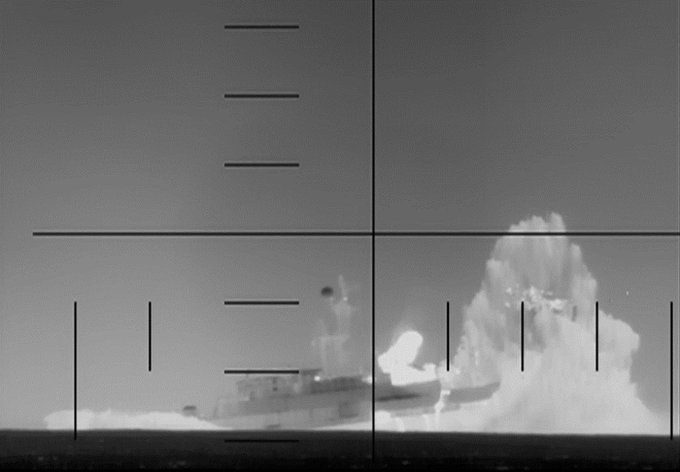
Naval planning in 2026 must wrestle with a host of tasks but few vessels with which to carry them out. At the same time naval engagements are a rarity. Where they do occur the participants do not use similar equipment. Russia has found this to its cost in the Black Sea. But the much better equipped US Navy has not been able to prevent Iran's cockleshell navy and drone force from controling access to the Gulf. Both actions would have baffled readers of the 1986 JANES.
More recently I have come to rely on the smaller German Weyers Flottentaschenbuch with its excellent line drawing silhouettes and armament charts.
It is now thirty five years since the Cold War fizzled out. Between 1945 NATO and the Warsaw Pact had developed and built powerful fleets and developed doctrines for their use in a hot war which apart from the blockade of Cuba in 1962 never materialised.
However, since 1991 navies have lost their classic measure of relative strength "the enemy fleet in being". It is worth remembering that the last naval actions between major surface naval units took place in World War 2 . The Falklands War in 1982 showed that even poorly armed nuclear submarines could defeat a surface ship while escort ships were vulnerable to air attack even with dumb bombs and cannon. Missiles were potent but electronics still had a long way to develop.
If you leaf through the Country pages of Jane's or Weyers (or the numerous online pages) no clear strands emerge.
The US Navy looks very much like it did in 1991 with some notable exceptions
:
The submarine fleet has received two new classes of SSN but the Subroc replacement (Sea Lance) has not been followed up.
The Nimitz class now make up most of the CV fleet and no conventional powered ships remain. AIr groups have fewer types and are arguably less capable in ASW and fleet air defence. An all weather long range replacement for the A6 did not arrive.
The robust frigate force of Perry AA and Knox ASW ships was replaced by a two class general purpose ship (LCS) which has not been a success.
I doubt anyone in 1986 would have expected the Bunker Hill class to still be in service or that the Burke class would continue to be built.
I have used the US Navy as my example.but with a few exceptions other navies have found it hard to reshape themselves.
The main exception has been China. In 1991 it was starting to build new escorts with weapons purchased in the West. Today China builds its own designs of everything from aircraft carriers to landing ships. Unlike the US and other Western countries it has a vigorous and successful naval programme.
However, the US Navy remains the only Navy to operate globally on every ocean and under it. It has bases and allies from the Arctic to Australia. China is still confined mainly to its own neighbourhood.
Most navies operate a few frigate type vessels and some submarines. But many cannot even afford that.
Naval planning in 2026 must wrestle with a host of tasks but few vessels with which to carry them out. At the same time naval engagements are a rarity. Where they do occur the participants do not use similar equipment. Russia has found this to its cost in the Black Sea. But the much better equipped US Navy has not been able to prevent Iran's cockleshell navy and drone force from controling access to the Gulf. Both actions would have baffled readers of the 1986 JANES.
Last edited: