I wonder if we'll ever get to see a test of one of these "Golden Shower" interceptor missiles?

Something from this program might trickle down into actual hardware, but I wouldn't hold it forever waiting

Obviously the very first order of business, then, is to design and construct an over the parody horizon radar.
 
Perhaps. But pew-pew also feels very SDI-ish, like going around in circles. Boost phase interception was supposed to have become feasible because SpaceX, or something (why some experts disagree on space launch capacity and cost being commensurate with solving constellation scaling I've posted on enough times already). Perhaps what is good for the goose (SBI) is good for the gander (DEW).
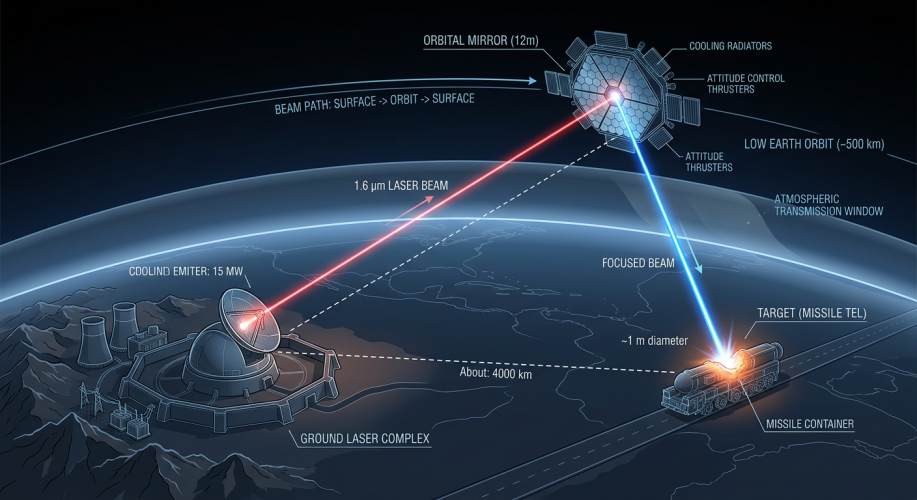
With DEW you completely eliminate the cost of the interceptors and you may not need as many host satellites because they're not as sensitive to position due to speed. They also do actually mention that they have 'other ways' of achieving the same thing in the article I read.
The general in charge of America’s Golden Dome missile defense shield said today that a high-profile and technologically ambitious element of the project, space-based interceptors (SBIs), may not make it into the final architecture as originally envisioned if the tech is shown to be prohibitively costly.
“Because we are looking at the threats from a multi-domain perspective to make sure I have redundant capabilities and I don’t have single points of failure,” he added. “So, if boost-phase intercept from space is not affordable and scalable, we will not produce it, because we have other options to get after it.

DEW technology is also well ahead of where it was in the Reagan era.

Guess it's good that Guetlein emphasizes affordability, even if it's in (inevitably) vague terms but recently defense economics, scalability and production volume have shaped if not dictated many developments that have been more empirical than pre-planned. The U.S. went through costly interceptors at an incredible (unjustified) rate against Iran's missiles and UAVs recently; perhaps being able to nip high-end threats in the bud, so to say, from orbit could result in a more sustainable overall defense, relieving high-end pressure from other layers. Perhaps not. In any case based on Ukraine's experience and China's emerging variety of offensive options it should've been clear already that it's not an easy environment for a massive multi-decadal system to remain relevant from strategy to requirement to deployment.
I think the problem is if the interceptors would end up costing the same as an SM-3 IIA. Multiply up by the number of interceptors and the cost is high regardless of launch costs. If they're forced to act defensively to protect the host satellite, that's also expensive, not so with DEW.

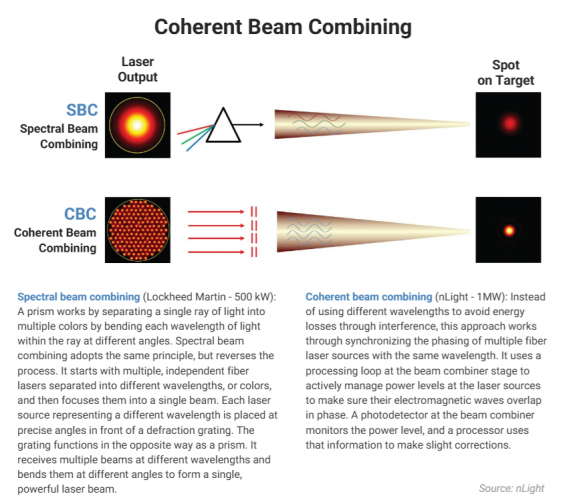
This 1MW nlight CBC laser is exactly the right level and technology for boost-phase purposes, the remaining question is size but payload to LEO capabilities are also way better than in the 1980s. There's the proven Falcon Heavy LV (63.8t), even without Starship or New Glenn LVs for instance.

Old-school chemical laser shot numbers were also very limited due to chemical fuel storage and servicing was difficult and expensive back then, that's changed too.
 
Last edited:
They already have a 'golden dome', do they not?
 

Similar threads

Back
Top Bottom