Future of the Iranian Armed Forces

Status
Not open for further replies.

Spook

ACCESS: Confidential
Joined
6 July 2012
Messages
161
Reaction score
96
Given the current situation and the possibility that Iran’s political and strategic direction could undergo a significant shift in the future, I have been wondering what the Iranian armed forces might look like under such circumstances. A potential "180-degree turn" in governance and/or international alignment would inevitably have major implications for Iran’s military doctrine, procurement strategy, and regional role.

Considering the country’s current economic situation, large-scale investment in modernizing and re-equipping the armed forces may or may not be among the top national priorities, at least in the short term. However, for the sake of discussion, I would like to explore this topic based on several key assumptions, such as:
  • A realistic and sustainable military budget (some rough figures below):
    (Saudia Arabia: $80b, Israel: $46b, Turkey: $25, UAE: $22b)
  • Availability of foreign and domestic resources, platforms, and technologies
  • Iran’s future role in the region (which I personally believe is one of the most critical factors)
  • Possible future regional escalations and security requirements
Taking these assumptions into account, what would be the most reasonable force structure, procurement choices, and force size for Iran in the medium to long term?
I personally believe that the future of Iran’s air force and, more broadly, its armed forces would likely become predominantly Western-oriented in terms of doctrine, training standards, and equipment as it once was. That said, I am very open to alternative viewpoints and would be interested in hearing arguments for different paths, including mixed or non-Western solutions, as well as which platforms might best fill specific operational roles.

My primary focus is on the Iranian Air Force, However, please feel free to expand the discussion to include Iran’s other military branches, such as ground forces, air defense, and naval forces, if relevant.


Geographic Considerations
It is a large and predominantly mountainous country, with vast central deserts and long coastlines along the Caspian Sea in the north and the Persian Gulf and Gulf of Oman in the south. Any realistic force structure must take into account long borders specially its southern borders and taking the clutter into consideration and the possible need for the top-down look when it comes to radar/search platforms, varied terrain..

Please try to keep the discussion as authentic, reasonable, and logically grounded as possible. For example, suggestions such as Iran acquiring a small fleet of (e.g. B-21s or (I would even suggest F-35s)) would clearly fall outside the realm of realism.

Finally, if forum members or moderators feel that this topic goes beyond the scope of this section, please feel free to move or delete the thread as appropriate. Thank you!
 
I think it's very hard to guess what a post-Islamic Republic of Iran would look like.

The fundamental thing would likely be the dissolution of the IRGC and the reabsorption of some elements of it into the more traditional armed forces. After that, the government would probably be overwhelmed with counter-insurgency/counter-terrorism efforts to suppress both IRGC/Basij remnants and the inevitable separatists in Balochistan and Sistan to the east, Kurdistan in the northwest, Khuzestan in the southwest, and maybe even the South Armenians in the far north. And related the need to secure resource extraction infrastructure against said insurgents.

The desperate need for economic reforms and infrastructure reconstruction would also override any effort to rearm along Western lines or what have you.

I suspect they'd basically soldier along with their current gear, possibly de-emphasizing the long range ballistic missile forces, though soen capacity there would remain important as regional leverage against various regional powers. Drones would remain highly relevant for counter-insurgency.

Probably they would let a lot of the IRGCN assets moulder away, since they are so specifically relevant to the Iran-US/Israel conflict.
 
Perhaps the title or description I provided was somewhat misleading?, What I was trying to understand is what future Iranian military acquisitions might look like if the country had the means to pursue them, this including overcoming its economic and infrastructure challenges through reform and reconstruction as mentioned above and also stated by you, not what would happen to the current military structure.

Without getting into the political aspects, as that is not my intention, I consider the possibility of separation to be very unlikely.

Regarding what would happen to the other parallel branches of the armed forces (that istheir various branches), this is explained in the following document (page 70, Section 8 - Military and Security).

https://fund.nufdiran.org/projects/ipp/research/emergency-phase-booklet/
Whether, how and when these measures (mentioned in the booklet) would actually be implemented or take place, however, is beyond the scope of my original intent.
 
They already have drones—good enough for border duty. Just keep them there…
 
If we're talking about economic reform leading to increased re-arment, which is how I understood your introduction, then the Iranian Air Force would most likely receive most of the attention, as it needs it the most. The long range missile aresenal is sufficiently served with domestic designs, same for their drone fleet. What they lack is modern aircraft in meanings numbers.

Now, I fail to see why Iran would ever pivot westwards (remember the whole fiasco that was the islamic revolution happened because the west put the unpopular and incompetent Shah in power after a coup d'etat that removed Mossadegh), but that aside, as it basically boils down to French equipment being the only viable western alternative, it would most likely simply translate into increased orders of Russian or Chinese sourced aircraft. Basically more Su-35s on order, maybe Su-34s and Su-57s following the Algerian model. On the other side we have the J-10CE and the J-35AE. Turkey may be an interesting proposition with KAAN, but that's heavily relation dependent. Ultimately the goal of reinvigorated Iranian economy and than defense budget would be to ensure that they're able to contest other regional powers in the air, which boils down to being able to take on the air forces of Israel, Saudi Arabia, Iraq and possibly Turkey. The toughest nut to crack is obviously Israel, but in practice they wouldn't need to outmatch it and simply have the means to effectively repell and threaten unsustainable losses.

So the AF would in my eyes be in the biggest need of new found funds and a new shopping list. Indigenous drones for ISR, border security, maritime patrol, low intensity strike and the likes, foreign sourced non-stealth and stealth aircraft in order to compete with their regional rivals which would seek to exploit the opportunity of a weakned Iran. For political reasons the most favorable options are France, Russia and China as they always have been for vaguely non-aligned/balancing powers and countries. Acquiring anything American seems ultimately highly unlikely.
 
Perhaps the title or description I provided was somewhat misleading?, What I was trying to understand is what future Iranian military acquisitions might look like if the country had the means to pursue them, this including overcoming its economic and infrastructure challenges through reform and reconstruction as mentioned above and also stated by you, not what would happen to the current military structure.
Given how states with anti-Israeli stance tend to do acquisitions, I'd probably look at Syria and Lebanon for examples of defense procurement(and deprocurement by Israel) - and center's attempts to maintain unity with cheapest possible militias/light infantry.
Maybe Iraq.

Main immediate threat in case of Iran, and especially if nationalists take power there is almost immediate civil war, or rather, several wars. Main external - removal of all dangerous capabilities of Iran, which is long known list(MIC with adjustend industries, professionals in related engineering/science, scholars), which whomever in power won't be able to protect.

Summary, Toyota ME division will win.
 
Last edited:
I think it's very hard to guess what a post-Islamic Republic of Iran would look like.

The fundamental thing would likely be the dissolution of the IRGC and the reabsorption of some elements of it into the more traditional armed forces. After that, the government would probably be overwhelmed with counter-insurgency/counter-terrorism efforts to suppress both IRGC/Basij remnants and the inevitable separatists in Balochistan and Sistan to the east, Kurdistan in the northwest, Khuzestan in the southwest, and maybe even the South Armenians in the far north. And related the need to secure resource extraction infrastructure against said insurgents.

The desperate need for economic reforms and infrastructure reconstruction would also override any effort to rearm along Western lines or what have you.

I suspect they'd basically soldier along with their current gear, possibly de-emphasizing the long range ballistic missile forces, though soen capacity there would remain important as regional leverage against various regional powers. Drones would remain highly relevant for counter-insurgency.

Probably they would let a lot of the IRGCN assets moulder away, since they are so specifically relevant to the Iran-US/Israel conflict.
Republic? It could also be a restoration of the Shah.
 
After decades of religious zealotry—they’d think a Batista was easygoing
 
For a few years. But we are straying from the subject.
The desperate need for economic reforms and infrastructure reconstruction would also override any effort to rearm along Western lines or what have you.
Baby steps, rebuild.
 
Given the current situation and the possibility that Iran’s political and strategic direction could undergo a significant shift in the future, I have been wondering what the Iranian armed forces might look like under such circumstances. A potential "180-degree turn" in governance and/or international alignment would inevitably have major implications for Iran’s military doctrine, procurement strategy, and regional role.
Well, let's start with realistic assumptions; any secular Iranian government that would come to power would not automatically become democratic, pro-Western and American-friendly. It would likely attempt to reduce tensions between Iran and USA, and would likely stop the pointless proxy war against Israel (since besides religious matter, most of Iranians have zero interest in Palestineans - they aren't even Persians). But there would still be major tensions between Iran and Saudi Arabia/UAE for the influence in Yemen, and major tensions between Iran and Turkey for the infuence in Syria.

So the most realistic assumption would be, that Iran would significantly reduce its efforts against USA and Israel, and concentrate on opposing Saudi and Turkey.

P.S. Reducing efforts does NOT means that Iran would reduce deterrence. Iran have no reasons to trust USA or Israel (and vice versa). So while stopping actively making things harder for them, Iran would still work on making sure that it could fight back against them.
 
Several assumptions:
  1. The thread's intent is to discuss a post-regime-change in Iran.
  2. The new regime will be west-aligned.
  3. Regime transition takes non-zero time.

Immediate threats:
  1. Remaining clergy and IRGC loyalists.
  2. PMF in Iraq.
  3. Migration from Afghanistan.
  4. Balochi insurgency.
  5. Turkish and Pakistani opportunism.
Long term threats:
  1. Turkey.
  2. Pakistan.
  3. Red Sea instability.
  4. Status Quo Axis.
  5. Ethnic heterogeneity.

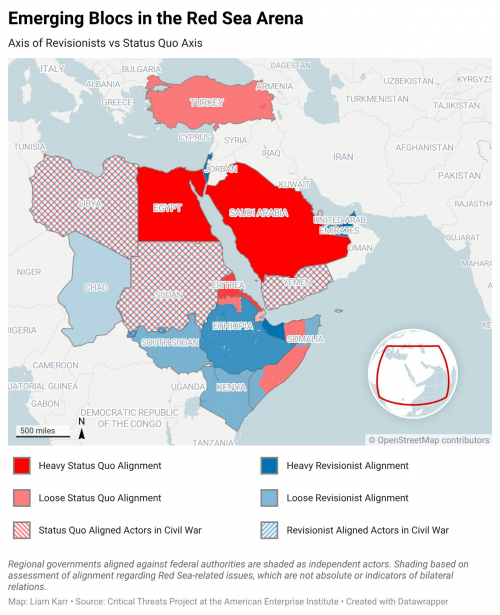
This map illustrates well the emerging middle east cold war in the post-IRGC era.
1771148079091.png

Likely regional and strategic allies:
  1. USA.
  2. Israel.
  3. UAE.
  4. India.
Likely other arms suppliers:
  1. Germany.
  2. South Korea.
  3. UK.
  4. France.
  5. European (other).

Energy based economy and sanctions removal -> Rapid early economic growth and available cash from the start.
Skilled labor -> Diversified, tech-oriented economy -> Economic stability.

Iran military 20 years after coup:
  1. Aviation
    1. Manned platforms - American.
    2. Unmanned - American, Israeli.
    3. Munitions - American, Israeli, Korean, British.
    4. Systems - American, Israeli.
  2. Air Defense
    1. American, Israeli.
  3. Ground
    1. Platforms - American, German, European, Korean, Indian.
    2. Munitions - American, Israeli, German, Korean.
    3. Systems - American, Israeli, European.
  4. Naval
    1. Platforms - German, Korean.
    2. Munitions - American, European, Israeli.
    3. Systems - American, European, Israeli.

The coup itself means Iran is less stable. So limitations across all categories to legacy systems or up to same standard as UAE/KSA.
Iran will likely partner with UAE and Israel on regional security, and will want to somewhat standardize with them.

Like with the IRGC, the new Iran will want to prioritize long distance capabilities, so air power and naval power.
The geographical reality means smaller vessels, so German and Korean shipbuilders are optimal.
Air power will favor distance so twin engine fighters e.g. F-15EX, and within 20 years an F-35 is also feasible as a successor will likely enter service in Israel by then.
Helicopters for the rough local geography, and tankers and cargo aircraft for maintaining the regional alliance network.
 
Also, one very important point. Any new secular Iranian government would likely got the atomic bomb as soon as they could. Despite common assumptions, it was Iranian secular nationalists that always pushed hard for getting the bomb. Ayatollah's are far more cautions there. They always view nuclear program more as bargain tool, than as actual military project (that's why despite spending vast resources, they still got only very limited results).

Essentially, the ayatollah position was to bargain about nuclear program, trying to got economical and political bonuses for NOT making the bomb.

The secular nationalists position was always to make the bomb first, and then bargain from the position of relative power and security.

So if ayatollah are gone, Iran would likely got the bomb within 0,5-1,5 years.
 
The fundamental thing would likely be the dissolution of the IRGC and the reabsorption of some elements of it into the more traditional armed forces.
Well, the IRGC missile corps would switch allegances without any problems. They are "high-tech" guys, that only formally subordinated to IRGC (because Ayatollah wanted to have direct control over long-range strike capabilities). As soon as Ayatollah is gone, the missile corpse would just went into Republican Military command. Same, I suppose, is for IRGC navy; with the exception of suicide boats squadrons, the rest would gladly fold in Republican Navy.
 
The secular nationalists position was always to make the bomb first, and then bargain from the position of relative power and security.

So if ayatollah are gone, Iran would likely got the bomb within 0,5-1,5 years.
Well, to be fair, clerical government that betted on non-nuclear "armed hostility" to neo-colonialism so far does indeed look like fools.
But nationalists(especially Shah personally) has such a bloody political trail, that it won't be their first trouble - and whatever is here, will be likely oppurtunistically dismantled. Without coherent armed forces, it's impossible to protect.
As soon as Ayatollah is gone, the missile corpse would just went into Republican Military command.
Iran struggled to protect them with functional government and in moment of national unity. Things will happen - look no further than Syria.
Granted, after January (hi S. Besseth) Iranian government has the top place at kiilling Iranian civilians(rebelling on not) scoreboard, but Israel holds a firm silver medal.
 
Last edited:
Also, one very important point. Any new secular Iranian government would likely got the atomic bomb as soon as they could. Despite common assumptions, it was Iranian secular nationalists that always pushed hard for getting the bomb. Ayatollah's are far more cautions there. They always view nuclear program more as bargain tool, than as actual military project (that's why despite spending vast resources, they still got only very limited results).
I disagree.
Nuclear stuff are the primary reason Iran is in such a mess. That and their vast regional network and missile arsenal.
One of the reasons the IRGC is collapsing is because Iran could no longer sustain basic necessities under sanctions.
What keeps the IRGC alive is a network of loyalists ready to incinerate people on demand.
A new regime will have none of that. And so has no mechanism of survival.

Also, this goofy thing doesn't discriminate between who the nuclear stuff belongs to
1771152959016.png
 
https://xxtomcooperxx.substack.com/p/the-mess-of-russo-iranian-arms-deals
As the Supreme Leader, Khamenei is the provisional head of the three branches of government (see: ‘head of state’), the commander-in-chief of the armed forces, and the director of the country’s media.

However, this does not mean that Khamenei is ruling the country as an all-mighty autocrat. His power depends on support from dozens of rival ‘interest groups’, most of which are a part of or at least associated with the Islamic Revolutionary Guards Corps (IRGC, also ‘Pasdaran’). Confronted with the rising power of the cliques (‘cliques’ or even ‘gangs’ would be a better descriptions, because most of these are endemically corrupt, too), Khamenei sought a solution in letting the various of them take over different segments of the Iranian economy. And so, one of cliques established itself in control over the banks and insurances, another over the judiciary, yet another over the construction industry, then several over the real estate sector — and another one in control of the defence sector. For example, the gang to which the former President of Iran, Ahmadinejad, belonged, used to control banks and insurances… until its members fell in disgrace and were then (conveniently) prosecuted for corruption…

Point is: whenever there is some major decision to make in Tehran, each of these cliques is doing its utmost to have its fingers in the game, and each is pulling in own direction. If nothing else works, it sends ‘own’ units of the IRGC to ‘sort out the problem’: and, because it’s ‘acting in the name of the God’, the IRGC is above all the laws. It’s meanwhile powerful enough to remove Khamenei ‘in a matter of minutes’, if necessary.

Unsurprising result is a completely dysfunctional chain of command and totally unworkable decision-making processes. Officially, Iran is ruled by an official government and parliament, but the final say depends on agreements between different of cliques. Even the ‘Supreme Leader’ has to bow to their wishes.
 
Republic? It could also be a restoration of the Shah.

The current govt is the "Islamic Republic of Iran". I was talking about the govt after that.

That said, Reza Phalavi has loudly and frequently expressed that he does not wish to reassume his father's role as an absolute monarch.
 
The only people really advocating for a restoration of the monarchy are some fringe, borderline cultist political donors living outside Iran. Unless they donate their way into being installed by a foreign power, which I unfortunately have to admit is possible, it ain't happening. And if it does, they'll be long gone before any kind of serious military procurement happens.
 
Can count on Cooper to make stuff up from his backside even on technical matters, let alone political. There was no EAF Su-35 testing vs Rafale, almost 30 Su-35s were built not just 17, they are in Algeria now etc. Oh and Iran ordered and received initially only 12 Su-24MKs not 24, the rest of the fleet came from Iraq.
So if this is is "knowledge" on pretty basic and known actual technical facts, one can image his knowledge (or lack of) of iranian politics. Just making stuff up and twisting events/facts pandering to his anti-iranian/anti-russian agenda (like Taghvaee).
Not that iranian politics are a bed of roses, just the aforementioned ridiculously stupid fatwa by Khamenei and co. to not develop nuclear weapons shows that, which now brought Iran in danger of sharing the same fate of Syria, Libya, Iraq, risking the country destroyed, millions dead... There is a reason why the west is not threatening DPRK with war and invasion.
 
Last edited:
How in the "Sam Hill" (slang for hell) does anyone believe Russia, PRC, and the Taliban are not going to exploit ethic divisions etc which TomS points to to assure there is nothing but chaos in that country till some peace keeping/humanitarian quagmire ensues.
 
Last edited:
How in the "Sam Hill" (slang for hell) does anyone believe Russia, PRC, and the Taliban are not going to exploit ethic divisions etc which TomS points to assure there is nothing but chaos in that country till some peace keeping/humanitarian quagmire ensues.
I mentioned in my comment that Afghans are likely to seize the opportunity, as well as Iraq's PMF, Turkey in Iran's north-western Kurdish regions, and possibly Pakistan as well.
 
I mentioned in my comment that Afghans are likely to seize the opportunity, as well as Iraq's PMF, Turkey in Iran's north-western Kurdish regions, and possibly Pakistan as well.
Largest *dreaming* separatism in Iran is not even those, but S.Azerbaijan.
It is not interested in separatism now, as most others. Current powoer structure, for all its faults, is explicitly non-nationalist. Heck, until may 2025 they didn't even touch traditional persian heroes.
How in the "Sam Hill" (slang for hell) does anyone believe Russia, PRC, and the Taliban are not going to exploit ethic divisions etc which TomS points to assure there is nothing but chaos in that country till some peace keeping/humanitarian quagmire ensues.
It's kinda suprising that you bring into conversation Russia, PRC and Taliban, when this whole thread is replacing islamic republic(which is by default non-ethnic) with new west-aligned government (which, again in this case, is by default nationalist - and with one hell of bloody hatchet with minorities).
 
From OP:
what would be the most reasonable force structure, procurement choices, and force size for Iran in the medium to long term?
@others This is getting snowed under. Start your own topic? On another website?
 
Several assumptions:
  1. The thread's intent is to discuss a post-regime-change in Iran.
  2. The new regime will be west-aligned.
  3. Regime transition takes non-zero time.

Immediate threats:
  1. Remaining clergy and IRGC loyalists.
  2. PMF in Iraq.
  3. Migration from Afghanistan.
  4. Balochi insurgency.
  5. Turkish and Pakistani opportunism.
Long term threats:
  1. Turkey.
  2. Pakistan.
  3. Red Sea instability.
  4. Status Quo Axis.
  5. Ethnic heterogeneity.

This map illustrates well the emerging middle east cold war in the post-IRGC era.
View attachment 802173

Likely regional and strategic allies:
  1. USA.
  2. Israel.
  3. UAE.
  4. India.
Likely other arms suppliers:
  1. Germany.
  2. South Korea.
  3. UK.
  4. France.
  5. European (other).

Energy based economy and sanctions removal -> Rapid early economic growth and available cash from the start.
Skilled labor -> Diversified, tech-oriented economy -> Economic stability.

Iran military 20 years after coup:
  1. Aviation
    1. Manned platforms - American.
    2. Unmanned - American, Israeli.
    3. Munitions - American, Israeli, Korean, British.
    4. Systems - American, Israeli.
  2. Air Defense
    1. American, Israeli.
  3. Ground
    1. Platforms - American, German, European, Korean, Indian.
    2. Munitions - American, Israeli, German, Korean.
    3. Systems - American, Israeli, European.
  4. Naval
    1. Platforms - German, Korean.
    2. Munitions - American, European, Israeli.
    3. Systems - American, European, Israeli.

The coup itself means Iran is less stable. So limitations across all categories to legacy systems or up to same standard as UAE/KSA.
Iran will likely partner with UAE and Israel on regional security, and will want to somewhat standardize with them.

Like with the IRGC, the new Iran will want to prioritize long distance capabilities, so air power and naval power.
The geographical reality means smaller vessels, so German and Korean shipbuilders are optimal.
Air power will favor distance so twin engine fighters e.g. F-15EX, and within 20 years an F-35 is also feasible as a successor will likely enter service in Israel by then.
Helicopters for the rough local geography, and tankers and cargo aircraft for maintaining the regional alliance network.

In continuation of this:

Equipment and force structure go hand in hand. Reliance on western equipment also means a somewhat similar force structure. But there's no causality here.
Iran in such scenario will likely want both western material support and a results-driven force structure that will support:

  1. Consolidated capabilities at the national armed forces. As opposed to current distributed armed capability across regional proxies and parallel national armed forces.
  2. Varied and balanced capabilities instead of force asymmetry.
  3. Integration into some regional axis likely involving UAE and Israel.
  4. Operations at distance instead of indirect fire.
 
The future armed forces of Iran will consist of remnants of IRGC/Basiji and other funded armed groups attempting to maintain trade/profit making means. The Bazaar class will align to those as is expedient to survive. Meanwhile the Demographic divisions will likely become the many different armed forces of Iran.
 
The future armed forces of Iran will consist of remnants of IRGC/Basiji and other funded armed groups attempting to maintain trade/profit making means. The Bazaar class will align to those as is expedient to survive. Meanwhile the Demographic divisions will likely become the many different armed forces of Iran.
The Basij are a lightly armed, wide spread, poorly trained militia only useful for crowd control.
There is no need to keep that in a separate organization outside the police force.

The IRGC are a parallel army but also are deeply ingrained in every economic structure.
There is no need to keep them if they have the army already.

Keeping them alive means keeping rivaling centers of power alive and reducing the central government's own power.

The only reason they exist is because the IRGC IS the central government.
Their economic structure also strangles the Iranian economy, so yet another reason to get rid of them.
There is no coup without purging the IRGC.
 
when this whole thread is replacing islamic republic(which is by default non-ethnic) with new west-aligned government
That's not how I understood the threat, because that's the least likely outcome. I understood it as a post islamic republic Iran, which most definitely does not default to being pro-west (the west still backs threats and enemies like Israel or Saudi Arabia, so they're still enemies to Iran regards if the government is Islamic, Socialist, Nationalist, whatever really. These fundamental factors don't change, the people don't change).
 
The Basij are a lightly armed, wide spread, poorly trained militia only useful for crowd control.
There is no need to keep that in a separate organization outside the police force.

The IRGC are a parallel army but also are deeply ingrained in every economic structure.
There is no need to keep them if they have the army already.

Keeping them alive means keeping rivaling centers of power alive and reducing the central government's own power.

The only reason they exist is because the IRGC IS the central government.
Their economic structure also strangles the Iranian economy, so yet another reason to get rid of them.
There is no coup without purging the IRGC.
Purging certainly is the goal of the collective west, but is asier said than done, and like Ven. msy only be the beginning of successful stabilization.
 
That's not how I understood the threat, because that's the least likely outcome. I understood it as a post islamic republic Iran, which most definitely does not default to being pro-west (the west still backs threats and enemies like Israel or Saudi Arabia, so they're still enemies to Iran regards if the government is Islamic, Socialist, Nationalist, whatever really. These fundamental factors don't change, the people don't change).
Israel is not an enemy to Iran. And the average Iranian doesn't necessarily view Israel as an enemy. The general population is displeased with the massive expenditure of resources on trying to wage a regional Jihad.
Pre-IRGC Iran was friendly with Israel.


Purging certainly is the goal of the collective west, but is asier said than done, and like Ven. msy only be the beginning of successful stabilization.
Sure. But it's different from voluntarily keeping the IRGC and Basij alive.
 
Israel is not an enemy to Iran. And the average Iranian doesn't necessarily view Israel as an enemy.
Even if it was so before june - Israel killed far too many civilians to make quite a few reconsider.
And frankly - removing key capabilities from Iran also means stange accidents happening to civilians. Scholars from Tehran university may study unfortunate subjects, but they're still civilians all the same.

Israel can be viewed as friendly to Israel in approximately same fashion, in which Iranians view Britain, US and Russia. In short term - worse.
 
Even if it was so before june - Israel killed far too many civilians to make quite a few reconsider.
And frankly - removing key capabilities from Iran also means stange accidents happening to civilians. Scholars from Tehran university may study unfortunate subjects, but they're still civilians all the same.

Israel can be viewed as friendly to Israel in approximately same fashion, in which Iranians view Britain, US and Russia. In short term - worse.
Well they can't have their cake and eat it too. Yeah, start wars and you take casualties. Join the IRGC and you sometimes get unalived.
The general population really has no sympathy to the IRGC and are quite happy with every casualty they take.

Above all they have an appetite for better quality of life. And that's something they can only really get by opening up to the west and getting the sanctions lifted.

I can see Iran going a bit in India's direction as a less aligned nation, but it'll still be tilted toward the west more than anywhere else.
 
Well they can't have their cake and eat it too. Yeah, start wars and you take casualties. Join the IRGC and you sometimes get unalived.
The general population really has no sympathy to the IRGC and are quite happy with every casualty they take.
People bombed in June weren't in IRGC - ~500 dead and several thousands wounded. You may not care, but it's somewhat strange to expect sympathy afterwards.
Above all they have an appetite for better quality of life. And that's something they can only really get by opening up to the west and getting the sanctions lifted.
It's hard to enjoy better quality of life in pieces.
1771152959016-png.802175

Russia does bring higher quality of life in Ukraine (Crimea), and strikes with far higher collateral avoidance standards - probably less casualties in long range strikes over all these years than what Israel killed in a week. People still somehow seem to not appreciate that. Because it's a foreign invasion and lots of death nonetheless. Human societies dislike that(heck other species with wars, like ants, for some reason don't either).
I can see Iran going a bit in India's direction as a less aligned nation, but it'll still be tilted toward the west more than anywhere else.
This thread has some sort of magic decolonization feel. Venezuela was probably too impressive for rightwings' own good.
 
People bombed in June weren't in IRGC - ~500 dead and several thousands wounded. You may not care, but it's somewhat strange to expect sympathy afterwards.

It's hard to enjoy better quality of life in pieces.
1771152959016-png.802175

Russia does bring higher quality of life in Ukraine (Crimea), and strikes with far higher collateral avoidance standards - probably less casualties in long range strikes over all these years than what Israel killed in a week. People still somehow seem to not appreciate that. Because it's a foreign invasion and lots of death nonetheless. Human societies dislike that(heck other species with wars, like ants, for some reason don't either).

This thread has some sort of magic decolonization feel. Venezuela was probably too impressive for rightwings' own good.
Damn, that's kinda hyper misinformed but ok.
 
Status
Not open for further replies.

Similar threads

Back
Top Bottom