Furry avatars of doom

Last edited:
HDqBTSOX0AAcmp3
 
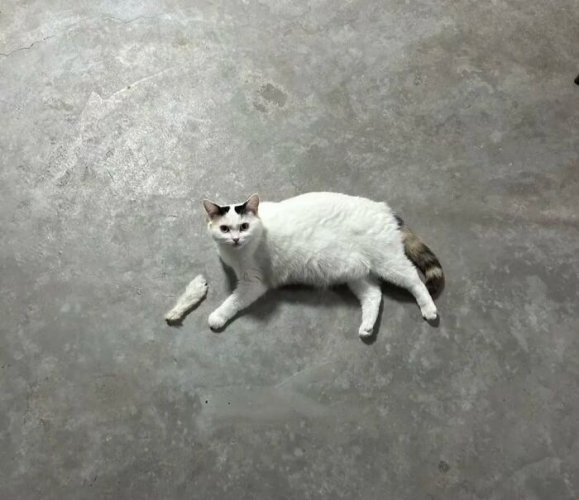
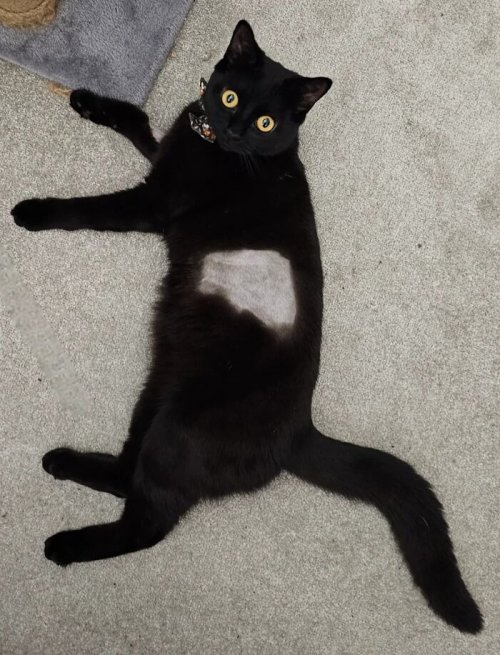
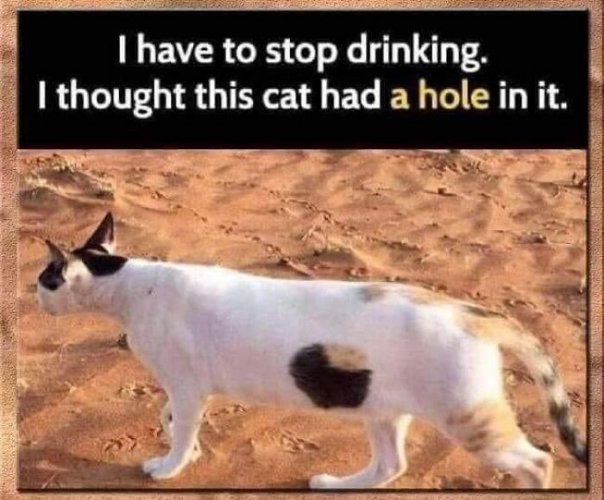
With the white cat , at first glance it appears that the cat's front leg is separated from it's body , in reality it's a feather that's a similar shape to the cat's leg . With the black cat , it's been shaved for surgery , and it's skin tone matches the colour of the carpet , so it looks as if the cat has a hole in it .
Here's another example . . .

science-funniest-pics-jokes-6-6786373324cee__700.jpg

cheers ,
Robin .
 
About that:


Why do cats often leave food unfinished? Many cat owners have experienced this puzzling behavior. Domestic cats are well known for eating multiple small meals throughout the day, a pattern thought to reflect their evolutionary origin from the African wildcat (Felis silvestris lybica), a solitary hunter that repeatedly captures small prey. It has also often been assumed that cats leave food unfinished simply because they have a small appetite or a capricious nature. However, the mechanism underlying this characteristic feeding pattern has remained unclear.

A research group led by Professor Masao Miyazaki at Iwate University, Japan, has now shown that domestic cats may stop eating not only because they are full, but also because smell plays an important role in regulating feeding motivation. The study suggests that feeding behavior in cats is dynamically influenced by olfactory habituation and dishabituation. The study was published in Physiology & Behavior.
View: https://m.youtube.com/watch?v=-KYZNjJ6a5Y
 
Last edited:
About that:


Why do cats often leave food unfinished? Many cat owners have experienced this puzzling behavior. Domestic cats are well known for eating multiple small meals throughout the day, a pattern thought to reflect their evolutionary origin from the African wildcat (Felis silvestris lybica), a solitary hunter that repeatedly captures small prey. It has also often been assumed that cats leave food unfinished simply because they have a small appetite or a capricious nature. However, the mechanism underlying this characteristic feeding pattern has remained unclear.

A research group led by Professor Masao Miyazaki at Iwate University, Japan, has now shown that domestic cats may stop eating not only because they are full, but also because smell plays an important role in regulating feeding motivation. The study suggests that feeding behavior in cats is dynamically influenced by olfactory habituation and dishabituation. The study was published in Physiology & Behavior.
They're not that smart.

View attachment 808599
How Dare You, Sir!!!
 

Similar threads

Back
Top Bottom